Hongdae (홍대) is one of nine districts we cover in depth, so pair this with our Seoul neighborhoods guide, our guide to the best hotels in Hongdae, and the Seoul nightlife guide for the wider after-dark picture.
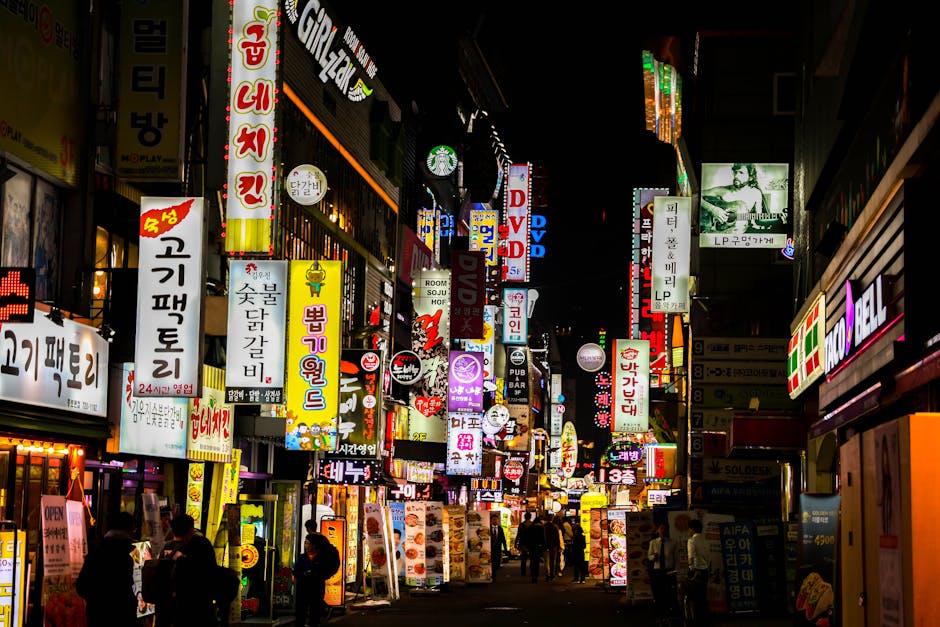
What is Hongdae?
Hongdae is the warren of streets fanning out from Hongik University, Korea’s most famous art and design school, in the Mapo district of western Seoul. The university gave the area its name (Hong-dae literally means “Hong University”) and its DNA: this has been the city’s bohemian, do-it-yourself creative quarter since the 1990s, when cheap rents pulled in painters, indie bands, and club promoters. Three decades later the rents aren’t cheap anymore, but the energy survives in the buskers, the basement music venues, the tattoo studios, and the relentless churn of pop-up shops.
Geographically, think of Hongdae as a cluster of linked neighborhoods rather than a single strip. The dense core sits between Hongik University Station and the university gates, packed with clothing shops, street food, and clubs. West of the station, Yeonnam-dong has reinvented itself as a leafy cafe-and-brunch district along the Gyeongui Line Forest Park (locals nicknamed it “Yeontral Park”). South toward the river, Hapjeong is quieter and more grown-up, full of design studios and wine bars, and Mangwon brings it back to earth with a beloved traditional market. You can walk between all four in 20–30 minutes.
Who is it for? Honestly, almost everyone, but especially travelers in their 20s and 30s, music fans, solo travelers (it’s social and easy), and anyone who wants to see how young Seoulites actually spend a Friday night. Families and early sleepers will find the late-night core loud — base yourself in Yeonnam-dong or Hapjeong for more calm. For first-timers weighing where to be, our where to stay in Seoul overview compares Hongdae with quieter bases like Myeongdong and Insadong.

Top things to do in Hongdae
You could spend a full day here without repeating yourself. These are the experiences worth building a visit around, roughly in the order you’d hit them from morning to small hours.
1. Watch the buskers on the walking street
The pedestrianized stretch outside Hongik University — officially “Hongdae Walking Street,” locally just geori — is the neighborhood’s beating heart. From late afternoon, dance crews, acoustic singers, and the occasional full K-pop cover group stake out spots, draw a ring of phone cameras, and perform until the police gently move them along around midnight. It’s free, it’s genuinely good (these are often pre-debut performers and conservatory students), and Saturday around 8–10pm is peak. Stand at the back if you don’t want to be pulled into a dance circle, which absolutely happens.

2. Cafe-hop in Yeonnam-dong
Walk ten minutes west from the station and the volume drops. Yeonnam-dong is low-rise, tree-lined, and wall-to-wall with independent cafes, the kind with one signature drink and a queue of photographers. The linear Gyeongui Line Forest Park (“Yeontral Park”) runs through it — a former rail line turned grassy promenade where locals picnic with takeout coffee on weekends. Budget ₩5,000–7,000 for a hand-drip and expect to wait for a window seat at the famous spots. For a full crawl with specific addresses, see our Seoul cafe guide; this district is its spiritual home.

3. Catch a show at an indie music venue
This is what made Hongdae famous before the clubs did. Live houses like FF, Club FF, Strange Fruit, Rolling Hall, and Mudaeruk host Korean indie rock, punk, and electronic acts most nights, with cover charges around ₩15,000–25,000 (often including a drink). It’s loud, sweaty, and the best way to see a side of Korean music that has nothing to do with idol groups. Check our Seoul live music venues roundup for line-ups and door times before you go.

4. Shop the indie fashion and beauty streets
Hongdae shopping is young, fast, and cheap-to-midrange — think Korean street fashion, vintage, and quirky accessories rather than luxury. The main drags are dense with small boutiques, plus larger anchors like AK& Hongdae (attached to the station) and the design-focused KT&G SangSangMadang. K-beauty is everywhere — Olive Young, Aritaum, and a dozen brand flagships. For deeper itineraries on what to buy and where, our Seoul shopping guide and K-beauty shopping guide map it out, and merch hunters should bookmark the K-pop merch shopping guide.

5. Eat Korean BBQ, then chimaek
Hongdae does grilled meat exceptionally well and cheaply, with student-priced samgyeopsal (pork belly) joints charging ₩12,000–16,000 per portion. After dinner comes chimaek — fried chicken and beer, Korea’s perfect pairing — at tables that spill onto the pavement in summer. Our Korean BBQ guide explains how to order and grill like a local, and first-timers should skim Korean dining etiquette so you know what to do with all those side dishes.

6. Walk or cycle the Han River parks
South of Hapjeong, the riverside Mapo / Yanghwa Hangang Park is where Hongdae goes to breathe. Rent a bike, grab convenience-store ramyeon and a beer, and watch the sunset over the Seonyudo island bridge. It’s a five-minute taxi or a 15-minute walk from the nightlife core — a useful daytime reset. See our Han River activities guide for bike rentals, ferries, and the famous picnic-and-delivery culture.

7. Browse Mangwon Market
One subway stop or a 15-minute walk west, Mangwon Market is a working neighborhood market and the antidote to Hongdae’s polish. This is where to eat your way through cheap, brilliant street food — hotteok, fried squid, gimbap, and the famous ₩2,000 goroke (croquettes) — alongside locals doing their shopping. It pairs perfectly with our Seoul street food guide and the cheap eats in Seoul roundup.
8. Go quirky: SangSangMadang, arcades, and themed cafes
KT&G SangSangMadang is a striking, art-house tower with an indie cinema, design shop, and gallery worth an hour. Around it you’ll find retro arcades full of claw machines and a rotating cast of themed cafes (everything from raccoons to Harry Potter). It’s gloriously silly and very Hongdae. More offbeat ideas live in our unique experiences in Seoul guide.
Where to eat in Hongdae
Hongdae feeds students, so it feeds cheaply and late. Beyond the BBQ and chimaek already mentioned, build your eating around a few categories. For a sit-down Korean meal, look for kalguksu (knife-cut noodle) and sundubu (soft tofu stew) spots tucked off the main drag where ₩9,000–11,000 buys a generous bowl. Yeonnam-dong is the area’s gourmet end, with small chef-driven restaurants doing everything from handmade pasta to modern Korean — reservations help on weekends.
For something distinctly Hongdae, hunt down a pojangmacha (orange-tented street stall) after 10pm for tteokbokki, odeng (fish cake skewers), and soju, or a gopchang (grilled intestine) house if you’re feeling brave — it’s a local late-night institution. Vegetarians are better served here than almost anywhere in Seoul thanks to the student crowd; our vegetarian and vegan Seoul guide lists specific Hongdae and Yeonnam-dong spots. If you’d rather have a local lead the way, several operators run evening tastings through the area — see our Seoul food tours roundup. And when the clubs let out, the neighborhood’s 24-hour gukbap (rice-and-soup) and haejangguk (hangover soup) joints are covered in our late-night food in Seoul guide.
Best Hongdae cafes for a slow afternoon
If your Hongdae plan is more flat-white than fireball shot, this is prime territory. The density is highest in Yeonnam-dong, but the whole district rewards aimless wandering. Look for multi-floor “study cafes” with rooftop seating, dessert specialists doing absurd cream-topped drinks for the camera, and old-school dabang hold-outs for context. Expect ₩4,500–7,000 for coffee and to pay a little extra for the photogenic stuff. Many stay open past midnight, making them a civilized alternative to bars. Our full Seoul cafe guide has named recommendations and the best rooftop and dessert picks across the city.
Where to stay in Hongdae
Hongdae is a smart base if nightlife, walkability, and the AREX airport train (a single ride from Incheon) matter to you. Accommodation skews toward stylish boutique hotels, guesthouses, and a wave of design-forward budget stays aimed at younger travelers — generally cheaper than Gangnam or Myeongdong for the same level of polish. Light sleepers should book in Yeonnam-dong or toward Hapjeong rather than directly on the club streets, where the bass carries until 4am. For specific properties at every price point, see our dedicated best hotels in Hongdae guide, and budget travelers should cross-reference the Seoul budget accommodation roundup. Comparing neighborhoods? Our where to stay in Seoul pillar weighs Hongdae against every other district.
Hongdae street food worth queuing for
Half the fun of Hongdae is eating standing up. The walking street and the lanes around it fill with carts and small storefronts every evening, and a few items are worth seeking out specifically. Tornado potato (a spiral-cut spud on a stick, ₩4,000) is pure Instagram bait but genuinely good. Egg bread (gyeran-ppang), a warm sweet-savory muffin with a whole egg baked in, runs about ₩2,000 and is the perfect cold-weather walking snack. Tteok-kkochi (chewy rice cake skewers glazed in sweet-spicy sauce) and hotteok (brown-sugar-filled griddle pancakes) are everywhere for ₩2,000–3,000. For something heartier, the steak cups and lobster-cheese carts that pop up near the station are messy, over-the-top, and exactly the kind of thing Hongdae does best. Bring small cash — many carts are cash-only — and follow the lines, which never lie. For the full citywide rundown of stalls and what to order, our Seoul street food guide and the best Korean dishes to try guide go deeper.
Hongdae nightlife
This is the main event, and it’s unlike anywhere else in Seoul. Where Gangnam’s clubs are exclusive and expensive and Itaewon’s are international, Hongdae’s are young, loud, and democratic — most run a low or free cover before midnight and the crowd is a mix of students, twenty-somethings, and travelers. The night doesn’t really start until 11pm and runs until the first subway at 5:30am. For the citywide picture, our Seoul nightlife guide sets the scene; below is the Hongdae-specific version.
Clubs
Hongdae’s clubs cluster within a few blocks, so bar-hopping between them is half the fun. Club FF blends live bands with DJ sets and is a reliable first stop. NB2 (backed by YG Entertainment) leans hip-hop and pulls a big crowd. Club Aura and Made go harder on EDM, while smaller rooms like vurt. and Henz Club reward the curious. Covers run ₩10,000–20,000, usually including a drink; many waive it before midnight or with a flyer. The famous “Hongdae Club Day” all-access passes come and go, so ask at the door. Our best clubs in Seoul guide ranks the current contenders.
Bars
Before (or instead of) the clubs, Hongdae’s bars span everything from grungy rock dives to polished cocktail rooms. Makgeolli bars serve the milky rice wine in brass kettles alongside savory pancakes; craft-beer taprooms have multiplied; and the area hides a few serious speakeasy-style cocktail bars for a quieter night. Drinks run ₩6,000–9,000 for beer and ₩14,000–18,000 for cocktails. To pinpoint the standouts, see our best bars in Seoul guide and the Korean alcohol guide if you want to drink like a local. And no Hongdae night is complete without an hour of noraebang (Korean karaoke) — there are coin-operated rooms on nearly every block.

How to get to Hongdae
Getting here is easy, which is part of the appeal. Hongik University Station sits on subway Line 2 (the green loop), the Gyeongui–Jungang Line, and crucially the AREX airport railroad — meaning you can ride straight from Incheon Airport to Hongdae in about 50 minutes without a transfer, a major reason travelers base here. Exits 8 and 9 dump you into the heart of the action. Sangsu and Hapjeong stations (also Line 2/6) serve the southern, calmer end. A T-money card makes all of this seamless; if you haven’t sorted one, read our T-money card guide and the wider getting around Seoul and Seoul subway guides. Late at night after the trains stop, taxis are plentiful but surge with demand — our Seoul taxi guide explains the apps and etiquette.

A one-day Hongdae itinerary
Here’s how I’d spend a full day and night, designed to flow from calm to chaos:
- 11:00 — Start slow with brunch and a hand-drip coffee in Yeonnam-dong, then stroll the Gyeongui Line Forest Park.
- 13:00 — Wander into the core for shopping: indie boutiques, KT&G SangSangMadang, and a themed cafe pit-stop.
- 15:30 — Taxi or walk down to Yanghwa Hangang Park for a riverside breather and bike ride.
- 18:00 — Early Korean BBQ dinner before the queues build.
- 20:00 — Post up on the walking street for prime busking hour.
- 21:30 — Chimaek and makgeolli to pace yourself.
- 23:00 — Noraebang for an hour, then hit the clubs.
- 05:30 — Hangover soup and the first subway home.
Tight on time across the city? Slot this into a wider plan using our 3-day Seoul itinerary or the longer 5-day itinerary.
Hongdae by day vs by night
It’s worth knowing that Hongdae is essentially two neighborhoods sharing an address. By day it’s brunch, cafes, vintage shopping, and quiet park walks — perfectly pleasant for families and older travelers, especially in Yeonnam-dong. By night the core transforms into a dense, loud, slightly chaotic party zone that peaks Friday and Saturday. Neither is “the real Hongdae” — both are. If you only have a few hours, pick your half deliberately: afternoons for the creative-arts side, after-dark for the legendary nightlife.
Free things to do in Hongdae
You can have a brilliant time here on almost no budget. The busking is free, the street art is free, walking the Gyeongui Line Forest Park and the Han River is free, and window-shopping the indie boutiques costs nothing. Weekends bring free pop-up markets and the long-running Hongdae Free Market (an arts-and-crafts fair near the playground) where students sell handmade goods. For a whole city’s worth of no-cost ideas, see our free things to do in Seoul guide and the budget-minded Seoul on a budget pillar.
Practical tips for visiting Hongdae
A few things I wish I’d known sooner. Cash is handy for street food and small bars, though cards work almost everywhere. Weekends after 9pm get genuinely crowded — go midweek if crowds aren’t your thing. Pickpocketing is rare but watch your phone in packed club entrances. The area is overwhelmingly safe even in the small hours (see our is Seoul safe for tourists guide), but solo travelers should still use licensed taxi apps after the trains stop. Last subways leave around midnight and resume near 5:30am, so plan to either be home by then or commit to the full night. Finally, don’t over-plan — Hongdae rewards the wander.
Beyond the core: Yeonnam-dong, Hapjeong, Mangwon & Sangsu
The mistake most visitors make is never leaving the main strip. The neighborhoods radiating out from Hongik University each have a distinct personality, and the best days here string several together.
Yeonnam-dong, northwest of the station, is the cafe-and-brunch heartland — low-rise, leafy, and built around the Gyeongui Line Forest Park. It’s where to slow down, and increasingly where Seoul’s most interesting small restaurants open. Hapjeong, to the south, is the grown-up sibling: design studios, indie bookshops, wine bars, and the giant Mecenatpolis mall sitting above the station. It’s a calmer place to sleep and eat while staying minutes from the action. Sangsu, between Hapjeong and the river, is the low-key local favorite — small bars and restaurants without the tourist markup, beloved by Hongik students. And Mangwon, one stop west, balances the famous market with the riverside park and a relaxed residential feel that’s made it quietly fashionable. Walking between these is the whole point: you can go from a quiet hand-drip coffee to a riverside bike ride to a basement punk show within a couple of square kilometers.
Best time to visit Hongdae
Hongdae runs year-round, but the experience shifts with the seasons. Spring (April–May) and autumn (September–October) are ideal — mild enough for the pavement chimaek tables and park picnics that define the area at its best. Summer is hot, humid, and electric; the streets stay packed past midnight and the Han River parks come alive, but afternoon heat pushes everyone into air-conditioned cafes. Winter thins the outdoor busking but the indoor scene — clubs, noraebang, live houses, themed cafes — barely notices the cold. As for the week: weekdays are calmer and better for cafes and shopping, while Friday and Saturday nights are when Hongdae becomes the Hongdae of legend. For citywide timing, see our guide to the best time to visit Seoul.
Where Hongdae fits in your Seoul trip
No single neighborhood is all of Seoul, and Hongdae plays best as part of a wider mix. Pair its scrappy creative energy with the shopping-and-street-food density of Myeongdong, the polish and nightlife of Gangnam, the traditional hanok streets of Bukchon, and the design-forward warehouses of Seongsu-dong. K-culture fans should also weave in the K-pop and Korean culture guide, since several entertainment landmarks sit nearby. Use our Seoul itineraries hub to slot Hongdae into the right day, and our master Seoul travel guide to tie the whole trip together.
FAQ: Hongdae Seoul guide
Is Hongdae worth visiting?
Absolutely — for most travelers it’s one of the three or four neighborhoods worth prioritizing. Hongdae offers something no other Seoul district does in the same concentration: a genuine, youth-driven creative-and-nightlife scene with buskers, indie music, cheap great food, and an easy social atmosphere, all a single airport-train ride from Incheon. Even if you don’t drink or club, the daytime cafe culture in Yeonnam-dong and the street-art energy make it a rewarding half-day. The only travelers who might skip it are those seeking quiet, refined, or luxury experiences, who’d be happier in Gangnam or the historic core around Insadong.
What is Hongdae famous for?
Three things above all: indie music (it’s the birthplace of Korea’s underground rock and electronic scene), nightlife (clubs and bars that run until sunrise), and street performance (the walking-street buskers are a Seoul institution). It’s also known for its dense cafe culture, affordable youth fashion, and the art-school creativity that flows from Hongik University. In short: it’s where young Seoul plays.
How long should I spend in Hongdae?
For the full experience, plan a late afternoon into the night — say 4pm until late, which lets you catch the cafes, dinner, busking hour, and the bars or clubs in one arc. If you only want the daytime creative side, two to three hours in Yeonnam-dong and the core is plenty. Night owls happily lose an entire evening here. Many travelers who base themselves in Hongdae naturally fold it into their days without “scheduling” it at all.
Is Hongdae safe at night?
Yes. Seoul overall is one of the safest major cities in the world, and Hongdae is busy and well-lit deep into the night, which adds natural safety in numbers. Standard precautions apply: watch your belongings in crowded club entrances, drink responsibly, and use a licensed taxi app rather than an unmarked car after the subway stops. Solo female travelers generally report feeling comfortable here. For a fuller picture, see our is Seoul safe for tourists guide.
What’s the difference between Hongdae and Itaewon?
Both are nightlife districts, but they feel different. Hongdae is younger, more Korean, more music-and-student-driven, and cheaper — the crowd skews local twenty-somethings. Itaewon is Seoul’s most international neighborhood, with a more diverse, expat-heavy crowd, global restaurants, and a different bar culture. If you want to party with young Koreans to indie and K-hip-hop, choose Hongdae; if you want international variety and a more mixed scene, read our Itaewon guide. Many travelers do both on different nights.
Is Hongdae good for first-time Seoul visitors?
It’s excellent for first-timers who are young or young-at-heart and want energy, walkability, and easy airport access. It’s also a fantastic base because the AREX train links it directly to Incheon. That said, if you’re prioritizing palaces, traditional culture, and a quieter sleep, you might prefer to stay near the historic center and visit Hongdae for an evening. Our first-time Seoul travel tips and neighborhoods guide help you decide.
What time do Hongdae clubs open and close?
Most clubs open around 10–11pm but stay sleepy until midnight; the real crowd arrives between 1am and 3am, and the biggest rooms run until 5–6am, conveniently lining up with the first subway around 5:30am. Bars open earlier, from late afternoon or early evening. If you arrive before midnight you’ll often skip the cover charge and walk straight in.
How do I get from Incheon Airport to Hongdae?
Take the AREX (Airport Railroad) directly to Hongik University Station — the all-stop train takes about 50–60 minutes and costs roughly ₩4,650 from Terminal 1 (₩5,250 from Terminal 2), while the nonstop express is faster for a bit more. Because Hongdae is on the AREX line, there’s no transfer, which is exactly why so many travelers choose it as a base. Full options are in our Incheon Airport to Seoul guide.
Is Hongdae expensive?
It’s one of the better-value nightlife districts in Seoul. Food and drinks are student-priced, club covers are modest, and you can fill a day for very little. Costs only climb if you chase the most photogenic cafes or upscale cocktail bars. For budgeting your whole trip, see how much a Seoul trip costs.
The glass-fronted, staffless rooms you pass every few doors here are self-photo studios, and Hongdae has the densest concentration of them in Korea — most open 24 hours. If you have been walking past them wondering how the machines work, our guide to Korean photo booths takes you through every screen, what a session costs and which poses to actually do.
Final word
Hongdae is the neighborhood I send almost everyone to at least once, because it shows you a version of Seoul that the palaces and shopping districts can’t — unpolished, creative, and alive at hours when the rest of the city sleeps. Spend an afternoon among the cafes and buskers, eat cheaply and well, and then let the night take you wherever the music’s loudest. When you’re ready to plan the rest of your trip, our things to do in Seoul hub and neighborhoods guide will point you to what’s next.