
This complete Seoul street food guide covers the must-try dishes, the best markets to find them, current 2026 prices, hygiene reality checks, halal and vegetarian options, and the unwritten rules locals follow. For more food context, read our broader Seoul food guide pillar, and pair this with the Seoul on a budget guide if you’re stretching every won.
The Must-Try Korean Street Foods
You could spend a week eating only street food in Seoul and still miss things. Start with these 25 classics — every market and most subway stations have multiple vendors selling them, and together they cover the full sweet-savory-spicy spectrum of Seoul snacking.
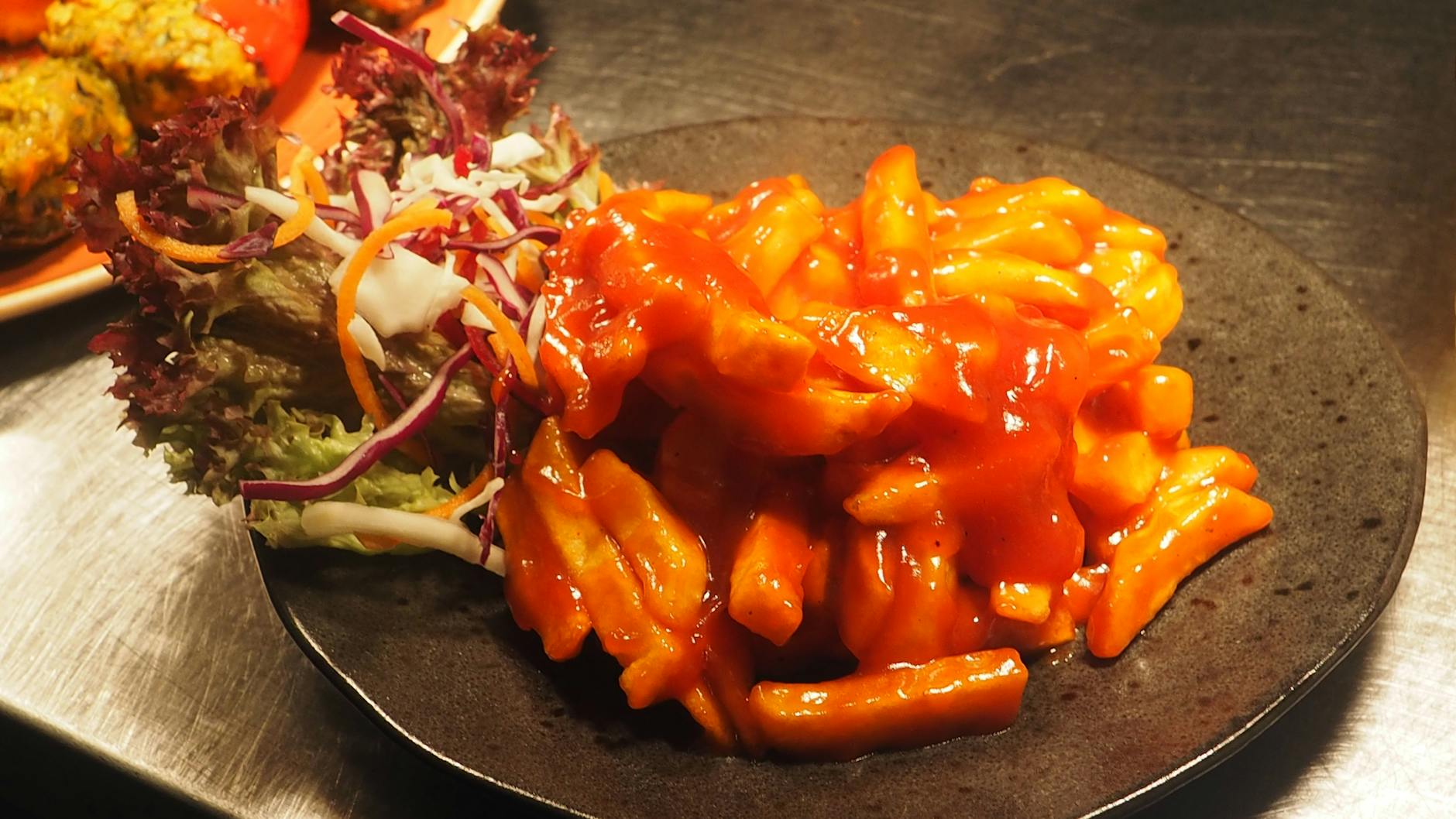
Tteokbokki (Spicy Rice Cakes)
If Korea has a national street snack, this is it. Cylindrical white rice cakes simmered in a sauce of gochujang (red chili paste), gochugaru (chili flakes), sugar, and stock. Sometimes served with fish cakes (eomuk), boiled eggs, scallions, and ramyeon noodles thrown in. Spicy enough to make your eyes water, sweet enough to keep you eating. Around 4,000-6,000 won per portion. The original Sindang-dong tteokbokki alley still serves the best in the city. For the cheese-and-ramyeon upgrade known as rabokki, order it with noodles and cheese piled in — the sauce clinging to the ramyeon is the best part.
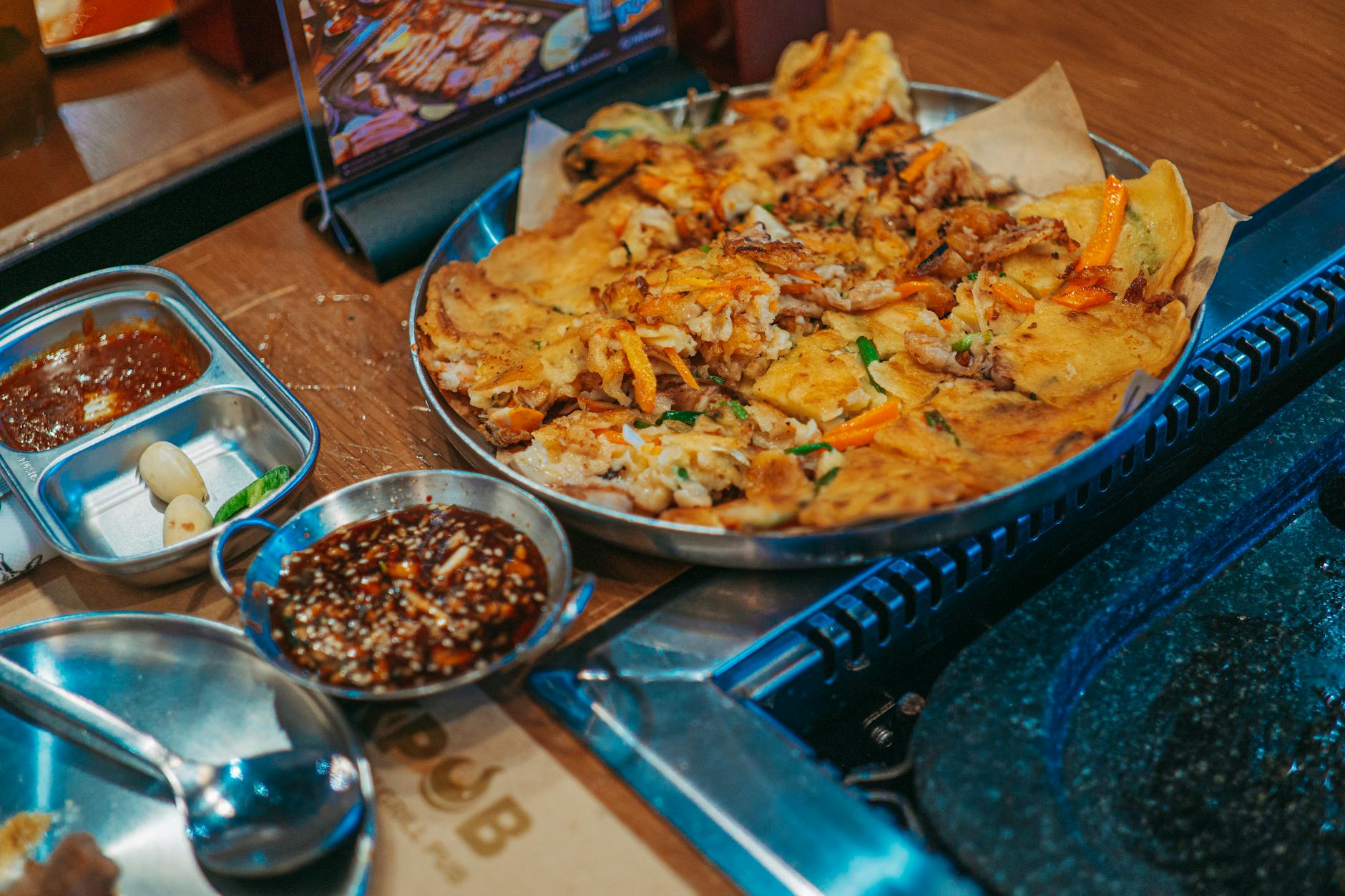
Bindaetteok (Mung Bean Pancake)
A Gwangjang Market specialty: ground mung beans pan-fried with bean sprouts, kimchi, and pork into a savory pancake the size of a small frisbee. Crispy edges, soft middle. Served with onion-soy dipping sauce. 5,000 won. Best eaten standing at the stall while it’s still hot. Watch for the stalls with a stone millstone grinding beside the griddle — that’s the mark of the real, freshly-ground thing.
Mayak Gimbap (Drug Rolls)
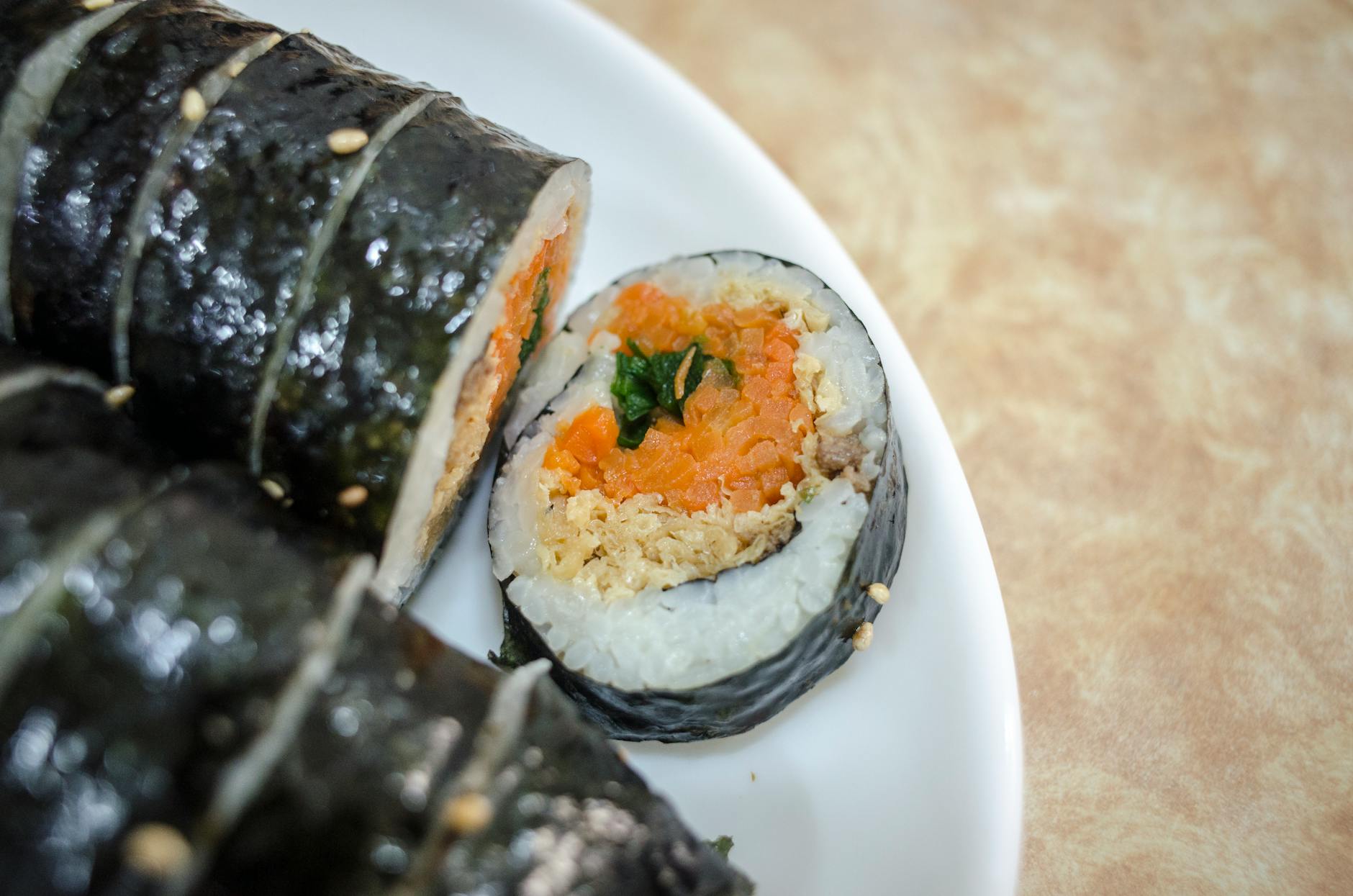
Tiny seaweed rice rolls filled with carrot, spinach, and pickled radish, dipped in a mustard-soy sauce. The name means “drug” in Korean — once you start, you can’t stop. 3,000-4,000 won for a tray of eight to ten. The Gwangjang Market originals are unbeatable.
Hotteok (Sweet Korean Pancakes)
Yeast dough stuffed with brown sugar, cinnamon, and sometimes crushed peanuts or sunflower seeds, then fried on a flat griddle until the sugar caramelizes into a molten center. A winter favorite. 1,500-3,000 won per piece. The Namdaemun Market hotteok stand near Gate 2 has a permanent line for a reason.
Eomuk / Odeng (Fish Cake Skewers)
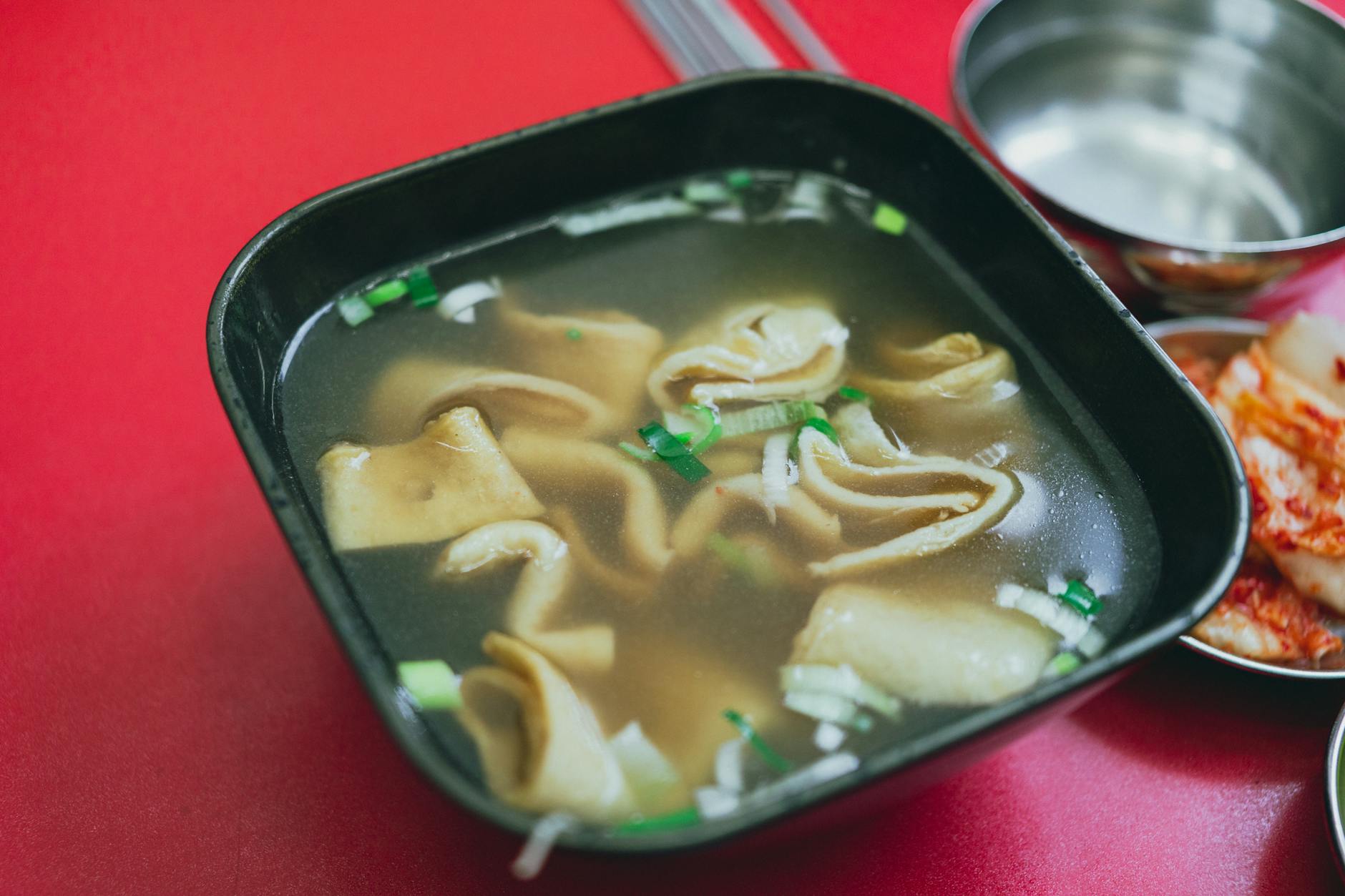
Compressed fish-paste cakes folded onto wooden skewers and simmered in radish-anchovy broth. The broth itself is poured into paper cups and served free with every order. 1,000-1,500 won per skewer. The ultimate Seoul winter snack.
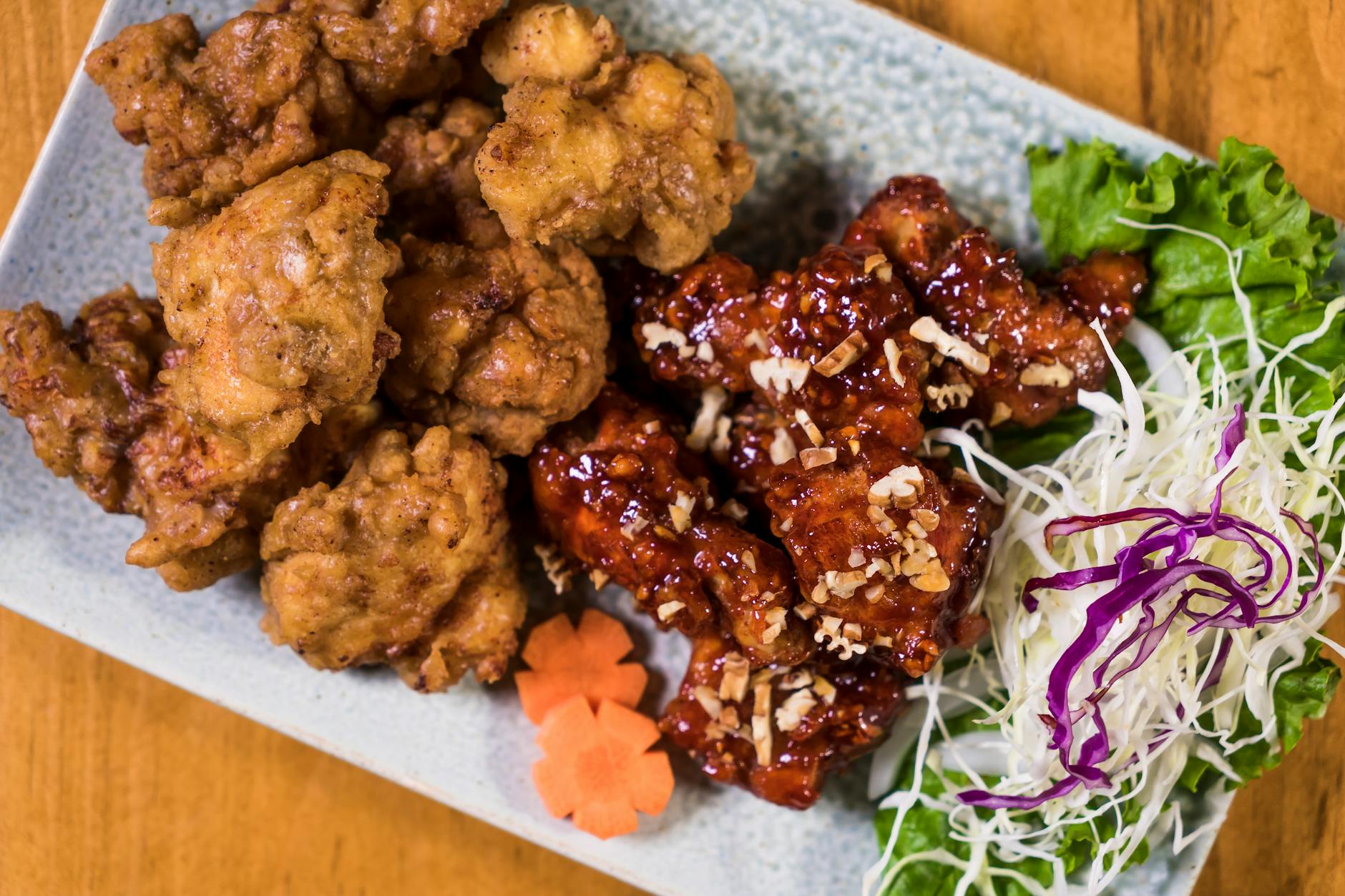
Korean Fried Chicken (KFC)
Not technically street food but sold in many markets and casual stalls. Korean fried chicken is double-fried for shatter-crisp skin, then tossed in either sweet-spicy yangnyeom sauce or honey-soy. A half-bird portion runs 18,000-25,000 won. Pair with a bottle of beer for the classic “chimaek” combo.
Twigim (Korean Tempura)
Vegetables, sweet potatoes, squid, and dumplings dipped in batter and deep-fried, sold by the piece. Often eaten dipped in tteokbokki sauce. 800-2,000 won per piece.
Sundae (Korean Blood Sausage)
Korean blood sausage stuffed with glass noodles, blood, and seasonings, steamed and served with salt, perilla powder, or a dipping sauce. Adventurous but loved by Koreans. 4,000-7,000 won per portion. Ask for it with a sprinkle of perilla-seed powder and a few slices of steamed liver — the traditional way locals eat it.
Mandu (Korean Dumplings)
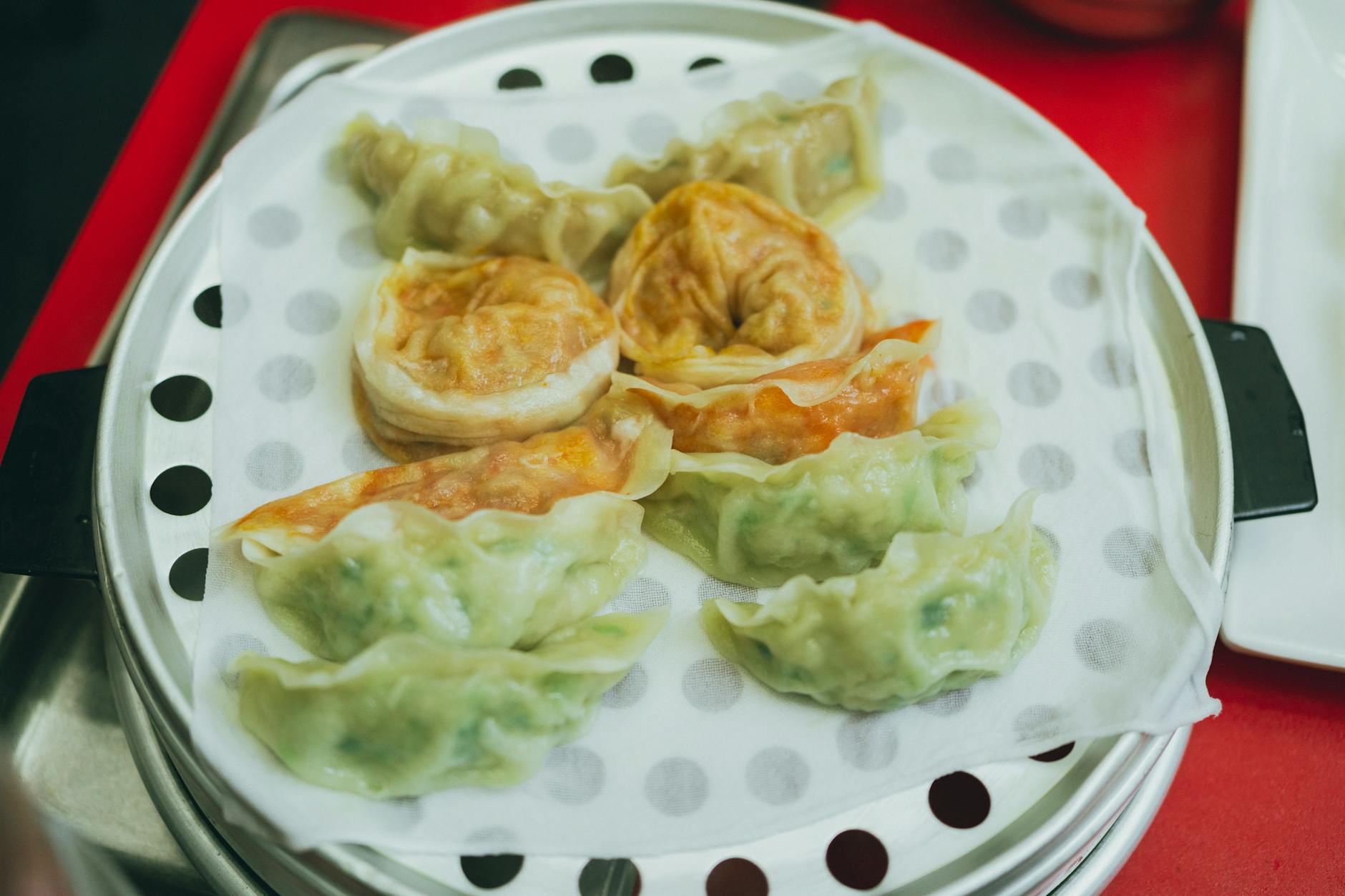
Steamed or fried dumplings filled with pork, tofu, kimchi, glass noodles, and vegetables. Hugely popular at markets. 4,000-6,000 won for six pieces. Bukchon’s Mandu Alley is a destination for fans.
Korean Corn Dogs (Hotdog)
Skyrocketed in popularity around 2019-2020. Hot dogs and mozzarella on a stick, dipped in batter, rolled in sugar or potato cubes, then deep-fried. Sweet, salty, cheesy, addictive. 3,000-5,000 won. Myeongdong has the most prolific stalls. Ask for the half-hotdog, half-mozzarella version rolled in diced potato and sugar — that crunch-and-stretch combo is why the queues form.
Bungeoppang (Fish-Shaped Pastry)
A waffle-batter pastry shaped like a goldfish, filled with sweet red bean or custard. Winter staple. 1,000 won for two or three.
Gimbap (Seaweed Rice Rolls)
The Korean lunchbox staple: rice, egg, pickled radish, spinach, carrot, and ham rolled in seaweed and sliced into coins. Cheap, portable, and everywhere — market stalls sell them from 3,000-4,500 won. Order chamchi (tuna) or cheese for an upgrade.
Gyeran-ppang (Egg Bread)
A small oval of slightly sweet cornbread baked with a whole egg on top. Warm, filling, and mildly savory — the perfect walk-and-eat breakfast on a cold morning. 1,500-2,000 won. Look for it near university areas and Myeongdong.
Dak-kkochi (Grilled Chicken Skewers)
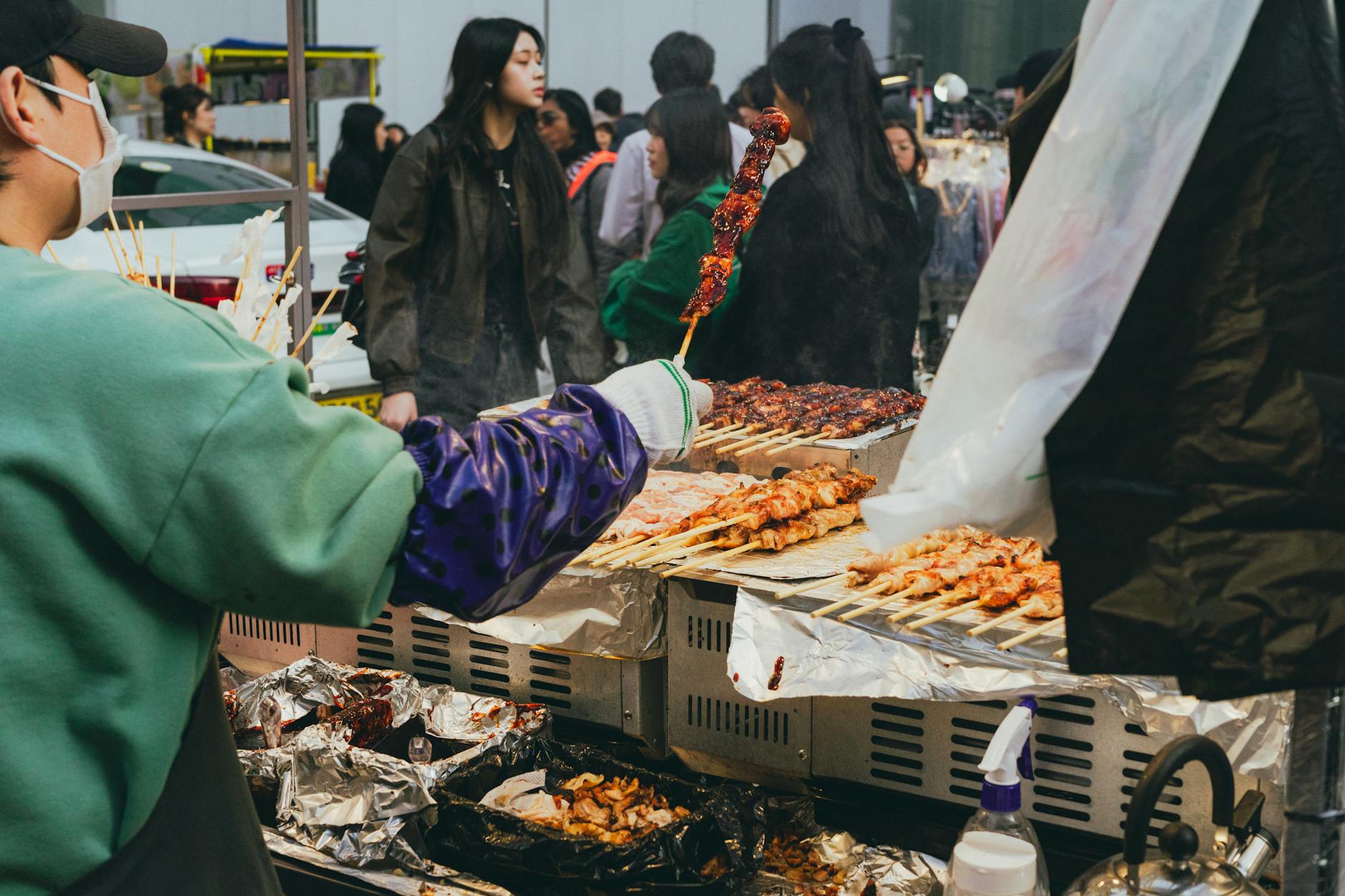
Bite-sized chicken threaded onto skewers, grilled over charcoal, and brushed with sweet-spicy gochujang glaze or soy-garlic sauce. Smoky, sticky, and hugely popular in Hongdae and Myeongdong. 3,000-5,000 won per skewer.
Sotteok-sotteok (Sausage & Rice Cake Skewer)
Alternating chunks of chewy rice cake and mini sausage on a stick, grilled and glazed with sweet-spicy sauce. A textural playground and a kids’ favorite. 3,000-4,000 won.
Tornado Potato (Hoe-ori Gamja)
A whole potato spiral-cut onto a skewer, deep-fried, and dusted with cheese, onion, or barbecue powder. More spectacle than substance, but a Myeongdong photo staple. 4,000 won.
Gun-goguma & Gunbam (Roasted Sweet Potato & Chestnuts)
Winter’s hand-warmers: sweet potatoes roasted in drum ovens until caramelized, and paper cones of hot chestnuts sold from carts near subway exits. 3,000-5,000 won. Pure, simple, seasonal comfort.
Kkwabaegi (Twisted Doughnuts)
Chewy twisted dough fried and rolled in sugar and cinnamon. An old-school market sweet enjoying a hipster revival at specialist stalls in Mangwon and Seongsu. 1,000-2,000 won each.
Hoppang / Jjinppang (Steamed Buns)
Fluffy steamed buns filled with sweet red bean, vegetables, or pizza-style toppings. Convenience stores sell mass-market hoppang in winter, but market-made jjinppang is softer and fresher. 1,000-2,500 won.
Dalgona (Sugar Candy)
The honeycomb sugar candy made famous worldwide by Squid Game — melted sugar and baking soda pressed with a shape you nibble out without cracking. Nostalgic street candy for a few hundred to 2,000 won. Try it around Ikseon-dong.
Tteok-kkochi (Skewered Rice Cakes)
Rice-cake tubes on a skewer, grilled and lacquered in sweet-and-spicy sauce — like tteokbokki you can eat while walking. 2,000-3,000 won and beloved by schoolkids after class.
Korean Street Waffle
A crisp waffle folded around a swipe of cream and jam or honey butter, sold from tiny carts for 2,000-3,000 won. A quick sweet fix between savory stops.
Lobster & Grilled Seafood Skewers
Myeongdong’s showpiece: half a lobster tail torched with cheese, plus grilled scallops and butter-garlic king prawns. Delicious but pricey by street-food standards — 10,000-15,000 won — and purely a Myeongdong indulgence.
Patbingsu (Shaved Ice)
The essential summer dessert: a mountain of fine shaved milk-ice topped with sweet red bean, chewy rice cakes, fruit, and condensed milk. Market and cafe versions run 6,000-12,000 won and easily feed two.
Beondegi (Steamed Silkworm Pupae)
The market’s boldest snack — silkworm pupae simmered in savory broth, sold in paper cups. The nutty-earthy smell hits before the cart does. An acquired taste, but a rite of passage for adventurous eaters at 3,000 won.
The Best Street Food Markets in Seoul
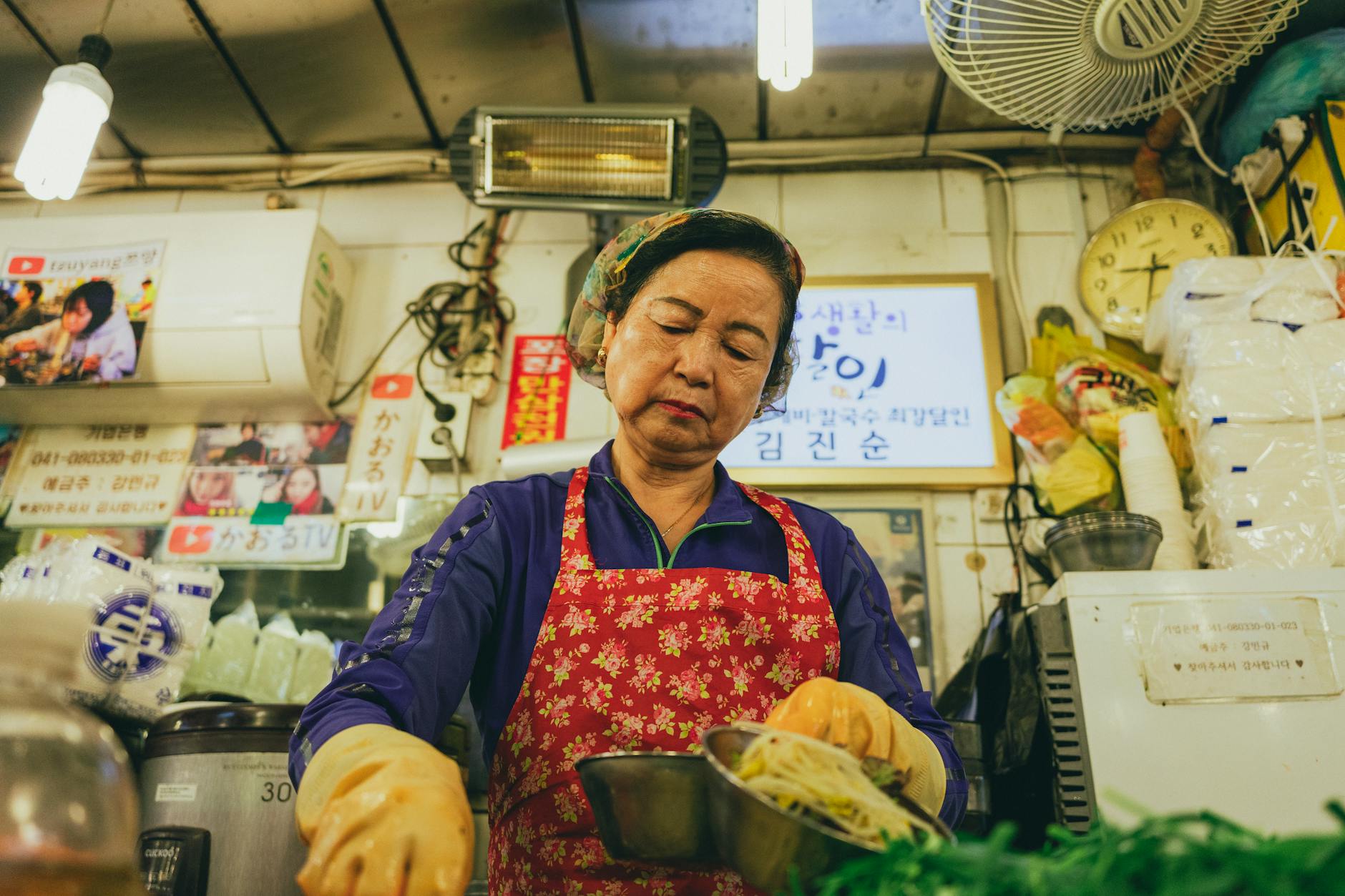
Seoul has dozens of traditional markets, but five stand out for street food specifically. Plan around them.
Gwangjang Market (Jongno)
The mother of all Seoul food markets — the country’s oldest, established in 1905, and arguably the best street food destination on Earth. Famous specialties include bindaetteok, mayak gimbap, kalguksu (knife-cut noodles), yukhoe (beef tartare), and hotteok. Open 8:30 AM to roughly 11:00 PM, with most food stalls running noon to 9 PM. Closed most Mondays. See our dedicated Gwangjang market food guide for the full breakdown.
Myeongdong Street Food
Not technically a market but a sprawl of food carts that take over Myeongdong’s main streets every evening from around 4 PM. Korean corn dogs, lobster cheese skewers, gyoza, tornado potatoes — Myeongdong is street food as Instagram fodder. Pricey for what it is (everything is 30-50% more than Gwangjang) but the atmosphere is electric. Come hungry but eat strategically — pick two or three showpiece items rather than grazing everything, since the prices add up fast.
Namdaemun Market
The largest traditional market in Seoul by area, with a tighter-packed indoor section where vendors serve old-Korea recipes — galchi (cutlassfish stew), hotteok, hairtail soup, and “Galchi Alley.” More authentic than Gwangjang, less foreigner-trodden, and noticeably cheaper. Go for an early lunch when the galchi stews are freshly bubbling and the market’s working-Seoul energy is at full tilt.
Tongin Market
Famous for the “lunch-box” experience: exchange 5,000 won for ten brass tokens (yeopjeon), then walk the market loading your tray at participating stalls. Each scoop costs 1-2 tokens. A perfect introduction to lots of small dishes for a single payment. The token cafeteria runs roughly 11 AM to 4 PM and is busiest — and most fun — at weekday lunch.
Mangwon Market
A neighborhood market in West Seoul that exploded in popularity after a Korean variety show featured it. Less touristy than Gwangjang or Namdaemun but with the same density of small food stalls. Particularly strong on fried snacks, jeon (savory pancakes), and old-school market sweets.
Where Else to Eat Street Food in Seoul
Beyond the markets, three neighborhoods are essentially open-air food scenes after dark.
Hongdae
The university party district has dozens of pojangmacha (orange-tarp tent restaurants) and street food carts that pop up around Hongik University Station after 5 PM. Especially good for Korean fried chicken, soju-friendly fried snacks, and the famous Hongdae corn dog stalls.
Itaewon
Foreigner-friendly with English-speaking vendors and a higher-than-average concentration of Middle Eastern, halal, and South Asian street food alongside Korean classics. Great for late-night eats.
Jongno’s Pojangmacha Streets
Behind the Jongno 3-ga subway station, dozens of orange-tent street bars stay open until dawn. The food is simple and salty (designed to keep you drinking) but the atmosphere — middle-aged office workers, soju, plastic stools — is quintessentially Seoul.
More Street Food Neighborhoods Worth Seeking Out
Once you’ve done the big markets, these local pockets reward the curious.
Sindang-dong Tteokbokki Town
An entire alley near Sindang Station given over to tteokbokki, where the dish was reinvented in the 1950s. Order jeukseok (instant) tteokbokki cooked at your table with ramyeon, dumplings, and cheese piled in. This is the birthplace of Seoul’s favorite snack.
Euljiro After Dark
The retro “Hip-jiro” district hides pojangmacha and old-school jeon-and-makgeolli joints between print shops — a moody, thoroughly local counterpoint to the tourist markets.
Gangnam Pojangmacha
Behind the glossy towers, late-night tents on the back streets of Gangnam and Yeoksam feed office workers grilled skewers and spicy chicken feet until dawn — more in our Gangnam guide.
Seongsu-dong Snack Carts
Seoul’s design district balances its trendy cafes with a growing crop of artisan street sweets like gourmet kkwabaegi and cream-filled buns — pair it with our Seongsu-dong guide.
How to Plan a Seoul Street Food Crawl
The best way to eat street food in Seoul is to graze — small portions from many stalls rather than one big plate. Here is a proven two-hour crawl through Gwangjang Market, the highest-density street food destination in the city.
Enter from the Jongno 5-ga side and start light with a tray of mayak gimbap and a mustard dip. Move to the legendary bindaetteok row — order one to share, hot off the griddle, with a paper cup of makgeolli. Next, brave a yukhoe (beef tartare) counter if you’re game, then a kalguksu stall for hand-cut noodle soup. Finish sweet with hotteok from a corner cart. Total damage: roughly 20,000-25,000 won for two, thoroughly full.
Go hungry, aim for around noon or after 8 PM to dodge the mid-afternoon lull, and carry cash. For a stall-by-stall map, see our Gwangjang Market food guide; to have a local lead the way, our Seoul food tours guide compares the best operators, and budget grazers should bookmark our cheap eats in Seoul guide.
Where to Find Late-Night Street Food
Seoul eats late, and some of its best street food only appears after dark. When the markets close, three areas keep the griddles hot past midnight.
Jongno 3-ga is the spiritual home of the after-hours pojangmacha, its orange tents packed with office workers over soju until 3 AM. Hongdae pairs corn dogs and fried snacks with student nightlife, while Itaewon adds halal kebabs and international bites for the post-club crowd. For the full after-midnight roundup — including 24-hour restaurants and convenience-store hacks — see our late-night food in Seoul guide, and match it to the areas in our Hongdae and Itaewon guides.
How Much Should You Spend?
Most Seoul street food snacks fall between 1,000 and 6,000 won. A full belly costs around 12,000-15,000 won. Two days of eating exclusively at markets and pojangmacha can keep you under 30,000 won total — half what one sit-down restaurant meal might cost.
| Snack | Typical Price (2026) |
|---|---|
| Tteokbokki (single portion) | 4,000-6,000 won |
| Bindaetteok | 5,000 won |
| Mayak gimbap (8-10 pieces) | 3,000-4,000 won |
| Hotteok (single) | 1,500-3,000 won |
| Eomuk skewer | 1,000-1,500 won |
| Korean corn dog | 3,000-5,000 won |
| Bungeoppang (2-3 pieces) | 1,000 won |
| Twigim (per piece) | 800-2,000 won |
| Sundae portion | 4,000-7,000 won |
| Korean fried chicken (half) | 18,000-25,000 won |
Are Korean Street Food Stalls Hygienic?
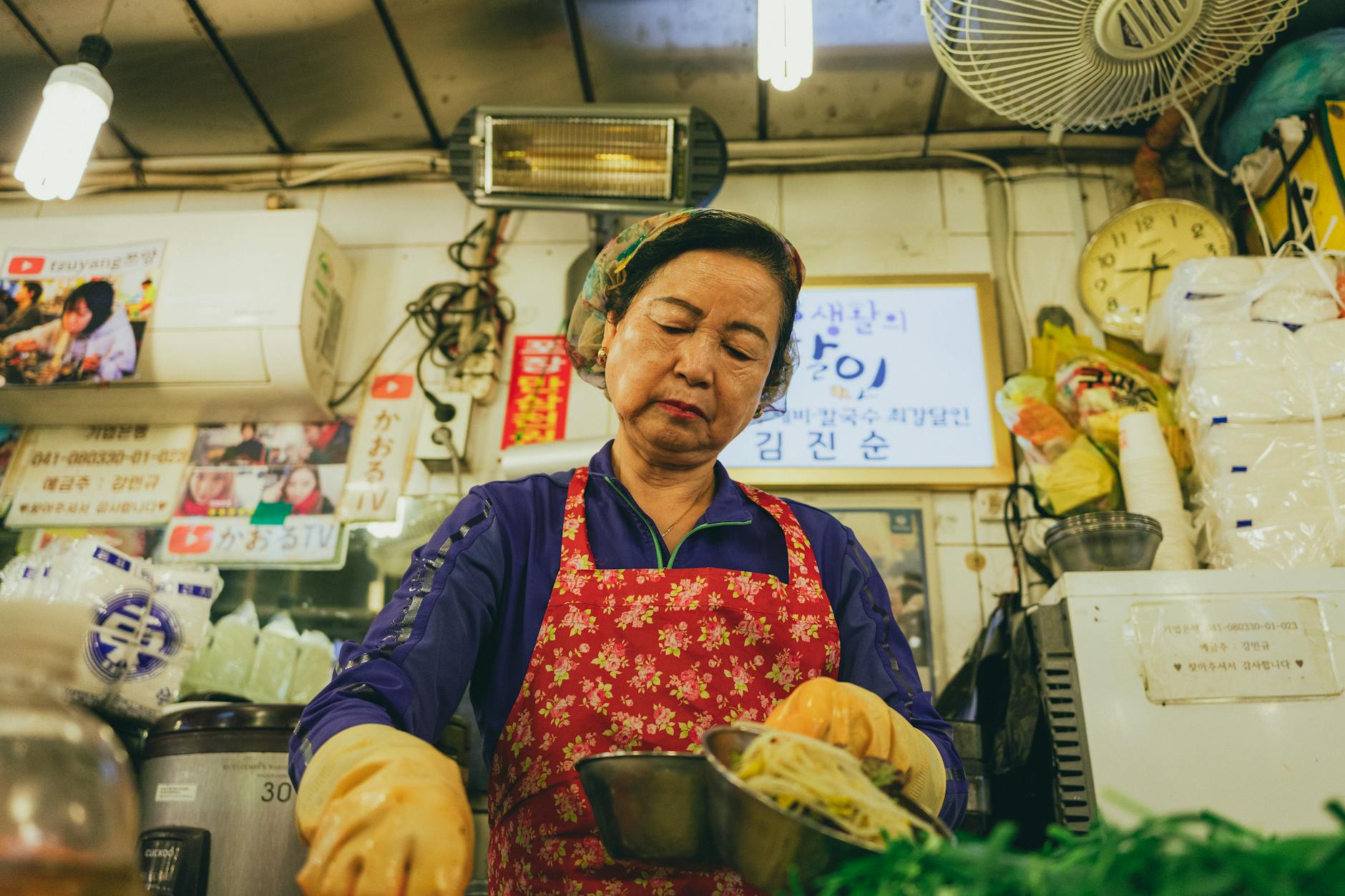
Generally yes. The Seoul city government requires food handlers to register and be inspected, and most stalls run by older Korean women have been operating for decades with strong reputations to protect. That said, common sense applies:
- Choose busy stalls — high turnover means fresh food.
- Look for visible cooking. Fried, steamed, and grilled foods are safest.
- Skip seafood that’s been sitting at room temperature.
- If a stall doesn’t have a hand-washing setup or running water, lean toward another.
Most travelers report no stomach issues from Seoul street food. Korean kitchens at all levels are required to follow strict food-safety regulations, and street-food vendors are no exception. See Is Seoul safe for tourists for broader context.
How to Order Like a Local
Most Seoul street vendors speak no English. That’s fine — Korean street food ordering is mostly visual.
- Point. Every stall has display cases or visible cooking. Point at what you want and hold up the number of fingers for the quantity.
- Say “yeogi” (here) if you want to eat at the stall, or “to-go” if taking it away. Most older vendors understand “to-go” as English.
- Pay in cash or with T-money. Many small stalls don’t take credit cards. ATMs are inside every subway station and convenience store.
- Don’t haggle. Prices are fixed and listed. Tipping is unnecessary.
- Watch where Koreans queue. The longest local line at any market = the best food. Always.
A few phrases that help: “얼마예요?” (eolmayeyo, how much?), “이거 주세요” (igeo juseyo, this one please), “맵지 않게” (maepji anke, not spicy), “포장이요” (pojang-iyo, to go), and “맛있어요!” (masisseoyo, delicious!) — the last one earns a smile every time. For the wider rules of eating in Korea, see our Korean dining etiquette guide.
Vegetarian, Vegan, and Halal Options
Korean street food is meat-heavy, but vegetarians have options:
- Hotteok — pure flour, sugar, and cinnamon
- Bungeoppang with red bean — vegan-friendly
- Twigim with vegetables, sweet potato, or seaweed — usually fried in shared oil with seafood, so not strict-vegan-friendly
- Tteokbokki without fish cake — ask for “eomuk eopseo” (no fish cake)
- Vegetable mandu — most stalls have a vegetable-only version
- Plain bindaetteok — some stalls serve a vegetable-only version on request
For halal options, head to Itaewon’s “Muslim street” near the Seoul Central Mosque, where halal-certified Korean and international street food is concentrated.
The Pojangmacha Experience
Beyond the markets, Seoul’s iconic pojangmacha (literally “tarp-covered food carts”) deserve a section of their own. These orange-canvas tent restaurants pop up at dusk and serve simple, salty, soju-friendly food until 2-3 AM.
A typical pojangmacha menu includes spicy tteokbokki, soondae, fried twigim, eomuk, and small dishes like pig-ear salad or grilled mackerel. Beer and soju flow heavily. The atmosphere is casual to the point of chaos — plastic stools, communal tables, neighbors striking up conversations. You’ll find them concentrated around Jongno 3-ga, Jongmyo, Hongdae, and the back streets of Gangnam.
A typical bill: 8,000-12,000 won for food, plus 4,000-6,000 won per soju bottle. Pay cash. No reservations.
Seasonal Street Foods to Look For
Some Seoul street foods are tied to the calendar.
Winter (December to February)
Hotteok, eomuk in hot broth, baked sweet potatoes (gun-goguma), bungeoppang, gunbam (roasted chestnuts), and steaming jjigae stews dominate the winter market scene. Vendors set up around subway exits and bus stops to catch frozen commuters.
Spring (March to May)
Cherry-blossom-themed sweets at Yeouido and Seokchon Lake parks. Strawberry-stuffed mochi, ice cream, and fresh fruit skewers proliferate.
Summer (June to August)
Patbingsu (shaved ice with red bean) and watermelon juice take over markets. Naengmyeon (cold buckwheat noodles) is everywhere. Gwangjang Market’s bibim-naengmyeon is a sweat-cooling lunch.
Fall (September to November)
Roasted chestnuts return, persimmons appear at every market, and chuseok-related foods like songpyeon (rice cakes) flood traditional markets in late September.
Street Food Mistakes Tourists Make
A few easy-to-avoid missteps separate a good street food day from a great one.
- Only eating in Myeongdong. It’s the most famous and the most expensive — everything costs 30-50% more than Gwangjang or Namdaemun. Eat one or two showpiece skewers for the atmosphere, then head to a real market for value.
- Chasing only the viral stall. The stall with the tour-group line is rarely the best; the one with the local lunch queue two doors down usually is.
- Skipping the free broth. Always take the eomuk broth — it’s free, warming, and part of the ritual.
- Not carrying cash. Many carts still don’t take cards, so load a T-money card or keep small bills handy.
- Over-ordering at one stall. Buy one item, keep walking, and save room — grazing is the entire point.
Frequently Asked Questions
Is Seoul street food spicy?
Some of it is — tteokbokki, korean fried chicken (yangnyeom version), and ramyeon all carry heat. Many other dishes (hotteok, mandu, bungeoppang, kimbap) are mild. If you’re sensitive, ask “ahn maewoyo” (not spicy) and most vendors will adjust.
Can I drink the broth at street food stalls?
The free eomuk broth poured at fish-cake stalls is safe and delicious. Drink as many cups as you want; it’s part of the experience.
What time should I go to markets?
Most market food stalls open between 11 AM and noon, peak from 5-9 PM, and close around 10-11 PM. Lunchtime is best for a quieter experience; evening for atmosphere.
Is street food cheaper than restaurants?
Yes — significantly. A street food meal costs 8,000-15,000 won. A casual sit-down restaurant meal averages 12,000-25,000 won. A Korean BBQ dinner runs 35,000+. See our Korean BBQ guide if you want to splurge.
Do I need to bring cash?
Yes — many small stalls only accept cash and T-money cards. Convenience-store ATMs are everywhere; most accept foreign cards.
Are street food stalls open in winter?
Yes. Many stalls actually shine in winter because cold-weather foods (hotteok, hot eomuk, sweet potato) are seasonal stars. Markets are partially indoors, so you stay warm.
Can I take a street food tour?
Yes — popular tour operators including O’ngo Food Communications, Secret Food Tours, and Trazy run guided street food tours of Gwangjang, Myeongdong, and Namdaemun. Expect to pay 70,000-100,000 won for a 3-hour tour with about 8-10 tastings.
What’s the most underrated Seoul street food?
Yachae hotteok — the savory version stuffed with cheese, vegetables, and glass noodles. Less famous than the sugar-cinnamon original but a serious upgrade for those who prefer salty over sweet.
Is Seoul street food good for vegetarians?
It’s meat-heavy, but hotteok, red-bean bungeoppang, vegetable mandu, tornado potato, and fish-cake-free tteokbokki all work. For dedicated meat-free spots nearby, see our vegetarian and vegan Seoul guide.
How many street food dishes should I try in a day?
Pace yourself for five to eight small items across a couple of markets — grazing beats gorging. Split portions with a travel partner so you can taste more without waste, and mind our Korean dining etiquette notes on eating while walking.
Where is the best street food in Seoul for first-timers?
Gwangjang Market is the easiest and most rewarding starting point: everything iconic is under one roof, portions are cheap, and vendors are used to visitors. Pair it with our best Korean dishes to try guide to know what you’re eating.
What should I drink with Seoul street food?
Makgeolli (milky rice wine) is the classic market pairing, especially with bindaetteok, while soju rules the pojangmacha tents. Non-drinkers can grab a Milkis or sikhye (sweet rice punch) from any stall. See our Korean alcohol guide for the full drinks primer.
Do street food vendors speak English?
Most older market vendors speak little to none, but ordering is visual — point, hold up fingers for quantity, and pay in cash. Popular tourist markets like Gwangjang and Myeongdong increasingly post English price signs and picture menus.
The Seoul Street Food Bucket List
Short on time? If you try nothing else, make it these ten:
- Bindaetteok, hot off the griddle at Gwangjang Market
- Mayak gimbap, straight from the tray with mustard dip
- Tteokbokki in Sindang-dong, cooked at your table
- Winter hotteok, molten sugar and all
- An eomuk skewer with a free cup of hot broth
- A Myeongdong Korean corn dog
- Hoppang or gyeran-ppang on a cold morning
- Sundae, for the adventurous
- Patbingsu on a sweltering summer afternoon
- A soju-fueled night at a Jongno pojangmacha
Tick off even half of that and you’ve eaten better than most visitors manage in a week.
Final Tips From a Seoul Local
Three rules for street food in Seoul: skip the cheap-seafood stalls in tourist areas (they pump up prices and freshness varies), follow the longest line of Korean office workers at lunchtime (they always know best), and never miss the bokkeumbap or fried-rice add-on at the end of a tteokbokki order — it’s the secret final form of every spicy meal. Master those three habits and Seoul’s street food turns from a series of snacks into one of the great cuisines of the world.
For your next destination, return to Seoul Food Guide or skip directly to our specialized Gwangjang Market food guide for the highest-density street food destination in the city.