Pair this with our where to stay in Seoul pillar, the Seoul on a budget guide, and our trip cost overview.
Here’s the short version before we get into specifics: your cheapest legitimate bed is a jjimjilbang spa floor at ₩10,000–20,000, your most reliable budget option is a Hongdae hostel dorm at ₩25,000–45,000, and the sweet spot for couples is a tiny-but-clean Korean business hotel at ₩50,000–90,000. Below we break down every category — what it costs, what it’s actually like, and which neighborhoods give you the most location for the least money. Pair it with our where to stay in Seoul pillar to choose a district first, then come back here to pick the room.
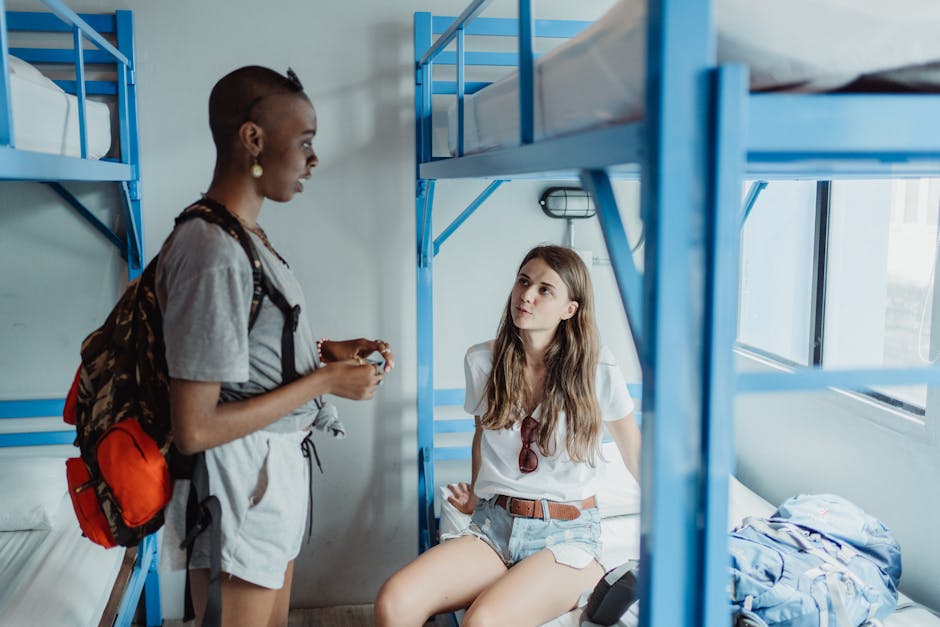
How cheap can Seoul accommodation get in 2026?
Quick benchmarks at 2026 prices:
- Jjimjilbang (Korean spa overnight): ₩10,000–₩20,000.
- Hostel dorm bed: ₩25,000–₩45,000.
- Capsule hotel pod: ₩30,000–₩55,000.
- Budget guesthouse private: ₩50,000–₩90,000.
- Budget chain hotel (Brown Dot, Stayeasy): ₩50,000–₩90,000.
- Airbnb / OYO entire apartment: ₩60,000–₩140,000.
If you eat at convenience stores, traditional markets, and self-cater occasionally (see our Seoul on a budget guide), you can run a comfortable Seoul day on ₩60,000–₩90,000 total.
Hostels: Seoul’s most reliable budget option
Seoul has dozens of well-run hostels. The best are concentrated in Hongdae, Insadong, and Itaewon. Most have private rooms in addition to dorms, free breakfast, free Wi-Fi, and 24-hour reception. Cleanliness is universally good — Korea takes hygiene seriously.
Best Seoul hostels for 2026
- Vincent Hostel Hongdae — top-rated; clean dorms, ₩30,000–₩45,000.
- Kimchee Hongdae / Sinchon — chain with multiple Seoul branches, ₩28,000–₩42,000 dorms.
- 24 Guesthouse Hongdae — backpacker classic, sociable atmosphere.
- Bunk Guesthouse Insadong — quieter, central Seoul location.
- Itaewon G Guesthouse — international travelers, English-friendly.
- Seoul Tower Hostel — near Seoul Station for AREX airport access.
What to actually expect from a Seoul hostel: keycard-access dorms with curtained pod-style bunks (each with its own light and outlet), a shared kitchen, free drip coffee, and a common room that’s the social engine of the place. The better ones run nightly events — pub crawls, kimchi-making, day trips to the DMZ — which makes them ideal for solo travelers. Book a top bunk if you want privacy, a bottom bunk if you’ll be in and out late. One insider tip: many of the best small hostels cluster around Hongik University Station and Sangsu, putting you a single AREX ride from Incheon Airport and steps from Seoul’s best cheap eats — see our cheap eats in Seoul and Hongdae guide. For airport logistics, our Incheon Airport to Seoul guide covers the AREX train.

Capsule hotels: privacy on a hostel budget
Capsule hotels split the difference between a dorm and a private room. You get a single occupant pod with a curtain or door, your own light and outlet, and a shared bathroom. Korean capsules are larger than the Tokyo equivalent and almost always include free water, slippers, towels, and toiletries.
Best Seoul capsule hotels
- Capsule Hotel CUBE Hongdae — clean, design-forward pods, ₩40,000–₩50,000.
- Hotel Cube Cabin Myeongdong — central location, women-only floor.
- 9 Brick Hotel — capsule hybrid in Insadong, mixes pods and small private rooms.
- Brown Dot Hotel (Hongdae, Gangnam, Myeongdong branches) — Korean micro-room chain bordering on capsule, ₩50,000–₩80,000.
Korean capsules are a genuine sweet spot for solo travelers who want privacy without hostel-dorm prices or hotel-room cost. Unlike the coffin-tight Tokyo originals, Seoul pods are usually wide enough to sit up in, with a proper mattress, a lockable luggage area outside, and spotless shared bathrooms stocked with toiletries. The trade-off is noise — pods have curtains or thin doors, not soundproofing — so pack earplugs. Many capsule hotels are gender-segregated by floor, which solo female travelers tend to appreciate. They’re easiest to find in Hongdae, Myeongdong, and around Seoul Station, all well-connected on the Seoul subway.

Guesthouses (Minbak): Korean-style budget privates
Minbak (민박) are owner-run guesthouses, often in older Korean buildings or hanok houses. They’re smaller and more personal than hotels, with the host frequently on-site. Standards vary — read recent reviews — but the best are charming and well-located.
Best budget guesthouses in Seoul
- Bukchon Guesthouse — hanok-style room with shared bathroom in Bukchon Hanok Village. ₩70,000–₩110,000. See our hanok stays guide.
- Hide & Seek Guesthouse — Insadong, family-run, ₩60,000–₩90,000.
- Doo Guesthouse — Bukchon, breakfast included, ₩80,000–₩130,000.
- Banana Backpackers — Itaewon, sociable, mix of dorms and privates, ₩45,000–₩90,000.
Staying in a minbak is the most “Korean” budget experience you can have. Expect to leave your shoes at the door, sleep on either a low bed or a traditional floor mattress over heated ondol flooring, and share a bathroom down the hall. The hosts — often a retired couple — frequently fold in small kindnesses: a bowl of fruit, hand-drawn neighborhood maps, a kettle of barley tea. Standards genuinely vary, so read the most recent reviews and confirm whether the room is private or the bathroom shared before booking. For the hanok version of this experience (a stay in a traditional courtyard house), our hanok stays in Seoul guide is the deep dive, and the Insadong and Bukchon areas are where you’ll find the prettiest options.
Love motels: the budget option nobody tells you about
Let’s clear this up, because it trips up a lot of first-timers: Korean “love motels” are completely fine for ordinary travelers, and they’re one of the best-value private rooms in the city. Yes, they exist primarily for couples seeking privacy, and yes, some have theatrical decor — mood lighting, the occasional round bed — but they are clean, safe, and professionally run, and nobody will bat an eye at a tired tourist with a suitcase. For ₩40,000–70,000 you typically get a surprisingly large room with a big bed, a powerful shower, fast Wi-Fi, a huge TV, free bottled water and toiletries, and sometimes a computer or a spa tub. The catch: they rarely take advance online bookings (you usually just walk in and pay cash or card at a discreet window), check-in is often after 5–7 PM, and they cluster near nightlife districts and transport hubs — Dongdaemun, Jongno, Sinchon, and the back streets of Hongdae. If you arrive late without a reservation, a love motel is a reliable, affordable fallback. Think of them as Korea’s no-frills business hotels with a slightly cheeky reputation.
Jjimjilbang: cheapest legal sleep in Seoul
The Korean budget travel hack. Jjimjilbang are 24-hour public bathhouse-spas with sleeping areas. For ₩10,000–₩20,000 entry you get bath access, sauna rooms, sleep on heated floors with a basic mat and pillow, lockers, and rentable pajamas. Not the most restful sleep — fluorescent lights, snorers, no privacy — but unbeatable for emergency or one-night stays.
Best Seoul jjimjilbang for overnight stays
- Spa Lei (Apgujeong) — women-only spa, premium feel, ₩20,000.
For etiquette, see our Seoul wellness and spa guide.

To be clear about what a jjimjilbang night involves: you pay at the door, get a locker key and a set of cotton pajamas, soak in the gender-segregated bath area, then sleep in a communal unisex relaxation hall — on a heated wooden floor, with a hard “wood-block” pillow and a thin mat, alongside dozens of strangers and the occasional symphony of snorers. It is not a restful eight hours. But it’s an unbeatable ₩15,000 for a shower, a sauna, and somewhere warm to crash — ideal before a dawn flight or after a missed last train. Bring earplugs and an eye mask. Etiquette matters here: shower thoroughly before entering the baths, keep your voice down in the sleeping hall, and read our Seoul wellness and spa guide so you don’t accidentally break a bathhouse rule.
Budget chain hotels under ₩90,000
If you want a private room with a real bed and an attached bathroom but don’t want to pay 4-star prices, Korean budget chains are the answer. Tiny rooms, but clean and well-lit.
- Brown Dot Hotel — multiple branches, ₩50,000–₩90,000.
- Stayeasy Hotel — Myeongdong, Hongdae, ₩60,000–₩100,000.
- OYO Townhouse — chain rebrand of older budget hotels, mixed quality.
- Hotel Skypark Daon (Hongdae) — small but well-designed, ₩70,000–₩110,000.
- Hotel Wonderloft (Insadong) — clean budget hotel near palaces.
These Korean budget chains are the unsung heroes of a comfortable cheap trip. The rooms are small — sometimes comically so, with the bed wall-to-wall — but they’re modern, immaculate, soundproofed better than a hostel, and they come with a private bathroom, strong air-con, and reliable Wi-Fi. For couples or anyone who values a door that locks and a quiet night, ₩60,000 here beats a ₩90,000 international chain on value every time. Brown Dot and Stayeasy have the widest footprint; book directly or via Korean platforms like Yanolja and Goodchoice (the apps locals actually use) for the best rates. For a sense of how this fits your overall spend, see our how much does a Seoul trip cost guide.

Airbnb and apartment rentals
For stays of 5+ nights, an Airbnb apartment often beats a hotel on value. Seoul Airbnbs run from ₩60,000 (small studio in residential neighborhood) to ₩200,000+ (centrally located 1BR). Note that commercial Airbnb hosting is restricted in many parts of Seoul; verify the listing has the correct city permits before booking long stays.
Best neighborhoods for budget Airbnb
- Mangwon — west of Hongdae, residential, cheap, foodie.
- Mapo — central but residential, easy AREX access.
- Yeonnam-dong — cafe-rich, walking distance to Hongdae.
- Bukchon (lower) — traditional houses sometimes available at budget rates.
Always confirm building has elevator if you have heavy luggage — older Korean residential buildings often do not.

Temple stays: a cheap night with a side of serenity
For something completely different, a Buddhist templestay (템플스테이) gives you a dorm-style night inside a working temple for roughly ₩50,000–80,000, including vegetarian meals, a tea ceremony, and an optional 4 AM chanting service. It’s not the cheapest bed in town, but per won it’s one of the most memorable — and the price covers food and a genuine cultural experience, not just a mattress. In Seoul itself, Myogaksa (near Dongdaemun) and Geumsunsa (at the foot of Bukhansan) run English-friendly programs; the official Templestay booking site lists current dates. Expect early nights, no alcohol, modest dress, and a digital detox. Combine it with our Seoul temples and shrines guide to plan which temple suits you. It’s the rare “accommodation” that doubles as the highlight of a trip.
For longer stays, an apartment changes the maths entirely. A kitchen lets you self-cater breakfast (convenience-store or market runs cost a few thousand won), a washing machine saves a packing day, and the per-night rate on a 7+ night booking often drops 15–25%. The catch in Seoul is legality: short-term rental licensing is patchy, and some hosts operate in residential buildings where it isn’t strictly permitted, so book listings with a track record of reviews and confirm the building allows guests. Aim for residential-but-connected pockets — Mangwon, Yeonnam-dong, Mapo — where you get local prices and still reach the centre in 15 minutes. And always check for an elevator before booking a fourth-floor walk-up; older Korean buildings frequently have none.
Budget accommodation Seoul: prices at a glance (2026)
| Type | Price/night | Privacy | Best for |
|---|---|---|---|
| Jjimjilbang | ₩10,000–₩20,000 | None | Emergency, early flight, novelty |
| Hostel dorm | ₩25,000–₩45,000 | Low | Solo backpackers |
| Capsule hotel pod | ₩30,000–₩55,000 | Medium | Solo travelers wanting privacy |
| Hostel private | ₩60,000–₩100,000 | High | Couples, light packers |
| Korean guesthouse | ₩50,000–₩90,000 | High | Cultural immersion |
| Budget chain hotel | ₩50,000–₩90,000 | High | Solo / couple comfort |
| Airbnb studio | ₩60,000–₩140,000 | High | Long stays, self-catering |
Best budget option by type of traveler
Solo backpacker: a Hongdae hostel dorm. It’s the cheapest sociable option and the events calendar means you’ll never eat dinner alone unless you want to. Solo traveler who values privacy: a capsule pod or a Brown Dot micro-room — your own lockable space for not much more than a dorm. Couple on a budget: a Korean business-hotel room (Stayeasy, Brown Dot) or, for the best value-per-won, a walk-in love motel near a transport hub. Two or three friends: a small Airbnb or a guesthouse private room split three ways often drops below hostel-dorm cost per head. Cultural one-off: a hanok guesthouse in Bukchon or a temple stay. Emergency or pre-dawn flight: a jjimjilbang near Seoul Station. Match the bed to the trip and you’ll rarely overpay. For the bigger picture of stretching a Seoul budget, our Seoul on a budget guide ties accommodation, food, and transport together.
Best neighborhoods for budget travelers
| Neighborhood | Why budget travelers like it | Sample stays |
|---|---|---|
| Hongdae | AREX direct from airport, cheap eats, hostels | Vincent, Kimchee, Hotel Pop Express |
| Insadong / Jongno | Walking to palaces, traditional vibes | 9 Brick Hotel, Bunk Guesthouse |
| Itaewon | International, English-friendly, mid-priced | Banana Backpackers |
| Seoul Station | Quick AREX access, central | K-pop Hotel Seoul |
| Mangwon / Mapo | Residential, very cheap, local feel | Airbnb apartments, OYO |
For full neighborhood context, see our Seoul neighborhoods guide.

Which booking platforms to use in Seoul
The platform you book on can swing the price by 20% or more. For hostels, Hostelworld usually has the deepest backpacker inventory and reviews; for budget hotels and capsules, the Korean apps Yanolja and Goodchoice (여기어때) routinely undercut Booking.com and Agoda, though their interfaces are Korean-first (Papago handles it). Agoda tends to win on mid-range Korean hotels, while Booking.com is the most foreigner-friendly for free cancellation. Love motels generally aren’t online at all — you walk in. Whatever you use, cross-check two platforms before paying, travel midweek to dodge the Friday–Saturday surcharge, and book longer stays directly with smaller properties, which often shave 5–10% for a direct reservation. A T-money card and a transit plan from our T-money card guide will then get you to any of them cheaply.
How to save more on Seoul accommodation
- Book directly with smaller hostels. Many give a 5-10% discount on direct bookings vs. Booking.com.
- Check Hostelworld and Trip.com in addition to Booking.com — often different rates.
- Travel Sun-Thu. Friday/Saturday rates are 20-30% higher.
- Use AREX express train directly to your stay’s nearest station to skip taxis (₩70,000+ each way).
- Self-cater partially. Convenience-store breakfasts cost ₩4,000–₩6,000.
- Visit during low season (mid-Jan to Mar, late June to early Sept) for best rates. See our best time to visit Seoul.
- Book longer stays. Airbnb and Brown Dot Hotel both discount 7+ night stays by 10-25%.

Booking timing, deposits, and check-in quirks
A few practical notes that save money and headaches. Seoul’s budget beds get tight around the big draws — cherry-blossom season (early April), autumn foliage (late October), and Chuseok and Lunar New Year holidays — so book those weeks a month or two out; the rest of the year you can often book a few days ahead and still get a good rate. Low season (mid-January to March, and the humid mid-summer stretch from late June into early September) brings the cheapest prices, as our best time to visit Seoul guide explains. Most hostels and budget hotels take card, but carry some cash for love motels and the smallest guesthouses. Standard check-in is 3 PM and check-out 11 AM, though many hostels hold luggage free before and after — handy on arrival and departure days. And don’t expect a big deposit: Korean budget properties rarely ask for one beyond the first night’s rate.
What to expect in Seoul budget accommodation
- Free Wi-Fi — universal in Korea, even ₩10,000 jjimjilbang have it.
- Free toiletries / slippers — Korean hospitality standard, even at hostels.
- Smaller-than-Western rooms — Korean budget rooms are compact. 4-9 sqm is normal.
- Heated floors (ondol) — many budget rooms still use floor heating.
- Bathroom with tub-shower combo — water often drains directly to the floor; expect a wet bathroom.
- Concierge or front desk language — often basic English; Naver Translate helps.

One more reality check on space: Korean budget rooms are small by Western standards — 4 to 9 square metres is normal, and “twin” can mean two beds pushed against opposite walls with nowhere to stand between them. That’s the trade for location and price, and frankly you won’t spend much time in the room in a city this walkable and this awake. Prioritise a stay within a short walk of a subway station over square footage; getting around is half the battle, and our getting around Seoul and first-timer travel tips guides explain why proximity to a line beats everything else. Safety, at least, is a non-issue: Seoul is one of the world’s safest big cities, and budget travelers of every stripe report feeling comfortable — see our is Seoul safe for tourists guide.
FAQ: budget accommodation in Seoul
What is the cheapest place to stay in Seoul?
A jjimjilbang (Korean public spa) at ₩10,000–₩20,000 per night. After that, hostel dorms at ₩25,000–₩45,000.
Is Seoul expensive for accommodation?
Mid-tier — cheaper than Tokyo or Singapore, slightly more than Bangkok or Hanoi. Solid budget stays start at ₩30,000.
Are Seoul hostels safe?
Yes, very. Korea is one of the safest countries in the world. Solo female travelers consistently report Hongdae and Insadong hostels as comfortable. See our Is Seoul safe guide.
Can I sleep at a jjimjilbang as a tourist?
Yes. Most jjimjilbang welcome foreigners and stay open 24 hours. Bring a fresh change of clothes and use the rentable pajamas they provide.
Where do most backpackers stay in Seoul?
Hongdae has the highest concentration of backpackers, followed by Itaewon and Insadong.
Is Airbnb legal in Seoul?
Short-term rentals require a special license; many hosts operate without one. Verify the listing has city registration to avoid cancellation issues.
How much does a week in Seoul cost on a budget?
For 7 days: ₩300,000 accommodation (hostel) + ₩200,000 food + ₩50,000 transit + ₩150,000 sights/snacks = roughly ₩700,000 (~$540 USD). See our trip cost guide.

Are love motels safe and OK for tourists?
Yes — they’re clean, private, and professionally run, and they’re great value (₩40,000–70,000 for a big room). They rarely take online bookings, so you usually walk in after about 5 PM and pay at the desk. They cluster near nightlife and transport hubs like Dongdaemun, Jongno, and Sinchon.
Can I do a temple stay near Seoul on a budget?
Yes. Myogaksa and Geumsunsa in Seoul run English-friendly templestays for about ₩50,000–80,000 including meals and a tea ceremony. Book through the official Templestay site. See our Seoul temples guide.
Which Seoul neighborhood is cheapest to stay in?
Hongdae has the most budget beds and the easiest airport access; Mangwon and Mapo are cheaper and more local; Seoul Station is best for early flights. Compare them in our Seoul neighborhoods guide.
What apps do locals use to book cheap hotels?
Yanolja and Goodchoice (여기어때) dominate the Korean budget-hotel market and often beat international sites. Hostelworld is best for dorms.
Final word
Seoul is forgiving of budget travelers. Pick a hostel or capsule in Hongdae for the easiest first trip, supplement with the occasional jjimjilbang night for fun, and use the metro for everything. The savings from a budget stay free up money for what makes Seoul memorable — Korean BBQ, fried chicken, palaces, K-pop concerts, and late-night food tours.
Continue planning with our Seoul on a budget guide, the first-timer travel tips, and our Hongdae hotels guide.