None of this is a test. Koreans are famously warm hosts and don’t expect a foreign guest to nail every protocol — but a little effort goes a remarkably long way, and it transforms how locals treat you at the table. Use this alongside our Seoul food guide, must-try Korean dishes, and Korean BBQ guide, and you’ll walk into your first Seoul restaurant knowing exactly what to do.
The single most important rule of Korean dining etiquette
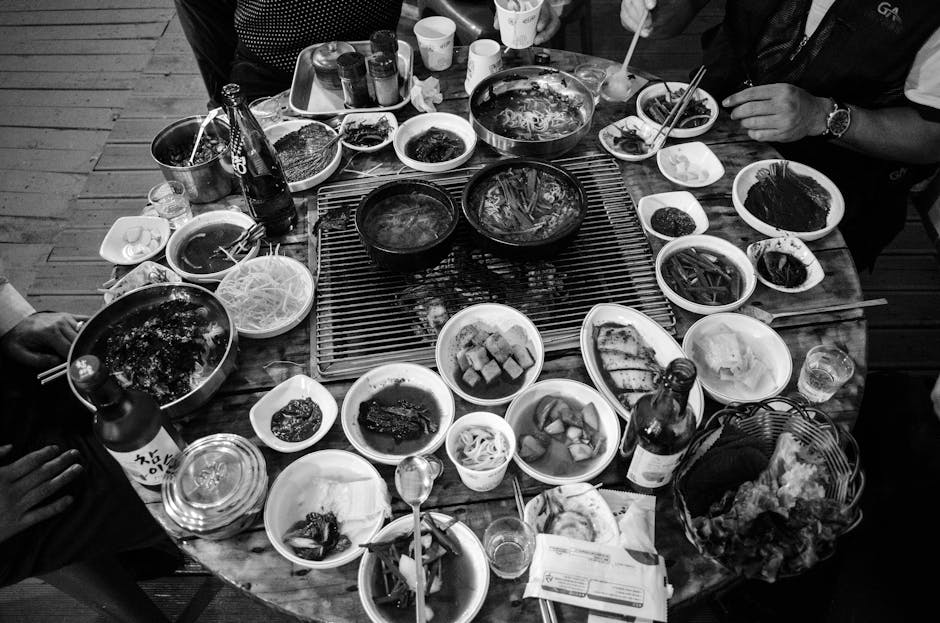
Wait for the eldest person to start eating before you do. That’s it. If you remember nothing else from this guide, remember that one line. The entire structure of Korean dining etiquette flows from this hierarchy of respect: how you sit, where you sit, how you pour drinks, how you hold your chopsticks — almost every rule below is downstream from “elders eat first.” Once you internalize that a Korean meal is a small performance of mutual respect rather than a free-for-all, the individual rules stop feeling like a list to memorize and start feeling like common sense.
Before the meal
Where to sit
If you’re in a private room or at a long table, the seat farthest from the door — usually the one facing the entrance — is the seat of honor, reserved for the eldest or most senior person present. As a foreign guest you’ll typically be seated wherever the host gestures, so just follow their lead and don’t claim the inner seat unless you’re invited to. When in doubt, hang back and let the group settle first; someone will point you to your spot.
Floor seating (joksang) and shoes
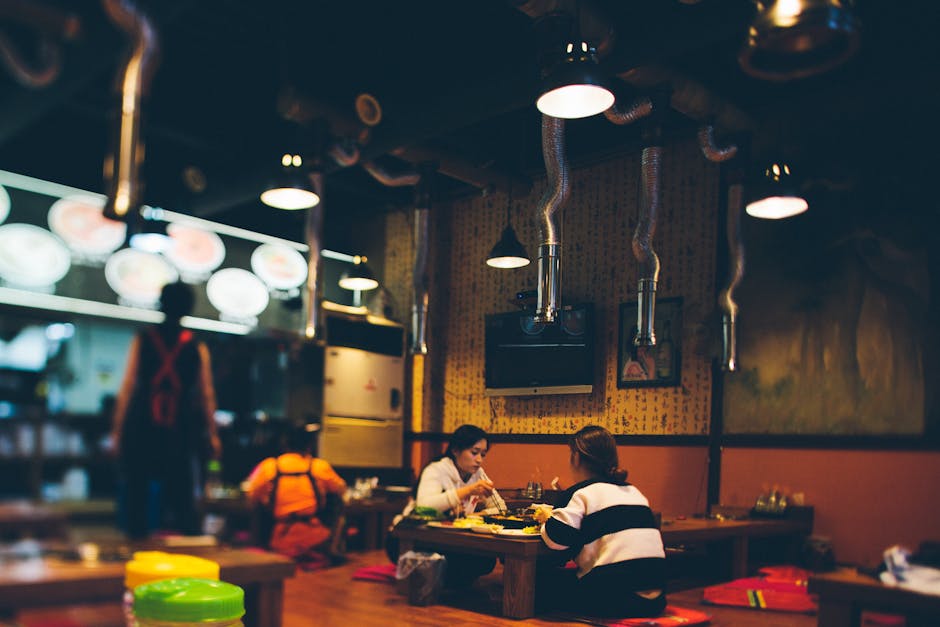
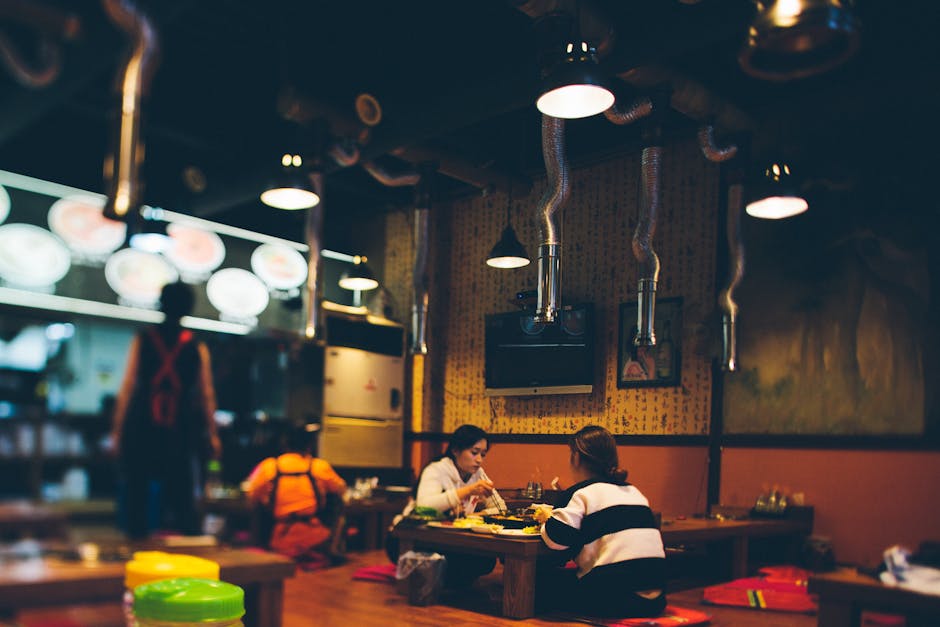
Many traditional restaurants use low tables with floor cushions. You’ll be asked to remove your shoes before stepping onto the raised wooden platform, so wear socks without holes and shoes you can slip off easily — this is not the meal for elaborate laces. Sit cross-legged or with your legs tucked to one side; pointing the soles of your feet at another diner is considered rude. If you have knee or back issues, just ask for a chair table (ipsik) — most places keep a few, and no one will bat an eye.
Greetings and the polite phrase
Before eating, it’s polite to say “Jal-meog-ges-seum-ni-da” (잘 먹겠습니다) — “I will eat well.” It’s the Korean cousin of the Japanese itadakimasu, and it signals appreciation to whoever is hosting or cooking. If someone older is treating you, a small nod in their direction as you say it lands even better.
Chopstick and spoon etiquette
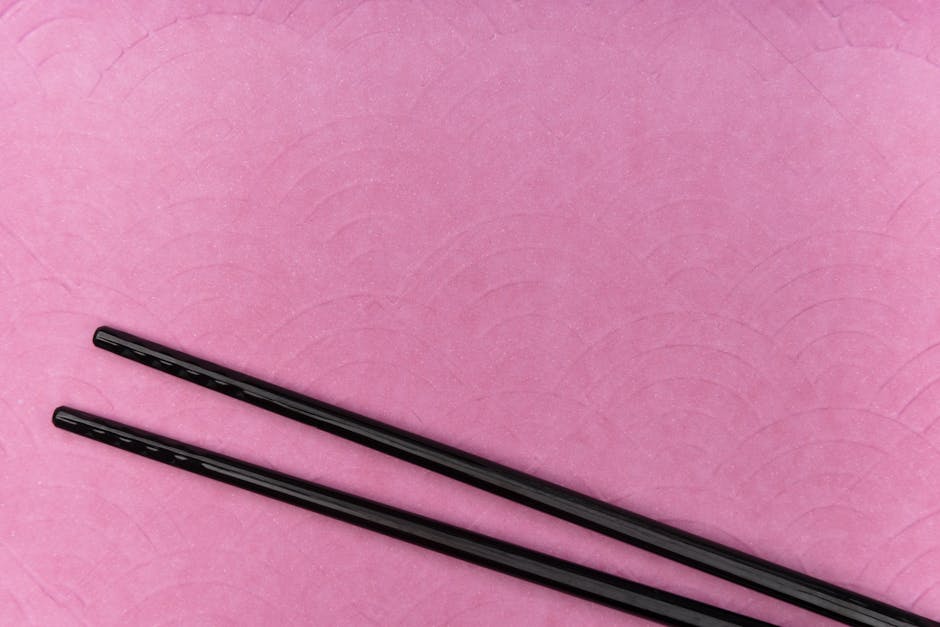
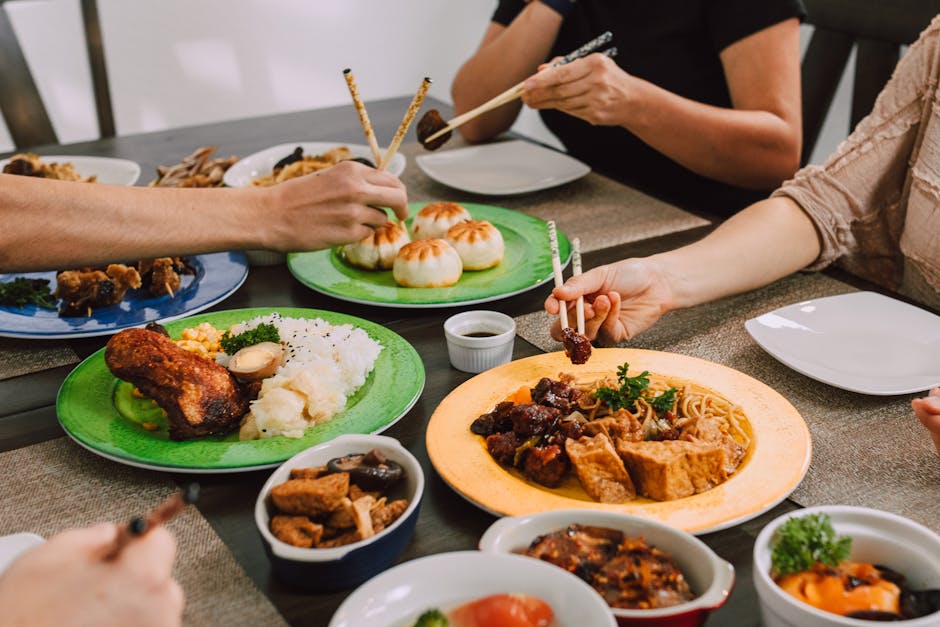
This is where most visitor mistakes happen. Korean meals use both chopsticks and a long-handled metal spoon (sujeo together), and each has a specific job. Unlike in much of Asia, the spoon is the workhorse here, not an afterthought.
The basic rule
- Spoon: rice and soup. Do not eat rice with chopsticks — it reads as slightly clumsy or foreign.
- Chopsticks: everything else — banchan, meat, vegetables, kimchi.
- Never use both at the same time. Set down whichever you aren’t using before picking up the other; a chopstick in one hand and spoon in the other looks greedy.
Chopstick taboos
- Don’t stick chopsticks upright in rice. This mimics the incense placed at funerals and is the single most offensive mistake you can make.
- Don’t pass food chopstick-to-chopstick. Also funeral imagery — move food via a plate instead.
- Don’t stab food like a skewer to spear it.
- Don’t wave or point chopsticks at people while talking.
- Don’t suck on the ends.
- When resting them, lay chopsticks parallel across the edge of your plate or bowl, never directly on the table.
Korean chopsticks are flat metal
Those slippery flat metal chopsticks are the hardest in Asia to master, and slick items like enoki mushrooms, glass noodles, or a whole quail egg can defeat even confident eaters. If you struggle, nobody will judge you — take your time, and practice on cubes of tofu first. The metal chopstick tradition, by the way, is a genuinely Korean quirk with roots in royal history; embrace the challenge as part of the experience.
How rice and soup work
Unlike Japan and China, in Korea you do not lift your rice or soup bowl. Both stay on the table, and you bring the spoon to your mouth instead. Lifting the bowl to your face is historically associated with begging and is considered low-class — it’s one of the clearest tells that separates a seasoned diner from a first-timer.
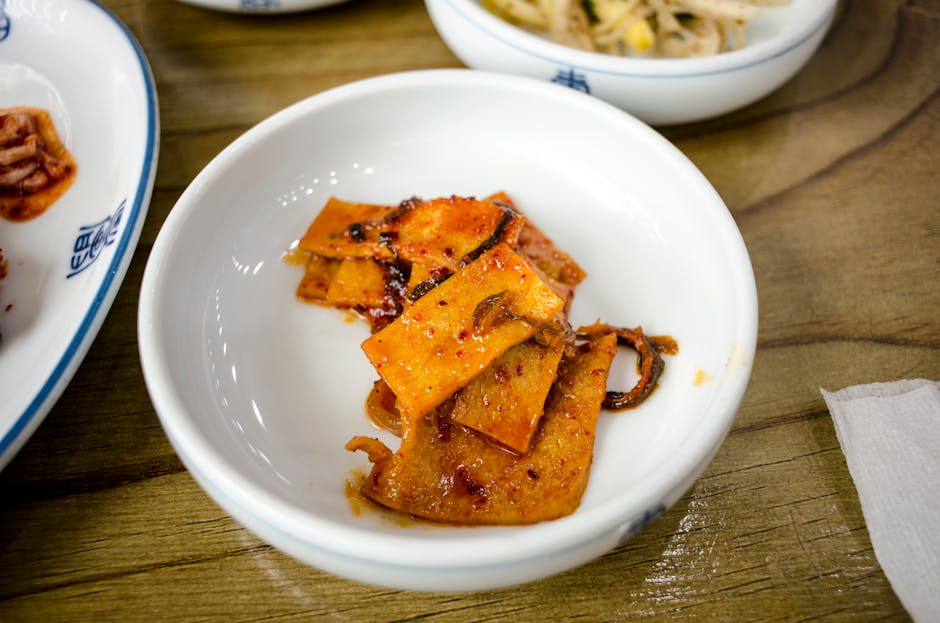
Rice and soup arrive in individual bowls, one per person. Banchan and the main dishes, by contrast, are shared from the center of the table — but never carry serving-side food directly to your mouth. Use your chopsticks to transfer it to your own plate first, then eat from your plate. (At very casual meals among friends, this rule loosens considerably, but it’s the safe default.) For the dishes themselves — what all those little plates actually are — our must-try Korean dishes guide is the companion read.
Banchan etiquette
Korean meals come with banchan — anywhere from four to twenty small side dishes — and they belong to everyone at the table, not just whoever they’re sitting in front of. The key rules:
- Banchan is unlimited at most restaurants. Finish a dish and the server will usually refill it unasked; if not, “Banchan deo juseyo” (반찬 더 주세요 — “more banchan please”) does the job.
- Don’t pile your plate high with banchan. Take small portions and refill as needed — heaping your plate looks wasteful.
- Don’t take the last piece of a shared dish without offering it around first. If you really want it, ask the table.
- Refills are generally free, but banchan isn’t bottomless. Ordering a third full helping of one dish you love (that pile of fried anchovies, say) crosses into rude.
Korean drinking etiquette: the big one
Drinking culture is huge in Korea, and getting the etiquette right will impress hosts more than almost anything else you can do at the table. The rules are strict but genuinely easy to follow once you’ve seen them once. If you plan to drink soju, makgeolli, or beer with locals — and you probably will — read this section twice.
Pouring rules
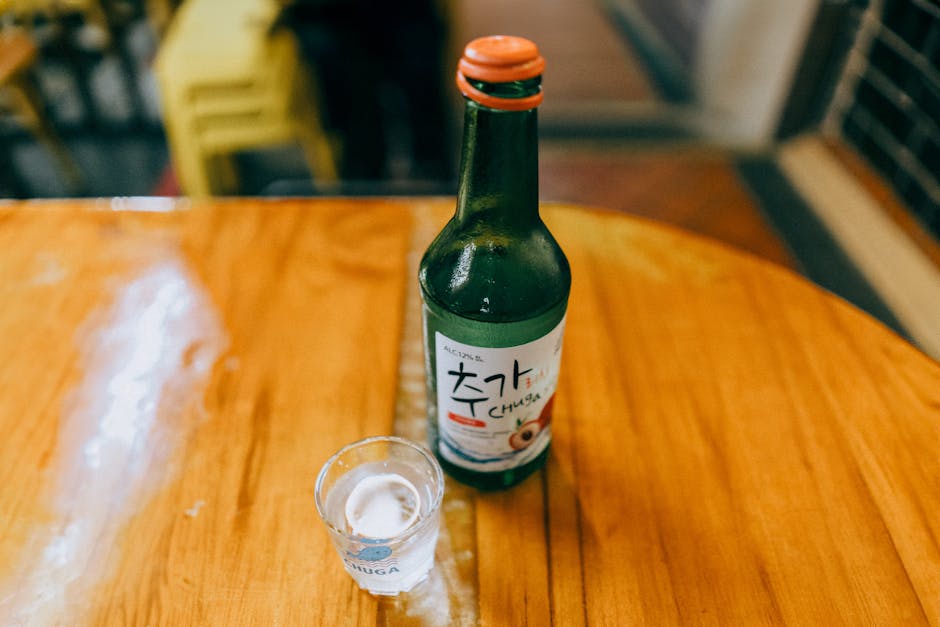
- Two hands when pouring or receiving from an elder. Hold the bottle with your right hand and rest your left hand on your right forearm, or lightly support the base of the bottle.
- Never pour your own drink. Wait for someone else to fill your glass. If you notice everyone’s glass is empty, fill theirs first and someone will return the favor.
- An empty glass is a signal. Koreans top up empty glasses, not half-full ones, so if you want to slow down, leave a sip in the bottom rather than draining it.
- Pour for elders first, then peers, then anyone junior to you.
Receiving rules
- Hold your glass with two hands when an elder is pouring for you — the same two-handed form as pouring.
- Take at least a small sip before setting the glass back down; it acknowledges the pour.
Drinking in front of elders
When drinking in front of someone significantly older or more senior, turn your head away from them and lift your glass slightly to the side as you sip. It looks odd the first time you do it, but it’s a deeply ingrained sign of respect, and older Koreans notice instantly when a foreigner knows to do it.
Toasting
The standard toast is “Geon-bae” (건배) — literally “empty cup.” A more casual version is “Jjan”. Clink glasses (holding yours slightly lower than an elder’s, if you want to be precise), take your drink — a sip is completely fine — and set the glass down.
Saying no to a drink
Refusing alcohol entirely is perfectly acceptable, but do it early and clearly: “I don’t drink, thank you.” Once an elder has actually poured a glass for you, though, the polite move is to accept it and at least touch it to your lips. That single sip is the minimum courtesy, and it lets you bow out of the rest without offense. For the full lowdown on what’s in the bottle — soju, makgeolli, Korean craft beer, and more — see our Korean alcohol guide.
Korean BBQ etiquette
Korean BBQ has its own social choreography, and it’s the meal foreigners most often get to share with local friends, so it’s worth knowing the moves. The big things:
Who grills
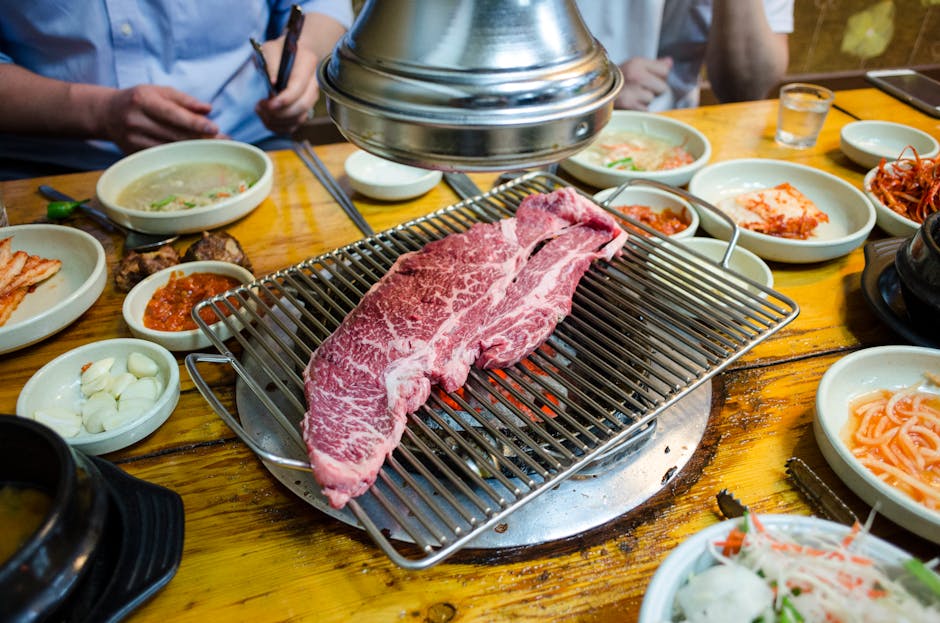
The youngest or most junior person at the table usually takes charge of the grill — flipping the meat with tongs, snipping it into bite-size pieces with scissors, and making sure the elders’ plates stay full before their own. At tourist-friendly restaurants the server often handles this for you. If you’re the guest of Korean friends, offering to grill (even clumsily) is a warm, generous gesture that will be remembered. Our full Korean BBQ guide walks through the cuts, the sides, and the best grills in the city.
How to eat ssam (lettuce wraps)
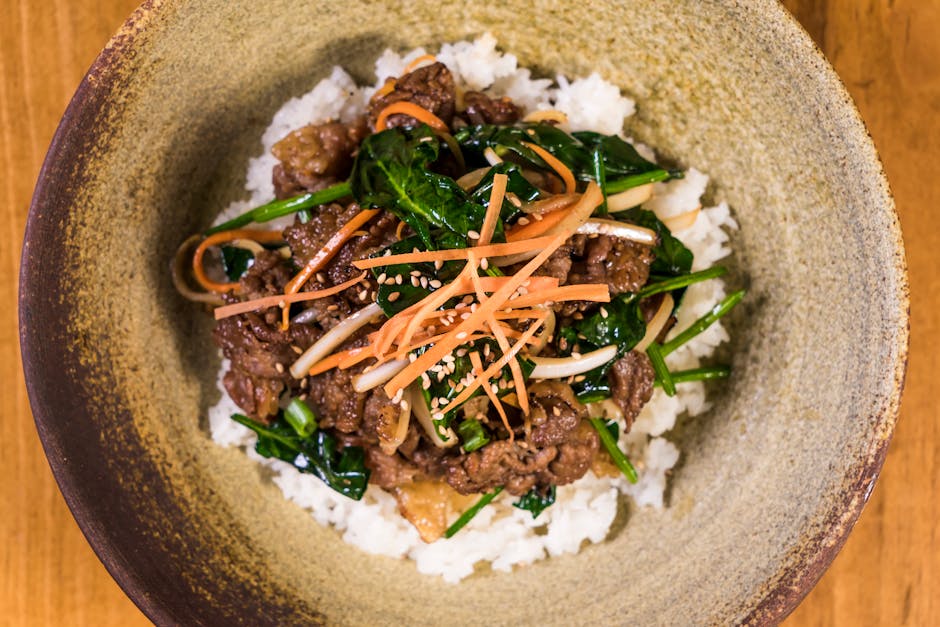
- Build the wrap on a lettuce or perilla leaf: a piece of grilled meat, a dab of ssamjang paste, a slice of raw or grilled garlic, a little rice if you like.
- Fold or roll it into a single parcel.
- Eat it in one bite. Taking two bites from a ssam, so it half-collapses back onto your plate, is considered a bit uncouth — go big or build smaller.
Banchan refills
Kimchi, ssamjang, raw garlic, and lettuce are almost always refilled free of charge at BBQ joints. Just flag the server and ask politely.
Tipping at BBQ
Tipping is not customary anywhere in Korea, and BBQ is no exception. Servers may even chase you down the street to return change you’ve left. Don’t leave money on the table — it causes confusion rather than pleasure.
What to say at the meal
| Situation | Korean | Romanization | Meaning |
|---|---|---|---|
| Before eating | 잘 먹겠습니다 | Jal meogkesseumnida | I will eat well |
| After eating | 잘 먹었습니다 | Jal meogeosseumnida | I ate well |
| Toast | 건배 | Geonbae | Cheers (literally “empty cup”) |
| More side dishes please | 반찬 더 주세요 | Banchan deo juseyo | More banchan please |
| Bill please | 계산해 주세요 | Gyesanhae juseyo | Bill please |
| Delicious | 맛있어요 | Mas-iss-eoyo | It’s delicious |
| I’m full | 배불러요 | Baebulleoyo | I’m full |
| No, thank you | 괜찮아요 | Gwaenchanayo | It’s okay (polite refusal) |
Paying the bill
Splitting the bill is becoming more common among younger Koreans, but the older custom is that one person — usually the most senior diner or the host — quietly pays for everyone. If a Korean colleague or older friend insists on paying, don’t fight them for the check; accept graciously and reciprocate next time by treating them to coffee or the second round. To pay yourself, catch the server’s eye and say “Gyesan-hae juseyo”, or simply raise a hand. Note that in many Korean restaurants you pay at the counter by the door on the way out, not at the table.
Tips are not customary, not expected, and occasionally refused outright. A service charge is sometimes added at hotel restaurants, but otherwise the price on the menu is exactly what you pay — one of the small joys of eating out in Seoul.
Communal dining and shared plates
Many Korean dishes — bubbling jjigae stews, sizzling BBQ, crispy jeon pancakes — are built to be shared straight from a central pot or grill. A few pointers keep it hygienic and polite:
- Use the communal serving spoon (guk-ja) when one is provided. If there isn’t one, dipping your own spoon into the shared pot is accepted at casual meals among friends.
- Don’t double-dip with chopsticks that have already been in your mouth.
- When sharing a stew, ladle a portion into your individual bowl rather than hunching over the central pot — especially in more formal company.
Mistakes most foreigners make
- Eating before elders. Wait for the eldest to lift their chopsticks first — every time.
- Lifting the rice or soup bowl. Keep both bowls flat on the table.
- Sticking chopsticks upright in rice. The single biggest taboo.
- Pouring your own drink. Wait for someone to pour for you, and pour for them in return.
- Tipping. Don’t — it confuses more than it flatters.
- Asking for substitutions. Korean dishes are set recipes, not build-your-own menus; swaps are unusual outside genuine dietary needs.
- Talking loudly with a full mouth. Korean dining is conversational but rarely rowdy at the table itself.
- Blowing your nose at the table. Even if the kimchi jjigae has your eyes streaming, step away to the restroom.
Street food and convenience store etiquette
Not every meal in Seoul happens at a table, and the rules loosen considerably once you’re eating on your feet. At a bunsik stall or a street food cart, it’s perfectly normal to eat standing up, share a communal cup of fish-cake broth, and pay with a quick tap of your T-money card or a few coins. The one thing to watch: many stalls expect you to eat there rather than wander off with the food, and you should return the shared broth ladle and cups where you found them. The buzzing food alleys of Gwangjang Market are the classic place to practice — grab a stool, point at what looks good, and dig in.
Convenience stores (CU, GS25, 7-Eleven) are a food scene in their own right, and the etiquette is minimal: heat your ramyeon or triangle gimbap at the in-store microwave, eat at the counter or outdoor bench, and bin your trash in the sorted recycling. It’s cheap, it’s genuinely part of Korean daily life, and no one expects any ceremony — a welcome break from the choreography of a formal meal.
Tea, dessert, and post-meal customs
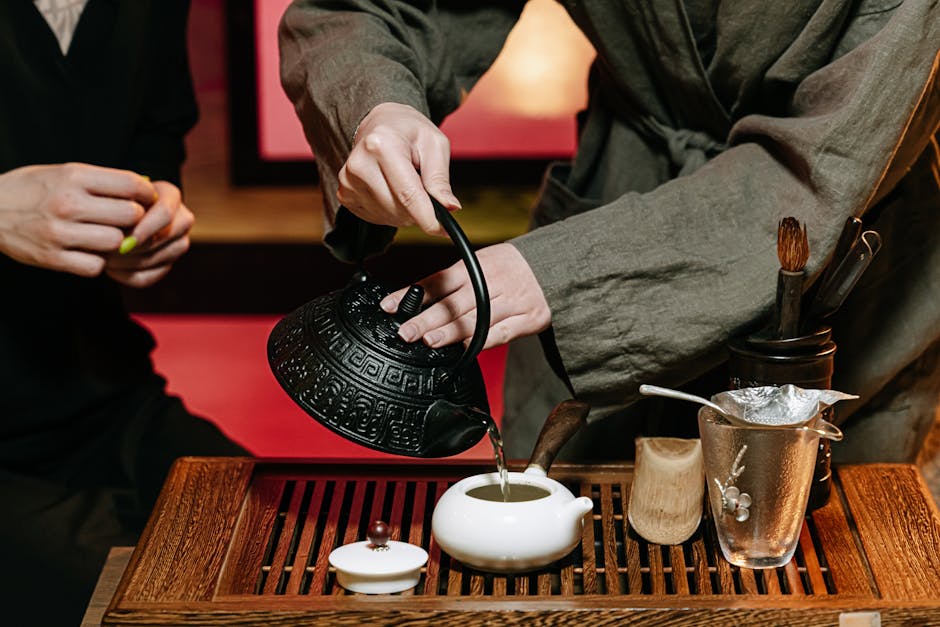
Most Korean meals don’t include dessert at the same restaurant. The custom instead is to move to a second venue — a coffee shop or dessert café — for something sweet and more conversation. This is called i-cha (“second round”), and it’s a hugely important social ritual: if a Korean colleague or new friend invites you to i-cha, it’s a genuine gesture of warmth, and declining can feel like a small rebuff. A big night out might even run to sam-cha (a third round). See our Seoul café guide for second-round picks, from hanok tea houses to Seongsu roasteries.
At the end of any meal, say “Jal meog-eos-seum-ni-da” (“I ate well”) — even after a merely okay meal. It’s a polite acknowledgement of the food and the company, and it closes the meal on the same respectful note it began.
Etiquette by setting
How tightly these rules apply depends enormously on where you’re eating. Here’s a quick calibration:
| Setting | Etiquette tightness | Key rules |
|---|---|---|
| Casual eatery / pojangmacha | Loose | Almost anything goes; banchan and chopstick basics still apply |
| Korean BBQ | Medium | Youngest grills, ssam in one bite, two-handed pours |
| Family meal at a Korean home | High | Bring a small gift; wait for elders; say “jal meogkesseumnida” |
| Business dinner (hoesik) | Very high | Two-handed pour, drink with elders, sing if asked at i-cha |
| Michelin / fine dining | Medium | Standard fine-dining manners; phones away for certain courses. See our Seoul Michelin guide |
| Buddhist temple meal | High | Silence, no leftovers, mindful eating |
The one setting worth flagging for business travelers is the hoesik — the after-work company dinner. It’s less a meal than a bonding ritual, often running through BBQ, soju, and a noraebang (karaoke) finale, with real (if unspoken) expectations around drinking with your seniors and staying until the group breaks up. If you’re in Seoul for work, our first-time Seoul travel tips guide has more on navigating these social currents.
FAQ: Korean dining etiquette
Is it rude to leave food on your plate in Korea?
Mildly — it can imply the food wasn’t to your taste. Finishing your plate is a quiet compliment to the host or cook. At a Buddhist temple meal, finishing every last grain isn’t just polite, it’s required.
Can I eat with my left hand in Korea?
Yes. Korea doesn’t have the right-hand convention found in some other cultures, so left-handed eating is completely fine.
Is it okay to slurp noodles in Korea?
Yes, especially with cold noodles (naengmyeon) and ramyeon. Slurping isn’t celebrated quite as openly as in Japan, but it’s fully acceptable and often unavoidable.
Should I tip at restaurants in Seoul?
No. Tipping is not customary and may even be refused. Hotel restaurants occasionally add an automatic service charge, but that’s the exception.
What if I can’t sit on the floor?
Most restaurants now offer chair seating — just ask. Many traditional spots keep a few chair tables specifically for foreign guests and older diners.
How do I say “I’m a vegetarian”?
“Jeoneun chae-sik-ju-ui-ja-yeyo” (저는 채식주의자예요). Be aware that many banchan and broths contain fish or anchovy stock, so it pays to be specific — our vegetarian and vegan Seoul guide has phrases and restaurant picks.
Do I need to bow when I enter a restaurant?
No formal bow is needed, but a small nod and a friendly “annyeonghaseyo” to staff on arrival is warmly received and sets a good tone.
Asking what is in a dish is entirely normal here and gets a straight answer, which matters more than any other piece of etiquette if you have dietary requirements. For visitors who need halal specifically, our halal food in Seoul guide explains the certification tiers, the phrases worth learning and which Korean dishes hide pork stock.
Final word
You don’t need to memorize every rule above to eat well in Seoul. Eat with curiosity, wait for elders to start, hold your drink with two hands, and never stand your chopsticks up in your rice — that alone covers about 90% of Korean dining etiquette. Koreans are warm, generous hosts, and a small gesture of effort — a quiet jal meogkesseumnida, a two-handed pour — is far more memorable to them than getting every protocol exactly right.
Now go eat. Read more on the food itself in our Seoul food guide and must-try Korean dishes guide, and pair your new table manners with a proper Korean BBQ night out.