If you’re still mapping your trip, start with our complete Seoul food guide, then come back for the dish-by-dish deep dive below. For Korean BBQ specifically, see our Korean BBQ guide, and for street food, the Seoul street food guide picks up where this article leaves off.
Why Korean food is having a global moment
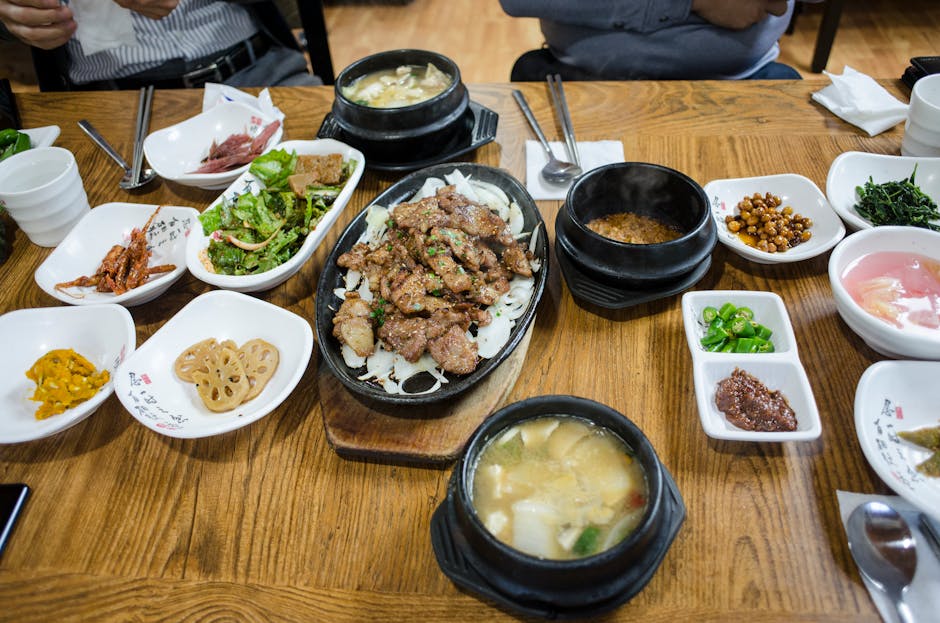
Korean cuisine has gone from regional secret to global obsession in less than a decade. K-dramas turned tteokbokki into a household word, BTS made ramyeon a flex, and chefs trained in Seoul are now opening restaurants from New York to Paris. But you cannot replicate Seoul’s food scene anywhere else: the depth of fermentation, the speed and intensity of the BBQ joints, the 24-hour stew houses, and the sheer ubiquity of side dishes (banchan) included with every meal create a flavor density you only get here.
The list below is organized roughly by category — rice dishes, soups & stews, grilled meats, noodles, snacks, and sweets — so you can plan a few meals around the things that excite you most. None of them is hard to find: most appear on menus throughout the city, and many show up in the same meal as banchan.
1. Bibimbap (비빔밥) — the customizable rice bowl
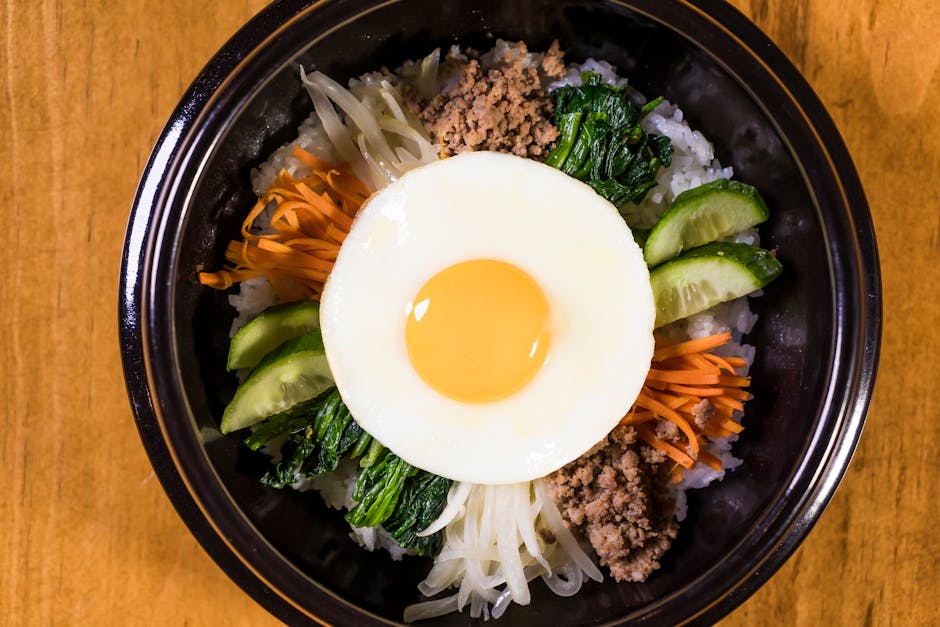
If you only have time for one Korean dish, make it bibimbap. The name literally means “mixed rice,” and the dish is exactly that: a bowl of warm short-grain rice topped with seasoned vegetables (namul), a protein, gochujang chili paste, sesame oil, and often a raw or fried egg. You stir everything together vigorously before eating.
Try the dolsot version, served in a screaming-hot stone bowl that crisps the bottom layer of rice into a golden crust called nurungji. Jeonju is the spiritual home of bibimbap, but Seoul’s Insadong area has dozens of excellent versions. Expect to pay ₩9,000–₩15,000 at a casual spot, ₩20,000+ at upscale restaurants.
2. Samgyeopsal (삼겹살) — pork belly Korean BBQ
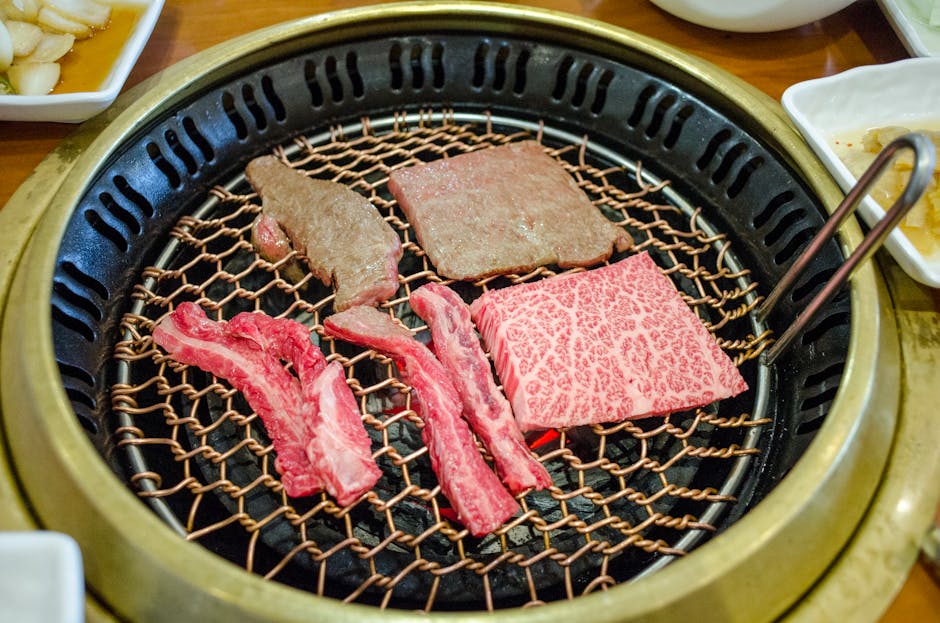
Samgyeopsal is the gateway drug of Korean BBQ: thick-cut, unmarinated pork belly grilled at your table over charcoal or gas. You’ll get a tray of raw pork (about 200g per person), tongs, scissors (yes, the server cuts it as it cooks), and a battlefield of side dishes — kimchi, garlic, ssamjang dipping paste, and lettuce or perilla leaves for wrapping.
The ritual: grill a piece, dip in salt-and-sesame oil or ssamjang, wrap in a leaf with rice and garlic, and eat in one bite. Hongdae, Konkuk University, and Mapo have the most lively samgyeopsal streets. Budget ₩15,000–₩25,000 per person for a generous meal.
3. Bulgogi (불고기) — sweet marinated grilled beef
Where samgyeopsal is robust and chewy, bulgogi is silky and sweet. Thinly sliced beef is marinated in a sauce of soy, sugar, sesame oil, garlic, and pear juice, then grilled over a domed pan that catches the savory marinade. The result is tender, faintly smoky, and unmistakably Korean. Eat it the same way you eat samgyeopsal — wrapped in lettuce — or over rice.
4. Kimchi (김치) — the soul of every meal
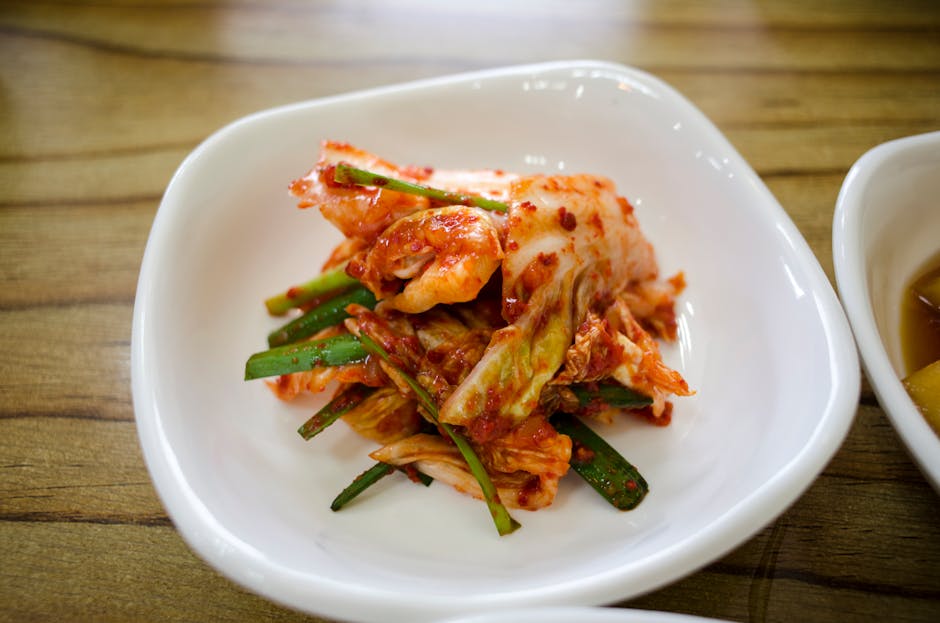
Kimchi is not a single dish but a category: hundreds of regional varieties of fermented vegetables, most famously baechu kimchi (Napa cabbage with chili, garlic, ginger, and salted shrimp). It’s served as a side at literally every meal, including breakfast. The flavor evolves as it ages — fresh kimchi is crunchy and bright, while well-aged “mukeun-ji” kimchi is sour, funky, and ideal for stews.
Don’t skip kimchi even if you think you don’t like it: the version on the table at a good Seoul restaurant tastes nothing like the jarred stuff at home. Visit the Museum Kimchikan in Insadong (₩5,000) for a deep dive.
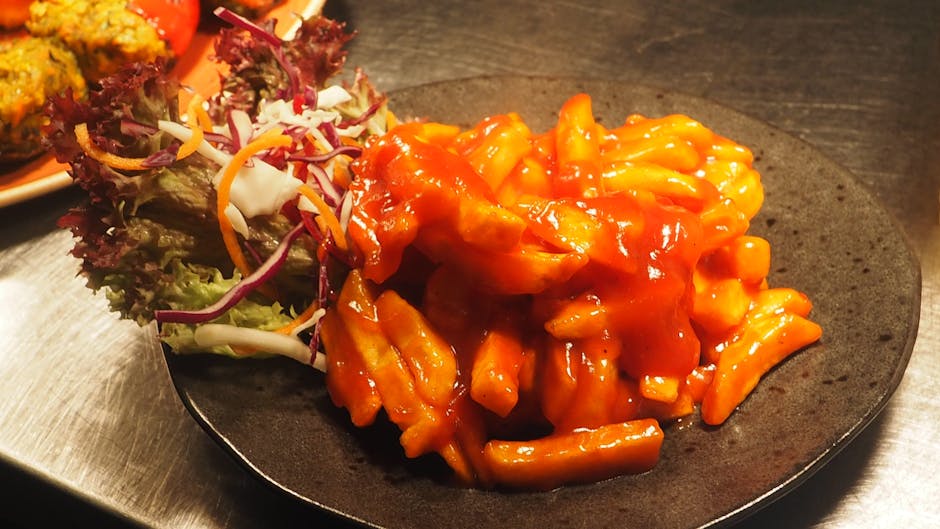
5. Tteokbokki (떡볶이) — spicy rice cakes
The undisputed queen of Korean street food. Cylindrical rice cakes (tteok) and fish cakes are simmered in a glossy red sauce of gochujang, gochugaru chili flakes, sugar, and broth until the cakes turn chewy and the sauce thickens to a sweet-spicy glaze. Add ramyeon noodles, boiled eggs, or fried mandu for the full experience.
Find the best versions in Sindang-dong’s Tteokbokki Town (the neighborhood that invented modern rosé tteokbokki) or any street stall in Myeongdong and Hongdae. Cost: ₩4,000–₩8,000 for a generous portion.
6. Kimchi Jjigae (김치찌개) — kimchi stew
The ultimate Korean comfort meal. Aged kimchi is simmered with pork belly, tofu, scallions, and gochugaru into a bubbling, sour-spicy stew served in a stone bowl with a separate bowl of rice. It’s hot enough to fog your glasses and salty enough that you’ll want extra rice, which is the point.
Every Korean home and casual restaurant makes a version. For an iconic spot, try Gwanghwamun Jip near City Hall — they’ve been doing one thing for decades.
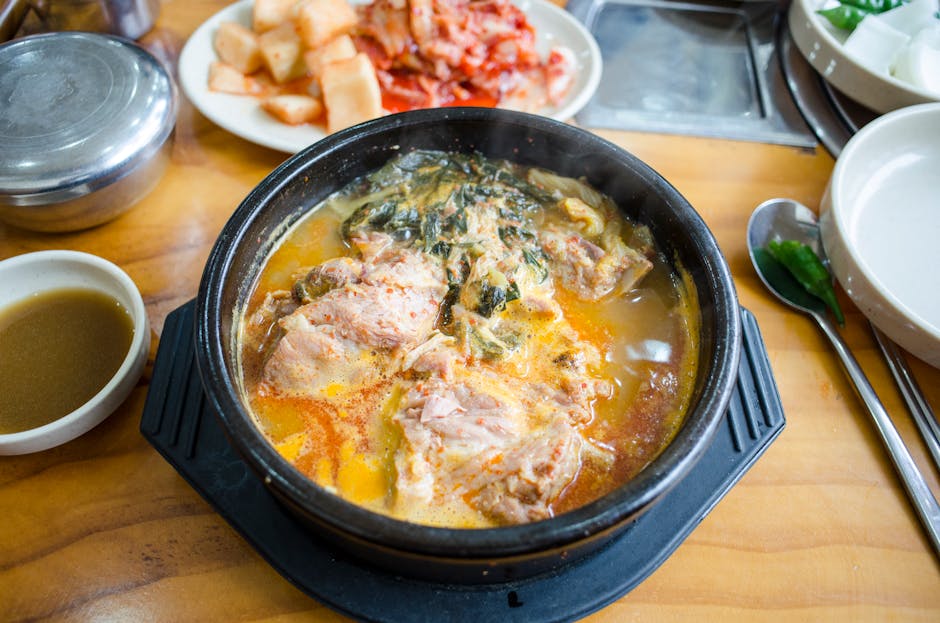
7. Sundubu Jjigae (순두부찌개) — soft tofu stew
A close cousin to kimchi jjigae but lighter and silkier. Uncurdled silken tofu is simmered with seafood or pork, kimchi, gochugaru, and a raw egg cracked in at the table. Eat it screaming hot with rice — the tofu is meant to be slurped with a spoon.
8. Doenjang Jjigae (된장찌개) — fermented soybean stew
If kimchi jjigae is the loud cousin, doenjang jjigae is the wise one. Made from doenjang (fermented soybean paste, a relative of miso), it’s earthier and funkier, packed with zucchini, tofu, mushrooms, and either anchovy or beef stock. It’s the stew most Korean grandmothers make, and a must-try for anyone interested in fermentation.
9. Samgyetang (삼계탕) — ginseng chicken soup
A whole young chicken stuffed with sticky rice, ginseng, jujube, garlic, and chestnuts, then simmered for hours in a clear broth. The Korean tradition is to eat samgyetang on the three hottest days of summer (sambok) to “fight heat with heat.” It’s restorative, savory, and surprisingly mild — pour the included salt-pepper-sesame seasoning into a small dish and dip pieces of chicken as you eat.
The most famous spot is Tosokchon near Gyeongbokgung Palace; expect a queue, but it’s part of the experience. ₩19,000–₩22,000 per person.
10. Seolleongtang (설렁탕) — milky ox bone soup
Beef bones are simmered for 10+ hours until the broth turns milky-white and rich with collagen. Served with thinly sliced beef brisket, glass noodles, and rice in the bowl, plus a dish of salt and chopped scallions to season at the table. This is what Koreans eat for breakfast, hangover recovery, or any time they need a soft, nourishing meal.
11. Naengmyeon (냉면) — cold buckwheat noodles
The summer dish. Chilled buckwheat-and-sweet-potato-starch noodles in an icy broth (mul-naengmyeon) or tossed in a fiery red sauce (bibim-naengmyeon), topped with cucumber, Asian pear, half a hard-boiled egg, and a slice of beef. The noodles are famously chewy — restaurants serve scissors so you can cut them.
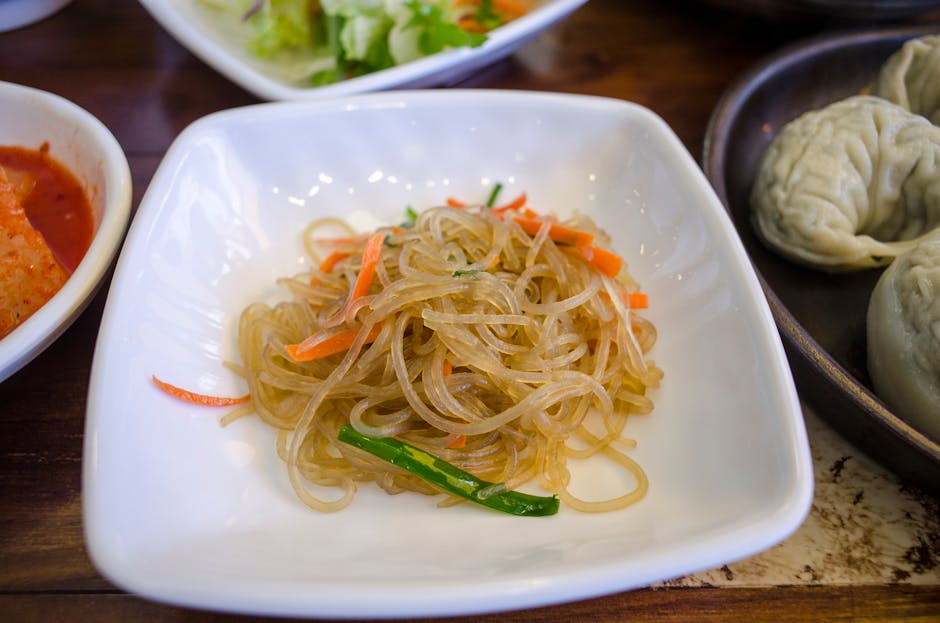
12. Japchae (잡채) — sweet potato glass noodles
Springy, translucent dangmyeon (sweet potato starch) noodles stir-fried with beef, mushrooms, spinach, carrots, and bell peppers in a sauce of sesame oil and soy. Sweet, savory, and a little chewy. Japchae is a celebration food in Korea — you’ll see it at weddings, holidays, and birthday spreads — but it’s also a popular banchan and a staple at any homestyle restaurant.
13. Jjajangmyeon (짜장면) — black bean noodles
Korean-Chinese fusion at its finest. Thick wheat noodles topped with a glossy black sauce of fermented black soybean paste (chunjang), pork, onions, and zucchini. Salty, slightly sweet, and weirdly addictive. Order it at any Chinese-Korean restaurant — chains like Hongkong Banjeom 0410 are reliably excellent.
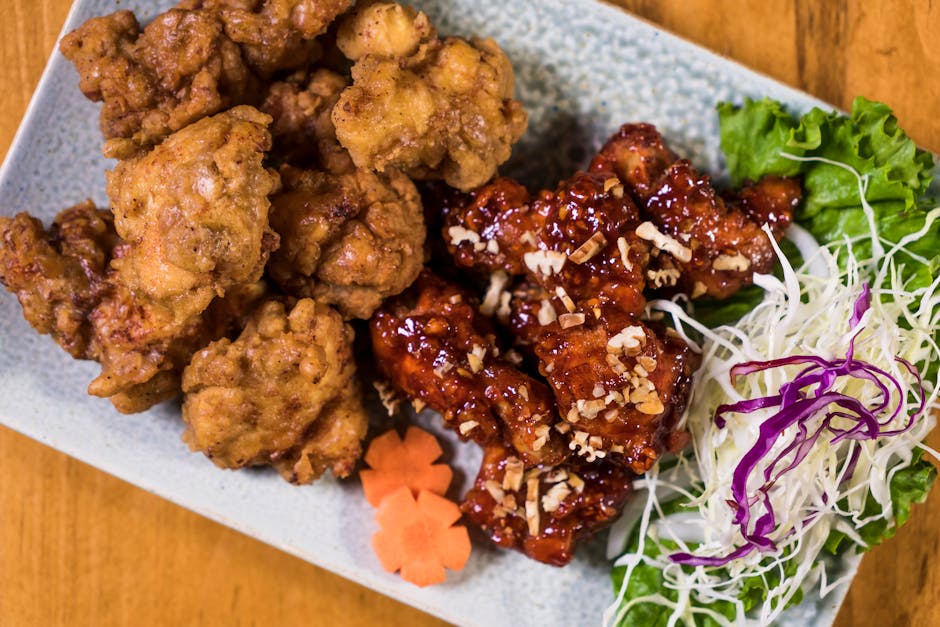
14. Korean Fried Chicken (KFC, 치킨) — beer’s best friend
Twice-fried for shatter-crisp skin, then either left plain (huraideu), glazed with sweet-spicy yangnyeom sauce, soy-garlic, or honey-butter. Korean fried chicken is engineered for chimaek (chicken + maekju, beer), the national pastime of pairing fried chicken with cold lager. Brands like BHC, BBQ, Kyochon, and Pelicana have shops everywhere; for a sit-down experience, head to a Hongdae or Gangnam chimaek bar.
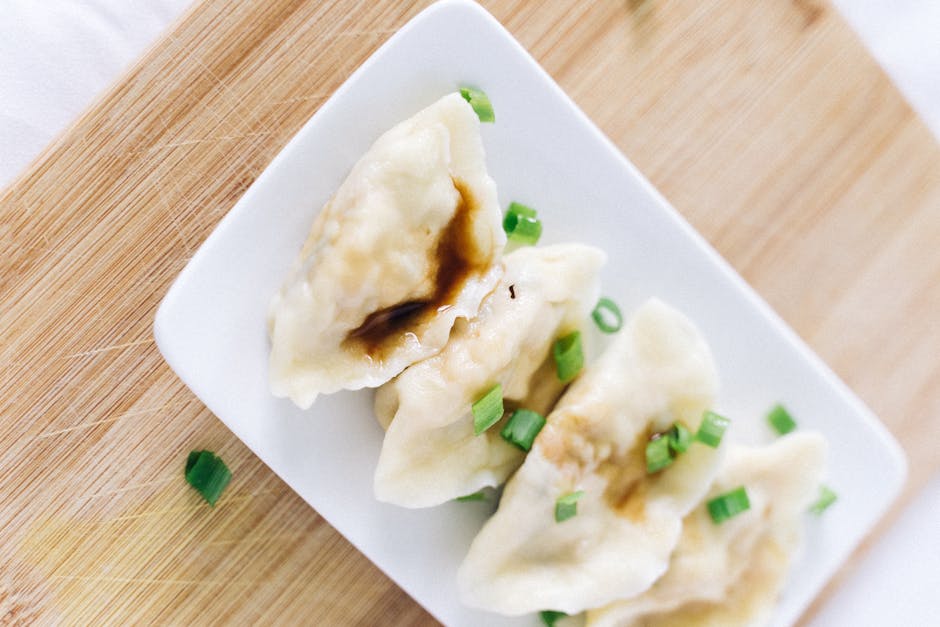
15. Mandu (만두) — Korean dumplings
Steamed, boiled, or pan-fried dumplings filled with pork, beef, kimchi, or tofu. Often served as a side or in a soup (mandu-guk). The kimchi mandu at Jaha Son Mandoo in Buam-dong is a Seoul institution.
16. Haemul Pajeon (해물파전) — seafood scallion pancake
A crispy-edged, chewy-centered pancake of scallions, squid, shrimp, mussels, and sometimes oysters. Often eaten on rainy days with makgeolli (cloudy rice wine) — there’s even a Korean saying about how the sound of frying pajeon resembles rain. Find the best versions in Jongno’s old alley restaurants.
17. Bossam (보쌈) — boiled pork belly wraps
If samgyeopsal feels too heavy, bossam is the alternative. Pork belly is slowly boiled with herbs and spices until tender and lean, then sliced and served with napa cabbage leaves, raw garlic, ssamjang, and a saucy salted shrimp dip. Wrap and eat. Often paired with bo-kimchi, a special radish kimchi made just for bossam meals.
18. Hotteok (호떡) — sweet stuffed pancakes
Winter street food at its purest. A doughy disc is stuffed with brown sugar, cinnamon, and crushed nuts, then pan-fried until the filling melts into syrup. Burn-your-mouth hot is the only acceptable temperature. Find them at any street stall in Myeongdong from autumn through early spring; ₩2,000–₩3,000 each.
19. Bingsu (빙수) — shaved ice with toppings
Korea’s answer to summer dessert. A mountain of finely shaved milk ice topped with red bean (patbingsu), mango, strawberry, cheesecake bites, or matcha. Cafes like Sulbing have made bingsu a year-round phenomenon. Share one between two — they’re enormous.
20. Korean Street Food (Tteok-kkochi, Hotdog, Twigim)
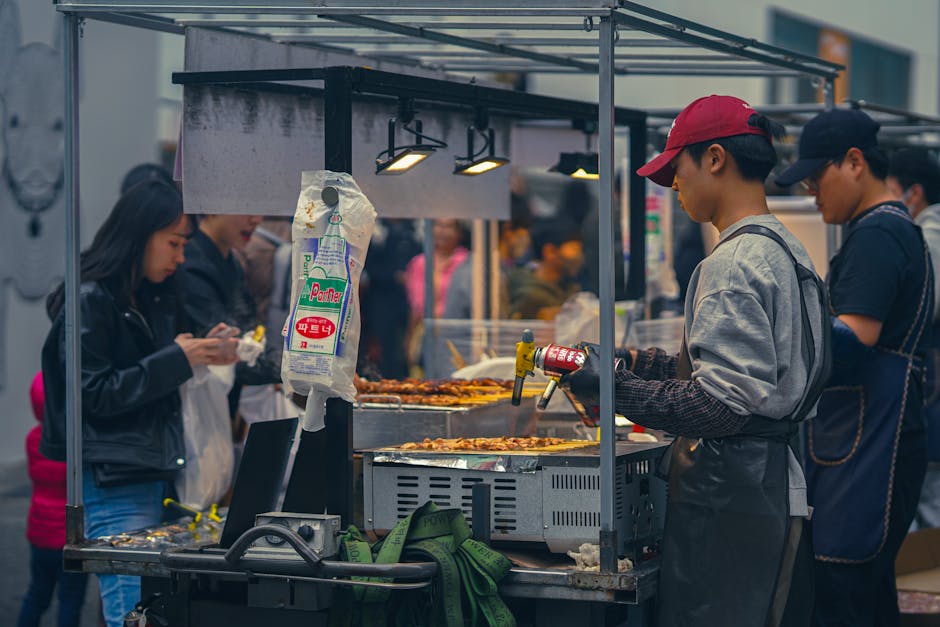
Beyond the iconic dishes, leave room for the rotating cast of street snacks: tteok-kkochi (skewered grilled rice cakes glazed in sweet-spicy sauce), Korean corn dogs rolled in sugar or potato cubes, and twigim (assorted tempura-style deep-fried vegetables, mandu, and squid). Myeongdong, Hongdae, and Gwangjang Market are the holy trinity of street food. See our Gwangjang Market food guide and the Seoul street food guide for stall-by-stall picks.
Quick reference: Korean dishes by mood and budget (2026)
| Mood | Dish | Typical price | Best neighborhood |
|---|---|---|---|
| Hangover | Seolleongtang | ₩9,000–₩14,000 | Jongno |
| Cold winter night | Kimchi jjigae | ₩9,000–₩12,000 | Anywhere |
| Group celebration | Korean BBQ (samgyeopsal) | ₩15,000–₩25,000 pp | Mapo, Hongdae |
| Quick lunch | Bibimbap | ₩9,000–₩15,000 | Insadong |
| Summer heat | Naengmyeon | ₩10,000–₩14,000 | Gangnam |
| Late-night drinks | Korean fried chicken + beer | ₩20,000–₩28,000 | Hongdae, Gangnam |
| Street snacking | Tteokbokki, hotteok | ₩3,000–₩8,000 | Myeongdong |
| Hot summer recovery | Samgyetang | ₩19,000–₩22,000 | Gyeongbokgung area |
Korean food etiquette in 60 seconds
A few quick rules so you don’t accidentally offend at the table: never stick chopsticks upright in rice (it mimics funeral incense), use both hands when receiving or pouring drinks for an elder, don’t lift rice or soup bowls (use the spoon), and wait for the eldest person to start eating before you do. For a deeper guide, see our Korean dining etiquette guide.
Where to eat: best neighborhoods for Korean food
Different neighborhoods specialize in different scenes. Insadong and Bukchon for traditional Korean (bibimbap, hanjeongsik banquets). Mapo and Mangwon for old-school BBQ. Hongdae and Itaewon for trendy fusion and late-night chimaek. Myeongdong for street food. Gangnam for high-end sushi-meets-Korean and a strong cocktail scene. Gwangjang Market and Tongin Market for budget feasts you can graze stall-to-stall.
FAQ: must-try Korean food
What is the most famous Korean food?
Internationally, Korean BBQ, kimchi, and bibimbap are the three most recognized Korean foods. Inside Korea, kimchi jjigae and tteokbokki are eaten more often by locals.
What should a first-timer order in Seoul?
Start with samgyeopsal (Korean BBQ) for dinner, bibimbap or kimchi jjigae for lunch, tteokbokki and hotteok as snacks, and finish with Korean fried chicken and beer. That covers the major flavor profiles — grilled, fermented, spicy, sweet, and crispy.
Is Korean food spicy?
Some dishes are very spicy (tteokbokki, buldak), but many are not at all. Bulgogi, japchae, samgyetang, seolleongtang, mandu, and most banchan are mild. Look for the chili pepper icon on menus to gauge heat.
Are vegetarians welcome?
It’s getting easier every year. Buddhist temple cuisine and Insadong restaurants are reliable, and Itaewon has a growing vegan scene. See our vegetarian and vegan Seoul guide for restaurant picks.
How much should I budget for food in Seoul?
You can eat very well on ₩30,000–₩50,000 per day if you mix street food, market lunches, and one nicer sit-down meal. For a comprehensive breakdown, see how much does a Seoul trip cost.
Final word
Korean food rewards curiosity. Order things you can’t pronounce, sit down at a stall where everyone else is eating something unidentifiable, and ask the server what’s good. Seoul’s food scene is generous — even the cheapest meal usually comes with five or six free banchan — and the city is built for grazing your way through it.
Plan your eating itinerary against our full Seoul food guide, then layer on specific deep-dives: Korean BBQ, street food, and Gwangjang Market.