This is the complete Seoul subway guide for tourists: how to read the map, which lines you’ll actually use, how to pay, how to transfer, what to watch out for, and the small etiquette rules that will keep locals smiling.
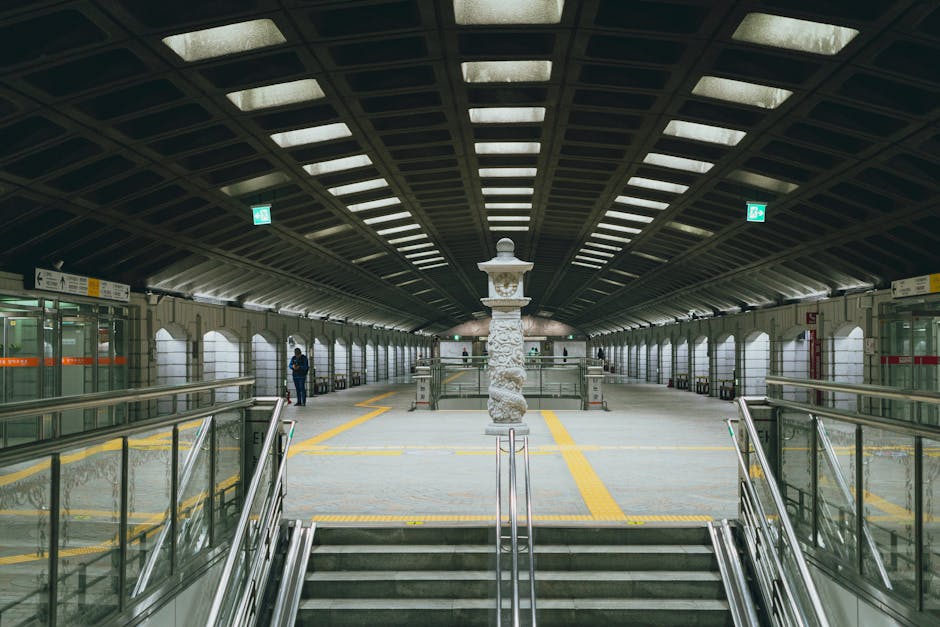
Seoul Subway at a Glance
- 23+ lines covering Seoul Metropolitan Area
- ~800 stations with English, Chinese, and Japanese signage at major stops
- Operating hours: Approximately 5:30 AM – midnight (last trains vary by line)
- Base fare: ₩1,400 with T-money card; ₩1,500 with single-trip ticket
- Free transfers between subway lines and to most buses (within 30 minutes)
- Frequency: 2–4 minutes peak; 5–10 minutes off-peak
- Free Wi-Fi at every station and on most trains
Understanding Seoul’s Subway Map
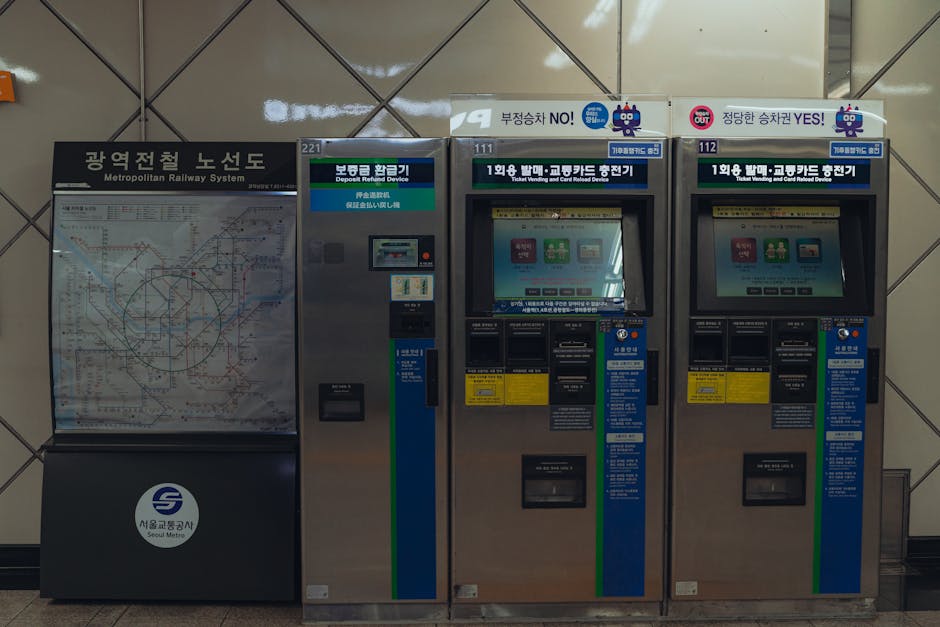
The Seoul subway map looks intimidating at first — a tangle of colored ribbons crossing each other in dozens of places. Don’t panic. As a tourist you’ll typically use only Lines 1, 2, 3, 4, 6, and 9 plus the airport express. Here’s the cheat sheet:
The Lines You’ll Actually Use
- Line 1 (Dark Blue): The oldest line. Connects Seoul Station, Jongno, Dongdaemun, and continues to Incheon. Useful for: Gyeongbokgung Palace area, Dongdaemun shopping, day trips.
- Line 2 (Green): The famous loop line that circles central Seoul. The single most useful line for tourists. Useful for: Hongdae, Sinchon, Gangnam, Jamsil, Itaewon (transfer), Myeongdong (transfer).
- Line 3 (Orange): Runs north-south through the central core. Useful for: Gyeongbokgung, Anguk (Bukchon Hanok Village, Insadong, Jogyesa), Apgujeong (luxury shopping), Express Bus Terminal (Banpo).
- Line 4 (Sky Blue): Cuts northeast to southwest. Useful for: Myeongdong, Dongdaemun History & Culture Park, Seoul Station, Hyehwa (Daehakno theater district).
- Line 5 (Purple): Runs east-west, connecting Yeouido and Gwanghwamun. Useful for: Gwanghwamun (palace area), Yeouinaru (Han River park), Gimpo Airport.
- Line 6 (Brown): Useful for: Itaewon (international district), Hapjeong (Hongdae area), Mangwon.
- Line 9 (Gold): Faster express services available. Useful for: Gimpo Airport, Yeouido, Gangnam, Bongeunsa Temple.
- AREX (Blue with stripes): Airport Railroad Express to Incheon Airport.
Reading Station Numbers
Every station has a 3-digit code combining its line and position. Anguk Station = 328 means Line 3, the 28th station. This is invaluable when station names sound similar (like Sinchon vs. Sincheon — both real). Always double-check the station number, not just the name.
How to Pay: T-Money Card vs. Climate Card vs. Single Ticket

Option 1: T-money Card (Best for Most Tourists)
The T-money card is a rechargeable transit card accepted across Seoul’s entire transit network — subway, bus, taxi, and convenience stores. It’s the simplest, cheapest way for tourists to ride. Buy at any convenience store (CU, GS25, 7-Eleven, Emart24) for ₩2,500–4,000 (card cost is non-refundable but lasts 5 years). Top up at subway station kiosks or convenience stores — minimum recharge ₩1,000, maximum ₩90,000. Saves ₩100 per ride versus single tickets and gives you free transfers.
For a deep dive on this card, see our T-money card guide.
Option 2: Climate Card (For Heavy Riders)
Launched in 2024, the Climate Companion Card offers unlimited subway and bus rides within Seoul for one fixed price. Pricing as of 2026:
- 30-day unlimited subway/bus: ₩62,000–65,000
- 30-day with bike share included: ₩65,000–68,000
- 7-day option: ~₩20,000 (limited release)
Worth it if you’re staying 5+ days and using transit 4+ times per day. Available at most subway stations and major convenience stores.
Option 3: Single-Journey Ticket
Buy from station vending machines (English available). Costs ₩1,500 plus a refundable ₩500 deposit. Slow and the most expensive option per ride — only practical if you’re truly making one or two journeys.
Option 4: Tourist Passes (Specialty)
- K-Tour Pass T-money: Pre-loaded ₩10,000+ T-money card with discount perks at certain attractions.
- Discover Seoul Pass: Tourist pass that bundles transit with attraction admissions; not always cost-effective unless you’re hitting many paid sites.
Step-by-Step: Riding the Subway for the First Time

1. Find Your Route
Open Naver Maps or KakaoMap on your phone. Both offer English. Enter origin and destination, and they’ll plot the optimal subway route, fare, walking time, and exit number. Google Maps offers basic transit but is less reliable than the local apps.
2. Enter the Station
Look for the round subway logo and “지하철 / Subway” signs. Stations have multiple entrances numbered 1, 2, 3, etc. The closest entrance to your destination is shown in your app — entries on different sides of intersections can save you 5+ minutes of walking.
3. Tap In
Tap your T-money or Climate Card flat against the orange sensor on the turnstile. The fare displays briefly. Walk through. Save your card — you must tap out at the destination.
4. Find Your Platform
Color-coded signs point to each line. After picking the line, look at the directional signs that list the last station in each direction. Direction is named by terminus (e.g., “to Sinseol-dong” or “to Singil”). Naver Maps tells you which terminus your direction goes toward.
5. Board the Train
Doors are marked. Stand to the side of the doors. Let passengers exit before boarding. Mind the gap.
6. Track Your Journey
Onboard signs and announcements name the next station in Korean, English, Chinese, and Japanese. Door indicator lights show which side will open at the next station. Most trains also show transfer connections at upcoming stations.
7. Transfer (If Needed)

Transfers are free within the system as long as you don’t tap out. At your transfer station, follow signs to the colored circle of your next line. Some transfer walks are quick (50 m); some longer (300+ m). Naver Maps shows transfer time.
8. Tap Out and Use the Right Exit
Tap your card on the orange sensor at the exit turnstile. Choose the correct numbered exit before climbing the stairs — exits can put you on opposite sides of a four-lane road. Naver Maps tells you the exit number. This is the single most important tourist tip in Seoul.
The Best Apps for the Seoul Subway
- Naver Maps (★ recommended): Most accurate routing, real-time arrivals, exit numbers. Free.
- KakaoMap: Equally good. Slightly cleaner UI for some travelers.
- Subway Korea (Kakao): Subway-only app showing line maps, fares, fastest route, and “where to stand” tips for fast transfers.
- Seoul Subway by JD Software: A favorite among tourists for its simple offline map and quickness.
- Google Maps: Works for transit but less detailed than Naver/Kakao. Useful as a fallback.
For more app picks, see our best apps for traveling in Seoul.
Subway Etiquette: Don’t Be That Tourist

Korean subway culture is understated and polite. A few simple manners go a long way:
- Voices low. Phones on silent or vibrate. No speakerphone calls. Don’t argue or play music aloud.
- Stand on the right of escalators in most lines (Seoul has been gradually shifting away from a “stand left, walk right” rule, but right-stand is still the norm).
- Priority seating at the ends of cars (often pink) is reserved for elderly, pregnant, and disabled riders. Never sit there even if empty unless you qualify.
- No eating or drinking on the train. (Coffee in a cup with a lid is generally tolerated; food is not.)
- Backpacks off in front of you in crowds. Korean commuters consider it polite to swing a backpack to the front when packed in.
- Let people exit first. Stand to the sides of doors before boarding.
- Don’t block doors. Move into the car.
- Keep videos to yourself. Watching content with sound is not done — even teenagers wear earbuds.
Top 10 Tourist Stations and What’s at Each
- Myeongdong (Line 4): Shopping mecca, street food, beauty stores. Exit 6 for the main strip.
- Hongik University / Hongdae (Line 2): Nightlife, cafés, indie music. Exit 9 for the main entertainment area.
- Gyeongbokgung (Line 3): The premier Joseon palace. Exit 5 for the main gate.
- Anguk (Line 3): Bukchon Hanok Village, Insadong tea houses, Jogyesa Temple.
- Itaewon (Line 6): International cuisine, Hamilton Hotel district, Itaewon antique street.
- Gangnam (Line 2): Luxury shopping, K-pop tour starting points, COEX area.
- Jamsil (Line 2/8): Lotte World theme park, Lotte Tower observation deck.
- Express Bus Terminal (Line 3/7/9): Banpo Hangang Park, GoTo Mall underground shopping.
- Dongdaemun (Line 1/4): 24-hour shopping malls, DDP architecture.
- Seoul Station (Line 1/4/AREX): Main rail hub, KTX trains, airport express.
Each one is part of our broader Seoul neighborhoods guide.
Subway to Major Attractions: Quick Reference

| Attraction | Station | Line | Exit |
|---|---|---|---|
| Gyeongbokgung Palace | Gyeongbokgung | 3 | 5 |
| Changdeokgung Palace | Anguk | 3 | 3 |
| Bukchon Hanok Village | Anguk | 3 | 2 |
| N Seoul Tower (Namsan) | Myeongdong | 4 | 3 + cable car |
| Hongdae | Hongik Univ. | 2 | 9 |
| Gangnam Style street | Gangnam | 2 | 10 |
| Lotte World | Jamsil | 2/8 | 4 |
| DDP / Dongdaemun | DDP | 2/4/5 | 1 |
| Banpo Bridge Fountain | Express Bus Terminal | 3/7/9 | 8-1 |
| Bongeunsa Temple | Bongeunsa | 9 | 1 |
| Itaewon | Itaewon | 6 | 2 |
| Insadong | Anguk | 3 | 6 |
| Incheon Airport | Incheon Int’l Airport T1/T2 | AREX | — |
Common Mistakes Tourists Make
- Going through the wrong exit. Some stations have 12+ exits in different directions. Always check Naver Maps.
- Confusing similar names. Sinchon (Hongdae area, Line 2) ≠ Sincheon (Jamsil area, Line 2) ≠ Sinseol-dong (Line 1). Use station numbers.
- Missing the last train. Last trains depart between 11:30 PM and midnight. Plan night returns or budget for a taxi.
- Forgetting to tap out. If you don’t tap out, the system may charge max fare on your next entry.
- Boarding the wrong direction on Line 2 (the loop). Both directions lead “around” — always check whether your route goes clockwise or counterclockwise. A loop the wrong way can cost 30+ minutes.
- Sitting in priority seating. Even when empty, leave it for those who need it.

Safety, Accessibility & Practical Notes
- Safety: Seoul Metro is consistently ranked among the safest urban rail systems in the world. Petty theft is rare; pickpockets are uncommon but possible in dense crowds at Myeongdong or Hongdae. See our is Seoul safe guide.
- Accessibility: All stations have elevators. Wheelchair-accessible turnstiles at every entry. Tactile paving for blind passengers. Audio announcements in 4 languages.
- Lost and found: Run by Seoul Metro at Sindorim, Chungmuro, and Wangsimni stations. Items are typically held 1 week before being moved to central Seoul Police lost and found.
- Restrooms: Free, clean, available before and after the fare gates at every station.
- Cell signal: Continuous LTE/5G even in tunnels.
- Wi-Fi: Free public Wi-Fi at all stations; subscription “Subway Wi-Fi” on most trains.
- Charge points: USB outlets near priority seating in many newer cars.
Late-Night and Weekend Tips

- Last trains leave central stations between 23:30 and 00:30 depending on line. After that, take an N-bus (city night bus, ₩2,250) or a Kakao T taxi.
- Weekend service runs as normal but some lines extend last-train times by 30–60 minutes on Friday and Saturday.
- Concert and event nights (Hongdae, Gangnam, Jamsil) crowd the platforms. Use Line 9 express or transfer one stop for breathing room.
Sample Subway-Powered Day in Seoul
A quick demonstration of how easy the metro makes touring:
- 9:00 AM — Gyeongbokgung (Line 3, Exit 5). Tour palace and watch changing of the guard.
- 11:30 AM — Walk to Anguk (Line 3, Exit 6). Insadong lunch, Bukchon stroll.
- 2:30 PM — Subway Anguk → Myeongdong (transfer Chungmuro to Line 4). Beauty shopping and street food.
- 5:00 PM — Myeongdong → Hongik Univ. (transfer at Chungmuro to Line 4 then Sindorim Line 2). Café, indie shops.
- 8:00 PM — Hongik Univ. → Jamsil (Line 2, single train, ~30 min). Lotte Tower sunset.
- 10:00 PM — Subway home.
Total subway cost using T-money: about ₩7,000 for the entire day. Worth it.
Pair it with our full Seoul itineraries and the broader getting around Seoul hub for buses, taxis, and bikes.

Frequently Asked Questions
How much does the Seoul subway cost for tourists?
Base fare with a T-money card is ₩1,400 (single-trip ticket: ₩1,500). Each additional 5–10 km adds ₩100. A full cross-city journey rarely exceeds ₩2,000.
Do I need cash?
No. T-money cards are recharged with cash or card at any convenience store or station kiosk. Single tickets accept both.
Is the Seoul subway safe at night?
Yes. The subway is well-lit, monitored, and patrolled. Last trains run until ~00:30. Female-only carriages exist on some lines during late hours.
Can I use Apple Pay or Google Pay on the subway?
Mostly no. While Apple Pay launched in Korea in 2023, transit payments still primarily require T-money cards or compatible Korean credit cards. The Mobile T-money app on Android supports phone-based fare payments.
Is there Wi-Fi on the subway?
Free public Seoul Wi-Fi covers stations. Onboard Wi-Fi exists but is patchy; use mobile data instead.
How early is the first train?
Around 5:30 AM on most lines.
How late is the last train?
Between 23:30 and 00:30 depending on line and direction.
Are there English announcements?
Yes. Every station and most trains announce stops in Korean, English, Chinese, and Japanese. Visual signs are bilingual at minimum.
How do I get from Incheon Airport to Seoul by subway?
Take the AREX Airport Express. Express train to Seoul Station: 43 min, ₩11,000. All-Stop train: 60 min, ₩4,750. See our Incheon Airport to Seoul guide.
Is the subway accessible for wheelchairs and strollers?
Every station has elevators, accessible turnstiles, and tactile paving. Some elevators are at non-obvious entrances — consult Naver Maps.
Final Thoughts
Mastering the Seoul subway is the single best thing you can do for your trip — it transforms a vast, dense city into a network of 5-minute hops. Buy a T-money card on arrival, install Naver Maps before your flight, and within a day you’ll be transferring at Sindorim and exiting Anguk Exit 2 like you’ve lived here a year. For the rest of your Seoul travel planning, see our complete Seoul travel guide and getting around Seoul resource hub.