This is the complete Insadong guide for Seoul tourists: every must-visit shop, the best traditional tea houses still operating, the museums worth your time, where to eat, what to buy, what’s overpriced (some things are), and how to slot Insadong into a half-day or full-day Seoul itinerary.
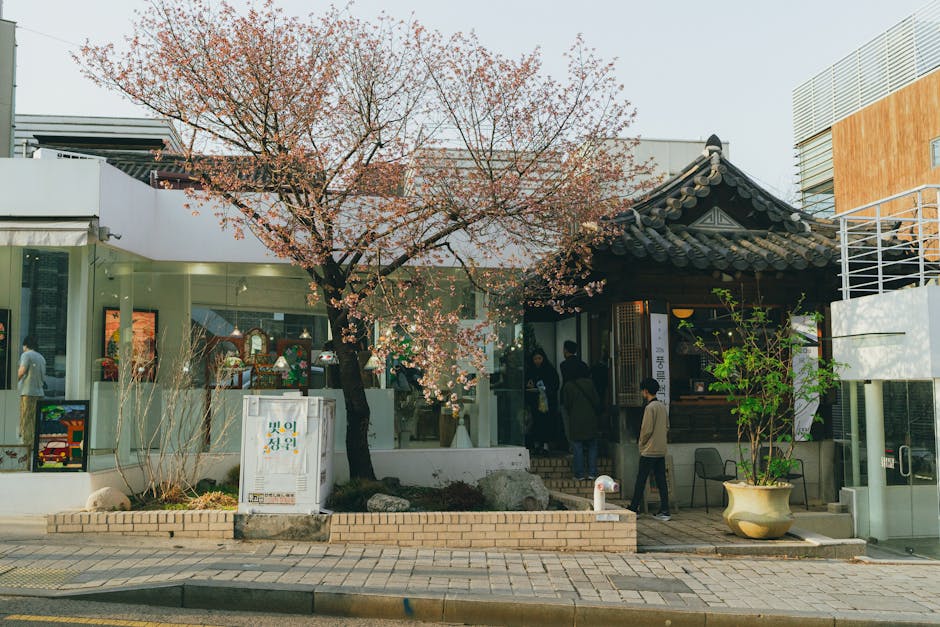
Why Visit Insadong?
Most Seoul neighborhoods specialize: Hongdae has indie music, Gangnam has skyscrapers, Myeongdong has K-beauty. Insadong specializes in tradition. Originally settled by aristocrats during the Joseon dynasty, it became Korea’s antique-and-art district in the early 20th century when fading aristocratic families sold heirlooms to dealers here. Today an estimated 40% of all antique shops in Korea cluster within these few blocks.
For visitors, that means Insadong delivers something the rest of fast-modernizing Seoul has paved over: scrolls hand-brushed with calligraphy ink, blue-and-white porcelain in styles unchanged for 500 years, hanji paper, brass tableware, and tea served in stoneware in low-ceilinged hanok rooms by women who know exactly which tea complements which late-spring afternoon. Even Starbucks has its only Korean-language sign in the country here, in deference to the heritage feel.
Orientation is easy: think of Insadong as the connective tissue between three of Seoul’s heavyweight sights. Bukchon Hanok Village sits a ten-minute walk uphill to the north, Gyeongbokgung and Changdeokgung palaces flank it to the west and east, and the buzzing old-town district of Jongno spills right into its southern end. That location is why so many first-time visitors use Insadong as their cultural home base — it is central, entirely walkable, and stitched into the wider Seoul neighborhoods map without needing a single taxi.
How to Get to Insadong
- Subway: Anguk Station (Line 3), Exit 6 — emerge at the top of the main pedestrian street.
- Alternative: Jonggak Station (Line 1), Exit 3 — 5-minute walk from the south end.
- From Myeongdong: 10-minute taxi (~₩6,000) or 2 stops on Line 4 then transfer to Line 3.
- From Gyeongbokgung Palace: 12-minute walk southeast.
Once you arrive, everything in this guide is on foot. Bring our getting around Seoul guide if you’re new to the metro.
Top 12 Things to Do in Insadong
1. Walk Insadong-gil, the Main Street

The main pedestrian street is just 700 meters long, but it’s packed with antique shops, paper stores, calligraphy studios, modern art galleries, ceramic boutiques, and traditional snack vendors. Weekday mornings (Tue–Thu, 10:00–13:00) are the calmest. Saturdays and Sundays the street becomes a craft fair with extra outdoor stalls — fun, but crowded.
2. Explore Ssamziegil — The Spiral Mall
Ssamziegil is a five-floor open-air complex that doubles as architecture, shopping mall, and art space. There are no stairs — instead, a gently sloping spiral ramp wraps around an open courtyard, so you naturally walk up past 70+ small shops selling jewelry, leather goods, calligraphy, K-pop merch, ceramics, and quirky design items by Korean artisans. The rooftop has a café and great photo views.
- Address: 44 Insadong-gil
- Hours: 10:30 AM – 8:30 PM
- Highlights: Personalized stamp engraving (₩10,000–25,000), handmade leather wallets, ceramic painting studio
3. Visit Jogyesa Temple — Korea’s Buddhist Headquarters

Just three minutes’ walk from the main street, Jogyesa is the headquarters of Korean Zen Buddhism. The Daeungjeon hall houses three towering gilded Buddhas; the courtyard is canopied year-round in lotus lanterns. During Buddha’s Birthday in May, the entire complex becomes a forest of pink and orange paper lanterns — one of Seoul’s most photographed scenes. Free entry. See our Seoul temples and shrines guide for more.
4. Have Tea at a Traditional Hanok Tea House

Insadong’s traditional tea houses are perhaps the single best reason to visit. These are not Starbucks. You enter a low wooden door, remove your shoes, sit cross-legged on heated ondol floors, and order from a hand-written menu. The tea is brewed slowly, served in stoneware, and accompanied by a small dish of homemade rice cakes (tteok) or roasted nuts. Top picks:
- Shin Old Tea House (신구다원): A cozy hanok with heated floors, low tables, silk cushions, and dim lighting. Sets ₩9,000–14,000.
- Moon Bird Only Thinks of the Moon (달새는 달만 생각한다): Quirky upstairs hideaway. Pine-needle tea and homemade injeolmi rice cake are signatures.
- Osulloc Tea House: Korea’s most famous green-tea brand has its flagship here. Premium green teas ₩8,000–15,000 with traditional snacks. Second-floor windows look onto the main street.
- Beautiful Tea Museum: Tea-tasting in a courtyard surrounded by an actual museum of teaware. Combine learning + drinking.
5. Browse Antique and Calligraphy Shops
The narrow side alleys off Insadong-gil are where the antique density jumps. Look for Kongbu, Tonggyojang, and Gohwagol — three of the longest-running antique shops, all multi-generation family businesses dealing in Joseon-era brassware, scholar’s accessories, and ceramics. Even if you’re not buying, dealers welcome browsing, and many will explain pieces in basic English.
6. Try a Calligraphy or Hanji Paper Workshop
Several studios offer 30-minute calligraphy classes for tourists (~₩15,000–25,000) where you’ll learn to grind ink on a stone, hold the brush vertically, and write a Korean character or your name in Hangul. Hanji (traditional mulberry-bark paper) workshops let you make your own bookmark or fan. Look for storefronts marked “calligraphy” or ask at the Insadong Information Center near Anguk Station Exit 6.
7. Visit the Kyung-In Museum of Fine Art

Tucked off the main street, the Kyung-In Museum of Fine Art blends a contemporary Korean gallery with an outdoor hanok-style tea garden. Admission is free; the on-site tea house is excellent. Painters, ceramicists, and textile artists rotate exhibitions monthly. A serene break from the busy street.
- Address: 11-4 Insadong 10-gil
- Hours: 10:00 AM – 6:00 PM (closed Mondays)
8. Eat at Yongsusan or Sanchon (Royal Court Cuisine)
Insadong is one of the few neighborhoods that still preserves royal Korean court cuisine (gungjung eumsik) restaurants. Sanchon and Yongsusan both serve elaborate 9-to-14-course tasting menus inspired by what Joseon kings ate. Expect ₩45,000–95,000 per person. Reserve in advance for dinner.
9. Try Honey Dragon’s Beard (Ggultarae)
The silk-thread honey candy is a tourist staple — vendors theatrically pull a cube of honey paste through 16,384 strands until it becomes a fine cocoon, then wrap it around chopped almonds. ₩6,000–8,000 per box. Watch the show, even if you skip the candy.
10. Hunt the Famous Long Ice Cream

The 30-centimeter-tall vanilla soft-serve has become an Insadong photo trophy. Several vendors sell them; quality is similar. ₩5,000.
11. Visit the Tongin Market for Cash-Coin Lunch
Just 10 minutes’ walk away, Tongin Market runs a unique experience: buy ₩5,000 worth of brass coins at the market center, then exchange them at participating stalls for banchan (side dishes), filling a real lunch tray as you go. A wonderfully analog way to sample Korean home cooking.
12. Catch a Performance at the Korea House
The Korea House hosts traditional dance, court music, and folk-instrument performances daily — beautifully staged, English subtitles available. Tickets ₩50,000. Combines well with the Korean cuisine dinner sets.
Insadong Food: Where to Eat
Insadong’s dining leans traditional and unhurried — this is not a late-night grease strip but a place for a proper sit-down Korean meal between shop visits. Reservations help at the court-cuisine and temple-food restaurants, especially on weekends, while the noodle, dumpling, and soup spots below run first-come, first-served and turn tables fast at lunch. If you want to actually understand what lands on your table, skim our guide to the best Korean dishes to try and our primer on Korean dining etiquette before you sit down.
- Imun Seolnongtang — Opened in 1907, one of Seoul’s oldest seolleongtang restaurants. Famous for ox-bone soup, ₩12,000.
- Sanchon — Vegetarian Buddhist temple cuisine in a hanok setting. ₩45,000+ courses.
- Insadong Mandoo — Hand-pleated dumplings filled with kimchi or shrimp. ₩9,000.
- Beolsa — Hidden hanok jeonbokjuk (abalone porridge) restaurant. ₩18,000.
- Cha-Masineun-Tteul — Hidden third-floor tea house with persimmon punch. Set ₩12,000.
- Korean ceramics: Authentic celadon, buncheong, and white porcelain pieces. ₩30,000–500,000+.
- Hanji paper goods: Bookmarks, fans, lampshades. ₩5,000–80,000.
- Korean tea: Premium green tea, persimmon-leaf, lotus-flower. ₩15,000–60,000 a tin.
- Calligraphy brushes & ink stones: Functional gifts for art lovers. ₩20,000–200,000.
- Maedeup (Korean knot work): Decorative tassels and keychains. ₩8,000–30,000.
- Jogakbo (patchwork textiles): Pieces sewn from silk scraps. Wall art ₩50,000–300,000.
- Antique brassware: Tableware, candlesticks. Bargaining is acceptable.
- “Antique” coins or seals priced under ₩50,000 — usually mass-produced reproductions.
- Touristy hanbok keychains: same items cost half as much in Myeongdong.
- Brass “Korean traditional swords” — toy reproductions.
Insadong Food: Where to Eat
The Insadong Tea House Experience, Explained
You could visit Insadong for the tea houses alone. A traditional Korean tea house (jeontong chatjip) is the antithesis of a modern Seoul café: no laptops, no queue for oat-milk lattes, just a hushed hanok room, floor cushions, and a menu of medicinal and seasonal brews you won’t meet anywhere else. Here is how to do it right.
What to order. Skip the coffee and order something uniquely Korean. In summer, ask for omija-cha, the “five-flavor” berry tea served chilled and magenta, simultaneously sweet, sour, and tart. In cold months, ssanghwa-cha is the move — a thick herbal tonic often crowned with pine nuts, walnuts, and a sliver of egg yolk that Koreans drink to head off a cold. Other staples worth trying are yujacha (honeyed citron), saenggang-cha (ginger), daechu-cha (jujube), and sujeonggwa, the chilled cinnamon-persimmon punch. Most sets run ₩8,000–14,000 and arrive with a small plate of tteok (rice cake) or hangwa (honey-and-sesame confections).
How it works. You slip off your shoes at the door, settle onto the heated ondol floor, and — this is the important part — nobody hurries you out. Nursing a single pot for an hour while it rains outside is entirely normal and even the point. Service is gentle rather than attentive, so flag the owner when you are ready. It is a genuinely restorative pause and one of the more grounding unique experiences in Seoul.
Where to go. The four houses listed earlier — Shin Old Tea House, Moon Bird Only Thinks of the Moon, Osulloc, and the Beautiful Tea Museum — are the reliable classics, but half the pleasure is ducking up an unmarked staircase off Insadong 12-gil and finding a five-table room with no English sign at all. If you would rather compare the traditional article with the contemporary scene, our Seoul café guide maps the modern cafés a few neighborhoods over, and anyone curious about traditional drinks after dark should read our Korean alcohol guide for the makgeolli houses nearby.
Insadong Shopping Guide
Insadong Shopping Guide

What to Buy in Insadong
What to Skip
A note on bargaining and tax refunds. Gentle haggling is customary with antique and brassware dealers — a polite “조금 깎아 주세요” (jogeum kkakka juseyo, “a little discount please”) can shave roughly 10% off, though fixed-price ceramic boutiques and tea shops won’t budge. Larger purchases at shops displaying a “Tax Free” sticker qualify for a VAT refund; keep the receipt and your passport for the airport counter. For the wider rules and Seoul’s other shopping districts, see our Seoul shopping guide and our duty-free shopping guide.
Art Galleries & Exhibitions in Insadong
Long before it was a tourist street, Insadong was — and still is — the center of Seoul’s art trade. Dozens of galleries hide in plain sight above the shops and down the side lanes, and nearly all of them are free to enter. Gallery-hopping here is one of the best-value cultural afternoons in the city, and almost nobody who comes for the ice cream realizes it is here.
Start with the Insa Art Center, a seven-floor building on the main street where every level holds a rotating exhibition of Korean painters, printmakers, and sculptors — ride the elevator to the top and work your way down. The Kyung-In Museum of Fine Art (covered above) pairs its galleries with a hanok tea garden, while Hakgojae Gallery, set in a restored hanok on the Bukchon side, shows serious contemporary Korean and international work inside a beautiful traditional space. Gana Art Insa and a rotating cast of one-room commercial galleries round things out.
How to do it: galleries generally open 10:00 AM–6:00 PM and close on Mondays, so pair gallery time with a weekday visit. You need no tickets and no plan — just push open any door marked gallery (갤러리) and browse. Once you have caught the bug, our Seoul museums and galleries guide covers the National Museum of Korea, the Leeum, and the MMCA a short ride away.
Best Times to Visit Insadong
Best Times to Visit Insadong
Weekday Mornings (Recommended)
Tuesday through Thursday, 10:00 AM – 1:00 PM — fewer crowds, more relaxed shop owners, easier tea-house seating. Mondays many museums and some galleries close.
Sunday Afternoons
The main street closes to traffic and adds outdoor stalls and street performances. Crowded but festive — best if you want energy and a craft-fair atmosphere.
Buddha’s Birthday Week (Early May)
Jogyesa’s lantern festival overflows into Insadong’s alleys. Photogenic but expect serious crowds.
Cherry Blossom Season (Early April)
The walk between Gyeongbokgung Palace and Insadong is lined with cherry trees. Combine with our best time to visit Seoul guide.
Suggested Half-Day Insadong Itinerary
- 10:00 AM — Anguk Station Exit 6, walk down Insadong-gil.
- 10:30 AM — Jogyesa Temple (free, 30 min).
- 11:00 AM — Browse antique alleys; visit a calligraphy workshop.
- 12:30 PM — Lunch at Imun Seolnongtang or Sanchon.
- 2:00 PM — Tea at Shin Old Tea House or Osulloc.
- 3:00 PM — Ssamziegil shopping spiral.
- 4:30 PM — Walk to Gyeongbokgung Palace for late-afternoon tour.
For a full day, combine with our Seoul itineraries for the perfect Day 1 introduction to Korean tradition.
Insadong vs. Bukchon Hanok Village — Which to Choose?

The two neighborhoods are 10 minutes apart by foot and complement each other:
- Insadong = traditional shopping, tea, antiques, calligraphy, eating
- Bukchon Hanok Village = looking, walking, photographing actual residential hanoks
The most efficient pairing: Bukchon in the morning (peaceful, photogenic light) → walk down to Insadong for lunch and afternoon tea. See our dedicated Bukchon guide for the perfect combo day.
Combining Insadong With Nearby Seoul Highlights
Insadong’s greatest practical advantage is that it is ringed by other must-sees, all reachable on foot. Here is how travelers usually string them together into a single day.
- Gyeongbokgung Palace (12 min west): Time the free Royal Guard changing ceremony (10:00 AM and 2:00 PM), and rent hanbok in Insadong first — hanbok-wearers enter the palace free.
- Bukchon Hanok Village (10 min north): Do the photogenic residential-hanok maze in the quiet morning light, then drift down to Insadong for lunch. Full route in our Bukchon Hanok Village guide.
- Gwangjang Market (15 min east): When you want something rowdier than court cuisine, Seoul’s most famous market hall serves bindaetteok mung-bean pancakes and live-octopus dares — see our Gwangjang Market food guide and broader Seoul street food guide.
- Cheonggyecheon Stream & Jongno (5 min south): The restored stream and the old-town bars of Jongno make an easy evening extension once the shops close.
Slot all of it into a wider plan with our 3-day Seoul itinerary, which uses this heritage core as its natural first day.
Renting Hanbok in Insadong
Insadong and the palace corridor just north of it are the epicenter of Seoul’s hanbok-rental trade, and slipping into Korea’s traditional dress for a few hours is one of the most enjoyable things to do here. Side-street shops rent full outfits — a layered skirt or robe, an underskirt, and a hairpin — for around ₩15,000–25,000 per four hours or roughly ₩30,000 for the full day, usually with optional hair styling for a small extra fee. The practical payoff is real: anyone wearing hanbok enters Gyeongbokgung, Changdeokgung, and the other Joseon palaces free of charge, so a ₩20,000 rental can offset the combined palace admission while giving you the day’s best photos. Choose a shop with English-speaking staff and a wide size range, and go in the morning so you have the outfit for both the palaces and Insadong’s alleys before the shops close.
Practical Tips for Visiting Insadong
Practical Tips for Visiting Insadong
- Cash is helpful for some smaller antique shops, though cards work nearly everywhere now.
- Restrooms: Free at Ssamziegil (every floor), the Insadong Information Center, and most tea houses for paying customers.
- Photography: Allowed everywhere on the street; ask before photographing inside antique shops.
- Hanbok rental: Several shops offer 4-hour rentals (₩15,000–25,000) and you’ll see lots of tourists wearing hanbok in the area.
- Free Wi-Fi at the Information Center and most cafés.
- Bring a tote bag — purchases add up if you’re shopping for ceramics or paper goods.
- Dress for walking — most of Insadong is pedestrian; some side alleys are uneven cobblestones.
Insadong Information Center & Tourist Help
The Insadong Information Center at the top of the main street (Anguk Exit 6, just before the pedestrian zone starts) offers free maps in English, Chinese, and Japanese, can recommend specific tea houses or workshops based on your interests, and books experiences directly.
Ten minutes east of Insadong, past Tapgol Park, the hanok alleys of Ikseon-dong make an easy second stop — smaller, flatter and far more about eating and drinking than shopping. Our Ikseon-dong guide has a walking route and the cafes and restaurants worth your time.
Frequently Asked Questions
How long do I need in Insadong?
Two to four hours covers the main attractions, including a tea house. A full day is rewarding if you also do calligraphy or tea ceremony workshops.
What’s the best time to visit Insadong?
Tuesday–Thursday morning for calm browsing; Sunday afternoon for the closed-to-traffic craft-fair atmosphere.
Is Insadong walkable from Gyeongbokgung Palace?
Yes — about 12 minutes east on foot, passing through Bukchon Hanok Village makes it scenic.
Do shops in Insadong accept credit cards?
Most do. Bring a little cash for some antique dealers and tiny tea snacks.
What’s the most authentic souvenir to buy in Insadong?
Korean ceramics (celadon or buncheong), premium tea, hanji paper goods, or a small calligraphy brush set.
Is Insadong worth visiting?
Absolutely — it’s one of the most distinct cultural neighborhoods in Seoul and the best place to experience traditional Korean crafts in a single walkable area.
Can I rent hanbok in Insadong?
Yes, several rental shops on side streets offer 4-hour or full-day rentals, often with hair styling included.
Are there English menus at Insadong restaurants?
Most major restaurants and tea houses have English menus. Smaller establishments may use pictures or basic English.
Is Insadong family-friendly?
Yes — kids enjoy the dragon’s beard candy, the long ice cream, and the spiral Ssamziegil. Calligraphy workshops are well-suited for children too.
Is Insadong free to visit?
Yes — walking the street, browsing the shops and galleries, and visiting Jogyesa Temple are all free. You only spend on tea, food, workshops, and souvenirs, which is why Insadong regularly appears in our roundup of free things to do in Seoul.
What’s the closest palace to Insadong?
Changdeokgung — a UNESCO World Heritage site with its famous Secret Garden — is a 7-minute walk northeast, and Gyeongbokgung is about 12 minutes west. Either makes an ideal pairing with an Insadong morning.
Is there good vegetarian food in Insadong?
Yes. Sanchon serves an entirely meat-free Buddhist temple-cuisine banquet, and most tea houses offer vegetarian rice-cake snacks. See our vegetarian and vegan Seoul guide for more options nearby.
Can I visit Insadong in the evening?
You can, but most shops, galleries, and tea houses close by 8:00–9:00 PM and the antique dealers shut earlier. Late afternoon into early evening is the sweet spot — arrive by 3:00 PM to enjoy the street before it winds down.
Final Thoughts
Final Thoughts
If you have a single afternoon to understand traditional Korean culture in Seoul, spend it in Insadong. The neighborhood condenses tea, antiques, calligraphy, ceramics, court cuisine, and active Buddhism into a single walkable kilometer. Pair it with Bukchon Hanok Village in the morning and you’ve covered Seoul’s heritage core in one day.
For complete Seoul trip planning, see our Seoul travel guide, the Seoul neighborhoods guide, and our things to do in Seoul hub.