Walk the main strip and the sheer range of it is the point: this is the one corner of Seoul where the food, the faces and the languages come from everywhere at once. Pair this guide with our Seoul neighborhoods guide, the Seoul nightlife guide, the wider Yongsan district guide, and our vegetarian and vegan Seoul guide — Itaewon has the city’s biggest plant-based scene.
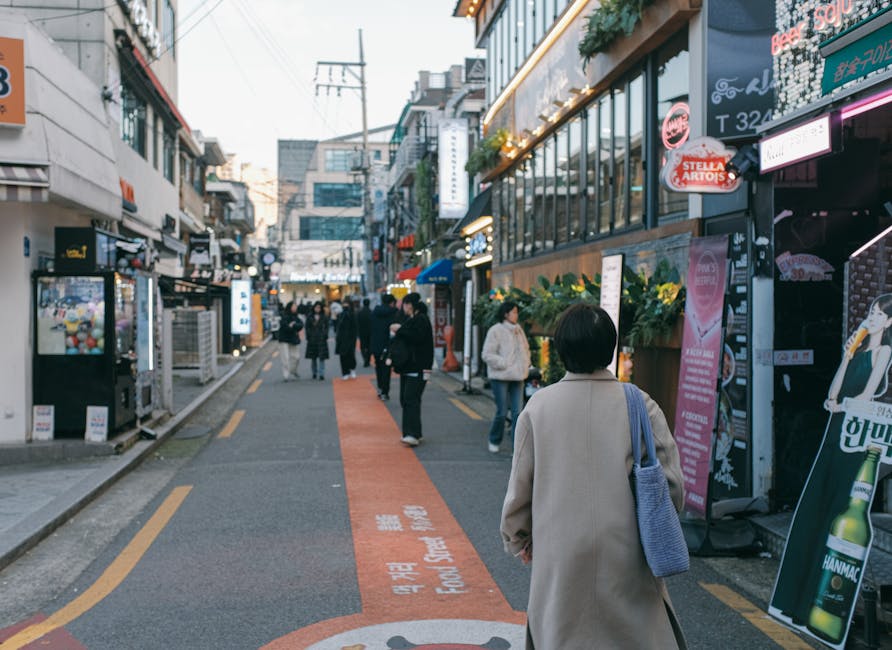
What is Itaewon?
Itaewon is a Yongsan-gu neighborhood wedged between Namsan Mountain to the north, the Han River to the south, and the former Yongsan Garrison — the old US military base, now a park in slow transition — to the west. It became Seoul’s international quarter from the 1950s through the 1990s, as military families, embassies and expats clustered here and the restaurants and shops grew up to serve them. A wave of Korean redevelopment since around 2010 has polished the area into a hipster-foodie destination without erasing the genuinely international character that makes it unlike anywhere else in the country.
What that means for a visitor is a neighborhood that reads differently from the rest of Seoul. Menus are bilingual by default, staff switch to English without blinking, and the mix of cuisines is the real attraction rather than a novelty. If the palaces and hanok lanes are old Seoul, Itaewon is the city’s worldly, slightly rough-edged cousin — and a welcome change of pace midway through a trip. For the bigger picture of how it fits among the city’s districts, our neighborhoods overview sets the scene.
The Itaewon area divides into four sub-neighborhoods, and knowing them turns a confusing sprawl into an easy plan:
- Itaewon main strip — the central thoroughfare from Itaewon Station toward Hannam-dong, lined with international restaurants, bars and vintage shops. This is the loud, busy heart.
- Haebangchon (HBC) — the hillside neighborhood north of the station, all cafes, cocktail bars and low-rise charm. The most expat-beloved pocket and the prettiest to wander.
- Hannam-dong — east of Itaewon and notably more refined, home to art galleries, fine dining and the Leeum Museum. Where Itaewon puts on its grown-up clothes.
- Gyeongnidan-gil (Bogwang-dong) — south of the station, the craft-beer-and-brunch lane that also hosts the city’s best jazz cellars, mapped in our Seoul live music venues guide.

A short history: how Itaewon became Itaewon
To understand why a single Seoul neighborhood serves Nigerian buffets next to Turkish doner next to Korean BBQ, it helps to know how it got here. Itaewon grew up in the shadow of the Yongsan Garrison, the US military base that occupied the land to its west for decades after the Korean War. From the 1950s onward, the bars, tailors, restaurants and shops that sprang up to serve American soldiers and their families gave the area an international cast found nowhere else in the country — along with a slightly raffish reputation it has since outgrown. Embassies and a growing expat population deepened the mix through the 1980s and 90s.
The modern transformation came after 2010, as Korean creatives, restaurateurs and the craft-beer pioneers moved in, drawn by cheap rents and the area’s built-in diversity. They polished Itaewon into the foodie-hipster destination it is today without erasing its multicultural roots; the mosque, the global restaurants and the vintage trade all predate the gentrification. With the garrison land now slowly reopening as a public park, the neighborhood is entering yet another chapter — but its core identity as Seoul’s window onto the wider world has held firm for seventy years. That layered history is a big part of what makes a day here feel different from anywhere else in the city, as our Yongsan guide explores in more depth.
Top things to do in Itaewon
1. Eat your way through global cuisine
This is what brings most visitors, and rightly so — nowhere else in Korea packs this many cuisines into walking distance. It’s the natural complement to the Korean-food deep dive in our Seoul food guide. Reliable picks across the board:
- Indian: Everest, Taj Mahal and Mughal, all on or just off the main strip, and all long-running favorites for a reason.
- Turkish: Sultan Kebab and Sivas Doner for a fast, generous, well-priced lunch.
- Mexican: Vatos Urban Tacos (the homegrown Korean-Mexican chain that started here) and Coreanos Kitchen.
- Italian: Linus’ BBQ for American-Italian hybrids, Pizzeria O’Sole Mio for proper Naples-style pies.
- Middle Eastern: Petra and Aladin Cafe, clustered near the mosque.
- African: Buffet Lagos for a rare-in-Asia Nigerian spread.
- Vegan and vegetarian: Plant Cafe, Plant 2.0 and Vegetus — see our vegetarian Seoul guide.
- Korean: Maple Tree House for premium BBQ and Eunjuok for something more traditional; for the wider world of grilled meat, our Korean BBQ guide has you covered.

A practical tip: the blocks immediately around Seoul Central Mosque hold the densest cluster of halal and Middle Eastern kitchens in Korea, so if that’s what you’re after, start there and graze uphill. Most places open from around 11:30, and the strip only really fills after dark — come hungry in the late afternoon and you’ll have your pick of tables before the dinner rush.
2. Craft beer and cocktails
Itaewon birthed Korea’s craft beer scene, and it’s still the best place in the country to drink it at the source. Don’t miss:
- Magpie Brewing Company — the flagship Itaewon location, rooftop and all, from one of Korea’s craft pioneers.
- Mikkeller Bar Seoul — the Danish cult brewery’s Seoul outpost, with a rotating, adventurous tap list.
- The Booth — a Korean craft brand whose Gyeongnidan-gil flagship pairs its beers with proper pizza.
- Jang Bar — a genuinely original cocktail bar building drinks around Korean fermented jang sauces.
- Charles H. — the Four Seasons’ basement bar, a perennial on Asia’s-50-Best lists (just outside Itaewon proper, but worth the hop).
For where the night goes next, see our Seoul nightlife guide and the standalone best bars in Seoul roundup.

3. Haebangchon (HBC) cafe and cocktail crawl
Walk uphill from Noksapyeong Station Exit 2 and you’re in HBC — Seoul’s most expat-friendly hillside neighborhood and, to my mind, the most pleasant part of Itaewon to simply wander. The cafe density is high, the cocktail scene punches well above the neighborhood’s size, and the views back over the city from the upper streets are quietly lovely. Standout stops:
- Anthracite Coffee — a Seoul roasting institution, in its original home.
- Casa Corona — easygoing Mexican brunch.
- The Hidden Cellar — a speakeasy-style cocktail bar worth the hunt.
- Almost Famous — vinyl on the turntable, natural wine in the glass.
- Vatos Urban Tacos — Korean-Mexican fusion with several locations nearby.
For more of the city’s coffee culture, our Seoul cafe guide ranges well beyond this hill.

4. Vintage and thrift shopping
Itaewon is home to Korea’s biggest vintage scene — pre-loved designer fashion, retro furniture and crates of vinyl, a legacy of decades of imported goods passing through the area. The best hunting is around the main strip and up into HBC; try Round in House, Almost Home Vintage and Modern Soju Vintage. Prices reward patience and a willingness to dig, and it’s a refreshing contrast to the gleaming malls elsewhere in the city.

5. Leeum Samsung Museum of Art
Korea’s most architecturally ambitious private museum, in Hannam-dong, designed by a trio of star architects (Mario Botta, Jean Nouvel, Rem Koolhaas). Entry to the permanent collection has been free since 2023, and the rotation spans traditional Korean art and contemporary international work. Even if museums aren’t usually your thing, the building alone justifies the visit; pair it with the other institutions in our Seoul museums and galleries guide.
6. War Memorial of Korea (Yongsan)
One of Seoul’s most powerful — and free — museums. Outdoor displays of tanks, aircraft and naval hardware ring the building, while the indoor halls trace Korean military history from antiquity through the Korean War with real depth and care. Allow at least two hours; it’s a sobering, genuinely moving counterweight to a day of tacos and craft beer. It sits about ten minutes’ walk from Samgakji Station, technically just outside Itaewon but always paired with it.

7. Seoul Central Mosque
Korea’s largest mosque, opened in 1976, crowns a hill in the heart of Itaewon and anchors the surrounding Muslim community and its halal restaurants. Visitors of any background are welcome to view the courtyard outside prayer times; dress modestly and be respectful of worshippers, and the short climb rewards you with a quietly striking view back over the neighborhood.

8. Namsan trail to N Seoul Tower
Itaewon’s northern slope flows straight up into Namsan Park, and the roughly 30-minute trail to N Seoul Tower from this side is one of the best urban walks in the city — shaded, well-paved, and far quieter than the cable-car approach. Time it for late afternoon and you’ll reach the top for sunset over the whole of Seoul.

Where to eat in Itaewon
| Restaurant | Cuisine | Approx 2026 cost |
|---|---|---|
| Plant Cafe | Vegan brunch | ₩15,000-25,000 |
| Vatos Urban Tacos | Korean-Mexican | ₩20,000-30,000 |
| Linus’ BBQ | American BBQ | ₩30,000-50,000 |
| Sultan Kebab | Turkish | ₩12,000-20,000 |
| Vegetus | Vegan fine dining | ₩70,000-110,000 |
| Pizzeria O’Sole Mio | Italian / Naples-style | ₩20,000-30,000 |
| Maple Tree House | Korean BBQ premium | ₩40,000-70,000 pp |
| Buffet Lagos | Nigerian | ₩28,000 set |
| Anthracite Coffee HBC | Cafe + pastry | ₩7,000-12,000 |
Eating well in Itaewon without overspending
Itaewon can be as cheap or as splurgy as you like. At the value end, a Turkish doner from Sultan Kebab or a loaded plate from one of the Indian houses runs ₩12,000–20,000 and feeds you generously; the African and Middle Eastern set meals near the mosque are some of the best-value international food in the city. Lunch sets, served roughly 11:30–14:30, routinely undercut the same dishes at dinner, so do your big ethnic-food meal midday and keep the evening for drinks. If you want to go fully frugal, you’re a short ride from the markets and stalls in our cheap eats guide and the Seoul street food guide. At the other extreme, Hannam-dong’s tasting menus — Vegetus among them — climb past ₩100,000 a head and are worth it for a special night. The trick is to mix tiers across a day rather than eating high every meal: a cheap kebab lunch buys you a guilt-free craft-beer evening.
Itaewon by mood: who it’s for
Itaewon flexes to fit very different travelers, so point yourself at the right corner. Food adventurers should base their day on the main strip and the mosque-adjacent halal blocks, grazing across three or four cuisines. Cafe-and-cocktail people belong in Haebangchon, where a slow uphill crawl from coffee to natural wine to a speakeasy is the whole point. Culture-first visitors should anchor in Hannam-dong around the Leeum and the galleries, with the War Memorial as a morning. Beer geeks live on Gyeongnidan-gil among the brewery flagships. And homesick travelers craving a flavor of home — a real taco, a proper curry, a pint of something hoppy — will find Itaewon the most comforting neighborhood in Korea. Most people are a mix, which is exactly why a full day here works so well.
Itaewon after dark
Itaewon has long been one of Seoul’s defining nightlife districts, and the after-dark version of the neighborhood is a different animal from the daytime one. The main strip and its side lanes hold everything from quiet listening bars to heaving dance floors, the international crowd makes it one of the easiest places in the city to fall into conversation, and the bars run late. Start with craft beer on Gyeongnidan-gil, move to cocktails in HBC, and if you want to keep going, the clubs around the main strip pick up after midnight — our best clubs in Seoul guide flags the standouts. Jazz fans, meanwhile, should detour to the Gyeongnidan-gil cellars covered in our live music venues guide for a mellower night.
Beyond the main strip: nearby detours
Itaewon sits in the middle of Yongsan-gu, so it’s easy to fold in a few neighboring highlights. Just west, the former garrison grounds are gradually becoming Yongsan Park, and the National Museum of Korea — the country’s flagship museum, and free — is a short ride away near Ichon. East and across a bridge lies the riverfront, where you can rent a bike or catch a ferry along the water; our Han River activities guide lays out the options. For another hit of the creative, design-forward Seoul that Itaewon shares a sensibility with, the cafe-and-boutique warehouses of Seongsu-dong are a quick subway hop away. And the gallery scene that starts in Hannam-dong continues across the city in our museums and galleries guide. None of these are strictly part of Itaewon, but they turn a half-day in the neighborhood into a satisfying full day in this corner of Seoul.
Where to stay in or near Itaewon
Itaewon’s accommodation skews mid-range to luxury, with Hannam-dong adding boutique design options. A few notable picks:
- Grand Hyatt Seoul — a classic 5-star on the Namsan slope, with sweeping views and a famous winter ice rink.
- The Itaewon Hotel — a boutique mid-range option right on the main strip, handy for nightlife.
- Banana Backpackers — a sociable, well-run hostel for budget travelers.
- Hannam-dong apartments — popular short-term rentals for longer or quieter stays.
Itaewon is a solid base for international travelers who prioritize food and nightlife, though it’s a little removed from the palaces. For the full citywide comparison, see our where to stay in Seoul pillar.
How to get to Itaewon
| From | Best route | Time / cost |
|---|---|---|
| Incheon Airport | AREX Express to Seoul Station, then the subway | 43–51 min to Seoul Station, ₩13,000 |
| Gimpo Airport | Line 5 → Line 6 transfer | 40 min, ₩2,000 |
| Myeongdong | Line 4 → Line 6 (transfer at Samgakji) | 20 min |
| Hongdae | Line 6 (direct) | 20 min |
| Gangnam | Line 4 → Line 6 | 30 min |
| Insadong | Line 3 → Line 6 | 25 min |
Itaewon sits on Line 6, with a direct ride from Hongdae and an easy hop from Myeongdong. For fares, transfers and last-train times, see our getting around Seoul guide.

One-day Itaewon itinerary
- 09:30 — Brunch at Casa Corona or Plant Cafe (₩18,000).
- 11:00 — Wander Haebangchon’s hilly cafes, stopping at Anthracite Coffee.
- 12:30 — War Memorial of Korea, about two hours, free entry.
- 14:30 — Lunch on the main strip — Sultan Kebab or Vatos Urban Tacos.
- 15:30 — Vintage and thrift shopping.
- 17:00 — Leeum Museum of Art in Hannam-dong.
- 18:30 — Sunset trail up to Namsan Tower, a 30-minute uphill walk.
- 20:00 — Dinner: Linus’ BBQ or Vegetus (₩40,000-90,000).
- 22:00 — Craft beer at Magpie or Mikkeller.
- 23:30 — Cocktails at The Hidden Cellar (HBC) or Jang Bar.
Best time to visit Itaewon
Itaewon is an afternoon-and-evening neighborhood year-round — mornings are sleepy and many kitchens don’t open until 11:30. Spring and autumn are loveliest for combining the Namsan trail with the food and bars, while summer’s humidity makes the air-conditioned restaurants and HBC cocktail bars more appealing than the uphill walk. Weekends bring the biggest crowds and the best energy but also the longest waits; a weekday evening is the sweet spot if you’d rather not queue. The neighborhood is busiest around major holidays and events, so plan accordingly if you’re sensitive to crowds.
Practical tips for visiting Itaewon
- Best time of day: late afternoon onward; the international restaurants open from around 11:30 and the strip comes alive after dark.
- Languages: Itaewon is the most English-friendly neighborhood in Seoul, and most menus are bilingual.
- Diversity: the most international corner of Korea, where visitors of every background blend in easily.
- Payment: cards are universal; you’ll rarely need cash.
- Subway: Itaewon and Noksapyeong stations are both on Line 6.
- Taxi: easy to flag, especially along the main strip.
- Crowd safety: Itaewon’s bar streets get genuinely dense late at night, and the narrow, sloping alleys can bottleneck — following the deadly 2022 Halloween crowd crush, the district is more carefully managed, but it’s still wise to avoid the tightest, most packed lanes at peak times and step out if a crowd feels crushing. General travel safety is covered in our is Seoul safe for tourists guide.
FAQ: Itaewon Seoul guide
Is Itaewon worth visiting?
Yes, especially for international food, craft beer, vegan dining and vintage shopping. It’s the most distinctive neighborhood in Seoul if you want global flavors and a less obviously touristy mood.
What is Itaewon known for?
International food, craft beer, vintage shopping, its long-standing expat scene, Haebangchon’s hillside cafes, and proximity to Namsan Tower and the War Memorial of Korea.
Is Itaewon safe?
Yes, very safe overall, like the rest of Seoul. As in any busy nightlife district, stay attentive in crowded bar streets late at night and avoid the tightest, most packed alleys at peak times. See our is Seoul safe guide.
Where do expats hang out in Itaewon?
Haebangchon’s hilly cafes, Magpie Brewing’s rooftop, Hannam-dong brunch spots, and the Gyeongnidan-gil craft-beer bars are the most expat-popular.
Is Itaewon good for vegetarians?
Excellent — Itaewon and Hannam-dong hold Seoul’s biggest concentration of vegan restaurants. See our vegetarian Seoul guide.
How long should I spend in Itaewon?
Half a day for food and bars; a full day if you add the War Memorial, the Leeum and the Namsan trail.
Is Itaewon a good place to stay in Seoul?
Yes for international travelers — central, English-friendly and packed with food and nightlife. Less ideal if your trip centers on palaces and traditional sights, which sit closer to Insadong and Jongno.
What’s the difference between Itaewon and Hongdae?
Itaewon is international, food-led and a touch more grown-up; Hongdae is younger, music-driven and student-flavored. They’re a direct 20-minute ride apart on Line 6, so many travelers do both.
Is Itaewon expensive?
It spans the full range. You can eat a satisfying international meal for ₩12,000–20,000 and drink local craft beer for ₩8,000–12,000 a glass, or spend ₩100,000-plus on a Hannam-dong tasting menu and imported cocktails. Vintage shopping rewards patience over deep pockets, and the marquee sights — the War Memorial, the Leeum’s permanent collection, the Namsan trail — are free. Mix the tiers and Itaewon is very doable on a mid-range budget.
Is Itaewon family-friendly?
During the day, very much so — the War Memorial (with its outdoor tanks and aircraft), the Leeum, the Namsan trail and the easy international food all suit families well. After dark the main strip becomes a busy bar-and-club district, so it’s better to do the family sightseeing earlier and save the late-night streets for adults.
Which street should a first-timer start on?
Start on the Itaewon main strip near Exit 1 or 2 of Itaewon Station to get your bearings and a feel for the food, then climb into Haebangchon for the cafes and a quieter, prettier wander. That two-part loop captures the neighborhood’s range in a single afternoon.
Final word
Itaewon is the most international neighborhood in Seoul, and one of its most interesting — a place to graze through the world’s cuisines, dig through vintage racks, climb to a tower sunset, and cap the night with craft beer or an inventive cocktail. It’s the change of pace that rounds out a Seoul trip. Combine it with a palace-and-hanok day around Insadong and a nightlife evening in Hongdae and you’ll have seen the city’s full range, traditional to global.
Continue planning with our Seoul neighborhoods guide, the Seoul nightlife guide, the Yongsan district guide, and our vegetarian Seoul guide.