This is the complete T-money card guide for Seoul tourists in 2026: where to buy one, how to top it up, what it costs, the differences between T-money, Climate Card, and WOWPASS, how to refund unused balance before flying home, and the small tips that save Korea-bound travelers a surprising amount of money over a week.
What is a T-money Card?
T-money (티머니) is South Korea’s universal contactless transit and small-payments card. First launched in Seoul in 2004, it’s now accepted on:
- All Seoul Metro subway lines (1–9, plus light-rail and AREX)
- City buses across all of Korea (Seoul, Busan, Daegu, Daejeon, Incheon, Gwangju, Jeju)
- Most taxis in major cities
- KORAIL trains for short distances
- All major convenience store chains (CU, GS25, 7-Eleven, Emart24, MiniStop)
- Many vending machines, public phones, lockers, and even some street parking meters
One card. One tap. No cash, no fumbling. It’s the closest thing to a “Korea travel passport” that exists.
Why Tourists Should Get a T-money Card on Arrival
- Cheaper fares: Subway base fare drops from ₩1,500 (single ticket) to ₩1,400 with T-money. Bus fares similar saving.
- Free transfers: Switch between subway lines, or between subway and bus, within 30 minutes — no extra base fare.
- No deposit on every ride: Single tickets need a ₩500 refundable deposit each time. T-money is one card, used unlimited times.
- Skip the lines: No more queueing at the vending machine for every train.
- Works nationwide: Use it in Busan, Jeju, Gyeongju — same card, same tap.
- Card never expires: Save it for your next visit or pass it to a friend.
Where to Buy a T-money Card
1. Convenience Stores (Easiest)

The simplest option. Walk into CU, GS25, 7-Eleven, Emart24, or MiniStop (you’ll see one on every block in Seoul) and ask for a “T-money card.” Cards cost ₩2,500 to ₩4,000 for the basic version; designer or character editions run ₩5,000–10,000. The card itself is non-refundable, so consider it a souvenir. Cashier will activate it and you can top up immediately.
2. Subway Station Vending Machines
Every Seoul Metro station has multiple vending machines that sell and recharge T-money cards. They support English, Chinese, Japanese, and Korean. Cash and card accepted. As of March 2026, 440 new kiosks across 273 Lines 1–8 stations now accept Visa, Mastercard, JCB, UnionPay, and American Express — so you no longer need Korean won to buy or recharge.
3. Incheon and Gimpo Airports
Both major airports have convenience stores in the arrivals area selling T-money cards. Recommended location at Incheon: convenience stores immediately past customs, or the official Korea Tourism counter on the 1F arrivals level. You can grab a card and top it up before catching the AREX train into the city.
4. Pre-Order Online (Newer Option)
Several travel sites (Klook, Trazy, KKday, WOWPASS) sell pre-loaded T-money cards in custom designs that you pick up at the airport. Costs slightly more than store purchase, but skips arrival queues. Useful for travelers landing at peak hours.
Getting T-money the Moment You Land
Here’s the exact sequence for picking up a T-money card at Incheon Airport so you can walk straight onto a train into the city.
- Clear immigration and grab your bags. Don’t exchange much cash — you’ll barely need it once you have T-money.
- Find a convenience store or the Transportation Center. On the arrivals floor (1F), GS25 and CU sell T-money; the Transportation Center (B1, follow the “AREX / Train” signs) also has multilingual machines.
- Buy the card (₩2,500–4,000) and load ₩30,000–50,000. Foreign cards now work at most kiosks, but the store counter always takes cash.
- Head to the AREX platform. Tap in on the All-Stop train (about ₩4,750 to Seoul Station, roughly 65 minutes) — the same card, the same tap you’ll use all week.
If you’re weighing the All-Stop train against the Express AREX, an airport limousine bus, or a taxi, our Incheon Airport to Seoul guide breaks down every option by time and cost.
Cost Breakdown
| Item | Cost | Refundable? |
|---|---|---|
| Card (basic) | ₩2,500–4,000 | No |
| Card (designer/K-pop) | ₩5,000–10,000 | No |
| Initial top-up | ₩1,000–90,000 | Yes (minus ₩500 fee) |
| Subway base fare | ₩1,400 | — |
| Bus base fare | ₩1,500 (city bus) | — |
| Taxi minimum | ₩4,800–5,000 | — |
For a 4-day Seoul trip, ₩30,000–₩50,000 of T-money credit is plenty for full daily transit. Re-load anytime.
T-money vs. Single Tickets vs. Credit Card: The Real Math
Is the card actually worth it for a short trip? Almost always yes. Picture a typical sightseeing day of six rides — hotel to palace, to lunch, to a museum, to a market, to dinner, and back.
- Single-journey tickets: ₩1,500 base fare plus a ₩500 deposit you have to reclaim each time, and you queue at a machine before every ride. Six rides means ₩9,000 in fares and a lot of faffing.
- T-money: ₩1,400 base fare with free transfers inside 30 minutes, so a subway-to-bus hop counts as a single journey. The same day often lands around ₩6,000–7,000, tapped in seconds.
Over a four-day trip that gap — plus the time saved not queuing — pays back the ₩3,000 card many times over. The only travelers who can truly skip it are those planning to walk everywhere or take taxis exclusively, and even they’ll want it for the odd bus and convenience-store run.
How to Top Up (Recharge) Your T-money Card

Method 1: Convenience Stores
Hand the card to the cashier with cash or card and say “T-money충전 (chung-jeon)” — Korean for “recharge.” Minimum ₩1,000, maximum ₩90,000 per top-up.
Method 2: Subway Station Machines
Insert the card into the slot, choose “Charge T-money,” select amount, pay with cash or card. Takes 30 seconds. Receipts available.
Method 3: Bank ATMs
Most major Korean bank ATMs (KB Kookmin, Shinhan, Woori, Hana) recharge T-money. Use the English menu.
Method 4: Mobile T-money (Android only)
Korean residents and Android users can install a virtual T-money on the SIM. Not practical for short-term tourists unless you have a Korean SIM with NFC.
How to Use a T-money Card: Mode by Mode
Subway
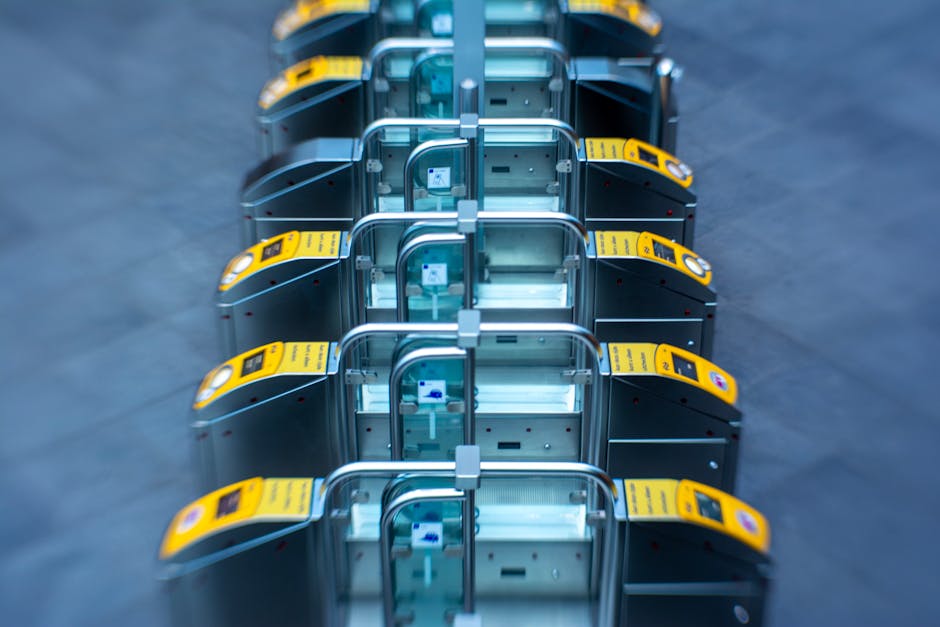
Tap the card flat on the orange sensor at the entry turnstile. The fare deducts as you tap out at your destination. Always tap out — failure to tap out can trigger a max-fare charge on your next entry.
Bus

Tap the orange sensor as you board. On most lines, you also tap when you exit (to confirm distance — Seoul charges by distance for some routes). If you transfer to another bus or to the subway within 30 minutes, you don’t pay another base fare.
Taxi
At the end of your ride, tap the card on the sensor near the meter. The driver may need to push a button to activate the reader. Confirm the fare matches the meter before tapping.
Convenience Stores
At the register, swipe or tap your T-money. Balance is deducted directly. Limits apply (typically ₩30,000 per transaction).
AREX Airport Express
The All-Stop AREX train (commuter version) accepts T-money. The Express AREX train (the faster ₩11,000 service) requires a separate ticket purchased in advance.
Beyond Transit: Using T-money for Everyday Payments
Locals treat T-money as a mini debit card, and you can too. Beyond fares, that stored balance quietly pays for a surprising amount of daily life in Seoul.
Tap it for drinks and snacks at any convenience store, coffee from vending machines, coin lockers at subway stations and tourist sites (a lifesaver for stashing bags between hotel checkout and a late flight), public-restroom and photo-booth machines, and even some fast-food kiosks. Transaction limits are modest — usually about ₩30,000 a tap — but for the small, frequent purchases that devour your loose change, it’s faster than cash and spares you a pocketful of ₩100 coins. Keep ₩5,000–10,000 of headroom on the card and you’ll rarely need to break a note.
T-money vs. Climate Card vs. WOWPASS: Which Should You Choose?
| Card | Best For | Cost | Coverage |
|---|---|---|---|
| T-money | Most tourists, all of Korea | ₩2,500–4,000 + load | National |
| Climate Card | Heavy daily Seoul transit users | ₩3,000 card + ₩5,000–65,000 pass | Seoul only (no AREX, no Suwon) |
| WOWPASS | Tourists wanting forex + transit | ₩4,000–5,000 | National (debit + transit hybrid) |
Choose T-money if:
- You want simplicity and national coverage
- You may visit Busan, Jeju, or other Korean cities
- You ride transit fewer than 4 times per day
- You prefer pay-as-you-go without a daily commitment
Choose Climate Card if:
- You’ll be in Seoul 5+ days riding transit 4+ times daily
- You don’t plan to visit Suwon, Nami Island, or use the AREX express
- You want unlimited rides for a flat fee
Climate Card pricing as of 2026:
- 1-day pass: ₩5,000
- 2-day pass: ₩8,000
- 3-day pass: ₩10,000 (Tourist version)
- 5-day pass: ₩15,000 (Tourist version)
- 7-day pass: ₩20,000 (Tourist version)
- 30-day pass: ₩62,000–65,000 (residents)
The tourist Climate Card is sold at Incheon Airport and major subway stations (Myeongdong, Gimpo, Seoul Station), and needs a ₩3,000 physical card on top of the pass price. Crucially, it doesn’t cover the AREX, the Shinbundang Line, or trips out to Suwon and the wider Gyeonggi area — so if your plans include a day trip beyond the city, keep a T-money card as backup.
Choose WOWPASS if:
- You want one card combining transit + debit-card spending
- You want to exchange foreign currency at competitive rates inside the kiosk
- You’re comfortable carrying a balance for shopping in addition to transit
For most tourists, the simple T-money card is the right call. Add a Climate Card on top only if your daily ride count justifies it, or reach for WOWPASS — its kiosks (in most major subway stations, Myeongdong, Hongdae, and both airports) also exchange 16+ foreign currencies into a won balance — if you’d rather carry a single card for spending and transit together.

Do You Even Need T-money in 2026?
It’s a fair question, because Seoul is slowly modernizing how it takes fares. The city has begun piloting open-loop “tap-and-go” payment — tapping a contactless foreign credit card or phone straight on the reader — on some buses and a handful of subway lines, and more kiosks now accept foreign cards for top-ups. So do you still need a physical T-money card?
For now, yes. Open-loop acceptance is partial and inconsistent: it doesn’t yet cover every line, transfer discounts can behave differently, and taxis, convenience stores, and lockers still expect T-money. Until tap-and-go is universal, a ₩3,000 T-money card remains the one method that works everywhere, every time, with the free-transfer discount intact. Buy the card, and treat any open-loop reader you spot as a convenient bonus rather than a replacement.
How to Refund a T-money Card Before You Leave Korea
Headed home with leftover balance? You have two refund options:
Option 1: Convenience Store Refund (Up to ₩20,000)
If your remaining balance is under ₩20,000, head to any GS25 or CU (some 7-Elevens) and ask for a “T-money refund.” The cashier deducts a ₩500 service fee and hands you cash. Done in under a minute.
Option 2: T-money Service Counter (Higher Balances)
For balances over ₩20,000, visit a designated T-money service center (T-money Town in Seoul Station, T-money Square in Myeongdong, or counters at major subway interchanges). Bring your passport. Larger balances may be refunded by bank transfer; cash up to ₩50,000.
Option 3: Just Keep It
The card never expires. Hold onto it for your next Korea trip. Many returning tourists never bother with refunds — the ₩500 fee plus low remaining balance often makes it not worth the trip to a refund counter.
Special and Souvenir T-money Cards
One of T-money’s underrated charms is the absurd variety of designer cards. K-pop groups (BTS, BLACKPINK, NewJeans, TWICE, Stray Kids), Disney characters (Pixar, Marvel, Frozen, Lilo & Stitch), Pokémon, Studio Ghibli — Korean convenience stores routinely stock thousands of variants. They cost ₩5,000–10,000, often double as collectibles, and cleared at customs duty-free. Younger travelers and K-pop fans often spend more on the card itself than on rides.
Notable rare editions: hologram and photo cards from the most current K-pop comebacks; limited-edition Squid Game and Demon Slayer collaborations; transparent or LED-equipped cards from Lotte World, COEX, Disney Store, and SM Town.
Where T-money Doesn’t Work (and What to Use Instead)

- AREX Express train: Requires a separate ticket (₩11,000). The All-Stop train accepts T-money.
- KTX high-speed trains: Buy at the KORAIL counter or app.
- Long-distance intercity buses: Buy at the bus terminal counter.
- Some traditional markets: Always cash. ATMs are nearby.
- High-end restaurants and luxury shopping: Use a credit card.
T-money Tips That Save You Money
- Always tap out on subway and bus. Forgetting penalizes future fares.
- Transfer within 30 minutes for free transfers — a single subway-to-bus journey on most routes costs only ₩1,400.
- Top up ₩30,000+ at a time to avoid frequent recharge stops.
- Don’t bend the card. RFID chips inside can crack — protect in a passport sleeve or wallet.
- Save your last receipt. Useful evidence for the rare scenario where the gate misreads your tap.
- Don’t worry about lost cards. If lost, the remaining balance is gone — but cards aren’t tied to your identity, so no fraud risk.
- Use it for water and snacks at convenience stores — saves a few seconds of fumbling for cash.
T-money Card and Group Travel
Each rider needs their own card — you cannot tap two people through with one card. Family travelers should buy one card per person. Children under 6 ride free with a paying adult. Children aged 6–12 should get a youth T-money card, which charges a reduced fare, and teens 13–18 qualify for a student rate; both need a one-time registration at a T-money service center or via the app to activate the discount. Buy each child their own card at a convenience store and load a small balance so the whole family moves through the gates without a bottleneck.
Common Tourist Mistakes

- Forgetting to tap out on the subway. The system charges the maximum fare on your next entry.
- Buying the wrong card. Some “Korea Tour Card” or “Discover Seoul Pass” products are bundled passes, not regular T-money. Verify with the cashier.
- Trying to use Apple Pay. Most Korean transit terminals do not accept Apple Pay yet. T-money remains essential.
- Sharing a card. One card per rider; the system rejects double-taps.
- Letting a card sit at zero balance. You’ll be denied entry at the turnstile. Top up before traveling.
T-money Troubleshooting: When the Gate Beeps Red
Taps almost always just work, but here’s what to do on the rare occasion something goes wrong.
- Red light and a beep at the gate: usually an insufficient balance. Step aside, top up at the nearest machine, and try again — no harm done.
- “You already tapped in” error: you likely forgot to tap out on a previous ride, so the system thinks you’re mid-journey. Tap on the deduction sensor or ask staff at the booth to reset it; they do this dozens of times a day.
- The reader doesn’t respond: take the card out of a thick wallet, since other RFID cards (some hotel keys, contactless credit cards) can interfere. Tap the bare card flat and hold it for a full second.
- Card seems dead: a bent or cracked card can stop working. Any station office can check the balance and, at a T-money service center, transfer it to a fresh card.
- Overcharged for not tapping out: if a max-fare charge slips through, a T-money customer center can review and refund it with your card and receipt.
The universal fallback is the red “call” button at every staffed gate — Seoul’s station agents are used to helping visitors and will wave you through or fix the card quickly.
Where T-money Plays in Your Wider Trip
The T-money card is one part of a larger transit puzzle. Pair it with our complete getting around Seoul guide, master the Seoul subway guide, and learn how to use it on the Incheon Airport to Seoul AREX route.
For broader trip planning, see Seoul travel guide, Seoul on a budget for cost saving, and Seoul travel tips for first-time visitors.

Frequently Asked Questions
How much does a T-money card cost?
Basic cards are ₩2,500–4,000. Designer cards (K-pop, Disney, character editions) run ₩5,000–10,000. The card itself is non-refundable, but loaded balance is.
Where can I buy a T-money card?
At any convenience store (CU, GS25, 7-Eleven, Emart24, MiniStop), at subway station vending machines, at airports, or pre-ordered online from Klook, Trazy, or KKday.
Can I use a T-money card for taxis?
Yes. Tap the card on the meter sensor at the end of your ride. Most Seoul, Busan, and Jeju taxis accept it.
Does T-money work outside of Seoul?
Yes — across all of South Korea. Subways, buses, and taxis in Busan, Daegu, Incheon, Gwangju, and Jeju accept T-money.
How do I refund my unused balance?
Visit GS25 or CU for refunds up to ₩20,000 (₩500 fee). Larger balances at T-money service centers in Seoul Station or Myeongdong, or at Incheon Airport refund kiosks.
Does T-money expire?
The card never expires. Loaded balance also doesn’t expire. Save it for your next visit.
Can I use one T-money card for multiple people?
No. Each rider needs their own card.
Should I get T-money or Climate Card?
Most tourists should get T-money. Choose Climate Card only if you’ll ride Seoul transit 4+ times daily for 5+ days and don’t need AREX or Suwon trips.
Can I use my Korean credit card to recharge T-money?
Yes — and as of 2026, most subway recharge kiosks now accept foreign Visa, Mastercard, JCB, UnionPay, and American Express.
Do kids need a T-money card?
Children under 6 ride free with a paying adult. Children 6–12 need a discounted youth T-money. Discount is automatic if registered.
What if I lose my T-money card?
The balance is lost — cards aren’t registered to identity. Buy a replacement at any convenience store and top up.
Can I use T-money on my phone with Apple Pay or Google Pay?
Not reliably. Most Korean transit readers still don’t take Apple Pay, and mobile T-money runs only on certain Android phones with a Korean SIM. For tourists, the physical card remains the simplest, most dependable option.
Is T-money cheaper than buying single subway tickets?
Yes. T-money fares are about ₩100 lower per ride, you skip the ₩500 per-ticket deposit dance, and you get free transfers between bus and subway within 30 minutes — savings that add up fast over a multi-day trip. Our Seoul on a budget guide has more fare-cutting tips.
How much should I load on a T-money card for a week?
For a week of typical sightseeing, ₩50,000–70,000 covers subway, bus, and the odd taxi, with convenience-store snacks on top. Load ₩30,000 to start and top up as needed — you can always refund most of the balance before you fly home.
Can I buy a T-money card before arriving in Korea?
Yes — Klook, KKday, Trazy, and WOWPASS sell pre-loaded or collectible T-money cards for airport pickup. It costs a little more than a store card but skips the arrival queue at peak times.
What’s the difference between T-money and a Discover Seoul Pass?
They’re different products. T-money is a pay-as-you-go transit and payments card; the Discover Seoul Pass is a time-limited sightseeing pass that bundles free entry to attractions (and includes some T-money transit function). If your goal is simply getting around, buy T-money; add a Discover Seoul Pass only if you’ll hit enough paid attractions to justify it.
Final Thoughts
The T-money card is the best ₩3,000 you’ll spend in Korea. It transforms transit from “what did that cost again?” to a single seamless tap. Pick one up at the airport, load ₩30,000–50,000, and you’re set for a full Seoul trip with money to spare. Pair it with our Seoul subway guide and getting around Seoul resources, and you’ll move through this city like a local from day one.