Think of this as the complete Jongno guide for Seoul tourists: every palace, every neighborhood worth your time, the stream walks, where to eat, where to sleep, and a one-day itinerary that captures the essence of historical Seoul without ever leaving the district. If you read only one neighborhood guide before your trip, this is the one — because on a first visit you will almost certainly spend more hours here than anywhere else in the city.

Why Jongno is Seoul’s Historic Heart
When General Yi Seong-gye founded the Joseon dynasty in 1392 and made Seoul (then called Hanyang) the capital, he sited the royal palace in what is now Jongno. The neighborhood’s name derives from Jong (bell) and no (street) — a reference to the great bronze bell rung daily for 600 years to mark the opening and closing of Seoul’s fortress gates. That bell still hangs at Bosingak Pavilion in central Jongno today, and it’s still rung 33 times every New Year’s Eve.
For modern visitors, Jongno is simply the densest concentration of “must-see” Seoul anywhere in the city: five Joseon palaces, two UNESCO sites, three traditional villages, the nation’s central square, and a 5-kilometer restored urban stream, all within walking distance of one another. What makes it special isn’t just the checklist, though — it’s the way 600-year-old palace walls sit directly beneath glass office towers, and how a lane of tea houses opens onto an eight-lane boulevard. This is where you feel the whole sweep of Korean history in an afternoon. To see how Jongno fits alongside the city’s other districts, our Seoul neighborhoods guide lays out the map.
How to Get to Jongno
- Subway: Multiple lines cross Jongno — Gyeongbokgung (Line 3), Anguk (Line 3), Jonggak (Line 1), Jongno 3-ga (Lines 1, 3, 5), Jongno 5-ga (Line 1), Gwanghwamun (Line 5).
- Bus: Many city buses run the district along Jongno-ro and Sejong-daero.
- From Incheon Airport: AREX Express to Seoul Station, then a 5-minute taxi or one subway stop to Jonggak. See our Incheon Airport to Seoul guide.
- Walking: Most Jongno highlights are within 30 minutes’ walk of each other.
The single most useful thing to know is that Anguk Station (Line 3) is the tourist gateway — its exits drop you steps from Bukchon, Insadong, Jogyesa Temple, and the palace gates. Once you’re in the district, forget the subway for short hops; Jongno is genuinely walkable, and the walking is half the pleasure. For the wider transit picture, our getting around Seoul guide and Seoul subway guide cover fares, transfers, and the T-money card.
The 5 Royal Palaces of Jongno
No other city in the world puts five royal palaces this close together. You won’t see all five — and you shouldn’t try — but knowing the character of each helps you pick the two or three that fit your day.
1. Gyeongbokgung Palace (경복궁) — The Main Palace
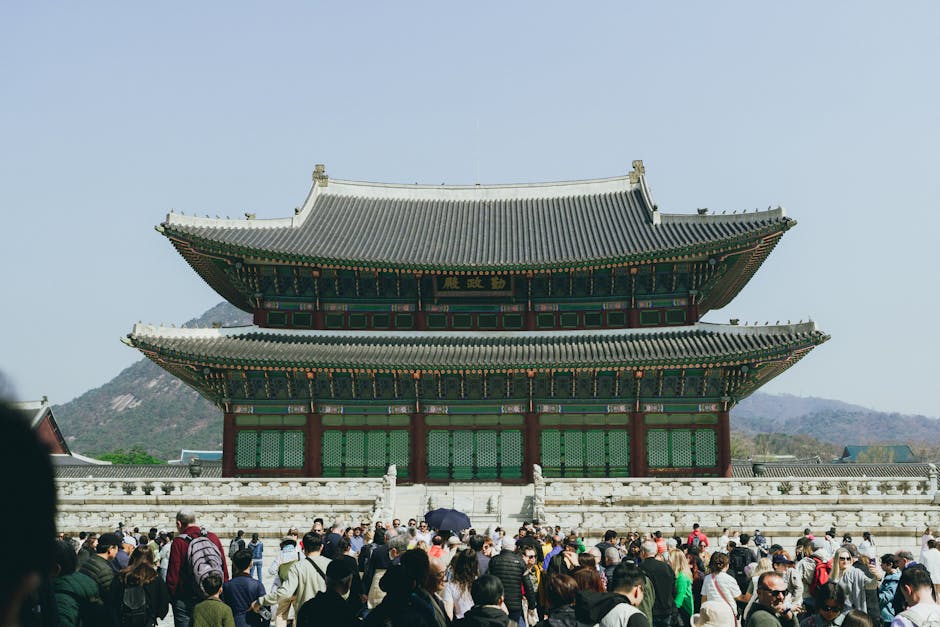
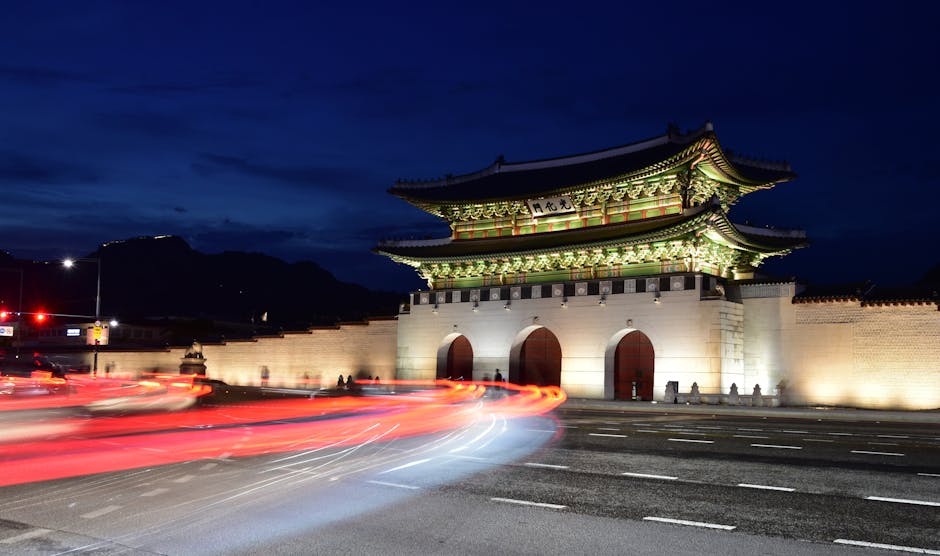
Gyeongbokgung (1395) is the largest and most iconic of the Joseon palaces. Built when the dynasty was founded, it served as the king’s primary residence until the Japanese invasion of 1592. The meticulously reconstructed complex now covers 432,000 m², and its main gate, Gwanghwamun, is the symbolic heart of Korea. Give it at least two hours: the throne hall of Geunjeongjeon, the floating banquet pavilion of Gyeonghoeru over its lotus pond, and the hexagonal Hyangwonjeong are the set-piece photographs, and the on-site National Folk Museum is free with your ticket.
- Subway: Gyeongbokgung Station (Line 3), Exit 5
- Hours: 9:00 AM – 5:00 PM (closed Tuesdays)
- Admission: ₩3,000 adults; FREE if wearing hanbok
- Don’t miss: Royal Guard Changing Ceremony at 10:00 AM and 2:00 PM, Gyeonghoeru Pavilion, and Hyangwonjeong Pavilion
2. Changdeokgung Palace (창덕궁) — UNESCO World Heritage
Changdeokgung (1405) is the only one of the five Joseon palaces designated a UNESCO World Heritage Site, and to my eye it’s the most beautiful. Rather than imposing a rigid grid, its builders threaded the halls into the natural terrain, which is why it feels less like a monument and more like a place someone actually lived. The Secret Garden (Huwon) — accessible only by timed guided tour — hides 30 hectares of pavilions, lotus ponds, and 300-year-old trees, and it is spectacular in autumn.
- Subway: Anguk Station (Line 3), Exit 3
- Hours: 9:00 AM – 5:00 PM (closed Mondays)
- Admission: ₩3,000 main palace; ₩5,000 extra for the Secret Garden tour
- Note: Reserve Secret Garden tours online — autumn slots fill weeks ahead
3. Changgyeonggung Palace (창경궁) — The Quieter Royal Residence
Built in 1483 as a residence for retired queens, Changgyeonggung is the most peaceful of the major palaces and pairs naturally with Changdeokgung, to which it’s connected by a wooded path. It holds one of Korea’s earliest greenhouses (1907) and a lovely Spring Pond, and because most tour groups skip it, you can often have a courtyard to yourself — a rare thing in central Seoul.
- Subway: Hyehwa Station (Line 4), Exit 4
- Admission: ₩1,000
4. Deoksugung Palace (덕수궁) — Where Tradition Meets Modernity
Smaller than the others but unique for blending traditional Korean halls with Western neoclassical buildings from the late 19th century, Deoksugung sits across from City Hall and stages a changing-of-the-guard ceremony three times daily. The Stone Wall Walk (Doldam-gil) tracing its outer wall is one of Seoul’s most romantic strolls, especially under the ginkgo trees in November — a favorite in our Seoul itinerary for couples.
- Subway: City Hall Station (Line 1/2), Exit 2
- Admission: ₩1,000
5. Gyeonghuigung Palace (경희궁) — The Hidden One
Often skipped entirely, Gyeonghuigung is a small western palace beside the Seoul Museum of History. Entry is free, and it’s worth 30 quiet minutes if you’re passing — you’ll likely have the grounds nearly to yourself.
Jongmyo Shrine (종묘) — UNESCO World Heritage
The Confucian royal shrine of the Joseon dynasty, Jongmyo houses the spirit tablets of every Joseon king and queen. Inscribed by UNESCO in 1995, its main hall is the longest single wooden structure in Asia — a low, austere, almost hypnotic building that rewards slow looking. The annual ancestral rites (Jongmyo Daeje), held on the first Sunday in May, continue a 600-year unbroken tradition of ritual music and dance. See our Seoul temples and shrines guide for the full picture.
- Subway: Jongno 3-ga (Lines 1, 3, 5), Exit 11
- Admission: ₩1,000
- Hours: Guided tour only on weekdays; self-guided on weekends
Top Things to Do in Jongno
1. Photograph the Royal Guard Changing Ceremony
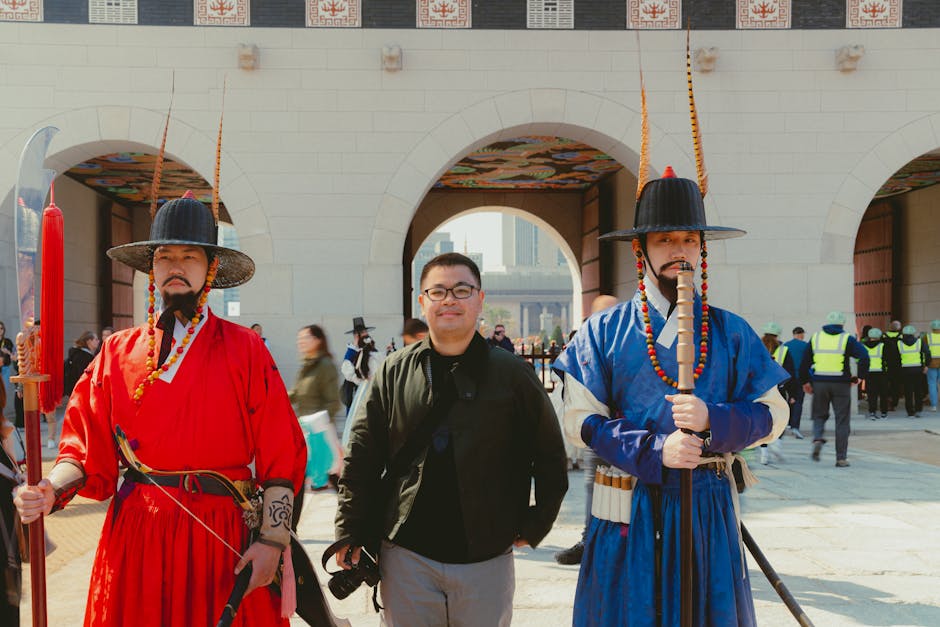
Held at Gwanghwamun Gate (10:00 AM and 2:00 PM) and Deoksugung (11:00 AM, 1:30, 2:30, and 3:30 PM), costumed reenactors perform an elaborate guard-changing ceremony of drums, banners, and horsehair hats. It’s free, it’s genuinely photogenic, and you can pose with the guards afterward — arrive 10 minutes early for a front-row spot, and note it’s cancelled in heavy rain.
2. Walk Cheonggyecheon Stream
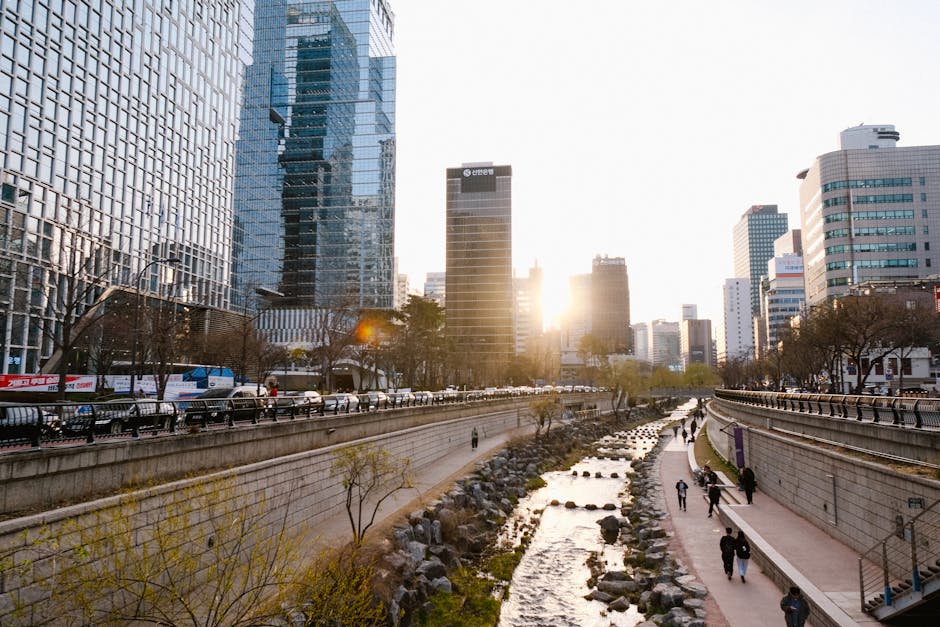
The Cheonggyecheon Stream was uncovered from beneath an elevated freeway in 2005 in one of Asia’s most celebrated urban-regeneration projects. Today 5.84 km of restored waterway runs through the heart of Jongno, lined with cafés, public art, seasonal festivals, and a constant procession of couples and commuters cooling their feet. Start at Cheonggye Plaza near Gwanghwamun; walking the whole length east takes about 90 minutes, but even 20 minutes at dusk, when the office towers reflect off the water, is worth it.
3. Visit Gwanghwamun Plaza
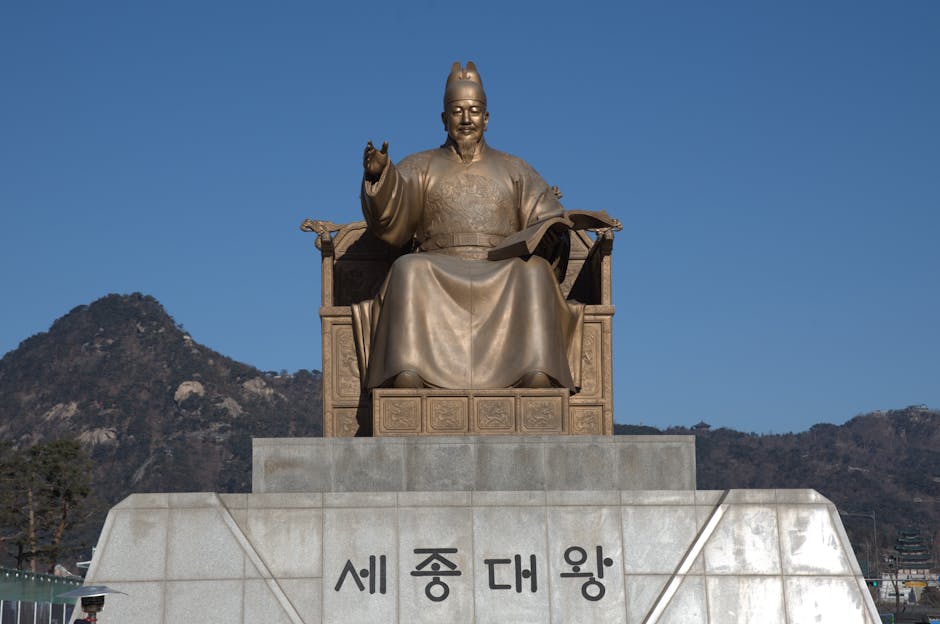
Between Gyeongbokgung and City Hall lies Gwanghwamun Plaza, Korea’s symbolic public square. Statues honor King Sejong the Great, who gave Korea its Hangul alphabet, and Admiral Yi Sun-sin, who broke the Japanese navy in the 1590s. Beneath the plaza sit free interactive museums on both figures — a cool, air-conditioned detour on a hot day — and the square itself hosts concerts, protests, and festivals year-round. It’s the beating civic heart of modern Korea, and it’s free.
4. Discover Ikseon-dong Hanok Village
Ikseon-dong is the up-and-coming hanok village that layers 1920s Korean homes with hip cafés, wine bars, and indie boutiques. Smaller, denser, and trendier than Bukchon, it’s best after dark, when the lantern-lit alleys fill with a young local crowd. It’s the perfect evening counterpoint to a daytime of palaces — and it pairs beautifully with our dedicated Insadong and Bukchon Hanok Village guides for the more traditional neighborhoods next door.
5. Hike Inwangsan or Bugaksan
Behind Gyeongbokgung rise two of Seoul’s granite peaks. Inwangsan (Eagle Mountain, 339 m) is a manageable 90-minute round trip with breathtaking palace views and the shamanist Guksadang shrine along the way. Bugaksan (342 m) follows preserved Joseon-era fortress walls and needs a little more planning, but the ridgeline panorama over the palace district is unbeatable. Both are free; the Seoul outdoor and nature guide has trail details.
6. Eat at Gwangjang Market
One of Korea’s oldest covered markets, Gwangjang is the source of legendary bindaetteok (mung-bean pancakes ground and fried to order), mayak gimbap (“narcotic” mini seaweed rolls), sundae (blood sausage), and the raw beef tartare that stops first-timers in their tracks. It shot to global fame via Netflix’s Street Food: Asia, and the buzzing food alley runs roughly 9:00 AM to 11:00 PM. It deserves a visit of its own — our Gwangjang Market food guide maps exactly which stalls to hunt down and what to pay.
7. Hang at Bosingak Bell Pavilion
The bell that rang for 600 years to open and close Seoul’s gates still hangs at Bosingak, directly in front of Jonggak Station. The current bell is struck 33 times every New Year’s Eve at midnight in a televised ceremony that draws huge crowds — Seoul’s answer to Times Square.
8. Explore Insa-dong Antique District
Korea’s largest concentration of antique dealers, calligraphy studios, hanji paper shops, and traditional tea houses, all along one pedestrianized spine. It’s the best place in the city to buy a genuine Korean souvenir; the full rundown is in our Insadong guide.
9. Climb Bugak Skyway for City Views
A scenic mountain road behind Bukchon winds up to Bugak Pavilion, with 360-degree views over Seoul and the Han River. Reach it on bus 1020 or 7212; weekends bring out the road cyclists and the food trucks.
10. See Tapgol Park
Site of the March 1st Movement of 1919, where Koreans first read out the Declaration of Independence, Tapgol Park is small but historically essential, and it shelters the 10-story Wongaksa Pagoda, a National Treasure carved from marble.
Where to Eat in Jongno
Jongno’s food skews old-school and proudly so — this is the district for the dishes that built Korean cuisine, eaten in rooms that have been serving them for a century.
- Gwangjang Market — bindaetteok, mayak gimbap, and raw beef tartare, ₩6,000–15,000
- Imun Seolnongtang — Seoul’s oldest restaurant (1904), milky ox-bone soup, ₩12,000
- Tosokchon Samgyetang — the famous ginseng chicken soup near Gyeongbokgung, ₩19,000
- Gwanghwamun Jip — spicy braised short ribs (galbijjim), ₩45,000 for two
- Sanchon — Buddhist temple cuisine in Insadong, lunch ₩45,000
- Yongsusan — traditional royal-court cuisine, set menus from ₩70,000
- Onion Anguk — modern bakery inside a restored Bukchon hanok
My honest advice: do one blowout and one street bite. Queue for Tosokchon’s samgyetang at lunch, then graze Gwangjang for dinner. If you want to branch out, the Seoul food guide covers the wider scene and the Korean BBQ guide points you to the best grills for a proper meat feast.
Suggested One-Day Jongno Itinerary
Here’s how I’d spend a single, full day in Jongno — palaces in the cool morning, hanok lanes in the afternoon, and the stream and market after dark:
- 9:00 AM — Rent hanbok at Gyeongbokgung Station Exit 5
- 10:00 AM — Watch the Royal Guard ceremony, then tour Gyeongbokgung Palace
- 12:00 PM — Walk to Bukchon Hanok Village and grab a snack
- 1:00 PM — Lunch at Tosokchon Samgyetang or in Insadong
- 2:30 PM — Insadong tea house and craft browsing
- 4:00 PM — Jongmyo Shrine (UNESCO)
- 5:30 PM — Walk Cheonggyecheon Stream as the city lights up
- 7:00 PM — Dinner at Gwangjang Market
- 8:30 PM — Drinks and live music in Ikseon-dong’s hanok bars
That single loop covers two palaces, two UNESCO sites, two hanok villages, a legendary market, and Korea’s most photographed stream — all on foot. For a version that spreads this across a longer trip, see our 3-day Seoul itinerary and the wider Seoul itineraries hub.
Jongno After Dark
Most visitors treat Jongno as a daytime district and clear out by dinner — which is a mistake, because the area has one of the most characterful night scenes in Seoul, minus the Gangnam price tags. The stretch around Jongno 3-ga is famous for its pojangmacha — orange-tented street bars where office workers spill onto plastic stools over grilled gizzard, egg rolls, and endless bottles of soju. It’s loud, cheap, smoky, and completely authentic. A few blocks north, the lantern-lit alleys of Ikseon-dong hide natural-wine bars and cocktail dens inside century-old hanok, drawing a younger, quieter crowd.
For a piece of living history, duck into Nakwon, the labyrinthine old arcade near Insadong, or find one of the makgeolli houses where cloudy rice wine is ladled from brass kettles alongside savory pancakes. If you want a fuller map of the city’s bars and clubs, our Seoul nightlife guide and best bars in Seoul guide cover where to go once you’ve had your fill of palaces — and the Korean alcohol guide explains exactly what to order and how to pour it politely.
Where to Stay in Jongno
Jongno is the most-recommended base for first-time visitors, precisely because so much is walkable from your door. The main lodging zones:
- Gwanghwamun area — the upscale cluster (Four Seasons, Fairmont, Lotte Hotel Seoul)
- Insadong / Anguk — mid-range hotels and hanok stays within steps of the villages
- Jonggak — business hotels with direct subway access
- Hanok guesthouses in Bukchon — the atmospheric splurge
For a truly local stay, book a night in a restored courtyard house; our hanok stays in Seoul guide covers the licensed options, and the broader where to stay in Seoul guide compares neighborhoods and price bands.
Best Times to Visit Jongno
- Cherry blossom (early April): palace courtyards bloom pink; pair with our best time to visit Seoul guide
- Autumn foliage (late October): palace gardens and the stream walk hit peak color — the best window of the year
- Buddha’s Birthday week (early May): the Lotus Lantern Festival lights up Jogyesa Temple and the surrounding streets
- Avoid closure days: Gyeongbokgung shuts Tuesdays, Changdeokgung shuts Mondays
Practical Tips for Visiting Jongno
- Buy the Royal Palaces Pass (₩10,000) for entry to all four major palaces plus Jongmyo. Valid three months and pays for itself in two visits.
- Mind the closure days — Gyeongbokgung Tuesdays, Changdeokgung Mondays — so you don’t arrive to locked gates.
- Hanbok rental gets you in free to all four palaces, and the photos are better for it.
- Grab a T-money card at any convenience store (see our T-money card guide).
- Free Wi-Fi covers every palace gate, plaza, and Cheonggyecheon entrance.
- Restrooms are clean and free inside every palace and metro station.
- Wear real walking shoes — Jongno is walkable but full of gravel courtyards, hills, and stairs.
Frequently Asked Questions
What’s the best palace to visit in Jongno?
Gyeongbokgung is the most iconic and the largest; Changdeokgung is the most beautiful and the only UNESCO-listed one. If you have time for two, do both — they’re a 10-minute walk apart.
Can I visit all five palaces in one day?
Technically possible but exhausting and joyless. Two palaces in a day is the sweet spot; three is the practical maximum before palace fatigue sets in.
Is Jongno safe at night?
Very. Jongno is well-lit, busy well past 10 PM, and among the safest areas of an already safe city. Our is Seoul safe for tourists guide has the full context.
How long do I need in Jongno?
Two full days lets you see the palaces, both hanok villages, Insadong, Jongmyo, and Cheonggyecheon at a relaxed pace. One packed day covers the essentials.
What’s the best subway station for Jongno’s tourist sites?
Anguk Station (Line 3), Exits 2, 3, and 6, puts you within walking distance of Bukchon, Insadong, Jogyesa Temple, and the palaces.
Is Gwanghwamun Plaza worth visiting?
Yes — it’s free, photogenic, holds two free underground museums, and is the symbolic center of modern Korea. It takes as little as 20 minutes.
Where can I rent hanbok in Jongno?
Around Anguk Station Exits 1 and 6, and near Gyeongbokgung Station Exit 5. There’s plenty of choice, with prices typically ₩15,000–35,000 depending on rental length.
What’s the best food to try in Jongno?
Bindaetteok and mayak gimbap at Gwangjang Market, samgyetang at Tosokchon, and ox-bone soup at Imun Seolnongtang — three dishes that between them tell the story of old Seoul.
Is Jongno good for first-time Seoul visitors?
It’s the best base for first-timers, full stop. Most palaces, hanok neighborhoods, and famous markets are within walking distance of each other and of the main hotels.
Final Thoughts
If you have one day in Seoul, spend it in Jongno. If you have a week, you’ll still spend most of your time here. This is the district that holds the greatest share of Korea’s pre-modern past while functioning as the political and ceremonial center of the present — palaces and protest squares, tea houses and towers, all in a walkable few square kilometers. Combine it with our Seoul itineraries, the broader Seoul neighborhoods guide, and the comprehensive Seoul travel guide to build the rest of your trip.