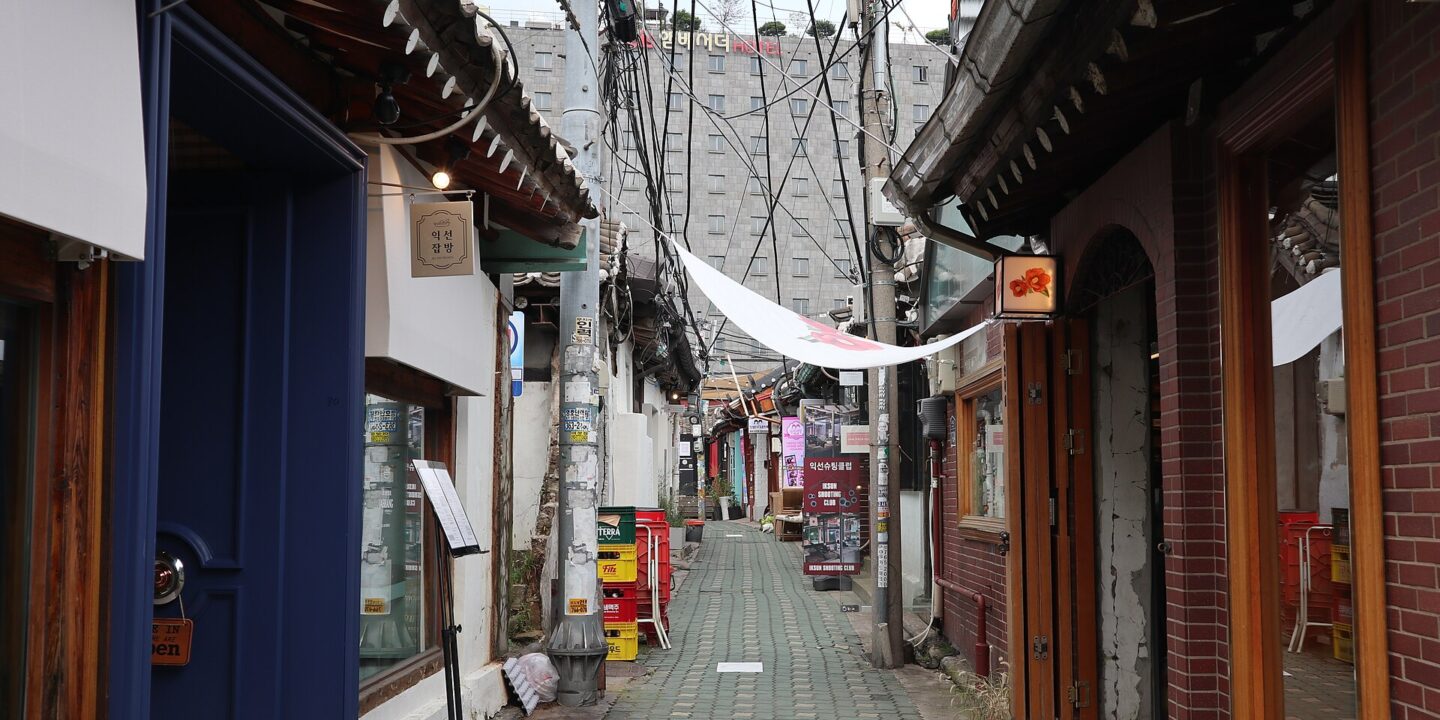
This guide covers where Ikseon-dong actually is and how to get in, the short history that explains why it looks the way it does, which alleys to walk and in what order, the cafes, restaurants and bars worth queueing for, when it becomes unbearable, and how to fold it into a day with Changdeokgung, Insadong and Jongmyo on foot. Prices and opening patterns were checked in September 2026. Ikseon-dong turns over tenants quickly, so treat any individual venue as a strong lead rather than a promise, and check a map app for current hours before you make a special trip.
Ikseon-dong at a glance
| Detail | |
|---|---|
| Where | Jongno-gu, immediately north of Jongno 3-ga Station, between Insadong (west) and Jongmyo Shrine (east) |
| Subway | Jongno 3-ga Station, Lines 1, 3 and 5. Exit 4 or Exit 6 puts you a two- to three-minute walk away |
| Size | Roughly a hundred hanok across a handful of lanes; you can walk every alley in 15 minutes |
| Realistic visit | 1.5–2 hours with a coffee stop; 3 hours with a meal |
| Entry | Free — it is a public residential and commercial neighbourhood |
| Coffee | ₩5,500–8,000; signature drinks and desserts push a two-person cafe stop to ₩20,000–30,000 |
| Lunch or dinner | ₩12,000–25,000 per person at most restaurants |
| Hanbok rental nearby | ₩15,000–20,000 for a basic 2–4 hour rental |
| Busiest | Saturday and Sunday 13:00–19:00; Friday evenings |
| Quietest | Weekday mornings before 11:00, when many cafes are only just opening |
Why Ikseon-dong looks the way it does
Most of the hanok you see in Seoul today are not ancient. The tiled-roof houses of Bukchon and Ikseon-dong mostly date from the 1920s and 1930s, and they are, in a sense, early mass housing. In Ikseon-dong the man behind them was Jeong Se-gwon, a Korean property developer and independence-movement supporter who bought up land in central Seoul during the Japanese colonial period and built compact, standardised hanok for ordinary Korean families. Part of the point was to keep Korean households in the heart of the city at a time when Japanese settlement was pushing into it.
That origin explains the shape of the place. These are not grand yangban residences with courtyards the size of tennis courts. They are small, closely packed urban houses set along lanes that were never meant for anything wider than a handcart, which is why the neighbourhood feels intimate rather than stately, and why two people cannot pass comfortably in some of the alleys when a queue has formed outside a bakery.
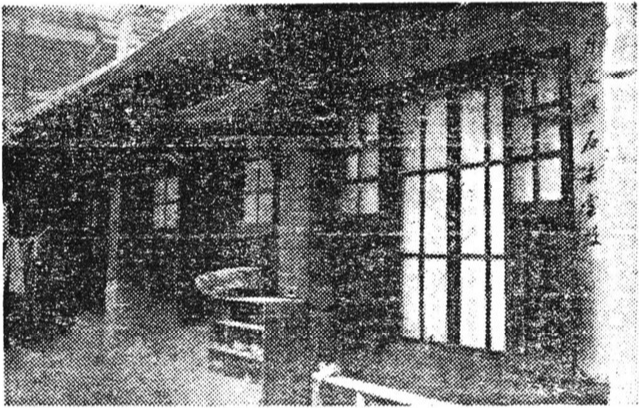
For most of the post-war decades Ikseon-dong was a slightly shabby residential pocket, surrounded by the jewellery trade, cheap bars and the old men’s afternoon culture of Tapgol Park. By the 2000s it was earmarked for redevelopment, which would have meant demolition. Those plans stalled and were eventually dropped in the mid-2010s, and in the space they left, young owners began renting the cheap hanok and turning them into cafes, workshops and small restaurants. Within five years it had gone from almost unknown to one of the most-photographed streets in Korea.
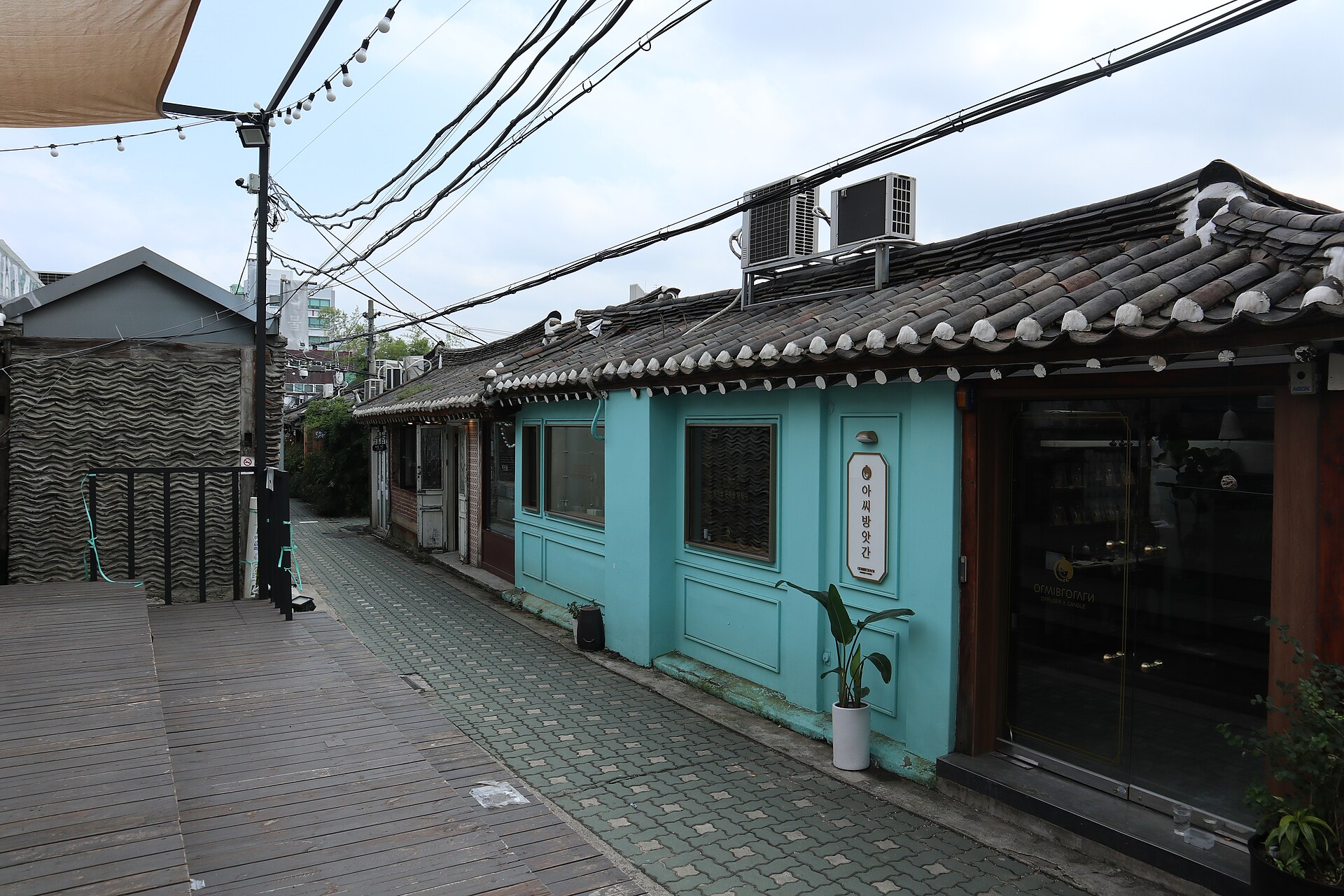
The result is not a museum. Signage is modern, the air-conditioning units sit on the tiled roofs, and some businesses have gutted the interiors entirely behind the old frames. Purists find that disappointing. Most visitors find it the most enjoyable version of hanok Seoul, precisely because you can go inside, sit down and have a drink rather than admire closed doors from the lane, which is the Bukchon experience.
Getting there
By subway
Jongno 3-ga is one of the best-connected stations in the city, served by Line 1, Line 3 and Line 5. Line 5 platforms are the closest to Ikseon-dong. Take Exit 4 or Exit 6, walk north along Donhwamun-ro for a minute or two and turn right into the first narrow lane lined with low tiled roofs. If you come out and see a wide road with heavy traffic and no hanok, you are on the right street — keep walking north and watch the right-hand side. The standard adult fare with a T-money card is ₩1,550. If you are still setting up transport, our Seoul subway guide covers transfers and exit logic.
On foot from nearby sights
- From Insadong: about 7–10 minutes east from the Insadong main street, crossing past Tapgol Park.
- From Jongmyo Shrine: about 5 minutes west from the main gate.
- From Changdeokgung: about 10–12 minutes south from Donhwamun Gate, straight down Donhwamun-ro.
- From Gwangjang Market: about 15–20 minutes west along Jongno, or two stops on Line 1 from Jongno 5-ga.
- From Bukchon: about 20 minutes, most pleasantly via Changdeokgung’s southern wall.
How the neighbourhood is laid out
It helps to know that Ikseon-dong has two distinct halves, because the photos you have seen are almost all from one of them.
The hanok core
The inner grid, entered from Donhwamun-ro and from the lanes behind Supyo-ro, is where the tiled roofs are: a few parallel alleys, a couple of cross-lanes and some dead ends, with cafes, dessert shops, small restaurants, hanbok studios, photo booths and a handful of bars. Lanterns and fairy lights are strung overhead. This is the part that gets impossibly crowded, and it is where most of your two hours will go.
The outer lanes
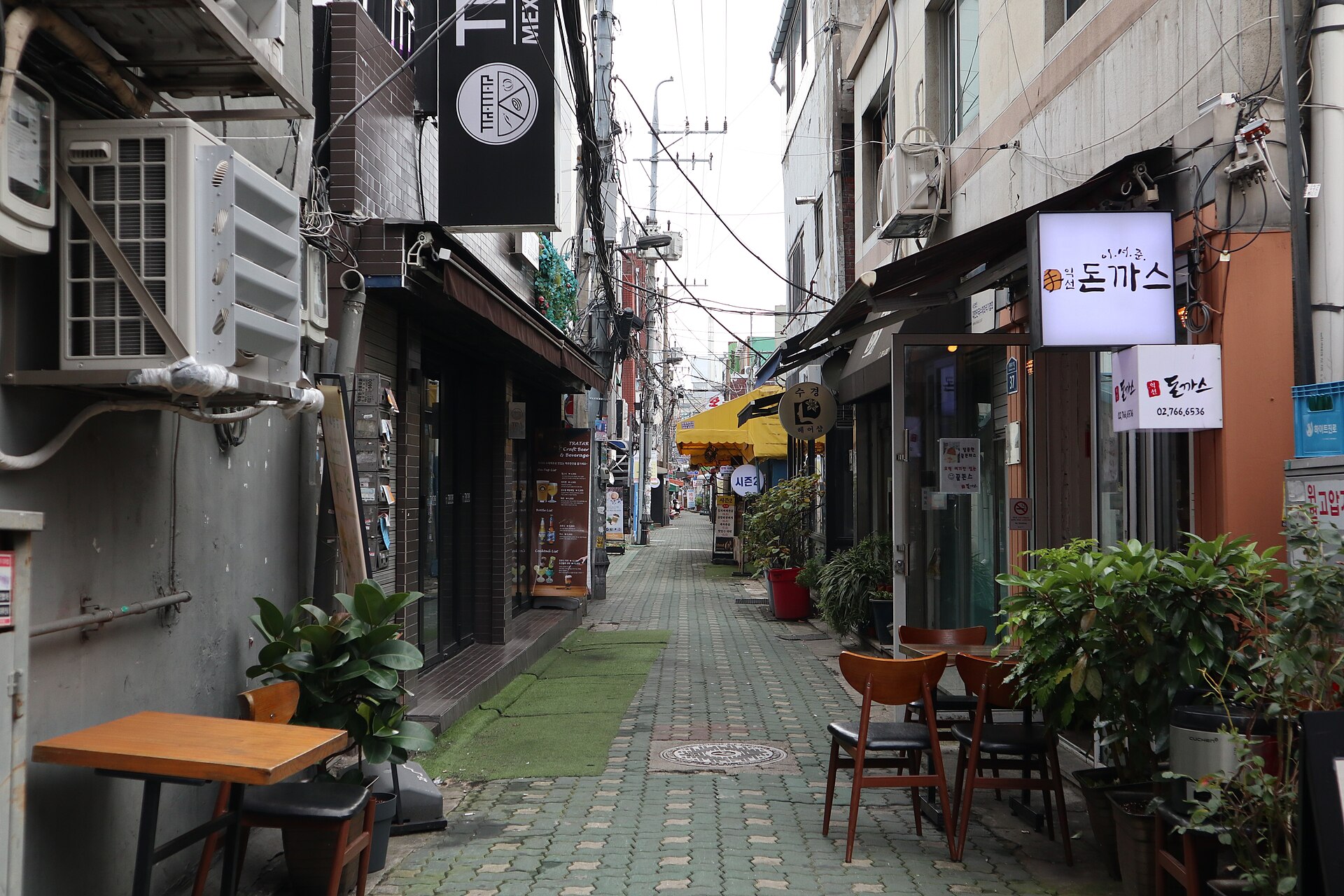
Around the edges, particularly towards Supyo-ro and the jewellery district to the south, the hanok give way to ordinary low-rise concrete buildings full of tonkatsu restaurants, craft beer bars, Mexican places and hair salons. It is less photogenic and much less crowded, and when the core has a forty-minute queue for everything, this is where you will actually get a table.
A walking route through Ikseon-dong
There is no wrong way to walk a neighbourhood this small, but this order avoids doubling back and puts the coffee stop where you will want it.
- Enter from Donhwamun-ro (Exit 4 or 6 of Jongno 3-ga). Take the first hanok lane on the right and walk it slowly end to end. This is the densest stretch, with the lantern-lined roofs that feature in most photographs.
- Loop the parallel alleys. Turn left at the end, then left again down the next lane, and repeat. It sounds tedious; in practice each lane has a completely different set of shopfronts and it takes ten minutes.
- Look up and look in. Several cafes have glass roofs, internal courtyards or water features that you only see from the doorway. Many owners do not mind you looking in if you do not linger with a camera.
- Stop for coffee or dessert — ideally somewhere with a courtyard or upstairs seat, which gives you a view back over the roofs.
- Drift into the outer lanes towards Supyo-ro for lunch or an early dinner.
- Exit south to Jongno, where the pojangmacha tents set up along the main road in the evening, or west towards Tapgol Park and Insadong.
Cafes and dessert shops
Coffee is the reason most people come. Ikseon-dong’s cafes compete less on the beans than on the room, and the best of them are genuinely beautiful spaces. Expect to pay ₩5,500–8,000 for coffee and more for the signature drinks, and expect queues for the famous names at weekends. For the speciality-coffee end of the city, our guide to the best coffee shops in Seoul is the better starting point; Ikseon-dong is about atmosphere.
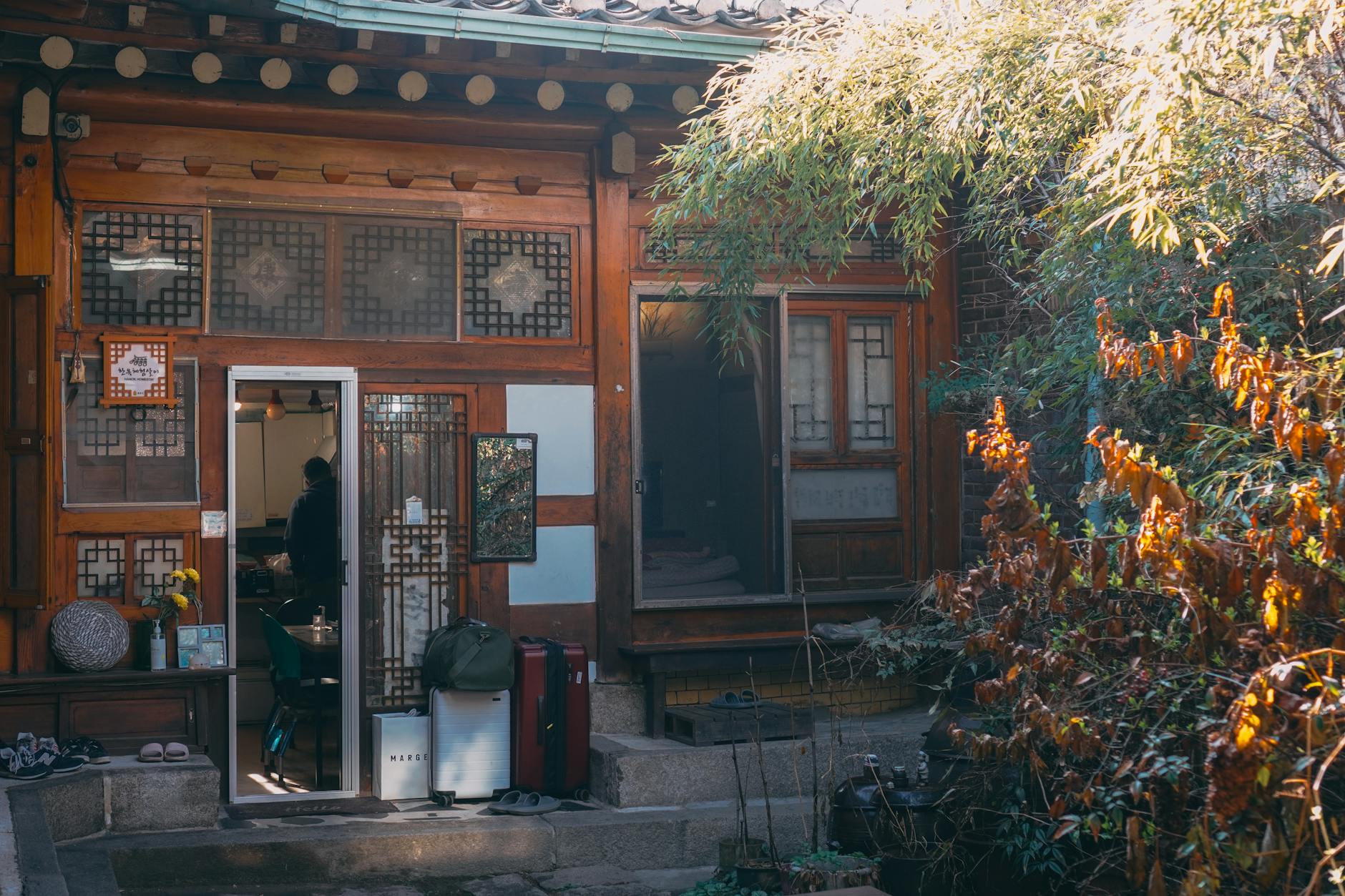
Names worth knowing
- Cheongsudang — the most famous cafe in the neighbourhood, known for its entrance path through bamboo and water and for its wobbly soufflé castella. Beautiful, very busy, and the one place where a waiting list on a weekend is almost guaranteed. Go early on a weekday.
- Shilla-dang Ikseon — a hanok dessert cafe leaning into traditional flavours: citron, misutgaru (roasted-grain powder) and Korean-style sweets. Good if you want something that tastes of Korea rather than Paris.
- Donut Jungsu Ikseon — doughnuts over several floors of wood-panelled rooms, with one of the better rooftop views across the tiled roofs.
- Jayeondo Salt Bread — part of the salt-bread craze that has swept Seoul; small, buttery rolls sold hot from the oven. The queue moves quickly, and the first batches of the morning are the ones to get.
- Dongbaek Yanggwajeom — a long-standing dessert shop styled like an old Western-style confectioner, with a camellia motif; a dependable choice when the bigger names are rammed.
A note on the queues: many of the popular cafes use a tablet or a QR-code waiting list rather than a physical line. You add your name, wander off and get a Korean-language text when your table is ready — which does not work well without a Korean number. If there is a tablet at the door, ask staff whether they can call your name instead, or pick somewhere without a list.
Where to eat
The food in Ikseon-dong is better than the neighbourhood’s reputation as a cafe playground suggests. It is heavy on Korean-fusion comfort food served in hanok rooms, and prices are central-Seoul normal rather than tourist-inflated: ₩12,000–25,000 a head for most meals.
Korean and Korean-fusion
- Damsot Ikseon — sotbap, rice cooked to order in an individual stone pot with toppings such as steak, salmon or abalone. You scoop the rice into a bowl, pour tea into the pot and eat the scorched crust (nurungji) at the end. Excellent value for a sit-down meal, and a queue to match at lunchtime.
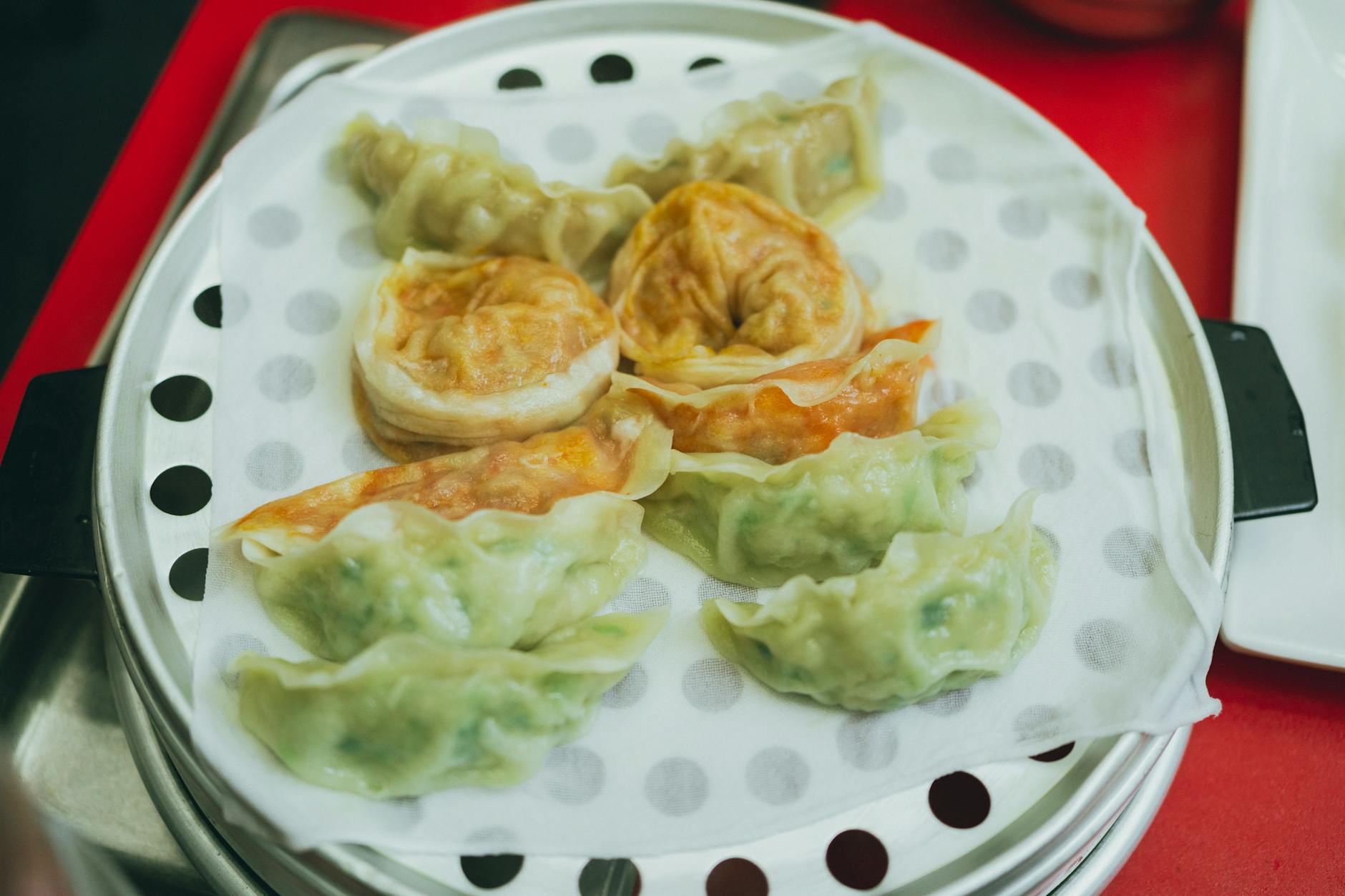
- Namdo Bunsik — a bunsik (snack-food) restaurant with a Jeolla-province slant: tteokbokki, seaweed tempura, dumplings and Jeonju-style bibimbap. Cheap, cheerful and busy at weekends.
- Ojugine — no-frills home-style Korean cooking, less of a scene than the trendier places and correspondingly easier to get into.
- Ikseon Banju — the upmarket option, a stylish hanok with seasonal Korean dishes and drinks pairings. Book or arrive early if it is a special occasion.
- Changhwadang — a long-running mandu (dumpling) and tteokbokki shop that became one of the neighbourhood’s early hits. Confirm it is still trading before you go out of your way.
Beyond Korean
- Hoho Sikdang — Japanese-style dishes, particularly hire-katsu (pork tenderloin cutlet) and sukiyaki, in a cosy hanok. Popular with couples; expect to wait.
- 2-Storey House (Icheung Yangok) — a two-level building with a rooftop and a menu of Korean-accented pasta. The cream pasta is the house order.
- Roll in Ikseon — Western-Korean fusion in a well-designed hanok interior; go for the room as much as the food.
- El Carnitas — carnitas tacos and nachos with neon and loud music. It feels out of place until you have eaten there.
Ikseon-dong after dark
From about 18:00 the balance tips from cafes to bars. The lanterns come on, the photo crowd thins a little, and the hanok restaurants fill up with office workers and dates. It is one of the most atmospheric places in the city to have a first drink, even if it is not where you will want to spend a whole night.
What drinking here looks like
- Makgeolli and jeon: several hanok restaurants serve rice wine by the kettle with savoury pancakes. It is the classic rainy-evening order and it suits the rooms.
- Cocktail bars in hanok: small, low-lit rooms with Korean-inflected cocktails, often using omija, yuja or soju bases. Expect ₩15,000–20,000 a cocktail.
- Craft beer: concentrated in the outer lanes, with draught from about ₩7,000–9,000.
- Pojangmacha on Jongno: the tented street stalls that set up along the main road outside Jongno 3-ga Station in the evenings. Plastic stools, soju, fishcake skewers and grilled seafood. Rough, cheerful and the obvious second stop.
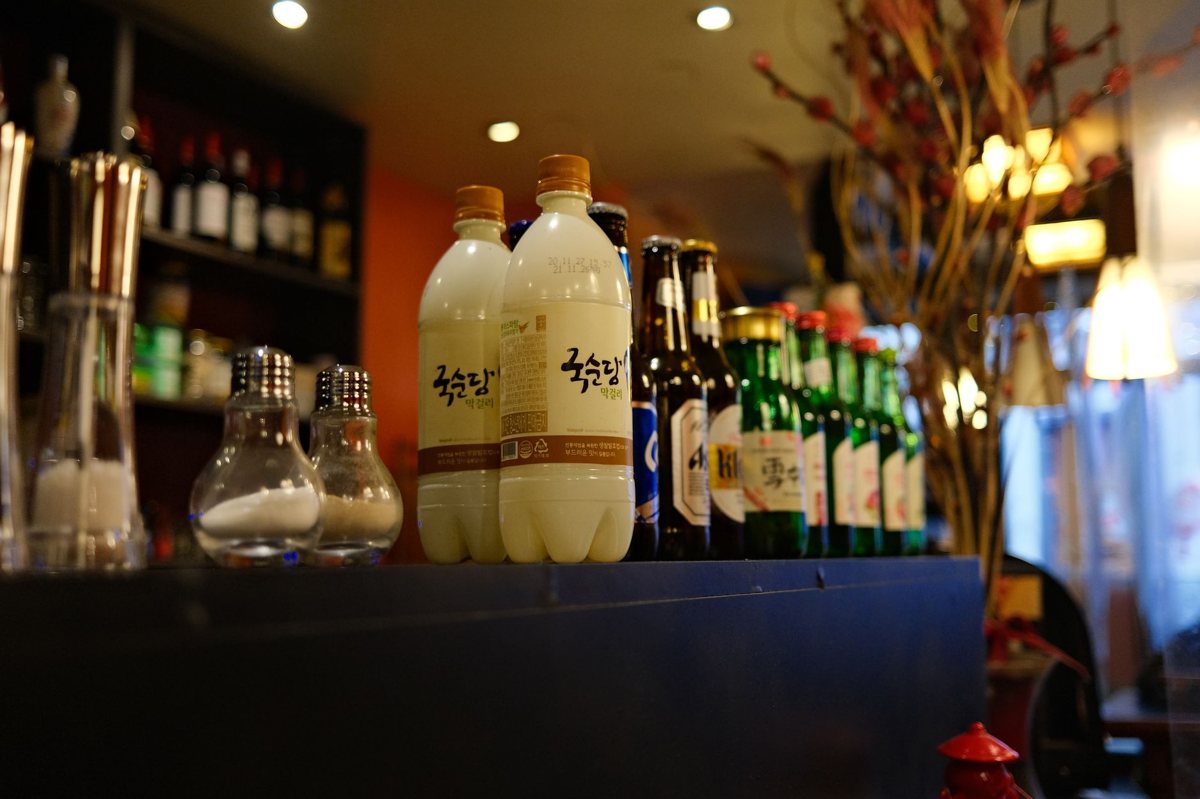
If you want to understand what you are drinking before you order it, our Korean alcohol guide explains makgeolli, soju, cheongju and the table etiquette that goes with them. For a later night with more character, Euljiro is a 15-minute walk south, and our Euljiro guide covers Nogari Alley and the unmarked stairwell bars.
Things to do in Ikseon-dong besides eating
- Rent a hanbok. Rental shops in and around the neighbourhood charge roughly ₩15,000–20,000 for a basic 2–4 hour rental, and ₩25,000–35,000 for premium or themed outfits. Wearing hanbok gets you into all five grand palaces free, so it pairs well with Changdeokgung or Jongmyo nearby.
- Photo booths. The self-photo studios here are hanok-themed, with props and backdrops to match. A session costs about ₩4,000–8,000. Our self-photo studio guide explains how the booths work.
- Small shops. Candle and diffuser makers, stationery, vintage clothing and ceramics tucked into single rooms. Nothing essential, all pleasant to browse.
- Retro arcades and shooting galleries. A couple of old-fashioned games rooms and a toy shooting club lean into Seoul’s nostalgia craze. Cheap, silly and good with teenagers.
- People-watching. The honest main event. Couples in rented hanbok, students on dates, grandparents who have lived here for decades bemused by all of it.
When to go, and when it becomes unbearable
This is the part most guides skip, and it matters more in Ikseon-dong than almost anywhere else in the city because the lanes are so narrow.
The crowd pattern
| When | What it is like | Verdict |
|---|---|---|
| Weekday 09:00–11:00 | Quiet, many cafes still closed or just opening, bakeries busy | Best for photos and walking |
| Weekday 11:00–17:00 | Steady but manageable; lunch queues at the popular restaurants | Good all-round |
| Weekday evening | Busy in the bars and restaurants, comfortable in the lanes | Best for atmosphere |
| Friday evening | Crowded; office workers plus weekenders | Go early or book |
| Weekend 13:00–19:00 | Shoulder to shoulder in the main lanes; 30–60 minute waits at the famous cafes | Avoid if you can |
| Rainy weekday | Quieter, and the hanok rooms feel at their best | Underrated |
Is it worth it on a weekend?
Honestly, only if it is your only chance. On a Saturday afternoon in spring or autumn the main lane moves at a shuffle, every cafe you have heard of has a digital waiting list you cannot join without a Korean number, and it is hard to take a photograph without forty other people in it. It is still worth a walk-through if you are passing between Insadong and Changdeokgung, but do not plan a relaxed afternoon around it. Come on a weekday morning, or accept that you will be eating in the outer lanes.
Seasons
- Spring (April–May): the best weather for sitting in courtyards; also peak crowds.
- Summer (June–August): hot and humid in the narrow lanes, with monsoon rain in July. Cafes with air-conditioning become precious.
- Autumn (September–October): ideal walking weather and the best evenings.
- Winter (December–February): cold, but the lights look lovely, the queues shrink and a hanok cafe with underfloor heating is a genuine pleasure.
Fitting Ikseon-dong into a day in Jongno
Ikseon-dong is too small to be a day on its own, and perfectly positioned to be part of one. Jongno is the most walkable historic district in Seoul, and our Jongno guide maps the wider area. Two routes that work well:
The palace-and-hanok half day
- 09:30 Changdeokgung. Arrive at opening; the palace is quieter than Gyeongbokgung. Add the Secret Garden only if you have booked a guided slot.
- 12:00 Walk south down Donhwamun-ro to Ikseon-dong (10–12 minutes).
- 12:15 Lunch in the outer lanes to beat the core queues, then walk the hanok lanes.
- 14:00 Coffee somewhere with a courtyard.
- 15:00 Insadong for tea houses and craft shops, 10 minutes west.
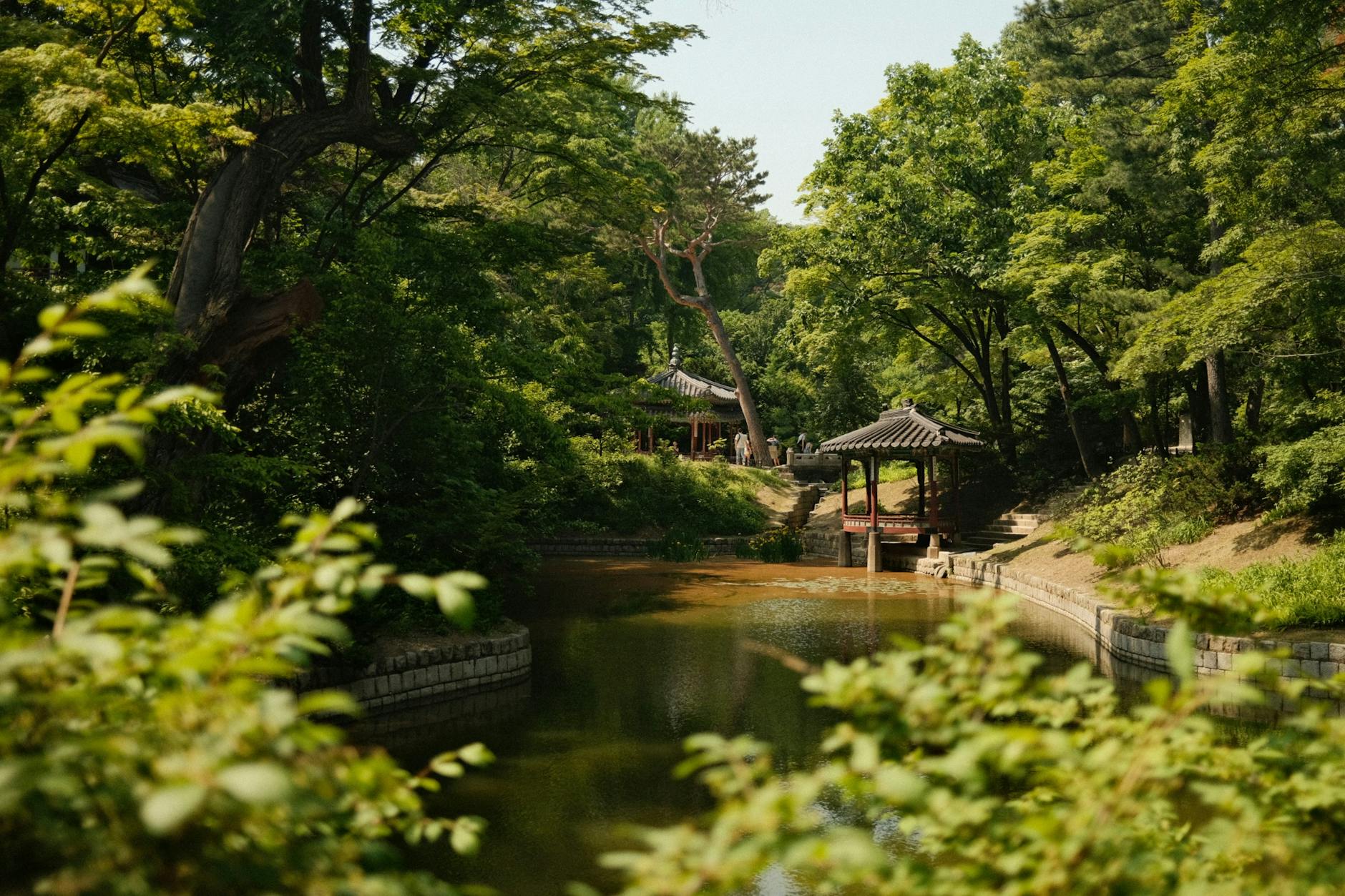
The afternoon-into-evening version
- 14:00 Jongmyo Shrine, the royal ancestral shrine and a UNESCO World Heritage Site, 5 minutes east.
- 16:00 Ikseon-dong as the day crowd starts to thin.
- 18:00 Dinner in a hanok restaurant.
- 20:00 Pojangmacha on Jongno, or walk 15 minutes south to Euljiro.
For the tea houses, galleries and craft streets on the Insadong side, our Insadong guide covers what is worth your time and what is tourist filler.
Ikseon-dong vs Bukchon
People often ask which hanok neighbourhood to prioritise. They are very different experiences, and if you only have time for one it is worth choosing deliberately.
| Ikseon-dong | Bukchon Hanok Village | |
|---|---|---|
| Size | A few lanes; 15 minutes end to end | A hillside of streets; 1.5–2 hours |
| Character | Commercial: cafes, restaurants, bars | Largely residential, with galleries and craft studios |
| Can you go inside? | Yes — that is the point | Mostly no; people live there |
| Views | Close-up roofs and lanes | Rooftop views down to the city |
| Rules | Normal public street | Visitor curfew and quiet rules in the residential core |
| Evening | Excellent | Quiet; not the time to go |
| Best for | Food, coffee, a relaxed drink | Architecture, photography, the classic view |
If you have one free afternoon and care about eating well, choose Ikseon-dong. If you want the postcard view and do not mind a steep walk, choose Bukchon — our Bukchon Hanok Village guide covers the viewpoints and the resident-protection rules. If you want to actually sleep in a hanok, neither neighbourhood is the only option; our guide to hanok stays in Seoul compares the guesthouses.
Practical tips
- Use Naver Map or KakaoMap, not Google Maps, to find individual venues. Many Ikseon-dong addresses sit on tiny numbered lanes that Google struggles with.
- Be respectful of residents. People still live in some of these houses. Do not sit on doorsteps, open unmarked doors or photograph into windows.
- Toilets are inside cafes and restaurants, not in the lanes. Jongno 3-ga Station has public toilets.
- Strollers and wheelchairs: the lanes are flat but narrow, with steps into many hanok. Doable on a weekday, miserable on a weekend.
- Payment: foreign cards work almost everywhere. A few of the older bars prefer cash.
- Tripods and big camera rigs are unwelcome in the busy lanes, and some shops post no-photography signs for their interiors. Respect them.
- Closing days vary by venue, and many small places close one weekday. Check before you commit to a special trip.
Frequently asked questions
Is Ikseon-dong worth visiting?
Yes, if you go at the right time and keep expectations in proportion. It is a small commercial hanok neighbourhood, not a historic site, and it rewards a slow coffee or a meal far more than a quick photo stop. On a weekday it is one of the loveliest places in central Seoul. On a sunny weekend afternoon it can feel like a queue with roofs.
How long do I need in Ikseon-dong?
You can walk every lane in 15 minutes. A realistic, enjoyable visit with a coffee is 1.5–2 hours, or around 3 hours if you eat a meal as well. Most people combine it with Changdeokgung, Jongmyo or Insadong.
What is the nearest subway station?
Jongno 3-ga Station, served by Lines 1, 3 and 5. Use Exit 4 or Exit 6 and walk north along Donhwamun-ro for a couple of minutes.
Is Ikseon-dong the same as Bukchon Hanok Village?
No. Both are neighbourhoods of 1920s–1930s hanok, but Bukchon is a much larger, largely residential hillside north of the palaces, while Ikseon-dong is a small, flat grid of lanes almost entirely converted into cafes, restaurants and shops.
When is Ikseon-dong least crowded?
Weekday mornings before 11:00 are quietest, although some cafes are not yet open. Weekday late afternoons and rainy days are also good. Weekend afternoons are the worst.
Can I wear hanbok in Ikseon-dong?
Yes, and plenty of visitors do. Rental shops in the area charge roughly ₩15,000–20,000 for a basic rental of a few hours. If you plan to wear it, walk up to Changdeokgung or across to Jongmyo as well, since hanbok wearers get free entry to the five grand palaces.
Is Ikseon-dong good at night?
Very. The lanterns come on, the hanok restaurants and bars fill up, and it is a lovely place for dinner and a first drink. For a full night out, carry on to the pojangmacha tents on Jongno or to Euljiro.
Final thoughts
Ikseon-dong is a neighbourhood that punches far above its size. It is not old in the way a palace is old, and some of its interiors are more design studio than heritage, but it is one of very few places in Seoul where you can sit inside a hanok with a coffee or a kettle of makgeolli rather than peer at one from the street. Go on a weekday, eat in the outer lanes if the famous names are full, and fold it into a walk with Changdeokgung and Insadong. For the other districts worth building a trip around, our Seoul neighbourhoods guide puts it in context.
Photo Credits
Ikseon-dong hanok lane with shop signs and overhead cables: Ikseon-dong 익선동 October 1 2020 1 by S h y numis, CC BY-SA 4.0, via Wikimedia Commons.
Ikseon-dong house in 1935: Ikseon-dong 1935 by Anonymous Unknown author, Public domain, via Wikimedia Commons.
Row of hanok shops in the Ikseon-dong core: Ikseon-dong 익선동 October 1 2020 2 by S h y numis, CC BY-SA 4.0, via Wikimedia Commons.
Outer lane with restaurants in Ikseon-dong: Ikseon-dong 익선동 October 1 2020 10 by S h y numis, CC BY-SA 4.0, via Wikimedia Commons.