
This complete guide covers what to eat, where exactly to find each dish, current 2026 prices in won, opening hours and the best times to visit, how to get there, how to order, and the rookie mistakes that quietly ruin first-timer trips. Pair it with our Seoul street food guide and the broader Seoul food guide pillar for the full picture, and since the market sits in Seoul’s old town, our Jongno guide makes an easy day around it.
What is Gwangjang Market?
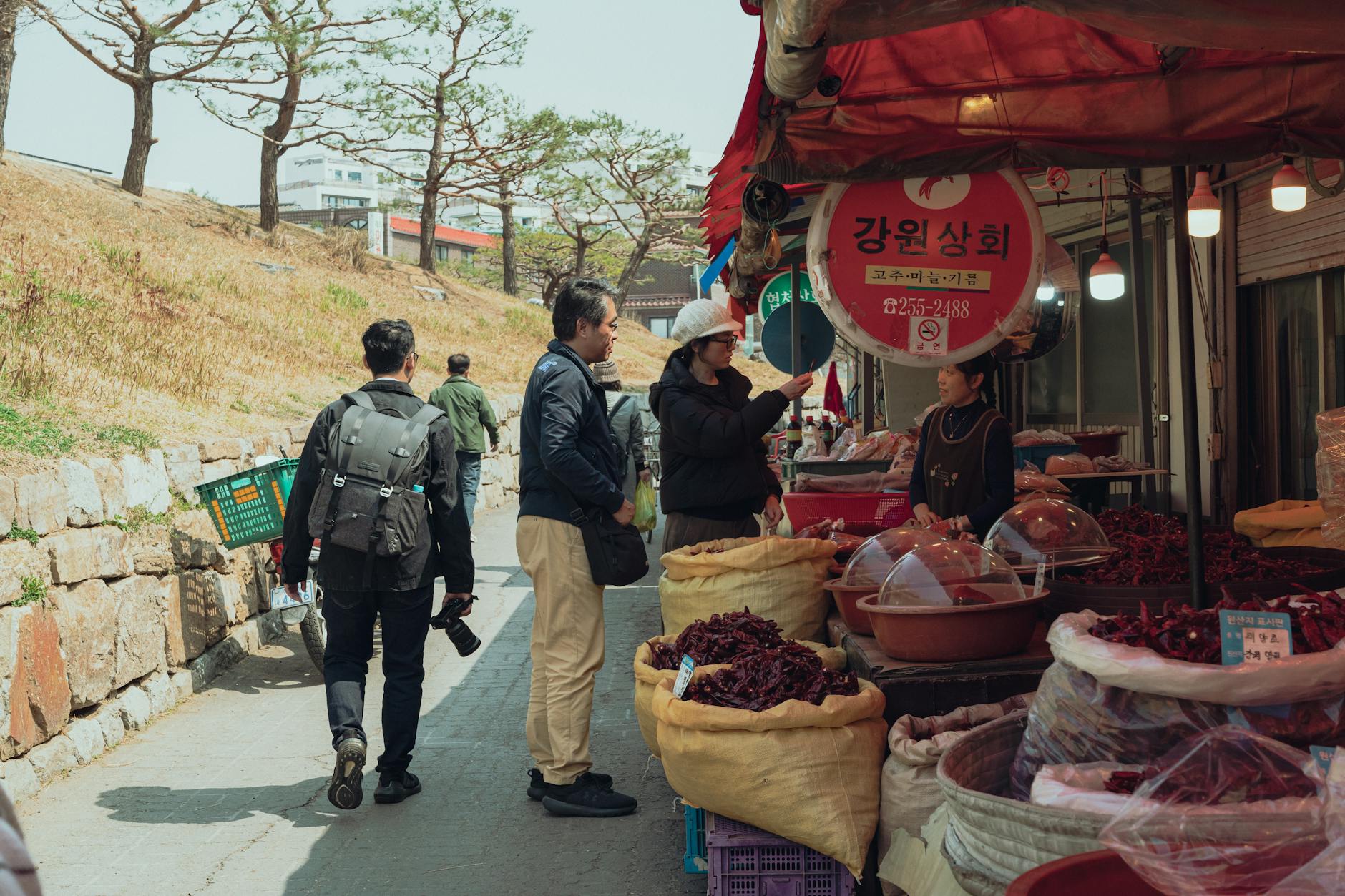
Gwangjang Market spans roughly 42,000 square meters in the Jongno district, just north of Cheonggyecheon stream. It opened in 1905 as Korea’s first permanent traditional market — a proudly local response to the colonial-era Japanese department stores going up across the city. Today it’s two markets in one: part textile bazaar, where the upper floor sells hanbok, silk, and vintage clothing, and part food paradise, where the ground floor is wall-to-wall stalls. The food section is what every traveler comes for, and it’s where you should spend the bulk of your visit.
What sets Gwangjang apart from Seoul’s other markets is density and continuity. Vendors are often third- or fourth-generation operators working the same griddle their grandmother did, recipes haven’t meaningfully changed since the 1960s, and the social choreography — sitting elbow-to-elbow on plastic stools, sharing a bottle of soju with the stranger beside you — is largely the same as it was decades ago. It’s living heritage you can eat, and that’s rarer than it sounds. If you want to get the table manners right before you sit down, our Korean dining etiquette guide covers the pouring, sharing, and small courtesies that make vendors warm to you instantly.
Opening Hours and When to Visit
The official market hours are 8:30 AM to 6:00 PM, but in practice the food stalls run on their own clock, and the market has a completely different personality depending on when you arrive.
- 8:30–11:00 AM: Most food stalls are still setting up. A handful of breakfast spots — especially the soup vendors — are open, and it’s the quietest time of day if you want photos without crowds.
- 11:00 AM–2:00 PM: Lunch service in full swing. The bindaetteok stalls hit peak production, oil spitting off a dozen griddles at once. Crowds are real but manageable.
- 2:00–5:00 PM: The sweet spot. Most stalls are open, lines are short, and vendors are relaxed enough to chat or pose for a photo. If you can only go once, go now.
- 5:00–9:00 PM: Peak crowd. Office workers pour in for after-work drinks and dinner, the energy turns electric, and seats become genuinely scarce.
- 9:00–11:00 PM: Wind-down. Some stalls shutter early; the famous ones simply run until they sell out.
Closing Days
Most stalls close on Sundays, and some additionally take Mondays off. Major holidays — especially Chuseok (Korean Thanksgiving) and Seollal (Lunar New Year) — see most of the market shut entirely. If you’re traveling specifically to eat at one particular stall, always check ahead, because there’s nothing sadder than crossing the city for a shuttered griddle.
Best Day to Go
Tuesday through Thursday afternoons offer the best balance of openness, atmosphere, and short lines. Weekends are crowded but genuinely lively and fun if you don’t mind waiting; Sundays are dead and best avoided. For a broader sense of when Seoul itself is at its best, our best time to visit Seoul guide covers the seasons.
The Must-Try Dishes at Gwangjang Market
You physically cannot eat everything in one visit, so here’s the ranked reality — the dishes that made this market famous, what they cost, and which stalls are worth the queue.
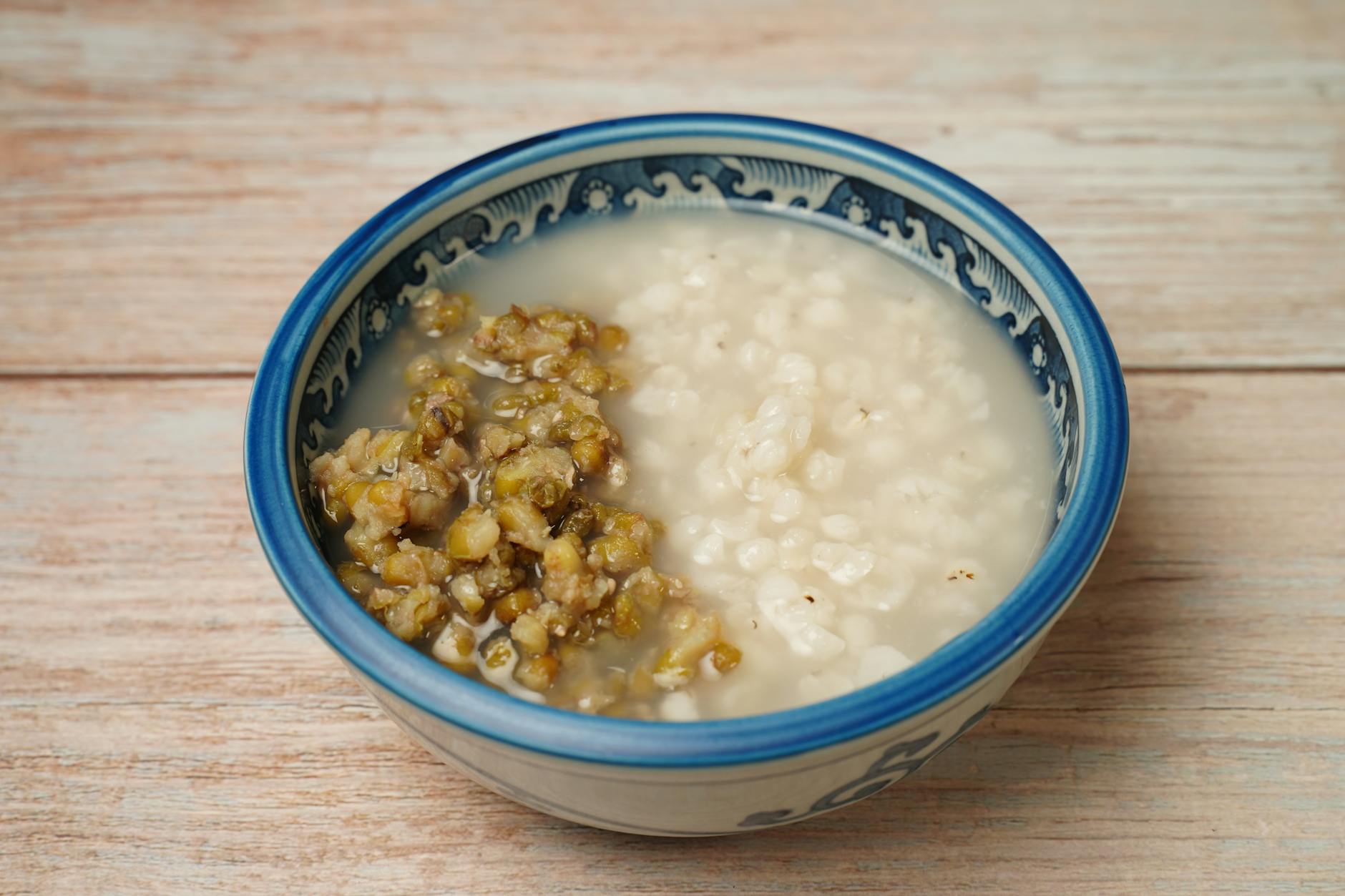
Bindaetteok (Mung Bean Pancake) — 5,000 won
Gwangjang’s signature dish and the smell that hits you first. Mung beans are soaked, stone-ground on the spot, and mixed with bean sprouts, kimchi, scallions, and pork, then shallow-fried in a generous pool of oil until the edges crisp into golden lace. It arrives with sliced raw onions and a soy-vinegar dipping sauce, and it is glorious — savory, crunchy-edged, and just greasy enough to demand a shot of soju. The classic stalls, Park Gajeong and Soonhee Bindaetteok in particular, have been at it for 50-plus years.
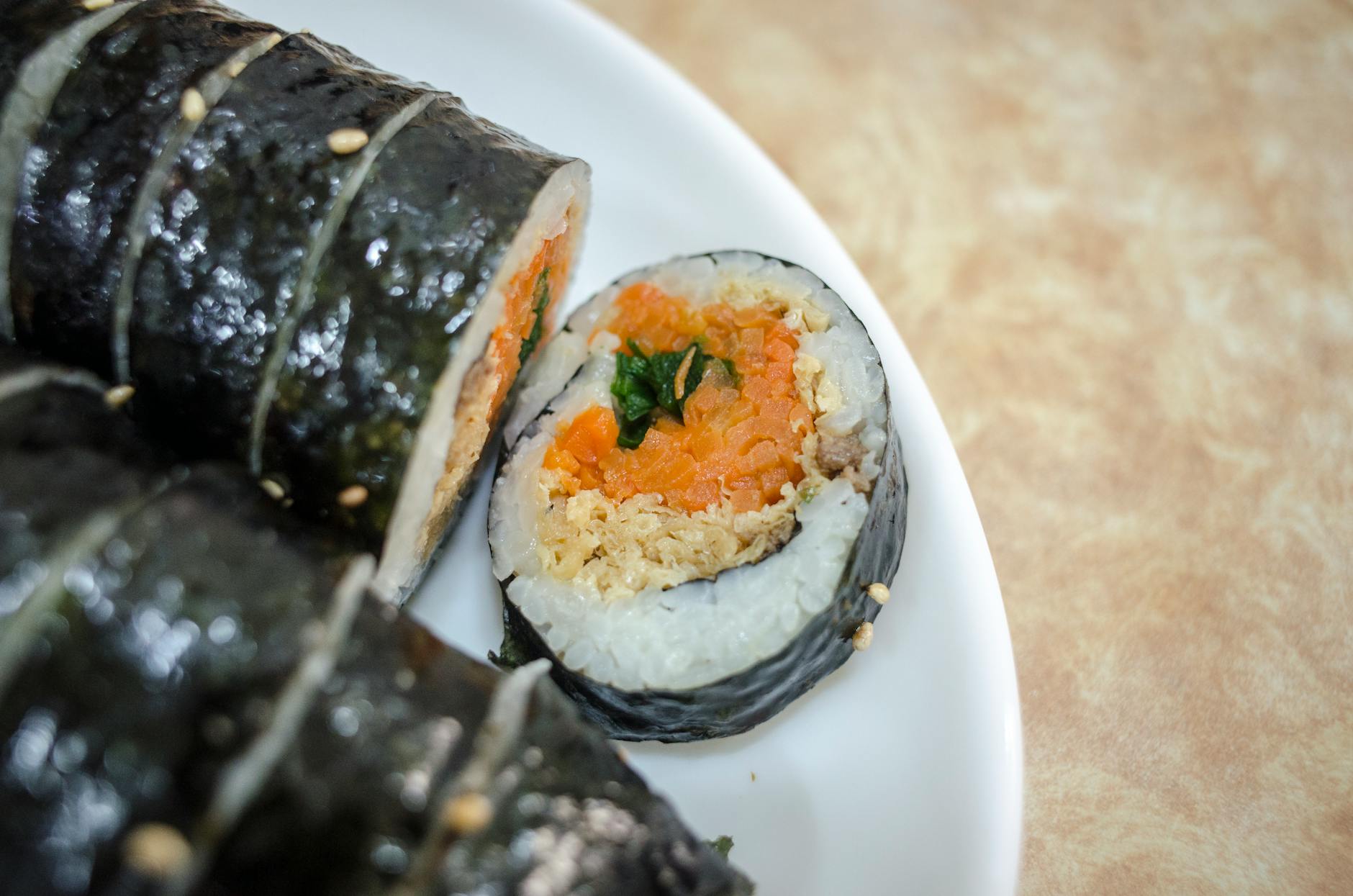
Mayak Gimbap (Drug Rolls) — 3,000–4,000 won per tray
Mini seaweed-rice rolls filled with pickled radish, carrot, and spinach, dipped in a sharp mustard-soy sauce that makes them genuinely, alarmingly addictive — hence the nickname “narcotic rolls.” The original Mayak Gimbap stand near the central food alley is the source; every other version in Seoul is essentially a copy. Order a tray, dip generously, and watch it vanish in five minutes flat.
Kalguksu (Knife-Cut Noodles) — 7,000–9,000 won
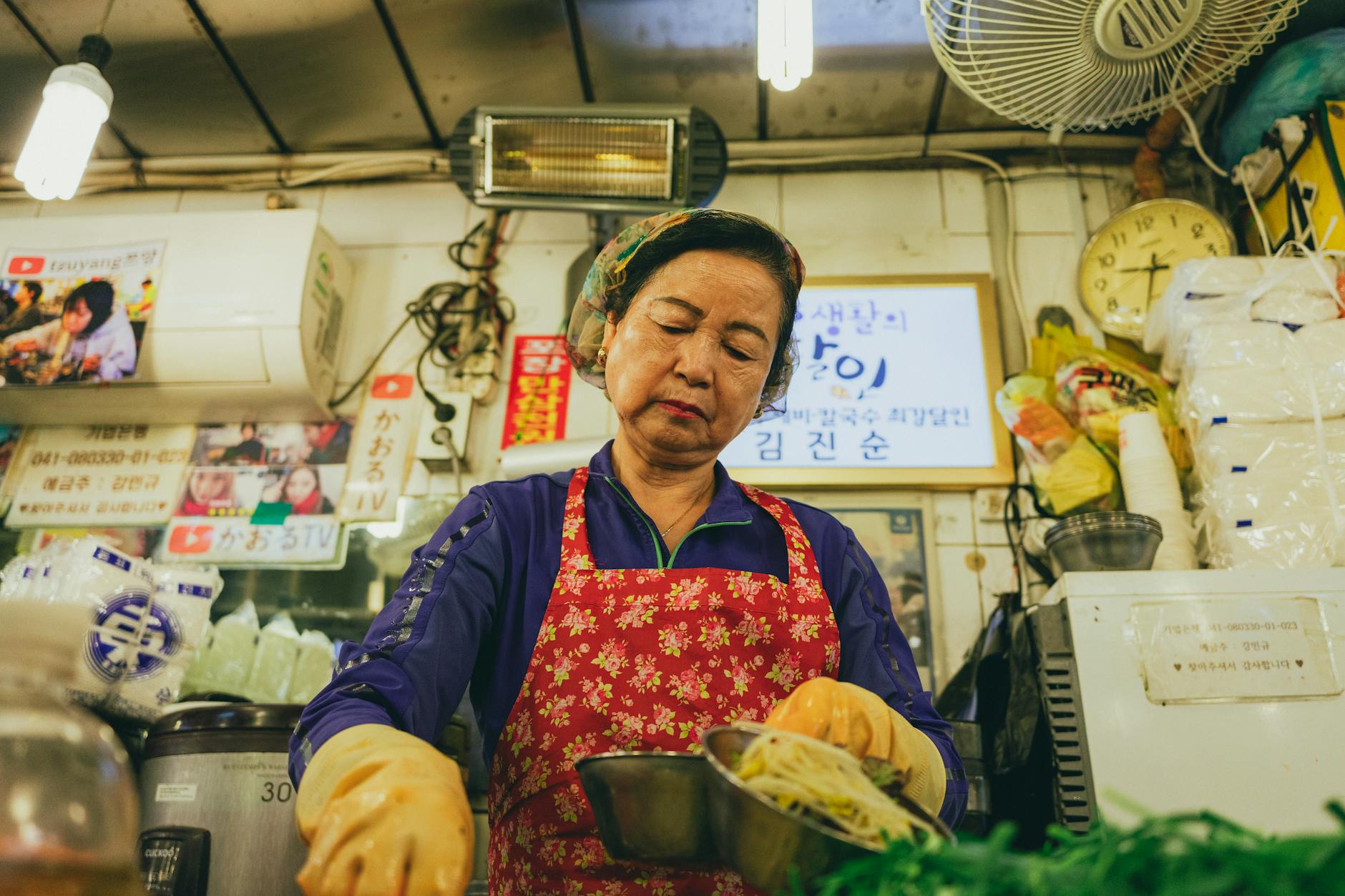
Fresh wheat noodles hand-cut with a knife and simmered in an anchovy or chicken broth with seasonal vegetables — comfort food in a steel bowl. Cho Yonsoon’s Gohyang Kalguksu stall, featured on Netflix’s Street Food: Asia, is the famous one, and you should expect a 20–30 minute wait at peak times. The noodles are made fresh each morning and the dough runs out, so arrive before 6 PM or you’ll miss the cutoff entirely.
Yukhoe (Beef Tartare) — 18,000–25,000 won
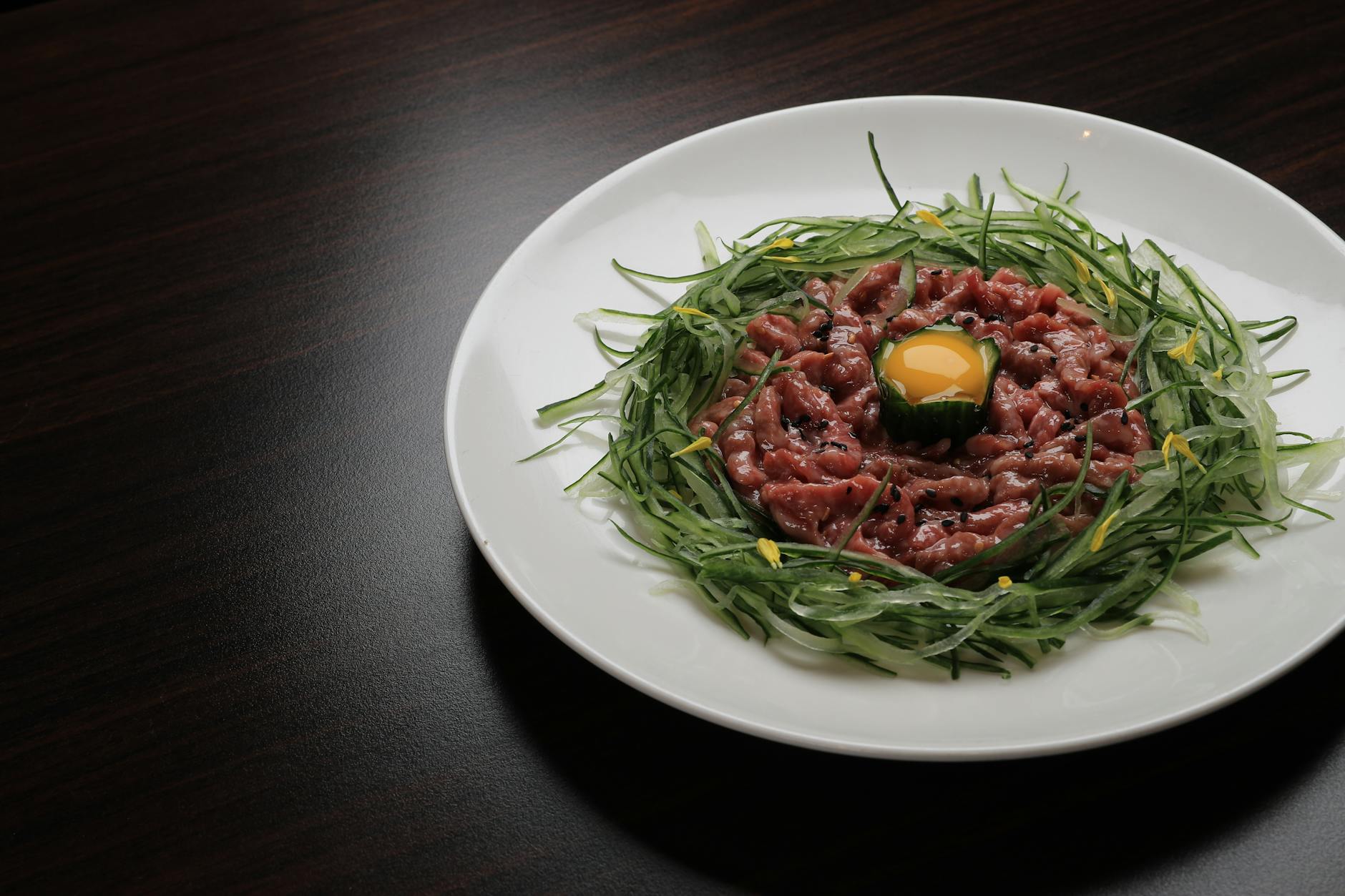
Raw beef seasoned with sesame oil, soy, garlic, sugar, and pine nuts, piled over julienned Korean pear and crowned with a glossy raw egg yolk you break and fold through. It’s silky, sweet, and nutty, and far less intimidating than it sounds. Yukhoe Jamae is the most famous specialist, serving it on the same alley for three generations; one serving comfortably feeds two as a shared plate.
Tteokbokki and Sundae — 4,000–7,000 won
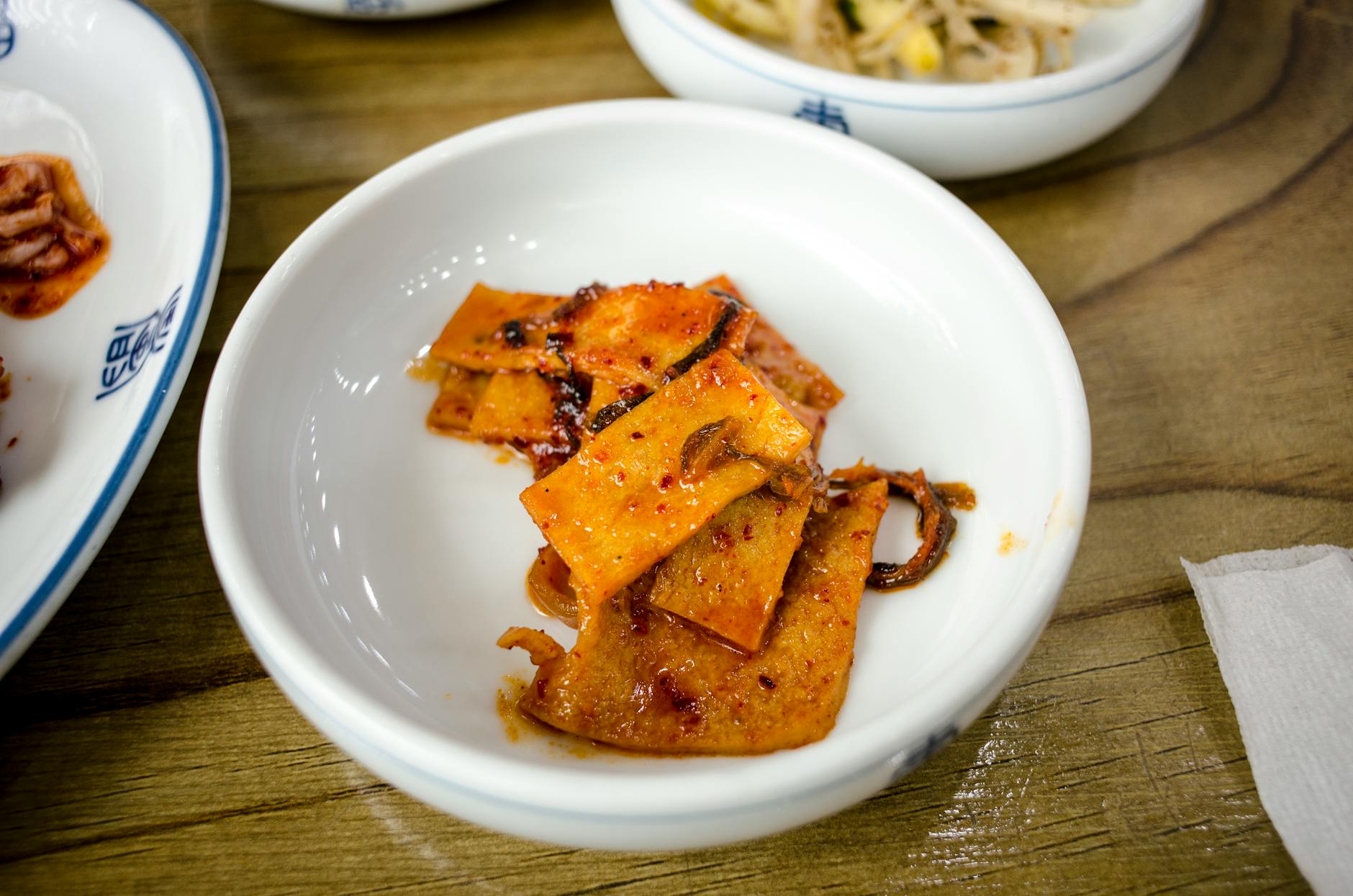
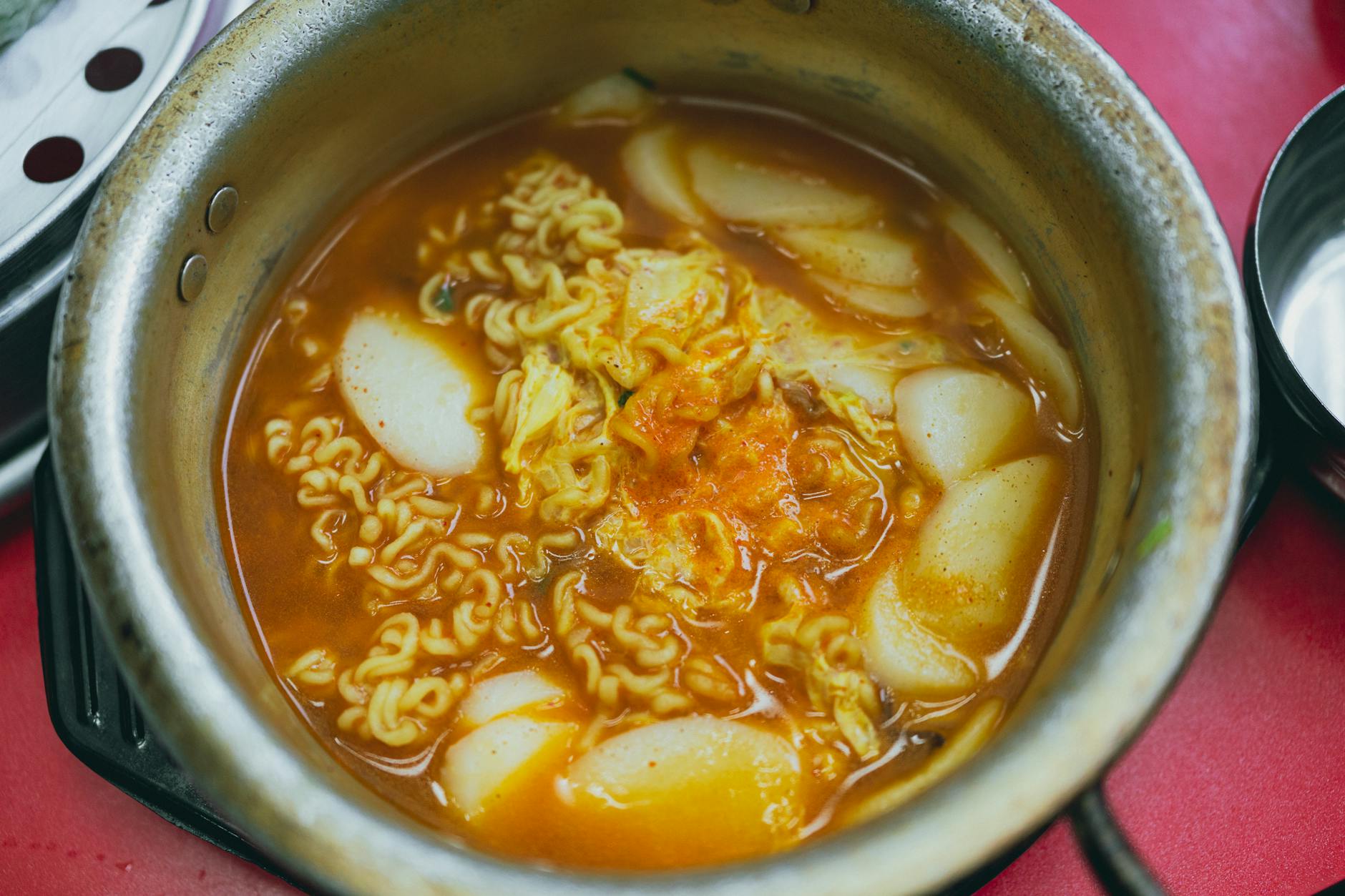
Spicy rice cakes simmered in a glossy red gochujang sauce alongside boiled blood sausage. The market’s versions aren’t wildly different from any other Seoul stall, but the quality is consistently high — add fish cakes (eomuk) and a boiled egg to soak up the heat for the full effect.
Jeon (Korean Savory Pancakes) — 5,000–9,000 won
Beyond bindaetteok, Gwangjang has stalls dedicated to the whole jeon family: pajeon (scallion pancake), gamja-jeon (potato pancake), kimchi-jeon, and modum-jeon (an assorted platter). The “Modum Jeon Alley” north of the food court is the spot, and a shared platter with a bottle of makgeolli rice wine is the classic rainy-day order — Koreans genuinely crave jeon when it rains.
Sundae Gukbap (Blood Sausage Soup) — 8,000–10,000 won
A hearty bowl of Korean blood sausage and rice in a cloudy broth, finished with onion, scallions, and perilla powder, with a side of kimchi. It’s proper old-Seoul soul food, and it’s best ordered at the back-row stalls run by the older women who’ve been ladling it for decades. Not for the faint-hearted, but a revelation if you lean in.
Bossam (Boiled Pork Wraps) — 22,000–30,000 won
Tender boiled pork belly, sliced and served with napa cabbage leaves, raw garlic, kimchi, and ssamjang for wrapping. It’s surprisingly affordable at Gwangjang compared with the specialist bossam restaurants elsewhere in the city, and it’s a fantastic communal dish for a group of three or four working through a couple of soju bottles.
Korean Soju — 4,000 won per bottle
Not technically food, but the drink that fuels the entire market. The classic pairing is bindaetteok and a chilled green bottle of Chamisul, poured for you (never yourself) by whoever you’re sharing a table with. After two bottles you’ll be convinced you’re fluent in Korean. To understand what’s in the bottle and how to drink it properly, our Korean alcohol guide is the companion read.
Hotteok and Bungeoppang — 1,000–2,000 won
Sweet winter street snacks — hotteok is a chewy pancake oozing molten brown sugar and cinnamon, bungeoppang a fish-shaped pastry filled with red-bean paste. Gwangjang’s selection is smaller than Namdaemun’s famous hotteok stand, but the quality is solid and the price is pocket change.
Mung Bean Sprout Bibimbap — 8,000–9,000 won
An old-fashioned market lunch: rice topped with seasoned mung bean sprouts, vegetables, and a spoonful of gochujang, mixed at the table. The bean sprouts are the very same ones going into the bindaetteok, sourced fresh from the back of the market — a nice, thrifty piece of market logic. It’s also one of the more reliable options for lighter or meat-free eaters.
Where Exactly to Find the Famous Stalls
Gwangjang’s layout is a genuine maze on a first visit — the aisles cross and double back, and the signage is mostly in Korean. Use these landmarks to orient yourself:
- Bindaetteok Alley: the center of the food court, easy to find by sound and smell alone. Soonhee Bindaetteok and Park Gajeong are the legends here.
- Mayak Gimbap Lane: just east of Bindaetteok Alley, marked by the stacked trays of small rolls.
- Cho Yonsoon’s Kalguksu: the northeast corner of the indoor section — look for the longest queue in the building.
- Yukhoe Alley: a side passage near the south entrance. Yukhoe Jamae and Bugok Yukhoe are the famous names.
- Jeon Row: along the northern wall of the food section, a dozen pancake stalls lined up in a row.
Don’t over-plan the route, though. Half the joy of Gwangjang is drifting, following a smell, and grabbing an open stool wherever you find one. Use Naver Maps to reach the right entrance, then let the market take over.
How Much Should You Spend?
Gwangjang is one of the best-value meals in Seoul. Rough per-person budgets:
- Quick snack tour (4–5 stalls): 12,000–18,000 won
- Sit-down lunch with bindaetteok and noodles: 15,000–22,000 won
- Full feast for two with yukhoe, bindaetteok, and drinks: 50,000–70,000 won total
Bring cash — many stalls still don’t take cards, especially the older ones. Convenience-store ATMs sit inside the market and all along the surrounding streets. If keeping costs down is the goal for your whole trip, Gwangjang is a star player in our cheap eats in Seoul guide.
How to Get to Gwangjang Market
By Subway
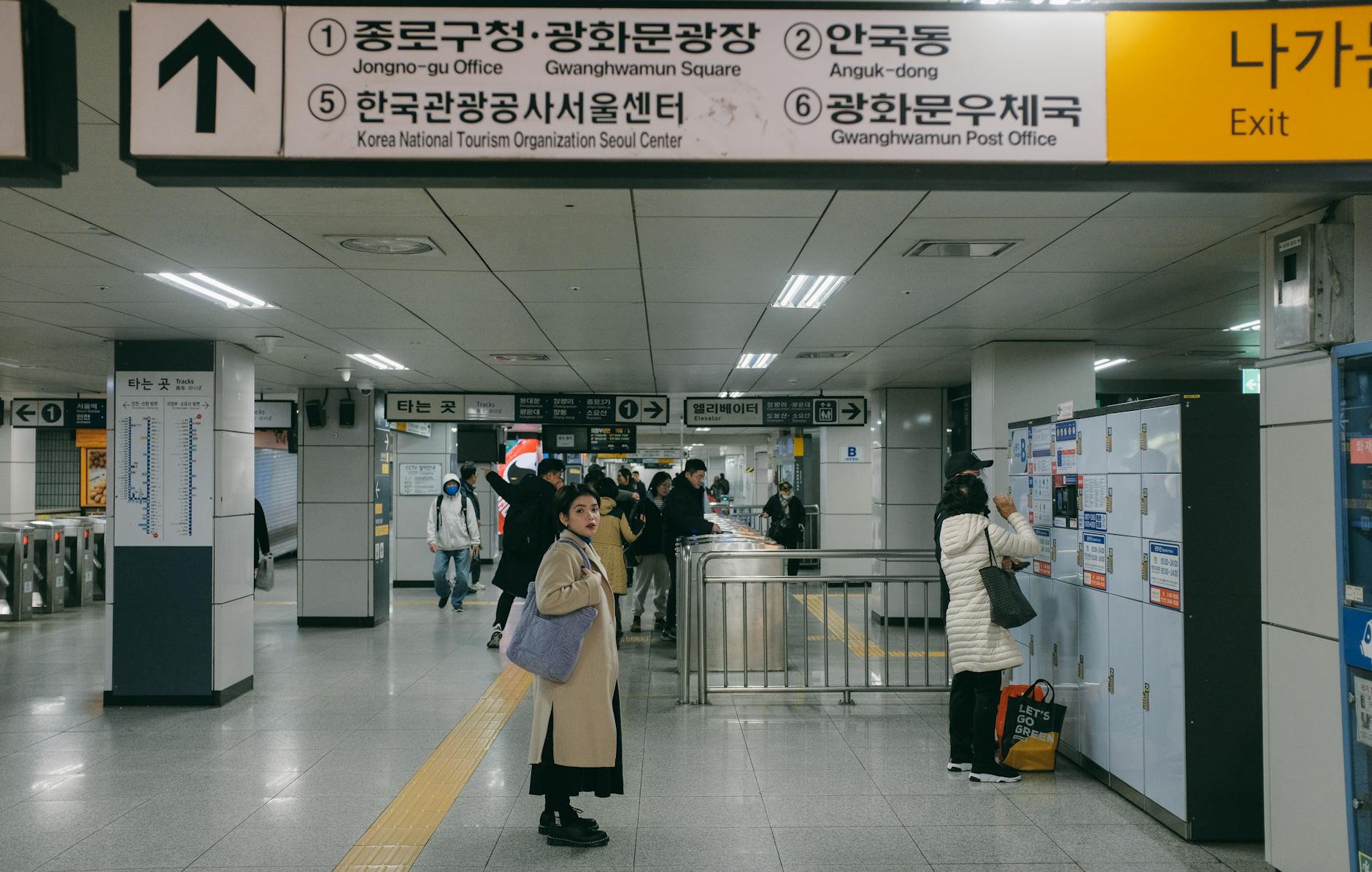
The most convenient access is Jongno 5-ga Station (Line 1, Exits 7 and 8) — both exits drop you within a one-minute walk of the market’s main entrance. Euljiro 4-ga Station (Lines 2 and 5) is a seven-minute walk from the southern entrance if you’re coming from that direction. Our Seoul subway guide covers the wider network.
By Bus
Bus stops named “Gwangjang Market” or “Jongno 5-ga, 6-ga” are served by routes 101, 103, 152, 162, 270, 271, and many more. See our Seoul bus guide for tips on navigating the system.
From Major Tourist Areas
- From Myeongdong: a 15-minute walk along Cheonggyecheon stream, or four stops via Line 4 and Line 1
- From Insadong: a pleasant 12-minute walk east along Jongno — pair the two easily
- From Hongdae: about 25 minutes on Line 2 to City Hall, then transfer to Line 1
- From Gangnam Station: about 30 minutes on Line 2 with a Line 1 transfer
How to Order at Gwangjang
Most older vendors don’t speak much English, but the system couldn’t be simpler, and a little confidence goes a long way.
- Look at the food. Nearly every stall cooks in the open and displays its dishes, so you can point at exactly what you want.
- Point and hold up fingers for quantity — universally understood.
- Sit at any open seat. Communal seating is the norm; strangers will squeeze in beside you, and that’s part of the fun.
- Pay at the end. Most stalls work on trust — eat first, then settle the bill before you leave.
- Cash is king. Some stalls take cards now, but cash is universal and faster.
A friendly “annyeonghaseyo” as you sit and a “jal meokgesseumnida” before you dig in will earn you a warmer welcome and, often, a slightly more generous plate. For the full run-down of table courtesies, keep our Korean dining etiquette guide handy.
A Sample 2-Hour Eating Route
If the sheer number of stalls feels paralyzing, here’s a tried-and-tested order of attack that hits the greatest hits without overloading your stomach. Aim to arrive around 2 PM on a weekday.
- Start light (2:00 PM): a tray of mayak gimbap from Mayak Gimbap Lane — small, moreish, and a gentle warm-up that won’t fill you.
- The main event (2:20 PM): one bindaetteok, shared, on Bindaetteok Alley, with the raw onions and dipping sauce. Order a bottle of soju or makgeolli to go with it if you’re in the mood.
- Something raw (2:50 PM): a shared plate of yukhoe at Yukhoe Alley — break the egg yolk, mix, and eat it with the pear.
- The Netflix stop (3:20 PM): queue for Cho Yonsoon’s kalguksu if the line is under 20 minutes; otherwise grab noodles at the neighboring stall, which is nearly as good.
- Finish sweet (3:50 PM): a hotteok or bungeoppang on your way out, plus a free cup of anchovy broth to reset your palate.
That’s five distinct dishes, a drink, and a full lap of the market in about two hours, for well under 25,000 won a head if you share. Slot it into a wider old-town day using our 3-day Seoul itinerary, which threads Gwangjang together with the nearby palaces and Insadong.
Gwangjang Survival Tips
- Come hungry but not starving. You’ll want to graze several stalls, so don’t blow your entire appetite on one giant bindaetteok.
- Wear shoes you can stand in. The floors get oily and you’ll be on your feet for stretches.
- Skip the most photographed stalls if the line tops 30 minutes. The quality next door is usually just as good, and the wait rarely justifies the lost stomach space.
- Carry tissues. Napkin supply at stalls is famously unreliable.
- Travel light. The aisles are narrow and packed; a small daypack beats a bulky bag or a suitcase.
- Bring a friend. Solo dining works fine, but the experience scales beautifully — more people means more dishes shared and tried.
Beyond Food: What Else is at Gwangjang?
The upper floor is a hanbok and silk wholesale market, and it’s worth a look if you’ve been eyeing traditional Korean clothing — prices here run 30–50% below the tourist-area shops, though quality varies and you’ll want to inspect the stitching. The east end of the market adds vintage clothing shops, household goods, and a small produce section that’s a window into everyday Korean shopping. Most travelers spend 90% of their time on the ground-floor food court, and rightly so, but if you have a spare hour the upstairs is a genuinely interesting change of pace — and a good rainy-hour option. For more places to browse and buy, our Seoul shopping guide covers the city’s markets and malls.
Gwangjang vs. Namdaemun vs. Tongin: Which to Visit?
Seoul has several great market-food experiences, and they’re surprisingly different in feel. Here’s how Gwangjang stacks up against the other two big names:
| Market | Best For | Atmosphere | Tourist Density |
|---|---|---|---|
| Gwangjang | Famous specialties (bindaetteok, mayak gimbap, yukhoe) | Bustling, communal | High |
| Namdaemun | Old-Korea recipes, hotteok, galchi (cutlassfish) alley | Workmanlike, local | Medium |
| Tongin | Lunch-box token system, lighter snacking | Quirky, charming | Medium |
Nearly every visitor hits Gwangjang at least once, and it should be your first market if you only do one. If you have time, add Namdaemun for the grittier, more local contrast and Tongin for its charming brass-token “lunchbox” system, where you buy coins and trade them for portions at different stalls.
If you enjoy Gwangjang, Namdaemun Market is the natural next stop: less of a food hall, more of a working wholesale market, with bowls of hand-cut kalguksu at shared counters and braised hairtail in its own alley. Our Namdaemun Market guide has the details.
Frequently Asked Questions
Is Gwangjang Market still worth visiting in 2026?
Absolutely. Despite its growing fame, Gwangjang keeps its authentic character — the legendary stalls have multi-decade reputations to protect, so food quality stays high. The only real trade-off is crowds; go on a weekday afternoon and you’ll get the best of it.
Is Gwangjang foreigner-friendly?
Increasingly so. Most popular stalls now have English signage, photo menus are standard, and many vendors speak enough English to take your order. Card payment is also far more common than it was five years ago, though cash is still smoother.
Is Gwangjang vegetarian-friendly?
Limited but doable. Bindaetteok, vegetable jeon, mung bean sprout bibimbap, and noodle soups (ask for “no meat”) all work, while sundae and yukhoe are obviously off the table. Our vegetarian and vegan Seoul guide has more meat-free options across the city.
Can I bring kids?
Yes — Gwangjang is family-friendly during daytime hours, and kids usually love the spectacle. After 6 PM the alcohol-fueled atmosphere makes it less ideal for young children, and strollers are difficult to push through the crowds.
How much time should I plan?
Minimum 90 minutes; two to three hours is ideal. That’s enough to try four or five dishes, walk the whole market, and settle in for a beer or soju at a stall.
Are credit cards accepted?
About half the stalls take domestic cards now, but foreign cards work less reliably. Bring 50,000–70,000 won in cash to be safe.
Is there seating?
Most stalls have plastic stools out front, and communal tables are the norm. The larger jeon and yukhoe specialists have small dedicated seating areas.
Can I take leftovers home?
Yes — bindaetteok, jeon, and gimbap travel well, and most stalls will happily box them up for takeaway at no extra charge.
What’s the spiciest dish?
Tteokbokki and any “buldak” (fire chicken) variants top the heat scale. Bindaetteok, yukhoe, and kalguksu are all mild, so balance your order if you’re spice-shy.
Are there bathrooms?
Yes — public restrooms are at the south and east entrances. They’re functional rather than pristine, so carry your own tissues.
Final Tips From a Seoul Local
Three rules for a great first Gwangjang Market trip. First, come hungry but pace yourself across at least four stalls — you’ll regret demolishing one giant bindaetteok and being too full to try the yukhoe. Second, pair a savory dish with a fresh-fried jeon at the same stall; vendors will happily warm and re-crisp it on request. Third, don’t leave without a cup of free anchovy broth from any eomuk stall — it’s the unofficial palate cleanser between courses, and refills are free. Master those three habits and Gwangjang becomes the highlight of your Seoul food adventure, not just one stop among many.
Hungry for more? Circle back to our Seoul street food guide, dig into the best Korean dishes to try, or jump to the Korean BBQ guide for the city’s other essential food experience. And if you’d rather have a guide walk you through it, our Seoul food tours guide includes market crawls that start right here at Gwangjang.