Yongsan-gu is one of Seoul’s most multicultural and historically layered districts. Sitting between Namsan Mountain and the Han River, just south of Myeongdong, Yongsan-gu encompasses Itaewon (the city’s international district), Hannam-dong (luxury enclave), Haebangchon (Seoul’s “liberation village”), the massive War Memorial of Korea, the new Yongsan Park (built on the former US military base), the I’Park Mall electronics complex, and Yongsan Station — the city’s second-busiest rail hub.
This is the complete Yongsan guide for Seoul tourists: the must-see attractions, the international food scene, where to shop for electronics, the new Yongsan Park, and how to navigate this sprawling, evolving district that has changed more in the past five years than any other neighborhood in Seoul.
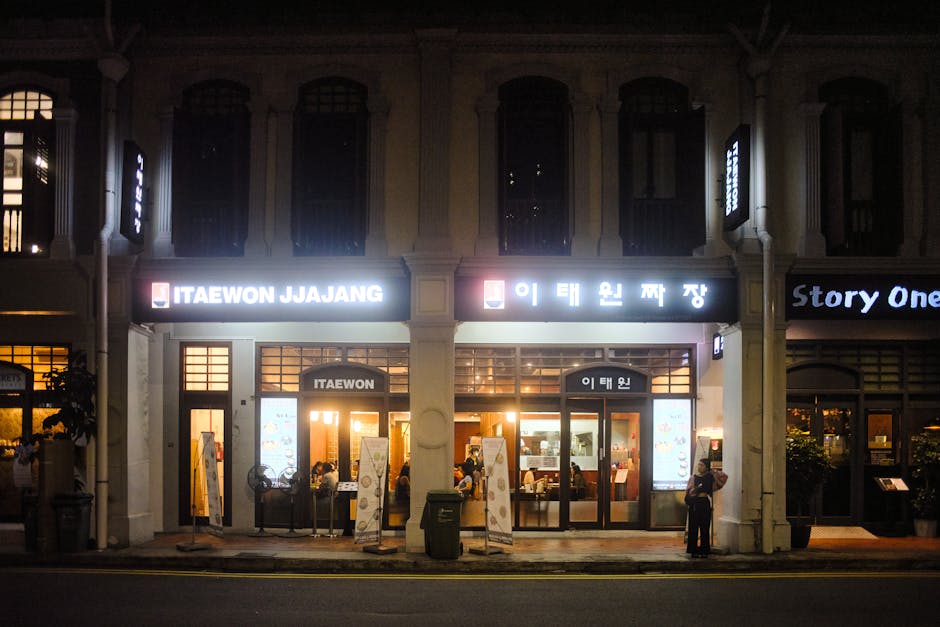
Why Visit Yongsan-gu?
Yongsan-gu has a unique character among Seoul districts: international, layered, and rapidly evolving. For decades, the central area was dominated by the US military base (Yongsan Garrison), which created a multicultural ecosystem of restaurants, bars, and shops catering to American servicemembers and their families. With the base’s full relocation to Pyeongtaek (completed 2022), the entire central area has been transformed into the new Yongsan Park, surrounded by museums, embassies, luxury hotels, and Korea’s most diverse neighborhoods.
For tourists, that means three big draws: Itaewon’s international cuisine, the War Memorial of Korea (the country’s most important military museum), and cosmopolitan neighborhoods (Hannam-dong, Haebangchon, Gyeongnidan-gil) where Korean and global culture intersect.
What makes Yongsan feel different the moment you arrive is the collision of registers. You can spend the morning among Joseon-era celadon and a moving military memorial, grab a Turkish kebab and a flat white for lunch, browse a ₩4-million handbag in Hannam, and finish with makgeolli in a converted 1960s house in Haebangchon — all within a single district. Nowhere else in Seoul packs that range into such a small footprint. If you only have time for one slice, our dedicated Itaewon guide zooms in on the multicultural core, while this page covers the whole of Yongsan-gu.
How to Get to Yongsan-gu
- Subway: Multiple stations cross the district — Yongsan (Line 1), Itaewon (Line 6), Samgakji (Lines 4, 6), Hangangjin (Line 6), Noksapyeong (Line 6).
- Major hubs: Yongsan Station serves KTX high-speed trains and Line 1; Itaewon Station serves the international district.
- From Incheon Airport: AREX Express to Seoul Station + 1 stop to Yongsan, or limousine bus 6030 directly.
- From Myeongdong: 15 minutes by bus 110A or transfer Line 4 → Line 6.
For broader transit, see our getting around Seoul guide and Seoul subway guide.
Top 8 Things to Do in Yongsan-gu
1. Visit the War Memorial of Korea
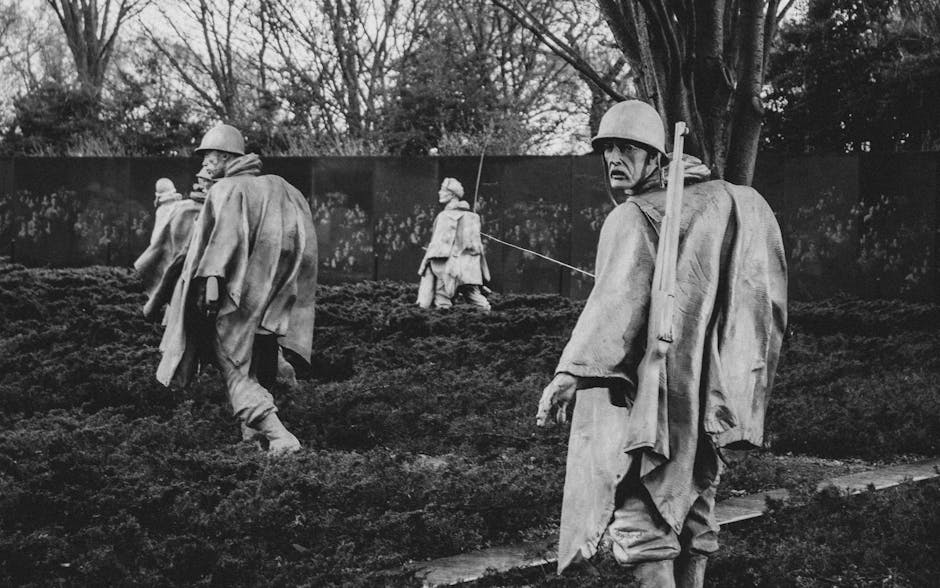
The War Memorial of Korea is one of the largest military museums in Asia and one of Seoul’s most respected attractions. Spread across multiple indoor halls and a vast outdoor display field, it covers Korean military history from the Joseon dynasty to the Korean War (1950–1953) and the present day. Tanks, fighter jets, missiles, and a B-52 bomber sit in the outdoor area.
- Subway: Samgakji Station (Lines 4, 6), Exit 12
- Hours: 9:30 AM – 6:00 PM (closed Mondays)
- Admission: Free
- Plan: 2–3 hours minimum; a full day if you read every exhibit
- Don’t miss: Korean War timeline, Walk of Remembrance, the outdoor aircraft and tank field
Start outside. The Statue of Brothers — a South Korean soldier embracing his North Korean brother atop a cracked dome — is the memorial’s emotional centerpiece, and the outdoor field of tanks, howitzers, a retired B-52, and a Korean-built patrol boat you can board is genuinely absorbing even if you skim the labels. Inside, the Korean War Room uses dioramas, a 6.25 combat simulation, and a moving hall of engraved names to tell the 1950–53 story with unusual clarity. Families should head for the Children’s Museum in the same complex (free, timed entry). The building’s colonnade and reflecting pools are a favorite of K-drama crews — see our K-drama filming locations guide — and photographers love the symmetry at golden hour. Budget two hours; history buffs, closer to four.
2. Explore Itaewon’s International Food Scene
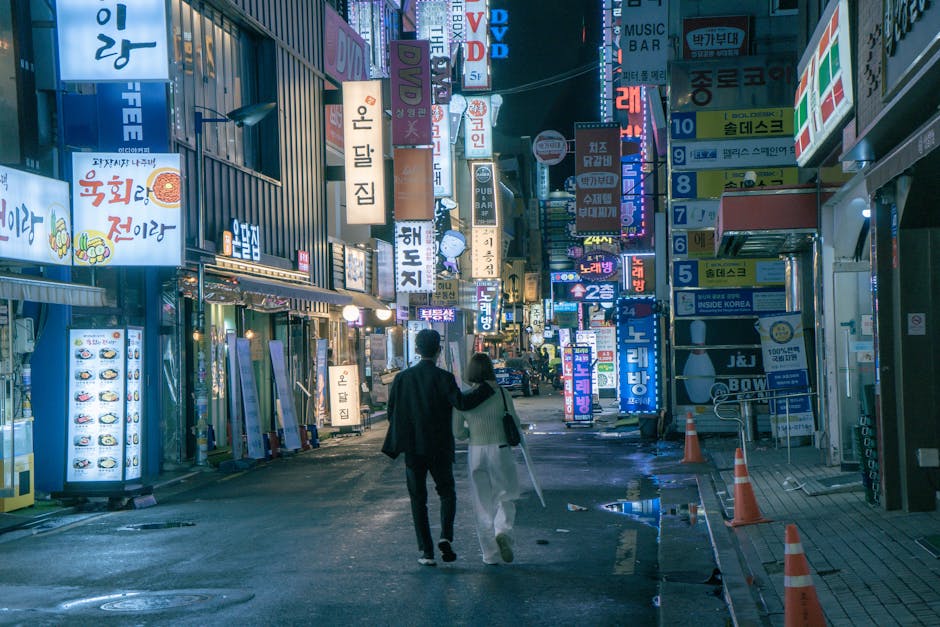
Itaewon-ro is the most multicultural strip in Korea. Within a few blocks you’ll find authentic Turkish kebabs at Kervan, Egyptian shawarma at Petra, Mexican tacos at Vatos Urban Tacos, Texas-style brisket at Linus’ BBQ, Greek at Santorini, Indian at Everest, Italian at Buon Appetito, and South African at Braai Republic. It’s also home to Seoul’s Central Mosque and a diverse Muslim food scene.
Beyond the headline restaurants, work the side streets. Usadan-ro 10-gil climbs the hill behind the main drag with murals, tiny wine bars, and vintage shops; Gyeongnidan-gil (technically in neighboring Yongsan) is café row proper. Around Seoul Central Mosque you’ll find genuinely good halal — Eid for biryani, Salam for Pakistani curries, and a cluster of Middle Eastern bakeries. Do wander the antique furniture street off Itaewon-ro for reproduction Korean chests; skip the tourist-trap tailors promising “24-hour suits.” For a fuller sweep of where to eat citywide, cross-reference our Seoul street food guide.
3. Climb to N Seoul Tower via Namsan Park
The northern edge of Yongsan-gu rises into Namsan Park, the forested mountain at Seoul’s geographic center. From Hangangjin or Itaewon, hike or take the cable car up to the iconic N Seoul Tower for 360° city views, the famous love-locks, and a revolving restaurant. Free park entry; ₩25,000 for the observation deck.
4. Wander Haebangchon (HBC)
Haebangchon (“Liberation Village”) is the hilly residential neighborhood just north of Itaewon Station, originally settled by Koreans returning from forced labor in Japan after WWII. Today it’s one of Seoul’s most charming hipster villages — narrow stair-lined alleys lined with craft brewers, cafés in repurposed homes, indie bookstores, and tucked-away bistros. The 15-minute walk from Itaewon Station Exit 1 toward the War Memorial passes through HBC’s main streets.
Haebangchon rewards slow wandering. The main road, Sinheung-ro, is lined with indie bakeries, a beloved secondhand bookshop, taco joints, and Korea’s craft-beer pioneers, while the stair-stepped alleys above open onto sudden views of Namsan and the tower. It’s steep — wear real shoes — but the payoff is the most village-like pocket in central Seoul, and it empties out on weekday afternoons when the rest of the city is grinding away.
5. Browse the Hannam-dong Luxury District
South of Itaewon, Hannam-dong is one of Seoul’s most expensive neighborhoods, home to the Leeum Museum of Art (Samsung’s flagship museum), Hannam-dong Korean BBQ alley, and a row of stylish boutiques. Combine Leeum’s collection (Korean traditional art + modern global) with a long lunch at one of the area’s celebrated restaurants.
The Leeum Museum of Art is the reason to make the trip south. Its three buildings — designed by Mario Botta, Jean Nouvel, and Rem Koolhaas — hold everything from Joseon moon jars and Goryeo celadon to Rothko, Giacometti, and rotating contemporary shows; general admission to the permanent collection is free, with paid special exhibitions. Pair it with the wider picture in our Seoul museums & galleries guide. Afterward, Hannam’s “BBQ alley” is worth the splurge — dry-aged hanwoo at places like Mongtan books out days ahead; our Korean BBQ guide explains how to order like you know what you’re doing. Blue Bottle’s Korean flagship and a strip of designer boutiques round out the neighborhood.
6. Visit the National Museum of Korea
South of Yongsan Station, the National Museum of Korea is the country’s most important museum — a massive complex housing more than 220,000 artifacts spanning the entire history of Korea. Free admission. Plan 2–3 hours.
Don’t rush it. The unmissable pieces are the serene gilt-bronze Pensive Bodhisattva in its own darkened room and the ten-story marble Gyeongcheonsa Pagoda rising through the central hall. The reflecting pond and “Path to History” out front are a lovely photo stop, there’s a decent café for a mid-visit coffee, and the adjacent Yongsan Family Park is perfect for a post-museum stroll. It’s one of the best rainy-day options in the city.
- Subway: Ichon Station (Line 4), Exit 2
- Hours: 10:00 AM – 6:00 PM (Wed/Sat until 9:00 PM)
7. Shop at I’Park Mall and Yongsan Electronics Market
The Yongsan Electronics Market at Yongsan Station is Korea’s largest electronics market — eight buildings of cameras, laptops, smartphones, audio equipment, and gaming gear. Connected to the modern I’Park Mall for fashion, dining, and a multiplex. Tax-free for foreign tourists.
A word to the wise: the Yongsan Electronics Market rewards bargaining and punishes the unprepared. Compare prices online first, always ask for the tax-free (VAT refund) receipt, confirm international warranty coverage, and test the item in-store before paying. The Najin and Terminal buildings are strongest for cameras and PC components; many stalls close Sundays. If haggling isn’t your thing, the connected I’Park Mall has fixed-price electronics and a cinema.
8. Stroll the New Yongsan Park
The former US military garrison is being progressively transformed into Yongsan Park — set to become Korea’s largest urban park (similar in scale to Central Park in NYC). As of 2026, the southern portion is open with walking paths, public art, and sculpture installations. The full park completes in 2027.
For now, access to parts of the old garrison is via free guided tours you reserve through the park’s official site; the open southern section has walking loops, public sculpture, and the restored greenhouse. It’s a fascinating work in progress — a rare chance to walk ground that was off-limits to Koreans for over a century. For other green space nearby, see our Seoul parks & gardens guide.
Yongsan Food Scene
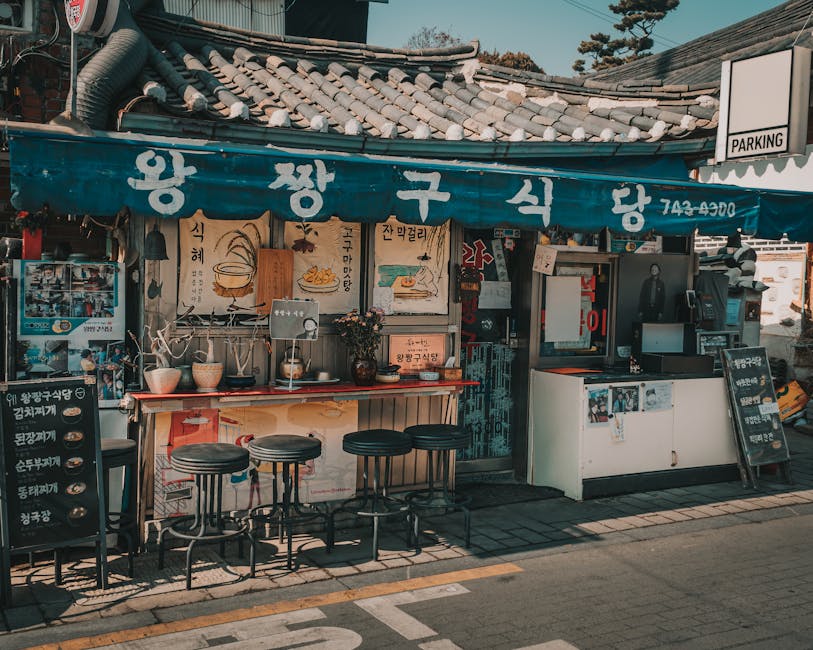
- Vatos Urban Tacos (Itaewon) — Mexican-Korean fusion, kimchi carnitas tacos. ₩6,000–14,000 each.
- Linus’ Bama Style (Itaewon) — Texas-style smoked brisket plate ₩28,000.
- Casablanca Sandwicherie (HBC) — Authentic Moroccan + French sandwiches ₩9,000.
- Le Saint-Ex (HBC) — Beloved French bistro, prix-fixe ₩45,000.
- Mongtan (Hannam) — Korean BBQ specializing in dry-aged beef ₩60,000+ per person.
- Egg Drop (Itaewon) — Cult egg sandwich chain, ₩4,500–6,500.
- Buddha Bowl (HBC) — Vegan international bowls ₩13,000.
- Braai Republic (Itaewon) — South African barbecue, boerewors, springbok. ₩28,000.
For more food picks, see our Seoul food guide.
Yongsan Nightlife
Itaewon is one of the city’s primary nightlife zones (alongside Hongdae and Gangnam). Highlights:
- Itaewon main strip: Sports bars, international pubs, hookah lounges
- Hooker Hill / “World Foot”: Late-night clubs and dance bars (rebuilt and revived post-2022)
- HBC craft beer scene: Magpie Brewing, The Booth, Craftworks
- Hannam wine bars: Sophisticated date night spots
- Seoul Pub crawl tours often start in Itaewon
The rhythm of an Itaewon night is later than most of Seoul: dinner runs past 21:00, bars fill after 23:00, and clubs like the reopened venues on the hill don’t peak until well after midnight. Hannam skews grown-up and wine-forward; HBC is craft beer and conversation; the main strip is where the energy and the crowds concentrate. Plan your ride home — the subway stops around midnight, so line up a Kakao T taxi from Itaewon Station Exit 4 if you’re out late.
See our complete Seoul nightlife guide.
Yongsan-gu’s Distinct Sub-Neighborhoods
- Itaewon — International cuisine, nightlife, multicultural energy
- Haebangchon (HBC) — Hilltop hipster village, cafés, indie spaces
- Hannam-dong — Luxury lifestyle, museums, fine dining
- Gyeongnidan-gil — Café-lined alley running off Itaewon
- Hwagok-dong — Quiet residential, leafy streets
- Ichon-dong — Riverfront residential near Han River
Suggested Half-Day Yongsan Itinerary
- 9:30 AM — War Memorial of Korea (Samgakji Station Exit 12)
- 11:30 AM — Walk through Yongsan Park toward Itaewon
- 12:30 PM — Lunch at Vatos Urban Tacos or Linus’ Bama Style
- 2:00 PM — Browse Itaewon antique street and Hyundai Card Music Library
- 3:30 PM — Coffee + bookstore browsing in Haebangchon
- 5:00 PM — Hike up to N Seoul Tower for sunset
- 7:00 PM — Dinner in Hannam-dong (Mongtan or Italian)
- 9:00 PM — Drinks back in Itaewon main strip
Best Times to Visit Yongsan-gu
- Spring/autumn: Perfect outdoor weather for HBC walking + Namsan hiking
- Friday/Saturday nights: Itaewon’s energy peaks
- Mondays: Many museums (War Memorial, National Museum) close — plan accordingly
- Avoid Halloween nights in central Itaewon, particularly along Hooker Hill, due to safety crowd-control measures still in effect since 2022
Where to Stay in Yongsan-gu
Yongsan offers a wide range of accommodation:
- Grand Hyatt Seoul — 5-star on Namsan with city views
- The Shilla Seoul — Iconic luxury hotel
- JW Marriott Hotel Seoul Dongdaemun (just north)
- Itaewon Hotel — Mid-range; walking distance to nightlife
- Boutique guesthouses in Haebangchon
See our where to stay in Seoul guide.
Practical Tips for Visiting Yongsan
- English is widely spoken in Itaewon — most service workers are fluent.
- Halal food is widely available, especially around Seoul Central Mosque.
- Foreign-friendly ATMs at Citibank, Standard Chartered, and convenience stores.
- Tax-free shopping at major Itaewon and Hannam stores.
- Free Wi-Fi across the district.
- Late-night taxis easy to find at Itaewon Station Exit 4.
- Subway closes around midnight — plan returns or take a Kakao T taxi.
Yongsan vs. Other Seoul Districts
How does Yongsan compare?
- vs. Hongdae — Yongsan is more international, less student-driven. Both are good nightlife.
- vs. Gangnam — Yongsan is more diverse, less polished, more historic.
- vs. Jongno — Yongsan is contemporary multiculturalism vs. Joseon-era heritage.
- vs. Myeongdong — Yongsan is local + international vs. tourist-shopping focused. Myeongdong’s cosmetics streets and evening food stalls are 15 minutes away on bus 110A if you want both in one day.
Yongsan Café Culture: Gyeongnidan-gil to Haebangchon
Yongsan quietly rivals Seongsu and Yeonnam for coffee. Gyeongnidan-gil and the alleys of Haebangchon are dense with roasters and dessert cafés built into old houses — think exposed brick, rooftop terraces facing Namsan, and single-origin pour-overs for ₩6,000–8,000. Craft-beer fans should hit Magpie Brewing‘s HBC taproom, Craftworks, or The Booth; our best bars in Seoul and Seoul café guide both single out this neighborhood. The move is to climb HBC in the late afternoon, café-hop downhill, and land at a taproom by dusk.
A Local’s Take: What’s Worth Your Time in Yongsan
Do: Give the War Memorial and National Museum real time — both are free and genuinely world-class. Walk (don’t subway) between Itaewon and Haebangchon to feel how fast the character shifts. Book Hannam BBQ ahead. Ride up to N Seoul Tower from the Namsan side for the classic city panorama.
Skip: The overhyped “international” chain restaurants on the main Itaewon strip when the family-run halal and bistro spots one street over are better and cheaper. Don’t schedule museums on a Monday — the big ones close. And you don’t need a guided pub crawl; Itaewon and HBC are easy to explore solo.
Frequently Asked Questions
What’s special about Yongsan-gu?
It’s Seoul’s most international district — home to embassies, the largest expat population, the country’s most multicultural cuisine, and major museums.
Is Yongsan-gu the same as Itaewon?
Itaewon is a neighborhood within Yongsan-gu (district). Yongsan-gu is much larger and includes Hannam, Haebangchon, Yongsan Station area, and more.
Is the War Memorial of Korea worth visiting?
Yes — even non-history-buffs find the museum compelling. It’s free, well-organized, and the outdoor military hardware display is impressive.
Is Itaewon safe?
Yes. Following the 2022 incident, crowd-control and safety measures have been significantly upgraded. The area remains safe and welcoming. See our is Seoul safe guide.
What’s the best food in Yongsan-gu?
Itaewon for international cuisine; Hannam-dong for high-end Korean BBQ and fine dining; HBC for indie bistros and craft beer.
How long do I need in Yongsan?
Half a day for the highlights. A full day if including the National Museum, War Memorial, and dinner in the area.
Is Yongsan walkable?
Within sub-neighborhoods, yes. Between them, use the subway — Yongsan-gu spans a wide area.
What’s the best subway exit for Itaewon?
Itaewon Station (Line 6), Exit 2 puts you at the heart of the main strip.
Is there a mosque in Yongsan?
Yes — Seoul Central Mosque on Itaewon-ro 27-gil is Korea’s main mosque and welcomes respectful visitors.
What’s the new Yongsan Park?
The former US military base is being converted into Korea’s largest urban park, scheduled to fully open in 2027. The southern portion is already accessible.
How do I get from Yongsan to other parts of Seoul?
Yongsan Station (Line 1) and the AREX line connect fast to Seoul Station, Hongdae, and the airport; Itaewon Station (Line 6) reaches Gangnam via a transfer. See our Seoul subway guide for routing.
Is Yongsan-gu good for families?
Very. The War Memorial’s Children’s Museum, the National Museum, Yongsan Family Park, and the I’Park Mall cinema make an easy, mostly-free day with kids — and much of it is indoors for rainy afternoons.
What is Gyeongnidan-gil?
A café- and bar-lined lane just west of the War Memorial, once the strip serving foreign residents and now one of Seoul’s most atmospheric places to eat, drink, and people-watch.
Final Thoughts
Yongsan-gu is the most international, most rapidly changing, and arguably most underrated of Seoul’s districts. The combination of the War Memorial, Itaewon’s food, Hannam’s culture, and the new Yongsan Park makes for a fascinating day trip from any base elsewhere in the city. Pair it with our Seoul travel guide, broader Seoul neighborhoods guide, and the things to do in Seoul hub.