Pair this with our where to stay in Seoul pillar, the Seoul neighborhoods guide, and our Myeongdong hotels alternative for travelers who want both.
Here’s the short version if you’re deciding right now: book a hanok if you want the trip to feel like Korea rather than like any city with a Marriott, and you don’t mind trading a minibar and a lobby for a courtyard and a paper window. Book two nights, not one — the first evening is spent figuring out the light switches and the shoe rules; the magic lands on the second morning, when you’re drinking barley tea in a silent 100-year-old courtyard while the rest of Bukchon is still asleep. If you need a gym, a pool, and 2am room service, a hanok will frustrate you and you should skip to our where to stay in Seoul pillar instead. Everyone else: read on.
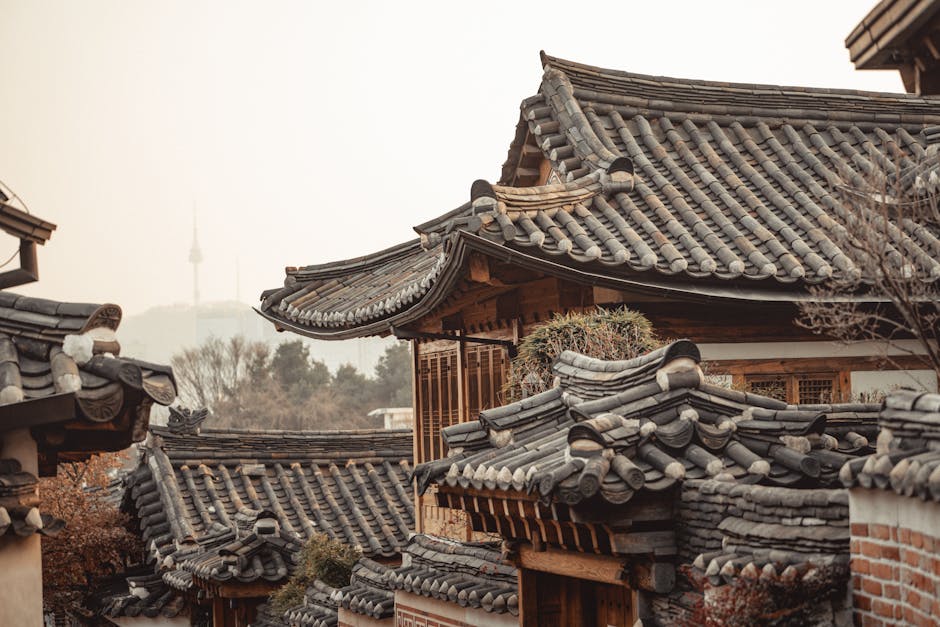
What is a hanok?
Hanok are traditional Korean houses, typically built from pine, paulownia, or cypress wood, with mortise-and-tenon joinery (no nails), paper windows (changho), tile roofs (giwa), and ondol — the centuries-old radiant under-floor heating system that uses smoke from a kitchen hearth to warm the stone floor. The architecture is designed for harmony with nature: each hanok has an inner courtyard (madang), south-facing main rooms, and natural cross-ventilation in summer.
Most surviving hanok in Seoul date to the late Joseon dynasty (1392–1897) and the early 20th century. The biggest concentrations are in Bukchon Hanok Village (north of Insadong) and Seochon (west of Gyeongbokgung Palace), with smaller pockets in Ikseon-dong and Eunpyeong Hanok Village (north Seoul).
What makes a hanok a hanok isn’t just the wood — it’s the philosophy. Traditional builders followed baesanimsu, siting a house with a mountain at its back and water in front, and orienting the main rooms south for winter sun. The deep eaves are calculated to block the high summer sun but let the low winter sun reach deep into the room. The maru (a raised wooden-floored hall) stays cool and breezy in summer, while the ondol rooms trap heat in winter — one house, two climates. Once you’ve spent a night in a well-built hanok you start to notice how much modern architecture ignores all of this.
Seoul lost thousands of hanok to 20th-century development, which is exactly why the surviving clusters are protected and why a stay directly funds their upkeep. Fewer than a dozen neighborhoods retain meaningful hanok density today, and Bukchon — wedged between two royal palaces — is the crown jewel. If you want the full history and a walking route through the lanes, our Bukchon Hanok Village guide maps it street by street.
What to expect from a hanok stay
Hanok accommodations vary widely. Some are pure heritage experiences — paper-screen windows, no en-suite bathroom, sleeping on a futon (yo) atop the heated floor. Others are luxury hybrids: original hanok shells fitted with rain showers, premium bedding, in-house tea masters, and Michelin-quality breakfasts.
A typical night in a hanok
You arrive, slip off your shoes at the raised threshold, and pad across a wooden floor that’s noticeably warm underfoot. The host pours a welcome tea in the courtyard and walks you through the quirks: the sliding paper doors that glow amber at dusk, the futon folded in the closet, the bathroom that may be a few steps across the courtyard. Dinner is out in the neighborhood — Insadong and Samcheong-dong are a five-minute walk — and you’re back before the lanes empty. The floor is toasty, the room dim and quiet, and the only sounds are the timber settling and, if you’re lucky, rain on the tile roof. Morning comes with a knock and a tray: rice, soup, a wall of small banchan dishes. You eat cross-legged, then step into an empty courtyard for the photo everyone comes for, taken before the day-trippers arrive at 10am. That two-hour window — dawn in an empty hanok — is the whole reason to stay overnight rather than just visit.
Common features
- Heated floors (ondol). The room is warmer near the floor than the ceiling. In winter you’ll appreciate it; in summer it’s turned off.
- Sleeping on a futon (yo). Some stays now offer Western beds, but the traditional setup is a thick futon laid on the floor.
- Paper-screen windows. Translucent rather than transparent, beautiful but less private. Modern stays add curtains.
- Slippers. Take outdoor shoes off at the threshold; indoor slippers provided.
- Shared courtyard. The madang (inner courtyard) connects rooms; you’ll often share it with other guests.
- Quieter than hotels. No corridors, no elevators — just wooden creaks and birdsong.

Best luxury hanok stays in Seoul (₩300,000+)
1. Rakkojae Bukchon
The most famous luxury hanok in Seoul. Originally a 1930s house, restored in 2003 into a boutique heritage hotel. Eight rooms, an in-house jjimjilbang sauna, and a chef-led traditional Korean dinner option. Each room has been individually designed.
2026 rate: ₩450,000–₩900,000 per night. Best for: heritage-luxury travelers, anniversaries, photographers.
Do this: book the room with its own small private courtyard and pre-order the multi-course hanjeongsan dinner — it’s the single best in-hanok meal in the city. Skip: the cheapest room, which faces the service side and loses the whole point of the property.
2. Bonum 1957 Hanok and Boutique
Restored hanok in central Bukchon with sleek modern interiors woven into the heritage shell. Refined breakfast included; courtyard views from most rooms.
2026 rate: ₩320,000–₩560,000.
The interiors here are the most Instagram-famous in Seoul — think black-framed glass, a manicured courtyard, and a breakfast that’s genuinely a highlight rather than an afterthought. It’s also the easiest luxury hanok for first-timers nervous about “roughing it”: bathrooms are full modern spa-standard, and Western beds are available on request. Anguk Station is a four-minute walk.
3. Hanok Inn Seoul (Eunpyeong Hanok Village)
A new-build hanok complex in Eunpyeong, with mountain views and the most ambitious modern hanok architecture in Seoul. Quieter and more contemporary than Bukchon.
2026 rate: ₩340,000–₩620,000.
4. The Sui
Compact but design-led luxury hanok with a famous Korean tea master in residence. Lectures and tea ceremonies on request.
2026 rate: ₩280,000–₩460,000.

Best mid-range hanok stays (₩150,000–₩300,000)
5. Tea Guesthouse
Intimate hanok with five rooms in a quiet Bukchon backstreet. Korean tea ceremonies, cooking classes, and English-speaking hosts.
2026 rate: ₩180,000–₩260,000.
6. Bukchon Maru Guesthouse
Family-run hanok with traditional ondol floors and a small but well-tended garden. Multiple room sizes; couples and families both fit.
2026 rate: ₩150,000–₩240,000.
7. Sodam Hanok Guesthouse
Restored Bukchon hanok with a more boutique feel. Lots of original wood detail, well-priced for the location.
2026 rate: ₩170,000–₩270,000.
8. Beanbean Bukchon
A modern hanok-inspired build (not a heritage house) with a younger, design-forward feel. Strong choice for mid-range visitors who prioritize comfort.
2026 rate: ₩170,000–₩280,000.

Best budget hanok stays (₩70,000–₩150,000)
9. Hide & Seek Guesthouse
Older hanok structure, simple rooms with shared bathrooms but lots of authentic atmosphere. Walking distance to Insadong.
2026 rate: ₩70,000–₩110,000.
10. Hanok Stay Bukchon
Group of five small budget hanok rooms; private but compact. English-friendly host; tea included.
2026 rate: ₩90,000–₩140,000.
11. Doo Guesthouse
Long-running Bukchon mid-budget hanok. Korean breakfast included. Recently renovated rooms have en-suite bathrooms.
2026 rate: ₩100,000–₩160,000.
12. Tea Story Hanok Stay
Smallest budget hanok on the list. Two rooms only, ondol floors, paper windows. The most authentic experience for the price.
2026 rate: ₩80,000–₩130,000.

Comparison: hanok stays at a glance (2026)
Hanok stay vs a Seoul hotel: which should you book?
This is the question I get most, so here’s the honest trade-off. A hanok wins on atmosphere, culture, and photos, and it’s usually quieter and more central-to-the-old-city than a comparable hotel. A hotel wins on space, climate control, elevators, late check-in, luggage handling, and predictability. The two aren’t mutually exclusive — the move most seasoned visitors make is to split the trip.
| Factor | Hanok stay | Seoul hotel |
|---|---|---|
| Atmosphere & culture | Unbeatable | Generic |
| Room size & storage | Compact | Larger |
| Air-con / heating control | Variable (great ondol, limited A/C) | Full control |
| Soundproofing | Thin (paper & wood) | Solid |
| Late / self check-in | Often no | 24-hour desk |
| Accessibility (stairs, thresholds) | Poor | Good |
| Best trip length | 2–3 nights | Any |
My standard recommendation for a first Seoul trip: two nights in a Bukchon hanok at the start, when you’re wide awake with jet lag and happy to be up at dawn, then move to a modern hotel in Myeongdong or Gangnam for the rest. You get the culture hit without a week of futon-sleeping, and the contrast itself is memorable. If you’re weighing neighborhoods more broadly, the where to stay in Seoul pillar breaks down every district.
Which hanok stay is right for your trip?
The “best” hanok depends entirely on who you are and how you travel. Here’s how I’d steer different visitors.
Couples and honeymooners. Splurge on Rakkojae Bukchon or The Sui — a private courtyard, a tea ceremony, and a candle-lit hanjeongsan dinner is as romantic as Seoul gets. Ask for a room away from the shared madang.
First-timers nervous about tradition. Bonum 1957 or Hanok Inn Seoul give you the hanok shell with full modern bathrooms and Western beds. You get the aesthetic without sleeping on the floor.
Solo travelers. Tea Guesthouse and Hide & Seek are social, English-friendly, and safe — Seoul is one of the safest big cities in the world for solo visitors, and hanok hosts tend to look after single guests. Pair with our unique experiences in Seoul guide for solo-friendly activities.
Families. Book a larger ondol room at Bukchon Maru or Doo Guesthouse; kids genuinely love sleeping on the floor and running in the courtyard. Confirm the maximum occupancy — many rooms cap at two.
Photographers and creators. You want an empty courtyard at golden hour, so prioritize a stay with its own private madang (Rakkojae) rather than a shared one, and rent a hanbok for the shoot. Our K-drama filming locations guide covers the palace and hanok backdrops nearby.
Winter travelers. This is my secret tip — hanok are at their absolute best in January. The ondol floor is blissful, snow on the curved tiles is unforgettable, and rates drop outside cherry-blossom season. Just pack warm socks for the walk to the bathroom.
| Hanok stay | Tier | Avg 2026 rate | Best for |
|---|---|---|---|
| Rakkojae Bukchon | Luxury | ₩650,000 | Heritage luxury, anniversaries |
| Bonum 1957 | Luxury | ₩440,000 | Modern-meets-heritage |
| Hanok Inn Seoul | Luxury | ₩460,000 | Newer architecture in Eunpyeong |
| The Sui | Luxury | ₩370,000 | Tea ceremonies |
| Tea Guesthouse | Mid-range | ₩220,000 | Cultural immersion |
| Bukchon Maru | Mid-range | ₩200,000 | Family-run hospitality |
| Sodam Hanok | Mid-range | ₩220,000 | Boutique mid-range |
| Beanbean Bukchon | Mid-range | ₩220,000 | Modern hanok comfort |
| Hide & Seek | Budget | ₩90,000 | Authentic budget |
| Doo Guesthouse | Budget | ₩130,000 | Family budget |
Best Seoul hanok neighborhoods to stay in
Bukchon Hanok Village (most popular)
Between Gyeongbokgung and Changdeokgung Palaces, with hundreds of preserved hanok and the largest concentration of stay options. Walking distance to Insadong, Samcheong-dong cafes, and major palaces. Can get crowded with day-trippers from 10:00 to 17:00.
Seochon (quieter alternative)
West of Gyeongbokgung. Less famous, more residential, fewer crowds. The hanok density is lower but the streets feel more lived-in. Good cafes, fewer shops.
Ikseon-dong (trendy hipster)
Hanok village turned trendy cafe and shop district. Some hanok stays here have a more youth-culture vibe.
Eunpyeong Hanok Village
New-build hanok complex in north Seoul, beneath Bukhansan mountains. Modern interpretations rather than heritage homes. 30-min subway from central Seoul.
Ikseon-dong in depth
Ikseon-dong deserves special mention: it’s the oldest hanok neighborhood turned into Seoul’s most charming cafe-and-bistro warren, all narrow lanes and hidden courtyards. Staying here puts you in the middle of the nightlife-adjacent hipster scene while still sleeping under a tile roof. It’s a short walk to Jongno and central enough to reach anywhere on Line 1, 3, or 5.
Making the most of your hanok neighborhood
The best hours in Bukchon bookend the day. Wake early and walk the upper lanes (Gahoe-dong, around the 31 and 11 alleys) before 9am, when they belong to residents and the odd photographer rather than tour groups. Mid-morning, drop into Samcheong-dong’s cafes and small galleries. The palaces are a five-minute walk in either direction — Gyeongbokgung to the west, Changdeokgung with its Secret Garden to the east — so slot one into your afternoon. Come evening, Insadong’s tea houses and Ikseon-dong’s bistros are within strolling distance for dinner, and you’re back inside the quiet lanes before they empty. For a full walking sequence, our Insadong guide and Seoul temples and shrines guide slot neatly into a hanok-based day. If you’re mapping a whole trip around this area, our Seoul itineraries hub shows how the palace district fits a 3-, 5-, or 7-day plan.

What’s included in a hanok stay
Standards vary, but most include:
- Korean breakfast. Rice, soup, banchan, sometimes a slow-cooked grain porridge (juk).
- Tea service. Often free; some hanok feature ceremonial pouring.
- Hanbok rental. ₩10,000–₩30,000 for several hours of dress-up — useful for photos.
- Toiletries, slippers, and bath towels.
- Wi-Fi. Universal in Seoul, even in 100-year-old buildings.
- Shared courtyard or garden.

What is NOT typical at a hanok stay
- Pools, gyms, or 24-hour reception.
- Elevators (most are single-storey).
- In-room kitchens (some apartment-style hanok have small kitchenettes).
- Heavy soundproofing — paper walls and wooden frames transmit voices and music.
- Western beds (some now offer them, but futons are traditional).
- Big bathrooms — many luxury hanok have small en-suite bathrooms; budget options share.
Hanok stay etiquette
- Take off shoes at the threshold. Always.
- Walk softly on wooden floors. Heels and stomping echo.
- Don’t lean on or touch the paper windows. They’re delicate and expensive to repair.
- Be quiet at night. Walls are thin and other guests are nearby.
- Eat in the dining area, not the bedroom. Smells linger in wood and fabric.
- Respect the courtyard. It’s for quiet enjoyment, not music or loud calls.
For broader cultural context, see our Korean dining etiquette guide.

How to choose the right hanok stay
| If you want… | Pick… |
|---|---|
| Heritage luxury | Rakkojae Bukchon |
| Modern hanok design | Bonum 1957 or Hanok Inn Seoul |
| Tea ceremony focus | The Sui or Tea Guesthouse |
| Family-run hospitality | Bukchon Maru or Doo Guesthouse |
| Budget authenticity | Hide & Seek or Tea Story |
| Mountain quiet | Eunpyeong-area hanok |
Best time of year for a hanok stay
Spring (April-May) for cherry blossoms in Bukchon’s small streets and autumn (October-November) for colorful tile-roof contrast are widely considered the best times. Summer is warm and humid; the hanok cross-ventilation helps but A/C in some heritage rooms is limited. Winter is cold but the ondol floor is gloriously warm — and snow on hanok roofs is iconic.
For weather and timing detail, see our best time to visit Seoul.

How to book a hanok stay
- Booking.com — most reliable for English-language reservations and refund protection.
- Airbnb — strong for boutique and family-run hanok in Bukchon and Seochon.
- Direct booking via the hanok’s own site — sometimes 5-15% cheaper.
- Hanok Stay Korea (hanokstay.or.kr) — government-backed registry with verified properties and English booking.
Book 2–3 months ahead for spring/autumn peaks. Cherry-blossom weekends in Bukchon often sell out 6+ weeks in advance.
Getting to your hanok from Incheon Airport
Most hanok cluster around Anguk Station (Line 3) in Bukchon. From Incheon, the cheapest route is the AREX All-Stop train to Seoul Station (about ₩4,750, ~60 min) then Line 1/3 to Anguk — roughly 90 minutes door to door. Faster and easier with luggage: the AREX Express to Seoul Station (~43 min) then a short taxi, or a straight airport taxi (₩70,000–₩90,000, 60–75 min depending on traffic). Note that Bukchon’s lanes are steep and often car-free, so your taxi may drop you a block from the door — travel light or expect a short uphill walk with your bags. Full route options and current fares are in our Incheon Airport to Seoul guide, and once you’re in the city, getting around Seoul covers the subway and T-money basics.
FAQ: hanok stays in Seoul
What is the best hanok stay in Seoul?
Rakkojae Bukchon is the most famous luxury option. For mid-range, Tea Guesthouse and Bukchon Maru are top choices. Hide & Seek leads the budget category.
How much does a hanok stay cost in Seoul?
Budget ₩70,000–₩140,000, mid-range ₩150,000–₩300,000, luxury ₩300,000–₩900,000+ per night in 2026.
Are hanok stays comfortable?
Yes — modern hanok stays balance heritage authenticity with full bedding, hot water, and Wi-Fi. Sleeping on a futon takes some getting used to, but most guests find it deeply restful thanks to ondol heating.
Do hanok stays have private bathrooms?
Mid-range and luxury hanok almost always do. Budget hanok often share — confirm before booking.
Can I sleep in a hanok with a Western bed?
Yes — Bonum 1957, Hanok Inn Seoul, and Beanbean Bukchon all offer Western beds in some rooms.
Are hanok stays good for families?
Yes for kids 6+, but check room capacity. Bukchon Maru and Doo Guesthouse have larger family rooms.
Is the AREX airport line near hanok stays?
Yes — Anguk Station (Line 3, near Bukchon) is reachable in ~50 min from Incheon Airport via AREX express + Line 3 transfer at Seoul Station.
Is Bukchon too touristy to stay in?
During the day, the main photo lanes get crowded — but that’s exactly why staying overnight is worth it. From roughly 6pm to 9am the neighborhood empties out and becomes residential and hushed. You’re paying for the hours day-trippers never see.
Is there a minimum number of nights?
Most hanok accept one-night bookings, but I’d book two. One night is mostly spent adjusting to the futon and the shared bathroom; the second is when you actually relax into it.
Can I check in late at a hanok?
Often not — many are family-run with no 24-hour desk, and check-in may cut off around 9–10pm. Message your host your arrival time in advance. If your flight lands late, spend the first night at an airport or Myeongdong hotel and move to the hanok the next day.
Do hanok stays have air conditioning in summer?
Most modern hanok stays have added A/C units, but heritage rooms can be warm and humid in July–August. Cross-ventilation helps, but if you wilt in heat, confirm A/C before booking and consider visiting in spring or autumn instead — see our best time to visit Seoul guide.
Where can I store luggage if check-in is later than my arrival?
Most hosts will hold bags if you arrive early, and Anguk and Anguk-adjacent stations have coin lockers. Seoul also has cheap luggage-storage apps and services around major stations.

What to pack for a hanok stay
You don’t need much, but a few things make the experience smoother. Bring warm socks or slippers — floors are heated but thresholds and courtyards are cold, and you’ll be shoeless indoors. Pack a small day-bag rather than hauling a giant suitcase up Bukchon’s car-free lanes. A light sleep mask helps because paper windows glow at dawn, and earplugs are wise given the thin walls. If you’re a light sleeper unused to a firm futon, that’s worth knowing going in — the ondol warmth compensates, but the surface is firmer than a hotel mattress. Everything else (toiletries, towels, Wi-Fi, tea) is provided. For a full citywide checklist, see our Seoul packing list.
Final word
A hanok stay is the best single way to layer Korean culture into your Seoul trip. Two or three nights in a Bukchon hanok with a Korean breakfast and an early-morning courtyard photo will stand out longer than a week in any luxury chain hotel. Combine with one or two nights at a modern Seoul hotel (Myeongdong or Gangnam) for the full spectrum.
Continue planning with our where to stay in Seoul pillar, the Seoul temples guide, and our Myeongdong hotels guide.