This guide covers what Euljiro is by day, how Nogari Alley works and what to order there, how to find the unmarked bars without wasting an hour, Sewoon Sangga and the underground shopping centre, and the practical business of getting in and out. Hours and prices were checked in September 2026; this is a district that changes fast and several of its best-known places have moved or closed under redevelopment, so treat specific venues as a starting point rather than a guarantee.
At a glance
| Detail | |
|---|---|
| Stations | Euljiro 3-ga (Lines 2 and 3) · Euljiro 4-ga (Lines 2 and 5) · Euljiro 1-ga (Line 2) |
| By day | Printing, paper, lighting, tile, hardware and machine-tool wholesalers |
| By night | Nogari Alley, unmarked stairwell bars, rooftops, vinyl bars |
| Nogari Alley anchor | Manseon Hof — open since 1980, 12:00–05:00, 365 days a year |
| Nogari | Dried young pollack, grilled; a couple of thousand won each |
| Draught beer | Roughly ₩4,000–5,000 |
| An evening for two | ₩30,000–45,000 |
| Best time | From about 18:00; the alley peaks 20:00–23:00 |
| Best season | Late spring and early autumn, when the street seating works |
Euljiro by day
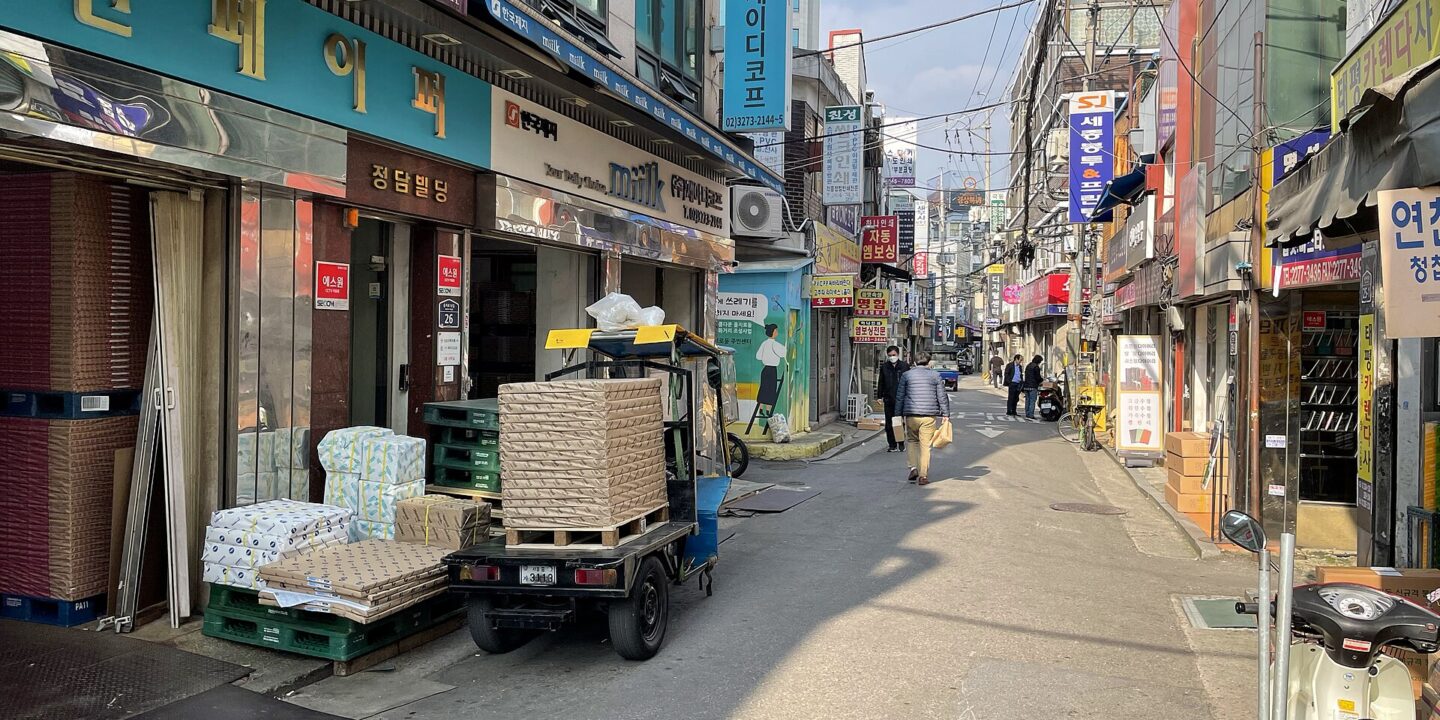
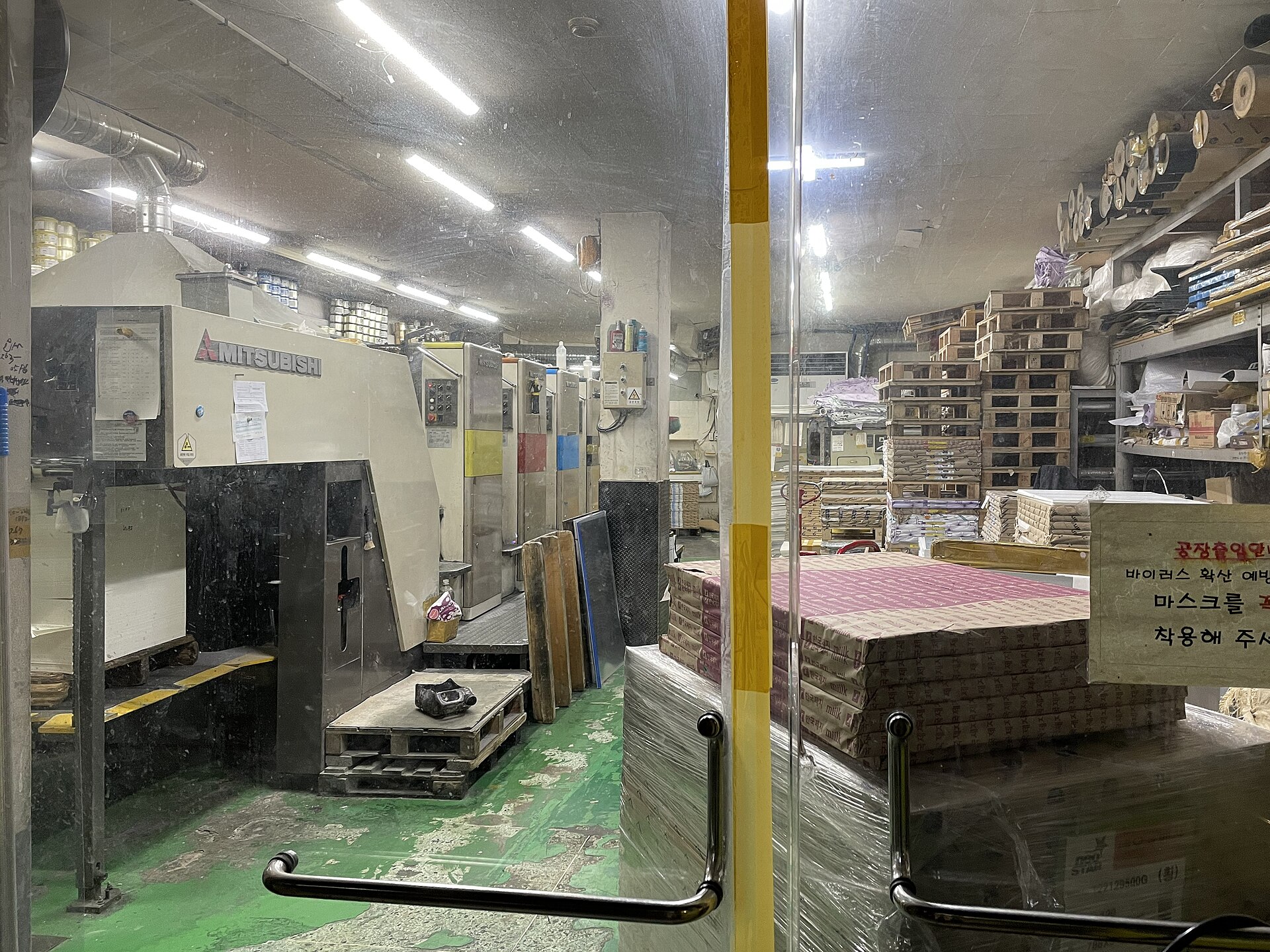
Euljiro is a long east–west spine running from City Hall towards Dongdaemun, and for most of the twentieth century it did what it still largely does: supply things to people who make things. The blocks between Euljiro 3-ga and 4-ga are lighting shops, floor to ceiling, thousands of fittings in windows so bright they are hard to look at. North of that are the tile and bathroom-fitting wholesalers. The alleys towards Chungmuro are the printing district, where small presses have been running short-run jobs for decades. Elsewhere it is hardware, hinges, sheet metal and machine tools.
None of this is a tourist attraction and none of it is trying to be, which is precisely why walking through it in the afternoon is worthwhile. It is one of the last stretches of central Seoul that still visibly makes and moves things, in a city that has otherwise been very thoroughly turned into offices and apartments. The trucks are small, three-wheeled and loaded improbably high. The shops are one room deep with the owner sitting at the front. Nobody will try to sell you anything.
It is also under pressure. Blocks have been cleared for redevelopment, several long-established businesses and restaurants have been forced to move, and the future of large parts of the district is genuinely uncertain. That tension — between the old trades and the bars that arrived because the rents were cheap — is the actual story of Euljiro, and it is worth being conscious of while you are drinking there.
Nogari Alley
The single most enjoyable evening in central Seoul, and the easiest to do without any preparation.
What it is
A short stretch of street near Euljiro 3-ga Station where a handful of old beer halls put plastic tables and stools out across the road, and several hundred people sit outside drinking cheap draught beer and eating grilled dried pollack. The anchor is Manseon Hof, open since 1980 and now spread across several buildings including rooftop seating, running from midday to five in the morning, every day of the year.
The alley is what gave Euljiro its nickname — Hipjiro, hip plus Euljiro — and it is the point at which an industrial district became a destination. On a warm evening the road effectively closes to traffic through sheer volume of furniture.
What to order
- Nogari — dried juvenile pollack, grilled over heat until it curls, torn apart with your hands and dipped in a gochujang-mayonnaise sauce. Chewy, salty, intensely savoury, and designed from first principles to make you drink more beer. A couple of thousand won each; order several.
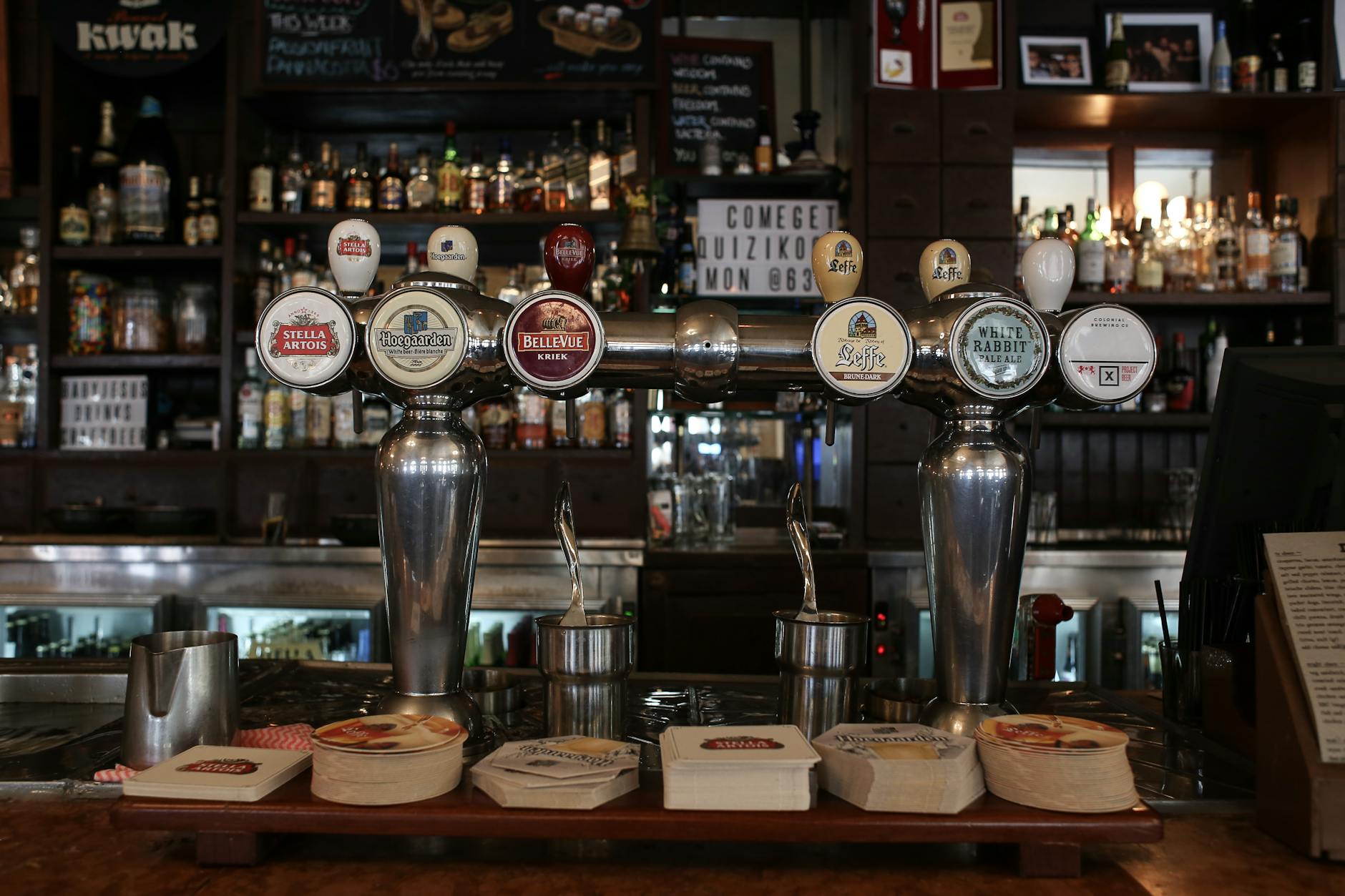
- Draught beer — saeng-maekju, cold, light and about ₩4,000–5,000 a glass. Nobody is here for the beer’s complexity.
- Grilled garlic chicken and skewers — most of the halls do a short menu of grilled things beyond the pollack. All of it is good and none of it is complicated.
- Golbaengi muchim — cold spicy sea snails with noodles, at some of the halls. Excellent.
How it works
Find a free table and sit down; someone will come. There is no reservation system and no queue system, so at peak times on a Friday you hover and wait for people to leave. Payment at the end, cards fine. Nobody will rush you and nobody will mind that you do not speak Korean — pointing works, and the menu is short.
Go on a weekday if you can. Friday and Saturday after eight are genuinely full, and the pleasure of the place is in sitting outside with room around you rather than being wedged between two other tables.
The unmarked bars, and how to find them
The other Euljiro is the one people find intimidating: bars with no signage, in stairwells and above hardware shops and behind unmarked doors, deliberately hard to find as a matter of style. Some genuinely are hidden. Most are less hidden than they look.
The practical method
- Use a map app and trust it. Naver Map and Kakao Map both list these places accurately, in Korean and often in English. The app will put you within five metres of a door and you will still not see it — look up. Almost all of them are on the second, third or fourth floor.
- Look for the lift. A lot of buildings here have a single small lift with hand-written floor labels. The bar is usually on it.
- Look for the queue. A group of people standing on the pavement outside a shuttered hardware shop at nine at night is a queue, not a coincidence.
- Look up at the windows. Warm lighting and plants on an upper floor above a wholesale unit is a reliable indicator.
- Ask. Staff at one bar will happily tell you where another is. This is a small scene and everyone knows everyone.
What the bars are like
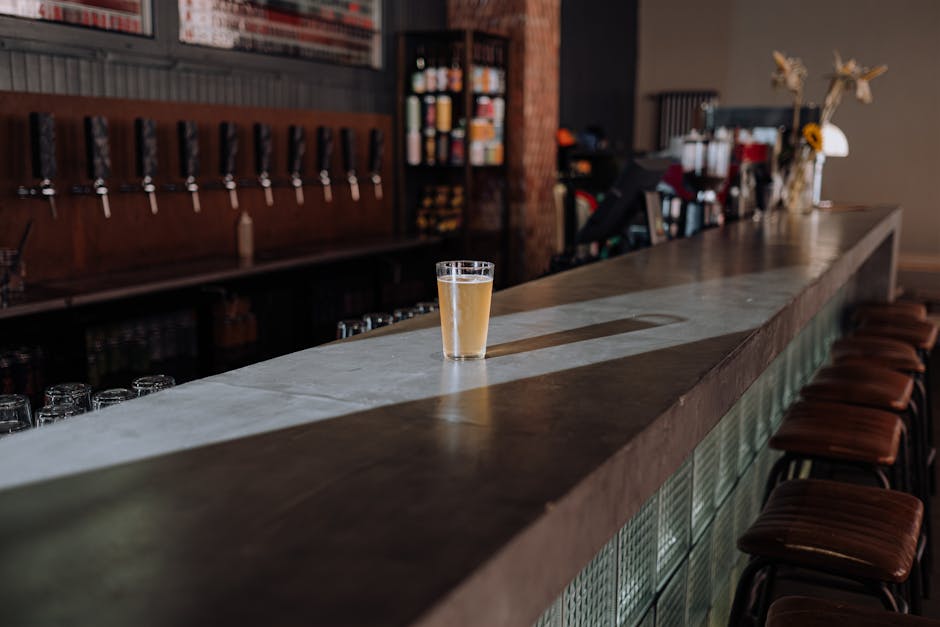
The house style is a deliberately unrenovated interior — bare concrete, stripped plaster, exposed pipework, mismatched furniture, low light — occupying a space that was recently a workshop or an office. Many have a strong music focus, with vinyl walls and proper systems. Several have rooftops, which in Euljiro means an ordinary flat roof with a view of neon signs and air-conditioning units, and is much better than that sounds. Cocktails typically run ₩12,000–18,000, beer ₩7,000–9,000, which is above the alley and below Gangnam.
The scene is small enough that a good night is three or four places within a few hundred metres. Our best bars in Seoul guide covers the wider city, and the Korean alcohol guide explains what to order if you would rather drink locally than cocktails.
Sewoon Sangga
Sewoon Plaza is a linear megastructure built in 1968 — a long concrete spine of shops and flats running north to south, and one of the most significant and most argued-about buildings in modern Korean architecture. For decades it was the country’s electronics centre, then it declined badly, and since 2014 it has been the subject of an urban regeneration programme that added a pedestrian overpass, a rooftop observatory, a plaza and maker workshops.
What is worth doing: walk the elevated deck, which runs above the street and gives you a view over Jongmyo shrine and the rooftops of the old city; go up to the rooftop for the view; look at the electronics stalls, which still sell components, second-hand cameras and things you cannot buy anywhere else. Fans of Korean drama will recognise it as a filming location for Vincenzo and Guardian: The Lonely and Great God.
It is a strange, half-abandoned, half-revived building and it will not take more than forty minutes. Its long-term future has been debated repeatedly and parts of the complex have been slated for demolition at various points, so check before making a special trip.
The Euljiro Underground Shopping Centre
Beneath the main road runs one of Seoul’s longest underground arcades — a strip-lit corridor of small shops stretching for over a kilometre and connecting several stations, selling clothing, hiking gear, watches, bags, luggage and military surplus at prices well below street level.
It is completely unglamorous, largely used by office workers and older shoppers, and genuinely good value. It is also the practical answer to a rainy afternoon or a hot one: you can walk a substantial distance across central Seoul underground without surfacing. Bring cash for the smaller stalls.
Eating in Euljiro
The district’s restaurants are mostly old, small and built around one dish, which is the best kind.
- The beer halls of Nogari Alley, covered above, which are a meal as much as a drink.
- Golbaengi — spicy cold sea snails with somyeon noodles, a Euljiro speciality, served with beer and perfect in summer.
- Naengmyeon — cold buckwheat noodles in an icy broth. Euljiro has a long association with the dish, though several of its most famous houses have moved or closed under redevelopment, so check current addresses rather than relying on an old blog post.
- Jokbal and bossam — braised pig’s trotter and boiled pork with wraps, both classic drinking food and widely available in the surrounding blocks.
- Cafes. Euljiro’s daytime cafe scene has grown alongside the bars, in the same unmarked-upstairs style. Several are excellent and several are mostly interior design.
For what to eat once the bars close, see our late-night food in Seoul guide — Euljiro sits between Jongno and Dongdaemun, both of which are open considerably later than most of the city.
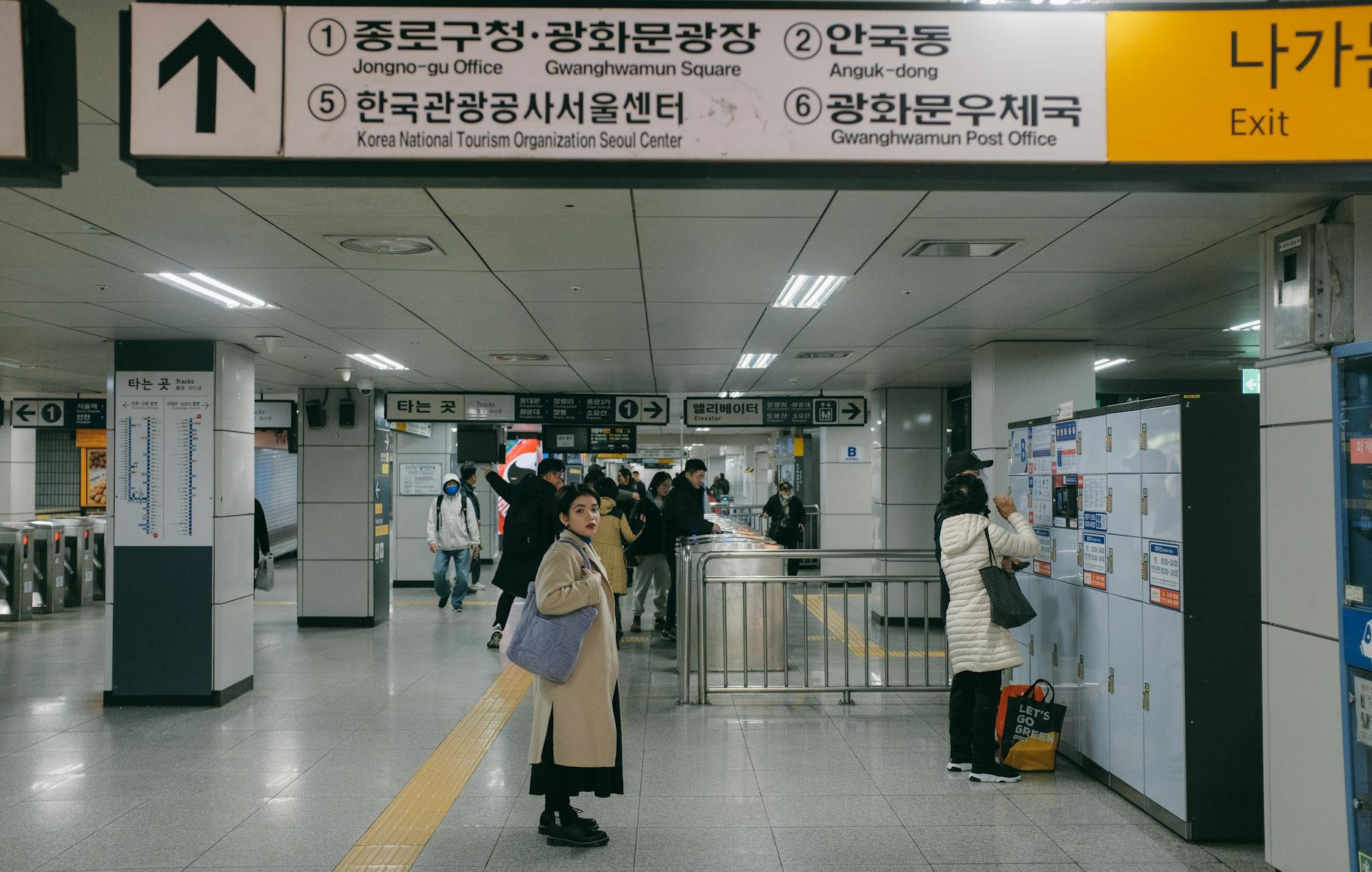
What Euljiro looks like from the inside
Two things about the district catch visitors off guard, and both are worth knowing before you arrive.
The buildings are old and the lifts are small
These are 1960s and 1970s commercial blocks, and the bars occupy floors that were never designed for forty people drinking. Stairwells are narrow, lifts fit four people at a squeeze, and a busy Saturday means waiting on a landing. Several venues are up four flights with no lift at all, which is worth knowing if stairs are a problem — and worth asking about before you walk across the district to one.
The neighbours are still working
Above and below the bars are businesses that open at seven in the morning, and the residents and shopkeepers here have very mixed feelings about what has happened to their district. Noise on the street after midnight is a genuine friction point, and there have been repeated complaints and occasional crackdowns. Keep conversation on the pavement quiet, do not sit on other people’s loading bays, and take your bottles with you. It costs nothing and it is the difference between a welcome visitor and part of the problem.
When not to go
Three timings to avoid.
Sunday. The daytime district is closed and a good number of the bars close too. The alley will be quieter than you want.
Deep winter. Nogari Alley is fundamentally an outdoor institution, and in January the tables are indoors, the street is empty and the whole thing loses most of its point. Go between April and early November.
Heavy rain. Same reasoning. The upstairs bars work in any weather; the alley does not.
A Euljiro evening, in order
- 17:00 — Get off at Euljiro 3-ga and walk the daytime district while the shops are still open. Lighting street, then the printing alleys.
- 18:00 — Sewoon Sangga. Walk the elevated deck, go up for the Jongmyo view.
- 19:00 — Nogari Alley. Find a table outside, order beer and several nogari, stay for an hour and a half.
- 21:00 — First unmarked bar. Pick one from a map app before you go rather than wandering hopefully.
- 22:30 — Second bar, ideally a rooftop.
- Midnight — Either the last subway home, or walk twenty minutes east into Dongdaemun, where nothing closes.
Last useful trains are around midnight, and Euljiro is central enough that a taxi home is not expensive. Timings are in our Seoul subway guide.
Combining it with the rest of the city
Euljiro’s position is its underrated advantage: it is walking distance from a great deal.
- Myeongdong is ten minutes’ walk south-west — a useful contrast, and covered in our Myeongdong guide.
- Jongno, Insadong and the palaces are fifteen to twenty minutes north — see the Jongno guide.
- Gwangjang Market is a fifteen-minute walk north-east, and pairs beautifully with a Euljiro evening: eat at the market, drink in Euljiro. More in our traditional markets guide.
- Dongdaemun is twenty minutes east and keeps later hours than anywhere — see the Dongdaemun guide.
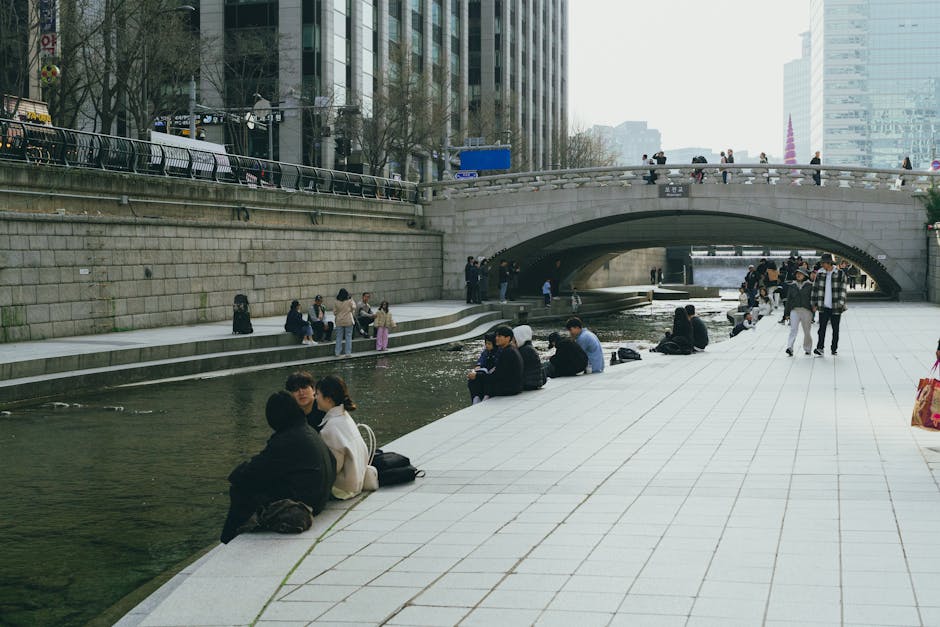
- Cheonggyecheon runs along the northern edge of the district, and walking the stream between Euljiro and Gwanghwamun is one of the better free hours in Seoul.
The honest verdict
Euljiro is the best night out in central Seoul and the one most likely to go wrong for a visitor who has not planned it. The bars are deliberately hard to find, several of the famous ones have moved, and turning up at nine on a Saturday with no destination in mind produces an hour of wandering past shuttered hardware shops followed by a compromise.
The fix takes five minutes: pick two bars on a map app before you leave your accommodation, go to Nogari Alley first while it is still light, and treat the rest as a bonus. Do that and it is unbeatable. It is also, unlike almost everything else on a Seoul itinerary, not a tourist activity — the crowd is overwhelmingly local, in their twenties and thirties, and the whole thing exists for them rather than for you.
One caveat: this is not a district for a first evening in Korea. It rewards a bit of confidence with the subway, the maps and the language, and it is much better on night four than night one.
Frequently Asked Questions
What is Hipjiro?
A nickname combining “hip” and “Euljiro”, describing the transformation of an industrial district into a nightlife destination. It began around Nogari Alley and spread to the unmarked bars occupying former workshops in the surrounding blocks.
Where is Nogari Alley?
Near Euljiro 3-ga Station, on Lines 2 and 3. Manseon Hof, open since 1980, is the anchor and now occupies several buildings including rooftop seating; it runs from midday to five in the morning, every day of the year.
What is nogari?
Dried juvenile pollack, grilled until it curls, torn apart by hand and dipped in a gochujang-mayonnaise sauce. Chewy, salty and very savoury. A couple of thousand won each, and the standard accompaniment to cheap draught beer.
How do I find bars with no signs?
Use Naver Map or Kakao Map, which list them accurately, then look up — almost all are on the second floor or above. Look for a small lift with hand-written floor labels, warm lighting on an upper floor, or a group of people standing outside a closed hardware shop.
How much does an evening in Euljiro cost?
Nogari Alley is cheap — draught beer around ₩4,000–5,000 and nogari a couple of thousand won each. The upstairs bars charge ₩12,000–18,000 for cocktails and ₩7,000–9,000 for beer. An evening for two across both comes to roughly ₩30,000–45,000.
Is Euljiro worth visiting during the day?
Yes, for an hour. The lighting street, the tile wholesalers and the printing alleys are one of the last visibly industrial parts of central Seoul, and walking through them is genuinely interesting even though nothing there is set up for visitors.
Is Sewoon Sangga worth seeing?
For forty minutes. Walk the elevated deck for the view over Jongmyo, go up to the rooftop, and look at the electronics stalls. Its long-term future has been repeatedly debated and parts have been slated for demolition, so check before making a special trip.
Which station should I use?
Euljiro 3-ga (Lines 2 and 3) for Nogari Alley and most of the bars. Euljiro 4-ga (Lines 2 and 5) for the eastern end and Sewoon Sangga. Euljiro 1-ga (Line 2) if you are coming from Myeongdong.
Is it safe at night?
Yes. The alleys are quiet rather than threatening and the crowd is largely young professionals. The usual Seoul standard applies — this is a very safe city late at night.
Do I need to book?
Not at Nogari Alley, which does not take reservations. Some of the upstairs bars are small enough that a Friday-night wait is likely; a few take bookings through Korean platforms. Weeknights avoid the problem entirely.
Final Thoughts
Euljiro works because the two halves of it have not been reconciled. The printing presses still run in the morning, the beer halls still sell dried fish the way they did in 1980, and somebody has opened a bar with a thousand records in an old sheet-metal workshop upstairs. Nothing has been curated and nothing has been explained, which is exactly the appeal.
Go at six, sit outside in Nogari Alley while it is still light, and find one unmarked door afterwards. That is the whole evening and it is one of the best Seoul has. For the districts either side of it, see our Seoul neighbourhoods guide.
Photo Credits
Euljiro printing alley: A paper wholesaler in Euljiro printing alley, paper delivery packed in front of the shop by Aaaatu, CC BY-SA 4.0, via Wikimedia Commons.
Printing works interior: A Mitsubishi printing press in a printing company in Euljiro printing alley by Aaaatu, CC BY-SA 4.0, via Wikimedia Commons.