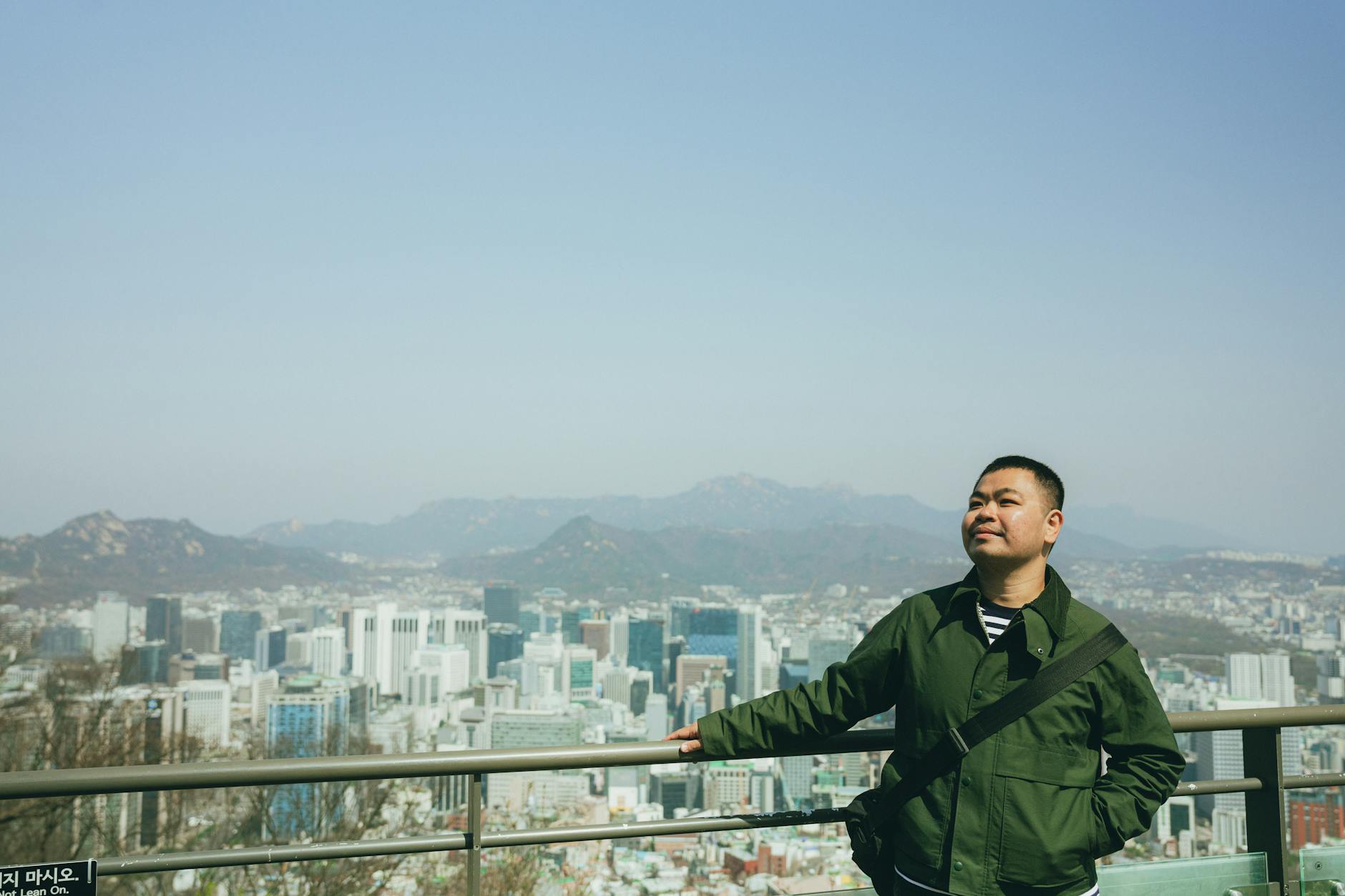
Why Seoul Is a Paradise for Seoul Outdoor Activities
Few capital cities in the world can match Seoul’s access to nature. The city is surrounded by mountains on all sides — Bukhansan to the north, Gwanaksan to the south, Dobongsan to the northeast, and Inwangsan and Bugaksan forming the historic inner ring. The Han River bisects the metropolitan area east to west, with 12 riverside parks lining its banks. Add in the 18.6-kilometer Seoul Fortress Wall trail, the 157-kilometer Seoul Dulle-gil circumnavigation path, and hundreds of neighborhood parks, and you begin to understand why Seoul consistently ranks among Asia’s best cities for outdoor recreation.
What makes Seoul outdoor activities uniquely accessible is the public transportation system. Nearly every major trailhead, park entrance, and riverside activity zone sits within walking distance of a subway station. You don’t need a car, a guide, or expensive gear to enjoy world-class hiking, cycling, kayaking, and nature walks — just a T-money card and a sense of adventure.
Best Hiking Trails in Seoul
Hiking is woven into Korean culture — on any given weekend, you’ll see Seoulites of all ages heading to the mountains in colorful outdoor gear. Seoul has more hiking options within its city limits than perhaps any other major world capital, ranging from gentle 30-minute hill walks to challenging full-day ridge traversals.

Bukhansan National Park
Bukhansan National Park is Seoul’s crown jewel of outdoor recreation and the world’s most visited national park per square meter. Located directly north of the city center, it features dramatic granite peaks, ancient Buddhist temples, and remnants of a Joseon-era mountain fortress. The park offers trails for every skill level:
- Baegundae Peak (836m) — Seoul’s highest summit. The 4.4-kilometer round-trip hike takes 3.5 to 5 hours with moderate-to-hard difficulty. The final approach involves scrambling up granite slabs with the help of steel cables, rewarding you with a breathtaking 360-degree panorama of the entire Seoul metropolitan area. Start from the Bukhansanseong Park Information Center, accessible via bus from Gupabal Station (Line 3).
- Bukhansanseong Fortress Course — A moderate 3-to-4-hour loop that follows the ancient fortress walls with views of both the mountain peaks and the city skyline below. This route passes several restored gates and offers excellent photo opportunities without the final summit scramble.
- Ui-dong Family Trail — An easier 2-hour option starting from Ui Station (Ui LRT), following a gentle valley path past streams and small temples. Ideal for families and beginners looking to experience Bukhansan without the steep climbs.
The Seoul Hiking Tourism Centre near the Bukhansanseong entrance provides free English-language trail maps, rents hiking gear at affordable prices, and runs free guided hikes for international visitors on weekends. It’s an excellent resource if you’re hiking in Seoul for the first time.
Which trailhead you pick changes the day completely: Doseonsa gives the shortest line to Baegundae, the Bukhansanseong fortress entrance is the classic longer approach, and Insubong is a technical climbers’ peak rather than a walker’s. Our full Bukhansan hiking guide compares the four main routes, covers the daily quota that now caps numbers on the final summit section, and lists the exact bus connections from each subway station.
Inwangsan (Inwang Mountain)
Inwangsan is one of Seoul’s most rewarding short hikes, offering dramatic views for relatively modest effort. The 1.5-to-2.5-hour trail (about 2.5 kilometers) climbs through a restored section of the ancient Seoul City Wall via stone staircases and wooden walkways. Along the way, you’ll pass the famous Seonbawi (Zen Rock), a large boulder formation historically associated with shamanistic prayers. The summit delivers a panoramic view encompassing Gyeongbokgung Palace, Bukhansan, the city center, and the Han River. Access the trail from near Sajik Park or Gyeongbokgung Station (Line 3). The fortress wall is beautifully illuminated after dark, making sunset hikes particularly magical.
Namsan (N Seoul Tower)
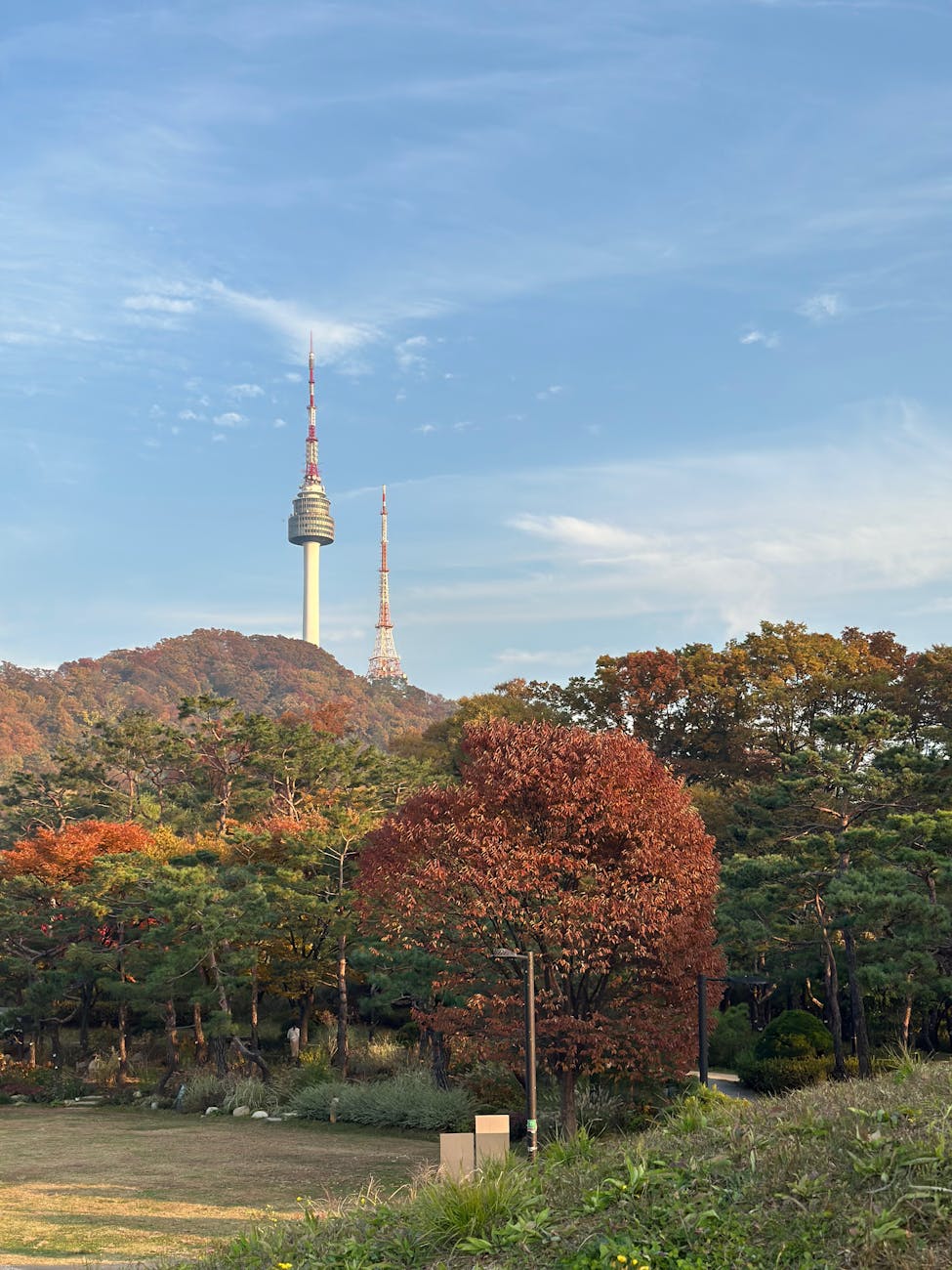
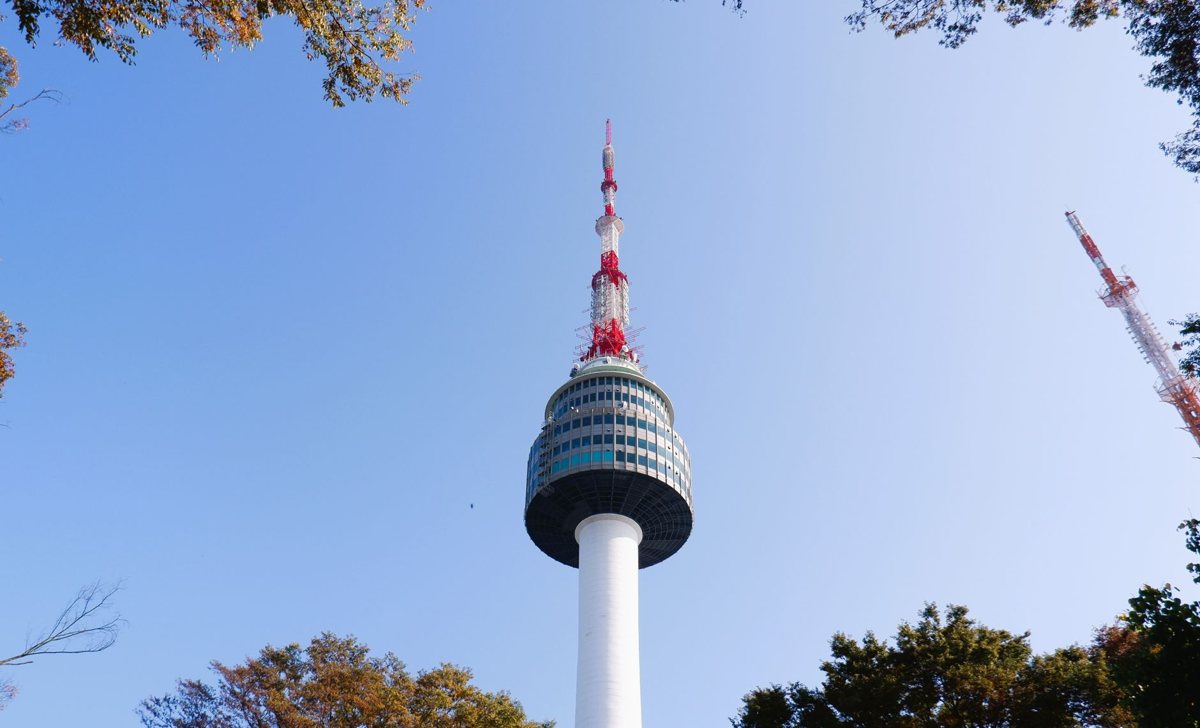
Namsan is Seoul’s most iconic city mountain and the most accessible nature hike in the urban core. Multiple forested paths wind up through pine and deciduous trees to the 262-meter summit, where N Seoul Tower offers 360-degree views of the city and the Han River. The walk takes 45 to 90 minutes depending on your starting point and pace. From Myeongdong Station (Line 4), follow the hillside stairs past traditional hanok houses and through shaded walking paths. If you prefer, take the Namsan Cable Car partway and walk the rest. A new Namsan Library Course opened in late 2025 with free admission, well-maintained trails through pine and maple groves, and scenic viewpoints along a 20-to-30-minute walking route — perfect for a quick nature break between sightseeing.
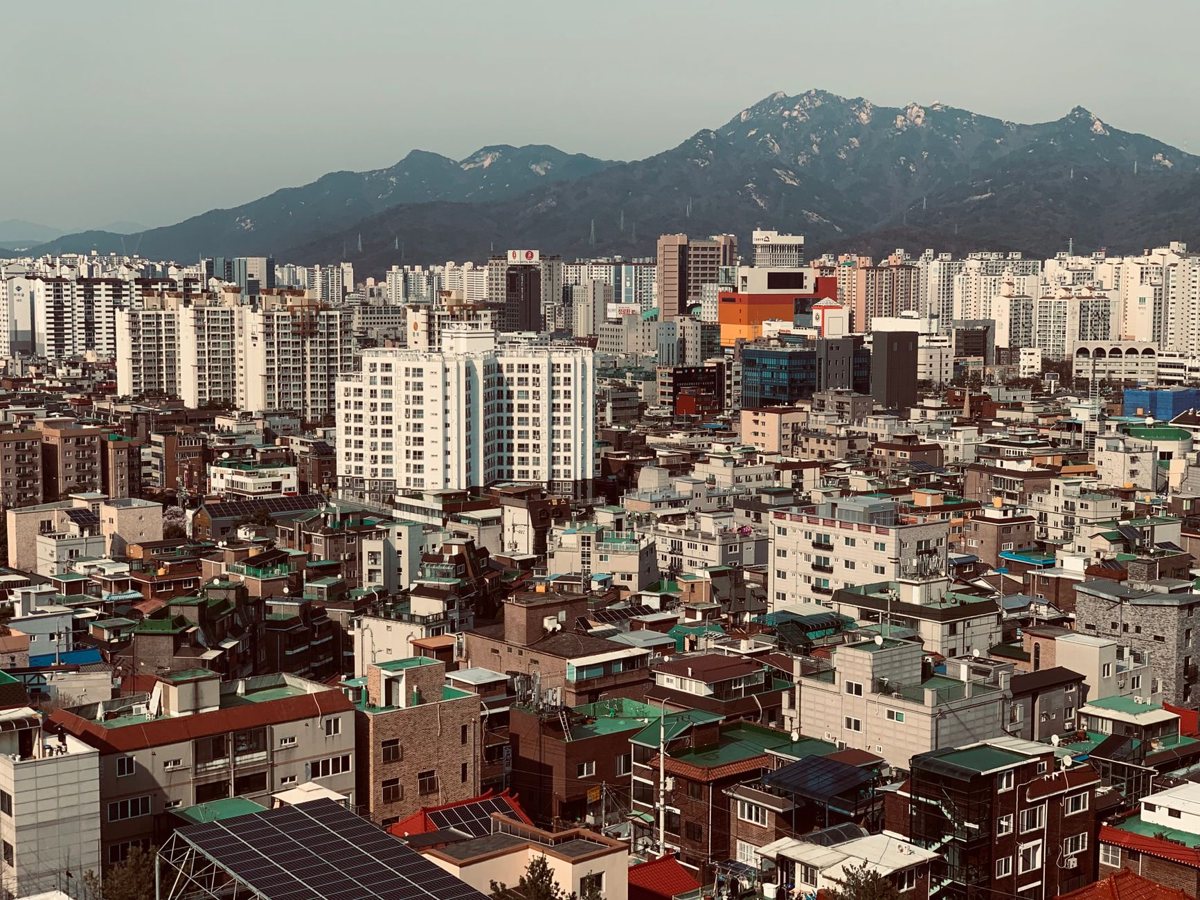
More Great Hiking Options
Beyond the marquee mountains, Seoul offers a deep bench of excellent hiking trails:
- Achasan — One of the most popular easy hikes among locals. Under an hour to the summit with wide-open views of the Han River, Lotte World Tower, and the eastern suburbs. Access from Achasan Station (Line 5). Especially popular for night hiking.
- Dobongsan — Sharper granite formations and more dramatic terrain than neighboring Bukhansan, with fewer crowds. A 4-to-6-hour round-trip hike accessible directly from Dobongsan Station (Line 1).
- Gwanaksan — South Seoul’s signature mountain with steep stairs, rocky viewpoints, and cliff-hugging temples. A 3-to-4.5-hour round-trip from Seoul National University Station (Line 2). Excellent for sunset climbs.
- Cheonggyesan — A quieter moderate hike in south Seoul with forested trails and ridge walking. 3 to 4 hours from Cheonggyesan Station (Shinbundang Line).
- Naksan Park — The easiest option at just 45 to 90 minutes, with wide-open sunset views, fortress wall sections, and proximity to the artsy Ihwa Mural Village and Daehangno theater district. Access from Hyehwa Station (Line 4).
Seoul Fortress Wall Trail (Hanyangdoseong)
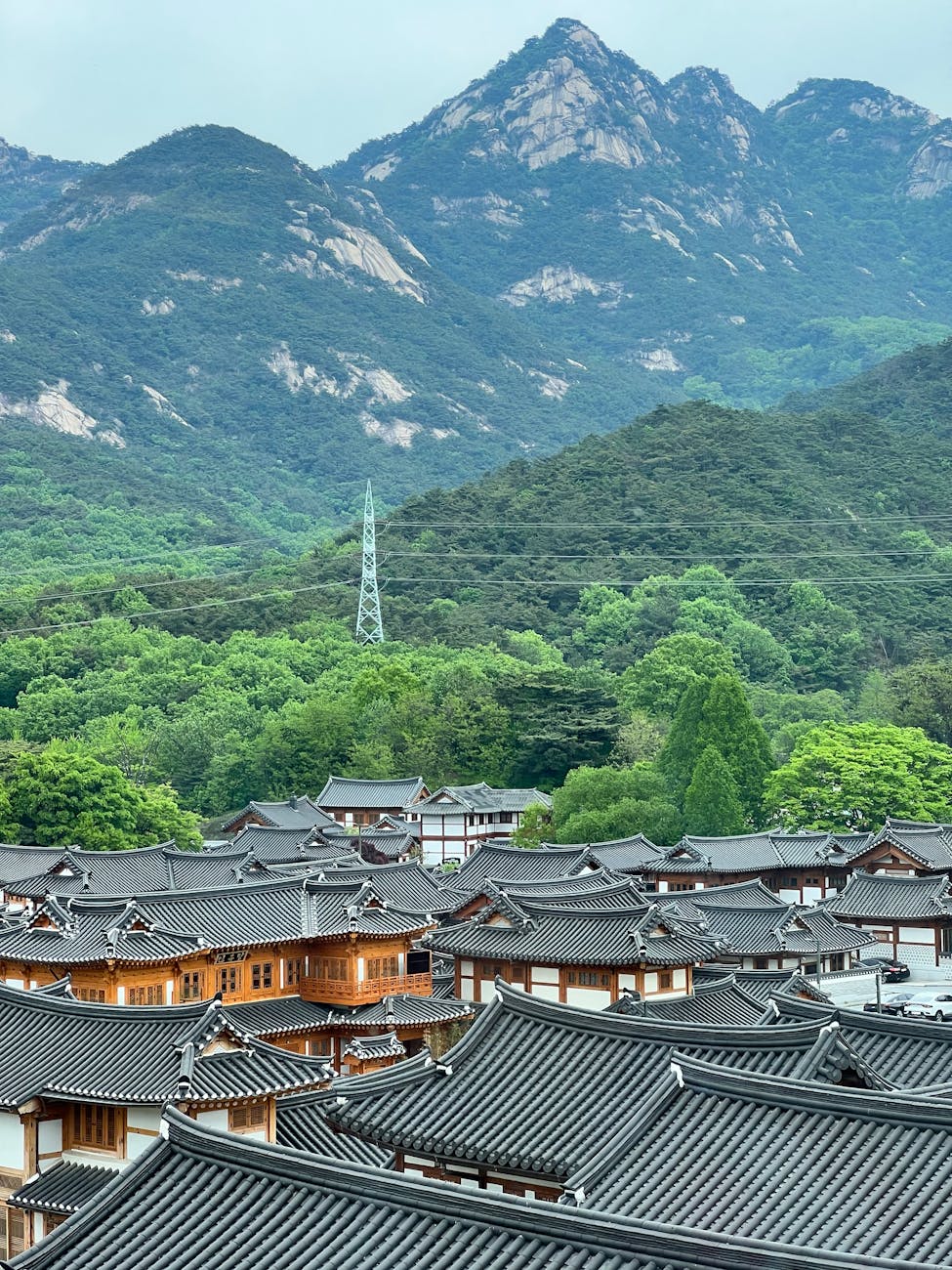
The Seoul Fortress Wall, or Hanyangdoseong, is one of the city’s most underrated outdoor experiences. Originally built in just 98 days in 1396 by over 197,000 workers, this 18.6-kilometer wall once enclosed the entire Joseon Dynasty capital. Today, beautifully restored sections wind across four mountains — Bugaksan, Naksan, Namsan, and Inwangsan — connecting eight historic gates and offering a unique way to experience both Seoul’s history and its natural landscape simultaneously.
The full circuit is typically completed over two to three separate outings rather than in one day. Each of the four main sections takes one to three hours and presents a different character:
- Naksan Section (2.1km, ~1 hour) — The easiest stretch, perfect for first-timers. Passes through Naksan Park and the charming Ihwa Mural Village before ending at the grand Heunginjimun Gate (Dongdaemun).
- Namsan Section (4.2km, ~2 hours) — The most panoramic section with sweeping city views. Popular with visitors for its accessibility and photo opportunities.
- Inwangsan Section (4.0km, ~2.5 hours) — Follows the dramatic ridgeline with rocky scrambles and fortress wall remnants. Rewarding and moderately challenging.
- Bugaksan Section (4.7km, ~3 hours) — The most challenging section with steep terrain. Passes through a military checkpoint (bring your passport) and offers the most secluded, forested experience.
Seoul offers a Hanyangdoseong stamp trail program — collect stamps at designated points along each section and receive a certificate of completion signed by the Mayor of Seoul. It’s a wonderful way to structure multiple visits and explore different neighborhoods along the wall.
Han River Parks and Activities
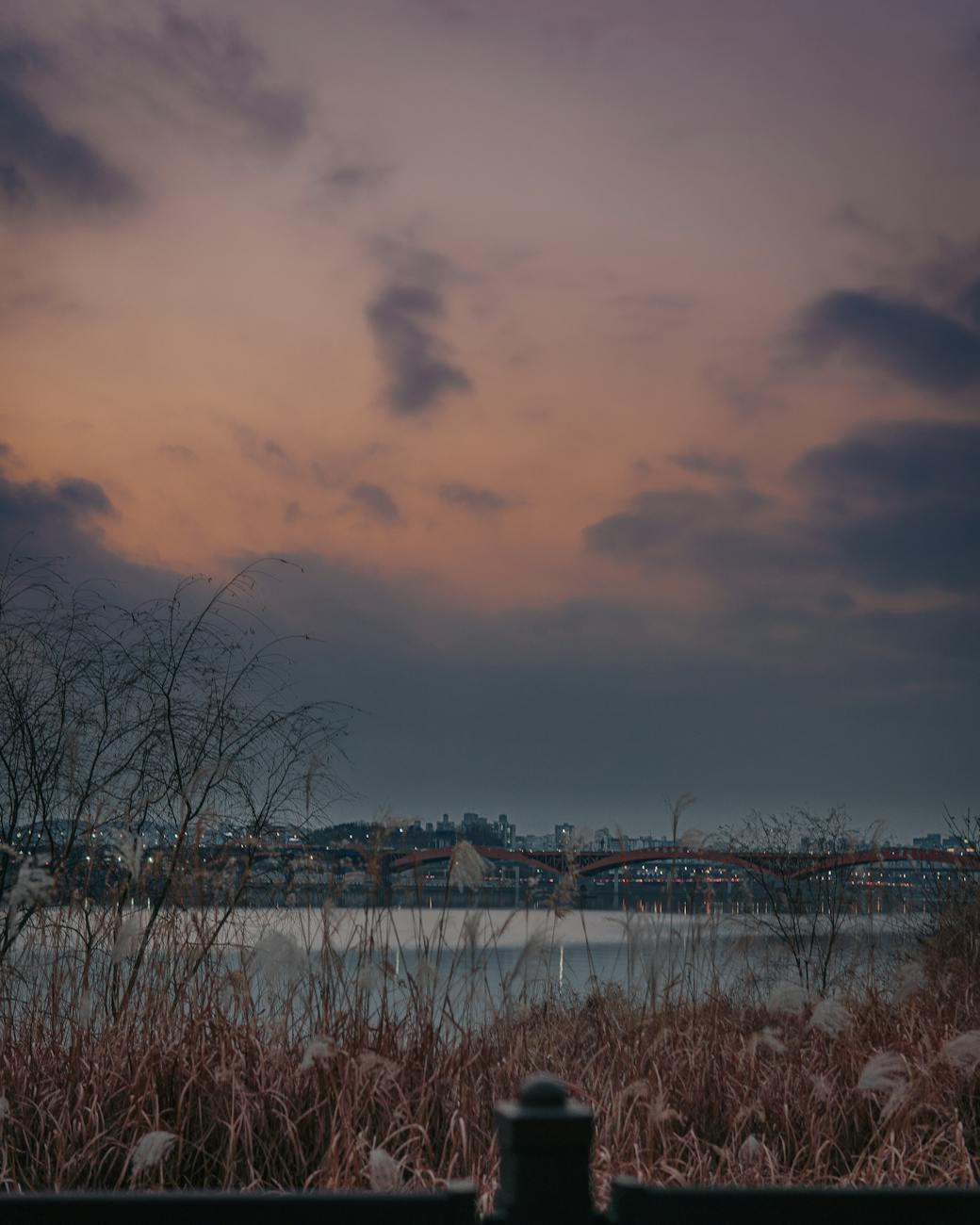
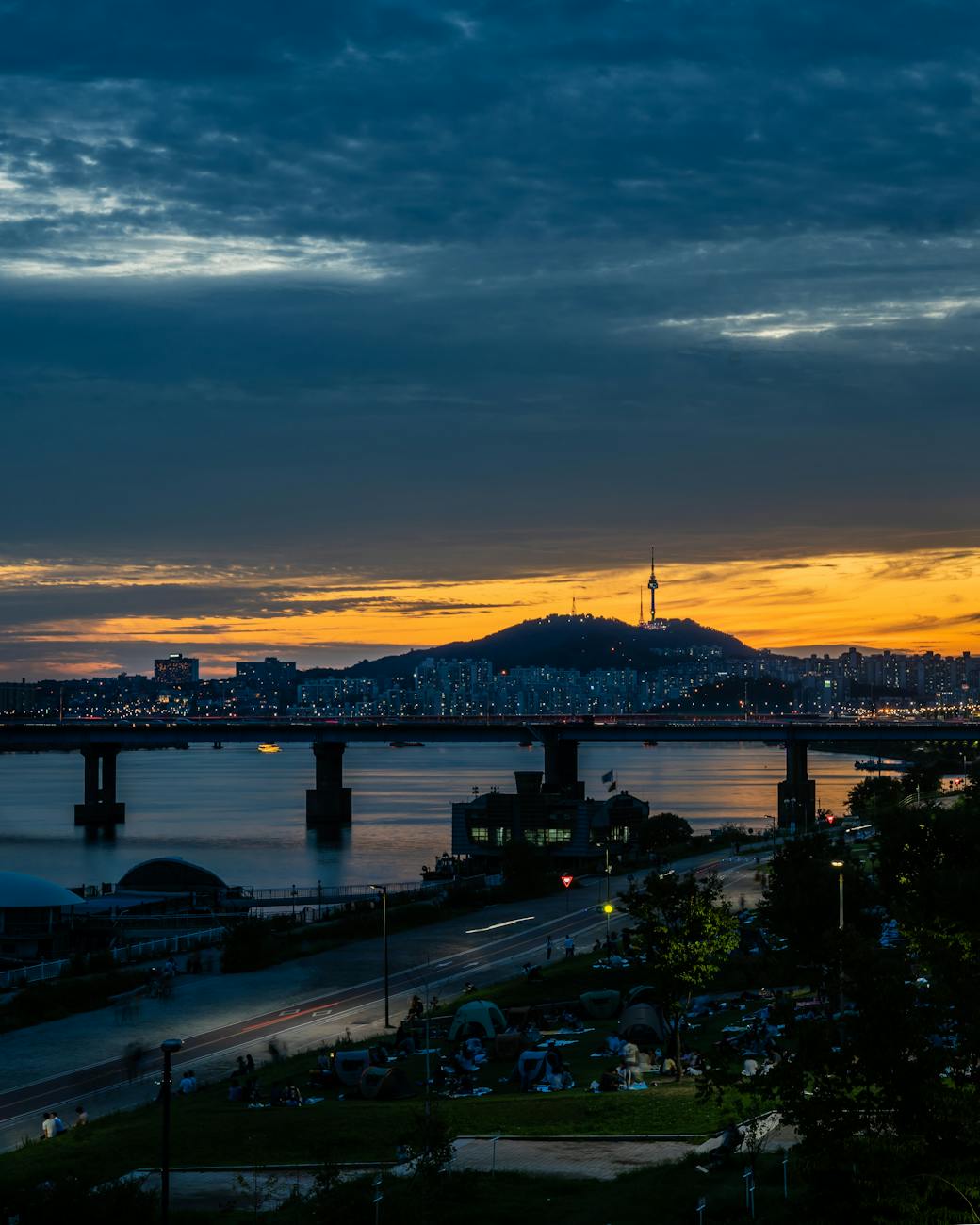
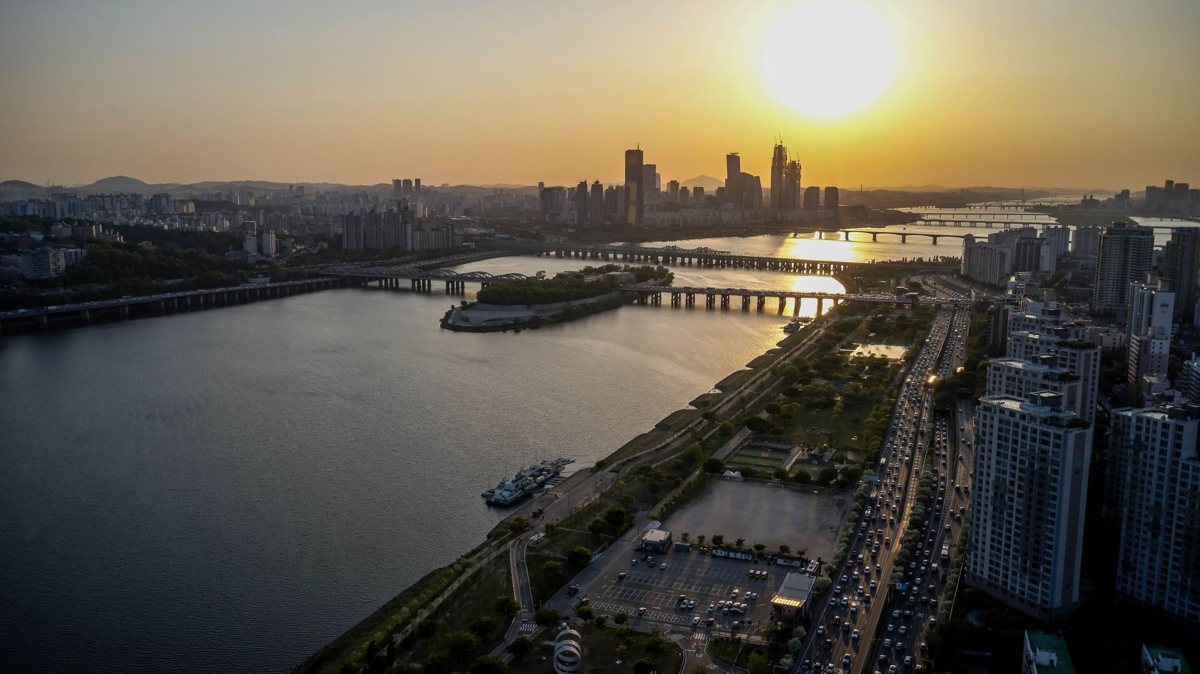
The Han River is Seoul’s liquid backbone, stretching roughly 40 kilometers through the metropolitan area with 12 designated Hangang Parks along its banks. These parks collectively form one of the world’s great urban riverside recreation systems, offering everything from quiet morning jogs to organized water sports, barbecue areas, and festival grounds.
Top Han River Parks
- Yeouido Hangang Park — The liveliest park, located just outside Yeouinaru Station (Line 5). Famous for its 1,886 cherry trees that bloom spectacularly in early April during the Yeouido Spring Flower Festival. Year-round activities include bike rentals, inline skating, duck boat rides, and picnicking on the wide lawns. The weekend night markets here are a Seoul institution.
- Banpo Hangang Park — Home to the iconic Moonlight Rainbow Fountain on Banpo Bridge, which shoots colored water jets synchronized to music on spring and summer evenings. The park also features the Banpo Sebitseom floating islands — futuristic structures housing restaurants and event spaces. Nearby canola flowers bloom in spring and buckwheat flowers appear in summer.
- Ttukseom Hangang Park — Seoul’s water sports hub. Rent kayaks, try stand-up paddleboarding, or join organized windsurfing and wakeboarding lessons. The park also has an outdoor swimming pool open in summer and extensive picnic lawns. Access from Ttukseom Station (Line 7).
- Nanji Hangang Park — The quietest major park with wide open spaces, fewer crowds, a campground, and one of the best kid-friendly riverside pools in Seoul. Adjacent to the Haneul Park and the World Cup Park complex in Mapo-gu.
- Mangwon Hangang Park — Popular with younger Seoulites for BBQ gatherings (equipment rental available) and sunset watching. Walk from Mangwon or Hapjeong Station (Line 6).
River Activities
The Han River supports a surprising range of activities beyond simple riverside strolling. Water sports including waterskiing, wakeboarding, paddle boarding, kayaking, and windsurfing are available with beginner lessons at Ttukseom and Yeouido parks. Han River Cruises operate themed options including story cruises, music cruises, moonlight cruises, and fireworks cruises, with optional lunch or dinner buffets. Seasonal outdoor pools open along several parks in summer, and some parks offer overnight camping during designated seasons.
Cycling Along the Han River
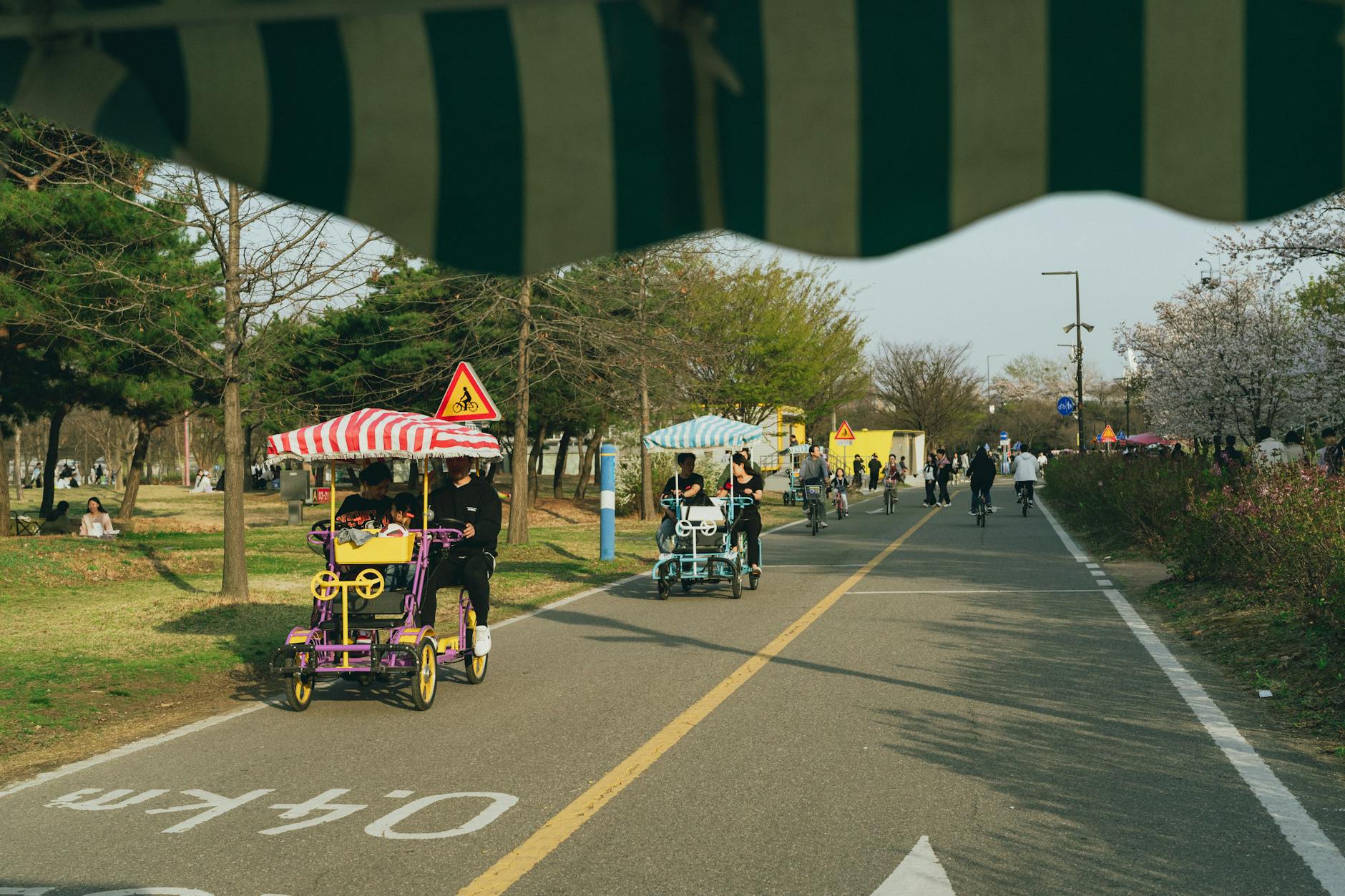
Seoul’s Han River bike paths are among the best urban cycling infrastructure in Asia. Paved paths stretch over 40 kilometers along both banks, connecting all 12 Hangang Parks in a continuous, car-free route. The city’s public bike-sharing system, Seoul Bike (Ttareungyi / 따릉이), has stations at every park entrance and throughout the city, available 24 hours a day for between 1,000 and 5,000 won per ride. Private bike rental shops near major parks offer multi-speed and tandem options for those wanting more variety. The riverside path is flat, scenic, and suitable for all ages — one of the best ways to experience Seoul’s relationship with water. Helmets are required by law for cyclists in Korea, and the 5,000-won Ttareungi day pass covers unlimited one-hour rides — our guide to cycling in Seoul walks through foreign-card sign-up, the five best Han River routes, and where to stop for chimaek along the way.
Parks and Urban Green Spaces
Beyond the Han River parks and mountain trails, Seoul maintains an impressive network of urban green spaces that offer everything from formal gardens and botanical collections to wild meadows and forested walking paths. Our ranking of the best parks in Seoul covers twelve of them in detail, including the Seoul Botanic Park greenhouse out in Magok and Bukseoul Dream Forest up in Gangbuk, with the seasonal peaks for each and the handful that charge admission.
Seoul Forest
Often called Seoul’s answer to New York’s Central Park, Seoul Forest is a sprawling 595,000-square-meter park in Seongdong-gu featuring five distinct themed zones: a cultural arts park, an eco-forest, a nature experience area, a wetlands ecology area, and the Hangang River waterside park. The park’s deer enclosure, butterfly garden, and insect botanical garden make it especially popular with families. In autumn, the Ginkgo Tree Forest becomes one of Seoul’s most photographed spots as tall golden trees form a luminous canopy over walking paths. Access from Seoul Forest Station (Suin-Bundang Line).
Olympic Park
Built for the 1988 Seoul Olympics, this expansive park in Songpa-gu combines sports heritage with beautiful landscaping. The wildflower garden erupts with cosmos in autumn, the Rose Garden peaks in late spring, and the Mongchon Fortress earthen walls offer gentle walking trails with historical significance. Large outdoor sculptures dot the grounds, creating an open-air art gallery effect. Access from Olympic Park Station (Line 5) or Mongchontoseong Station (Line 8).
More Urban Green Spaces Worth Visiting
- Haneul Park (Sky Park) — A former landfill transformed into a hilltop meadow with panoramic views, famous for its silver grass fields that shimmer in October. Part of the World Cup Park complex near Mapo Area.
- Seonyudo Park — A former water treatment plant on a Han River island, redesigned into a unique ecological park with water-themed gardens and industrial architecture. Accessible via a pedestrian bridge from Yanghwa area.
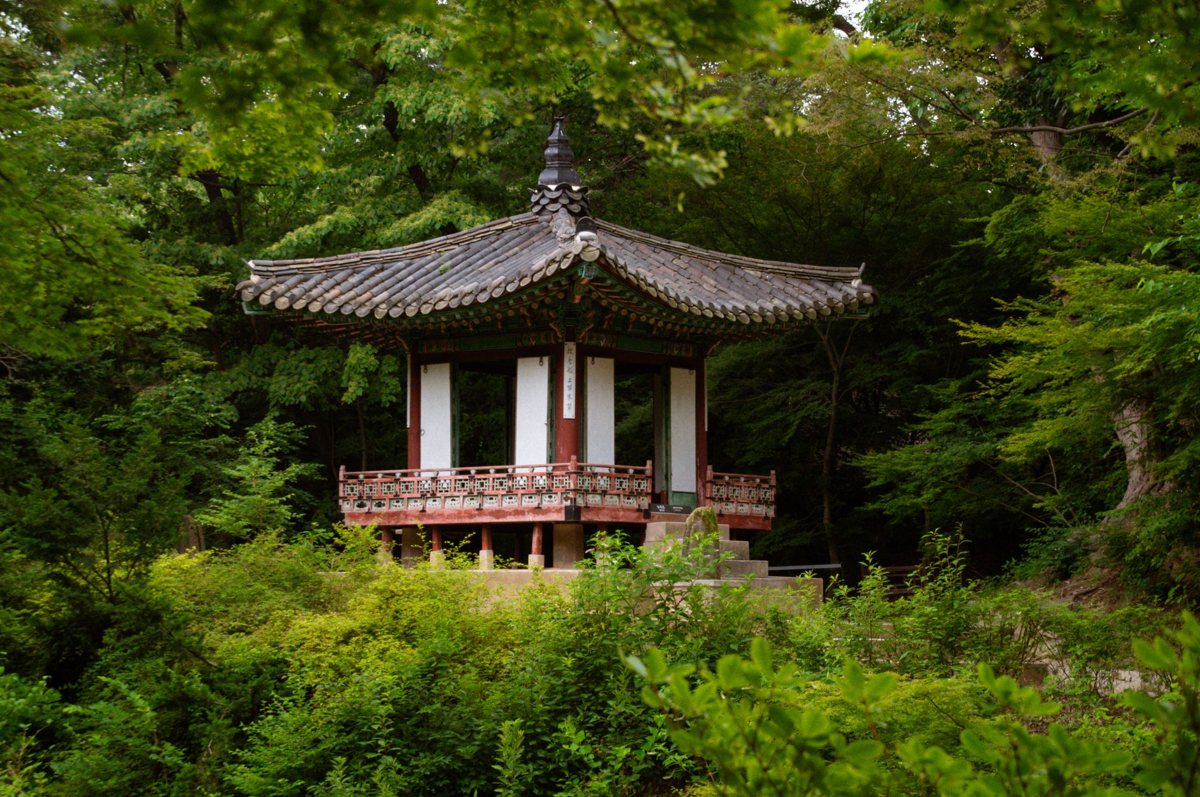
- Changdeokgung Secret Garden (Huwon) — A UNESCO World Heritage palace garden that has been maintained for over 500 years. Guided tours (reservation required) take you through ancient pavilions, lotus ponds, and 300-year-old trees in one of Seoul’s most serene settings. Check our Seoul travel guide for palace ticket information.
- Children’s Grand Park — A massive family-friendly park in Gwangjin-gu with a free zoo, botanical garden, amusement rides, and shaded walking trails. Access from Children’s Grand Park Station (Line 7).
- Seokchon Lake — Two connected lakes near Lotte World in Songpa-gu, ringed by over 1,000 cherry trees that create one of Seoul’s most spectacular spring displays. In autumn, the same trees produce vivid foliage reflected in the lake water.
Seasonal Nature Guide: When to Visit for What
Seoul’s four distinct seasons each offer dramatically different outdoor experiences. Timing your visit — or your outdoor activities — to match the seasons can transform your experience.
Spring (March – May)
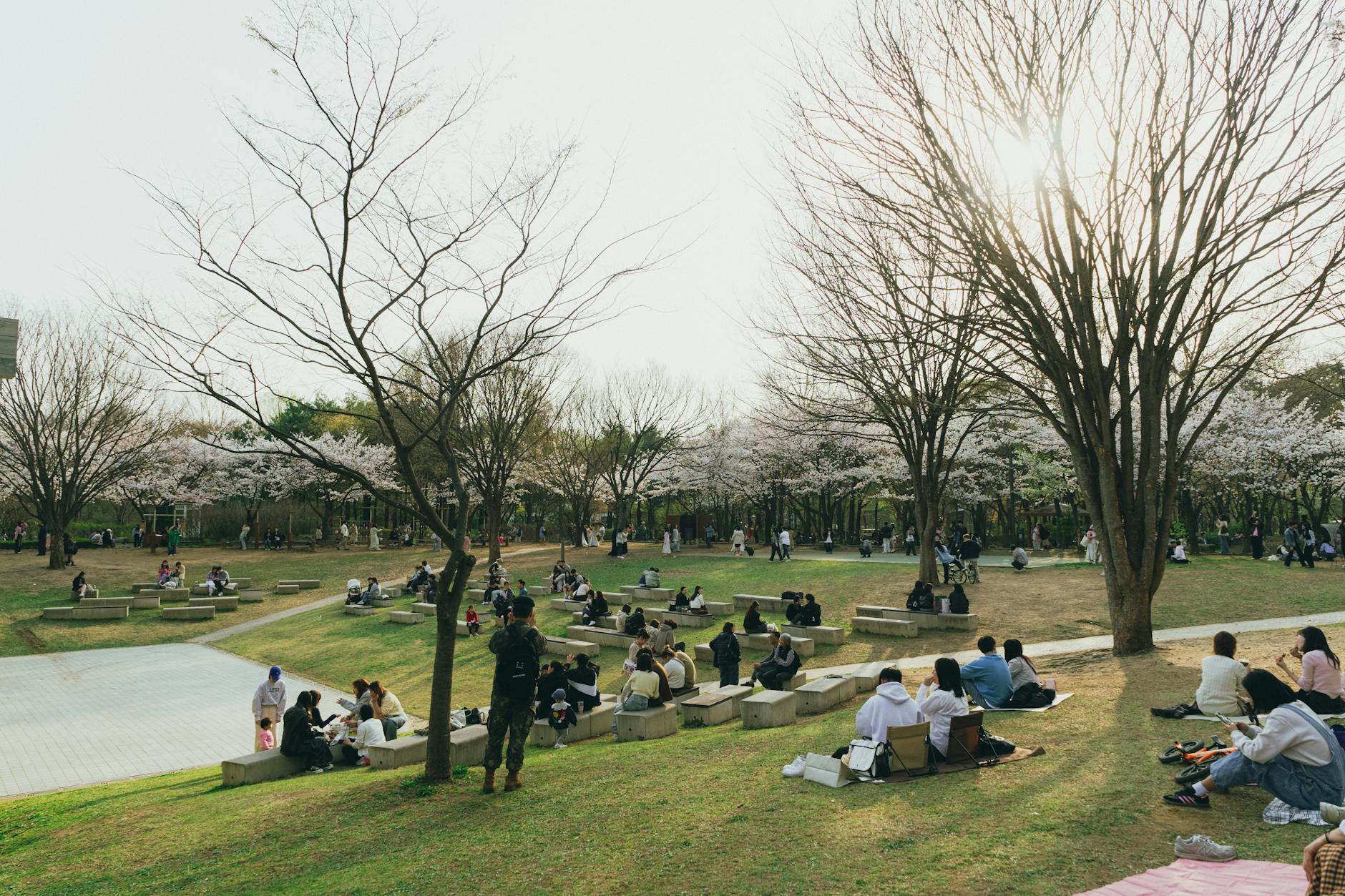
Spring is Seoul’s most celebrated outdoor season. Cherry blossoms typically peak in early to mid-April, painting the city in soft pink and white. The best cherry blossom viewing spots include Yeouido Park (home to Seoul’s largest cherry blossom festival with 1,886 trees), Seokchon Lake, Seoul Forest, Namsan Park, and the grounds of Gyeongbokgung and Changdeokgung palaces. Royal azaleas bloom on mountain slopes in April, and forsythia lines city streets in bright yellow. Spring temperatures are comfortable for hiking (10–20°C), though rainfall increases in late May. If you’re planning a Seoul itinerary, early April is ideal for combining cherry blossom viewing with comfortable outdoor exploration.
Summer (June – August)
Summer brings heat, humidity, and the monsoon season (typically late June through mid-July), but also lush green landscapes and unique outdoor opportunities. Early mornings and evenings are best for hiking — many locals favor pre-dawn summit climbs to catch sunrise from mountain peaks while avoiding the midday heat. Han River parks come alive with outdoor pools, water sports, and evening festivals. The Hangang Summer Festival runs from July through August with river-themed events along the parks. Hydrangeas bloom beautifully at mountain temples, and the mountains are at their most verdant. Always carry rain gear and extra water during summer outdoor activities.
Autumn (September – November)
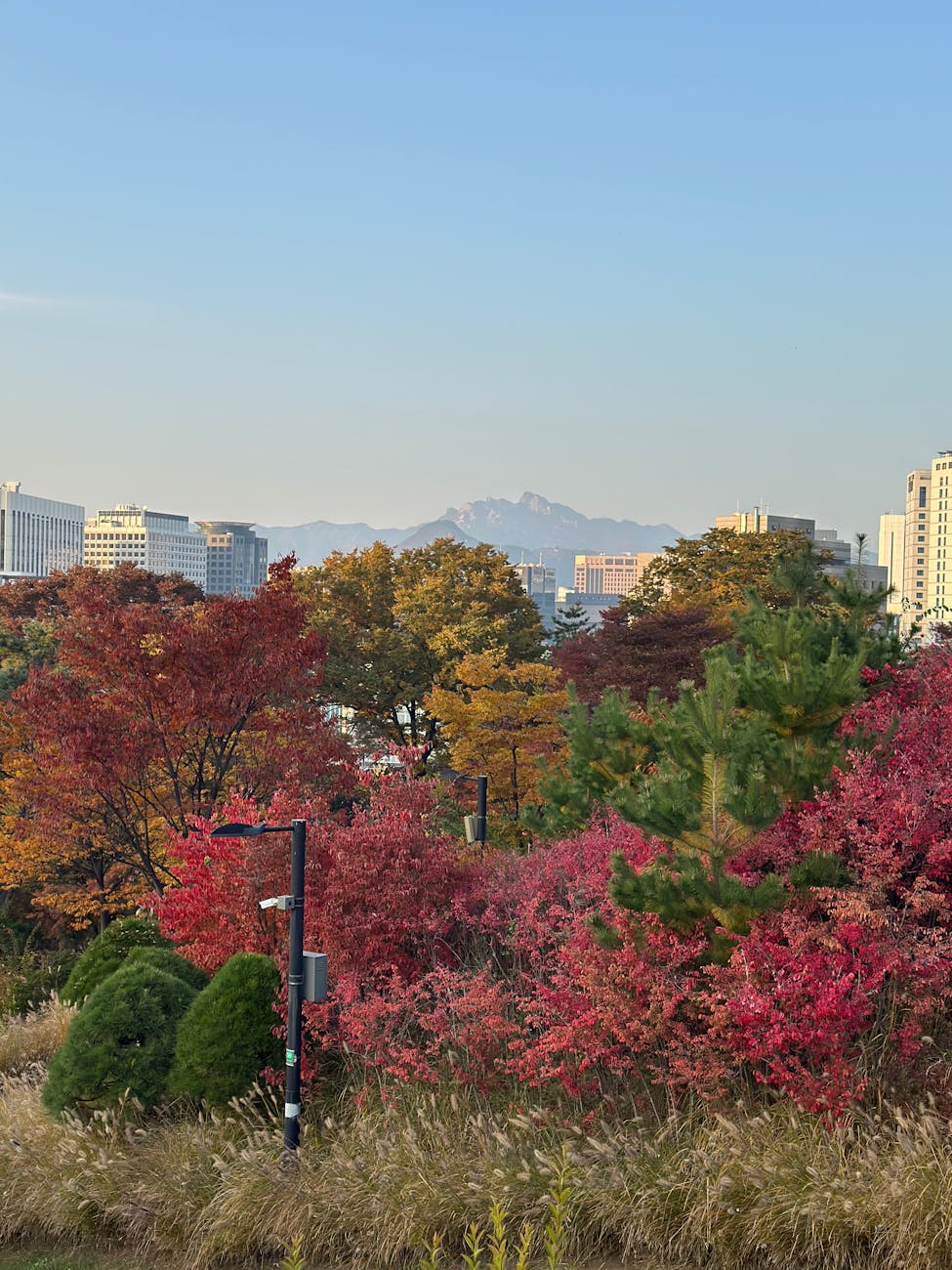
Autumn is widely considered Seoul’s best season for outdoor activities. Clear skies, cool temperatures (10–22°C), and spectacular fall foliage create perfect conditions for hiking, cycling, and park visits. Foliage typically peaks from mid-October to early November, with the best viewing at Bukhansan National Park, Seoul Forest’s Ginkgo Tree Forest, Namsan, Olympic Park, Deoksugung’s stone-wall road, and the Haneul Park silver grass fields. Autumn is peak hiking season — expect busier trails on weekends, especially at Bukhansan. Cosmos flowers bloom across Han River parks and Haneul Park in September and October.
Winter (December – February)
Seoul winters are cold (averaging -2 to 4°C) but offer their own outdoor charms. Snow-dusted mountain trails and frozen landscapes create dramatic scenery, particularly at Bukhansan and along the fortress wall sections. The city’s parks host ice skating rinks — the Seoul Plaza rink in front of City Hall is the most central. Winter sunrises from mountain peaks are especially vivid due to clear, dry air. Layer up with proper cold-weather gear, wear traction devices on icy trails, and start hikes early to finish before sunset (around 5:30 PM). For budget-conscious visitors, winter hiking is completely free and the trails are far less crowded.
Seoul Dulle-gil: The City Circumnavigation Trail
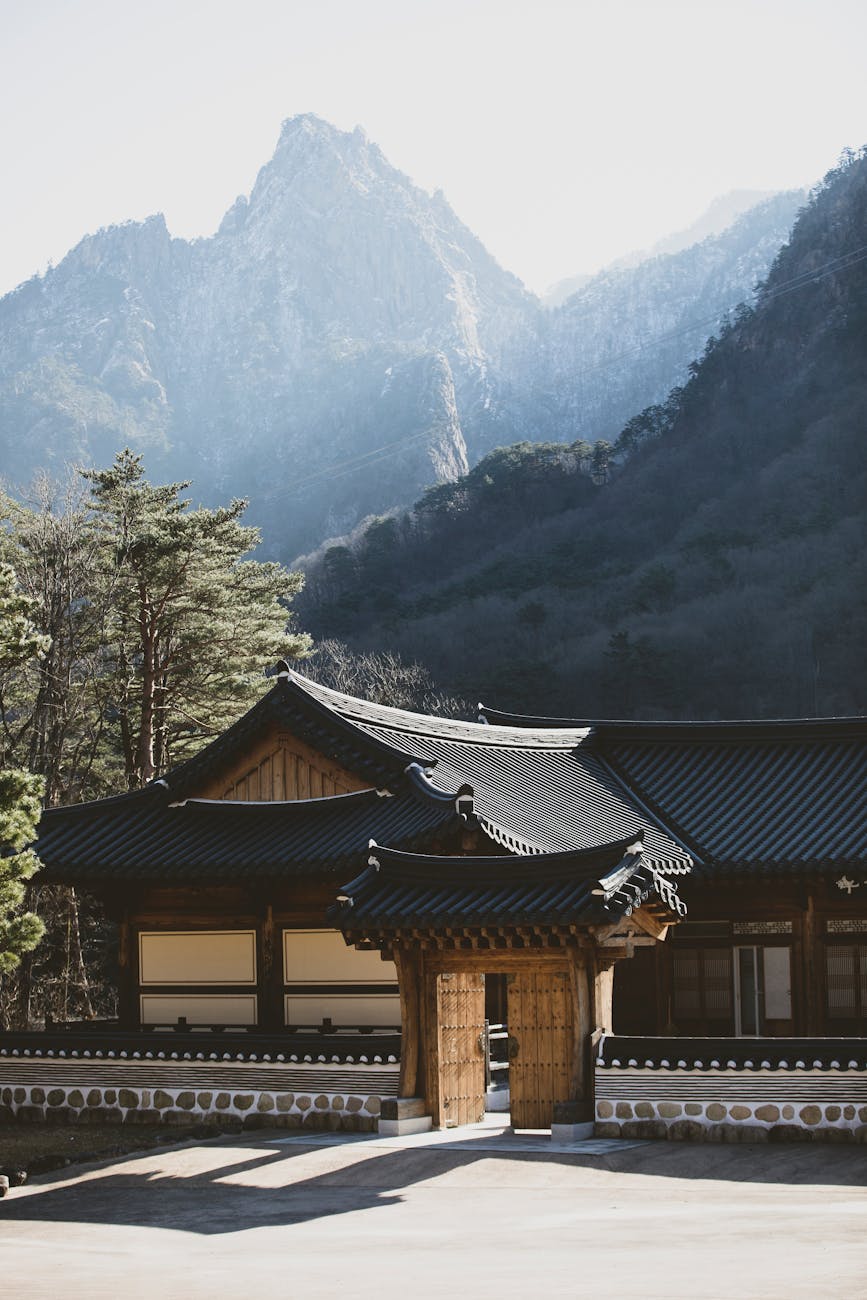
For those who want to go beyond individual mountain hikes, the Seoul Dulle-gil is a 157-kilometer trail system that circles the entire city. Divided into eight manageable stages, it connects mountains, forests, rivers, and neighborhoods in a continuous loop. Each stage takes three to six hours to complete and passes through diverse scenery — forested ridgelines, traditional village streets, Han River paths, and suburban greenways. The trail is well-marked with signage in Korean and English, and most stages start and end near subway stations. Completing all eight stages provides an intimate, ground-level understanding of Seoul’s geography that few visitors ever achieve.
Outdoor Safety Tips for Seoul
Seoul’s outdoor spaces are generally very safe and well-maintained, but a few practical considerations will enhance your experience:
- Trail conditions: Most popular trails are excellently maintained with steps, railings, and clear signage. However, granite surfaces can be slippery when wet — wear proper hiking shoes with good grip, especially on Bukhansan and Dobongsan.
- Hydration and sun: Mountain trails often have limited shade on ridgelines. Carry at least 1.5 liters of water per person in summer. Many trailheads and mountain huts sell water and snacks, but prices increase with elevation.
- Weather awareness: Mountain weather can change quickly. Check the Korea Meteorological Administration forecast before heading out, and avoid ridge trails during thunderstorms or high winds. Monsoon season (late June through mid-July) can make trails dangerously slippery.
- Wildlife: Seoul’s mountains are home to wild boar, which occasionally appear on trails at dawn and dusk. They are generally not aggressive but should not be approached or fed. Mosquitoes can be persistent near streams and forests in summer — bring insect repellent.
- Emergency services: Dial 119 for emergency rescue on trails. Most popular mountains have emergency location markers posted at regular intervals along trails. Cell phone reception is generally good on Seoul’s mountains.
- Passport for Bugaksan: The Bugaksan section of the fortress wall trail passes through a military zone. You must present a valid passport or Korean ID at the checkpoint. Photography restrictions apply in certain areas.
Difficulty Guide: Choosing the Right Trail
Not sure where to start? Here’s a quick guide to match your fitness level with the right Seoul outdoor activities:
Beginner / Casual Walker: Namsan (45–90 min), Naksan Park (45–90 min), Achasan (under 2 hours), any Han River park path, Seoul Forest, Cheonggyecheon Stream walk. These are flat or gently graded with clear paths, suitable for families with children and those not accustomed to hiking.
Intermediate / Active Traveler: Inwangsan (1.5–2.5 hours), Bukhansan Fortress Course (3–4 hours), Seoul Fortress Wall individual sections (1–3 hours each), Cheonggyesan (3–4 hours), Han River cycling full route. These involve moderate climbing with stairs and some uneven terrain, but no technical scrambling.
Advanced / Experienced Hiker: Bukhansan Baegundae Peak (3.5–5 hours), Dobongsan (4–6 hours), Gwanaksan (3–4.5 hours), Seoul Fortress Wall full circuit (7–10 hours over multiple days), Seoul Dulle-gil full route (157 km over multiple days). These involve steep terrain, granite scrambling, and significant elevation gain.
Practical Tips for Seoul Outdoor Activities
- Getting to trailheads: Use Seoul’s subway and bus system — nearly every major trail starts within a 10-minute walk of a transit stop. Download the Naver Map app for accurate Korean transit directions. Check our getting around Seoul guide for detailed transport tips.
- Gear rental: The Seoul Hiking Tourism Centre at Bukhansan rents hiking boots, poles, jackets, and backpacks at very low prices. Similar services are available at some other popular trailheads. For cycling, Seoul Bike (Ttareungyi) stations are everywhere — register via the app with a Korean phone number or use a temporary pass at kiosks.
- Trail food culture: Stopping at a mountain shelter restaurant (sanjang) for pajeon (green onion pancake) and makgeolli (rice wine) after a hike is a beloved Korean tradition. Many trailhead neighborhoods also feature excellent restaurants specializing in post-hike meals like samgyetang (ginseng chicken soup) and tofu stews. Browse our Seoul food guide for more dining options.
- Free activities: The vast majority of Seoul outdoor activities cost nothing. Mountain trails, fortress wall walks, Han River parks, and most urban green spaces are completely free. Even guided hikes from the Seoul Hiking Tourism Centre are offered at no charge.
- Best time to start: For popular mountains like Bukhansan, start before 8 AM on weekends to avoid crowds and secure parking (if driving). Weekday mornings are the least crowded. For Han River activities, late afternoon and sunset are magical times.
Day Trips for Nature Lovers
If you have time to venture beyond Seoul’s city limits, the surrounding Gyeonggi Province offers exceptional nature experiences within one to two hours of the capital. Nami Island in Gapyeong is famous for its tree-lined walkways and seasonal beauty, especially combined with the nearby Garden of Morning Calm. The DMZ area offers unique ecological significance — decades of restricted access have turned the demilitarized zone into an unintentional wildlife sanctuary. Suwon’s Hwaseong Fortress provides a historical walking circuit, and the coastal areas around Incheon offer beach hikes and island exploration. These make excellent additions to any Seoul activities itinerary for those staying more than a few days.
The DMZ takes more planning than the rest: you can only enter on a booked tour with your passport, standard runs leave Seoul around 6:30 AM and are back by 5:30 PM, and the restricted JSA itinerary is a separate booking from the usual Third Tunnel and Dora Observatory circuit — our DMZ tour guide explains which one to choose and the dress and photography rules that come with each. For everything else within reach, from Suwon’s UNESCO Hwaseong Fortress 30 minutes out on the subway to Seoraksan’s granite ridges three hours east, our roundup of day trips from Seoul ranks twelve destinations by travel time and season.
Explore Seoul’s Natural Side
Seoul’s outdoor offerings are one of its greatest and most underappreciated assets for international visitors. The city’s unique geography — mountains, river, fortress walls, and carefully curated green spaces — creates an outdoor experience unlike any other world capital. Whether you have an hour between museum visits or a full week to dedicate to trails and parks, Seoul’s natural side is waiting to surprise and delight you. Lace up your hiking boots, grab a Seoul Bike from the nearest station, or simply find a riverside spot and watch the sun set over the Han River — the great outdoors has never been more conveniently urban.