This guide gives you a day-by-day route that starts and ends in Seoul, with every train leg, fare and journey time; a 7-day cut-down for shorter trips; a 14-day extension that adds Jeonju and either Jeju or the east coast; seasonal variants; and a straight answer on whether the Korail Pass pays for itself on this route. (Spoiler: on the core 10-day version, it does not.) Fares and opening details were checked in September 2026. Treat them as the right order of magnitude, and check exact train times on Korail before you book.
The route at a glance
| Days | Base | Nights | Highlights |
|---|---|---|---|
| 1–3 | Seoul | 3 | Palaces, Bukchon, markets, Namsan, Hongdae |
| 4–5 | Gyeongju | 2 | Royal tombs, Cheomseongdae, Wolji Pond by night, Bulguksa, Seokguram |
| 6–8 | Busan | 3 | Markets and pork soup, the coastal Blueline Park, Haedong Yonggungsa, beaches |
| 9–10 | Seoul | 1 + departure | Seongsu or Gangnam, the Han River, last-day shopping |
Transport and costs at a glance
| Leg | Train | Time | Standard fare (₩) |
|---|---|---|---|
| Seoul → Gyeongju | KTX from Seoul Station | ~2 h | ~49,000 |
| Gyeongju → Busan | KTX | ~30 min | ~11,900 |
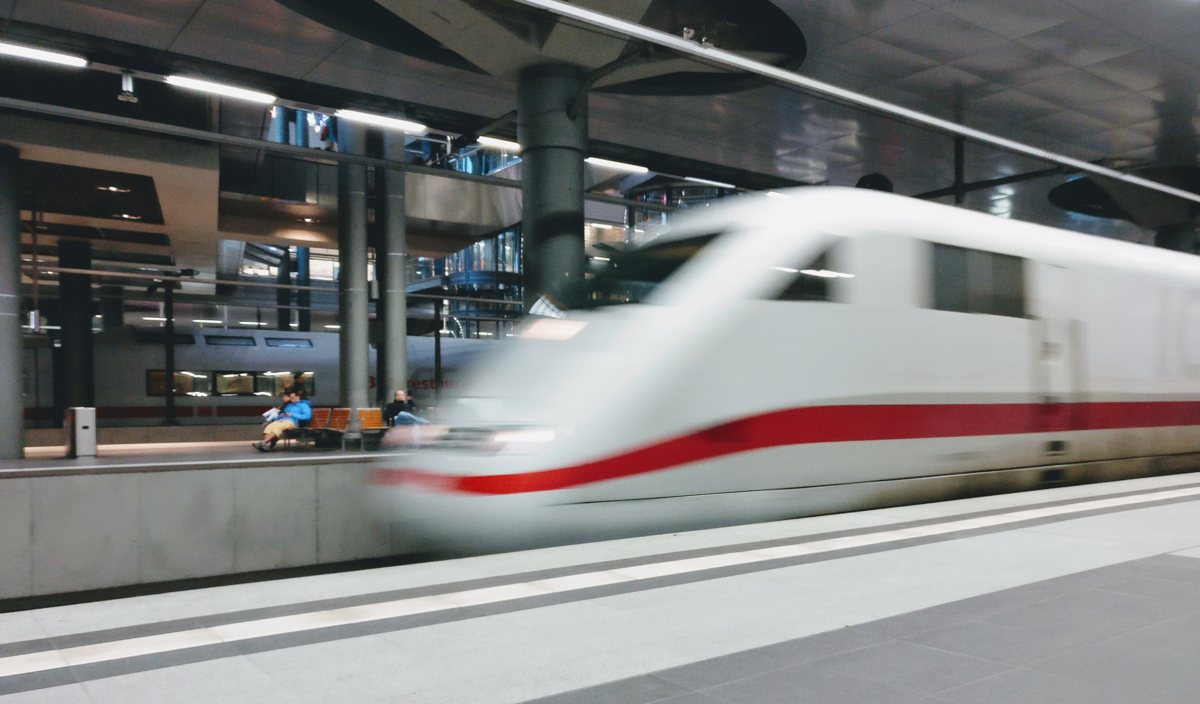
| Busan → Seoul | KTX | 2 h 08 (fastest) to ~2 h 40 | ~59,800 |
| Total rail on point-to-point tickets | ~121,000 | ||
| Korail Pass for the same three journeys (3-day flexi) | ~145,000 | ||
A realistic mid-range budget for the whole trip, excluding flights, is roughly ₩2,000,000–2,800,000 per person sharing a room: about ₩100,000–150,000 a night for a decent double, ₩40,000–70,000 a day on food, plus trains, entry fees and local transport. Backpackers staying in hostels and eating at markets can do it for half that. Our Seoul trip cost breakdown goes line by line for the capital.
Why this route, and why not more
Ten days in Korea tempts people into trying to see everything: Seoul, Busan, Jeju, Jeonju, Gyeongju, Seoraksan and the DMZ. It can be done, in the sense that trains exist, but you will spend a third of your trip packing and in transit. This route makes two deliberate choices.
- Three bases, not five. Seoul, Gyeongju and Busan form a straight line along the fastest KTX corridor in the country. Nothing on this route requires a bus, a flight or a change of train.
- Gyeongju gets two nights. It is the most frequently rushed stop in Korea, usually squeezed into a day trip from Busan. The sights are spread out, the best of them are at dusk and at night, and a day trip misses both.
What this route leaves out, and where to put it back, is covered in the 14-day extension further down.
Day by day
Day 1 — Arrive in Seoul
Most international flights land at Incheon. The AREX Express reaches Seoul Station in about 43 minutes; the all-stop train is cheaper and takes around an hour. A taxi to downtown costs ₩50,000–70,000 and only makes sense for a group with heavy bags. Our Incheon Airport to Seoul guide compares every option.
Base yourself centrally for the Seoul days — Myeongdong, Jongno or around Seoul Station, which also makes departure day for Gyeongju painless. Buy a T-money card at a convenience store, get a local SIM or eSIM, and spend the evening on something easy: a walk along Cheonggyecheon and dinner at a Korean BBQ restaurant.
Day 2 — Palaces and old Seoul
- Morning: Gyeongbokgung Palace (₩3,000; closed Tuesdays), timed for the 10:00 Royal Guard ceremony at Gwanghwamun Gate. Hanbok wearers get in free.
- Midday: walk to Bukchon Hanok Village, then down into Insadong for lunch.
- Afternoon: Changdeokgung, and the Secret Garden if you booked a guided slot in advance. Then the hanok cafés of Ikseon-dong.
- Evening: Gwangjang Market for bindaetteok and makgeolli.
Our Ikseon-dong guide covers the neighbourhood’s best cafés and how to avoid its worst queues.
Day 3 — Modern Seoul, or the DMZ
Pick one:
- Option A — the city: Myeongdong in the morning, the National Museum of Korea (free) at midday, Namsan and N Seoul Tower at sunset, and Hongdae for the evening.
- Option B — the DMZ: a full-day guided tour to the border. It is one of the most unusual days out in Asia and only possible on an organised tour. Book several days ahead and carry your passport. Our DMZ tour guide explains which tours are worth the money.
If you choose the DMZ, you lose Namsan and Hongdae, but you get two more Seoul days at the end of the trip to recover them.
Day 4 — KTX to Gyeongju
Take a mid-morning KTX from Seoul Station to Gyeongju Station — note that older guides and some booking sites still call it Singyeongju; it was renamed at the end of 2023. The journey is about two hours and costs around ₩49,000. Book three or four days ahead through letskorail.com or the Korail Talk app; weekend trains fill.
Gyeongju’s KTX station is outside the city. Local buses take roughly 30–40 minutes to the centre, or take a taxi, which is quick and inexpensive split between two or three people. Stay in a hanok guesthouse near Hwangnidan-gil, the café-and-restaurant street beside the tomb park: it puts almost every evening sight within walking distance.
Afternoon and evening, all on foot or by rented bicycle:
- Daereungwon Tomb Complex — the royal burial mounds of the Silla kings, grassy hills rising out of the city. Inside, the excavated Cheonmachong tomb shows how they were built.
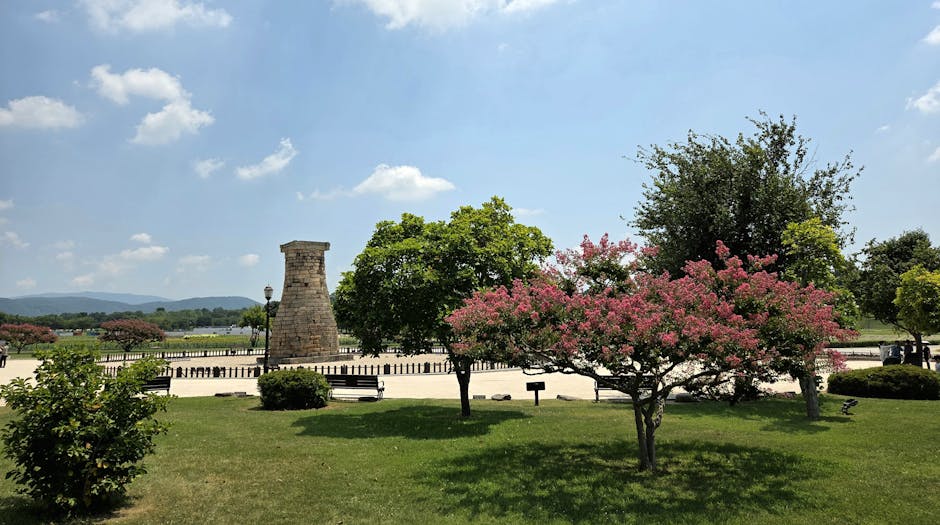
- Cheomseongdae — a 7th-century stone observatory, one of the oldest surviving in East Asia. Small, elegant and surrounded in spring and autumn by flower fields.
- Gyochon Hanok Village and Woljeonggyo Bridge — a reconstructed covered bridge over the river, spectacular once it is lit up.
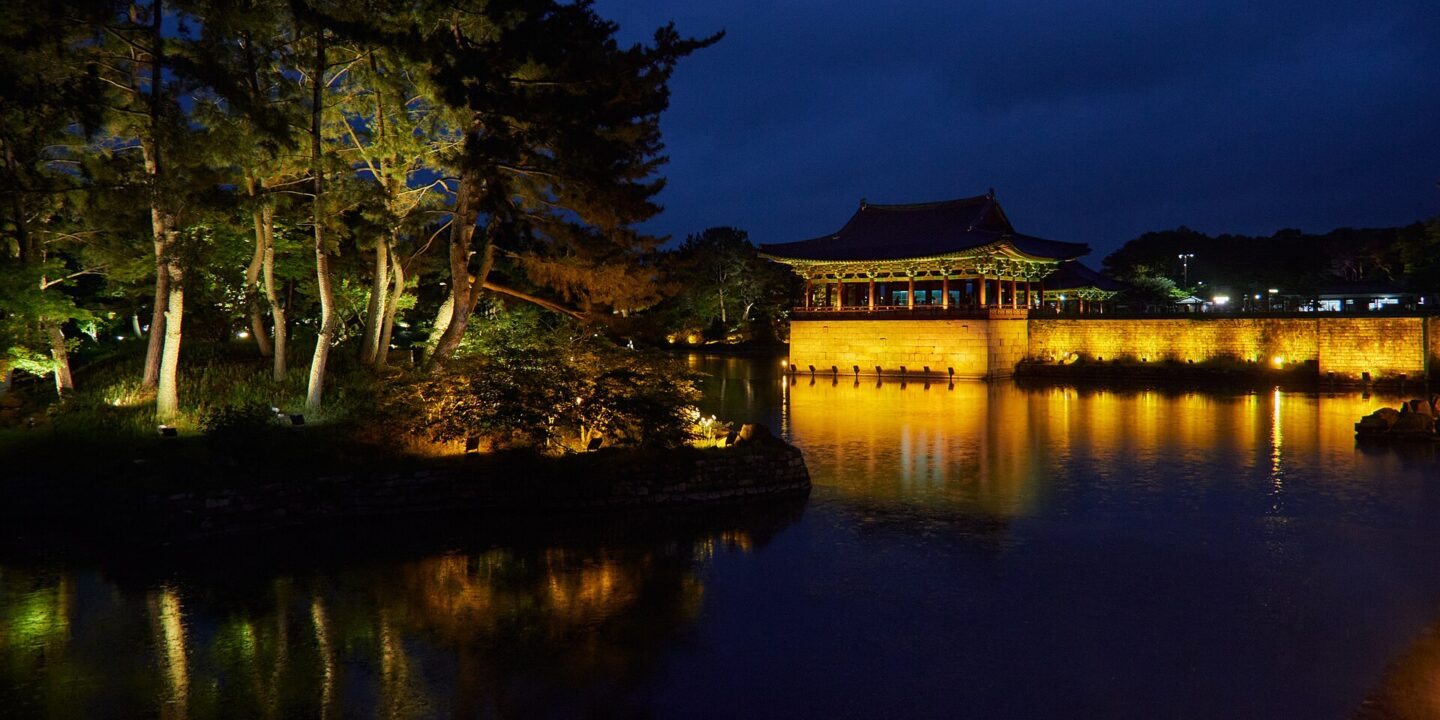
- Donggung Palace and Wolji Pond — the ruins of a Silla royal palace and its pond, with reconstructed pavilions. Go at dusk and stay until dark, when the pavilions are floodlit and reflected in the water. This is the single best sight in Gyeongju, and it is the one a day trip always misses.
Day 5 — Bulguksa and Seokguram
Gyeongju’s two UNESCO-listed Buddhist masterpieces sit on Tohamsan mountain, south-east of the city.
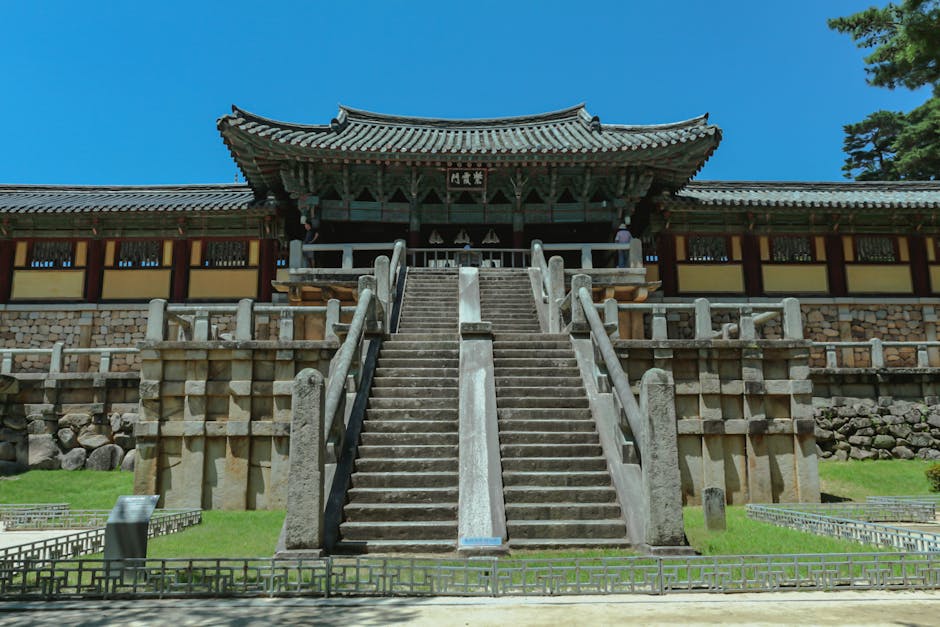
- Bulguksa Temple — the most famous temple in Korea, with its stone stairway-bridges and two celebrated pagodas, Dabotap and Seokgatap. City buses 10 and 11 run from the centre in about 40 minutes. Admission is now free; it opens around 09:00.
- Seokguram Grotto — an 8th-century granite Buddha inside an artificial cave, looking out towards the East Sea. Take the shuttle bus (route 12) up from Bulguksa, or hike the forest trail in about an hour. The Buddha is behind glass and photography is not allowed, but the walk up is beautiful.
Be back in town by mid-afternoon. Visit the Gyeongju National Museum (free), which holds the gold crowns excavated from the tombs and the enormous Emille Bell, then spend the evening in Hwangnidan-gil. Try ssambap (a table of leaves and side dishes to wrap rice in), a Gyeongju speciality, and a bag of Gyeongju bread, the red-bean pastry sold all over town.
Day 6 — KTX to Busan
Take a morning KTX from Gyeongju Station to Busan Station: about 30 minutes, around ₩11,900. If you prefer, express buses from Gyeongju’s intercity terminal take about an hour to Busan and drop you at Nopo in the north of the city.
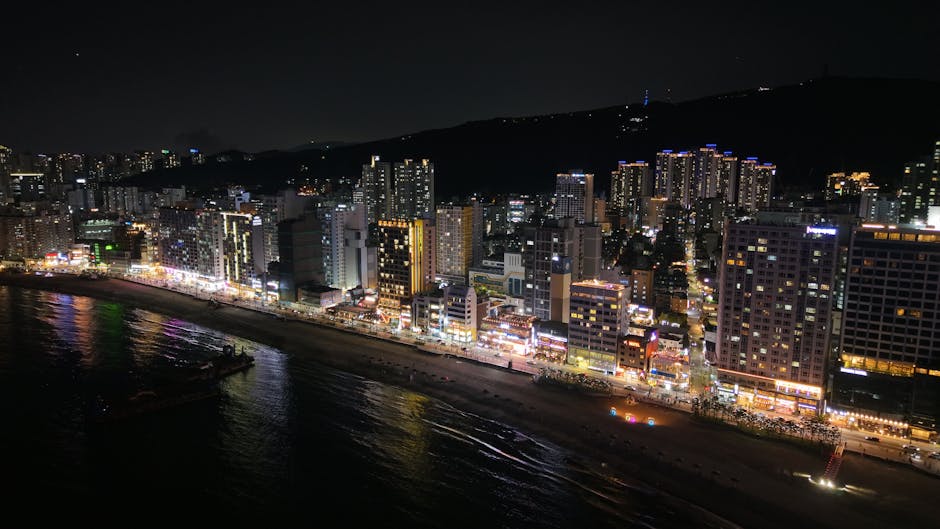
Busan is Korea’s second city and a completely different animal from Seoul: a steep, working port wrapped around a harbour, rougher round the edges and more relaxed about it. Stay in Seomyeon (central, nightlife, on both main metro lines) or Haeundae (beachfront, better for the coast, further from the station).
Afternoon, around the old centre:
- Busan Tower and Yongdusan Park for the harbour view.
- Gukje Market, a sprawling post-war market, and Bupyeong Kkangtong Market, whose night market is one of the best street-food runs in the country.
- Dinner: dwaeji gukbap, Busan’s pork-and-rice soup, is the city’s signature dish and costs around ₩10,000. Alternatively, milmyeon (wheat noodles) and grilled eel near the harbour.
Day 7 — The east coast
Today is Busan’s best day out, and it is almost all along the water.
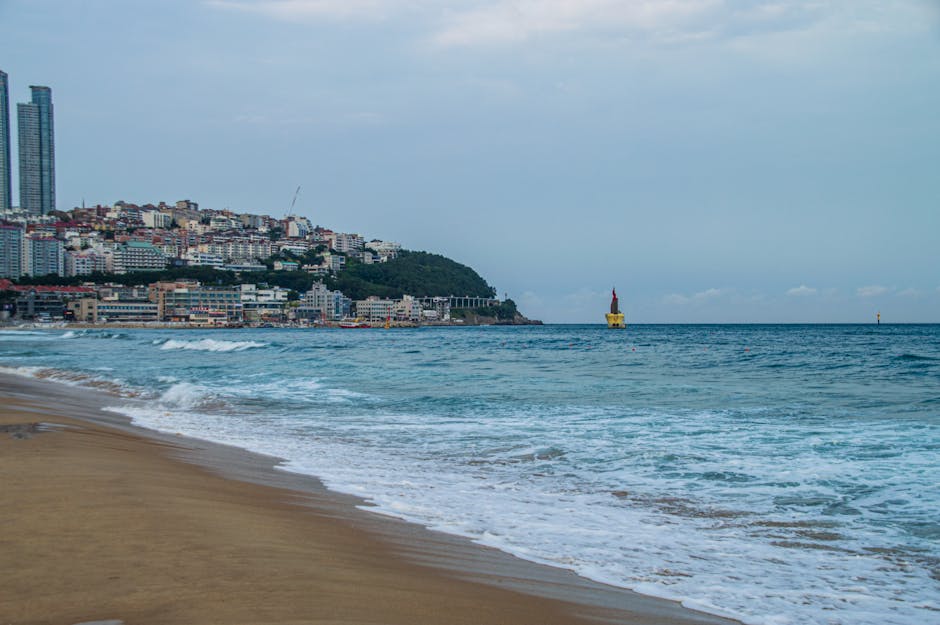
- Haeundae Blueline Park — a 4.8 km disused coastal railway converted into a tourist line between Mipo, Cheongsapo and Songjeong. The Beach Train runs along the shore for ₩8,000–10,000 one way. The Sky Capsules, little pastel pods on an elevated track above it, cost from about ₩40,000 one way for a capsule of two, rising for three or four people. Capsules sell out: book online in advance. You can also walk the coastal path beside the track for free.
- Cheongsapo — stop for grilled clams and the Daritdol skywalk, which juts out over the sea.
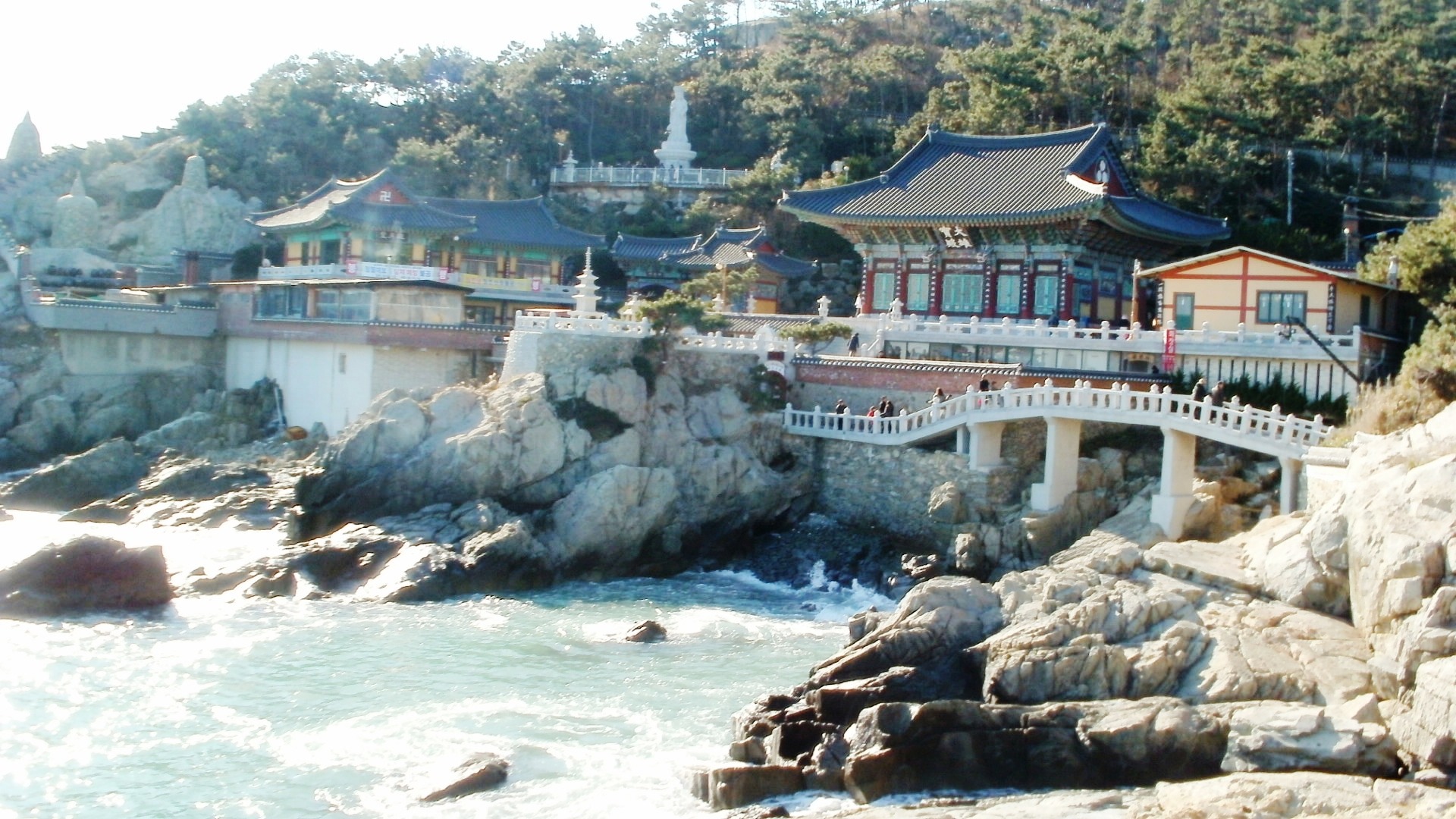
- Haedong Yonggungsa — a Buddhist temple built directly on the sea rocks, north of the city near Osiria Station. It is busy and a little commercial, but the setting is genuinely spectacular.
- Haeundae Beach — back for sunset and dinner.
Day 8 — Busan at your own pace
A flexible day, and one you will appreciate halfway through a trip. Options:
- Taejongsa and Yeongdo — cliffs, a lighthouse and a coastal park on the island across the harbour bridge.
- Songdo — the Songdo Marine Cable Car over the bay and a cliffside skywalk.
- Jeonpo Café Street in Seomyeon — Busan’s answer to Seongsu, a warren of independent cafés in old workshops.
- A jjimjilbang — Busan has some of the best bathhouses in the country, and an afternoon soak before a train day is entirely justified.
For a direct comparison of the two cities, and why many visitors end up wishing they had given Busan one more night, see our Seoul vs Busan guide.
Day 9 — Back to Seoul
Take a morning KTX from Busan Station to Seoul Station. The fastest services take 2 hours 8 minutes; most take closer to 2 hours 30 or 40. A standard seat costs around ₩59,800. Watch out for one trap: the SRT, a separate high-speed operator, also runs Busan–Seoul, but it terminates at Suseo in south-east Seoul, not at Seoul Station. It is a perfectly good train, but make sure you know which one you have booked and where your hotel is.
Afternoon and evening — the parts of Seoul you have not seen yet:
- Seongsu-dong — old factories turned into cafés, concept stores and pop-ups.
- The Han River — a picnic, a bike ride or fried chicken and beer delivered to Yeouido Hangang Park.
- Gangnam or COEX if shopping is on the list.
Day 10 — Departure
Last-minute shopping in Myeongdong for skincare and snacks, then AREX to Incheon. Leave three hours before an international flight. If your flight is in the evening, store bags at your hotel or at a Seoul Station locker and use the morning for anything you missed.
Should you buy a Korail Pass?
This is the question everyone asks, and on this route the answer is no.
All Korail Passes are now flexible, meaning the travel days do not have to be consecutive. Prices vary between sellers, but roughly: a 2-day pass costs around ₩130,000, a 3-day pass around ₩145,000, and longer passes more. This itinerary uses three separate train days. Buying those three journeys individually costs about ₩121,000. The 3-day pass you would need costs more than that, before you have taken a single train.
| Route | Point-to-point (₩) | Pass needed | Pass cost (₩) | Verdict |
|---|---|---|---|---|
| Seoul–Busan return | ~119,600 | 2-day | ~130,000 | Buy tickets |
| Seoul–Gyeongju–Busan–Seoul (this route) | ~121,000 | 3-day | ~145,000 | Buy tickets |
| Add Jeonju and Gangneung (14-day route, 6–7 train days) | ~240,000 | 5-day, plus a couple of short tickets | ~210,000 + extras | Close — do the sums for your dates |
The pass wins once you are covering three or more cities with long legs between them, or if you are making a lot of spontaneous trips and value the flexibility. For a straight line down the Gyeongbu corridor and back, buy individual tickets. Our guide to Seoul discount passes covers the passes that are worth it inside the city.
The 7-day cut-down
With a week, drop one night from each of Seoul and Busan and keep Gyeongju intact, or merge Gyeongju into Busan as a day trip. The first version is better.
| Day | Plan |
|---|---|
| 1 | Arrive Seoul; evening in Myeongdong or Jongno |
| 2 | Gyeongbokgung, Bukchon, Insadong, Gwangjang Market |
| 3 | KTX to Gyeongju; tombs, Cheomseongdae, Wolji Pond at night |
| 4 | Bulguksa and Seokguram; afternoon KTX to Busan |
| 5 | Blueline Park, Haedong Yonggungsa, Haeundae |
| 6 | Morning KTX to Seoul; Namsan at sunset, Hongdae at night |
| 7 | Seongsu or Myeongdong; depart |
It is brisk but not frantic. If you would rather spend the whole week in the capital, our 7-day Seoul itinerary includes a Busan option and a set of day trips instead.
The 14-day extension
Four extra days let you add either the southwest or an island, without cramming.
Option A: add Jeonju (2 nights) and Gangneung (2 nights)
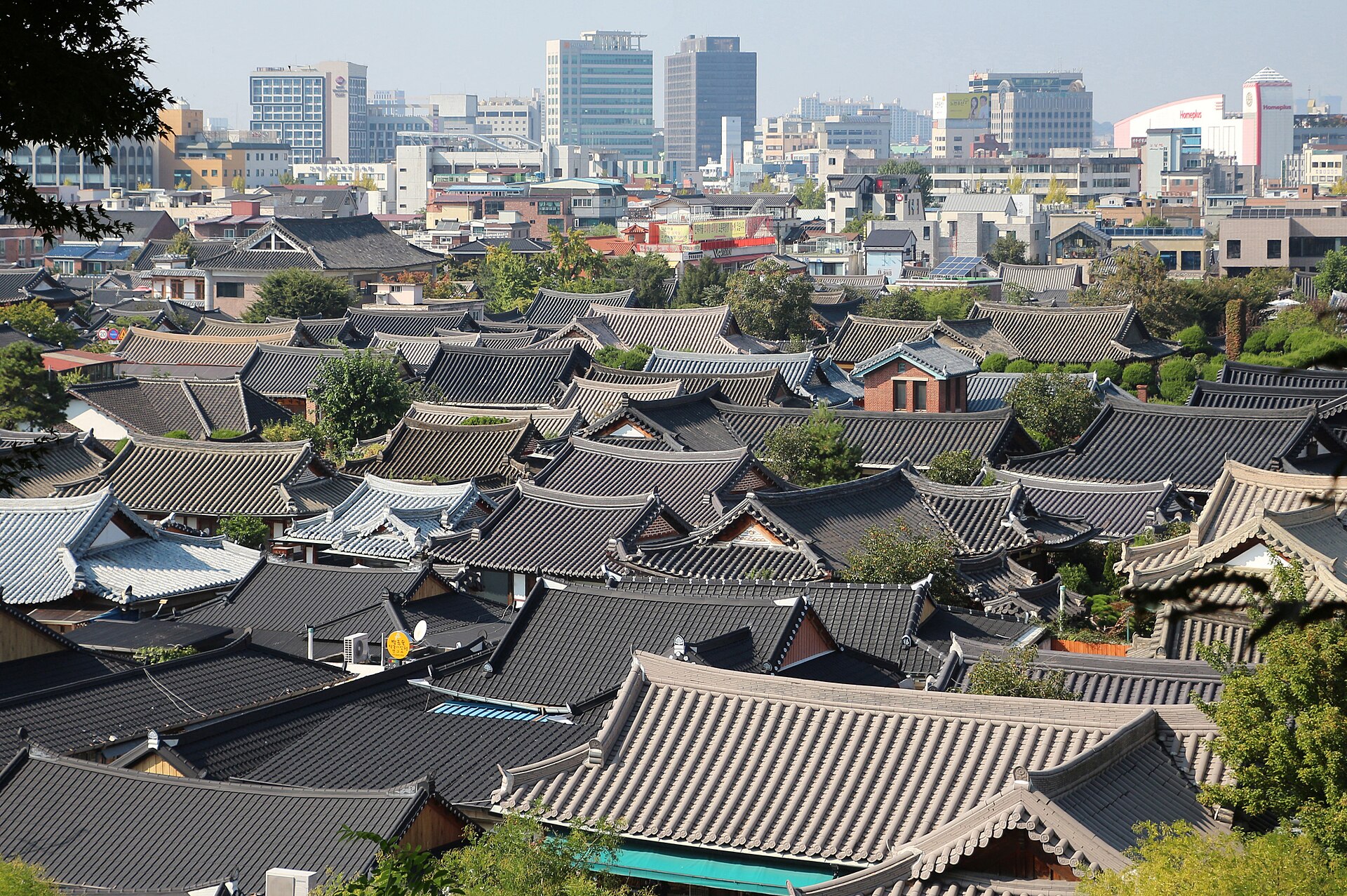
- Jeonju — the home of bibimbap and one of the largest urban hanok villages in Korea, with some 700 traditional houses, makgeolli alleys where each kettle comes with a table of free side dishes, and Gyeonggijeon Shrine. KTX from Yongsan or Suseo takes about 1 hour 50 minutes. Insert it at the start, between Seoul and Gyeongju (there is no direct fast train from Jeonju to Gyeongju, so allow a travel day), or run it as a two-night detour from Seoul.
- Gangneung — the east coast, 2 hours 20 minutes from Seoul by KTX (around ₩27,600 each way), with Anmok Coffee Street, Gyeongpo and Gangmun beaches and Jungang Market. Add it at the end of the trip. In October, carry on to Sokcho for the foliage at Seoraksan National Park.
Option B: add Jeju (3–4 nights)
Jeju is a volcanic island of craters, lava tubes, waterfalls and black-sand beaches, and it needs a hire car or a tour to do properly. Fly from Seoul’s Gimpo Airport (not Incheon) — around 65 minutes on what is the busiest air route in the world, with flights every few minutes — or from Busan’s Gimhae Airport at the end of the Busan leg, then fly back to Gimpo. Book early for summer and holiday weekends.
Option C: add Suwon and Andong
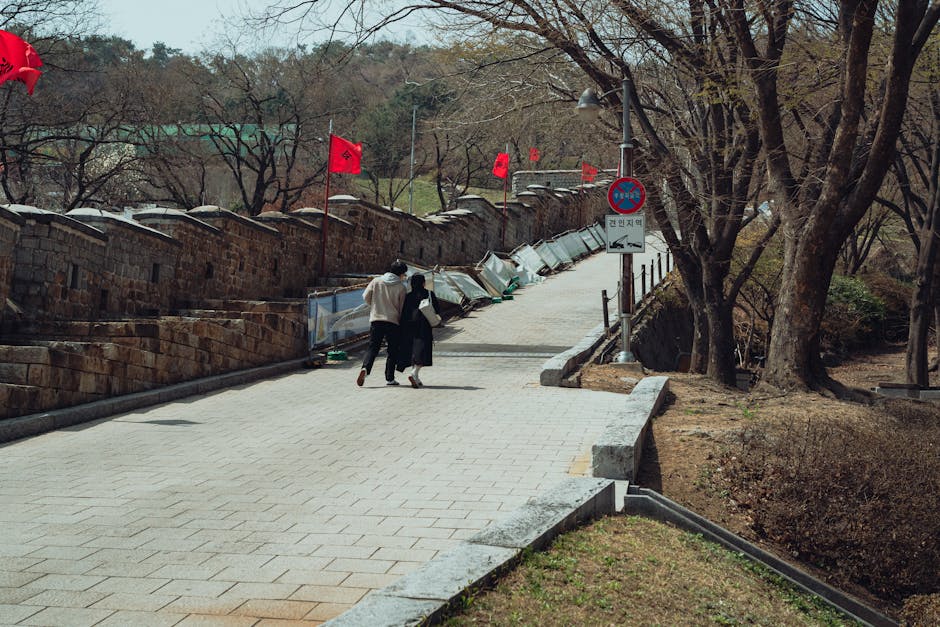
For history lovers: Suwon Hwaseong Fortress is an easy day trip from Seoul (its 5.7 km wall takes 2–3 hours to walk), and Andong’s Hahoe Folk Village, a living Joseon-era clan village, fits between Seoul and Gyeongju. Our day trips from Seoul guide covers Suwon and more.
Seasonal variants
| Season | What changes | Tweak the route |
|---|---|---|
| Spring (late March–May) | Cherry blossom arrives in Busan and Gyeongju a few days before Seoul | Travel south to north: start in Busan, finish in Seoul, to follow the blossom |
| Summer (June–August) | Hot, humid, monsoon rain through July; beaches busy | Put the coast at the end, plan indoor afternoons, book Blueline Park early in the day |
| Autumn (September–November) | The best weather of the year; foliage from mid-October | Add Seoraksan via Gangneung or Sokcho; book everything ahead in October |
| Winter (December–February) | Cold and dry in Seoul, milder in Busan; short days | Keep Gyeongju but plan on seeing Wolji Pond by 18:00; add a jjimjilbang or a ski day |
Busan and Gyeongju usually bloom several days before Seoul, so in early April you can catch the cherry blossom twice by starting in the south. Gyeongju’s Bomun Lake is one of the best blossom spots in the country. Our cherry blossom guide covers forecasts and the Seoul spots, and our best time to visit Seoul page goes month by month.
Avoid the big holidays if you can
Seollal (Lunar New Year, January or February) and Chuseok (harvest festival, September or October) empty Seoul and fill every southbound train for several days. Some restaurants and shops close. If your dates overlap, book trains the moment they go on sale and expect crowds at every heritage site.
What to eat in each city
Food is one of the best reasons to leave Seoul, because the regional dishes are genuinely different and they are cheaper and better at source. A short list for each stop:
| City | Eat this | What it is | Typical cost (₩) |
|---|---|---|---|
| Seoul | Samgyeopsal | Pork belly grilled at the table | 15,000–20,000 per portion |
| Seoul | Bindaetteok and yukhoe | Mung-bean pancake and raw beef at Gwangjang Market | 5,000–20,000 |
| Gyeongju | Ssambap | Rice with a spread of leaves and side dishes to wrap it in | 15,000–20,000 |
| Gyeongju | Gyeongju bread | Small red-bean pastries sold in boxes all over town | ~10,000–20,000 a box |
| Busan | Dwaeji gukbap | Milky pork broth with rice, seasoned with salted shrimp | ~10,000 |
| Busan | Milmyeon | Wheat noodles, cold or hot, a post-war Busan staple | ~8,000–10,000 |
| Busan | Eomuk | Fishcake; Busan is its home, and the shops near the station sell dozens of kinds | ~1,500–5,000 |
| Jeonju (extension) | Jeonju bibimbap | The original, with beef broth-cooked rice and a raw yolk | ~13,000–18,000 |
Busan’s seafood is the headline, but the pork soup is the thing people talk about for years afterwards. Look for a gukbap restaurant with a queue of office workers at lunchtime and simply order what they are having. In Seoul, our Seoul food guide covers the capital’s dishes and where to find them.
Getting around inside each city
Seoul
The subway goes everywhere you need, with free transfers and a base fare of ₩1,550 on T-money. Taxis are cheap by international standards and worth using late at night or with a group. Our getting around Seoul guide covers the lot.
Gyeongju
The central sights — the tombs, Cheomseongdae, Gyochon, Wolji Pond — sit within a flat, walkable area of a couple of kilometres, and renting a bicycle for the day is the most enjoyable way to link them. Bulguksa and Seokguram need a bus (10 or 11 to Bulguksa, 12 onwards to Seokguram) or a taxi. Buses are less frequent than in Seoul, so check the next departure before you finish lunch rather than after.
Busan
Busan has a full metro network — Line 1 runs through Busan Station, the old centre and Seomyeon; Line 2 goes out to Haeundae. For the east coast, the Donghae Line commuter railway reaches Osiria, the stop for Haedong Yonggungsa. The city is hilly and spread out, so expect to use the metro or taxis more than you would in central Seoul.
A sample daily budget
| Style | Accommodation per person | Food | Transport and sights | Per day (₩) |
|---|---|---|---|---|
| Budget | Hostel dorm or shared guesthouse room, 25,000–45,000 | Markets, gukbap, convenience stores, 25,000–35,000 | 10,000–20,000 | ~70,000–100,000 |
| Mid-range | Half a double in a 3–4 star hotel or hanok, 50,000–75,000 | Sit-down meals and a café, 40,000–70,000 | 15,000–40,000 | ~120,000–180,000 |
| Comfort | Half a double in a top hotel, 120,000+ | Restaurants and bars, 80,000+ | Taxis, tours, 50,000+ | ~250,000+ |
Add the three KTX journeys (about ₩121,000) and airport transfers on top. The DMZ tour and the Blueline Park Sky Capsule are the two biggest optional extras on this route.
Practical notes for the whole trip
- Booking trains: use letskorail.com (English) or the Korail Talk app; tickets go on sale about a month ahead. Friday evening southbound and Sunday evening northbound fill first.
- T-money works everywhere on this route — on Busan’s metro and buses, and on Gyeongju’s city buses.
- Luggage: KTX carriages have space at the ends of each car, but not much. Travel with a medium suitcase, not two large ones. Luggage delivery services between cities exist if you want to travel light.
- Maps: Naver Map or KakaoMap. Google Maps will not give you walking or driving directions in Korea.
- Accommodation: in Gyeongju, a hanok guesthouse near Hwangnidan-gil is part of the experience. In Busan, Seomyeon is the practical base and Haeundae the scenic one.
- Temple stays: several temples near Gyeongju offer overnight programmes, and Golgulsa is known for Sunmudo martial-arts training. Our temple stay guide explains what a stay involves.
- Money: foreign cards work almost everywhere, but carry some cash for markets, buses and small restaurants outside Seoul.
Frequently asked questions
Is 10 days enough for South Korea?
It is enough for a very good first trip covering Seoul, Gyeongju and Busan without rushing. It is not enough to add Jeju and the east coast as well. Two weeks lets you add one of those; three weeks, both.
Should I visit Gyeongju as a day trip from Busan?
You can, and many people do, but it is the most common regret on this route. The sights are spread across the city and up a mountain, and the best of them — Wolji Pond and Woljeonggyo Bridge — are at their finest after dark. Two nights is ideal; one is the minimum.
Is the Korail Pass worth it for Seoul, Gyeongju and Busan?
No. The three journeys cost about ₩121,000 on individual tickets, while the 3-day pass costs around ₩145,000. The pass only starts to pay when you add more cities with long journeys, such as Jeonju and Gangneung.
Can I fly into Seoul and out of Busan?
Yes, and it saves a day. Busan’s Gimhae Airport has international flights to Japan, China and South-East Asia, with connections beyond. If you do this, give the saved day to Seoul at the start or to Busan at the end.
What is the best order: Seoul first or Busan first?
Seoul first for most trips, because Incheon has the most international flights and it is easier to adjust to Korea in the capital. Reverse the route in spring if you want to follow the cherry blossom north.
Do I need to speak Korean to travel outside Seoul?
No. Signage on trains, stations and main sights is in English everywhere on this route. Menus in small restaurants in Gyeongju and Busan may be Korean-only, so a translation app with a camera function is useful. Our Seoul travel apps guide lists the ones worth installing.
Final thoughts
The best ten days in Korea are built around a railway line rather than a checklist. Seoul gives you the capital at full volume, Gyeongju slows everything down among royal tombs and temples, and Busan sends you back north with sea air and a taste for pork soup. Resist the urge to add a fourth and fifth base, book individual KTX tickets rather than a pass, and give Gyeongju the evening it deserves. For more on the Seoul end of the trip, our Seoul itineraries hub has plans from one day to a week.
Photo Credits
Donggung Palace and Wolji Pond at night, Gyeongju: Donggung Palace & Wolji Pond, Gyeongju – Donggung2687 by lumoplank, CC0, via Wikimedia Commons.
Haedong Yonggungsa temple on the Busan coast: Haedong Yonggungsa Temple, Busan, South Korea by Anna L Martin, CC BY 2.0, via Wikimedia Commons.
Hanok roofs of Jeonju Hanok Village: Jeonju Hanok Maeul 02 by Bernard Gagnon, CC0, via Wikimedia Commons.