This guide answers the split-your-days question rather than picking a winner. It covers what each city genuinely does better, recommended night splits for trips of four, seven and ten days, the seasonal factor that flips the answer entirely, and the practical business of getting between the two. Train fares and times were checked in September 2026; treat them as the right order of magnitude and confirm before you book, because Korail adjusts both.
At a glance
| Seoul | Busan | |
|---|---|---|
| Population | ~9.4 million in the city, 26 million in the metro area | ~3.3 million — Korea’s second city |
| Days it justifies | 4–6 comfortably, 3 at a squeeze | 2–3, occasionally 4 in summer |
| Wins on | Food breadth, shopping, palaces, nightlife, museums, day trips | Coast, seafood, pace, scenery, temples with sea views |
| Subway | Vast, signed in English, reaches everything | Smaller, four lines, some sights need a bus |
| Summer | Hot, humid, no relief | Hot and humid but with beaches and sea breeze |
| Winter | Genuinely cold, often below freezing | Mild — rarely much below freezing |
| KTX between them | 2 h 08 fastest, up to ~3 h 25 on slower services; ~₩54,000 standard class | |
| Transport card | T-money works in both cities | |
What Seoul does better
Food, by a distance
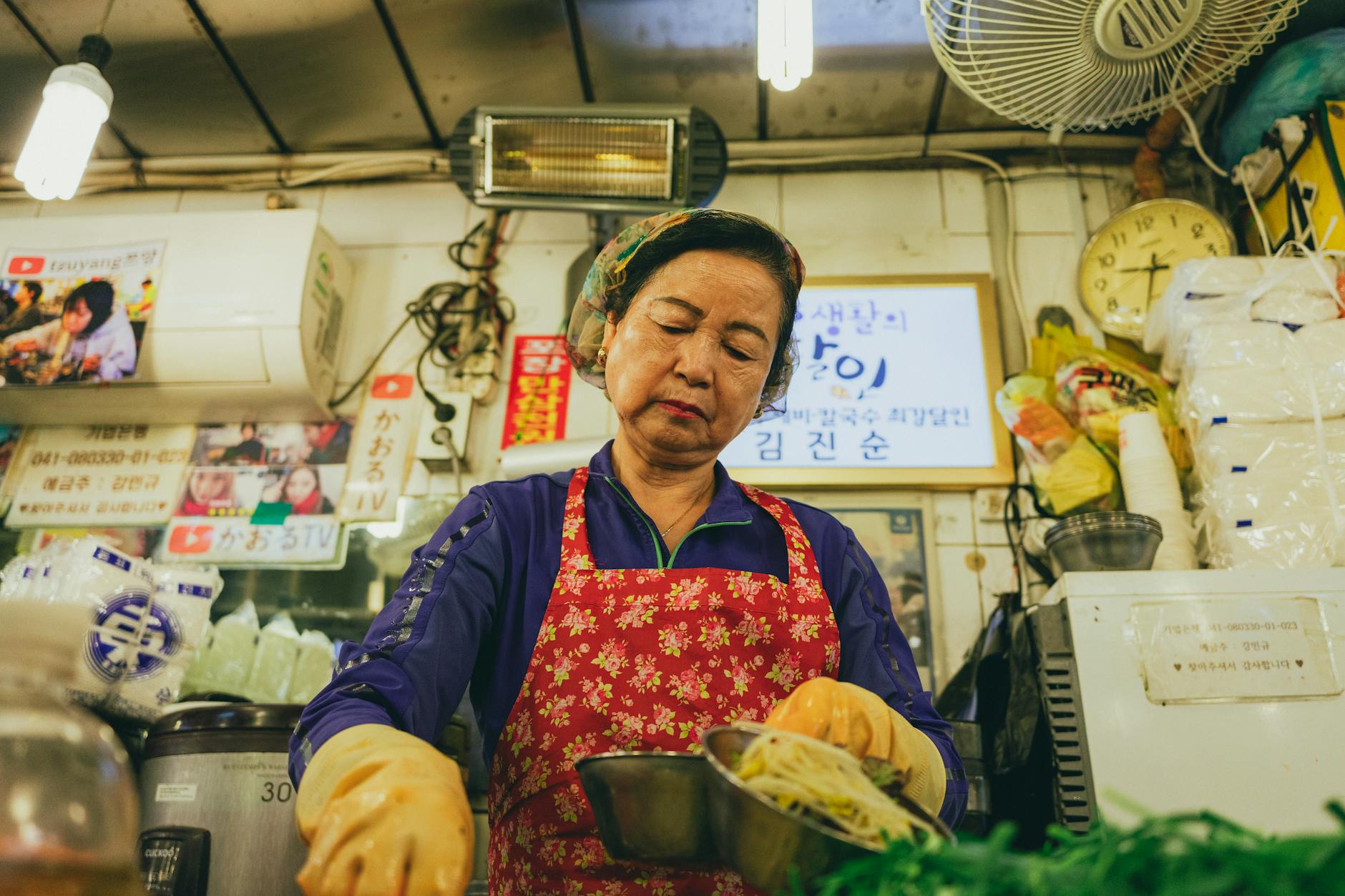
Not “better food” — Busan’s seafood is superb and its own thing entirely. Seoul wins on breadth. Nine and a half million people generate a restaurant scene that covers every Korean regional cuisine plus decent versions of most world cuisines, and it does it at every price point from a ₩4,000 market bowl to a three-star tasting menu. In Busan you will eat brilliantly within a narrow band. In Seoul you can eat brilliantly in a different direction every night for a week. Our Seoul food guide gives the shape of it, and the dishes worth trying covers the regional spread.

History you can walk into
Five grand palaces, a fortress wall, hanok districts, royal shrines and half a dozen national museums, most of them within one subway zone. Busan is a modern port that grew up in the twentieth century and swelled during the Korean War; its historic layer is thin by comparison, and what it has — Beomeosa temple, the UN cemetery — is scattered. If your interest in Korea is historical, that is not close.
Nightlife with genuine range
Hongdae, Itaewon, Euljiro, Gangnam and Seongsu are five distinct night-out cultures in one city. Busan’s nightlife is concentrated around Seomyeon and the Gwangalli beachfront and is good, but it is one register rather than five. There is more on the Seoul end of this in our neighbourhood guide.
Shopping, at every level
Dongdaemun’s wholesale towers, Myeongdong’s cosmetics, Gwangjang’s fabric floor, Seongsu’s concept stores, Apgujeong’s flagships, Namdaemun’s everything. Busan has Shinsegae Centum City, which is enormous, and Gukje Market, which is characterful. It is not a comparison.
Day trips
Seoul is the hub of the national rail network, which puts Suwon, Jeonju, Gangneung, the DMZ and Nami Island all within striking distance of a single base. Busan has Gyeongju, which is genuinely wonderful, and then a shorter list. Our day trips from Seoul covers the northern options.
What Busan does better
It has a coast, and it uses it
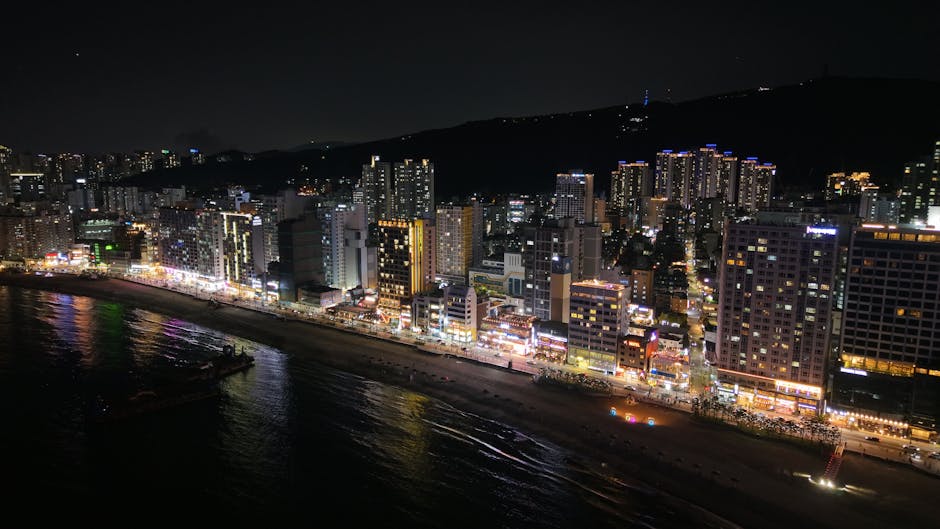
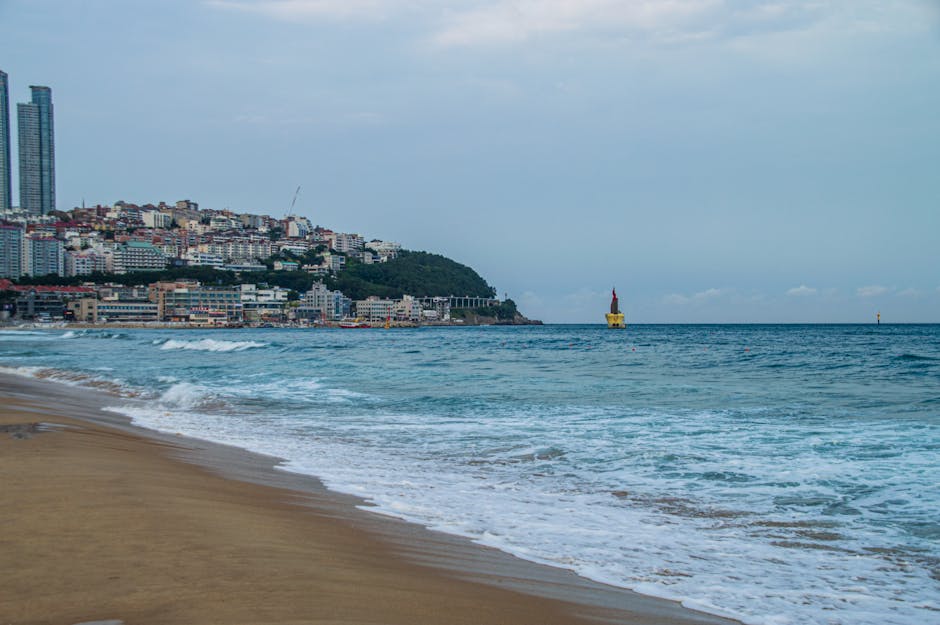
This is the whole case, and it is a strong one. Haeundae and Gwangalli are real city beaches — swimmable in summer, walkable year round, lined with cafes and with the Gwangan Bridge lit up across the water at night. Seoul has the Han River, which is lovely, but a river is not the sea. If you are visiting Korea in July or August, Busan stops being a nice extra and becomes the reason your trip is bearable.
Seafood at source
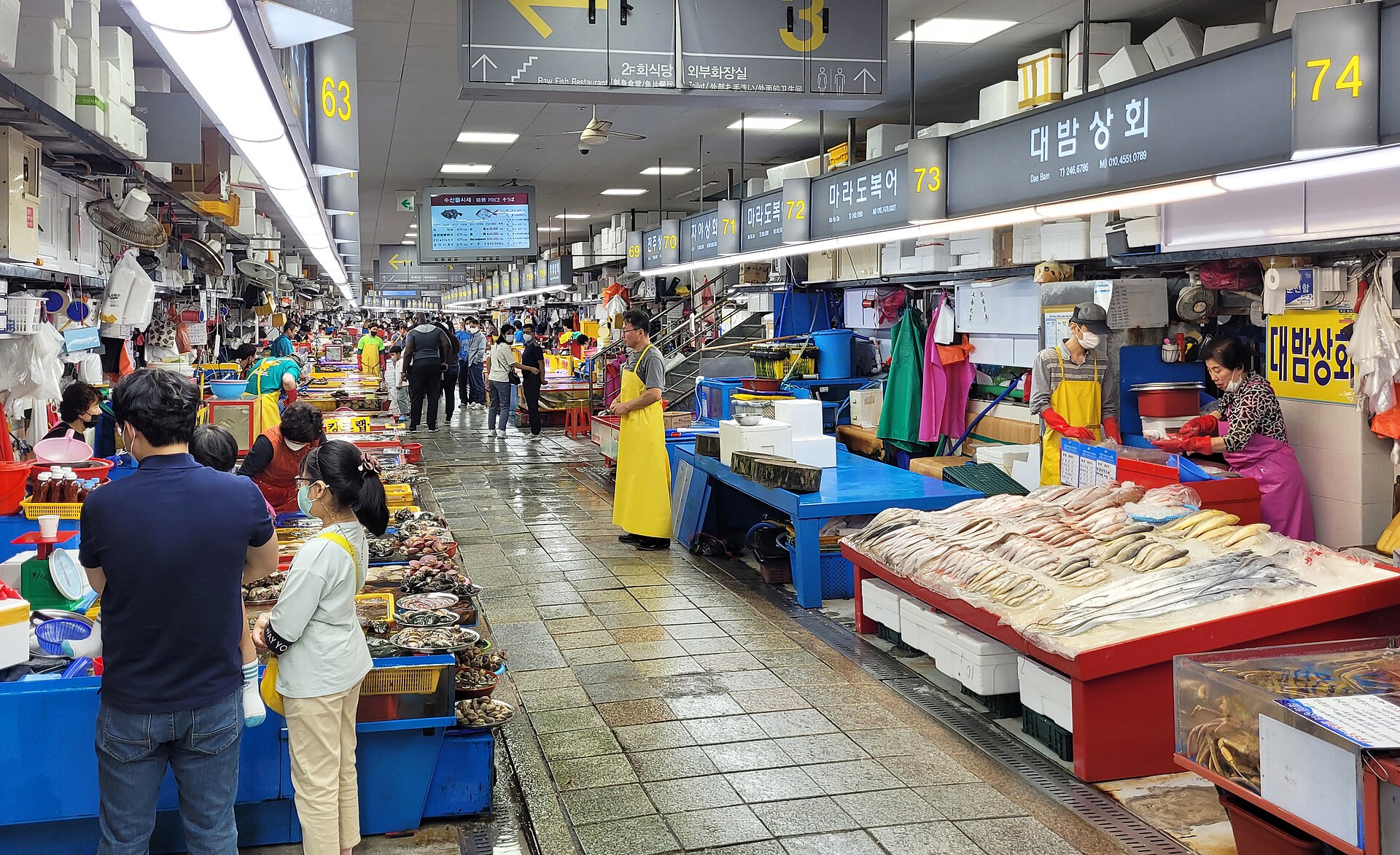
Jagalchi is Korea’s largest fish market and it is not a heritage attraction; it is a functioning wholesale and retail market where you buy a fish downstairs and have it prepared upstairs. Add the raw-fish tents at Millak, the eomuk (fish cake) tradition that Busan basically invented in its modern form, and dwaeji gukbap — pork soup with rice, the city’s own comfort dish, ₩8,000-ish and served everywhere. Seoul has all of this; Busan has it better and cheaper.
Scenery and topography
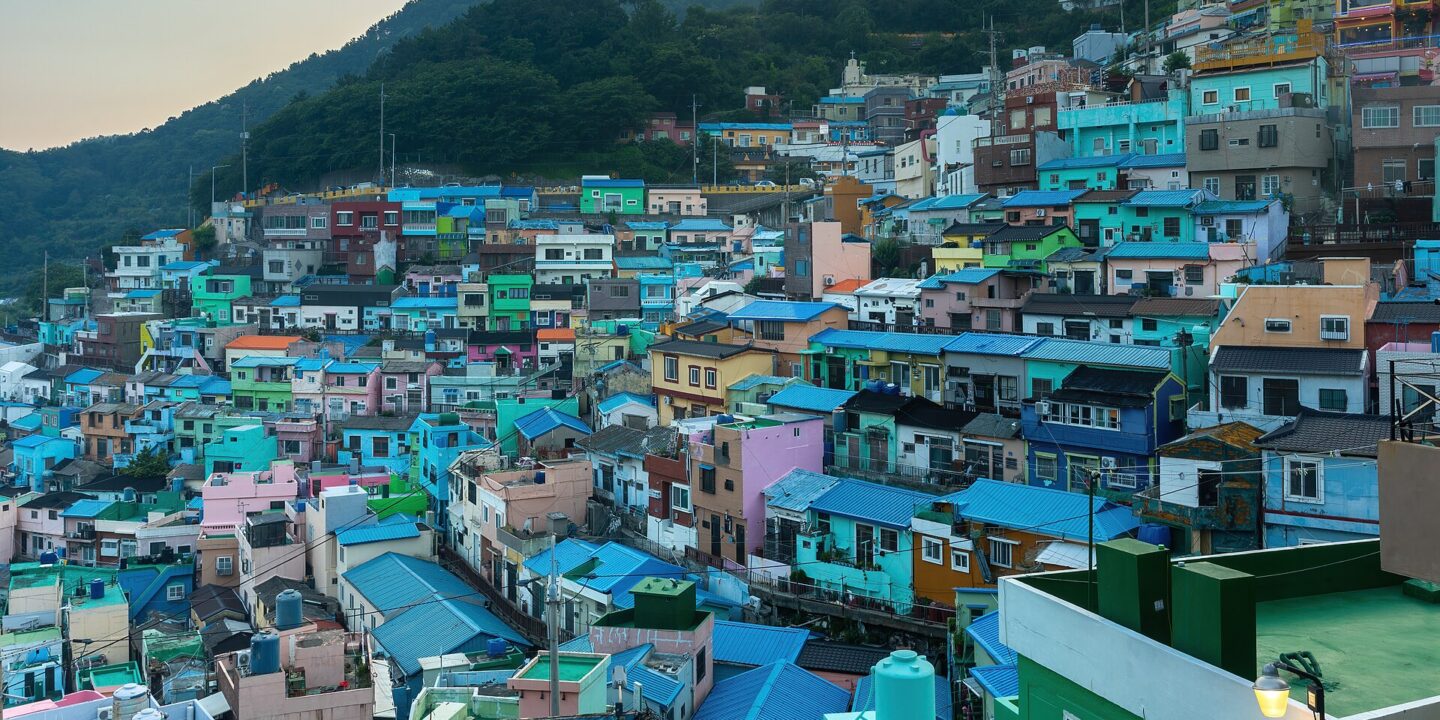
Busan is built across hills that drop into the sea, which means views constantly. Gamcheon Culture Village — a hillside of painted houses stacked on each other — is the postcard, and it is genuinely as striking as the photos. Haedong Yonggungsa is a Buddhist temple built onto rocks above the waves, which is not a thing Seoul can offer at any price. The Songdo and Cheongsapo coastal walks are excellent. Seoul has mountains, and they are beautiful, but you have to go and find them.
Pace
Busan is slower. People walk slower, meals take longer, the pressure to be efficient drops off. After four days in Seoul this feels like a physical relief, and it is a real argument for putting Busan at the end of a trip rather than the beginning.
How to split your days
These splits assume you fly into Incheon and out of Incheon, which is the usual arrangement. If you can fly out of Busan’s Gimhae airport — plenty of regional carriers do it — you save yourself a return leg and should shift a night to Busan.
Four or five days: Seoul only
Do not add Busan. Four days in Seoul is already tight — one palace day, one neighbourhood day, one food-and-market day, one day for whatever caught your eye. Adding Busan turns that into two days of Seoul, one travel day and a rushed day and a half in Busan, and you will have seen neither properly. Our three-day Seoul itinerary and five-day version both assume you stay put, and that is deliberate.
The one exception is a summer trip where you badly want a beach day, in which case treat Busan as a two-night side trip and accept that Seoul gets thin.
Seven days: five Seoul, two Busan
This is the standard split and it works. Five nights in Seoul, KTX down on the morning of day six, two nights in Busan, KTX back on the last morning or fly home from Gimhae. Two nights in Busan gives you one full day — Gamcheon in the morning, Jagalchi for lunch, Haeundae or Gwangalli in the evening — plus the two half days either side. It is enough to feel the place without pretending you have explored it.
Ten days: six Seoul, three Busan, one Gyeongju
With ten days the smart move is not to give Busan more nights but to put Gyeongju in between. Gyeongju was the capital of the Silla kingdom for nearly a thousand years and is the best historical site in Korea outside Seoul; it sits roughly on the line between the two cities, and the KTX stops at Gyeongju Station, formerly Singyeongju, about two hours from Seoul. Seoul, then Gyeongju for a night, then Busan for three, then fly home. That is the itinerary I would book for myself.
Two weeks or more
Now you can be greedy. Add Jeonju for the food and the hanok village, Gangneung on the east coast for the beaches and the coffee street, and Jeju if you want an island week. At this length the question stops being seoul vs busan and starts being how many stops your rail pass justifies.
The season changes the answer
Summer (June to August)
Busan gains a lot. Seoul in August is hot, humid and airless, and the monsoon lands in late June and July. Busan is barely cooler in absolute terms but the sea makes it survivable, and Haeundae in high summer is a genuine event — packed, loud, fun. The caveat is typhoon season, which peaks in late August and September and occasionally shuts the coast down for a day or two. Build in flexibility.
Autumn (September to November)
Seoul’s best season, comfortably. Clear skies, mild temperatures, autumn colour in the palace grounds and on the mountains from late October. Busan is also excellent and much quieter than summer. This is the best window for a split trip. Our best time to visit Seoul page goes month by month.
Winter (December to February)
The gap widens in Busan’s favour on comfort and in Seoul’s on things to do. Seoul gets properly cold — often below freezing, with wind — but it is an indoor city with jjimjilbang, museums, covered markets and underground shopping. Busan is mild enough to walk the coast in a jacket, but the beaches are pointless and half the seaside cafes are quiet. If you are cold-averse, Busan; if you want things to do, Seoul.
Spring (March to May)
Both are excellent. Cherry blossom arrives in Busan roughly a week before Seoul, which is a genuine planning lever — if your dates are marginal, going south first can catch the bloom you would have missed in the north.
Getting between them
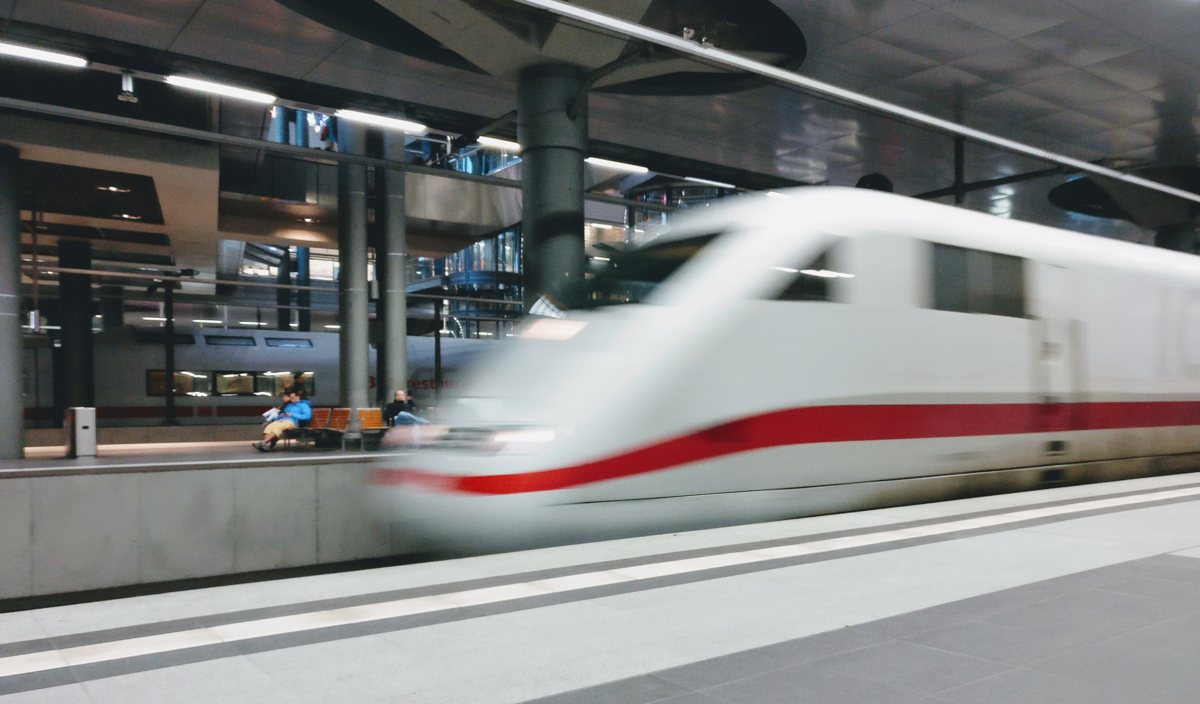
KTX, which is what you should take
The fastest KTX runs Seoul Station to Busan Station in about two hours and eight minutes; slower services with more stops take up to about three hours twenty-five. A standard-class seat is around ₩54,000 after the September 2026 fare cut. First departures leave Seoul from roughly 05:30 to 06:00, and the last services back leave Busan somewhere between 21:00 and 22:00 depending on the day. Book a few days ahead through KORAIL’s English website or the KORAIL+ app — weekend trains and holiday weekends genuinely sell out.
One trap worth knowing: Busan trains leave from two Seoul stations. The former SRT services, sold as KTX since KORAIL absorbed SR in September 2026, leave from Suseo Station in southern Seoul rather than Seoul Station. Both go to Busan, both are fast, and people regularly turn up at the wrong station. Check which one your ticket says.
Should you buy a Korail Pass?
For a straight Seoul-Busan return, no. Point-to-point tickets both ways come to roughly ₩108,800 since the September 2026 fare cut, and a two-day pass costs ₩131,000 — so the pass loses. The Seoul-Gyeongju-Busan triangle is also cheaper in singles. All Korail Passes are now flexible, with no consecutive-day requirement, but the maths only turns in the pass’s favour when you take two long trains on the same day. Work out your actual route in singles before you buy.
Flying and buses
Flights Gimpo to Gimhae take about an hour, but add the airport transfers at both ends and it is no faster door to door than the train, and usually costs more. The express bus is cheaper — expect somewhere around half the KTX fare — and takes four to four and a half hours. Take it only if you are on a strict budget or the trains are sold out.
Practicalities on arrival
Your T-money card works on Busan’s subway and buses with no changes needed, which removes the main friction of a second city. Busan Station sits centrally, with Line 1 running from it to Nampo-dong, Seomyeon and onward. Haeundae is on Line 2 and takes about 40 minutes from the station; if you are staying at the beach, factor that in when you pick a train.
Where to base yourself in each city
The logic is different in the two cities, and getting it wrong costs you more in Busan than it does in Seoul.
In Seoul, the decision is about subway position and what you want your evenings to sound like — Myeongdong for convenience, Hongdae for value and noise, Gangnam for polish, Jongno if you have been before. We set the three main contenders against each other in Myeongdong vs Hongdae vs Gangnam, and the wider list is in where to stay in Seoul.
In Busan the choice is blunter, because the city is strung along a coastline rather than clustered around a centre. Haeundae puts you on the best beach with the best hotels and a 40-minute subway ride from the station and the old town. Seomyeon is the geographic middle, the transport interchange and the best food and nightlife, but has no view of anything. Nampo-dong and Jung-gu put you next to Jagalchi, Gukje Market and the ferry terminal, which is the right call for a short two-night visit built around the western sights. Gwangalli splits the difference — beach, bridge view, a decent bar strip, less hotel choice.
For a first two-night visit I would stay in Nampo-dong or Seomyeon rather than Haeundae, on the grounds that you spend more time near the markets than on the sand unless it is genuinely beach weather. In July and August, reverse that.
Where each city disappoints
Being straight about this saves people money. Seoul’s weak point is that its individual sights are not that spectacular; the palaces are beautiful but modest next to Beijing or Kyoto, and the city’s appeal is cumulative rather than headline. Visitors expecting a list of must-sees sometimes come away underwhelmed, because Seoul rewards wandering and eating far more than it rewards ticking off.
Busan’s weak point is that it is spread out and the subway does not cover it well. Gamcheon needs a bus up a hill. Haedong Yonggungsa needs a bus and then a walk. Taejongdae is out on an island. The distances between the famous things are longer than the map suggests, and a two-day visit spent partly on buses is a common experience. Plan Busan geographically rather than by ticking off a list, and do the west (Gamcheon, Jagalchi, Nampo) on one day and the east (Haeundae, Gwangalli, the temple) on another.
You do not actually have to choose. Seoul and Busan sit at either end of the fastest KTX line in the country, with the Silla capital of Gyeongju thirty minutes short of Busan. Our 10-day Korea itinerary links all three, with every train leg, fare and a straight answer on the Korail Pass.
Busan is not the only option for a second base. Our guide to travelling beyond Seoul compares it with Gyeongju, Jeonju, Gangneung, Seoraksan and Jeju, with a day-trip-or-overnight verdict for each and sample routes that pair Busan with one or two other stops.
Getting between the two cities is the easy part: the KTX from Seoul Station or Suseo does it in a little over two hours on the fastest trains. Our KTX booking guide explains how to buy tickets with a foreign card and what changed when SRT merged into KTX in 2026.
If you have decided to see both, our Seoul to Busan guide covers the journey itself: which Seoul station your KTX leaves from, fares after the 2026 cut, an honest verdict on the day trip, and a realistic route through Jagalchi, Gamcheon and Haeundae.
Frequently Asked Questions
Is Busan worth visiting if I only have a week in Korea?
Yes, on a five-two split. Seven days is enough for both without either feeling rushed. Below six days, stay in Seoul — the travel days eat too much of the trip.
How many days do I need in Busan?
Two nights, giving you one full day plus two halves, is the realistic minimum and covers the highlights. Three nights is comfortable and lets you add Gyeongju as a day trip or spend a proper beach day. Four is generous unless it is high summer.
Is the KTX worth it over the bus?
Almost always. The train roughly halves the journey and the fare gap is smaller than people expect once you value two hours of your holiday. Take the bus only if the trains are sold out or you are counting every won.
Do I need a Korail Pass for a Seoul and Busan trip?
No. A return on point tickets works out cheaper than a two-day pass. Since the 2026 fare cut, the pass only makes sense when you take two long trains on the same day, such as long day trips from Seoul.
Which city is cheaper?
Busan, modestly. Accommodation runs noticeably lower outside the Haeundae beachfront in high summer, and seafood meals are better value. The gap is not large enough to drive the decision.
Can I use my T-money card in Busan?
Yes — T-money works on Busan’s subway, buses and taxis, and in convenience stores. Top it up at any station machine. This is one of the few things about Korean travel that is genuinely seamless.
Should I visit Busan or somewhere else outside Seoul?
If you want coast and seafood, Busan. If you want history, Gyeongju beats it comfortably. If you want food and hanok, Jeonju. If you want mountains, Sokcho and Seoraksan. Busan is the most complete second city, but it is not automatically the best second stop for what you specifically want.
Is one day in Busan possible from Seoul?
Technically yes — first train down at about half past five, last train back around nine in the evening, giving you roughly eleven hours on the ground. In practice it is a punishing day for about ₩120,000 in fares, and you will see two or three things in a rush. If you cannot spare a night, spend the day somewhere closer instead.
Final Thoughts
Seoul is the deeper city and Busan is the better break. The mistake people make is treating them as rivals and then squeezing Busan into a trip too short to hold it, which produces a travel day, a rushed afternoon and a slight sense of having wasted both. Give Busan two nights or none.
If you are still shaping the trip, our Seoul travel guide sets out how many days the capital actually needs, and the trip cost breakdown will tell you what adding the KTX legs does to your budget before you commit to them.
Photo Credits
Gamcheon Culture Village: Colorful houses in Gamcheon Culture Village at sunset in Busan South Korea by Basile Morin, CC BY-SA 4.0, via Wikimedia Commons.
Jagalchi fish market: Jagalchi Market 01 by Bernard Gagnon, CC0, via Wikimedia Commons.