This guide is the hub for every trip out of the capital on this site. It scores the main destinations on travel time from Seoul, the number of days each one deserves and what it does better than Seoul, then sorts them into the ones that work as a day trip and the ones that need a night or more. After that come sample routes for one, two and three extra stops, how the seasons should change your plans, and the practical side: trains, buses, flights, luggage and rail passes. Journey times and fares are approximate, because Korail fares vary by train, day and seat, so confirm the exact figure on Korail’s own site or the KORAIL+ app when you book.
Beyond Seoul at a glance
Here is the whole picture in one table. Times are the fastest regular public-transport option from Seoul, door to door from the station rather than from your hotel. The “days” column is what each place deserves for a first visit, not the minimum you can get away with.
| Destination | Fastest from Seoul | Days it deserves | What it does better than Seoul | Day trip? |
|---|---|---|---|---|
| Suwon (Hwaseong Fortress) | Subway Line 1, 55–65 min; KTX about 20 min | Half a day | A walkable 18th-century fortress wall | Yes, easily |
| DMZ and the border | Guided tour only, about an hour each way by coach | Half to a full day | Nothing in Seoul compares | Yes, by tour |
| Nami Island and Gapyeong | Train and ferry, roughly 1.5 hours | A day | Tree-lined avenues and river scenery | Yes |
| Jeonju | KTX about 1 hr 45–1 hr 55 | 1–2 days | One of Korea’s biggest hanok quarters, and the food | Yes, but better with a night |
| Gangneung | KTX-Eum about 2 hours | 1–2 days | East Sea beaches and a coffee-street culture | Yes |
| Seoraksan and Sokcho | Express bus about 2.5 hours | 1–2 days | Granite peaks and a fishing port | Possible, but long |
| Andong (Hahoe Village) | KTX-Eum about 2 hours, then a local bus | 1–2 days | A lived-in Joseon-era clan village | A very long day |
| Gyeongju | KTX about 2 hours | 2 days | A thousand years of Silla royal history | Not really |
| Busan | KTX from about 2 hr 10 | 2–4 days | Beaches, seafood, a port-city atmosphere | Doable, but rushed |
| Yeosu | KTX about 3 hours | 2 days | A quiet southern harbour and islands | No |
| Jeju Island | Flight from Gimpo, about 65 min in the air | 3–5 days | Volcanic landscapes, a slower pace | No |
Two patterns jump out. First, the places within about two hours split cleanly into easy day trips (Suwon, the DMZ, Nami Island) and places that technically work in a day but reward a night (Jeonju, Gangneung). Second, the big three that most visitors actually mean by “beyond Seoul” (Busan, Gyeongju and Jeju) all deserve at least two nights. If you only have a day to spare, look at the first group. If you have three or more, the second.
How to decide where to go
Before you look at individual destinations, it helps to answer three questions. They narrow the list faster than any ranking.
How many spare nights do you really have?
Count only the nights you are willing to spend away from your Seoul hotel. Zero nights means day trips, and you should stay within the two-hour radius. One or two nights opens up Jeonju, Gangneung, Gyeongju or a short Busan stop. Three nights or more is where a proper second base makes sense: Busan with a Gyeongju side trip, or Jeju. A week or more, and you can string together a loop. Our 10-day Korea itinerary lays out the version that works best for most first-timers.
A useful rule of thumb: every time you change hotel in Korea you lose roughly half a day to checking out, getting to the station, travelling and finding the next place. Two bases in a week is relaxed; four in a week is a blur of station concourses.
What does Seoul not give you?
Seoul is excellent at palaces, food, shopping, nightlife and city hiking. What it cannot offer is a real beach, an old town that is not a museum piece, deep mountain scenery or the slower pace of a provincial city. Pick the destination that fills the biggest gap for you:
- Coast and seafood: Busan, Gangneung, Sokcho, Yeosu, Jeju.
- History and temples: Gyeongju first, then Andong and Suwon.
- Traditional houses and food culture: Jeonju, then Andong’s Hahoe Village.
- Mountains and hiking: Seoraksan, and Hallasan on Jeju.
- The divided peninsula: the DMZ, which only works as a guided tour.
Which way does the rest of your trip point?
If you fly out of Incheon, the simplest plan puts your excursions in the middle of the trip and finishes back in Seoul. If you can book an open-jaw ticket, flying into Seoul and out of Busan’s Gimhae airport saves you a return train ride and a day. And if you are carrying on to Japan, Busan is the natural last stop. It is the closest Korean city to Fukuoka, and many travellers leave from there.
The day trips: back in Seoul for dinner
These are the places you can see properly and still sleep in your Seoul hotel. Our full guide to day trips from Seoul has more options and more detail; this is the short list with an honest verdict on each.

Suwon: the easiest UNESCO site near Seoul
Suwon’s Hwaseong Fortress is the best-value excursion in the Seoul area. The wall runs for 5.7 km around the old town, it was built between 1794 and 1796, and admission to the palace and museums is charged separately (check current fees on the Suwon Cultural Foundation site, swcf.or.kr). Line 1 of the Seoul subway gets you there in 55 to 65 minutes on a T-money card, or a KTX does it in about 20 minutes. Allow two to three hours to walk the circuit, then add the reconstructed Hwaseong Haenggung palace in the centre and a plate of Suwon galbi. It is a half day, or a gentle full day.
Verdict: if you add only one day trip to a Seoul itinerary, this is the safest bet. It is cheap, close, genuinely impressive and almost impossible to get wrong.
The DMZ: unforgettable, but only on a tour
The Demilitarized Zone is the most requested day trip from Seoul and the one with the least flexibility. You cannot simply turn up at most of the sites near the border; you go with a licensed tour operator, carrying your passport, on an itinerary that can change at short notice when the military closes a site. Expect a half day or a full day by coach. Our DMZ tour guide explains the difference between the standard tours and the ones that include the Joint Security Area, and what to check before you pay.
Verdict: worth it if the history interests you, and the reason many people come to Korea at all. Skip it if you would only be going because it is on every list. It is a sober day with a lot of coach time.
Nami Island and Gapyeong
Nami Island is a small river island east of Seoul, famous for its tree-lined avenues, its autumn colours and its role in a 2000s K-drama that turned it into a pilgrimage site. You reach it by train to Gapyeong and then a short ferry, and it fills a pleasant day, especially combined with the nearby Petite France or the Garden of Morning Calm. See our Nami Island guide for the routes and the shuttle options.
Verdict: lovely in October and early November and under snow, crowded and a little underwhelming on a summer weekend. If you are not a fan of the drama and it is not foliage season, a hike in Seoul’s own mountains is a better use of the day.
Hiking without leaving the metro area
It is worth saying that the best mountain day near Seoul does not involve leaving the city at all. Bukhansan National Park sits inside the city limits, with granite summits and temple paths a subway ride from downtown. Our Bukhansan hiking guide covers the routes. If what you want is a big view and some exercise, it delivers most of what Seoraksan does for a fraction of the travel time.
The overnighters: worth a night or more
These are the destinations that technically fit into a day from Seoul but are noticeably better with a hotel at the other end. They are also where most people find the trip they remember.
Jeonju: hanok, bibimbap and a slower evening
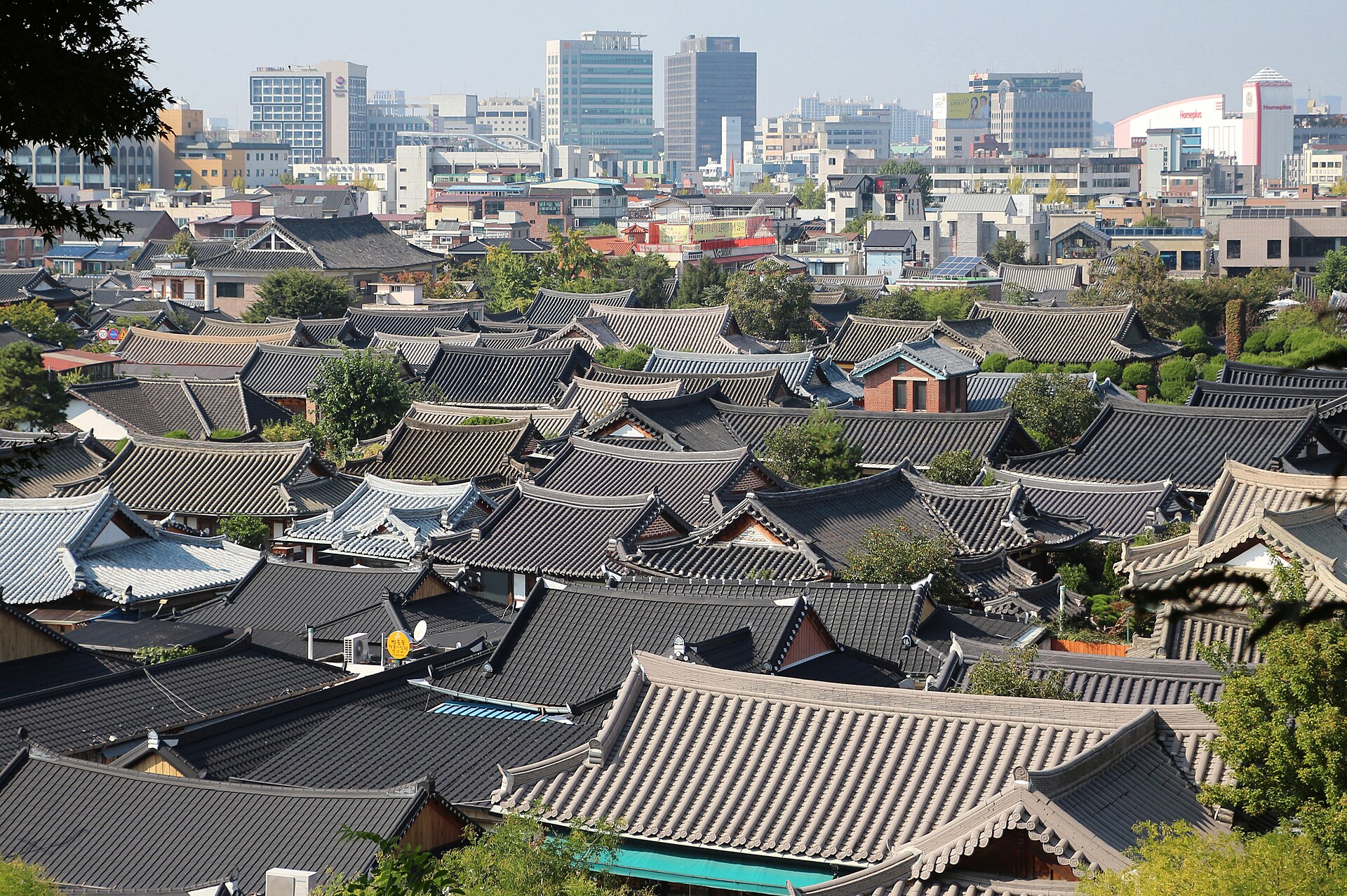
Jeonju is about 1 hour 45 minutes to 1 hour 55 minutes from Seoul on the KTX, from Yongsan or Seoul Station, with a standard ticket around ₩34,600. Its Hanok Village is among the biggest concentrations of traditional houses you can walk through in Korea, and the city has a serious claim on Korean food: it is the home of Jeonju bibimbap, and its market and makgeolli houses are a destination in themselves.
A day trip gives you six to eight hours on the ground, which is enough to walk the hanok lanes, see Gyeonggijeon Shrine and eat lunch. What you miss is the evening, when the day-trippers leave, the lanterns come on and the food streets fill up. One night in a hanok guesthouse turns a nice day out into the highlight of a trip. If you have stayed in a hanok in Seoul already, our guide to hanok stays explains what to expect from the rooms.
Verdict: the best one-night trip from Seoul for anyone interested in food or architecture. Do it as a day trip if you must, but leave on a late train.
Gangneung: the East Sea in two hours
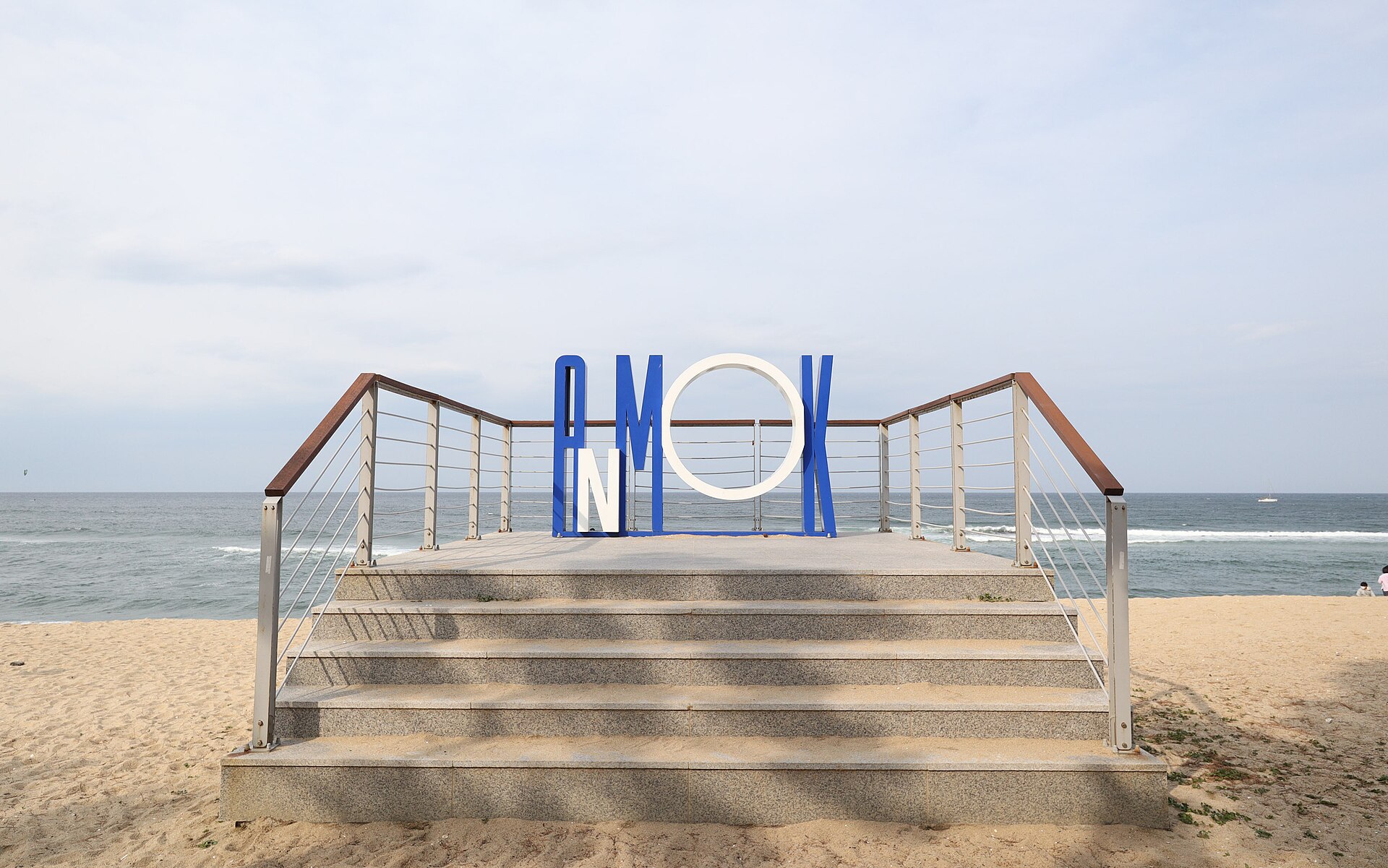
Gangneung became much easier to reach when the high-speed line was built for the 2018 Pyeongchang Winter Olympics, and it is now about 2 hours from Seoul on the KTX-Eum, with a standard fare of roughly ₩27,600 each way from Seoul Station. It gives you what Seoul cannot: open sea, sandy beaches at Gyeongpo and Gangmun, and Anmok Coffee Street, a strip of cafes facing the water that has become a destination of its own. Jungang Market fills in lunch.
Verdict: a genuinely good day trip by train, and one of the few places where a day trip is not a compromise. Stay a night if you want sunrise over the sea, which is the local ritual, or if you plan to combine it with Sokcho up the coast.
Seoraksan and Sokcho: mountains and sea
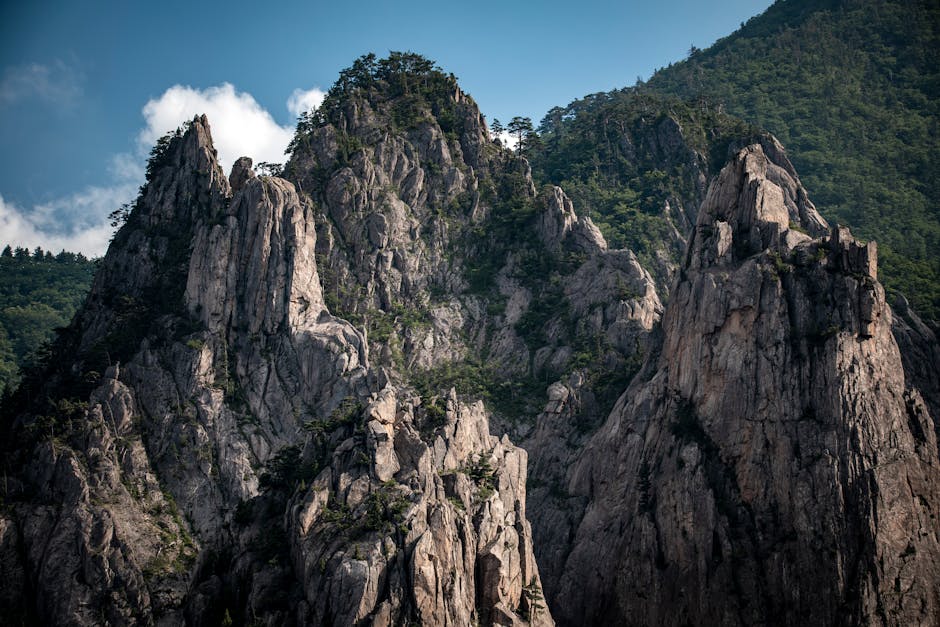
Seoraksan National Park is the dramatic mountain landscape most visitors picture when they think of hiking in Korea: granite ridges, temples tucked into valleys, and spectacular colour in autumn. The gateway town is Sokcho on the east coast, about 2.5 hours by express bus from Seoul Express Bus Terminal (Lines 3, 7 and 9) or Dong Seoul Bus Terminal (Line 2, Gangbyeon Station), followed by a local bus to the park entrance.
The park offers a cable car, a hard climb to the rock dome of Ulsanbawi, and a flat walk to Sinheungsa temple for anyone who wants scenery without the effort. Sokcho itself adds a fish market and Abai Village, settled by refugees from the North during the Korean War. Peak foliage runs from mid-October to early November, and it is the busiest time of year in the park, with buses and accommodation booked out well ahead.
Verdict: a day trip means five hours on buses for perhaps four hours in the mountains. It is possible, and guided day tours exist, but a night in Sokcho makes it a much better experience. If you only want a mountain view, Bukhansan in Seoul is the efficient choice.
Andong and Hahoe Village
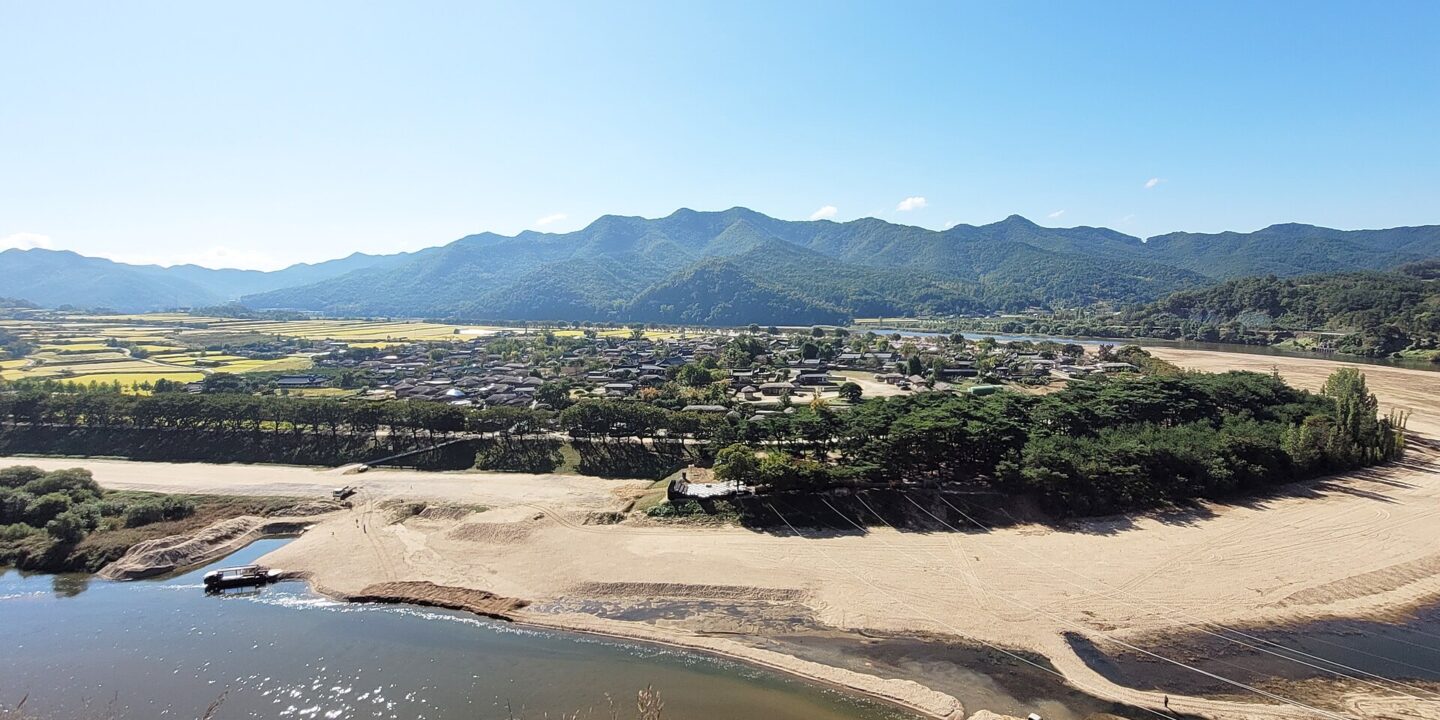
Andong, in the middle of the country, is where Korea’s Confucian heritage feels most intact. Its headline sight, Hahoe Folk Village, is a clan village still lived in by descendants of the Ryu family, set in a loop of the Nakdong River and listed by UNESCO with Yangdong village near Gyeongju as the Historic Villages of Korea. The town also has Byeongsanseowon, a Confucian academy set above the river, and a famous local dish, Andong jjimdak (braised chicken).
Getting there is the catch. The KTX-Eum from Cheongnyangni Station in eastern Seoul takes about two hours, and then Hahoe is roughly an hour further by local bus 210. Check where it boards before you go, since sources disagree on whether it starts at the station or the bus terminal. That is three hours each way to the village.
Verdict: rewarding for anyone who has already done Gyeongju and wants something less visited, but not a day trip. Stay overnight, ideally in a guesthouse within the village.
The big three: Busan, Gyeongju and Jeju
Ask most Koreans where a visitor should go after Seoul and the answer will be one of these three. Each needs at least two nights, and each does something Seoul simply cannot.
Busan: Korea’s second city
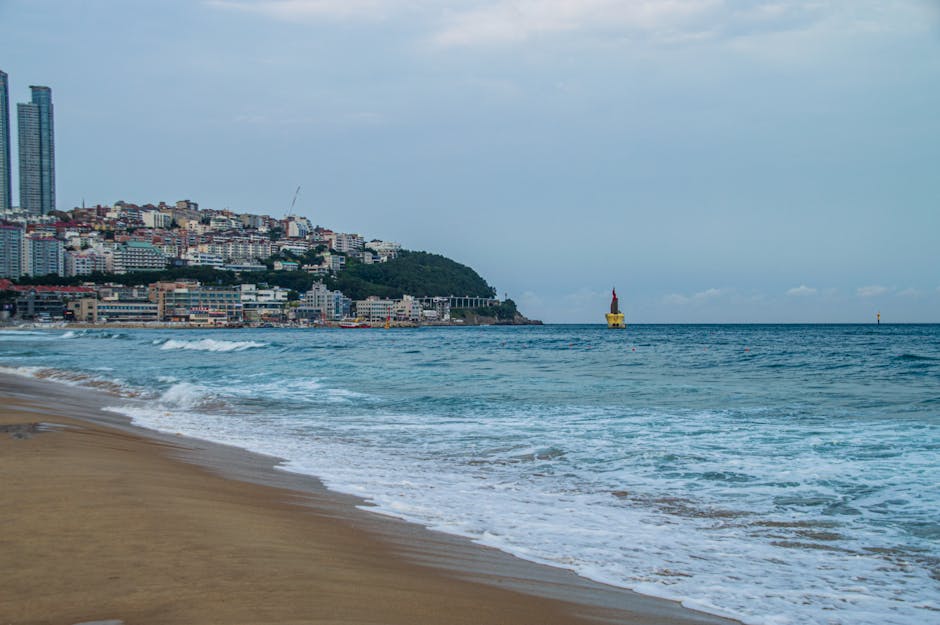
Busan is the obvious second stop, and for good reason. It is the country’s biggest port, its beaches are proper city beaches you can swim from in summer, and its food is built around seafood: Jagalchi Fish Market, raw-fish restaurants by the water, and dwaeji gukbap (pork and rice soup) as the local comfort food. The neighbourhoods are a draw in their own right. Gamcheon Culture Village climbs a hillside in pastel colours, Haeundae and Gwangalli have the beach crowd and the bridge views, and Haedong Yonggungsa is a temple built on the rocks at the edge of the sea.
The fastest KTX from Seoul takes a little over two hours, and the slowest just over three; a standard ticket costs around ₩54,000 each way after the September 2026 fare cut. First trains leave Seoul Station from about 05:30, and the last ones back from Busan run until about 21:00 to 22:00. Your T-money card works on Busan’s subway and buses too, which removes one of the small frictions of switching cities.
Can you do Busan as a day trip? Yes, and the arithmetic is tempting: leave at dawn, have eight or nine hours on the ground, take the last train back. But Busan is a spread-out city of hills and coastline, and those hours go fast between Jagalchi, Gamcheon and Haeundae. A day trip shows you that Busan is worth visiting rather than letting you enjoy it. Two nights is the honest minimum; three lets you add Gyeongju. Our comparison of Seoul vs Busan covers which city suits which kind of traveller if you are thinking of splitting your nights more evenly.
Gyeongju: the museum without walls
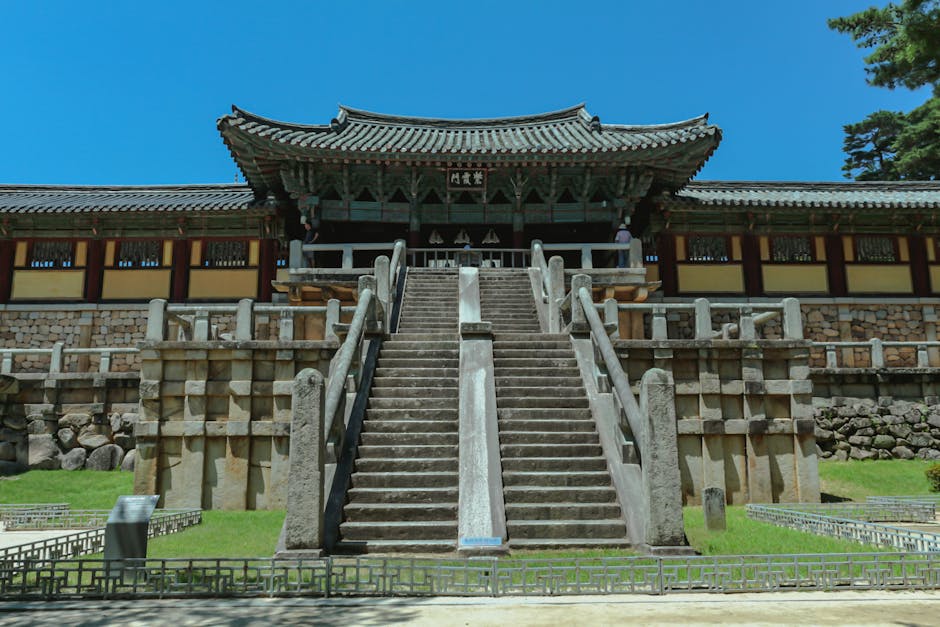
Gyeongju was the capital of the Silla kingdom for close to a thousand years, and the city is still scattered with its remains: grass-covered royal burial mounds in the middle of town, the stone observatory of Cheomseongdae, the reconstructed pavilions of Donggung Palace and Wolji Pond, and on the hills outside, Bulguksa temple and the Seokguram grotto, listed together by UNESCO since 1995. Since the abolition of cultural-heritage entrance fees in 2023, Bulguksa is free to enter.
The KTX takes about two hours to Gyeongju Station, with a standard ticket of around ₩44,500 since the September 2026 fare cut. If you are reading older guides, note that this station used to be called Singyeongju, and it sits well outside the centre, so you will need a local bus or taxi into town. City buses 10, 11 and 12 link the main sights.
Verdict: the single most rewarding place outside Seoul for anyone interested in history, and badly served by a day trip, because the sights are spread out and the two-hour train each way eats the day. Give it two nights, or one night slotted between Seoul and Busan: Gyeongju to Busan is only about 30 minutes on the KTX.
Jeju Island: a different Korea
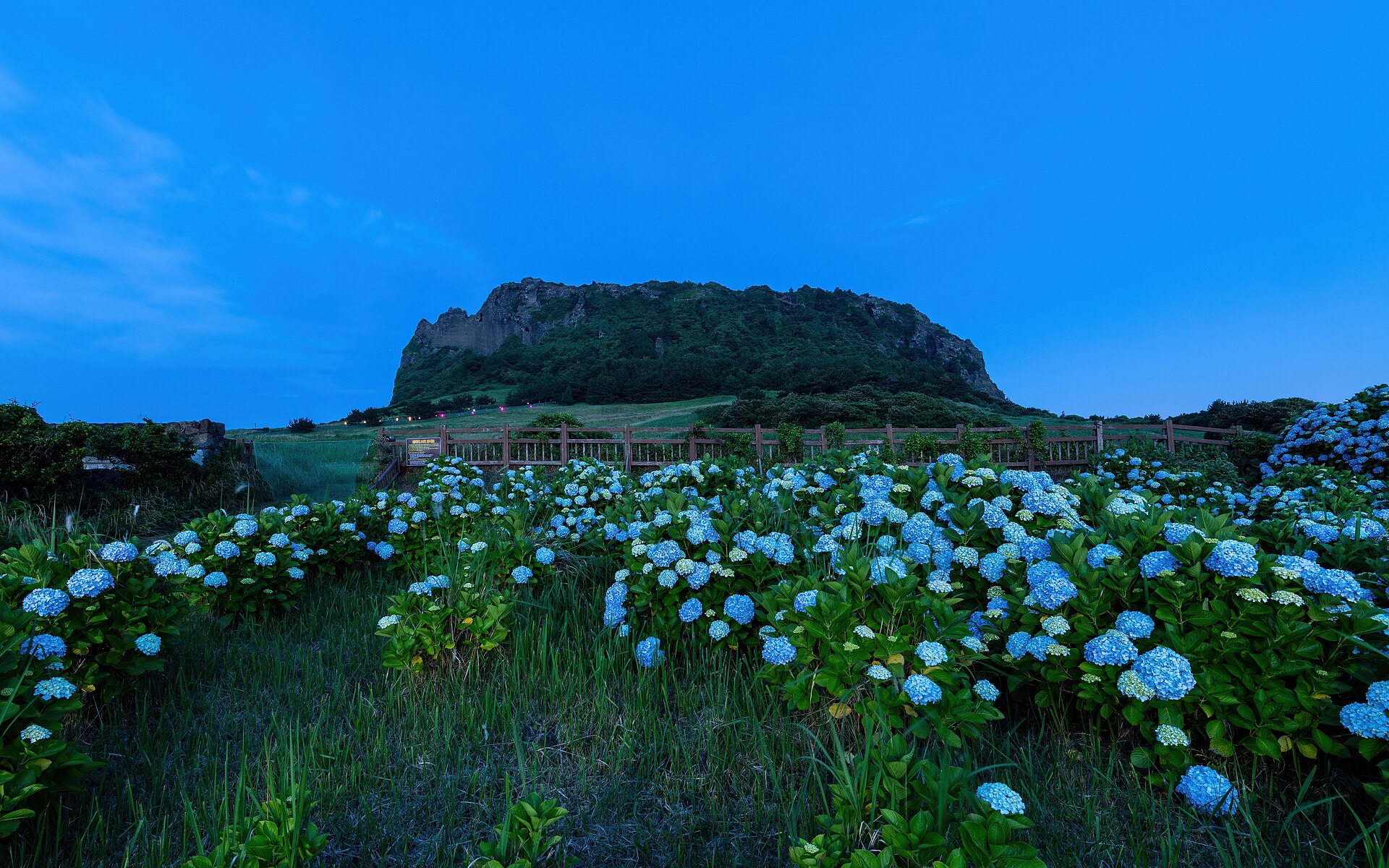
Jeju is a volcanic island off the south coast, with a climate, landscape and culture distinct enough that many Koreans treat it as a holiday abroad. It has Hallasan, the highest mountain in South Korea; the crater of Seongsan Ilchulbong; lava tubes, waterfalls and black-rock coastline; the haenyeo, the island’s women divers; and a network of long-distance walking trails, the Olle routes.
You fly. Flights leave from Gimpo, not Incheon, and take about 65 minutes in the air; the Gimpo to Jeju route was ranked the world’s busiest air route for 2025 by the aviation analysts OAG, so there are departures all day and fares are often low if you book ahead. Gimpo is about 30 minutes from central Seoul on Lines 5 and 9 or the AREX. Once on the island, the public buses are slow and most visitors hire a car or book tours, which is the main extra cost to budget for.
Verdict: Jeju is a destination, not an excursion. Under three nights you spend too much of the trip on airport transfers and island roads. If you only have two spare nights and want nature, Gangneung and Seoraksan are a better return on your time.
Day trip or overnight? The quick sort
The table below is the decision most people actually need. “Ground time” assumes a reasonably early start and the last convenient train or bus back.
| Destination | Return travel time | Ground time on a day trip | Our call |
|---|---|---|---|
| Suwon | About 2 hours by subway | As long as you like | Day trip |
| DMZ | Included in the tour | Set by the tour | Day trip, by tour |
| Nami Island | About 3 hours | 5–6 hours | Day trip |
| Jeonju | About 4 hours by KTX | 6–8 hours | Day trip works; one night is better |
| Gangneung | About 4 hours by KTX-Eum | 6–8 hours | Day trip works |
| Seoraksan and Sokcho | About 5 hours by bus, plus local buses | 4–5 hours | One night |
| Andong and Hahoe | About 6 hours with the local bus | 4–5 hours | One night |
| Gyeongju | About 4 hours by KTX, plus local buses | 5–7 hours | Two nights |
| Busan | About 5 hours by KTX | 8–9 hours with dawn and late trains | Two to three nights |
| Jeju | Flights plus airport transfers, about 4–5 hours | Not worth it | Three nights or more |
One more consideration: day trips are much more pleasant midweek. Korean domestic travel peaks at weekends and on public holidays, when KTX seats sell out and the popular spots fill up. If you have the choice, put your out-of-town days on a Tuesday to Thursday and keep the weekend for Seoul, where the crowds are easier to absorb.
Sample routes for one, two or three extra stops
These are the combinations that work well, assuming you start and finish in Seoul. They are deliberately unambitious; the most common mistake is adding one city too many.
One extra stop (2–3 nights)
- Busan, three nights. The default, and a good one. Ride the KTX down, spend two full days on Busan’s markets, beaches and hillside villages, then either return to Seoul or fly home from Gimhae.
- Jeonju, one or two nights. The best short break for food and traditional architecture. It pairs well with a trip that is otherwise all Seoul.
- Jeju, three nights. For a beach-and-nature break, especially in late spring or early autumn.
Two extra stops (4–5 nights)
- Gyeongju and Busan. The classic. Two nights in Gyeongju, two or three in Busan, then the KTX back to Seoul or a flight out of Busan. The short Gyeongju to Busan hop makes this the most efficient pairing in the country.
- Gangneung and Sokcho. The east coast in one sweep: sea, coffee, Seoraksan and fish markets. Best in autumn.
- Jeonju and Busan. Food-focused, and a good alternative to Gyeongju if you have already seen enough temples.
Three extra stops (a week or more outside Seoul)
- Jeonju, Gyeongju, Busan. A southern loop that covers traditional houses, Silla history and the coast, ending in Busan for a flight home or a ferry onwards.
- Andong, Gyeongju, Busan. The heritage-heavy version, for travellers who want the Joseon and Silla layers of Korean history side by side.
- Busan, then fly to Jeju. Busan has its own flights to Jeju, so you can finish on the island and fly back to Gimpo or connect onward.
For a day-by-day plan that puts these pieces together, see our 10-day Korea itinerary. If you are still deciding how long to spend in the capital before you leave it, the Seoul itineraries hub has plans from one to seven days.
Seasonal routing: where to go when
Korea’s seasons are strong enough to change which destination makes sense. The broad pattern is simple: spring arrives in the south first and moves north, autumn colour starts in the northern mountains and moves south, and summer belongs to the coast.
| Season | Go | Think twice |
|---|---|---|
| Spring (late March to May) | Gyeongju and Busan for early blossoms, Jeonju, Jeju | Peak-blossom weekends, when everywhere is busy |
| Summer (June to August) | Busan, Gangneung and the east coast beaches | Long hikes in the July monsoon and the humid heat |
| Autumn (September to November) | Seoraksan, Nami Island, Andong, Gyeongju | Seoraksan on an October weekend without bookings |
| Winter (December to February) | Gangneung and the Gangwon ski areas, Jeju (the mildest) | Long coastal days with short daylight |
A few specifics are worth knowing. The cherry blossom season in Gyeongju is usually a little earlier than in Seoul, which means a trip south in early April can catch blossoms at both ends; our cherry blossom guide has the Seoul side. The autumn foliage starts in the high mountains of Gangwon and works its way down; Seoraksan peaks from mid-October to early November, and our autumn foliage guide covers where to see it closer to the city. Summer is the rainy season across most of the peninsula, with July the wettest month in Seoul, so build some flexibility into any outdoor day. For the month-by-month picture, see the best time to visit Seoul.
Watch the Korean holiday calendar too. Seollal (Lunar New Year) and Chuseok (the autumn harvest festival) move millions of people around the country at once. Trains sell out weeks ahead, roads clog and some smaller restaurants close. Our guide to Korean holidays and festivals has the dates; if your trip overlaps one, book transport as early as possible or plan to stay put.
Getting around beyond Seoul
Korea’s transport network is fast, punctual and cheap by international standards, and almost everywhere in this guide is reachable without a car. The main question is which mode suits which trip.
Trains: KTX and KTX-Eum
High-speed trains are the backbone. Korail’s KTX runs the main lines south to Busan, southwest to Jeonju and Yeosu, and east to Gangneung, from Seoul Station and Yongsan (and, for some eastern routes, Cheongnyangni). The newer KTX-Eum trains serve Andong and other routes in the east.
The trap is Suseo. Until August 2026 a separate operator, SRT, ran high-speed trains from Suseo Station in southeast Seoul on overlapping routes to Busan and the southwest. KORAIL absorbed it on 1 September 2026, so those trains are now sold as KTX alongside everything else, but they still leave from Suseo. It is handy if you are staying in Gangnam. Check which station your ticket is from before you set off, because Suseo and Seoul Station are a long way apart.
Book on Korail’s own website or the KORAIL+ app, ideally a few days ahead, and further ahead for weekends, holidays and the autumn peak. Standing tickets exist when trains sell out, but two hours standing in a vestibule is not the way to start a trip.
Is a Korail Pass worth it?
The Korail Pass gives unlimited travel on Korail trains for a set number of days, and all versions are flexible, so the days do not have to be consecutive. Prices vary by the number of days and are listed on Korail’s site; a two-day pass is ₩131,000 for an adult. The maths is unforgiving. A simple Seoul to Busan return on standard tickets, at around ₩108,800 since the September 2026 fare cut, is cheaper than the pass, and so is a Seoul, Gyeongju and Busan triangle. The pass only wins when you take two long trains on the same day, such as long day trips from Seoul. Work out your actual journeys before you buy.
Express buses
Buses are the better option for the east coast mountains and some smaller towns. Express buses to Sokcho and Seoraksan leave from Seoul Express Bus Terminal and Dong Seoul Bus Terminal. They are comfortable, frequent and usually cheaper than the train, and premium buses with wide reclining seats run on the busier routes. Traffic is the risk: a Friday evening or holiday departure can add an hour or more.
Domestic flights
Flying makes sense for Jeju and, if you are in a hurry, for Busan. Domestic flights leave from Gimpo, which is much closer to the city than Incheon. Allow for security and the trip to the airport; on the Seoul to Busan run, the KTX is usually faster centre to centre.
Your T-money card
The same T-money card you use on the Seoul subway works on city buses and subways in Busan and most other Korean cities. It cannot be used for KTX tickets, which you buy separately. Our T-money card guide explains where to buy and top up, and the wider getting around Seoul guide covers the capital’s own network.
Luggage between cities
Korean trains have luggage racks at the ends of each carriage, but space is limited at peak times and stairs at smaller stations can be hard work with a big case. Two approaches make multi-city trips much easier. One is to leave your main bag at your Seoul hotel and travel south with a small overnight bag, which works if you are returning to the same hotel. The other is to use a luggage delivery service between hotels or airports; several operate from the big Seoul stations and from the airports, and they turn a trip with a heavy bag into one without.
Budgeting for trips out of Seoul
Travel within Korea is cheap enough that it rarely blows a budget, but it adds up across a two-week trip. Rough return fares for one adult on standard KTX tickets, based on the single fares above:
- Suwon: a few thousand won on the subway.
- Jeonju: about ₩69,000 return by KTX.
- Gangneung: about ₩55,000 return by KTX.
- Gyeongju: about ₩98,000 return by KTX.
- Busan: about ₩108,800 return by KTX.
Accommodation outside Seoul is usually cheaper than in the capital, except in Busan’s beach districts and on Jeju in high season. The bigger hidden costs are local transport in spread-out places (taxis in Gyeongju, a hire car on Jeju) and tours where public transport does not reach (the DMZ, some Seoraksan day trips). For the wider picture, see what a Seoul trip costs.
What is not worth it on a short trip
Every destination in this guide is worth visiting. Not every one is worth visiting on your trip. A few honest warnings:
- Busan as a day trip on a five-day visit. You will spend four to five hours on trains to see three sights in a hurry. With five days in total, stay in Seoul and see it properly, or give Busan two nights.
- Jeju for two nights. Between Seoul to Gimpo, the flight, the car hire and the drive across the island, too much of a two-night trip is logistics. Go for three nights or more, or go another time.
- Four cities in a week. Each change of base costs half a day. Two well-chosen stops beat four rushed ones.
- Seoraksan on an October Saturday without bookings. The park and the buses are at their busiest. Go midweek, or book everything early.
- Nami Island in high summer if you are not a drama fan. It is a pretty park, but it is at its best in autumn and winter.
And one positive note: the easiest wins are also the closest. A morning at Suwon’s fortress and an afternoon back in Seoul is a better day than many of the long excursions sold online.
For the mountain half of the east coast, our Seoraksan National Park and Sokcho guide works through the bus from Seoul, the cable car’s boarding-time system, the Ulsanbawi climb against the flat valley walk, and how much of Sokcho you can realistically add before the last bus home.
Most of the trips on this page start with a KTX ticket, and the booking rules changed in autumn 2026, when SRT was folded into KTX and Korail Talk became the KORAIL+ app. Our KTX guide for visitors covers booking with a foreign card, which Seoul station you need, seat classes, luggage and refunds.
Before you buy a rail pass for any of these trips, run the numbers. Since the September 2026 KTX fare cut, a single long journey costs less than a day of any pass, and our Korail Pass break-even guide works through Busan, the Gyeongju triangle and longer loops to show the one pattern where the pass still pays.
For the most popular trip on this page, our Seoul to Busan guide goes into the detail: the KTX from Seoul Station or Suseo, a one-day route for anyone who must do it as a day trip, and a two-night plan that splits the city between the old port and the beaches.
Frequently Asked Questions
Where should I go in Korea besides Seoul on a first trip?
For most first-time visitors, Busan is the best second stop, ideally with a night in Gyeongju on the way. Busan gives you the coast and the seafood Seoul lacks, and Gyeongju gives you the history. If you only have a day, Suwon’s Hwaseong Fortress is the easiest and best-value trip from the capital.
Can I visit Busan as a day trip from Seoul?
Yes. The fastest KTX takes a little over two hours each way, so you can have eight or nine hours in Busan with an early start and the last train back. It is tiring and rushed, though, because the main sights are spread across the city. Two nights is a much better minimum.
How many days should I spend outside Seoul?
On a one-week trip, two or three nights outside Seoul is a good balance. On a ten-day to two-week trip, you can comfortably spend half your time beyond the capital, with two or three bases. Changing hotels too often eats into the time you gain.
Is Jeju worth it if I only have a few days?
Not really. Jeju needs at least three nights to be worth the flights and the time spent getting around the island. On a shorter trip, Gangneung or Seoraksan gives you sea and mountain scenery with far less travelling.
Do I need a car to travel around Korea?
No, except on Jeju, where a hire car makes life much easier. Everywhere else in this guide is reachable by train, express bus or local bus, and Korea’s public transport is fast and reliable.
Which is better, Gyeongju or Jeonju?
They do different things. Gyeongju is about ancient history, with royal tombs, temples and Silla-era ruins spread over a wide area. Jeonju is about traditional houses and food in a compact, walkable quarter. If you can only choose one, pick Gyeongju for history and Jeonju for atmosphere and eating.
Should I buy a Korail Pass?
Only if you are taking several long train journeys. A single Seoul to Busan return on standard tickets is cheaper than the pass, and so is a Seoul, Gyeongju and Busan triangle. Since the 2026 fare cut the pass only pays for itself when you take two long trains on the same day.
Final Thoughts
The best trips beyond Seoul are the ones that add something the capital cannot. Pick the gap you most want to fill (the sea, the mountains, the old kingdoms, the food) and choose one or two places that fill it properly, with enough nights to enjoy them. For most people that means Busan and Gyeongju, or Jeonju, or Jeju given proper time, with Suwon as the day trip that is always worth slotting in.
Whatever you choose, plan the Seoul part with the same care. Our Seoul travel guide is the place to start.
Photo Credits
Hahoe Folk Village in its river bend, seen from the cliffs above: Hahoe Folk Village 01 by Bernard Gagnon, CC0, via Wikimedia Commons.
Hanok rooftops in Jeonju: Jeonju Hanok Maeul 02 by Bernard Gagnon, CC0, via Wikimedia Commons.
Anmok Beach, Gangneung: Anmok Beach 20220430 001 by Mobius6, CC BY-SA 4.0, via Wikimedia Commons.
Seongsan Ilchulbong behind hydrangeas, Jeju: Hydrangea macrophylla in front of Seongsan Ilchulbong volcano at blue hour in Jeju Island South Korea by Basile Morin, CC BY-SA 4.0, via Wikimedia Commons.