This page gives you three versions of the day: a history-first route built around the palaces, a food-and-neighbourhoods route for people who would rather eat than queue for tickets, and a layover version that works backwards from your flight. Each is timed with subway legs, walking times and a luggage step. Prices were checked in September 2026; treat them as the right order of magnitude rather than to the last won.
Seoul in a day: at a glance
| Item | Cost (₩) | Notes |
|---|---|---|
| T-money card | ~3,000–4,000 plus top-up | Buy at any convenience store; covers subway and buses |
| Subway fare | 1,550 per ride | With T-money, first 10 km; expect 4–6 rides in a day |
| Gyeongbokgung | 3,000 | Closed Tuesdays; free if you wear hanbok |
| Hanbok rental | 15,000–20,000 | Basic outfit for 2–4 hours |
| Namsan cable car | 14,000 return | Or walk up free in 30–40 minutes |
| N Seoul Tower observatory | 21,000 | Optional; the plaza and terraces are free |
| Market lunch | 10,000–20,000 | Gwangjang Market bindaetteok, mayak gimbap, noodles |
| Dinner | 20,000–35,000 | Korean BBQ runs higher with drinks |
| Luggage locker (4 h) | ~2,200–13,000 | Depends on bag size and weekday or weekend |
| Realistic total | ~90,000–140,000 | Per person, excluding hotel and airport transfer |
What one day can and cannot do
Be honest with yourself before you start. In a single day, with sensible pacing, you can comfortably do one palace, one hanok neighbourhood, one market meal and one viewpoint. That is a genuinely good day. What you cannot do is add Gangnam, Hongdae, a second palace, the DMZ or a K-pop agency tour without spending most of it underground.
Seoul is big. Central Seoul — the palaces, Insadong, Myeongdong, Namsan — sits in a compact knot north of the Han River, and that is where one day belongs. Gangnam and Jamsil are 30–45 minutes away by subway; Hongdae is 20–25 minutes west. Every one of those trips costs you roughly an hour there and back, and on a one-day visit that is an hour you do not have.
What to cut, and why
- Gangnam: a business district with good shopping and restaurants but little you cannot see elsewhere. Cut it.
- Lotte World Tower and Seoul Sky: spectacular, but in the far south-east. Namsan gives you a city view without the journey.
- The DMZ: a full-day tour on its own. Not compatible with seeing the city.
- A second palace: Changdeokgung is lovely, but two palaces in a day blur together for most people.
- Hongdae: great at night, but a separate evening. Only swap it in if nightlife matters more to you than Namsan.
If you have any flexibility at all, a second day transforms the trip. Our 3-day Seoul itinerary covers the same ground at a humane pace and adds Hongdae and the river.
Before the day starts
- Get a T-money card from any GS25, CU or 7-Eleven and load ₩20,000. It saves buying single tickets at every station. Our T-money guide explains top-ups and refunds.
- Install Naver Map or KakaoMap. Google Maps will not give you walking directions in Korea, which matters when your whole day is on foot.
- Check the day of the week. Gyeongbokgung is closed on Tuesdays. If your one day is a Tuesday, swap in Changdeokgung or Deoksugung (Deoksugung is closed on Mondays).
- Deal with your bags first if you are between hotels or flights. Details below.
- Wear shoes you can walk 15–20 km in. This is not an exaggeration on a day like this.
Version 1: The history-first day
The classic route and the one most first-time visitors should take. Everything is north of the river and within a few subway stops of everything else. Total walking: around 12–15 km.
08:30 — Breakfast near Gwanghwamun
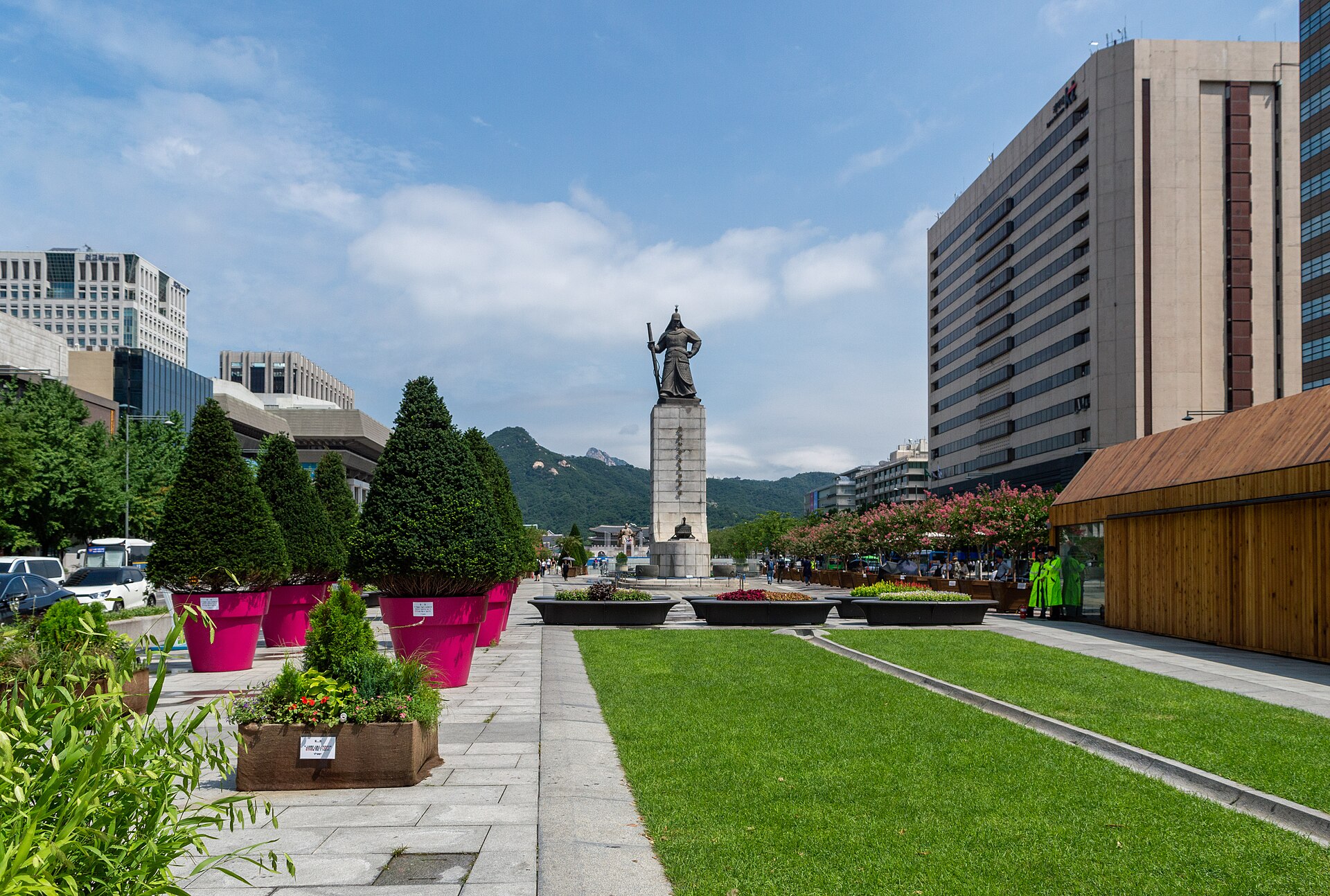
Start at Gwanghwamun Station (Line 5) or Gyeongbokgung Station (Line 3). Eat something quick — a bakery, a convenience-store breakfast, or a bowl of haejangguk (hangover soup) at one of the old restaurants in the backstreets of Seochon or Gwanghwamun, which open early for office workers. Allow 30 minutes.
09:00 — Hanbok, or not
Rental shops around the palace open early. A basic hanbok costs roughly ₩15,000–20,000 for two to four hours and gets you into all five grand palaces free. Whether it is worth it on a one-day visit depends on how much you care about the photographs: it adds 30–40 minutes to fitting and returning, which is real time on a tight day. If you skip it, nobody will think less of you.
09:30 — Gyeongbokgung Palace
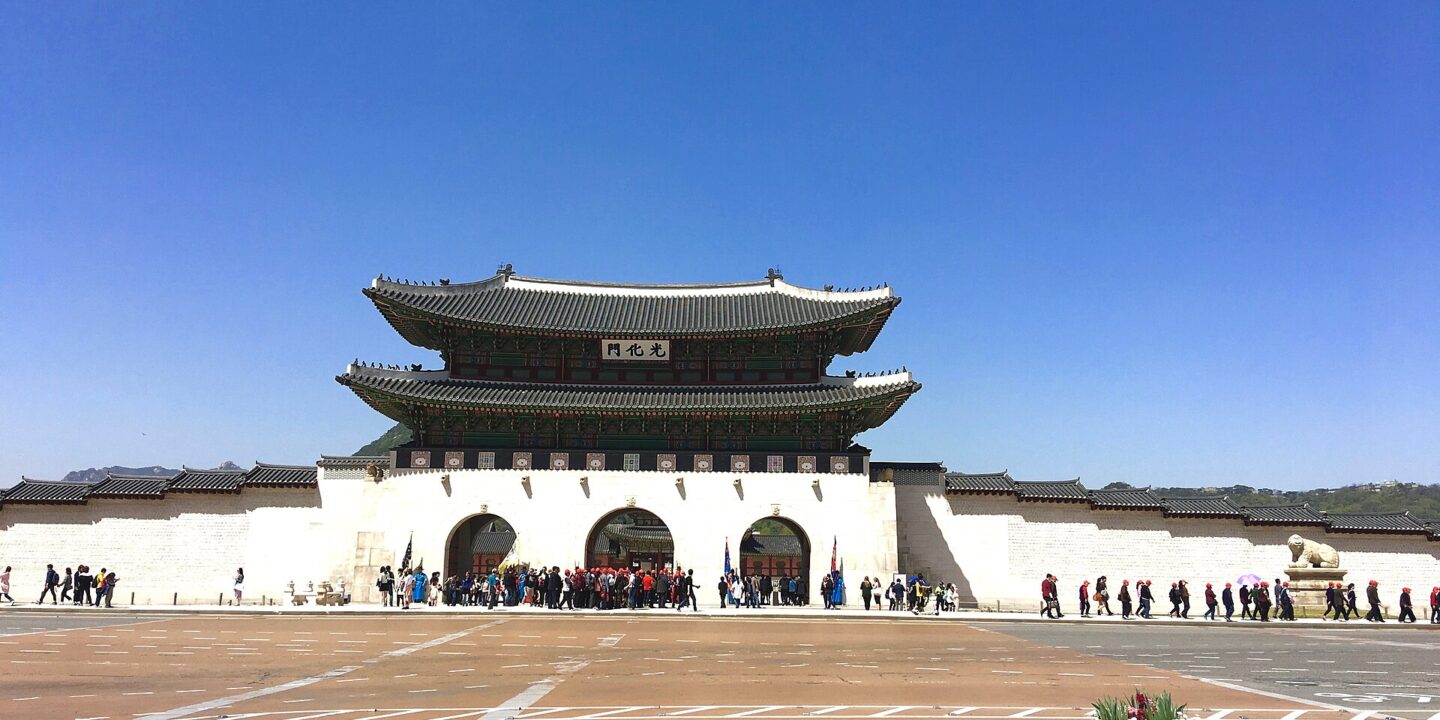
Gyeongbokgung opens at 09:00 and costs ₩3,000. It is the largest and grandest of the palaces, and in a single day it is the one to pick. Walk in through Gwanghwamun Gate, through the throne-hall courtyard of Geunjeongjeon, round to the lotus pond and pavilion of Gyeonghoeru, and out to the north past the residential quarters. Free English-language guided tours run for about 90 minutes if you want context; otherwise allow around 1.5–2 hours on your own.
The Royal Guard changing ceremony at Gwanghwamun Gate is performed at 10:00 and 14:00 and lasts around 20 minutes. It is colourful, free to watch from the square, and easy to time if you arrive at the palace a little before 10:00.
11:45 — Walk to Bukchon Hanok Village
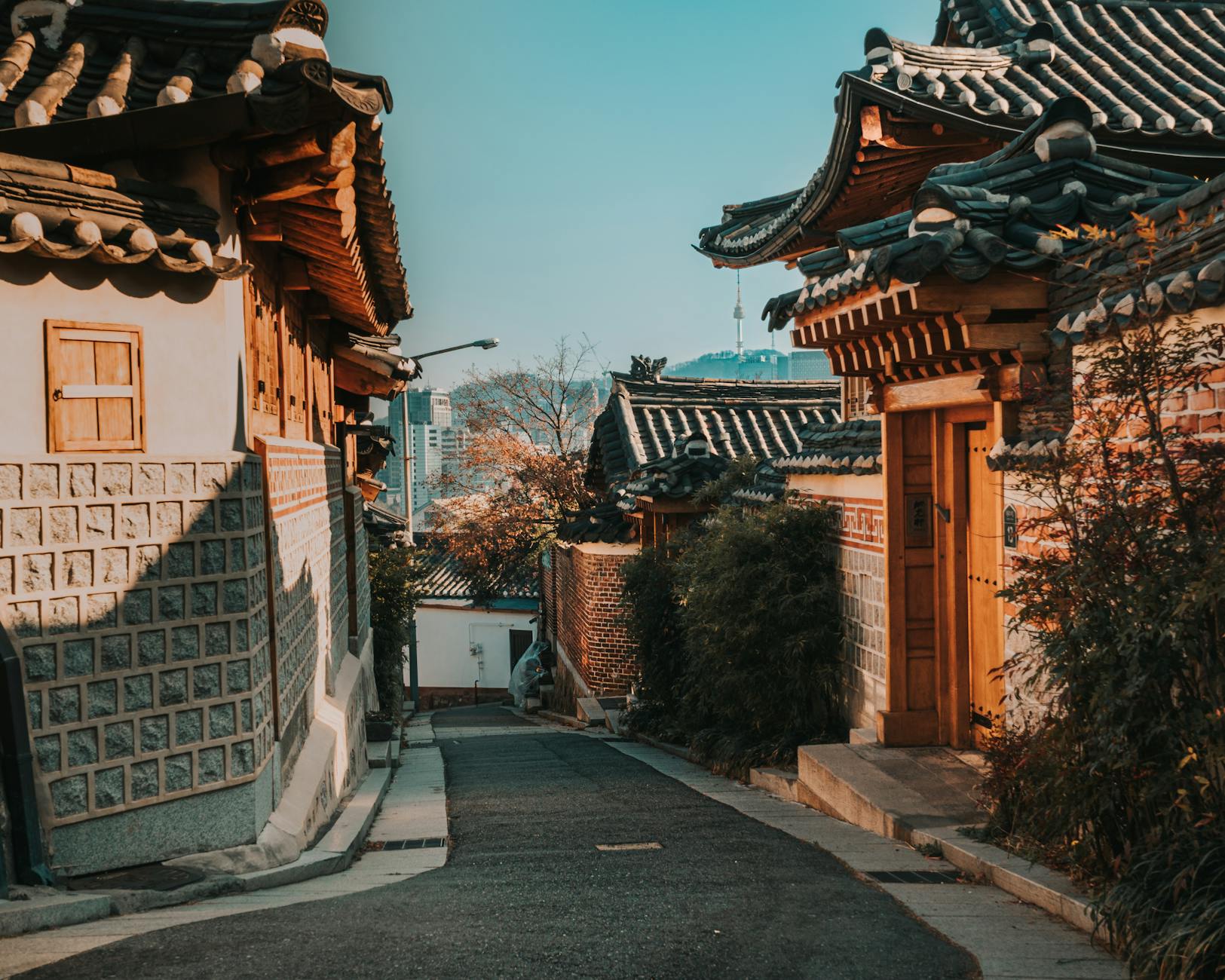
Exit through the palace’s east side and walk 15 minutes to Bukchon, the hillside of 1920s–30s hanok between Gyeongbokgung and Changdeokgung. The best-known viewpoints are along Bukchon-ro 11-gil, where the tiled roofs step down the hill towards the modern city. Bear in mind that people live here: parts of the core residential area now restrict tourist access in the late afternoon and evening, so this is a midday stop, not an evening one. Spend 45 minutes. Our Bukchon guide has the route and the rules.
12:45 — Insadong, and a short lunch
Walk down the hill to Anguk Station and across into Insadong (10 minutes). The main street is touristy but pleasant, and the lanes off it hold tea houses and small restaurants. For a quick lunch, a bowl of sujebi (hand-torn dough soup) or a set of Korean pancakes costs ₩10,000–15,000. Do not linger: this is a 45-minute stop. Our Insadong guide sorts the good tea houses from the filler.
13:45 — Cheonggyecheon to Gwangjang Market
Walk south five minutes to Cheonggyecheon, the restored stream that runs below street level through the middle of the city, and follow it east. It is a pleasant, flat 35–40 minute walk to Gwangjang Market; if your legs are already complaining, take Line 1 from Jonggak to Jongno 5-ga instead (two stops).
14:30 — Gwangjang Market
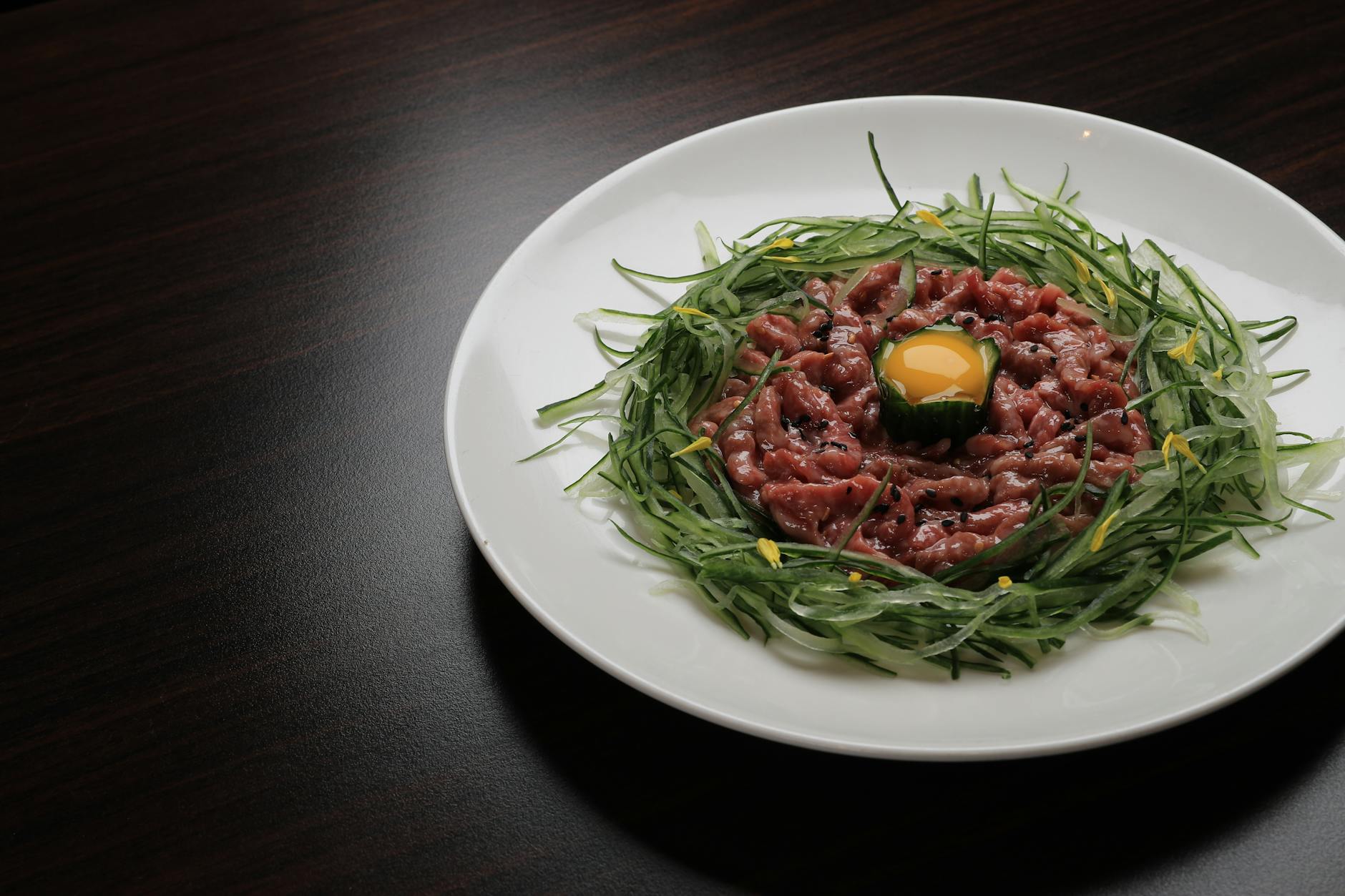
Gwangjang is the most famous food market in Seoul, and for a one-day visitor it is the single best-value hour. Sit at a counter and order bindaetteok (crisp mung-bean pancake, from about ₩5,000–7,000), mayak gimbap (small addictive rice rolls) and, if you are brave, yukhoe (raw beef with egg yolk) on the famous yukhoe alley. You do not need to plan a separate lunch and dinner around this; it can be a second, larger lunch. Allow an hour. Our Gwangjang Market food guide tells you exactly where to sit.
15:45 — Rest, or Myeongdong
This is the point to go back to your hotel for an hour if you can. If you cannot, take Line 2 from Euljiro 4-ga and change to Line 4 at Dongdaemun History & Culture Park for Myeongdong (about 15 minutes), and spend an hour on the shopping streets, where the skincare shops are concentrated and the street-food carts start setting up from late afternoon. Our Myeongdong guide covers what is worth buying.
17:30 — Namsan and N Seoul Tower for sunset
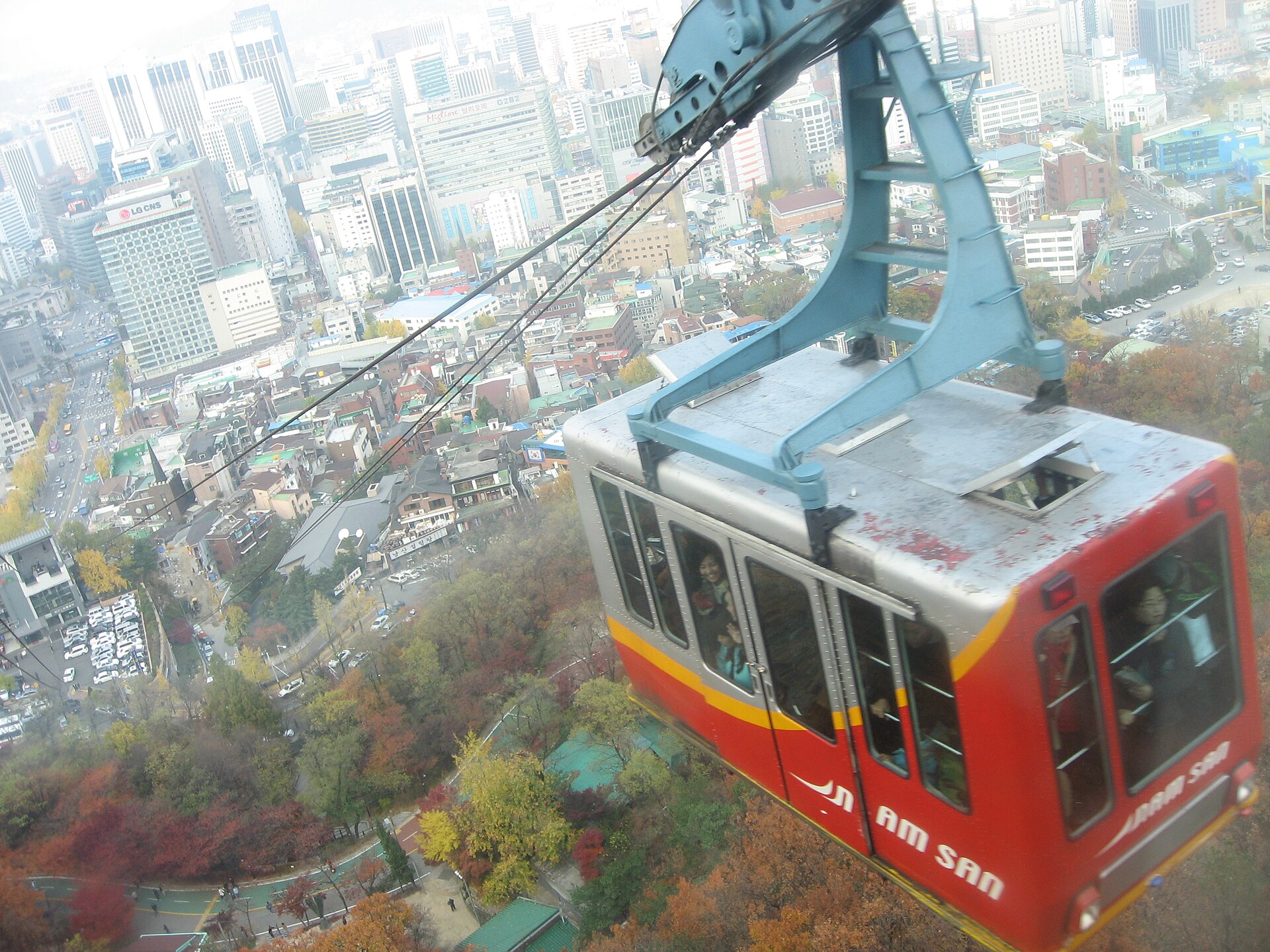
From Myeongdong Station Exit 3, the Namsan cable car base station is about a ten-minute uphill walk. The cable car costs ₩14,000 return and takes three minutes. Alternatively, walk the trail up in 30–40 minutes for free, or take the Namsan shuttle bus. Time your arrival for about 40 minutes before sunset. The plaza, terraces and love-lock fences at the top are free; the observatory inside N Seoul Tower costs ₩21,000 and is worth it only if the air is clear.
19:30 — Dinner
Come back down to Myeongdong or walk into the restaurant streets near Namsan’s lower slopes. For a first night, Korean BBQ is the obvious choice: samgyeopsal (pork belly) grilled at the table, with a beer and a bottle of soju, costs around ₩20,000–35,000 per person. Our Korean BBQ guide explains ordering, cuts and table manners.
21:00 — Optional night walk
If you still have energy, walk 15 minutes to Cheonggyecheon, which is lit at night, or take a taxi to Euljiro for a draught beer in Nogari Alley. Otherwise go to bed. You have earned it.
Version 2: The food-and-neighbourhoods day
For people who would rather eat their way across the city than queue at ticket booths. This version drops the palace interior (you still walk past Gwanghwamun Gate), gives more time to markets and cafes, and finishes in Hongdae rather than on Namsan.
| Time | Stop | Getting there | Eat or drink |
|---|---|---|---|
| 08:30 | Gwanghwamun Square and the palace gate from outside | Gwanghwamun Stn, Line 5 | Coffee and a pastry |
| 09:30 | Seochon lanes west of the palace | Walk 10 min | — |
| 10:30 | Tongin Market and the coin lunchbox (dosirak) café | Walk 10 min | Gireum tteokbokki (oil-fried rice cakes) |
| 12:00 | Bukchon and Samcheong-dong | Taxi or walk 25 min | — |
| 13:30 | Ikseon-dong | Walk 20 min or Line 3 to Jongno 3-ga | Hanok café, sotbap lunch |
| 15:30 | Gwangjang Market | Line 1, Jongno 3-ga to Jongno 5-ga | Bindaetteok, mayak gimbap, makgeolli |
| 17:30 | Seongsu-dong | Line 2 from Euljiro 4-ga, ~20 min | Specialty coffee, pop-up stores |
| 19:30 | Hongdae | Line 2 west, ~35 min | Korean fried chicken and beer, then street performers |
Two notes on this version. First, it involves far more subway time than Version 1, because Seongsu and Hongdae are at opposite ends of Line 2; if you are flagging by 17:00, drop Seongsu and go straight to Hongdae. Second, it is best on a Friday or Saturday, when Hongdae is at its liveliest. On a Monday it can feel flat.
Ikseon-dong is the underrated stop here: a small grid of hanok cafes and restaurants beside Jongno 3-ga, where you can sit inside a traditional house rather than admiring one from the lane. Our Ikseon-dong guide covers which places are worth the queue.
Version 3: The layover day
Incheon Airport is one of the best in the world for a layover, and the connection to the city is fast. But a layover day in Seoul is a matter of arithmetic before it is a matter of sightseeing.
Is your layover long enough?
| Layover | Realistic plan |
|---|---|
| Under 6 hours | Stay airside. Incheon has transit showers, a Korean cultural centre, rest areas and good food. Leaving is not worth the stress. |
| 6–8 hours | Consider the free Korea Tourism Organization transit tour, which handles immigration timing for you. |
| 8–12 hours | A self-guided half day in central Seoul: one palace and one market, or Myeongdong and Namsan. |
| 12–24 hours | Most of Version 1, with a hotel near Seoul Station if it runs overnight. |
The free transit tour
For layovers of roughly 5 to 24 hours, the Korea Tourism Organization runs free transit tours from Incheon, with routes that include Gyeongbokgung and Insadong. You register at the transit tour desk in the airport, show your onward boarding pass, and a guide takes you through the process. Places are limited and tours can fill, so check the current schedule before you land. For many travellers this is the least stressful way to see Seoul between flights.
Doing it yourself: the timeline
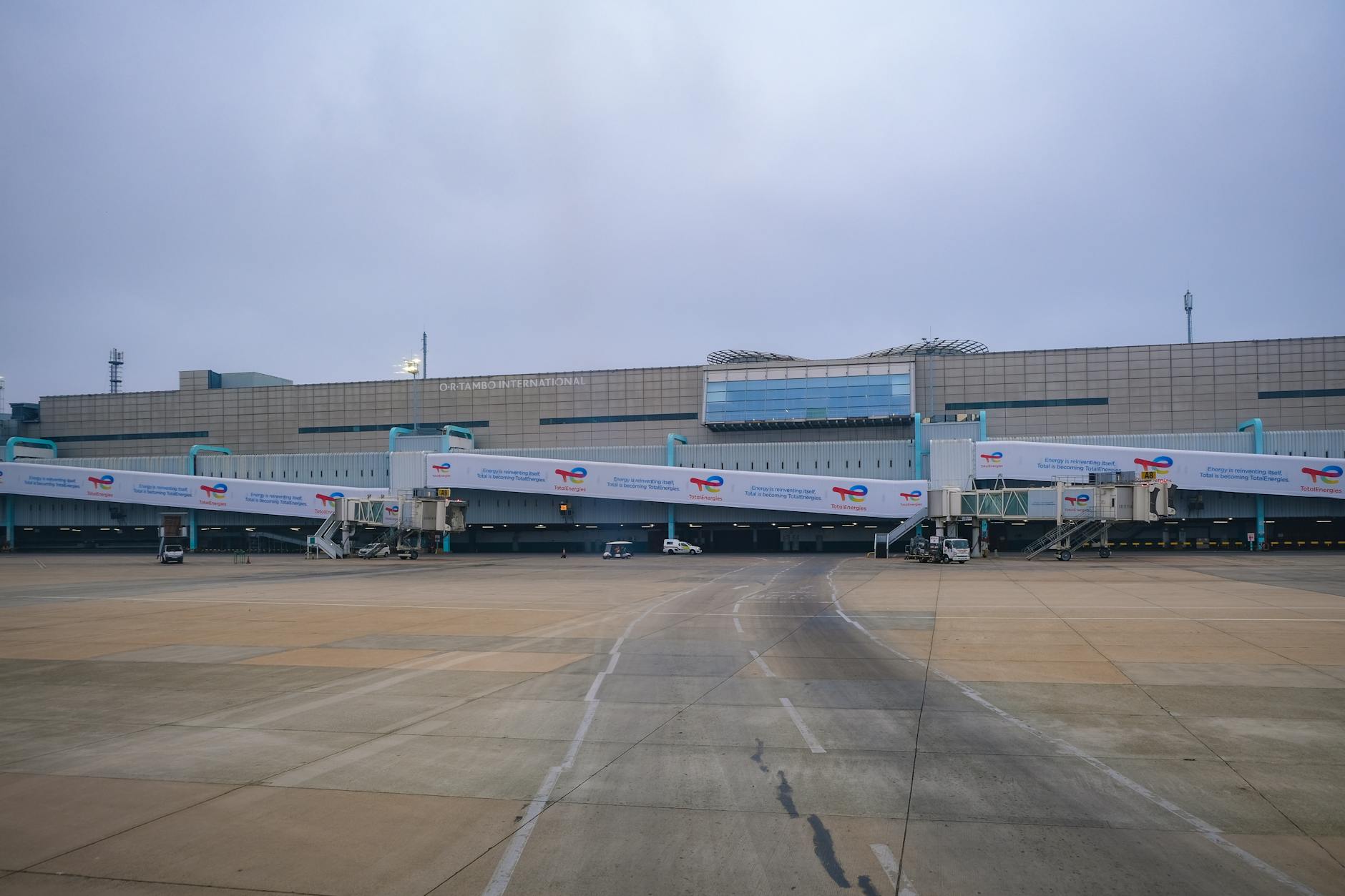
Work backwards from your departure. For an international flight, aim to be back at the airport terminal 3 hours before departure — two is technically possible, but security and immigration at Incheon can back up badly at peak times, and a missed connection is not a risk worth taking for an extra hour in town.
A worked example for a 10-hour layover, landing at 07:00 and departing at 17:00:
- 07:00–08:15 — Land, clear immigration, store bags or keep a small daypack. Allow 60–75 minutes.
- 08:15–09:15 — AREX to Seoul Station. The Express train runs non-stop in about 43 minutes to Terminal 1 (a little longer from Terminal 2); the cheaper all-stop train takes around an hour.
- 09:15–09:45 — Subway to Gyeongbokgung (Line 4 to Chungmuro, change to Line 3), around 20–25 minutes.
- 09:45–11:30 — Gyeongbokgung Palace, including the 10:00 guard ceremony.
- 11:30–12:30 — Walk to Insadong for lunch.
- 12:30–13:00 — Subway back to Seoul Station.
- 13:00–14:00 — AREX back to Incheon.
- 14:00 — At the terminal, three hours before departure.
That is four hours in the city from a ten-hour layover. That is the honest number, and it is still worth it. Our Incheon Airport to Seoul guide compares AREX, airport limousine buses and taxis (a taxi to downtown costs roughly ₩50,000–70,000 and only makes sense for a group).
Entry requirements
Leaving the airport means formally entering South Korea, so you need whatever visa, visa waiver or electronic travel authorisation applies to your passport. Rules for the K-ETA have changed several times in recent years; check them before you fly. Our Seoul visa requirements guide summarises the current position.
The luggage step
The most common way to ruin a one-day visit is to spend it dragging a suitcase. Sort it out before you start.
- Seoul Station lockers: several operators run lockers and staffed storage in and around the station. Automated lockers cost roughly ₩2,200–6,100 for four hours depending on size and whether it is a weekday or weekend; staffed services such as T-Luggage charge roughly ₩3,000–13,000 for four hours and run about 09:00–22:00.
- Subway station lockers: many larger stations, including Myeongdong and Hongik University, have smart lockers that take T-money or cards. Large suitcase-sized lockers fill quickly after 10:00.
- Airport storage: if you are on a layover, leave the big bag at Incheon. Both terminals have staffed luggage storage.
- Luggage delivery: services such as Safex and T-Luggage deliver bags between the airport, stations and hotels. Delivery from Seoul to Incheon Terminal 2 starts from around ₩20,000 for a small bag, which is money well spent if it frees your last day.
- Your hotel: almost every hotel and most guesthouses will hold bags before check-in and after check-out, free. Ask.
Swaps for rain, heat and winter
- Rain: swap Bukchon for the National Museum of Korea (free, huge, 15 minutes from Seoul Station on Line 4 to Ichon) and Namsan for the underground shopping arcades. Gwangjang Market is covered.
- Summer heat (July–August): start at 08:00, do the palace first, spend 13:00–16:00 indoors — a museum, a jjimjilbang or a café — and come out again for sunset.
- Winter (December–February): the palace closes at 17:00 (last entry 16:00) and it is dark by 17:30, so move Namsan earlier and give the evening to a market, a warm restaurant or a bathhouse.
- Tuesday: Gyeongbokgung is closed. Use Changdeokgung, or Deoksugung and its guard ceremony, instead.
Where to stay for one night
If your one day comes with one night, stay central. Myeongdong or around Seoul Station are the practical picks: both are on the AREX or one change from it, both put you walking distance or one stop from Namsan, and both have plenty of mid-range hotels. Jongno and Insadong suit the history-first version best. Avoid Gangnam for a single night — it is simply too far from everything on this page. Our where to stay in Seoul guide goes neighbourhood by neighbourhood.

The morning of this itinerary leans heavily on Gyeongbokgung, so it is worth ten minutes of reading before you go. The palace is closed on Tuesdays, the guard ceremony runs at 10:00 and 14:00, and the free English tours leave at 11:00, 13:30 and 15:30. Our Gyeongbokgung Palace guide has a two-and-a-half-hour route through the grounds, plus a ninety-minute version for days when the schedule is tight.
Frequently asked questions
Is one day in Seoul worth it?
Yes, as long as you keep it to central Seoul. One palace, one hanok neighbourhood, a market and Namsan make a full, memorable day. It will feel like a trailer for a much longer trip, which is no bad thing.
What is the one thing I should not miss with one day in Seoul?
Gyeongbokgung Palace. It is the grandest of the five palaces, it costs ₩3,000, and it is the most direct way into Seoul’s history. If you had to pick one other thing, make it a meal at Gwangjang Market.
Can I see Seoul on a layover?
With at least 8 hours, yes, if your passport allows entry. Allow about an hour each way on AREX, plus immigration, and be back at Incheon three hours before your flight. With 5–24 hours, the free KTO transit tour is the easiest option.
Should I rent a hanbok for just one day?
Only if photographs in hanbok matter to you. It costs ₩15,000–20,000 and gets you into the palace free, but fitting and returning takes 30–40 minutes out of a tight day.
How do I get around Seoul in one day?
By subway and on foot. Buy a T-money card at a convenience store, use Naver Map or KakaoMap for directions, and expect four to six subway rides at ₩1,550 each. Taxis are cheap by international standards and useful for short hops late in the day. Our Seoul subway guide covers the basics.
Is it better to do Gangnam or the palaces in one day?
The palaces. Central Seoul has far more to see per hour, and Gangnam is 30–45 minutes away each way. Gangnam is worth time on a longer trip, not on a one-day visit.
Final thoughts
A single day in Seoul rewards the people who plan it lightly and walk it hard. Pick one palace, eat at a market counter, climb Namsan for the lights and stop trying to add things. You will leave having seen a fraction of the city and wanting to come back for the rest, which is exactly the right outcome. When you do, our Seoul itineraries hub has routes for three, five and seven days, and our first-timer’s tips fill in the practical gaps.
Photo Credits
Gwanghwamun Gate at Gyeongbokgung Palace: Gwanghwamun Plaza – Gwanghwamun gate – Gyeongbokgung Palace 2016 – hschrijver by Hschrijver, CC BY-SA 4.0, via Wikimedia Commons.
Gwanghwamun Square with the Admiral Yi Sun-sin statue: Gwanghwamun Plaza, Seoul by Tristan Surtel, CC BY-SA 4.0, via Wikimedia Commons.
Namsan cable car above central Seoul: Korea-Seoul-Namsan Cable Car-01 by Andrew Bell, CC BY 2.0, via Wikimedia Commons.