Below you will find the current pass prices and rules, the cost of each pass per day of travel, worked examples for the routes visitors actually take, a break-even table, and the reservation rules and gotchas that the price comparison leaves out. Fares were checked in October 2026 against KORAIL’s own pass pages and press reports of KORAIL’s new fare table. Prices change, so confirm both the pass price and your point-to-point fares before you buy.
What the Korail Pass is in 2026
The Korail Pass is KORAIL’s rail pass for foreign visitors, sold on its booking page as the KORAIL PASS FX. You choose a number of travel days (two, three, four or five) and use them on any days you like within a ten-day window. The old split between consecutive passes and flexible passes has gone: all four types are flexible.
On each travel day you can ride KTX and other KORAIL trains in standard class as often as you like. Subway lines and temporary tourist trains are not covered. You buy the pass online with your passport details, which must match the passport you travel with, and you must carry a printed pass.
Prices
These are KORAIL’s adult prices, as announced in December 2025. Check the current price on KORAIL’s pass booking page before you pay.
| Pass | Adult price | Cost per travel day |
|---|---|---|
| 2 days within 10 | ₩131,000 | ₩65,500 |
| 3 days within 10 | ₩186,000 | ₩62,000 |
| 4 days within 10 | ₩234,000 | ₩58,500 |
| 5 days within 10 | ₩275,000 | ₩55,000 |
The booking page offers adult and child passes. Older guides describe youth and group “saver” versions; check the booking page for what is on sale when you buy rather than relying on those. There is also a KORAIL PASS+, which bundles the pass with a transport card for ₩8,000 more. If you have not already got a T-money or similar card for the subway, that is a reasonable add-on rather than a reason to buy the pass.
What the trains cost without a pass
On 1 September 2026 KORAIL absorbed the rival SRT operator and cut KTX fares by about 10% on average. Here are standard fares for the main routes, as reported from KORAIL’s new fare table. Different outlets round them slightly differently, so treat them as the right figure to within a few hundred won.
| Route | Standard fare, one way |
|---|---|
| Seoul–Busan | ₩54,400 (one outlet gives ₩53,820) |
| Seoul–Gyeongju | About ₩44,500 |
| Yongsan–Gwangju Songjeong | About ₩42,000 |
| Seoul–Dongdaegu (Daegu) | ₩39,000 |
For any other route, including Jeonju, Gangneung, Andong and Yeosu, price the journey in the KORAIL+ app or on KORAIL’s website before you decide. It takes a minute. Our KTX booking guide walks through how.
The break-even rule
Forget the total for a moment and look at the cost per travel day: between ₩55,000 (the five-day pass) and ₩65,500 (the two-day pass). Now compare that with the most expensive single journey in the table above: Seoul–Busan, at ₩54,400. It is cheaper than a day of even the five-day pass.
That gives you the whole decision in one line: the pass only pays off on days when you spend more on trains than the pass costs per day, and with fares at this level that means taking two long trains on the same day. One long train a day, which is how many people travel, will almost always come out cheaper on point tickets.
Here is the threshold you need to beat, per travel day, for each pass:
- 2-day pass: more than ₩65,500 of train travel on each of the two days.
- 3-day pass: more than ₩62,000 on each of the three days.
- 4-day pass: more than ₩58,500 on each of the four days.
- 5-day pass: more than ₩55,000 on each of the five days.
It is an average, so one big day can carry a lighter one. But if most of your travel days involve a single journey of ₩40,000 to ₩55,000, the pass cannot win.
Worked examples
Example 1: Seoul to Busan and back
This is the classic case: a few days in Seoul, a couple of nights in Busan, then back to Seoul for the flight home.
| Cost | |
|---|---|
| Seoul–Busan, standard | ₩54,400 |
| Busan–Seoul, standard | ₩54,400 |
| Point tickets total | ₩108,800 |
| 2-day pass | ₩131,000 |
| Verdict | Point tickets win by ₩22,200 |
And that is before you consider that point tickets come with a guaranteed seat on the train of your choice, booked up to two months ahead, while the pass leaves you reserving seats under its own limits. For a single Busan trip, skip the pass. Our Seoul vs Busan guide covers how long to give each city.
Example 2: the Seoul, Gyeongju and Busan triangle
Another common route: Seoul to Gyeongju for the Silla tombs and temples, on to Busan by the coast, then back to Seoul. Before the fare cut, guides often called this one roughly break-even. It is not any more.
| Cost | |
|---|---|
| Seoul–Gyeongju | About ₩44,500 |
| Gyeongju–Busan | A short hop: price it in KORAIL+ |
| Busan–Seoul | ₩54,400 |
| Point tickets total | About ₩98,900, plus the Gyeongju–Busan fare |
| 3-day pass (one journey a day) | ₩186,000 |
| 2-day pass (if you go Gyeongju–Busan–Seoul in one day) | ₩131,000 |
For the three-day pass to win, the Gyeongju–Busan leg would have to cost more than ₩87,100. Even squeezed into a two-day pass, it would need to cost more than ₩32,100, and this is a short regional hop, a fraction of the Busan–Seoul distance. Either way, buy point tickets. The 10-day Korea itinerary follows exactly this route.
Example 3: a five-stop loop, one train a day
Suppose you take a longer trip: Seoul to Gyeongju, Gyeongju to Busan, Busan back to Seoul, then a few days later a return trip from Yongsan to Gwangju. That is five journeys on five separate days.
| Cost | |
|---|---|
| Seoul–Gyeongju | About ₩44,500 |
| Gyeongju–Busan | Short hop: price it in KORAIL+ |
| Busan–Seoul | ₩54,400 |
| Yongsan–Gwangju Songjeong | About ₩42,000 |
| Gwangju Songjeong–Yongsan | About ₩42,000 |
| Point tickets total | About ₩182,900, plus Gyeongju–Busan |
| 5-day pass | ₩275,000 |
The pass would need the Gyeongju–Busan leg to cost more than ₩92,100. It does not come close. A lot of travel does not make a pass worthwhile on its own; a lot of travel on the same day does.
Example 4: where the pass wins, long day trips from Seoul
Now take a different traveller. They are staying in Seoul the whole time and making long day trips by KTX: Busan one day, Daegu another, out in the morning and back at night.
| Cost | |
|---|---|
| Day 1: Seoul–Busan and back | ₩108,800 |
| Day 2: Seoul–Dongdaegu and back | ₩78,000 |
| Point tickets total | ₩186,800 |
| 2-day pass | ₩131,000 |
| Verdict | The pass wins by ₩55,800 |
This is the pattern the pass rewards: two long journeys on each travel day. Add a third day, say a return trip to Gwangju for about ₩84,000, and the three-day pass at ₩186,000 against roughly ₩270,800 in tickets wins by a similar margin. The catch is that this is a punishing way to see Korea. A Busan day trip means more than four hours on trains for a few hours in the city, and our guide to where to go beyond Seoul explains why most of these places deserve a night.
Break-even table by itinerary
| Itinerary | Point tickets | Cheapest suitable pass | Winner |
|---|---|---|---|
| Seoul–Busan return, two days | ₩108,800 | ₩131,000 (2-day) | Tickets, by ₩22,200 |
| Seoul–Gyeongju–Busan–Seoul, three days | About ₩98,900 + Gyeongju–Busan | ₩186,000 (3-day) | Tickets |
| Seoul–Gwangju Songjeong return, two days | About ₩84,000 | ₩131,000 (2-day) | Tickets, by about ₩47,000 |
| Five-stop loop, one train a day | About ₩182,900 + Gyeongju–Busan | ₩275,000 (5-day) | Tickets |
| Busan and Daegu day trips from Seoul | ₩186,800 | ₩131,000 (2-day) | Pass, by ₩55,800 |
| Busan, Daegu and Gwangju day trips from Seoul | About ₩270,800 | ₩186,000 (3-day) | Pass, by about ₩84,800 |
If your plan does not look like the bottom two rows, buy point tickets.
The rules that matter more than the price
Even when the pass wins on paper, its rules can make it less useful than the numbers suggest. Read these before you buy.
Seat reservations: two a day
The pass lets you reserve up to two seats per day. Beyond that, you can still ride, but only on standing tickets, which are unlimited. For the day-trip pattern that makes the pass worthwhile, two reservations is exactly enough: one out, one back. Add a third leg on the same day and you are standing.
Reserve seats as early as you can. A pass gives you the right to ride, not a guaranteed seat, and on Friday evenings, weekends and holidays the seats you want may already have gone to people who bought tickets two months ago.
Holidays
Around Seollal and Chuseok, Korea’s two great family holidays, trains on popular routes often sell out. A pass does not change that. If your dates overlap either holiday, read the pass terms for any holiday restrictions and assume you will be standing unless you reserve very early.
The former SRT trains from Suseo
Until August 2026, the SRT trains from Suseo in southern Seoul were run by a different company and were not covered by the pass. Since 1 September 2026 they are part of KTX. Before you plan around Suseo departures with a pass, check the current pass terms on KORAIL’s site or ask at a station whether those trains are included.
Printed pass, passport, no changes
- You must carry a printed pass.
- The passport details on the pass must match the passport you carry.
- You cannot change the pass type, passenger type or personal details after buying.
- There is no refund fee up to the day before the pass’s starting date, and no refund is possible after the starting date.
First class
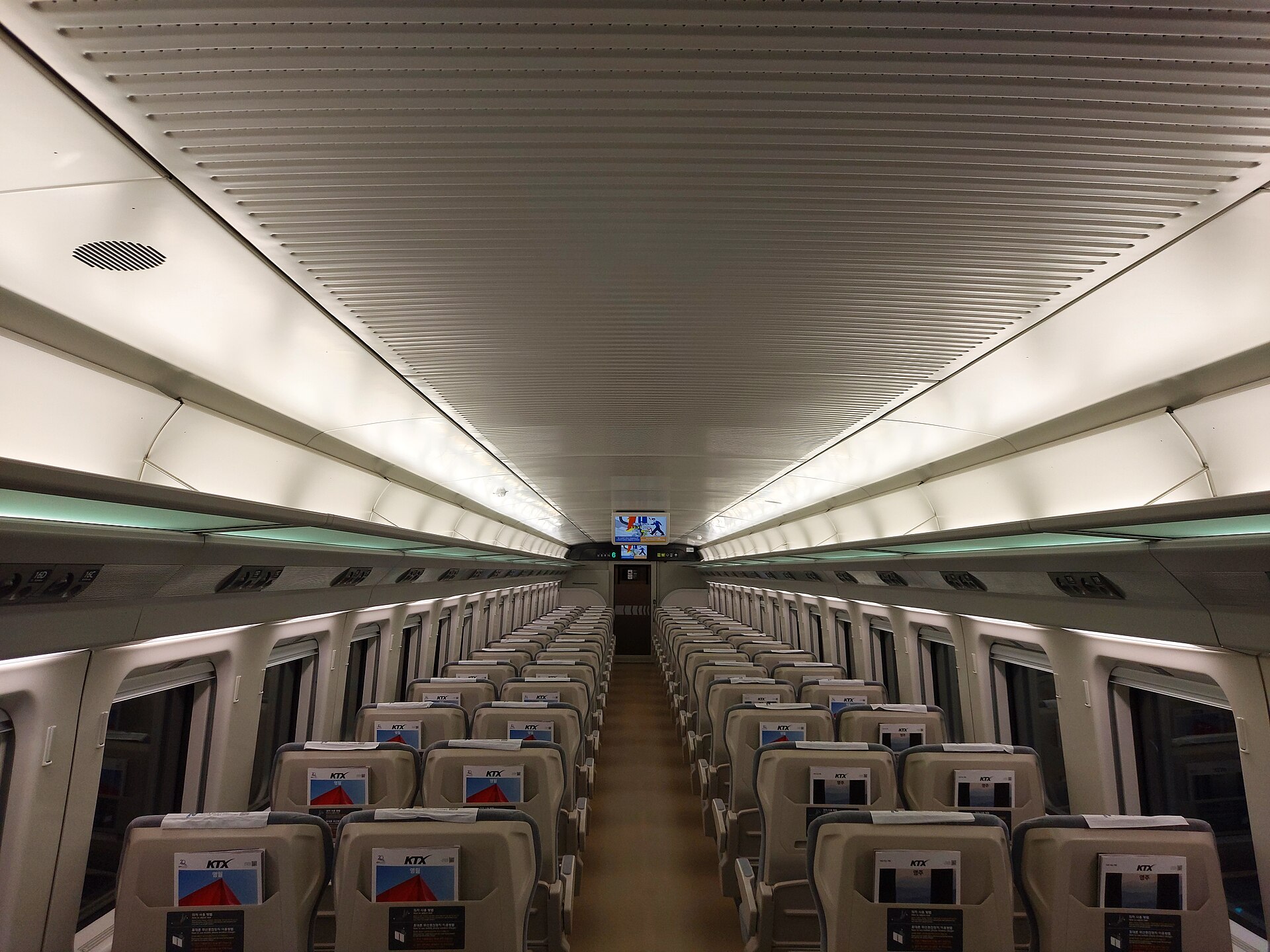
The pass covers standard class. First-class seats cost extra, though pass holders get a reduction; check the terms for the current rate. If you were hoping the pass would make first class affordable, price a first-class point ticket for comparison.
If you do buy the pass: getting the most from it
If your plans fit the day-trip pattern, the pass can save real money. A few habits make sure it does.
Plan the travel days around long return trips
Every travel day costs you between ₩55,000 and ₩65,500 of the pass price, so make each one count. Put your longest out-and-back trips (Busan, Daegu, Gwangju) on pass days, and pay for short or cheap journeys, such as a hop to Suwon or Gyeongju to Busan, with ordinary tickets on other days. A day with one short train on the pass is a day of the pass wasted.
Use both seat reservations
Two reservations a day fits a day trip exactly: one seat out, one seat back. Reserve both as soon as you know your trains, especially for the evening return, which is the leg most likely to sell out on a Friday or Sunday. A standing ticket back from Busan after a long day of sightseeing is a miserable way to finish.
Keep the ten-day window in mind
The travel days must all fall within ten days. If your trip is longer, decide which ten-day stretch has the long journeys in it, and start the pass then.
Carry the printed pass and your passport together
The pass is tied to your passport details, and it must be printed. Keep the printout with your passport rather than in your hotel room.
Price the alternative one more time
Before you buy, write down every train you expect to take, look up each fare in the KORAIL+ app and add them up. If the total does not beat the pass price, do not buy it. If it beats it only narrowly, consider whether you value the freedom of the pass, with its two-reservations-a-day limit, more than the certainty of booked seats on the trains you want.
A sample plan where the pass pays
Here is what a pass-friendly trip looks like in practice: seven nights based in Seoul, with three long day trips spread across the week.
- Days 1–2: Seoul. No trains.
- Day 3 (pass day 1): an early KTX to Busan, a day around the port and the beaches, an evening train back. About ₩108,800 on tickets.
- Day 4: Seoul, recovering.
- Day 5 (pass day 2): a return trip to Daegu. ₩78,000 on tickets.
- Day 6 (pass day 3): a return trip from Yongsan to Gwangju. About ₩84,000 on tickets.
- Day 7: Seoul, last-day shopping.
That is about ₩270,800 in point tickets against ₩186,000 for a three-day pass, a saving of roughly ₩84,800. It also means three days with several hours on trains each. Many visitors would get more out of the same week by spending two nights in Busan and taking one train each way, even though the pass would not pay. The maths favours the pass; the trip may not.
Who should buy the pass
- Day-trippers based in Seoul who plan two or more long return trips by KTX on separate days.
- Rail enthusiasts who want to ride as much of the network as possible in a short time, several trains a day.
- Travellers who value flexibility over savings, and are happy to pay a premium for not pricing each journey, within the two-reservations-a-day limit.
Who should not
- Anyone doing one return trip from Seoul, to Busan or anywhere else.
- Anyone moving between bases one train at a time: the Gyeongju and Busan triangle, or a longer loop.
- Anyone travelling around Seollal or Chuseok and expecting a seat.
- Anyone whose plans include a lot of local buses or subways, neither of which the pass covers.
Cheaper ways to save on Korean trains
If the pass does not fit, there are simpler savings:
- Book early. You get the train and seat you want, and you avoid paying for a first-class seat because standard sold out.
- Travel midweek. Weekday trains are less crowded, and refund fees for weekday tickets are lower.
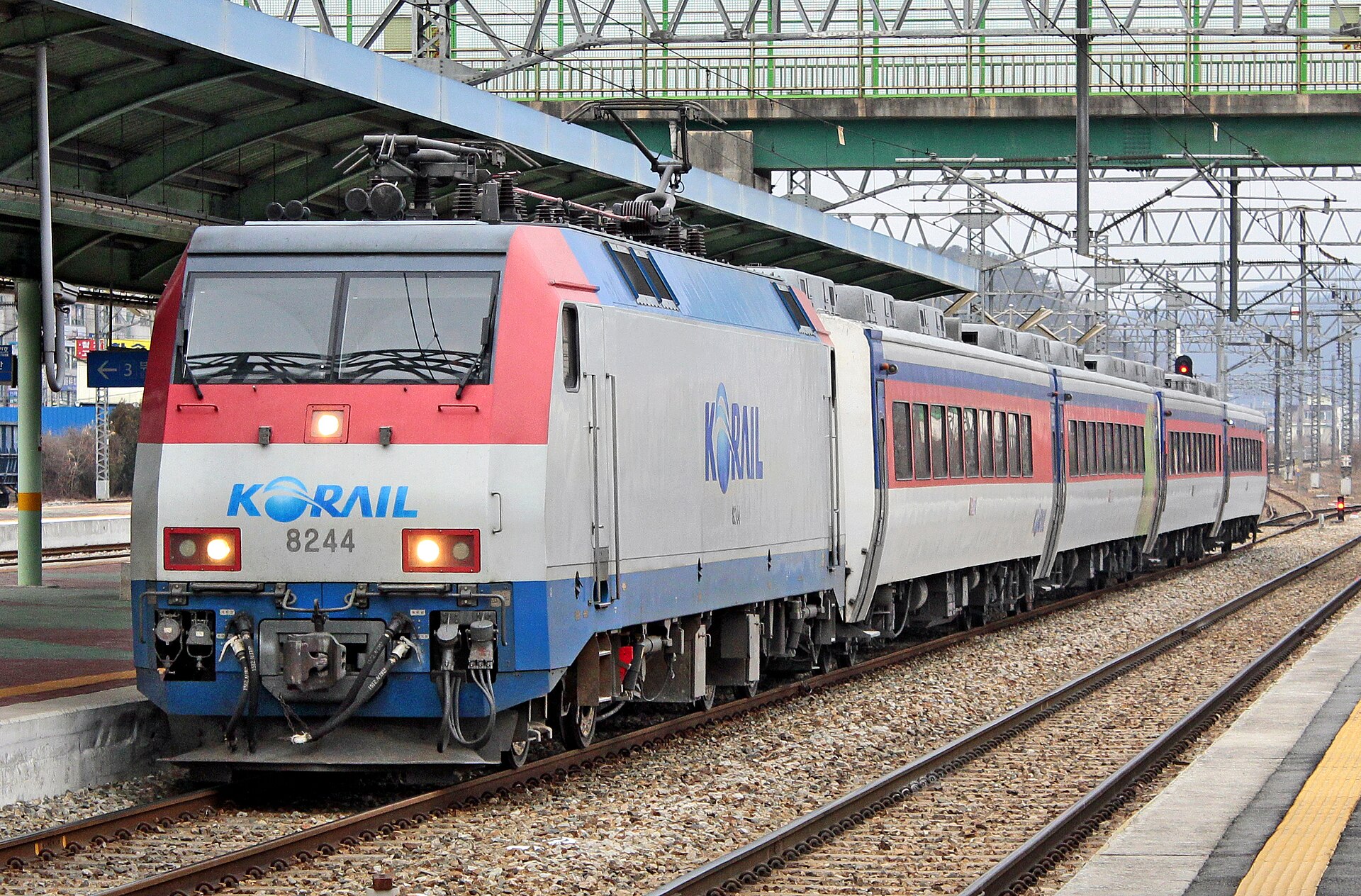
- Use slower trains for short hops. ITX and Mugunghwa services cost less than the KTX, and on short routes the time difference is small.
- Take the express bus where there is no KTX, or where you are not in a hurry. Our Seoraksan and Sokcho guide covers the bus option for the east coast.
- Count the whole trip. Our guide to how much a Seoul trip costs puts rail in the context of the rest of your budget, and Seoul’s discount passes may save more inside the city.
Frequently Asked Questions
Is the Korail Pass worth it for Seoul to Busan?
No. A standard Seoul–Busan ticket costs ₩54,400 each way since the September 2026 fare cut, so a return is ₩108,800, against ₩131,000 for the cheapest two-day pass. Point tickets win by ₩22,200.
How much is the Korail Pass?
KORAIL’s adult prices, announced in December 2025, are ₩131,000 for two travel days, ₩186,000 for three, ₩234,000 for four and ₩275,000 for five, all to be used within ten days. Check the booking page for the current price.
Are all Korail Passes flexible now?
Yes. All four types let you choose your travel days within a ten-day window; there is no longer a separate consecutive-day pass.
When does the Korail Pass pay off?
When you take two long trains on the same day, typically a long day trip out and back from Seoul, on most of your travel days. With one train a day, point tickets are almost always cheaper.
How many seats can I reserve with the Korail Pass?
Up to two per day. Standing tickets are unlimited.
Does the Korail Pass cover the subway?
Subway lines are not covered. If you want a transport card with the pass, the KORAIL PASS+ adds one for ₩8,000.
Can I use the Korail Pass on trains from Suseo?
Those trains ran as SRT, outside the pass, until KORAIL absorbed SR on 1 September 2026. Check the current pass terms on KORAIL’s site before relying on Suseo departures.
Do I need to print the Korail Pass?
Yes. KORAIL requires a printed pass, and the passport details on it must match the passport you carry.
Final Thoughts
The Korail Pass made more sense when fares were higher. Since the September 2026 fare cut, a single long journey costs less than a day of any pass, so the travellers who come out ahead are the ones who ride two long trains in a day, several days running. If that is you, the pass is a genuine bargain. If you are like most visitors, moving from Seoul to Busan or around the Gyeongju triangle one train at a time, book point tickets early, keep the flexibility of a fixed seat on the train you want, and spend the difference on dinner in Busan.
Photo Credits
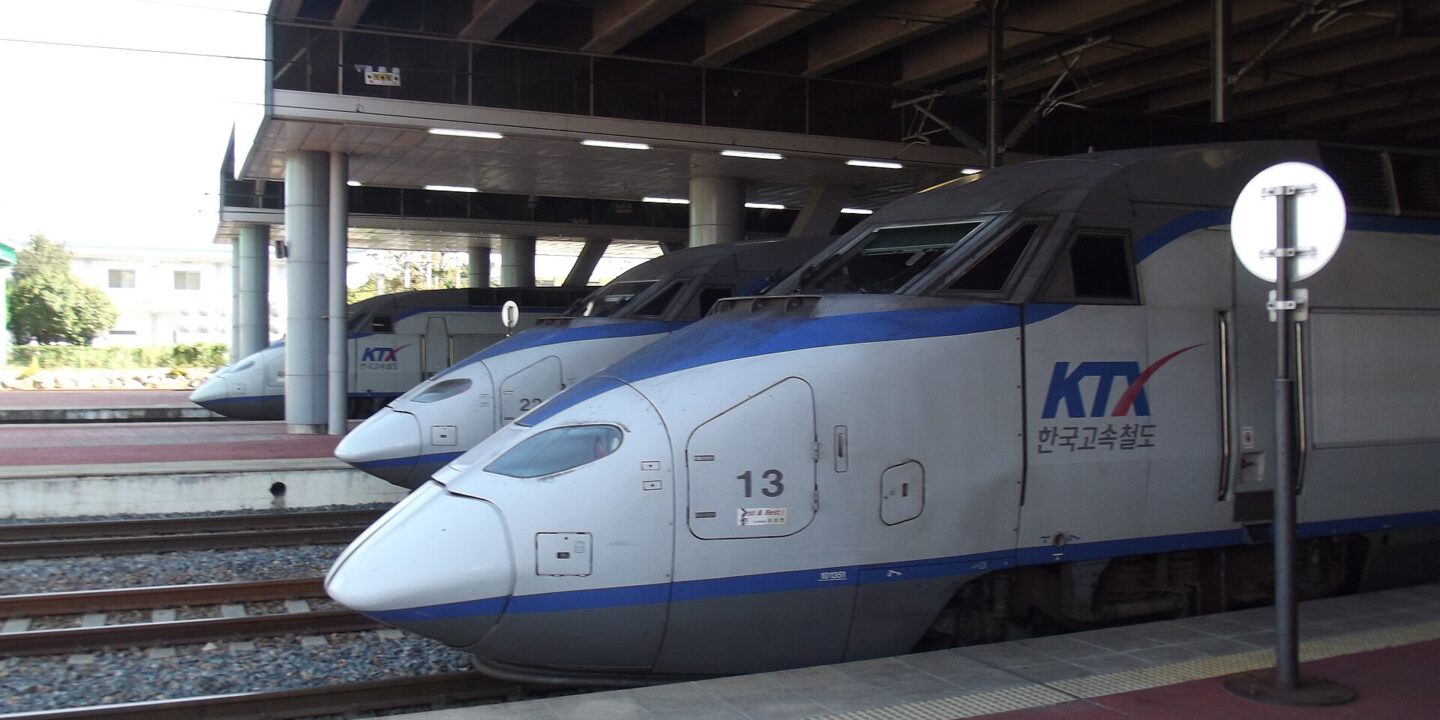
KTX trains at Busan Station (featured image): Busan main station trains 02 by Smiley.toerist, CC BY-SA 4.0, via Wikimedia Commons.
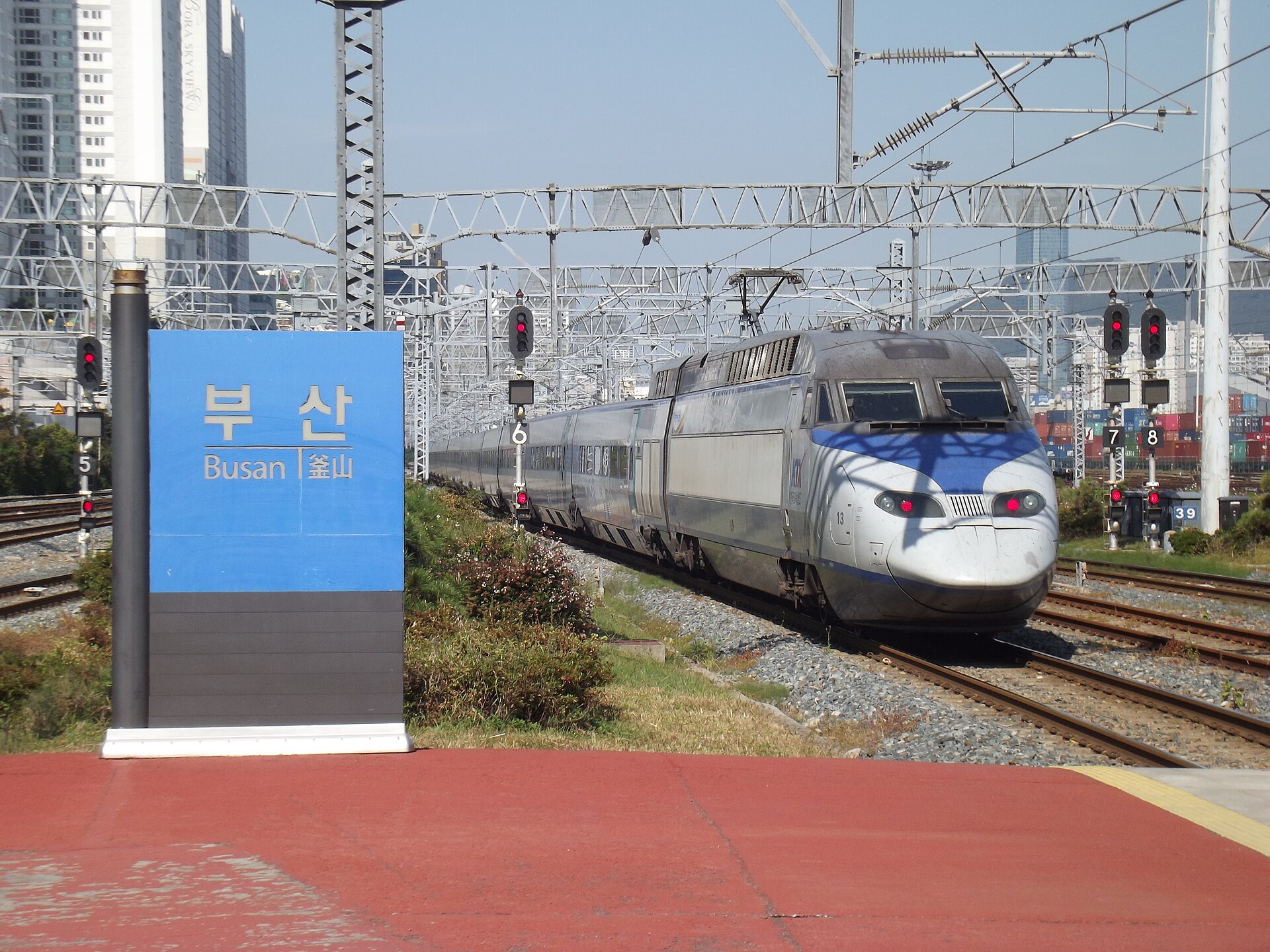
Busan Station sign: Busan main station trains 01 by Smiley.toerist, CC BY-SA 4.0, via Wikimedia Commons.
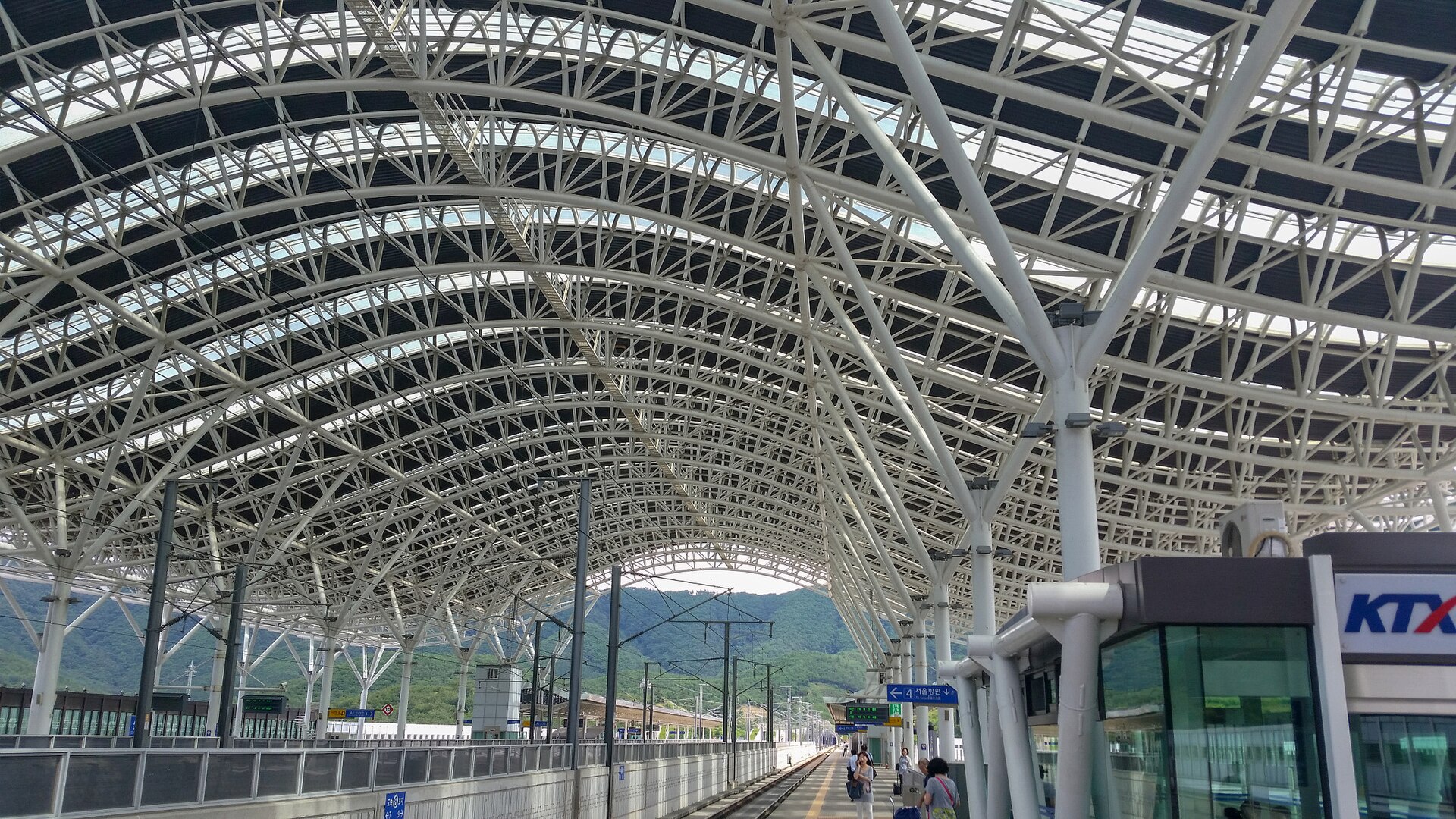
KTX station roof in Gyeongju: August In Gyeongju (242517229) by Eric Cosmides, CC BY 3.0, via Wikimedia Commons.
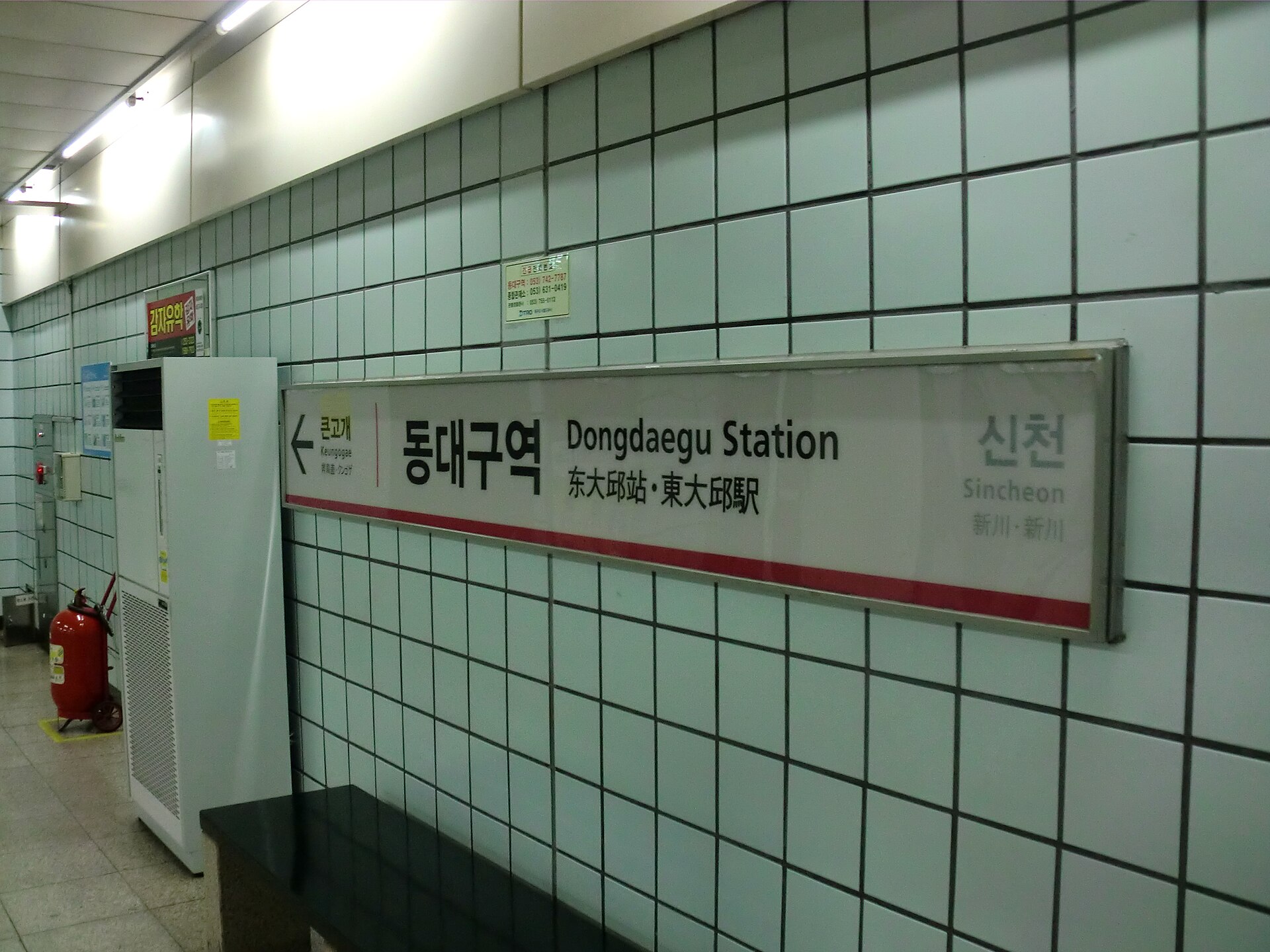
Dongdaegu Station nameboard: 135 Dongdaegu Station 3 by hyolee2, CC BY-SA 4.0, via Wikimedia Commons.
KTX-Cheongryong standard class: KTX-Cheongnyong Standard Class(2024.05.01) by 생각하는 나무, CC BY-SA 4.0, via Wikimedia Commons.
Mugunghwa train: Chungbuk Line Mugunghwa Train by Minseong Kim, CC BY-SA 4.0, via Wikimedia Commons.