This guide is the hub for everything ticketed on this site. It lists every major paid attraction in and around Seoul with its price, the time it takes and an honest verdict on whether it is worth the money; explains what the Discover Seoul Pass covers and when it beats buying direct; compares the booking platforms; and ends with a skip-list of the things that most often disappoint. Prices were checked in October 2026; treat them as the right order of magnitude, because theme parks and observatories adjust prices and run date-based deals, and confirm on the operator’s site before you buy. For the free side of the city, see our guide to free things to do in Seoul, and for the full menu of sights, things to do in Seoul.
Seoul’s ticketed attractions at a glance
| Attraction | Adult price (approx., Oct 2026) | Time needed | Worth paying for? |
|---|---|---|---|
| Gyeongbokgung Palace | ₩3,000 | Allow 2–3 hours | Yes. Essential on a first trip |
| Changdeokgung + Secret Garden | ₩3,000 + ₩5,000 | 2.5 hours | Yes, but book the garden tour |
| Deoksugung Palace | ₩1,000 | Allow about an hour | Yes, especially in the evening |
| Integrated palace ticket | ₩6,000 | Valid for six months | Yes, if you visit both big palaces |
| N Seoul Tower observatory | ₩29,000 | 1.5–2 hours with the trip up | Maybe. The plaza views are free |
| Namsan cable car | ₩15,000 return | 3-minute ride, plus queues | Usually not. Take the bus or walk |
| Seoul Sky, Lotte World Tower | ₩33,000 | Allow 1–1.5 hours | Yes on a clear evening, if it is your one tower |
| Lotte World | ₩64,000–67,000 (one day) | Half to full day | Yes for families, rainy days and theme-park fans |
| Everland | Varies by date, similar to Lotte World | Full day, with about an hour each way | Yes for coaster fans with time to spare |
| Aquariums (Lotte World, COEX) | Mid-range | Allow 1.5–2 hours | For families and wet days; pick one |
| DMZ tour | Tour prices vary by operator | Half or full day | Yes, if the history interests you |
| Nanta and other non-verbal shows | Theatre prices | Nanta runs about 90 minutes | Good for families or a jet-lagged evening |
| Jjimjilbang (bathhouse) | Typically under ₩20,000 | 2–4 hours | Yes. Seoul’s best-value experience |
| Suwon Hwaseong Fortress | A small fee, if any | Half day or more | Yes. The best-value day trip |
The short version: most first-time visitors need only three or four paid tickets. A palace or two, one observation deck and one big-ticket day, whether that is a theme park, the DMZ or a show, cover the things that are genuinely worth paying for. Everything else in Seoul is either free or cheap enough not to matter.
How to think about paying for sights in Seoul
Seoul’s attractions fall into three price bands, and it helps to know which you are looking at:
- Free. Most of what makes Seoul memorable costs nothing: Bukchon and the hanok lanes, the markets, the Han River parks, Cheonggyecheon stream, the city wall and its hikes, Starfield Library, and the permanent galleries of the National Museum of Korea, the National Palace Museum and the National Folk Museum. Our free things to do guide lists dozens.
- Cheap, ₩1,000 to ₩5,000. The palaces, Jongmyo Shrine, the Secret Garden tour and Suwon’s fortress. These are some of the best things in the country and are priced like a bus fare.
- Expensive, ₩20,000 and up. Observation decks, theme parks, aquariums, shows and tours. This is where the money goes, and where a little choosiness pays off.
A useful rule: budget for two or three items from the expensive band, choose them deliberately, and let everything else be free or cheap. If you are working out a full trip budget, our guides to what a Seoul trip costs and Seoul on a budget put these tickets in context.
Plan by cluster: where the paid sights are
Seoul’s big-ticket attractions sit in four clusters, and grouping your tickets by cluster saves hours of crossing the city on the subway.
- Jamsil (Lines 2 and 8). Lotte World, Seoul Sky, the Lotte World Aquarium and Seokchon Lake are all within a few minutes’ walk of Jamsil Station, much of it connected underground. This is the densest concentration of paid attractions in Seoul, and the one area where a pass day or a combo ticket clearly makes sense. Allow a full day for the park and the tower, or half a day for the tower, the aquarium and a walk around the lake.
- Namsan and Myeongdong (Line 4). N Seoul Tower, the cable car and the Namsan trails rise directly above Myeongdong, which makes a natural afternoon-into-evening plan: shopping and street food first, then the tower at sunset. There is a Nanta theatre here too, and our Myeongdong guide covers the ground-level half of the day.
- The palace quarter (Lines 1, 3 and 5). Gyeongbokgung, Changdeokgung, Deoksugung, Jongmyo and the free national museums lie within about two kilometres of each other. Palace tickets here cost ₩1,000 to ₩3,000 each.
- Samseong (Line 2 at Samseong, Line 9 at Bongeunsa). The COEX Aquarium, Starfield Library and Bongeunsa temple sit together around the COEX complex, with Gangnam’s shopping nearby.
Two sights fall outside the clusters and need a day of their own: Everland, an hour or more to the south, and a DMZ tour, which collects you in the morning and returns in the afternoon or evening. Put those in the calendar first and fit everything else around them.
Palaces and heritage: the cheapest tickets in town
The five grand palaces of the Joseon dynasty are the best-value sights in Seoul by a distance. Gyeongbokgung, the largest, costs ₩3,000 and is worth half a day; Changdeokgung costs the same, plus ₩5,000 for the guided Secret Garden tour, which has to be booked; Deoksugung costs ₩1,000 and is open until 21:00. The ₩6,000 integrated palace ticket covers four palaces and Jongmyo Shrine, and pays for itself as soon as you visit Gyeongbokgung and Changdeokgung. Anyone wearing hanbok gets in free. Wednesday is Culture Day, with free entry to every palace except Gyeongbokgung, and neither hanbok nor a Wednesday visit waives the Secret Garden fee.

There is nothing here to skip on price grounds; the question is only time. Our Seoul palaces guide helps you choose between them, and the individual guides cover the details: Gyeongbokgung for the tickets, tours, guard ceremony and night openings; Changdeokgung and the Secret Garden for the booking system; and Deoksugung for the evening visit and the stone wall road. If you plan to go in hanbok, our hanbok rental guide covers prices and the free-entry rule.
One trap to avoid: third-party platforms sell “skip-the-line” palace tickets and palace entry bundled into tours at several times the gate price. There is no line worth skipping at the palace ticket windows. Buy at the gate.
Seoul observation decks: N Seoul Tower or Seoul Sky?
Seoul has two major observation decks, and the most common mistake is paying for both. They look over the same city, and although the experiences are genuinely different, one is enough for most visitors.
N Seoul Tower
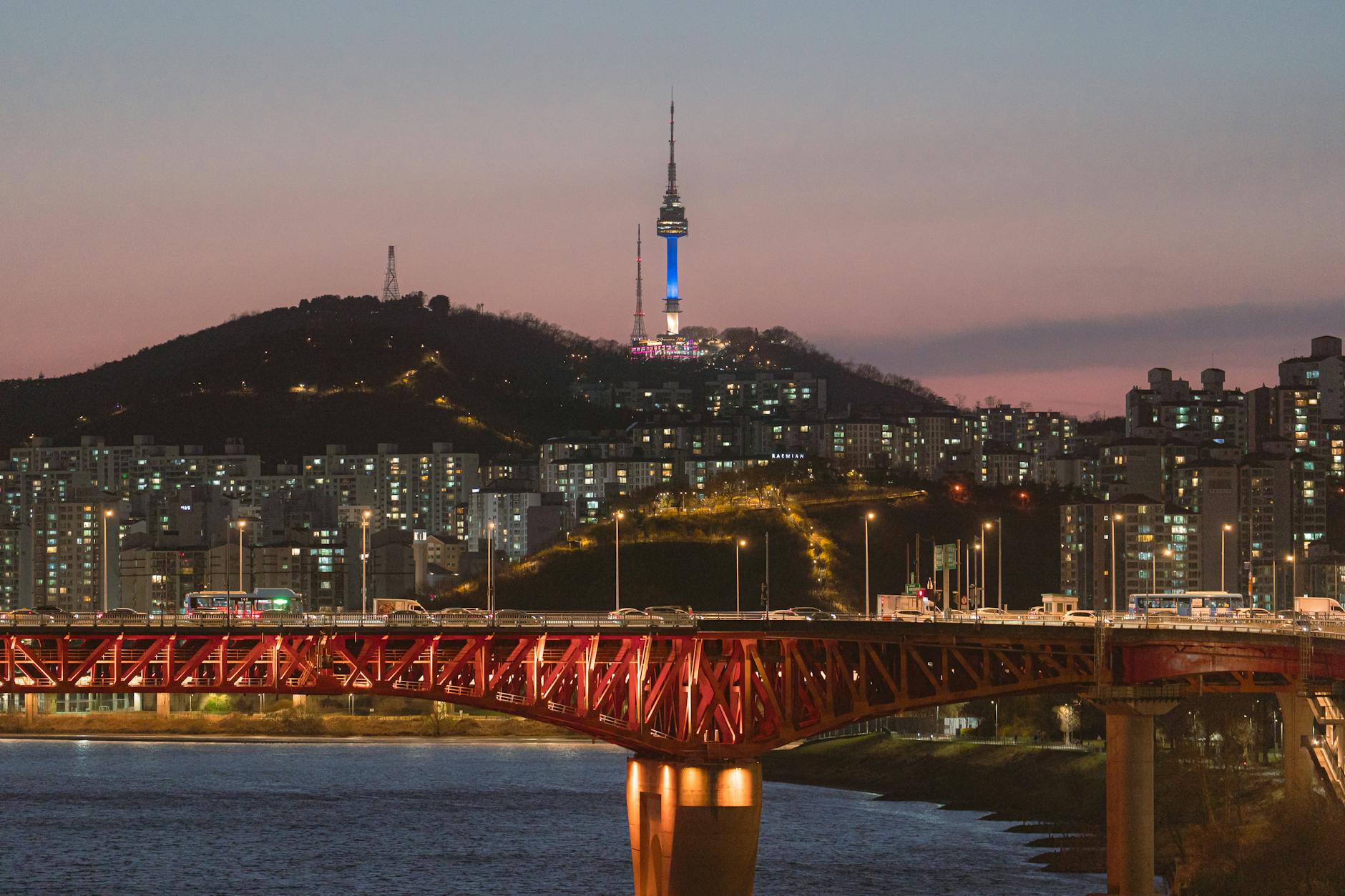
N Seoul Tower stands on top of Namsan, the wooded mountain in the middle of the city. The tower itself is modest in height, but because it sits on a mountain, its observatory sits not far below the far taller Lotte World Tower’s in height above sea level. The observatory costs ₩29,000 for an adult. The real appeal, though, is the setting: the walk or bus ride up through the forest, the terraces and the love-lock railings, and the sunset over the Han River. Much of that is free. The plaza, the terraces and the famous padlocks cost nothing, and the view from the terraces is only slightly lower than the one from the paid deck.
The cable car from the Myeongdong side costs ₩15,000 return or ₩12,000 one way for a ride of about three minutes, and runs from 10:00 to 23:00. Namsan circular buses 01A and 01B cost ₩1,500 by transport card only and stop at Chungmuro Station Exit 2 and Dongguk University Station, and the hike up from one of several trailheads is free.
Seoul Sky at Lotte World Tower
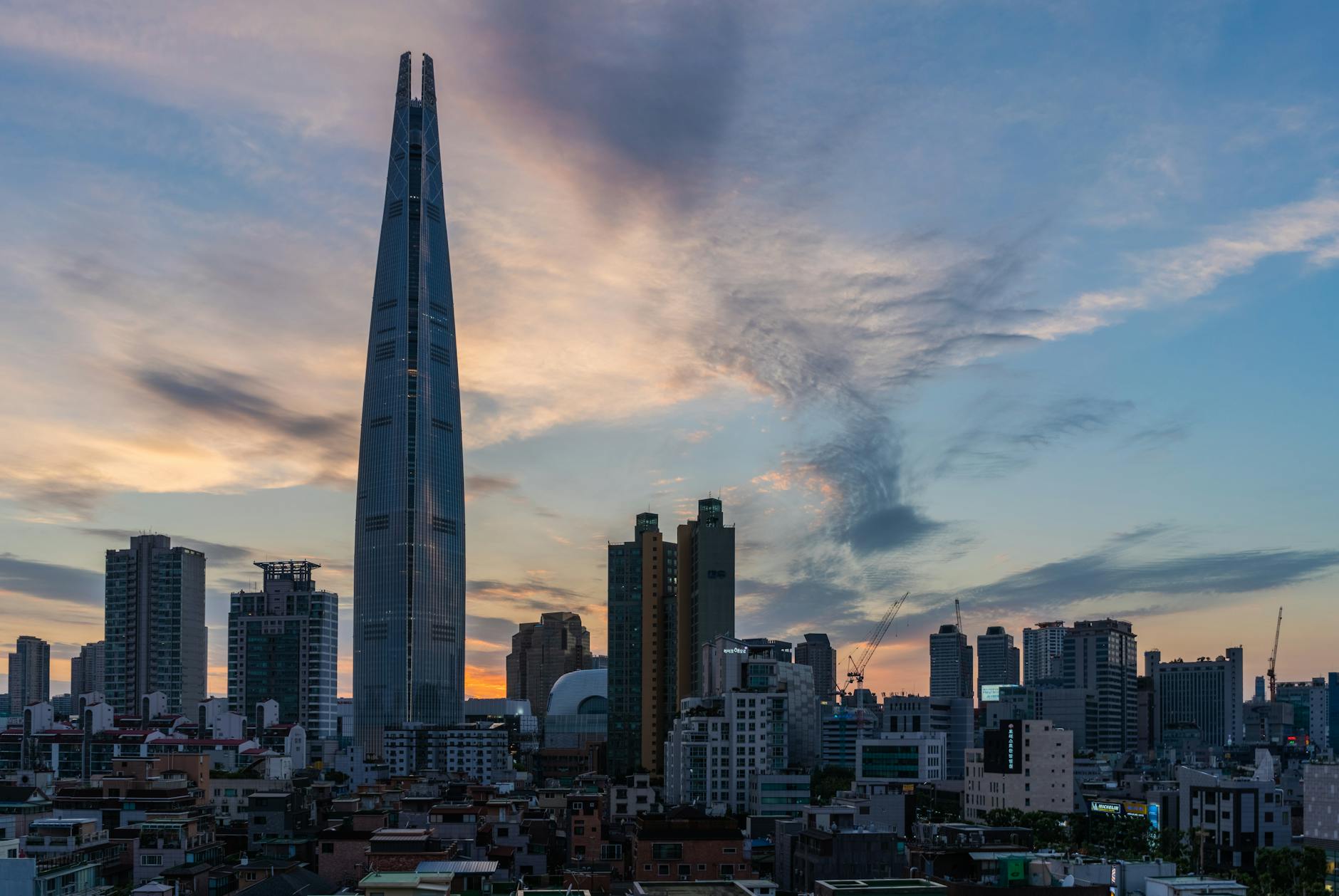
Seoul Sky occupies the top floors of Lotte World Tower in Jamsil, at 555 metres the tallest building in Korea. It is the more dramatic of the two decks: floor-to-ceiling glass, a glass-floored Sky Deck nearly 500 metres above the street, and a sense of looking down on the whole of south-east Seoul and the Han River. General admission costs ₩33,000 for adults aged 13 and over. The tower is near Exit 2 of Jamsil Station (Lines 2 and 8) and next to Lotte World, so the two combine easily.
Which one?
- Choose N Seoul Tower for atmosphere, sunset, a bit of nature and the option of paying nothing at all. It is the better choice if you are staying in Myeongdong or central Seoul, and the one to pick on a budget.
- Choose Seoul Sky for sheer height, the glass floor and a slick, modern experience, especially if you are already in Jamsil for Lotte World or staying in Gangnam.
- Choose neither on a hazy day. Seoul’s air quality varies a lot, and spring in particular brings days of fine dust when the view from either deck is a grey blur. Check an air-quality forecast before you pay.

For free views, Naksan Park on the city wall above Dongdaemun, the Bugaksan and Inwangsan trails, and the free Jeongdong Observatory beside Deoksugung all give excellent panoramas. The Deoksugung guide has the details on the last of these.
Seoul theme parks: Lotte World or Everland?
Seoul has two major theme parks, and they are very different days out.
Lotte World
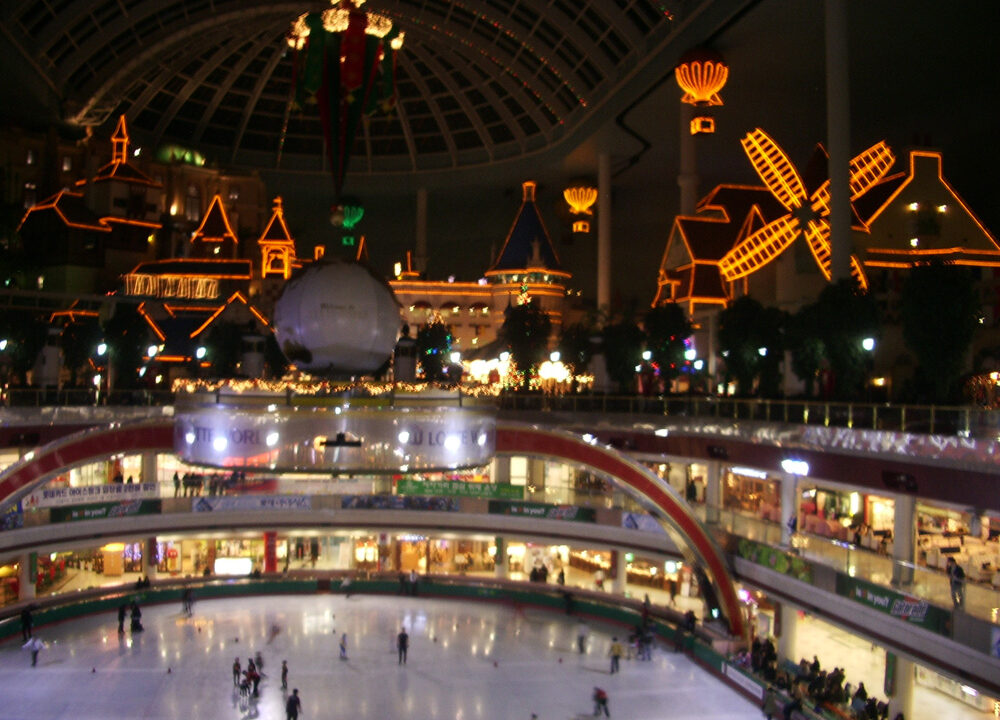
Lotte World in Jamsil is one of the world’s largest indoor theme parks, with a glass-domed interior, Lotte World Adventure, connected to an outdoor island section, Magic Island, on Seokchon Lake. It sits directly on the subway at Jamsil Station, it works in any weather, and it is easy to combine with Seoul Sky and the aquarium next door. A one-day adult ticket costs ₩64,000 for the park only or ₩67,000 with the Folk Museum at the gate, usually less through booking platforms, and the cheaper After4 ticket, valid from 16:00 (₩52,000 or ₩55,000), suits anyone who wants the rides and the evening parade without a full day’s investment. Weekday queues are manageable; weekend and school-holiday queues for the big rides can be long.
Verdict: the best theme park for families with younger children, for rainy days, and for anyone with only half a day to spare. It is not a thrill-seeker’s park in the way Everland is.
Everland
Everland, in Yongin, south of Seoul, is Korea’s largest theme park: a huge outdoor park set in hills, with the T Express wooden roller coaster, a zoo and seasonal flower festivals, plus the Caribbean Bay water park next door in summer. Getting there takes an hour or more each way by shuttle bus from Seoul, and longer by public transport, so it is a full-day commitment. An adult day ticket costs ₩55,000–71,000 depending on the month, a range that overlaps Lotte World’s.
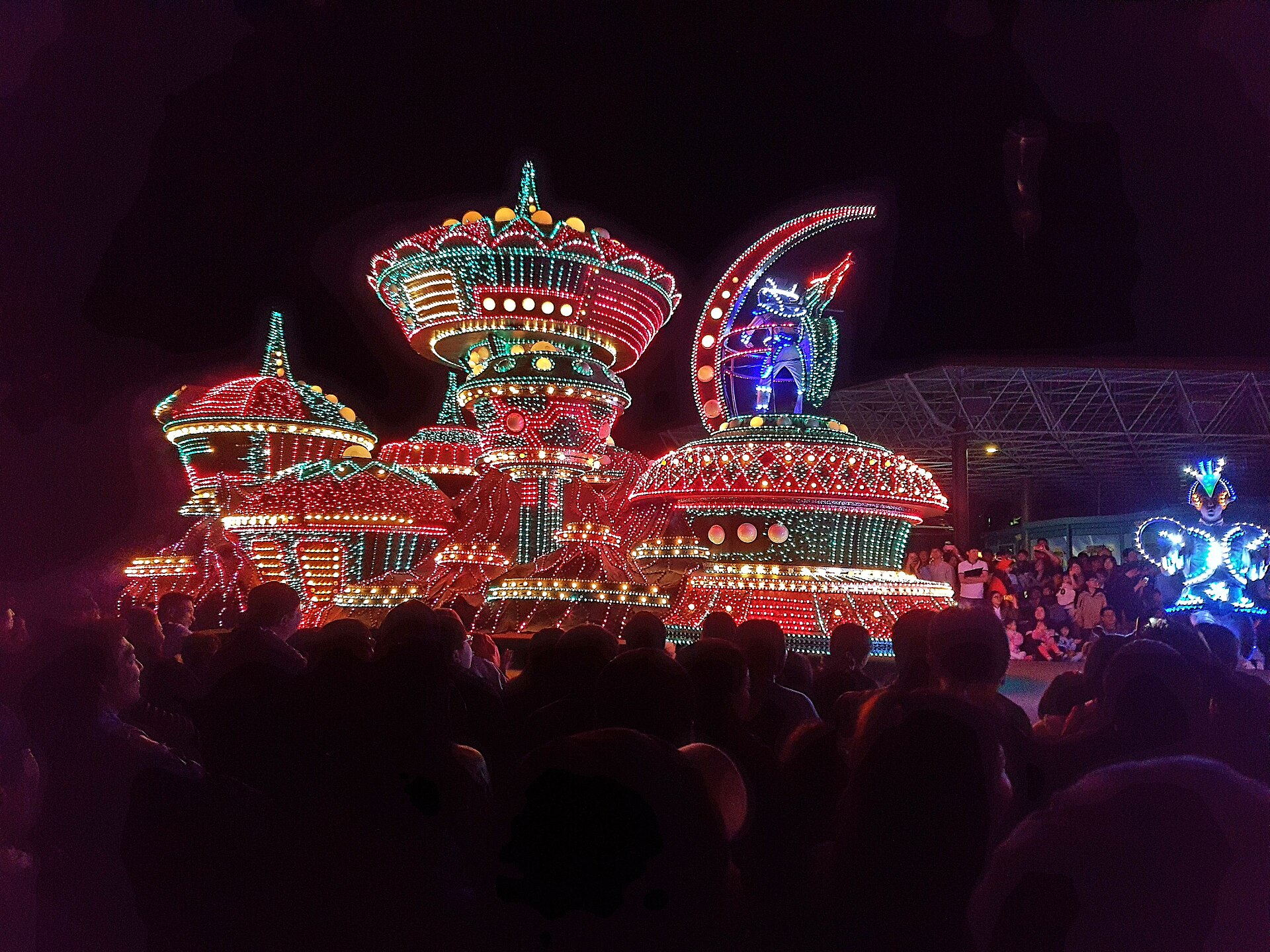
Verdict: worth it for coaster fans, animal lovers and families with older children, and for anyone with a week or more in Seoul. On a trip of three days or less, the travel time makes it hard to justify when Lotte World is on the subway.
The short rule that holds up: Lotte World wins on convenience and bad weather; Everland wins on coasters, outdoor space and animals. Our guide to Seoul with kids has more on planning a theme-park day with children.
Aquariums and rainy-day tickets
Seoul has two big aquariums, both inside shopping malls. The Lotte World Aquarium is in Lotte World Mall in Jamsil, at the foot of Lotte World Tower; the COEX Aquarium is in the COEX Mall in Samseong, a few steps from the free Starfield Library. Both have shark tunnels, both are good for small children and both are ideal on a wet afternoon. Neither is essential for adults without children, and there is no reason to do both. Choose the one nearest to whatever else you are doing that day, and check current prices on the operator’s site or the booking platforms, where they are often discounted.

For other ways to fill a wet day, many free and cheap, see our guides to rainy-day activities and museums and galleries. The Gangnam and Samseong area around COEX is covered in our Gangnam guide.
Tours, shows and experiences worth paying for
- A DMZ tour. Most of the border sites can only be visited on an organised tour, and the good ones are sobering, fascinating and unlike anything else on a Korea trip. It is a long day and not a fun one in the usual sense, which is the point. Our DMZ tour guide compares the itineraries and prices.
- A jjimjilbang. Korea’s 24-hour bathhouses charge typically under ₩20,000 for hot pools, saunas, heated floors to nap on and snacks to eat in your issued pyjamas. For the price it is the best-value experience in the city; see our jjimjilbang guide.
- Nanta and the non-verbal shows. Nanta, a percussive comedy set in a restaurant kitchen, has been running since 1997 in dedicated theatres, including one in Myeongdong. There is no language barrier, and it is good fun for families or for a jet-lagged first evening.
- A K-pop concert or broadcast. Some music-show recordings are free by application, while arena concerts are ticketed; our K-pop concerts and events guide explains how foreign fans can get in.
- A temple stay. An overnight or half-day programme at a Buddhist temple, with meditation and a monastic meal. See our temple stay guide.
- A Han River cruise. Pleasant at sunset rather than essential; the free riverside parks give you most of the same view. Our Han River guide covers the options.
Day trips with a ticket attached
Several of the best days out from Seoul come with an admission fee. Suwon’s Hwaseong Fortress costs little or nothing for a 5.7-kilometre walk around an eighteenth-century city wall, and it is about an hour from Seoul Station on subway Line 1, which makes it one of the best-value day trips in the region. Nami Island charges an entry fee on top of the transport and works best combined with other stops; our Nami Island guide explains whether it is worth it. Everland, the DMZ and the rest are covered in our day trips from Seoul guide.
Best picks by traveller type
- First-timers with four days: Gyeongbokgung with the guard ceremony, the Secret Garden, one tower at sunset, and one big day out: a DMZ tour if history pulls you, Lotte World if you want pure fun.
- Families with young children: Lotte World, for its indoor rides and subway access, one aquarium, N Seoul Tower by bus rather than the cable-car queue, and Gyeongbokgung, where foreign visitors aged 18 and under go free. Everland suits older children with the stamina for a long day.
- Thrill-seekers: Everland for T Express, and Lotte World’s big rides on a weekday. Seoul Sky’s glass floor is the other adrenaline hit.
- Couples: Deoksugung after dark for ₩1,000, Seoul Sky or the free N Seoul Tower terraces at sunset, and an evening by the Han River. Our couples itinerary builds these into evenings.
- History lovers: the integrated palace ticket, the Secret Garden, Jongmyo, a DMZ tour, Suwon Hwaseong and a temple stay. All of it together costs about the same as one theme-park ticket.
- Tight budgets: the palaces, the Secret Garden, a jjimjilbang, Suwon and the free viewpoints. Skip the decks or settle for the free terraces.
- Rainy days: Lotte World Adventure, an aquarium, the national museums, a jjimjilbang or a Nanta matinee.
The skip-list: what isn’t worth your money
Every city has attractions that sell far more tickets than they deserve. In Seoul, these are the ones that most often leave visitors feeling they overpaid:
- The Namsan cable car at peak times. ₩15,000 return, or ₩12,000 one way, for a ride of about three minutes, and the fare is the same however long you queue. Take the Namsan circular bus on your T-money card, or walk. If you do want the ride, go on a weekday morning.
- Both observation decks. Pick one tower. The second view of the same city is never as good as the first.
- Any observatory on a hazy day. Check the air-quality forecast. A ₩30,000 view of fog is a bad deal.
- Trick-eye and “3D illusion” museums. Fun for twenty minutes, dated, and pricey for what they are. A few photo-booth sessions give you more fun per won; see our guide to self-photo studios.
- The hop-on hop-off city tour bus. It crawls through traffic between sights that are faster and cheaper to reach by subway.
- “Skip-the-line” palace tickets. There is no line to skip. Buy at the gate.
- Everland on a short trip. A long travel day for rides you can approximate at Lotte World on the subway. Save it for a longer stay.
- Two aquariums. They are similar. Choose one.
- A multi-day pass on a slow itinerary. If your days are about neighbourhoods, markets and food, you will struggle to use it.
Timing: when to use your tickets
Paid attractions in Seoul follow the rhythm of the Korean calendar, and a little timing makes the same ticket a much better experience.
- Avoid school holidays and long weekends for theme parks. In Korea that means late July and August, the Chuseok and Seollal holidays, and Children’s Day on 5 May and the weekends around it. A rainy weekday in term time is the perfect Lotte World day.
- Book observatories for sunset, but check the air first. Arrive thirty to forty-five minutes before sunset to see the city in daylight, at dusk and lit up. Autumn gives the clearest air; spring brings fine dust and the yellow dust that blows in from the continent.
- Go to the palaces early. Nine o’clock on a weekday is quiet at Gyeongbokgung, and the peak runs from late morning to mid-afternoon. Remember the closing days: Gyeongbokgung on Tuesdays, Changdeokgung and Deoksugung on Mondays.
- Book the Secret Garden six days ahead. Online places open at 10:00 Korea time six days before each date.
- Use the seasonal extras. The Gyeongbokgung night openings in spring and autumn, Everland’s spring flower festivals and its Halloween season, and the Christmas decorations at the parks are when these places are at their best, and at their busiest.
For the weather month by month, see Seoul weather by month and our guide to the best time to visit Seoul.
Children, teenagers and seniors
Concessions vary by attraction, so check each operator’s price list, but a few patterns hold across Seoul. The palaces are free for foreign visitors aged 18 and under or 65 and over. The Secret Garden tour has a half-price youth rate of ₩2,500 for ages 7 to 18. Theme parks, observatories and aquariums set their own age bands: Seoul Sky, for example, charges the adult rate from age 13 and a lower child rate below that. Carry passports for the whole family, because age-based discounts need proof, and remember that child prices on the booking platforms are often discounted too, so compare them with the gate price rather than assuming the adult saving carries across.
Discover Seoul Pass or book direct?
The Discover Seoul Pass is the city’s official tourist pass: a card or app with free entry to a long list of attractions and extras such as a free airport train ride, and the physical Card Pass also works as a rechargeable transport card that you top up separately. In 2026 the 72-hour pass costs ₩90,000 and the 120-hour pass ₩130,000, and two “pick three attractions” passes, each valid for five days, cost ₩49,000 (Pick 3 Basic) and ₩70,000 (Pick 3 Theme Park). Its list has included Lotte World, N Seoul Tower, the palaces, Nami Island, the Leeum Museum of Art and a Han River cruise, but it changes, so check the app for anything you are counting on.
The maths is straightforward. The shortest timed pass, at ₩90,000 for 72 hours, costs more than a day at Lotte World, so it only pays if you fill those three days with paid sights. For a theme park plus a couple of other attractions, price the ₩70,000 Pick 3 Theme Park pass against buying each ticket direct. No pass pays on palace days, because palaces cost ₩1,000 to ₩3,000, and none pays on days spent wandering neighbourhoods. The smart move is to bunch your paid attractions so one pass covers them, and pay as you go the rest of the time. Our guide to Seoul discount passes runs through the full calculation and compares the transport passes.
Where to buy: booking platforms compared
| Where | Good for | Watch out for |
|---|---|---|
| At the gate or the operator’s own site | Palaces (gate only), the Secret Garden (official booking site), flexibility | Full price for theme parks and towers |
| Klook | The widest range, frequent discounts on theme parks, towers and combos | Some products are vouchers you must exchange at a counter first; read the cancellation rules |
| KKday | Similar range, sometimes cheaper on the same product | The same voucher-versus-QR caveat |
| Trip.com | Convenient if you have booked flights or hotels there | Fewer niche Korean experiences |
| Trazy and Creatrip | Korea specialists: K-pop, beauty and niche experiences | Smaller range of mainstream attractions |
| NOL World (Interpark Global) | Concerts, musicals, K-pop and other shows | For big K-pop sales, be logged in and ready when booking opens |
| Korean apps (Naver and others) | Often the cheapest prices | Usually need a Korean phone number and payment card |
Before you pay, check four things on any third-party ticket. Does it give you a QR code you scan at the gate, or a voucher you must first exchange somewhere else, sometimes nowhere near the attraction? Is it date-specific? Does the name need to match your passport? And does it include what you think it does, for example the observatory and not just the cable car? Our Seoul travel apps guide covers the booking apps worth installing.
How to save money on Seoul attraction tickets
- Go to the palaces on Culture Day, every Wednesday, when all except Gyeongbokgung are free (the Secret Garden tour is still charged), or go in hanbok.
- Buy the integrated palace ticket if you will visit both Gyeongbokgung and Changdeokgung.
- Use the Lotte World afternoon ticket from 16:00 if you do not need a full day.
- Look for combos. Lotte World plus Seoul Sky, or the tower plus the cable car, are often sold together for less.
- Book theme parks and towers online, after comparing the platforms’ prices with the gate price.
- Cluster paid sights on one or two pass days, and leave the rest of the trip pass-free.
- Take the free views first. If the terraces at N Seoul Tower or the Jeongdong Observatory satisfy you, you have saved the price of a deck.
- Go on weekdays. Queues are shorter, sunset slots are easier, and some parks price weekdays lower.
Three sample ticket budgets
To show how the choices add up, here are three typical four-day trips, adult prices only:
| Trip style | Paid tickets | Approximate total |
|---|---|---|
| History on a shoestring | Integrated palace ticket (₩6,000), Secret Garden (₩5,000), Suwon Hwaseong (a small fee), a jjimjilbang | Around ₩30,000 |
| The classic first trip | Integrated palace ticket, Secret Garden, one observatory (₩29,000–33,000), a DMZ tour or a show | Roughly ₩108,000–153,000 |
| Theme parks and towers | Lotte World (₩64,000, park only), Seoul Sky (₩33,000), an aquarium, N Seoul Tower (₩29,000) | ₩145,000 or more; a pass likely wins |
For itineraries that build these tickets into realistic days, see our Seoul itineraries.
Everland is the one big-ticket attraction that needs as much planning for the journey as for the park. Our guide to Everland from Seoul compares the routes, from bus 5002 at Gangnam Station to the rail route via the Yongin EverLine, and explains the online foreigner ticket, T Express and the safari rides.
If Lotte World is your big-ticket day, our Lotte World guide goes much further than the summary above: when the After-4 ticket beats the day pass, whether the Magic Pass fast pass is worth paying for, the rides that matter indoors and on Magic Island, including the new MapleStory zone, and what the queues are really like on weekdays and weekends.
Still torn between the two parks? Our Lotte World vs Everland comparison gives a verdict for every kind of traveller, from toddlers and thrill-seekers to rainy days and three-day trips, adds up the real cost once transport and time are included, and explains which to do first if you have time for both.
If N Seoul Tower is your observation deck, read our N Seoul Tower guide before you queue for anything. It compares the cable car with the ₩1,500 Namsan circular bus and the free walk up from Myeongdong, sets out what is free at the top, and gives approximate sunset times for every month so you arrive at the right moment.
If Seoul Sky is your tower, our Seoul Sky guide covers the ₩33,000 general ticket and when the ₩62,000 Fast Pass is worth it, the glass-floored Sky Deck on the 118th floor, the harnessed Sky Bridge Tour at 541 metres, and a head-to-head with N Seoul Tower on view, price and atmosphere.
Frequently asked questions
What are the best paid attractions in Seoul?
Gyeongbokgung Palace and the Secret Garden at Changdeokgung are the best value by far. After that, one observation deck (N Seoul Tower or Seoul Sky), one big day out (Lotte World, Everland or a DMZ tour) and a jjimjilbang cover what most visitors find most rewarding.
Is the Discover Seoul Pass worth it?
Only for attraction-heavy days. The 72-hour pass costs ₩90,000, more than Lotte World’s gate price, so it needs several paid sights in those three days to pay back; for a theme park and two other attractions, the ₩70,000 Pick 3 Theme Park pass, valid for five days, is the one to compare with buying direct. It is poor value for palace days and neighbourhood wandering.
Should I book Seoul attraction tickets in advance?
For theme parks, observatories at sunset, the Secret Garden, DMZ tours and concerts, yes: booking ahead is usually cheaper and sometimes the only way in. Palaces and museums need no booking.
N Seoul Tower or Seoul Sky?
N Seoul Tower for atmosphere, sunset and a free option on the terraces; Seoul Sky for sheer height, the glass floor and a modern experience. Pick one, and go on a clear day.
Lotte World or Everland?
Lotte World if you want convenience, an indoor park, small-child-friendly rides or a rainy-day plan; Everland if you want big coasters, a safari and a full day out and have time for the trip.
Which Seoul attractions are free?
Most of the city’s best experiences: the neighbourhoods, markets, Han River parks, city wall hikes, Cheonggyecheon, Starfield Library and the permanent galleries of the major national museums. The palaces are free in hanbok, and every Wednesday all of them except Gyeongbokgung are free for Culture Day (the Secret Garden tour is charged either way).
Where is it cheapest to buy Seoul attraction tickets?
Booking platforms such as Klook and KKday usually beat the gate price for theme parks and observatories. Palaces are cheapest at the gate. Korean domestic apps can be cheaper still, but usually need a Korean phone number.
Final thoughts
The best way to spend money on Seoul’s sights is to spend it on very few of them. Pay the small change for the palaces, choose one tower on a clear evening, pick one big day out that suits you, and let the free city do the rest. That approach costs less than a single theme-park ticket bought on impulse at the airport, and it leaves more time for the neighbourhoods, markets and food that most visitors remember longest.
Photo Credits
Lotte World Adventure’s indoor park and ice rink: Lotte World Adventure (5587583207) by InSapphoWeTrust from Los Angeles, California, USA, CC BY-SA 2.0, via Wikimedia Commons.
Everland’s night parade: Everland Moonlight Magic Parade by Kanishk0001, CC BY-SA 4.0, via Wikimedia Commons.