This guide covers the three ways up, cable car, bus and on foot, with what each costs and how long it takes; what the ₩29,000 observatory ticket gets you and what is free at the top; the love locks; sunset times by season; how to read the tower’s air-quality lights; the voucher traps to avoid when you buy online; and how to fit it into a day in Myeongdong. Prices and hours were checked in October 2026; confirm them on the official N Seoul Tower site before you go. For how it compares with Seoul’s other paid attractions, see our guide to Seoul’s ticketed attractions.
N Seoul Tower at a glance
| What | Detail (October 2026) |
|---|---|
| Observatory ticket | ₩29,000 adults, ₩23,000 children (3–12) and seniors (65+) |
| Observatory hours | Weekdays 10:00–22:30; weekends and public holidays 10:00–23:00; last entry 30 minutes before closing |
| Namsan cable car | ₩15,000 round trip, ₩12,000 one way (adults); 10:00–23:00; a 3-minute ride |
| Namsan circular buses 01A and 01B | ₩1,500 by transport card only, from Chungmuro Station Exit 2 and Dongguk University Station |
| Walking up | Free; through Namsan Park from Myeongdong or Hoehyeon stations, on steep paths and stairs |
| Free at the top | The plaza, the love-lock terraces, outdoor viewing platforms, Palgakjeong pavilion and the beacon mounds |
| Best time | 45 minutes before sunset on a clear day |
| Time needed | Two to three hours, including the trip up |
| Nearest stations | Myeongdong (Line 4), Hoehyeon (Line 4), Chungmuro (Lines 3 and 4) |
The short version: take the bus or walk up rather than queuing for the cable car at sunset, see the view from the free terraces first, and only then decide whether the observatory is worth ₩29,000 to you. On a hazy day, save your money altogether.
How to get up Namsan: cable car, bus or on foot
This is the decision that makes the biggest difference to your evening and your wallet, and most guides skip it. Private cars and taxis are barred from the road to the summit, so there are three ways to get to the tower.
| Route | Cost (adult) | Time | Best for | The catch |
|---|---|---|---|---|
| Namsan cable car | ₩15,000 round trip, ₩12,000 one way | 3-minute ride, plus the walk to the base station | The views on the way, and those who cannot manage hills | Busiest at weekends around sunset |
| Namsan circular buses 01A/01B | ₩1,500 by transport card | Varies with where you board and the traffic | Families, budget travellers and anyone short of time | Crowded at weekends; less of an experience |
| Walking | Free | The slowest way up, on steep paths through Namsan Park | Fit travellers, and anyone who likes a walk in the woods | Steps; sweaty in summer |
The Namsan cable car
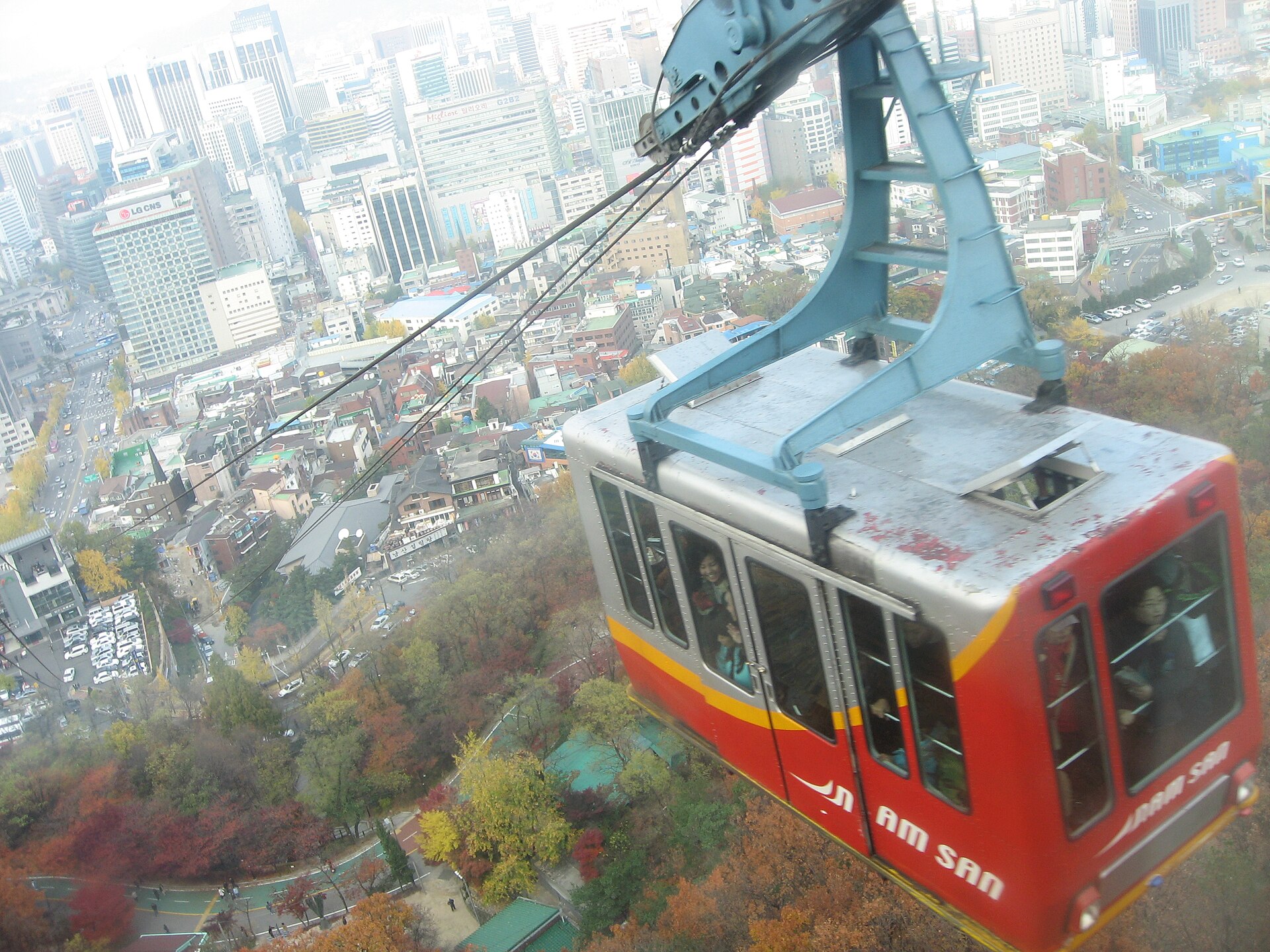
The cable car runs from a base station on the Myeongdong side of the mountain to just below the tower plaza. The ride itself takes three minutes and gives a lovely view back over the city, especially in autumn, when the slopes below are red and gold. To reach the base station, walk uphill from Myeongdong Station (Line 4), Exit 3, or ride the Namsan Oreumi, a free inclined elevator, for part of the way. Tickets cost ₩15,000 round trip or ₩12,000 one way for adults, with lower fares for children, and the cable car runs from 10:00 to 23:00.
The catch is the queue. It builds at weekends around sunset, exactly when everyone wants to go up, and there is another one to come down after dark. If you want the ride, go on a weekday or earlier in the afternoon, or do what many locals do: ride up one way for ₩12,000 and walk down through the woods, which is lovely in the evening.
The Namsan circular bus
The cheapest ride up, and the most underrated, is the Namsan circular bus, routes 01A and 01B, which climbs the mountain road to a stop a short walk below the tower plaza. It costs ₩1,500, paid by transport card only. The most convenient stop is outside Chungmuro Station (Lines 3 and 4), Exit 2; you can also board at Dongguk University Station (Line 3). It is the best choice for families, for anyone with limited mobility, and for anyone who wants to be at the top for sunset without standing in the cable-car queue. It does get crowded at weekends, so let a full bus go if you need to. Our Seoul bus guide and T-money guide explain how to pay.
Walking up Namsan
Walking up is free, surprisingly pleasant, and for many visitors the highlight of the evening. Namsan is a proper wooded mountain in the middle of the city, and the trails are well lit, well signed and busy with locals exercising. There are three popular approaches:
- From Myeongdong or Hoehyeon (the classic route). From Hoehyeon Station (Line 4), Exit 4, or Myeongdong Station, Exit 3, follow the signs up through Namsan Park towards Baekbeom Square, then take the stairs and paths to the summit. It is the most direct route and mostly stairs, so take it at your own pace.
- From Namsangol Hanok Village or the National Theatre (the gentle route). The road that loops around the north side of the mountain is closed to general traffic and makes an easy, shaded walk, ideal in summer and with cherry blossom in spring. It is longer than the stairs but much gentler.
- From the Itaewon side (the city wall route). From the south, trails climb alongside a stretch of the old Seoul City Wall, with great views over the river. It is steeper, but it combines well with an afternoon in Itaewon or Haebangchon; see our Itaewon guide.
Wear proper shoes, bring water in summer, and if you are going up for sunset, remember that you will come down in the dark. The main paths are lit, but the bus is the easy way down if you are tired. Our guides to Seoul’s parks and gardens and the outdoors in Seoul cover more of Namsan’s trails.
N Seoul Tower tickets and the observatory
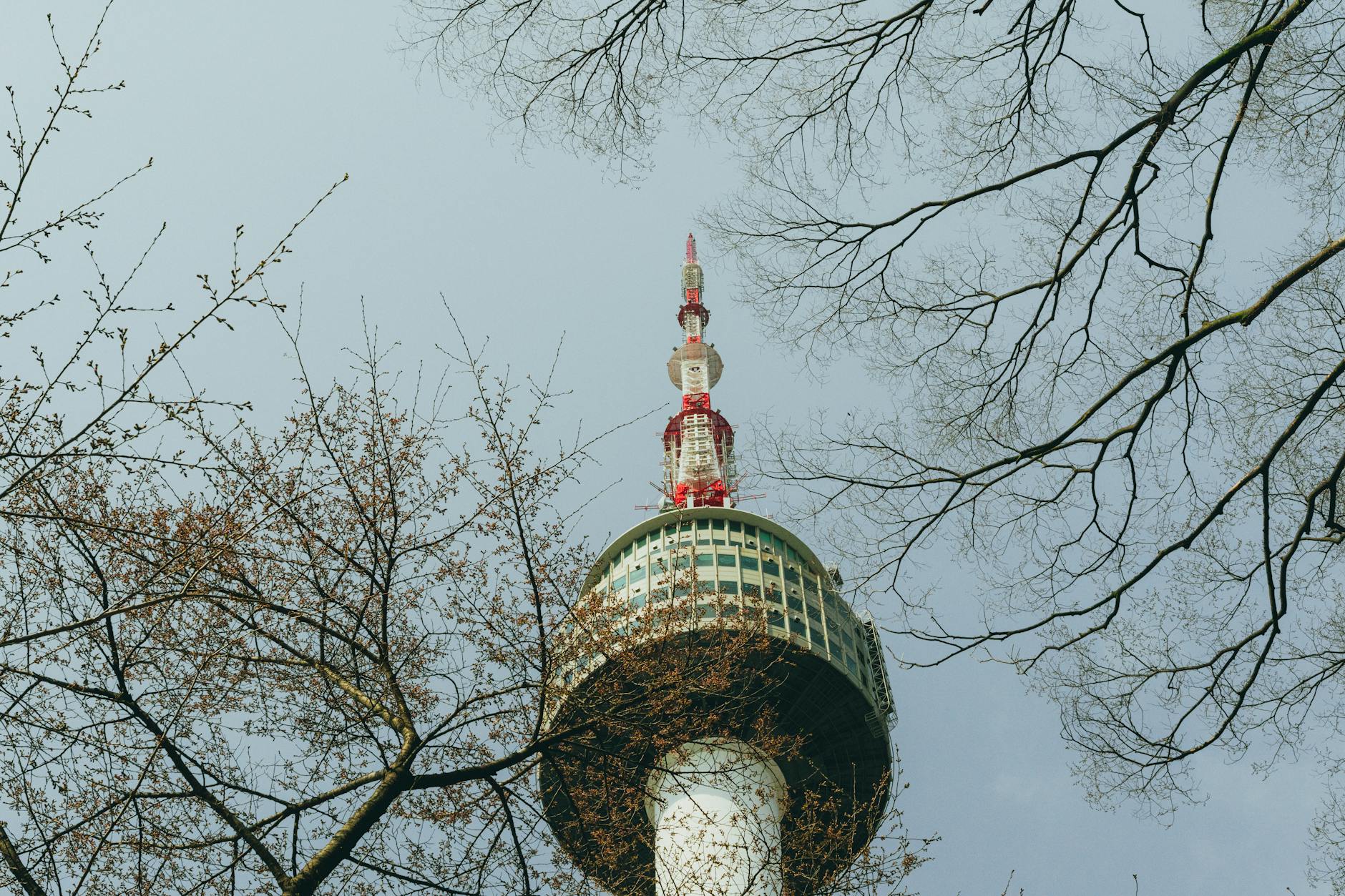
The tower itself was built as a broadcasting tower in the late 1960s and 1970s, opened to the public in 1980 and was renamed N Seoul Tower after a renovation in 2005. Because it stands on a mountain, its observation deck looks down on the city from far above the rooftops, with a 360-degree view over the whole city, the Han River and the mountains beyond.
The observatory costs ₩29,000 for adults and ₩23,000 for children aged 3 to 12 and seniors aged 65 and over. The tower has raised its prices before, so check the official site before you go. It is open from 10:00 to 22:30 on weekdays and from 10:00 to 23:00 at weekends and on public holidays, with last entry thirty minutes before closing. Tickets are sold at the tower. The observatory is also included in the Discover Seoul Pass, which pays off if you combine the tower with other paid sights on the same day; our discount passes guide has the maths.
Buying online: the voucher trap
Booking platforms sell N Seoul Tower tickets and tower-plus-cable-car bundles, sometimes at a small discount. Read the redemption instructions before you pay. The best products give you a QR code that you scan at the tower. Others are vouchers you must first exchange for a paper ticket at a counter, and the exchange point is not always at the tower itself. If the instructions send you to a partner desk elsewhere, for instance down in Myeongdong, check its opening hours, because arriving after it has closed leaves you with a voucher and no ticket. Check where and when the exchange happens, check that the product includes what you think it does, observatory or cable car or both, and if in doubt, buy at the tower.
Is the observatory worth it? What is free at the top
This is the honest question, and the answer depends on the weather and your budget. Much of what people love about N Seoul Tower is free:
- The plaza and the terraces around the base of the tower, with sweeping views over the city. They are only a little lower than the observatory.
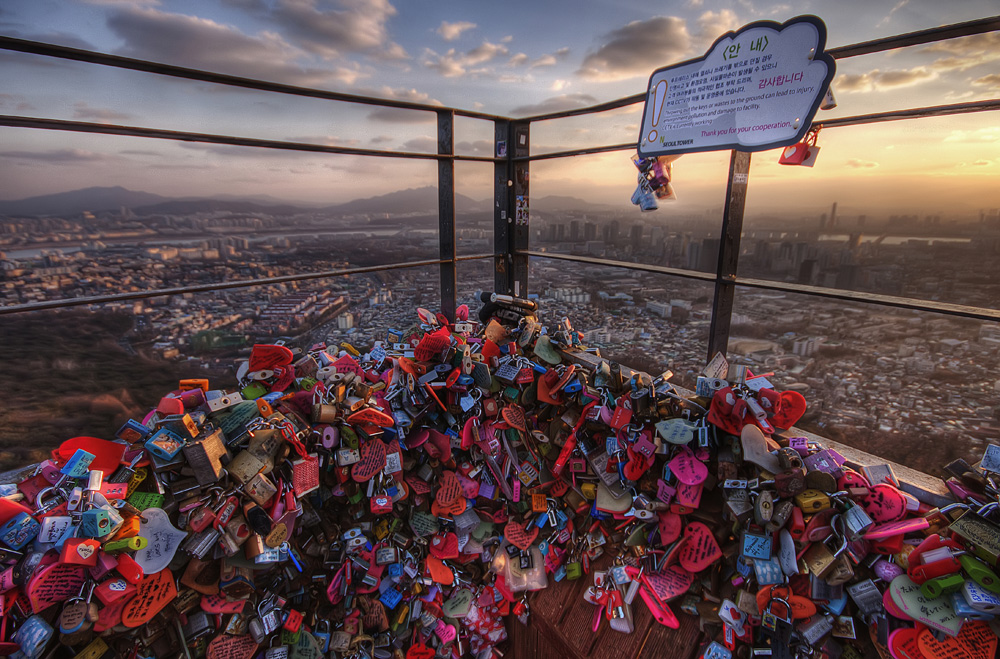
- The love-lock terraces, with thousands of padlocks clipped to the railings.
- Palgakjeong, the octagonal pavilion by the tower, and the reconstructed beacon mounds, from which fire signals were once relayed across the kingdom.
- Free traditional performances, including martial-arts demonstrations and drumming, held at the summit plaza on many afternoons.
- The walk up through Namsan Park, if you choose it.
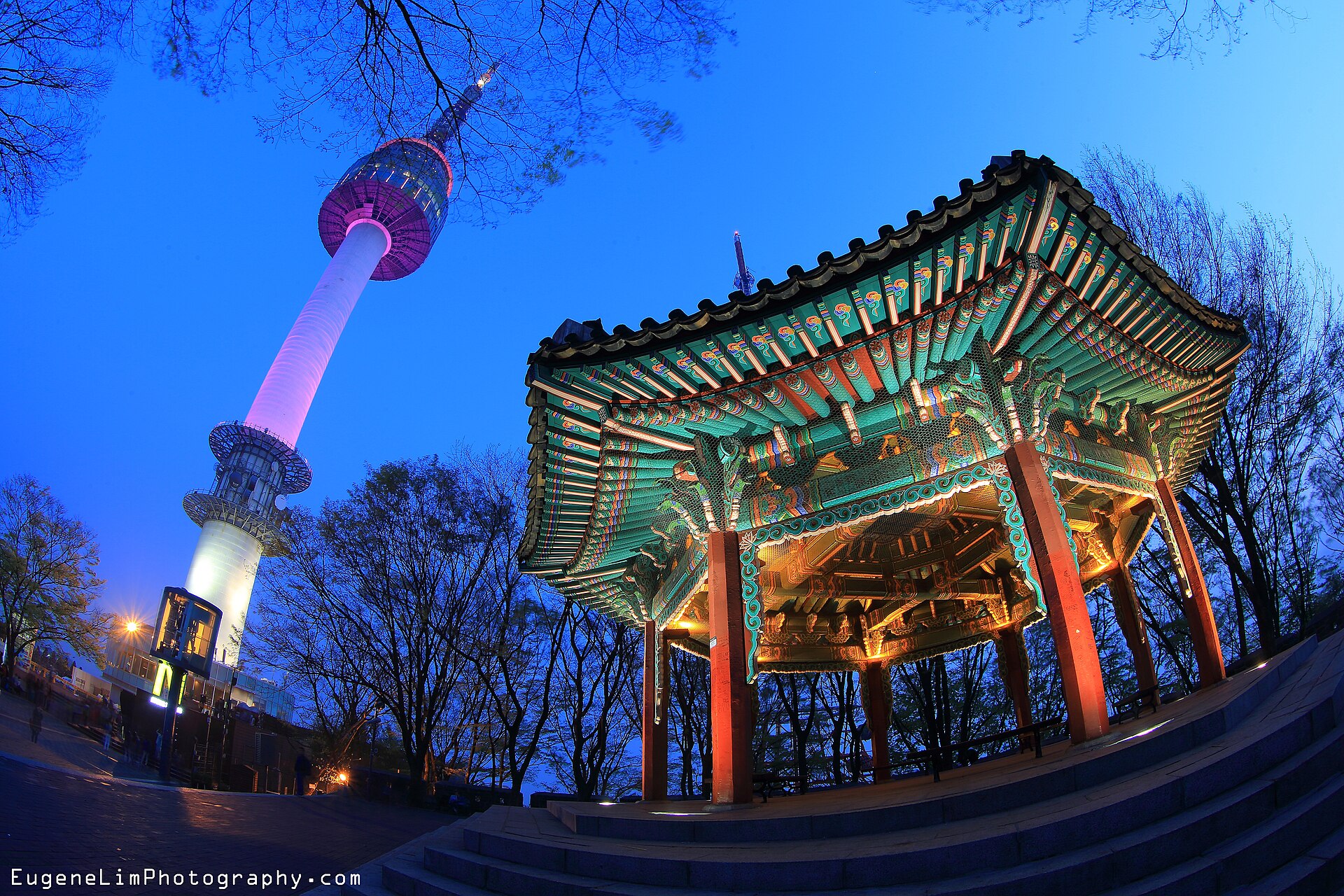
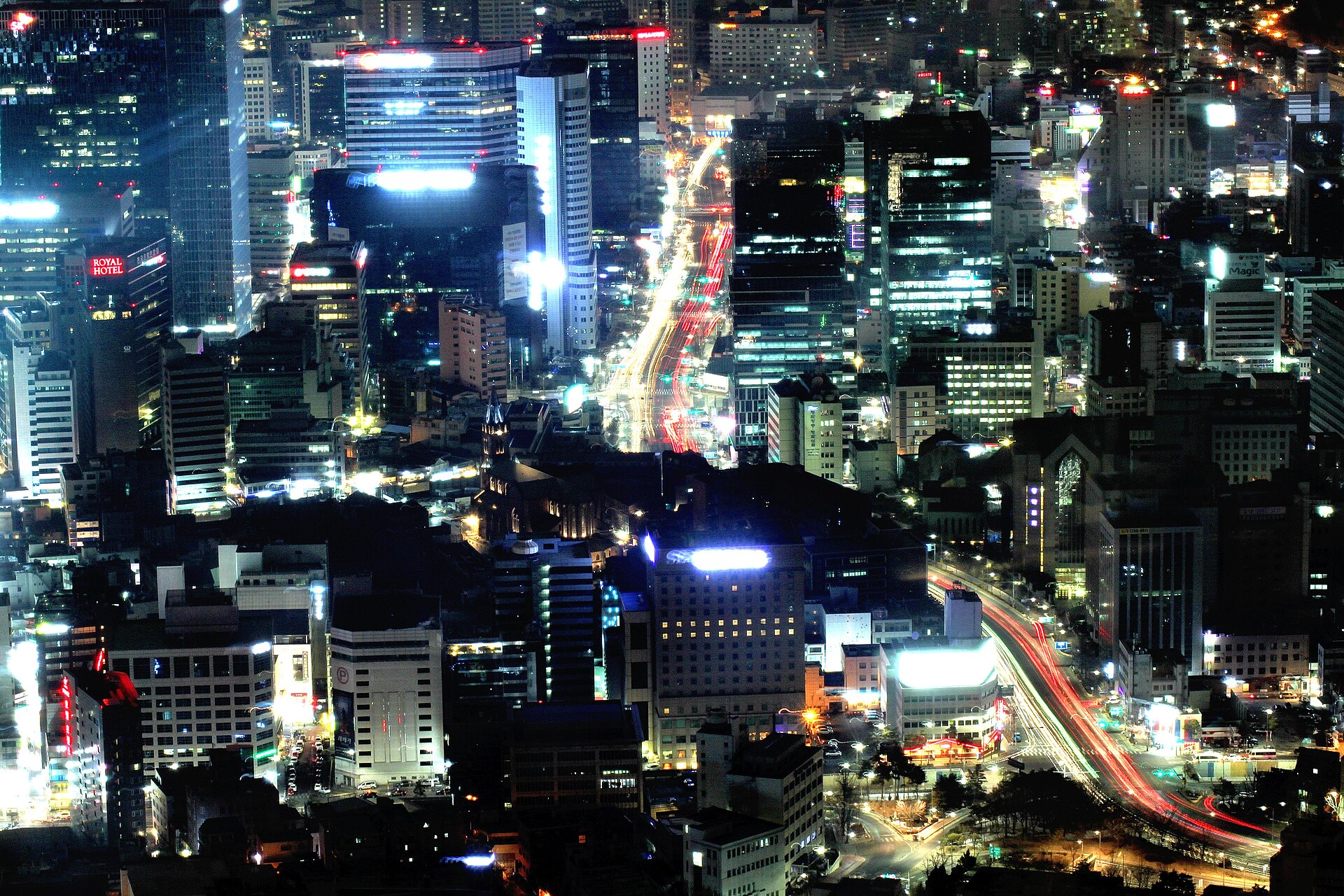
The observatory adds height, a full 360-degree panorama in one place, and shelter from the wind and cold, which counts for a lot on a January evening. For a first visit on a clear day, it is a good experience, especially at night, when the city lights stretch to the horizon. But if you are on a budget, if the air is hazy, or if you are also planning to visit Seoul Sky at Lotte World Tower, the free terraces give you most of the view. Our honest advice: go up, look out from the terraces, and only buy a ticket if you want more.
The love locks
The padlocks are the tower’s most famous sight: tens of thousands of them, clipped to railings and piled on metal trees on the terraces, many decorated with names, dates and hearts. Couples write their names on a lock, fix it to the railing and, traditionally, throw away the key, although you should resist throwing anything off the mountain. You can buy padlocks at the top if you did not bring one, and the terraces have been a fixture of Korean dramas for years; our guide to K-drama filming locations has more. For couples, sunset on the lock terraces followed by dinner in the city is a classic Seoul evening, and our Seoul itinerary for couples builds a day around it.
Sunset times by season
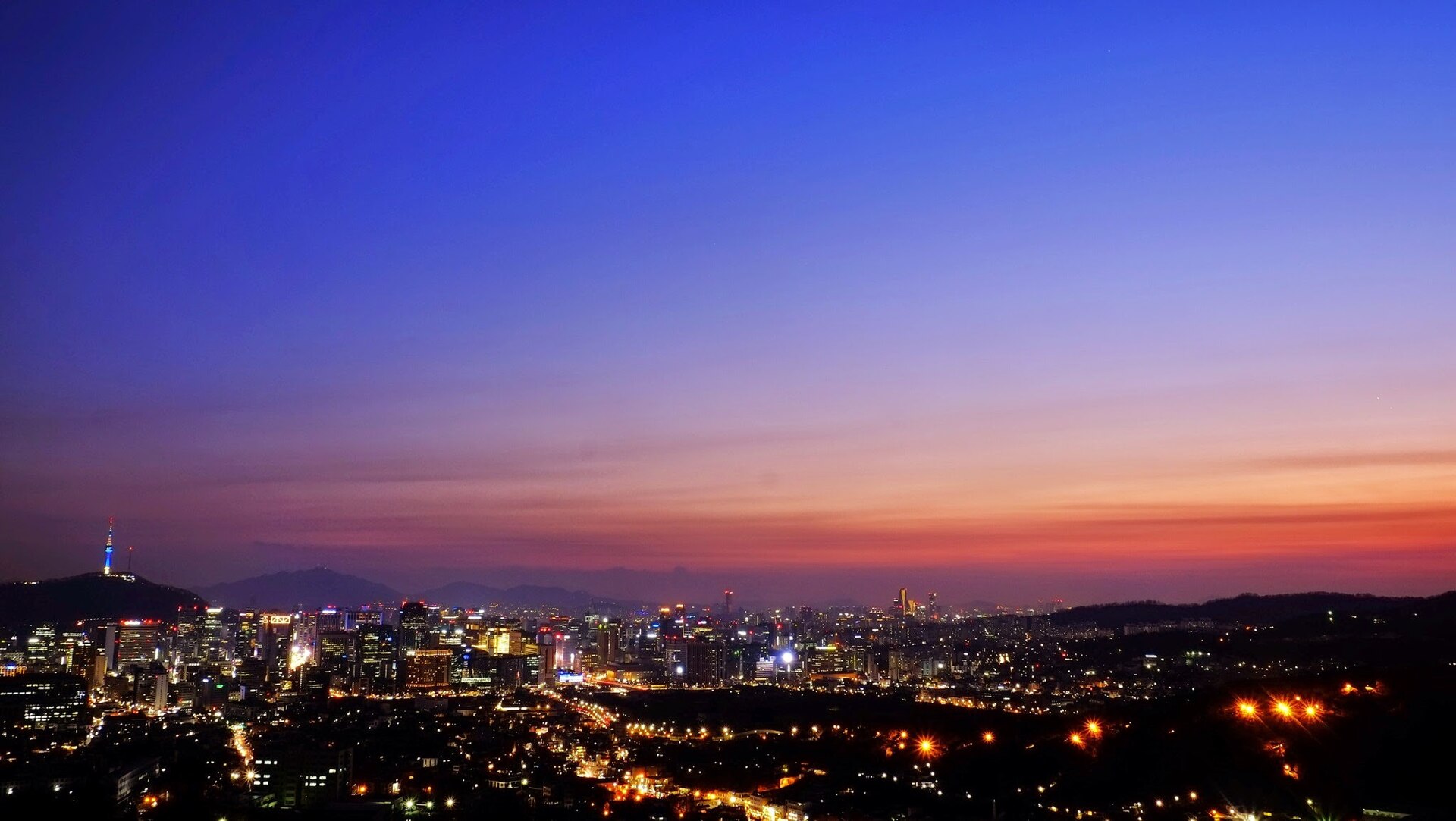
The best time to be at the top is about 45 minutes before sunset. You see the city in daylight, watch the sun go down over the western horizon, and then see the lights come on. Seoul’s sunset moves by almost three hours across the year, so check the time for your date:
| Month | Approximate sunset (mid-month) | Aim to be at the top by |
|---|---|---|
| January | 17:35 | 16:50 |
| February | 18:10 | 17:25 |
| March | 18:35 | 17:50 |
| April | 19:05 | 18:20 |
| May | 19:30 | 18:45 |
| June | 19:55 | 19:10 |
| July | 19:55 | 19:10 |
| August | 19:25 | 18:40 |
| September | 18:40 | 17:55 |
| October | 17:55 | 17:10 |
| November | 17:20 | 16:35 |
| December | 17:15 | 16:30 |
These are approximate times for the middle of each month; check a weather app for your exact day. In winter, sunset comes before most people finish work, so the tower is quieter at dusk; in summer, it comes late and the terraces are busy until well after dark. Autumn, especially October and early November, usually has the clearest air and the best sunsets. See Seoul weather by month for the rest.
Reading the tower lights: an air-quality check
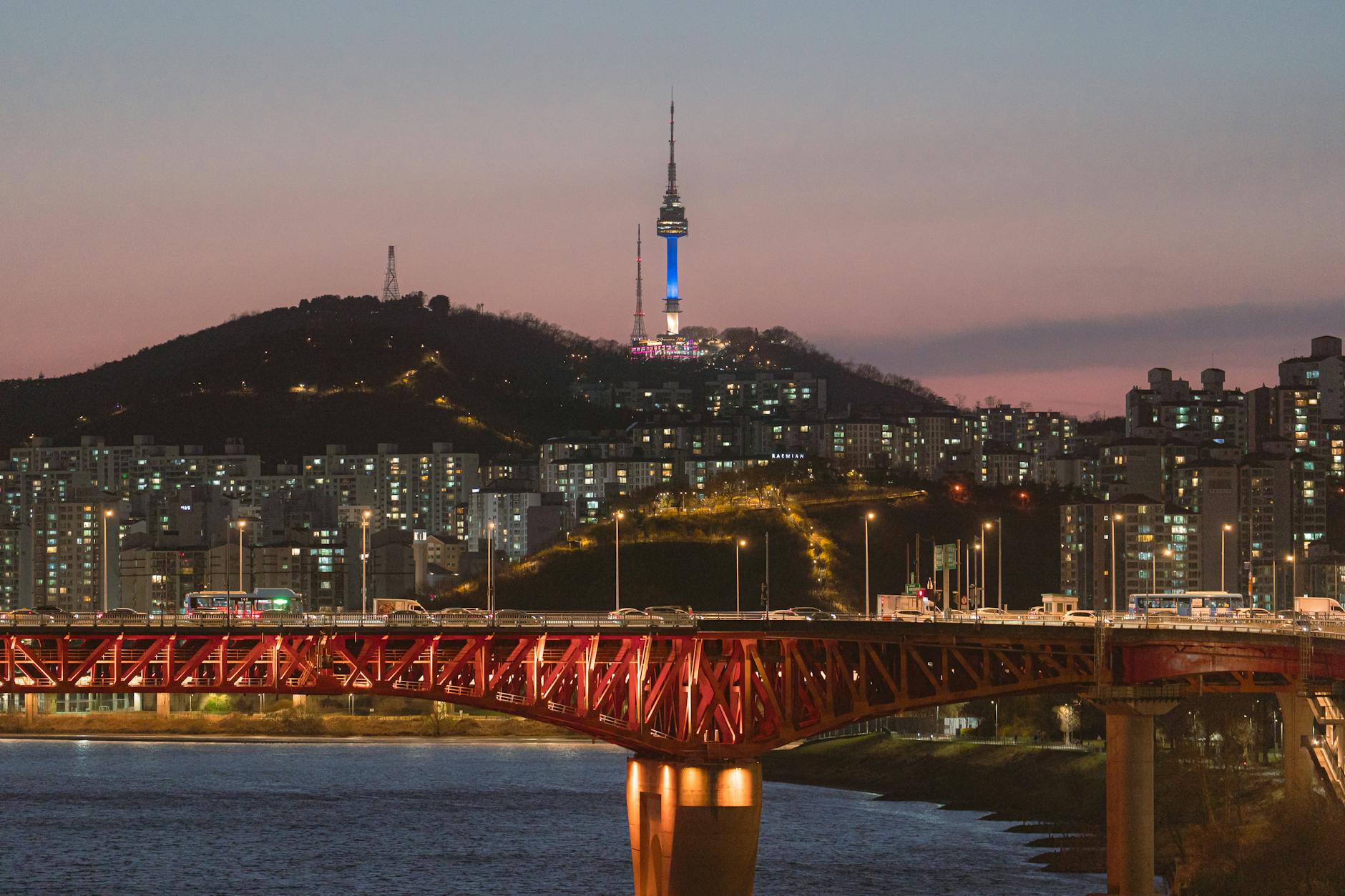
The tower’s lights double as a public air-quality indicator. When the air is good, the tower glows blue; when it is normal, green; and when fine dust levels are unhealthy, yellow or red. It is a useful check before you commit to the trip up: if you can see the tower from your hotel and it is not blue or green, the view from the top will be hazy, and the observatory ticket will not be worth it that evening. Spring is the worst season for fine dust and the yellow dust that blows in from the continent; autumn is the best.
Namsan through the seasons
- Spring: cherry blossom and forsythia line the roads around the mountain in early April, and the gentle north-side walk becomes one of the prettiest in the city. Spring is also the worst season for fine dust, so check the tower’s lights before you pay for the observatory.
- Summer: the mountain is green and shady, but hot and humid, and the July monsoon brings sudden downpours. Walk up after 18:00, when it cools a little, carry water, and enjoy the long evenings: sunset is close to 20:00 in June and July, and earlier through August.
- Autumn: the best season. Late October and early November turn the slopes red and gold, the air is usually at its clearest, and sunset comes at a civilised hour. The cable car ride is at its most beautiful now, and its queues at their longest.
- Winter: cold and windy at the top, with sunset around 17:15 in December and later through January and February, but quieter, with crisp, clear air on the best days. This is when the observatory’s warmth earns its ticket price. Wrap up for the terraces and take the bus rather than lingering on the paths after dark.
Eating and drinking at the top
The tower has cafes, snack bars and restaurants, including a revolving restaurant for special occasions, at the prices you would expect for the view. For a normal dinner you will do better, and spend less, back down in Myeongdong or on the Itaewon side. A good plan is a coffee on the terraces at sunset and dinner in the city afterwards.
Combining the tower with Myeongdong and Namsan
N Seoul Tower sits directly above Myeongdong, which makes a natural afternoon-into-evening plan: shopping and street food in Myeongdong, the walk or the cable car up at sunset, the view, and back down for a late dinner. Our Myeongdong guide covers the ground-level half. Nearby, Namsangol Hanok Village, at the foot of the mountain by Chungmuro Station, is a free open-air collection of traditional houses with a pleasant garden, and a good start to the gentle north-side walk. In spring, the roads around Namsan are lined with cherry blossom, and in late October and November the whole mountain turns red and gold; our cherry blossom and autumn foliage guides have the timing.
Three ways to do it
- The free evening: walk up from Myeongdong an hour before sunset, watch it from the terraces, add a lock if you like, and take the bus down to Chungmuro. Total cost: ₩1,500 at most.
- The classic: take the cable car up one way for ₩12,000, see the sunset from the observatory for ₩29,000, and walk down through the woods to Myeongdong for dinner.
- The family evening: take bus 01A or 01B from Chungmuro Station, Exit 2, in the late afternoon, see the free performances and the terraces, go up the observatory if the air is clear, and take the bus back before the children flag.
With children or limited mobility
The Namsan circular bus is the easiest way up for families and for anyone who finds hills difficult: it stops a short, paved walk below the plaza, and a T-money card covers it. From Myeongdong, the free Namsan Oreumi inclined elevator takes much of the effort out of reaching the cable car station, and the cable car itself saves the climb. The walking routes from Myeongdong and Hoehyeon are mostly stairs and hard work with a pushchair; if you want to walk with one, the paved north-side road is the gentler choice. At the top, the plaza is level and the observatory is reached by lift. Children pay the reduced observatory and cable car fares, and they will probably be happiest with the free performances, the locks and the ride. Our guide to Seoul with kids has more family ideas for central Seoul.
Is N Seoul Tower worth it? The honest verdict
Yes, but not necessarily the paid parts. The experience of N Seoul Tower, the mountain, the walk or ride up, the locks, the sunset over the city, is one of the best in Seoul, and most of it is free. The cable car is a pleasant ride that is rarely worth a long wait at busy times, and the observatory is a good extra on a clear day but inessential on a hazy one.
If you are choosing between N Seoul Tower and Seoul Sky at Lotte World Tower, the difference is atmosphere against height. N Seoul Tower has the mountain, the romance and a free option; Seoul Sky is taller, sleeker and has a glass floor. Most visitors need only one observation deck, and our guide to Seoul’s ticketed attractions explains how to choose. If you are on a budget, N Seoul Tower wins, because you can enjoy it without buying a ticket at all.
If you are weighing the two towers, our Seoul Sky guide covers the other contender: the observatory at the top of Lotte World Tower, higher and sleeker than N Seoul Tower, with a glass floor and direct subway access, but ₩33,000 with no free option at the top.
Frequently asked questions
How much is N Seoul Tower?
The observatory costs ₩29,000 for adults and ₩23,000 for children (3–12) and seniors (65+); prices have risen before, so confirm on the official site. The plaza, terraces and love locks at the top are free.
How much is the Namsan cable car?
₩15,000 round trip or ₩12,000 one way for adults, with lower fares for children. It runs from 10:00 to 23:00, and the weekend queue around sunset is the longest of the day.
What is the cheapest way up to N Seoul Tower?
Walking, which is free: from Myeongdong or Hoehyeon stations the paths climb steeply through Namsan Park. The Namsan circular buses 01A and 01B cost ₩1,500 by transport card from Chungmuro Station, Exit 2.
Can you take a taxi to N Seoul Tower?
No. Taxis and private cars are barred from the summit road. Take the bus, the cable car or walk.
What time should I go to N Seoul Tower?
About 45 minutes before sunset on a clear day, so you see the city in daylight, at dusk and lit up. Weekdays are quieter, and autumn has the clearest air.
Is the N Seoul Tower observatory worth it?
On a clear day, especially at night, it is a good experience. But the free terraces give you most of the view, so on a hazy day or a tight budget, skip it. If the tower is lit yellow or red, the air is poor.
How long do you need at N Seoul Tower?
Two to three hours, including the trip up, the terraces and the observatory. Allow longer if you walk up or queue for the cable car at a busy time.
Final thoughts
N Seoul Tower is at its best when you treat the mountain as the attraction and the tower as the reward. Walk up or take the bus, arrive before sunset, look out from the free terraces, and only then decide whether the observatory is worth it that evening. Do it on a clear night and it is one of the loveliest things to do in Seoul, whatever you spend. For the rest of the city’s paid sights, see our guide to Seoul’s ticketed attractions.
Photo Credits
Love locks on the terrace at sunset: Locks on Seoul Tower (6907571281) by Jimmy McIntyre – Editor HDR One Magazine, CC BY-SA 2.0, via Wikimedia Commons.
The Namsan cable car: Korea-Seoul-Namsan Cable Car-01 by Andrew Bell, CC BY 2.0, via Wikimedia Commons.
Palgakjeong pavilion and the tower at dusk: N Seoul Tower (13952097192) by Eugene Lim from Hong Kong, CC BY 2.0, via Wikimedia Commons.
Seoul at night from N Seoul Tower: City of Seoul View From N Seoul Tower by Penmerahpenbiru, CC BY 3.0, via Wikimedia Commons.
The skyline and tower at dusk: A Night View Of Seoul (95297801) by Lee Kyu Sang, CC BY 3.0, via Wikimedia Commons.