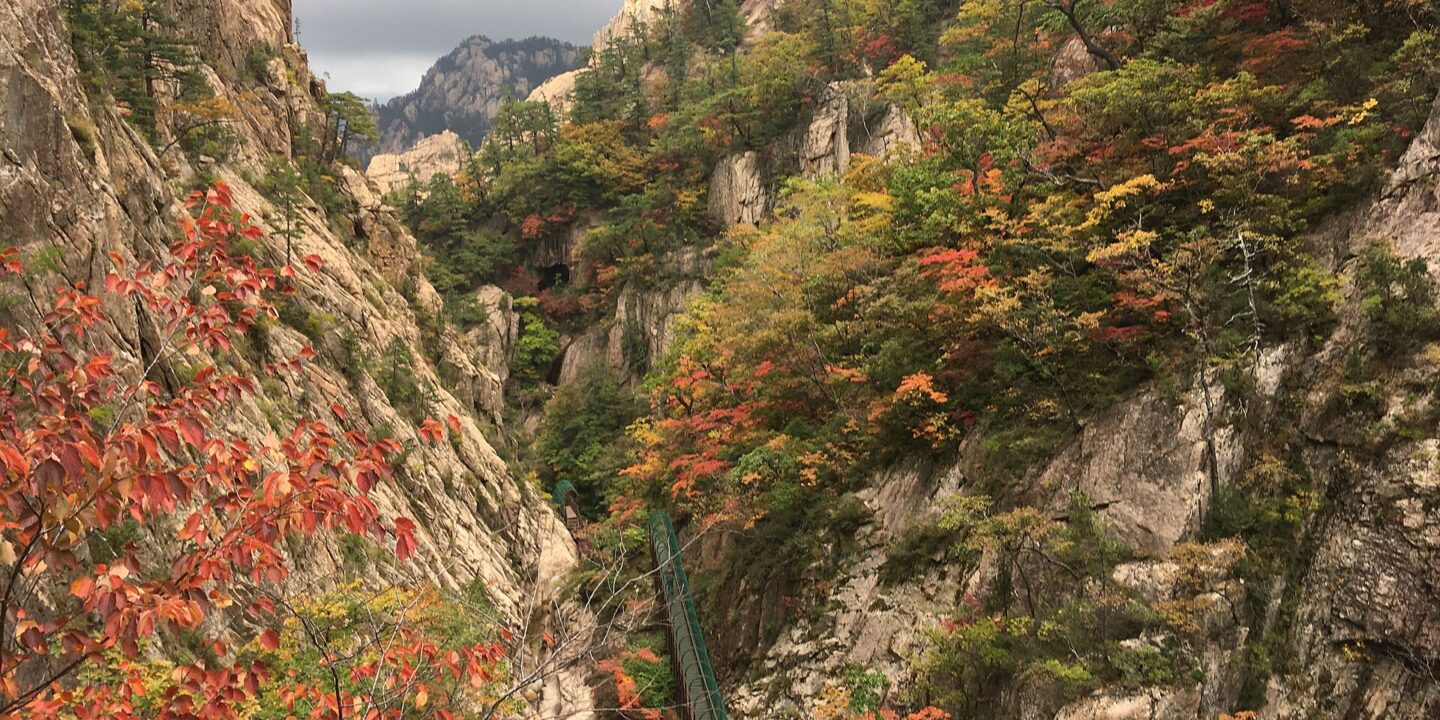
This guide covers how to get there from Seoul by express bus, the three ways to see the park in the time a day trip allows (the cable car, the Ulsanbawi climb and the flat valley walk past Sinheungsa), what the autumn foliage season does to crowds, and how to fold Sokcho’s market, Abai Village and Naksansa into the same day. It ends with an honest answer on whether a day trip is worth it at all, the bus-versus-tour arithmetic, and a short FAQ. Prices and times were checked in October 2026; cable car hours in particular change with the season, so treat them as a guide and check the operator’s page before you set off.
Seoraksan and Sokcho at a glance
Here is the whole trip in one table. The “verdict” column is the short answer for someone based in Seoul with one free day.
| What | The short version |
|---|---|
| Getting there | Express bus from Seoul Express Bus Terminal or Dong Seoul to Sokcho, about 2 hours 10 to 2 hours 30, then city bus 7 or 7-1 to the park entrance |
| Park entry | No national park admission charge; check at the gate for the temple area |
| Seorak Cable Car | ₩16,000 adult return, ₩12,000 child; round trips only, sold on site, no online booking |
| Best short hike | Ulsanbawi: steep, ends on steel stairs, allow most of a half day there and back |
| Easiest walk | The valley path past Sinheungsa towards Biseondae: flat, shaded, no climbing |
| Autumn colour | Seoraksan’s first colour came on 28 September 2026; peak is normally around 17 October |
| Add-ons in Sokcho | Sokcho Tourist & Fishery Market, Abai Village and the hand-pulled ferry, Naksansa on the coast to the south |
| Verdict | A long but rewarding day; a night in Sokcho turns it into a relaxed one |
If you only read one line: leave Seoul early, choose one thing to do in the park, and do not try to stack the cable car, Ulsanbawi and all three Sokcho add-ons into the same day. That is the itinerary that ends with you sprinting for the last bus back.
Why Seoraksan is worth the journey
Seoul is not short of mountains. Bukhansan is on the subway map, Inwangsan and Namsan are inside the city, and you can be on a granite ridge within an hour of breakfast. So why spend five hours on a bus to see another one?
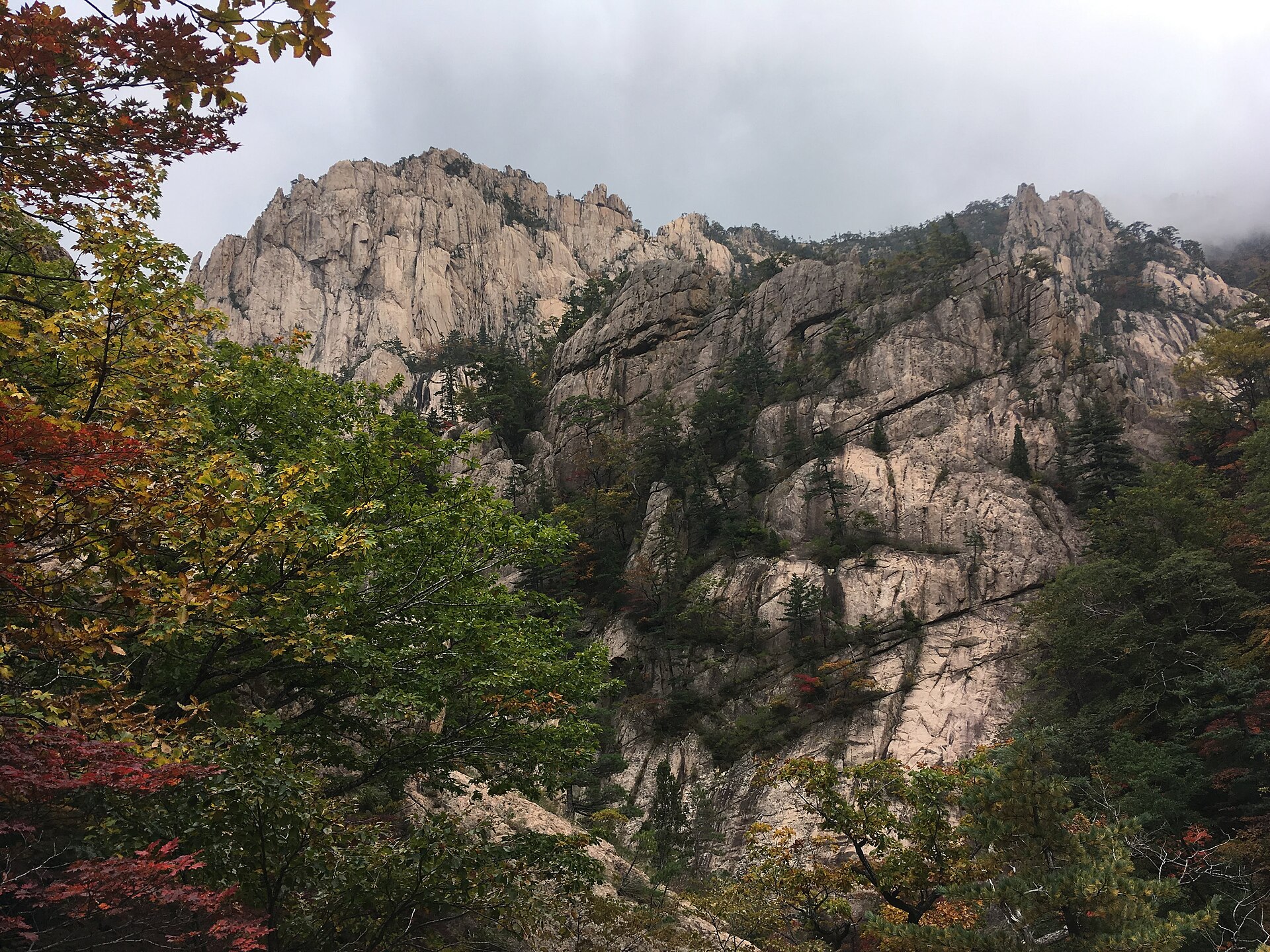
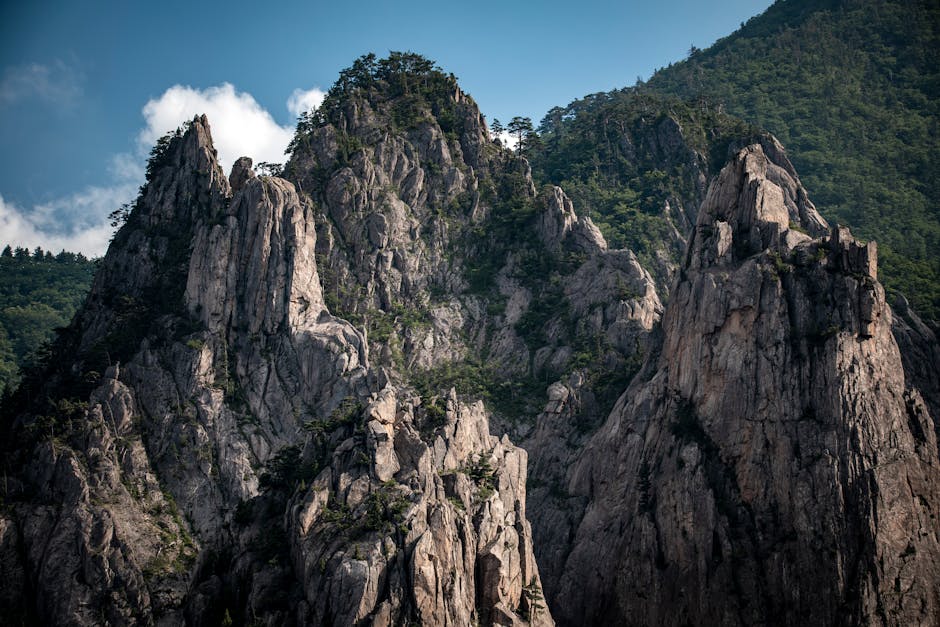
Scale, mostly. Seoraksan was designated a national park in 1970 and became a UNESCO Biosphere Reserve in 1982. It covers about 400 square kilometres, and its highest peak, Daecheongbong, reaches 1,708 metres. The outer valleys near Sokcho are a tangle of granite needles, slabs and gorges that make Seoul’s hills feel like parkland. In autumn the maples and oaks between the rock faces turn red and gold, and the effect is closer to a classical Chinese landscape painting than anything near the capital.
The second reason is the sea. Sokcho sits on the East Sea coast a short bus ride from the park entrance, so the same day can end with a seafood dinner and a walk along a harbour. Very few mountain trips anywhere let you swap hiking boots for a fish market in the space of a city bus ride.
The honest counterpoint: if you have only three or four days in Korea and have never been to Seoul before, this is not the trip to sacrifice a whole day of the capital for. It is a better fit for a second visit, for anyone who loves mountains, or for anyone already heading to the east coast. Our guide to where to go in Korea beyond Seoul puts it alongside the alternatives.
Getting from Seoul to Seoraksan
By express or intercity bus
There is no train to Sokcho, so the bus is the way in. Two Seoul terminals run the route:
- Seoul Express Bus Terminal (Express Bus Terminal Station, subway Lines 3, 7 and 9), in Seocho-gu south of the river. Express buses to Sokcho run from here.
- Dong Seoul Bus Terminal (Gangbyeon Station, Line 2), on the east side of the city. Intercity buses to Sokcho leave from here, and it is usually the handier of the two if you are staying north of the river or in the east.
The cable car operator gives the journey as about 2 hours 30 minutes on the express bus and about 2 hours 10 minutes on the intercity, with departures roughly every 30 minutes. Traffic on the expressway out of Seoul decides the real figure, and on autumn weekends that can add a good deal. Fares and the exact timetable are on kobus.co.kr for the express service; Dong Seoul’s intercity buses sell through the terminal, so check its timetable. Buy your outbound and return seats together, and buy them days ahead for a weekend in October.
The two routes arrive at two different terminals in Sokcho: the express bus terminal and the intercity bus terminal. They are close to each other and both are on the city bus route to the park, so it matters less than it sounds, but note which one your return bus leaves from.
From Sokcho to the park entrance
City buses 7 and 7-1 start at Sokcho’s intercity bus terminal, call at the express bus terminal, and run to the Seoraksan entrance, the visitor centre and finally the Seoraksan car park at Sogongwon, which is the stop you want. Pay with a T-money card, which works on Sokcho’s buses just as it does in Seoul; our T-money card guide covers topping it up. Allow around half an hour for the ride, more on a busy autumn weekend when the road up the valley clogs with cars.
A taxi from either terminal is quicker and, split between three or four people, not much more than the bus fares combined. It is worth it on the way back if you are cutting it fine for your bus to Seoul.
Is there a train option?
Not directly. Sokcho is not on the rail network today. If you have a Korail pass or simply prefer trains, the KTX-Eum runs to Gangneung, and you can continue north up the coast by bus. For a Seoraksan day trip that adds a leg and a connection, so it only makes sense if you are combining Gangneung and Sokcho into a two-night trip along the coast. Check Korail for current services before planning around it.
Park entry, hours and the Sogongwon entrance
Korea’s national parks stopped charging admission years ago, so there is no fee for the park itself. The temple area around Sinheungsa has in the past had a separate cultural-heritage charge at the gate, so ask at the booth if you meet one. The Seoraksan National Park office (033-801-0900) can tell you what it is for.
Most day-trippers use the Sogongwon area at Seorak-dong, the outer-Seorak entrance on the Sokcho side. Everything in this guide starts from there: the cable car base station is about five minutes’ walk from the entrance, Sinheungsa is a few minutes further, and the trails to Ulsanbawi and Biseondae both start beyond the temple. There are restaurants, convenience shops, toilets and a visitor centre near the entrance, so you do not need to carry lunch up from Sokcho unless you are heading for the high ridges.
Trail opening hours depend on the season and the route, and Korea National Park Service closes some trails for fire prevention in spring and late autumn, or in bad weather. Check the Seoraksan page on the Korea National Park Service site, which lists current trail controls and time-designated entry rules, the evening before you go. It is the one check that can save you a five-hour round trip to a closed path.
Three ways to see Seoraksan in a day
With about five hours of bus travel bookending the day, a day-tripper realistically gets five to seven hours in Sokcho and the park combined. That is enough for one of the three options below, plus a market dinner. The table sums them up; the sections after it go into each.
| Cable car | Ulsanbawi climb | Sinheungsa and the valley walk | |
|---|---|---|---|
| Effort | Low, with a short rocky scramble at the top | High: steady climb, then steep steel stairs | Low: mostly flat paths |
| Time | 1–2 hours, plus any wait for your boarding time | Most of a half day return | 1–3 hours, as long as you like |
| Cost | ₩16,000 adult return | Free | Free |
| The view | Across the outer Seorak peaks, out to Sokcho and the sea on clear days | The best of the three: the whole outer valley and the coast | Looking up at the cliffs rather than out over them |
| Best for | Non-hikers, families, short days | Fit walkers who want the classic | Anyone, in any weather |
Option one: the Seorak Cable Car
The Seorak Cable Car runs from Sogongwon up to a rocky shoulder of the mountain, the knoll known as Gwongeumseong after the old fortress said to have stood there. The line is 1,128 metres long and the top station sits at 699 metres. The ride takes about five minutes each way, cars leave every 10 to 15 minutes, and about every five minutes when it is busy. From the top station a short, rocky walk brings you out onto open granite with a view across the outer Seorak peaks and, on a clear day, down to Sokcho and the sea.
The prices for 2026 are ₩16,000 for an adult return, ₩12,000 for a child from 37 months up to elementary-school age, and free for children under 36 months. Only round-trip tickets are sold: there is no walking trail down from the top station, so everyone comes back the way they went up. The usual senior discount does not apply during the busiest stretches of the year, which in 2026 included the autumn period from 19 September to 15 November.
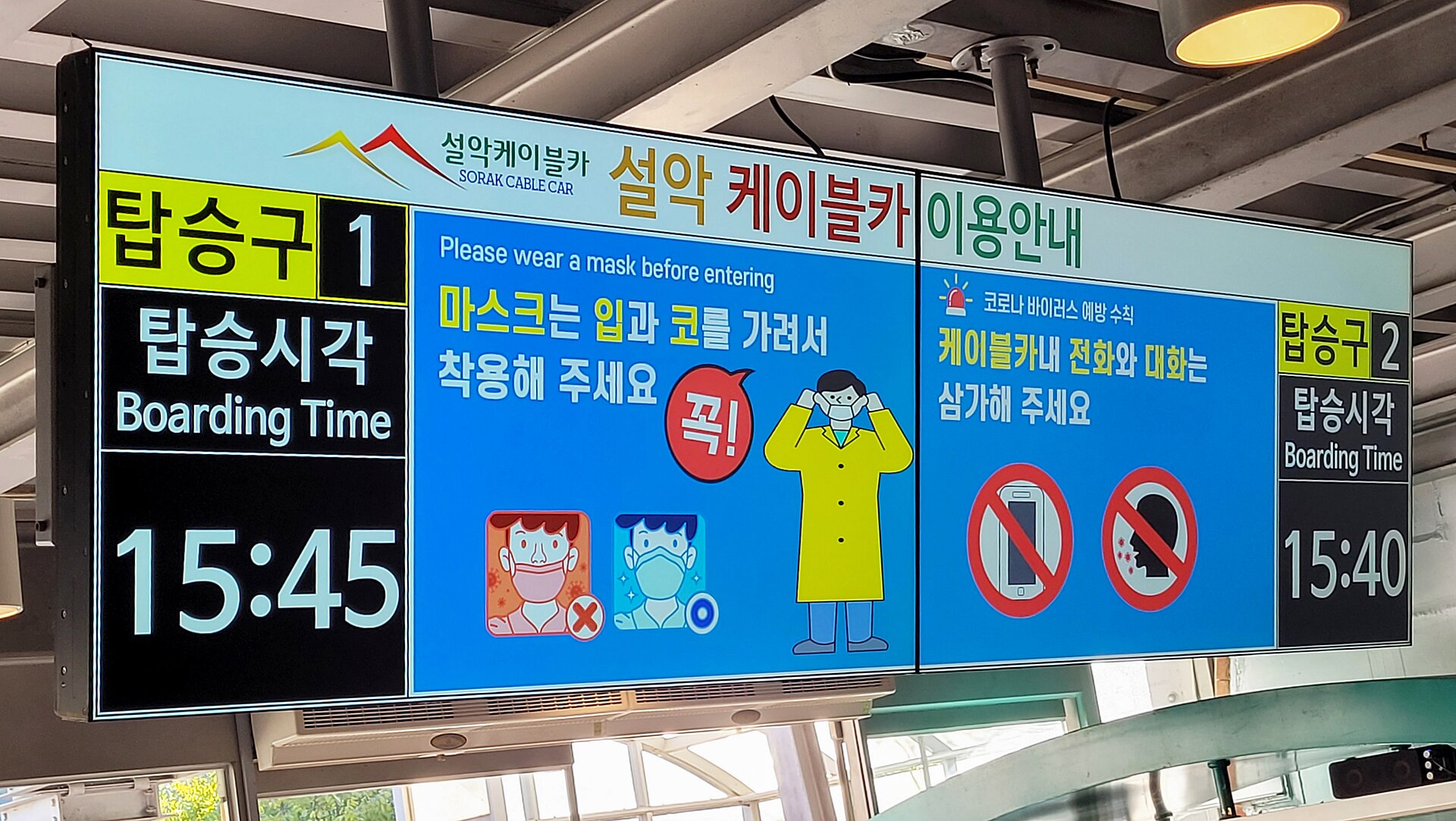
The thing that catches people out is how tickets work. There are no reservations and no online sales. You buy your ticket at the base station on the day, and it carries a boarding time. On a quiet weekday that may be the next car. On an October weekend it can be well into the afternoon, which is why people who arrive at lunchtime sometimes find the rest of their day planned for them. If you miss your slot, the operator charges a 20% fee and gives you a new time. Refunds are full up to ten minutes before boarding.
Hours change with the season. On 15 and 16 October 2026 the cable car runs from 08:30 to 17:30, but hours change with the season, and it stops for strong wind or bad weather. Check the Seorak Cable Car website for the day’s hours before you leave Seoul.
Is it worth it? For non-hikers, yes: it is the easiest way to get above the valley floor, and the view from the top is genuinely good. For anyone fit enough to walk Ulsanbawi, it is the lesser option, and in peak foliage season the boarding-time system can eat half your day. Buy your ticket the moment you arrive, then use the waiting time for Sinheungsa and the valley path rather than standing around the base station.
Option two: the Ulsanbawi climb
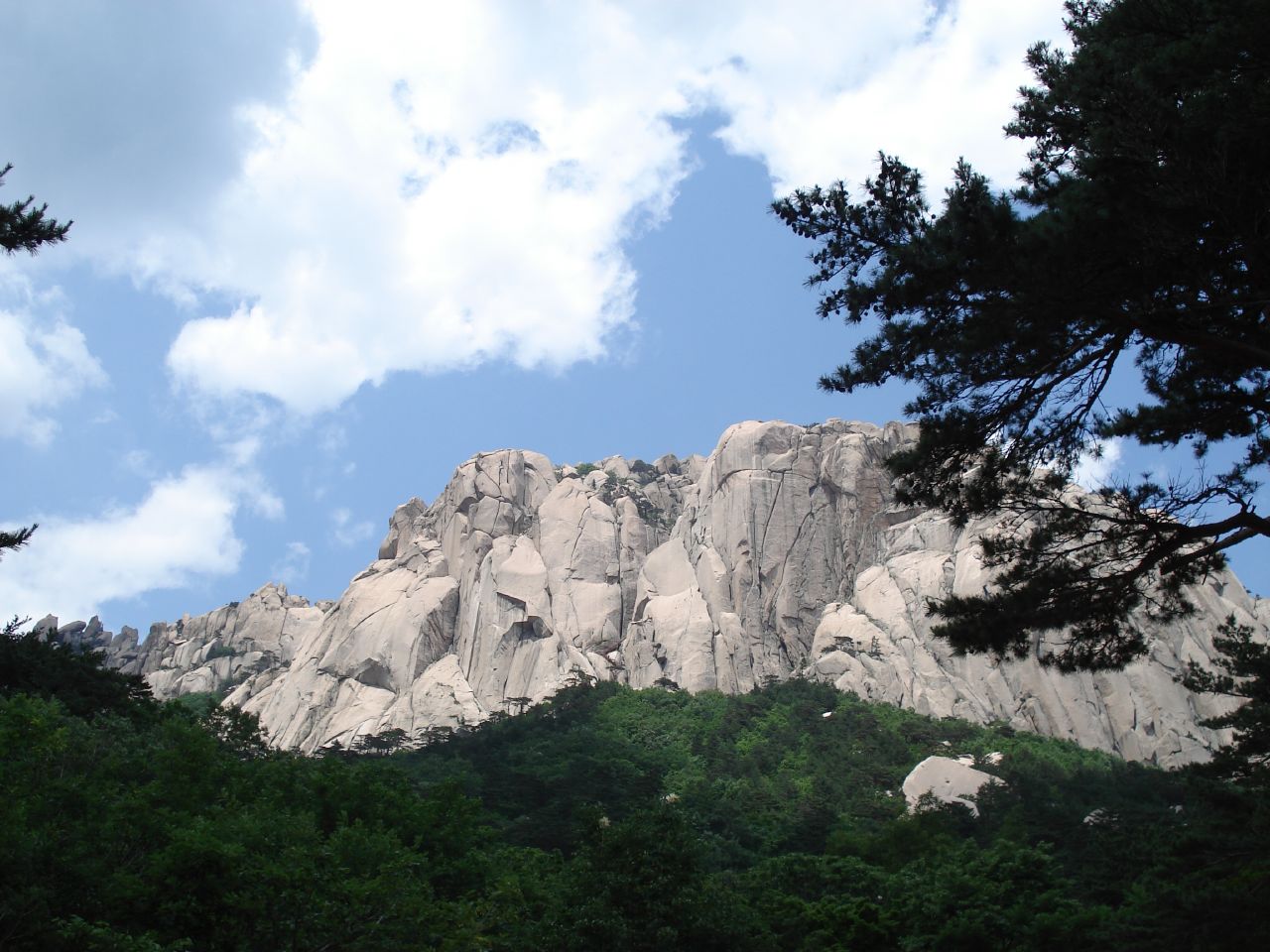
Ulsanbawi is the long, castellated granite ridge you see from all over the outer valley, and the climb to its top is the classic day hike from Sogongwon. The route goes past Sinheungsa, climbs steadily through forest to the hermitage at Gyejoam and the famous rocking stone, Heundeulbawi, and then turns serious: the last stretch to the ridge is a long run of steep steel stairs bolted to the rock face. Allow most of a half day there and back including stops. The park’s course page gives the current distance and time.
The reward is the best view a day-tripper can get: the whole outer Seorak valley on one side, Sokcho, its lakes and the East Sea on the other. It is not technical, and you will see plenty of Korean pensioners on it, but it is hard work, and the stairs are no fun for anyone who dislikes heights. Wear shoes with grip, carry water, and start early: the stairs are narrow, and on autumn weekends they can back up into a single-file queue in both directions.
The turnaround rule for a day-tripper is simple: if you have not reached the stairs by early afternoon, turn back. Daylight runs short in late October and your bus to Seoul will not wait.
Option three: Sinheungsa and the flat valley walk
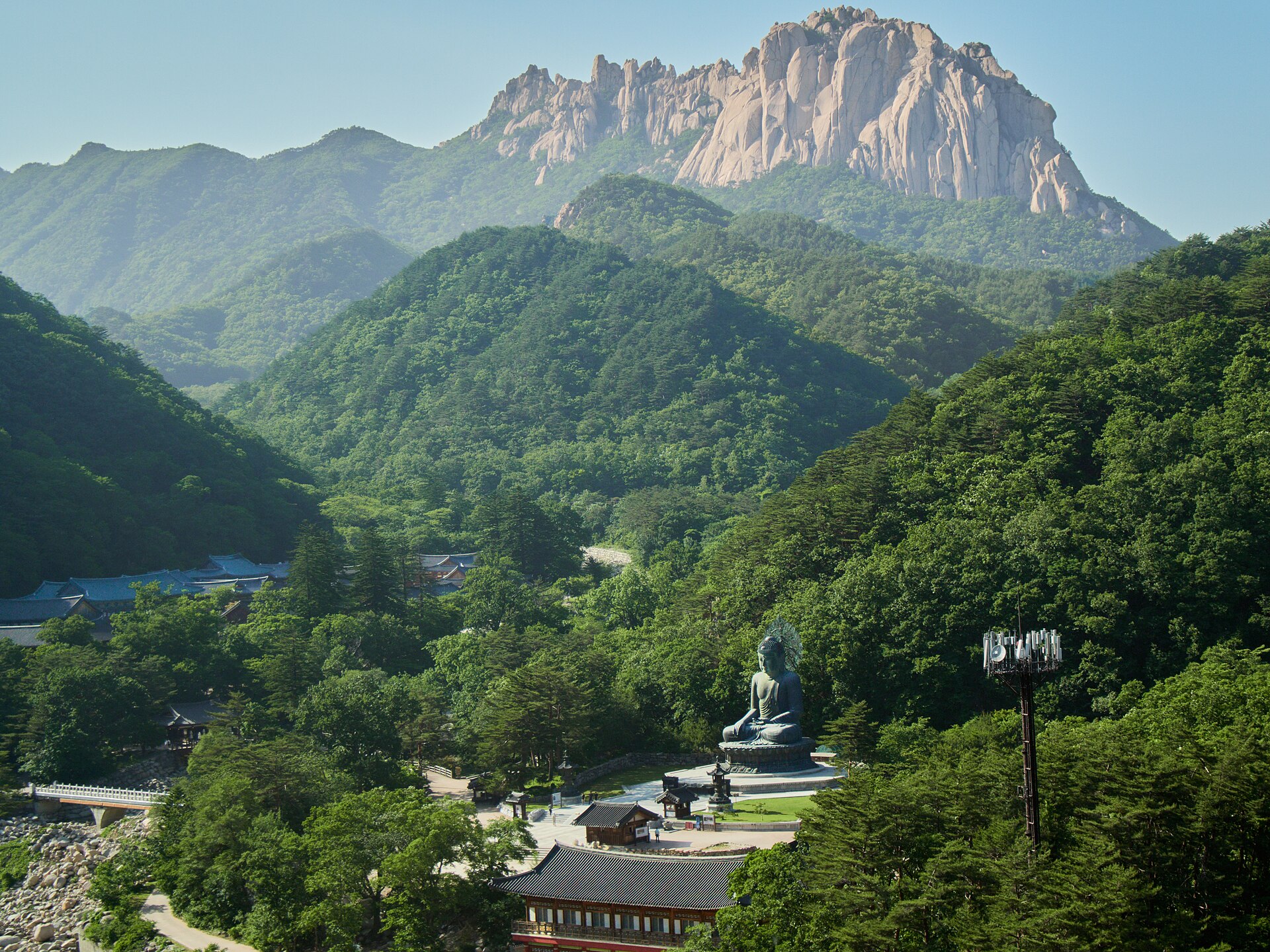
If you want the scenery without the climbing, or the weather closes the high ground, the valley floor is still spectacular. Start at Sinheungsa, the Buddhist temple a few minutes inside the entrance, whose great seated bronze Buddha is one of the best-known images of the park. Then follow the stream path deeper into the valley towards Biseondae, where the water runs over broad granite slabs beneath sheer cliffs. The path is mostly level and wide, and you can turn round whenever you have had enough.
A separate path from the same entrance leads to the Biryong and Towangseong waterfalls, but it climbs more than the Biseondae walk. Pick one, not both, on a day trip.
This is the best option in light rain, for families, and for anyone whose knees have opinions about steel stairs. It is also the easiest to combine with the cable car while you wait for your boarding time.
What about Daecheongbong?
The summit, at 1,708 metres, is a long, hard day from any trailhead, and day-trippers from Seoul should forget about it. Hikers who want it stay the night in Sokcho or near one of the park’s other entrances, start before dawn, and check the trail controls carefully, because the high routes are the ones most often restricted. If that is your goal, it is a trip in its own right, not an add-on.
Autumn foliage season: when to go and what it costs you
Autumn is Seoraksan’s big season, and the brief is that the colour starts here first. Because the mountain is high and far north, the leaves turn on Seoraksan before almost anywhere else in South Korea, then the colour moves down the slopes and south across the country over the following weeks. The Korea Meteorological Administration counts “first foliage” when about 20% of the mountain, measured from the summit down, has turned, and “peak” when about 80% has.
In 2026 the first colour on Seoraksan was recorded on 28 September, the same as its long-term average date. The normal peak date is 17 October; in 2025 the peak came on 24 October. The high ridges turn first, and the colour then moves down the mountain towards the valleys around Sogongwon, where day-trippers actually walk. The KMA publishes live foliage updates for famous mountains on weather.go.kr through the season; check it a few days before you book.
The booking scramble
Peak foliage is also peak everything else. Expect:
- Sold-out buses on autumn weekends, in both directions. Book your return at the same time as your outbound, and book days ahead.
- Traffic on the expressway and especially on the last few kilometres up the valley road to Sogongwon, which can add an hour.
- Late boarding times for the cable car, often hours after you buy.
- Queues on the Ulsanbawi stairs, which can stop moving for minutes at a time.
- Full guesthouses in Sokcho on Friday and Saturday nights.
The single best fix is to go on a weekday. A Tuesday in late October is a completely different experience from a Saturday. If you must go at the weekend, take the first bus you can and head straight for whatever you came for, before the coaches arrive. Our wider guide to autumn foliage in and around Seoul has closer options for days when Seoraksan is simply too busy.
The rest of the year
Seoraksan is not only an autumn trip. Spring brings fresh green, and Sokcho’s beaches make summer a reasonable choice, though it is also the rainy season. Winter puts snow on the peaks and empties the trails, but it is cold up high, some routes close, and the cable car stops in strong wind. In every season the mountain is colder than Seoul, so pack a layer even on a mild day. Our Seoul weather by month guide gives the city’s baseline.
Adding Sokcho: market, ferry and sea
Sokcho is a small, friendly fishing city with a lot packed into a short distance, and it is the natural place to end a Seoraksan day. Three stops are worth knowing.
Sokcho Tourist & Fishery Market
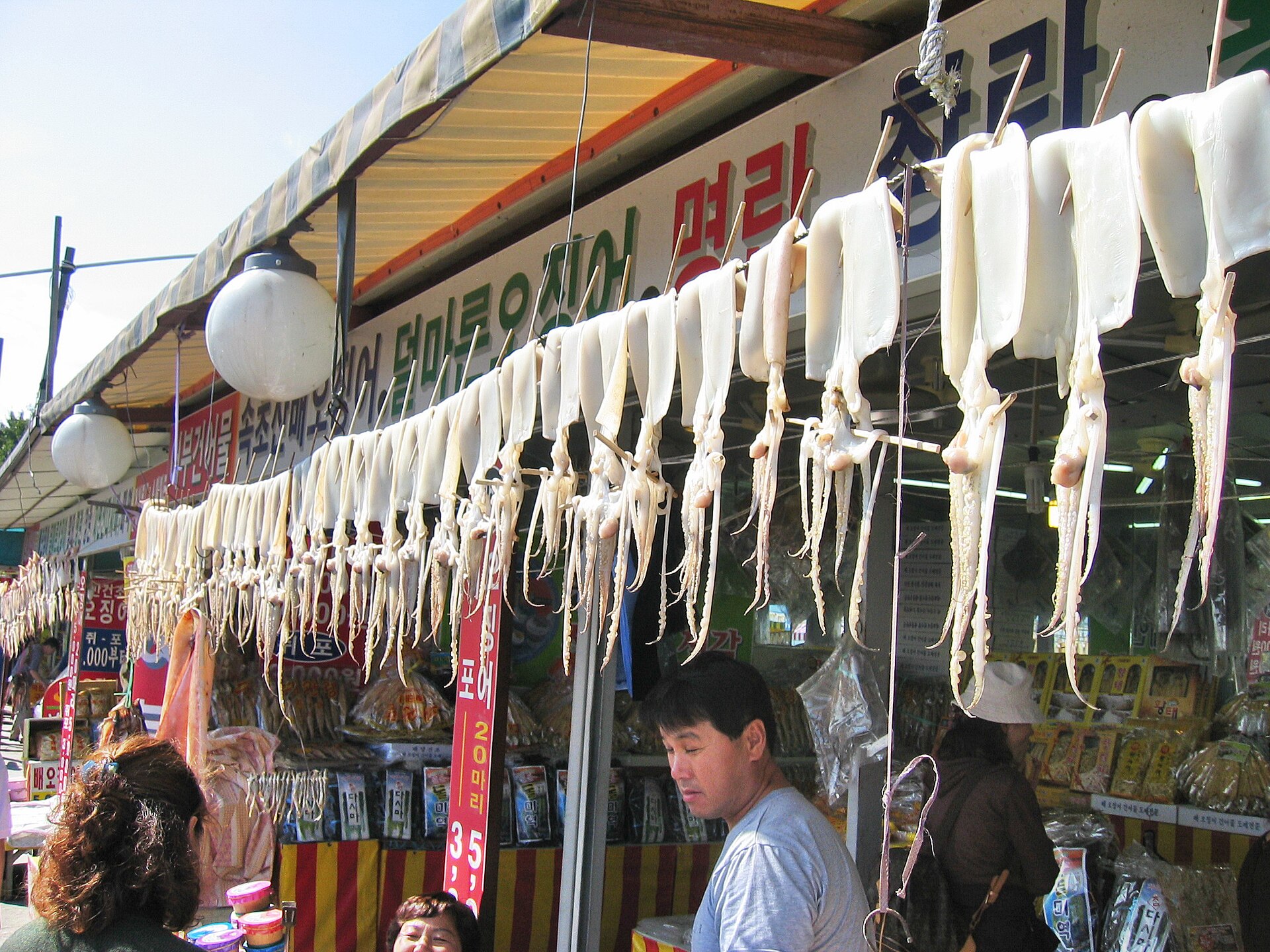
The town’s big covered market used to be called Jungang Market, and you will still see that name on older maps and signs. It is now officially the Sokcho Tourist & Fishery Market. Inside are seafood stalls, dried squid, snack counters and the dish the city is famous for across Korea: dakgangjeong, crisp fried chicken pieces tossed in a sticky sweet-spicy glaze and sold in boxes to take away. It travels well, which is why so many people carry a box back to Seoul on the bus. If you like Korean fried chicken, it is worth the detour on its own; our Korean fried chicken guide covers the Seoul side of the story.
The market is also a good place for a sit-down seafood meal before the bus home. Stall hours vary, so do not leave dinner until the last minute.
Abai Village and the Gaetbae ferry
Abai Village is a neighbourhood on a sandbar between Sokcho’s harbour and the sea, settled by refugees from the North during the Korean War who expected to go home and never could. Its name comes from the northern dialect word for an old man. Today it is known for its northern-style food, especially abai sundae (a squid-stuffed sausage) and naengmyeon, and for the Gaetbae, a flat barge you pull across the short channel by hauling on a fixed cable. It is a tiny crossing and charmingly low-tech. Carry some cash for the fare.
Combine it with the market: the two are close enough to walk between, and the ferry gives you a different route back.
Naksansa and the coast to the south
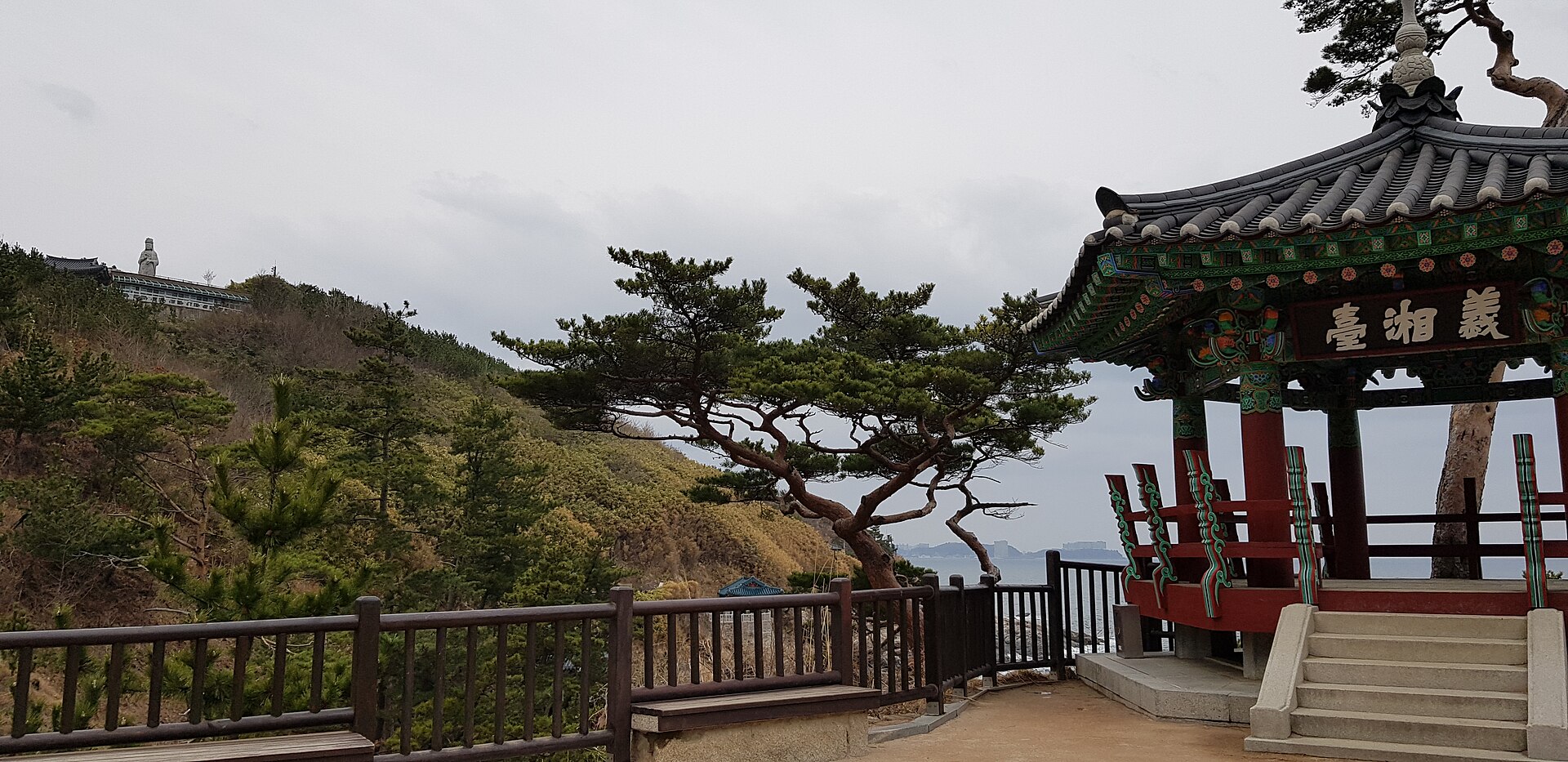
Naksansa is a Buddhist temple on a headland above the East Sea, just south of Sokcho in Yangyang. Its best-known corner is Uisangdae, a small pavilion on the cliff edge among old pines, which is one of the classic sunrise spots on the east coast. The temple was badly damaged by a forest fire in 2005 and has since been rebuilt, and it is a lovely, breezy place to walk after a day under the cliffs of Seoraksan.
It is a local bus ride from Sokcho. Check the temple’s own channels for current opening hours and any entrance charge before you go. On a day trip, Naksansa realistically replaces the hike rather than adding to it; it suits a second day, or anyone who would rather have the sea than the mountain.
A realistic day trip from Seoul
Here is a timeline that works, assuming an early bus and an autumn weekday. Times are approximate and built on the operator’s journey times; plug in the actual departures you book.
- 07:00 Leave Dong Seoul or the Express Bus Terminal. Bring breakfast to eat on the bus.
- 09:30 Arrive in Sokcho. Walk to the city bus stop and take bus 7 or 7-1 to Sogongwon.
- 10:00 At the entrance. If you want the cable car, buy your ticket first and note your boarding time.
- 10:15–14:30 Your one big thing: Ulsanbawi, or the cable car plus Sinheungsa and the Biseondae path. Lunch at the restaurants by the entrance.
- 15:00 Bus back down to Sokcho.
- 15:30–17:30 The market, dakgangjeong to take away, and the Gaetbae across to Abai Village for an early dinner.
- 18:00 Bus back to Seoul, arriving late evening.
Two things wreck this plan: a late start and a weekend. Leave on a later bus and you lose the hike; travel on a Saturday in mid-October and you should add an hour to every leg. In that case, drop Sokcho to a quick market visit and accept the shorter day.
Day trip or overnight?
A day trip works. It is also about five hours on a bus for five or six hours on the ground, and the second half of the day is shaped by a fixed departure time. That is fine for fit, organised travellers who want the mountain and nothing else.
A night in Sokcho changes everything. You can do the hike in the morning without watching the clock, spend the afternoon by the sea, eat a proper dinner, catch the sunrise at Naksansa or on the beach, and travel back the next afternoon when the roads are quieter. If your trip has the slack, it is the better plan. Two days also make it possible to combine Seoraksan with Gangneung along the coast, which our day trips from Seoul guide and the beyond-Seoul hub both cover.
If you can only spare a single day and the idea of ten hours of travel sounds miserable, consider whether you really need Seoraksan. Bukhansan gives you Seoul’s own granite peaks on the subway, and Nami Island is a far shorter trip for autumn colour.
Public bus or guided tour? The maths
Guided day tours to Seoraksan run from central Seoul, usually with hotel or subway-station pick-ups, a fixed number of hours at the park, and sometimes a stop in Sokcho or at Naksansa. Here is how to compare them with doing it yourself.
Doing it yourself
Your costs are:
- two long-distance bus fares (outbound and return), which kobus.co.kr shows when you search the route;
- four short city bus rides in Sokcho on T-money;
- ₩16,000 for the cable car, if you take it;
- food, plus any taxis.
For most people that adds up to less than a tour, often noticeably less, and you choose your own times, your own trail and how long you stay at the market.
When a tour wins
- You do not want to deal with terminals and Korean-language timetables. Both Seoul terminals are manageable, but a tour removes every decision.
- You are travelling alone and want company on the mountain, or a guide who knows the trail.
- The tour includes the cable car and handles the ticket on your behalf. Read the small print: given the boarding-time system, no tour can promise you a particular slot.
When comparing, divide the tour price by the hours you actually get at the park, and check whether the cable car is included or “optional”. Tours pick up across Seoul before setting off, so their time on the ground is often no better than a well-planned early bus.
Practical tips
- Check the trail controls on the Korea National Park Service site the night before.
- Book the return bus when you book the outbound, especially for an October weekend.
- Carry cash as well as cards: the Gaetbae, some market stalls and small restaurants prefer it.
- Bring layers. The top of the cable car and the Ulsanbawi ridge are windy and noticeably colder than the valley.
- Wear shoes with grip for Ulsanbawi; granite and steel stairs are slippery when wet.
- Keep your T-money topped up for the Sokcho buses.
- Do not count on the cable car on a windy day; have the valley walk as a backup.
- Pack light. Neither Seoul bus terminal nor the trail is a place to drag a suitcase; our Seoul packing list covers what to bring for autumn.
Frequently Asked Questions
How long does it take to get from Seoul to Seoraksan?
The cable car operator gives about 2 hours 30 minutes on the express bus from Seoul Express Bus Terminal and about 2 hours 10 minutes on the intercity bus from Dong Seoul, both to Sokcho, plus around half an hour on city bus 7 or 7-1 to the Sogongwon entrance. Weekend traffic in autumn can add an hour.
Is there an entrance fee for Seoraksan National Park?
There is no admission charge for the national park itself. A separate cultural-heritage charge has in the past been collected at the Sinheungsa gate. If you do see a booth, the park office (033-801-0900) can explain what it charges for.
How much is the Seoraksan cable car?
In 2026 the Seorak Cable Car costs ₩16,000 for an adult return and ₩12,000 for a child from 37 months to elementary-school age; under-36-months ride free. Only return tickets are sold, on site, with no online booking, and each ticket carries a boarding time.
Can you book the Seoraksan cable car online?
No. The operator takes no reservations. You buy tickets at the base station on the day, and in busy periods your boarding time may be hours after you buy, so get your ticket as soon as you arrive.
When is the best time to see autumn foliage at Seoraksan?
The colour reaches its peak around 17 October on average, and the lower valleys near Sogongwon turn after the high ridges. In 2026 the first foliage was recorded on 28 September. Check the KMA’s live foliage updates on weather.go.kr before you go.
How hard is the Ulsanbawi hike?
Moderately hard. The path climbs steadily through forest, then finishes on long, steep steel stairs up the rock. Allow most of a half day return with stops. It is not technical, but it is not for anyone uncomfortable with heights.
Can you do Seoraksan and Sokcho in one day from Seoul?
Yes, if you leave early and pick one main activity in the park, then add the market and Abai Village in Sokcho before the bus home. It is a long day. A night in Sokcho makes it far more relaxed.
Is there a train to Sokcho?
No. Sokcho is not on the rail network, so the bus is the direct route. The nearest KTX-Eum station is in Gangneung, from where you would continue north by bus.
Final Thoughts
Seoraksan rewards people who keep the plan simple. Leave Seoul early, choose the cable car, Ulsanbawi or the valley walk rather than all three, and finish in Sokcho with a box of dakgangjeong and a ride on the Gaetbae. Do that on a weekday in mid to late October and it is one of the best days you can have in Korea. Try to cram everything into a Saturday at peak foliage and you will mostly see the inside of a bus and the back of the person in front of you on the stairs. If you can find a night for Sokcho, take it.
Photo Credits
Autumn colour and granite cliffs in a Seoraksan gorge (featured image): Landscape in Seoraksan National Park 2 by Christophe95, CC BY-SA 4.0, via Wikimedia Commons.
Granite cliffs and autumn trees in Seoraksan: Landscape in Seoraksan National Park 1 by Christophe95, CC BY-SA 4.0, via Wikimedia Commons.
Sinheungsa’s bronze Buddha with Ulsanbawi behind: Seoraksan- Part II – Seoraksan3402 by lumoplank, CC0, via Wikimedia Commons.
Boarding-time boards at the Seorak Cable Car: Seoraksan Cable Car 01 by Bernard Gagnon, CC0, via Wikimedia Commons.
Ulsanbawi from the forest below: Korean.Seoraksan-Ulsanbawi-01 by flowerguy, CC BY 2.0, via Wikimedia Commons.
Dried squid at a Sokcho seafood stall: Korea-Sokcho-Squid.Market-01 by mera136, CC BY 2.0, via Wikimedia Commons.
Uisangdae pavilion at Naksansa: Naksansa, naksan temple uisangdae, 낙산사 의상대 by Cacaokiwi, CC BY-SA 3.0, via Wikimedia Commons.