This guide covers the three tiers of Muslim-friendly venue and how to read them, the Itaewon mosque district street by street, what to do in Myeongdong and Hongdae when you are nowhere near Itaewon, halal Korean barbecue that is genuinely certified, prayer rooms at the airport and around the city, and how Ramadan works in a country where almost nobody is fasting. Details were checked in September 2026; certifications lapse and restaurants close, so verify anything that matters to you before you travel.
At a glance
| Detail | |
|---|---|
| Main district | Itaewon, around Seoul Central Mosque — Itaewon Station (Line 6), Exit 3, uphill |
| Certifying body | Korea Muslim Federation (KMF) |
| Tiers | KMF-certified · Muslim-friendly / pork-free · self-declared or seafood-safe |
| Halal Korean BBQ | EID Halal Korean Food (Itaewon) · Yang Good (Gangnam) · Busan Jib K-BBQ (Itaewon) |
| Jumu’ah at Seoul Central Mosque | Fridays, 13:00 |
| Airport prayer rooms | Incheon Terminal 1 and Terminal 2, both with wudu facilities |
| Typical meal cost | ₩10,000–18,000 for a main; Korean BBQ ₩20,000–35,000 per person |
| Growth since 2020 | Muslim-friendly venues up roughly 150% |
The three tiers, and how to read a sticker
This is the single most useful thing to understand before you eat anywhere, because a green sticker in a Seoul window can mean four quite different things.
1. KMF-certified
The Korea Muslim Federation is the recognised certifying body in Korea, and its certificate means the kitchen has been inspected: no pork, no alcohol in cooking, meat sourced from certified suppliers, and separation maintained through preparation. This is the tier that satisfies most strict observance. There are not many of these restaurants — a few dozen across the country — and they are concentrated in Itaewon.
The certificate is normally displayed as a framed document rather than a sticker, and it carries an expiry date. If the certification matters to you, look at the date.
2. Muslim-friendly / self-certified
A much larger group. These kitchens have no pork and no alcohol on the premises, often source halal meat, and are frequently run by Muslim owners — but they have not gone through KMF inspection, usually because certification is expensive and slow relative to the size of the business. Many are excellent and entirely trustworthy. Some are simply a Korean restaurant that removed pork from the menu.
The practical approach is to ask directly. “Is the meat halal?” is a completely normal question in Itaewon and staff answer it plainly. In non-Muslim districts, expect more uncertainty and less English.
3. Pork-free, seafood-safe or vegetarian
The broadest tier, and in practice how most Muslim travellers eat for most meals in Seoul. Korean cuisine has enormous seafood and vegetable depth, and a great many dishes contain no meat at all. This tier is not halal in the certified sense, but for travellers whose observance permits it, it opens up almost the whole city.
Our vegetarian and vegan Seoul guide is genuinely useful here, because the venues that cater to one group very often serve the other.
The Itaewon mosque district
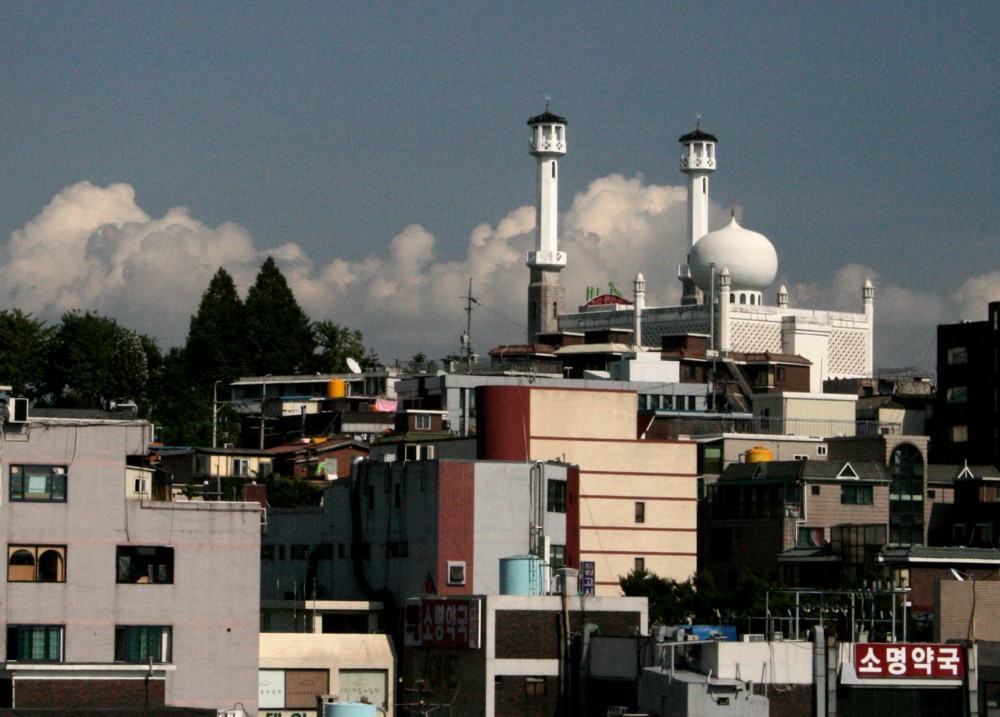
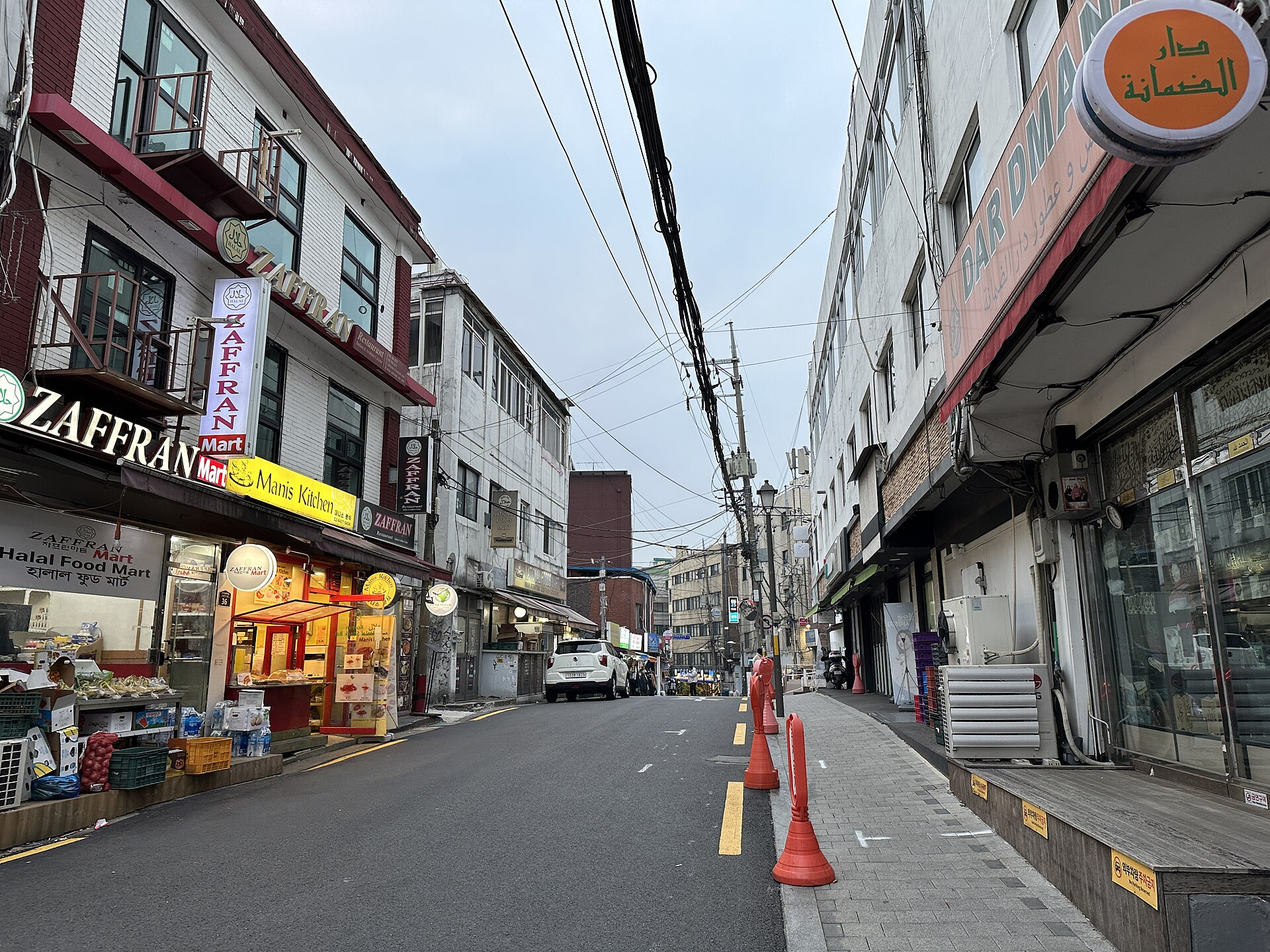
Seoul Central Mosque sits at the top of a hill in Itaewon, and the streets below it — principally Usadan-ro 10-gil — form the densest concentration of halal food in Korea. This is where you should eat your first meal and where you should come back if a day goes wrong elsewhere.
Getting there
Itaewon Station, Line 6, Exit 3. Turn right, then take the road that climbs. It is about a five-minute walk and it is genuinely a hill. The mosque’s white dome and twin minarets are visible from most of the street, which makes navigation easy.
What is on the street
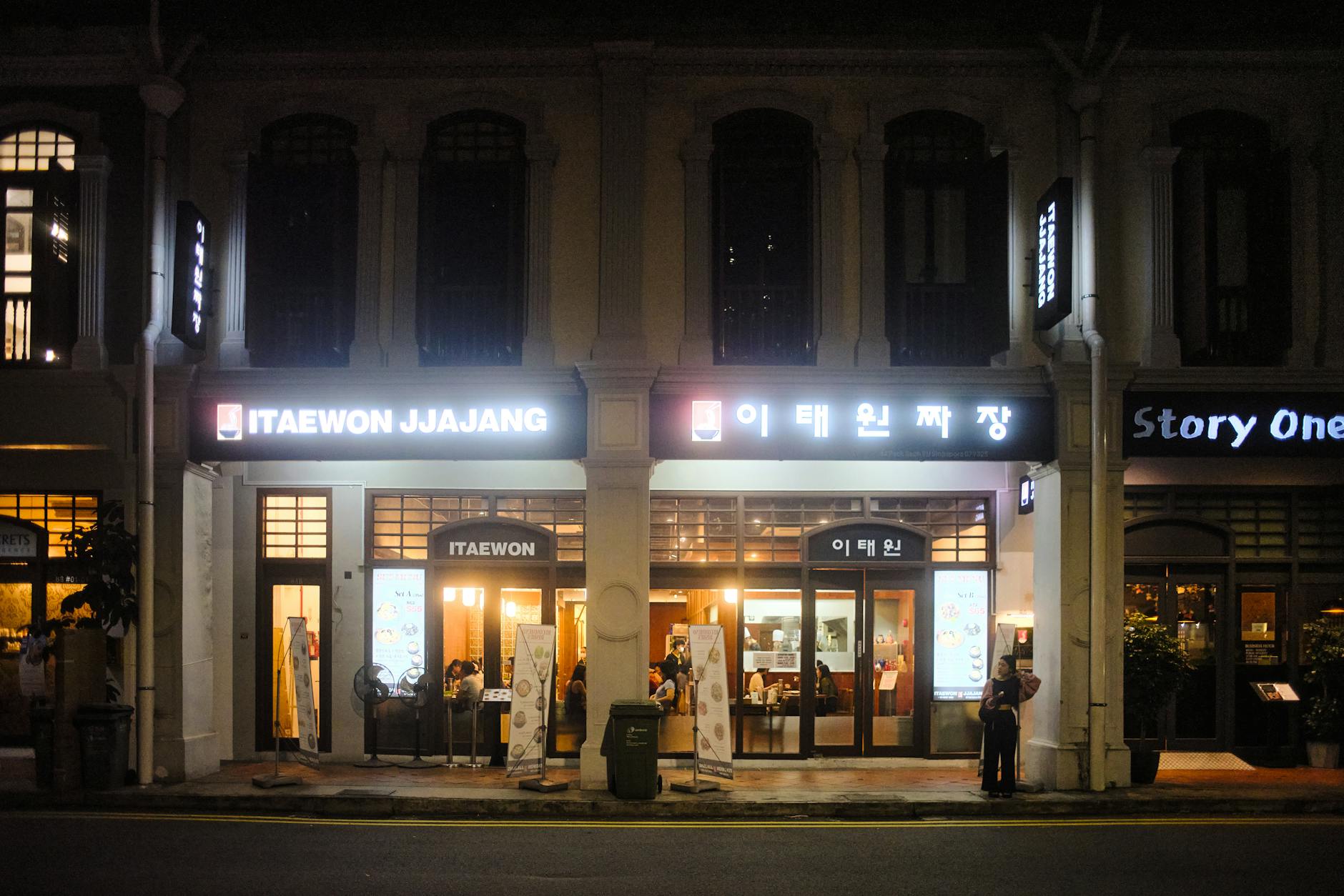
- EID Halal Korean Food, at 15 Usadan-ro 10-gil, was the first restaurant in South Korea to be formally halal-certified. It serves Korean barbecue and Korean comfort dishes, and has a prayer room on site with qibla markers, mats and mukena available. If you want one recommendation from this page, this is it.
- Hajj Korea Halal Food, near the mosque, does Korean dishes — samgyetang, kimchi jjigae, bulgogi over rice — alongside Malaysian food.
- Busan Jib has upper floors remodelled as Busan Jib K-BBQ, with a prayer room on the third floor.
- Zaffran and the halal grocers along the same stretch sell certified meat, spices, dates, and the sort of pantry items that are difficult to find elsewhere in the city. Useful if you have self-catering accommodation.
- Turkish, Pakistani, Uzbek and Egyptian kitchens fill in the rest of the street. Kebab, biryani, plov and mezze are all within a hundred metres of each other.
The wider district is covered in our Itaewon guide, which is worth reading because the neighbourhood has a lot more going on than the mosque street.
The mosque itself
Seoul Central Mosque is open to visitors outside prayer times and is the main congregational mosque in the country. Jumu’ah is at 13:00 on Fridays and the mosque fills — arrive early if you intend to pray there. Dress modestly, remove shoes, and follow the same conventions you would anywhere. Non-Muslim visitors are welcome outside prayer times and there is usually someone happy to answer questions.
Halal Korean barbecue, which is the thing people actually want
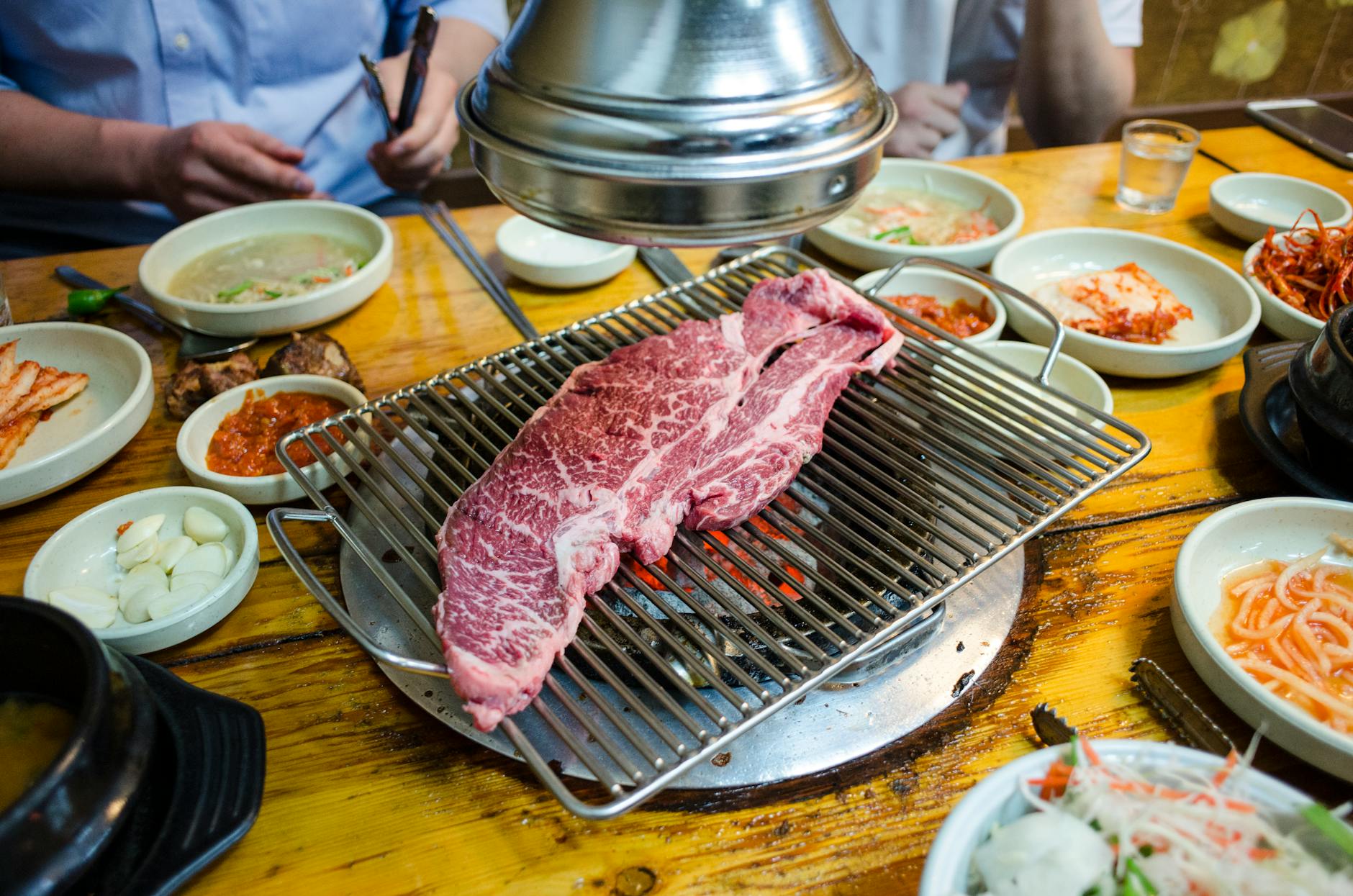
Korean barbecue is pork-dominant, and this is the single biggest gap for Muslim visitors — the standard samgyeopsal experience is off the table. But halal Korean barbecue does exist and it is worth planning a meal around, because eating grilled marinated beef at your own table with a dozen banchan is one of the genuinely essential Seoul experiences.
- EID Halal Korean Food (Itaewon) — certified, and the most straightforward option.
- Yang Good (Gangnam) — halal lamb barbecue, which is a different and very good thing. Lamb skewers and grilled cuts rather than the standard beef and pork.
- Busan Jib K-BBQ (Itaewon) — with the third-floor prayer room, which makes it easy to combine a long dinner with maghrib.
Expect ₩20,000–35,000 per person for a proper barbecue meal, which is in line with the non-halal equivalent. If you have never done Korean barbecue before, our Korean BBQ guide explains the ordering and grilling conventions, and Korean dining etiquette covers the table manners.
Eating outside Itaewon
Myeongdong
Myeongdong has several Muslim-friendly restaurants and, being the city’s main tourist district, is used to the question. There are Turkish and Indian kitchens, a handful of Korean places advertising halal or pork-free menus, and street stalls where the ingredients are visible — which is its own form of reassurance. Standards vary and certification is rare, so ask. Practical detail on the district is in our Myeongdong guide.
Hongdae
A younger, more international district with a growing number of Muslim-friendly and vegetarian-forward places, plus the highest density of restaurants in the city, which improves your odds simply by volume. See the Hongdae guide.
Universities
Areas around universities with significant international student populations — Konkuk, Hanyang, and the streets near Sungkyunkwan — have quietly good halal options aimed at students rather than tourists, at student prices. Worth knowing if you are based nearby.
Korean dishes that are usually safe, and ones that are not
Beyond dedicated halal restaurants, a working knowledge of the menu goes a long way.
Usually workable
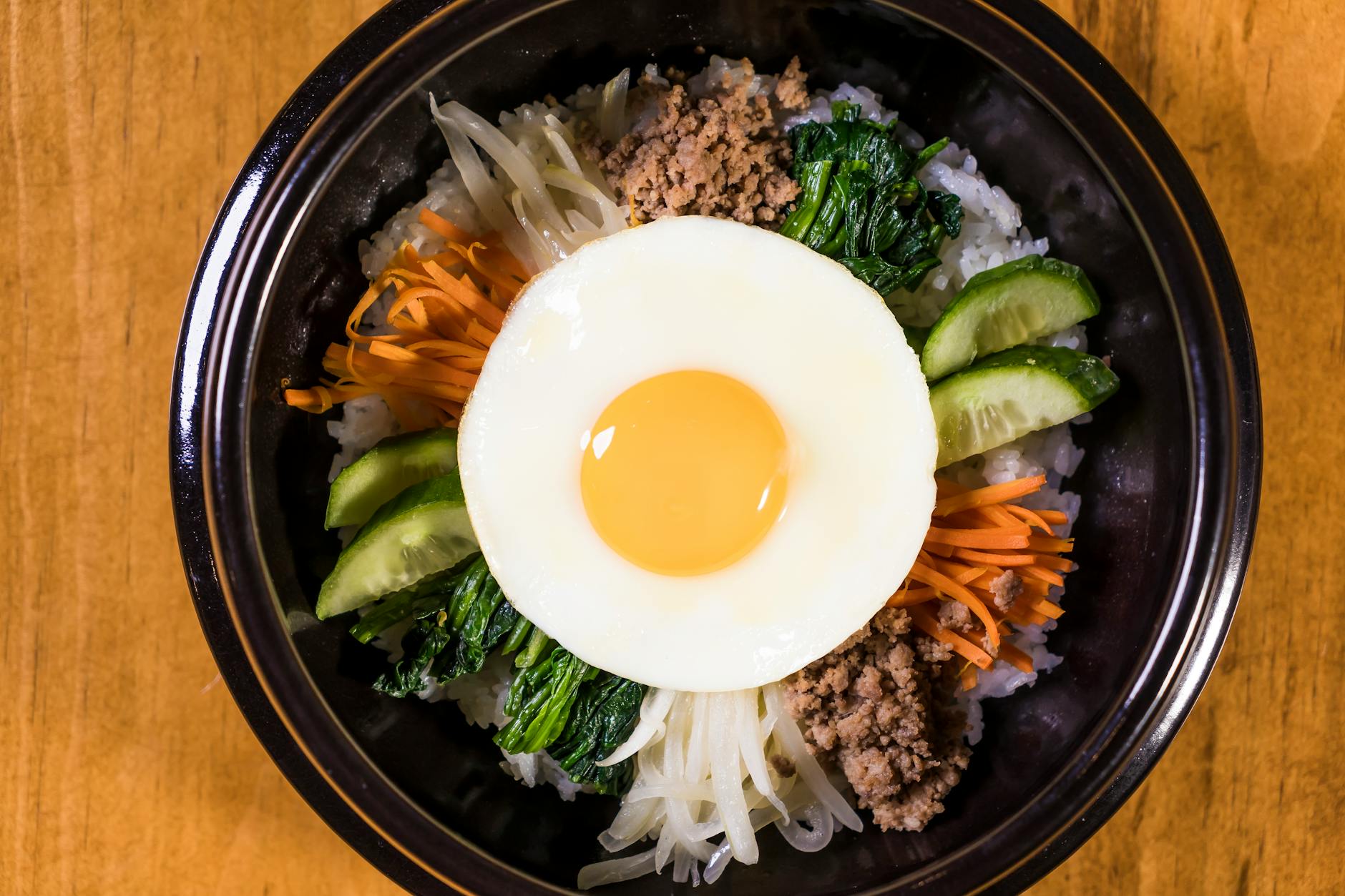
- Bibimbap — rice, vegetables, egg, gochujang. Order it without meat and it is straightforwardly vegetarian. Ask about the gochujang, which occasionally contains alcohol as a preservative.
- Haemul pajeon — seafood and spring onion pancake.
- Kimbap — check the filling; the standard version often includes ham.
- Sundubu jjigae — soft tofu stew, though the broth is frequently anchovy or, less helpfully, pork-based. Ask.
- Naengmyeon — cold buckwheat noodles, though the broth is usually beef.
- Seafood generally — Korea’s seafood cooking is exceptional and the safest broad category.
Approach with caution
- Anything with “samgyeopsal”, “bossam” or “jokbal” in the name is pork by definition.
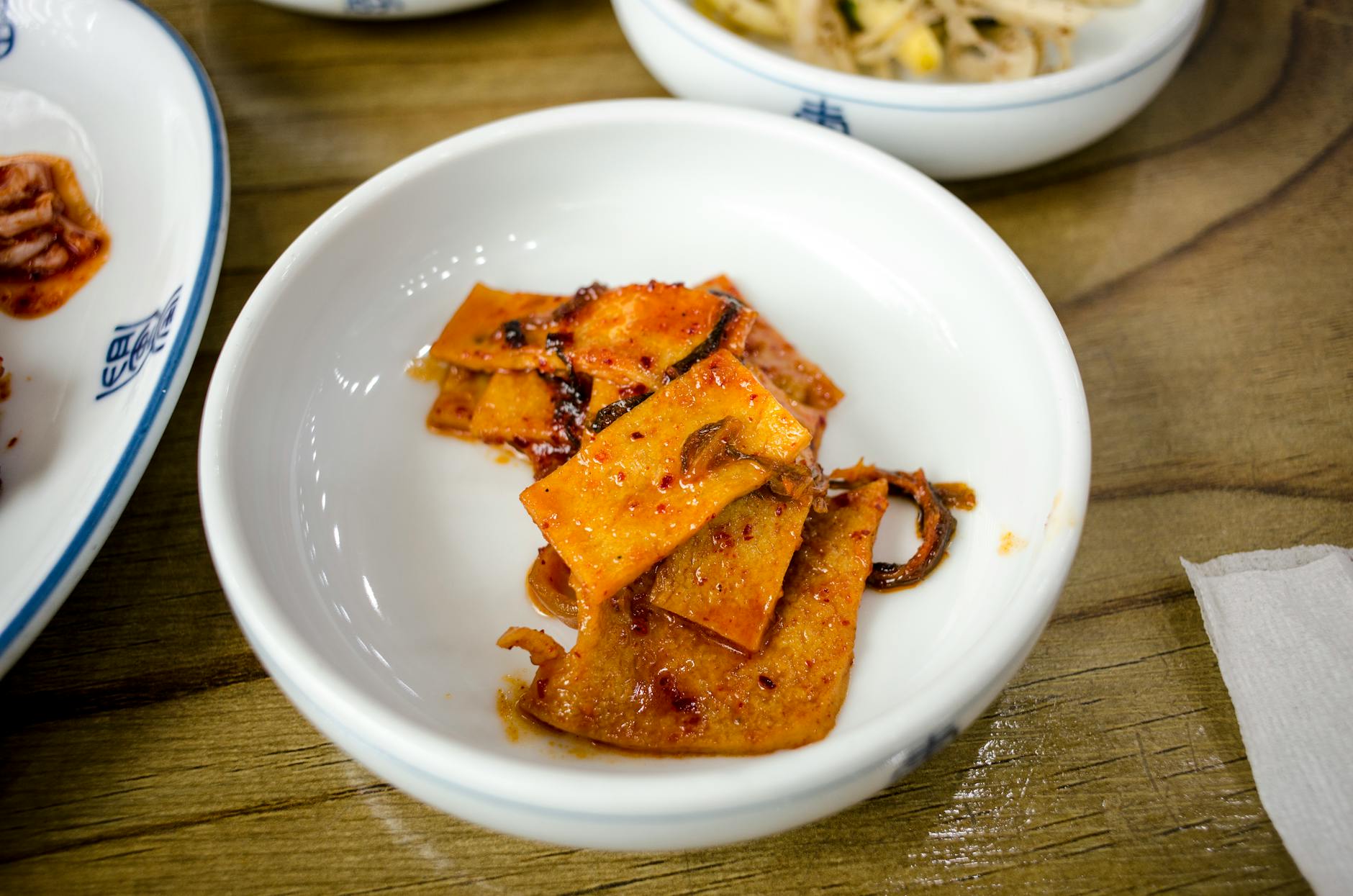
- Kimchi very often contains fermented shrimp or anchovy — usually fine for Muslim diets, an issue for vegetarians. Some commercial kimchi also lists alcohol.
- Broths. The default stock in a great many Korean soups is pork bone or beef bone. This is the most common hidden problem.
- Soy sauce and cooking wine. Mirin and soju appear routinely in marinades and braises. If you are strict about trace alcohol, a certified kitchen is the only reliable answer.
- Tteokbokki sauce sometimes contains fish cake with pork additives, though most versions do not.
Our best Korean dishes guide covers what each of these actually is, which makes reading a menu considerably faster.
Prayer facilities
At the airport
Incheon International Airport has dedicated Muslim prayer rooms with wudu facilities in both Terminal 1 and Terminal 2. They are signposted, and airport information desks will direct you. This is a real convenience on arrival and on a long layover.
In the city
Seoul Central Mosque in Itaewon is the largest facility and the easiest to reach. Beyond it, several of the halal restaurants around the mosque maintain their own prayer rooms — EID and Busan Jib among them — and a number of the larger shopping complexes and department stores have prayer or multi-faith rooms, though provision is inconsistent and not always well signposted. Ask at the information desk rather than looking for signage.
Outside Seoul there are mosques in Busan, Jeonju, Gwangju and several other cities, so a trip beyond the capital does not mean going without.
Practical notes for a Muslim traveller in Seoul
- Base yourself in or near Itaewon if halal food is a hard requirement rather than a preference. It removes a daily logistics problem. Line 6 is the weak point of the neighbourhood, so factor in slightly longer journeys to the palaces.
- Use the apps. Several Muslim-travel apps and the Korea Tourism Organization’s own listings maintain halal restaurant directories with current certification status, which is more reliable than a blog post — including this one — that may be a year out of date.
- Learn two phrases. Dwaeji-gogi is pork and sul is alcohol. “Dwaeji-gogi eopseoyo?” — no pork? — is understood everywhere.
- Convenience stores are your friend for breakfast and late meals: fruit, yoghurt, boiled eggs, seaweed, tuna kimbap and plain rice are all available at any hour.
- Carry snacks on day trips. Outside Seoul and the main tourist cities, halal options thin out fast.
- Ramadan. Korea has a small Muslim population and daily life does not change, so nothing is adjusted around fasting. The mosque runs taraweeh and community iftars, and the Itaewon restaurants adjust their hours; elsewhere you should plan suhoor and iftar yourself. The 24-hour convenience store culture makes this considerably easier than it would be in most non-Muslim countries.
A workable three-day eating plan
If the logistics feel abstract, this is how a Muslim visitor with reasonably strict requirements can eat well across a short trip without spending the whole holiday in one neighbourhood.
- Day one, arrival. Eat in Itaewon. Go straight to the mosque street, have a certified Korean meal at EID or Hajj Korea, and buy a bag of pantry supplies from one of the halal grocers while you are there — dates, snacks, tinned things — which covers you for breakfasts and awkward gaps later in the week.
- Day two, palaces and old Seoul. You will be around Gyeongbokgung, Bukchon and Insadong, where certified options are essentially absent. Plan a seafood or vegetarian lunch: Insadong has a strong temple-food and vegetarian tradition, which is the most reliable non-certified category in the city. Dinner back towards Itaewon or Myeongdong.
- Day three, shopping and neighbourhoods. Myeongdong for lunch, where several Turkish and Indian kitchens sit within a few streets of each other and the district is used to the question. Evening in Hongdae, which has the volume of restaurants to make something work, plus a growing number of Muslim-friendly and vegetarian-forward places.
The principle is simple: anchor your certain meals in Itaewon, use seafood and vegetarian cooking for the middle of the day when you are sightseeing, and keep convenience-store options in reserve. It is a genuinely manageable rhythm rather than a compromise.
Beyond food: the rest of a Muslim-friendly trip
A few things worth knowing that no restaurant list covers.
Alcohol is everywhere socially — Korean dining culture is built around shared drinking, and a great many restaurants are also drinking establishments. This is not a problem, but it does shape the atmosphere of an evening meal, and if you would rather avoid it, cafes are the more comfortable evening venue. Seoul’s cafe culture is enormous and open late, which makes this easy.
Modest dress is unremarkable in Seoul, and hijab attracts no particular attention in the city, though you will see very few Korean Muslims outside Itaewon. Reactions are curious rather than hostile.
Day trips need planning. Suwon, Nami Island and the DMZ have essentially no halal provision, so pack food. Busan has a mosque and some options; Jeonju, with its strong vegetarian and temple-food tradition, is easier than its size suggests.
Gelatin and marshmallow turn up in Korean snacks and desserts more often than you would expect, including in some convenience-store items that look safe. Reading a Korean ingredient list is a job for a translation app.
Is Seoul a difficult city for Muslim travellers?
Honestly: less than it was, and less than its reputation, but not as easy as Kuala Lumpur or Istanbul or even Singapore. If your observance permits seafood and vegetarian food from uncertified kitchens, Seoul is comfortable and you will eat very well. If you require certified halal for every meal, you will be eating in Itaewon most nights and planning around it — which is manageable on a four-day trip and gets repetitive on a ten-day one.
The direction of travel is clearly positive. Korea has actively courted Muslim visitors over the past decade, the Korea Tourism Organization publishes Muslim-friendly classifications, and the number of venues has risen sharply. It is a good time to come, and considerably better than it was five years ago.
Frequently Asked Questions
Is it easy to find halal food in Seoul?
In Itaewon, yes — the streets around Seoul Central Mosque have the highest concentration in Korea, including certified restaurants and halal grocers. Elsewhere in the city it takes more planning, though Muslim-friendly venues have grown roughly 150% since 2020.
What does the Korean halal certification actually mean?
Full certification comes from the Korea Muslim Federation and means an inspected kitchen: no pork, no alcohol in cooking, certified meat suppliers and maintained separation. Below that sit self-declared Muslim-friendly venues, which are often trustworthy but uninspected, and pork-free or seafood-only kitchens.
Is there halal Korean BBQ in Seoul?
Yes. EID Halal Korean Food in Itaewon was the first certified restaurant in Korea and serves Korean barbecue; Yang Good in Gangnam does halal lamb; Busan Jib K-BBQ in Itaewon has a prayer room on the third floor. Expect ₩20,000–35,000 per person.
Where is Seoul Central Mosque and can I visit?
It is above Itaewon Station, Line 6, Exit 3, a five-minute walk uphill. Visitors are welcome outside prayer times; dress modestly and remove shoes. Jumu’ah is at 13:00 on Fridays and it gets busy.
Are there prayer rooms at Incheon Airport?
Yes, in both Terminal 1 and Terminal 2, with wudu facilities. They are signposted and staff will direct you.
Is Korean food generally pork-based?
A lot of it is, and more importantly the default soup stock is frequently pork or beef bone even in dishes that look vegetarian. Seafood dishes, bibimbap without meat and seafood pancakes are the most reliably workable options in an ordinary restaurant.
Does kimchi contain non-halal ingredients?
Kimchi typically contains fermented shrimp or anchovy, which is generally acceptable in Muslim diets but a problem for vegetarians. Some commercial versions also list alcohol. If you are strict about trace alcohol, ask or stick to certified kitchens.
Should I stay in Itaewon?
If certified halal food is a hard requirement, yes — it removes a daily logistics problem. The trade-off is Line 6, which connects less conveniently to the palaces than Lines 1 to 4 do, so allow slightly longer for sightseeing journeys.
What happens during Ramadan in Seoul?
Very little changes in the city at large, since the Muslim population is small. Seoul Central Mosque holds taraweeh and community iftars, and the Itaewon restaurants adjust hours. Elsewhere you will be planning your own suhoor and iftar, which Korea’s 24-hour convenience stores make straightforward.
Final Thoughts
Seoul is not a halal-first city and it does not pretend to be, but the gap between the reputation and the reality is now large. One neighbourhood does the heavy lifting, a growing number of restaurants across the city have made a genuine effort, and Korea’s seafood and vegetable cooking means that even without certification you can eat superbly.
Base yourself with Itaewon in reach, eat one certified Korean barbecue meal properly rather than treating it as impossible, ask direct questions and expect direct answers. For the wider picture of what and where to eat in the city, start with our Seoul food guide and the Seoul travel guide.
Photo Credits
Seoul Central Mosque: Korea-Seoul-Itaewon-Seoul Central Mosque-01 by kayakorea (Brandon Butler), CC BY-SA 3.0, via Wikimedia Commons.
Halal food street below the mosque: Middle Eastern businesses around the Seoul Central Mosque 01 by Toobigtokale, CC BY-SA 4.0, via Wikimedia Commons.