This guide covers where chimaek came from, the flavour taxonomy and what each sauce actually tastes like, the big chains compared honestly, the independents worth crossing the city for, how to get chicken delivered to a park as a foreigner, and what the whole thing costs. Prices were checked in September 2026; chicken has inflated steadily in Korea over the past few years, so treat them as the right order of magnitude and expect them to drift upward.
At a glance
| Detail | |
|---|---|
| Whole chicken | ₩17,000–21,000 at the major chains |
| Half chicken | ₩10,000–12,000 |
| Beer in a restaurant | ₩4,000–6,000 for a bottle or draught |
| Convenience-store beer | ₩2,000–3,000 a can, often 4 for ₩10,000 |
| Dinner for two | ₩30,000–40,000 including beer |
| Core flavours | Fried (huraideu) · yangnyeom · ganjang soy garlic · honey butter · snow cheese |
| Main chains | Kyochon · BBQ · BHC · Kkanbu · Goobne · Nene · Puradak |
| The term “chimaek” | Chicken + maekju (beer); exploded during the 2002 FIFA World Cup |
| Delivery | Baemin and Coupang Eats; both deliver to Han River parks |
Where chimaek came from
Fried chicken arrived in Korea after the Korean War, through American military channels, and stayed as a fairly ordinary market snack for decades — whole birds fried in a market stall, eaten with the fingers. The shift to what exists now happened in two stages.
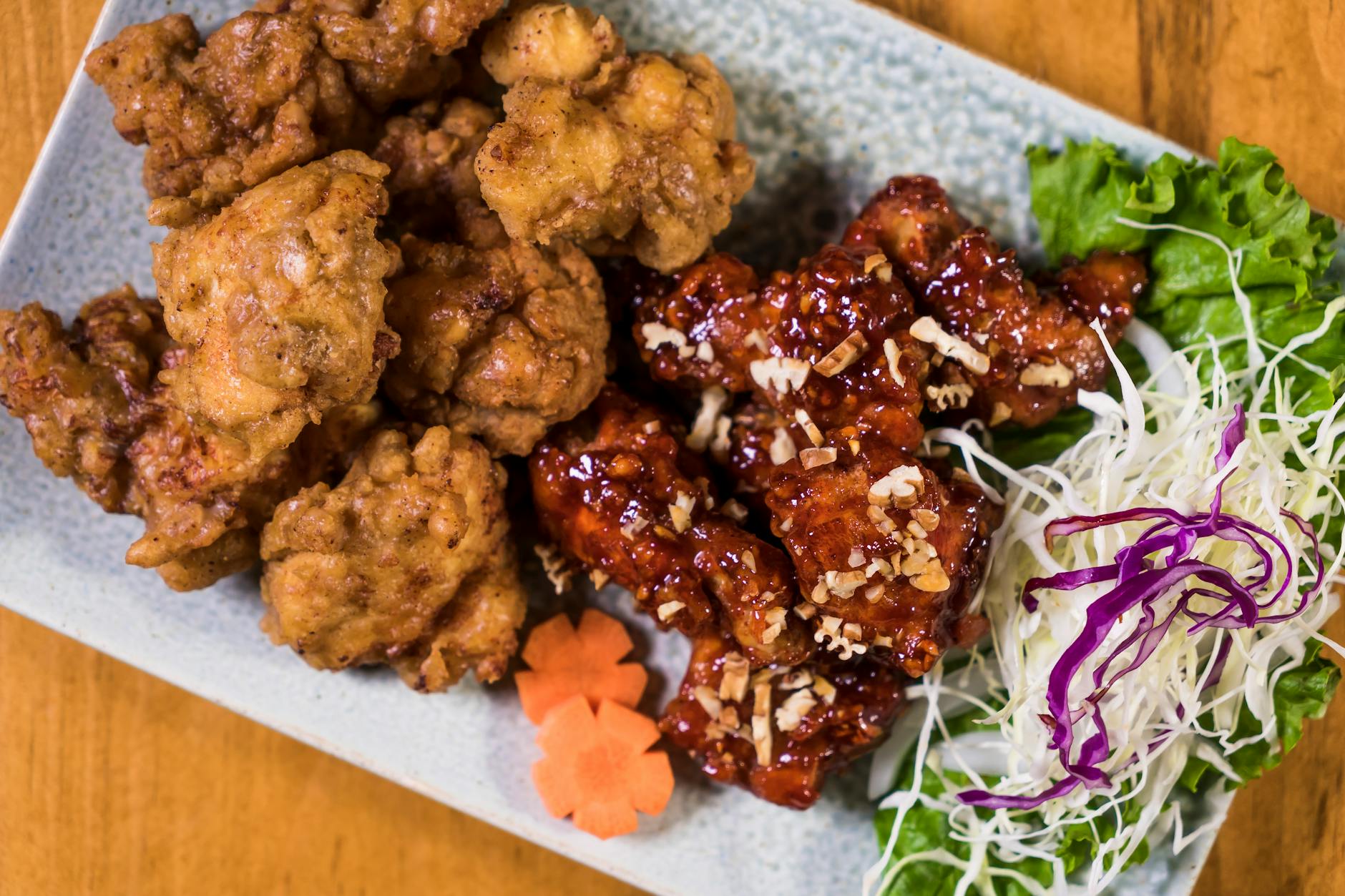
The first was the invention of yangnyeom chicken in the 1980s: fried chicken tossed in a sweet, garlicky gochujang glaze, which turned a foreign dish into an unmistakably Korean one.
The second was the 2002 FIFA World Cup, co-hosted by Korea and Japan, when Korea reached the semi-finals and the entire country watched games together outdoors and in bars. Fried chicken and beer became the national food of collective evenings, the portmanteau chimaek — chi-cken plus maek-ju — entered general use, and the industry has grown continuously since. There are now more fried chicken outlets in South Korea than there are McDonald’s branches worldwide, a statistic Koreans quote with a mixture of pride and alarm.
The technical thing that distinguishes Korean fried chicken from American is the double fry: chicken is fried once at a lower temperature to cook it through, rested, then fried again hotter to drive out the remaining moisture from the skin. The result is a thin, glassy, brittle crust that stays crisp under sauce — which is the whole point, because the sauce is applied after frying and would ruin a conventional coating within minutes.
The flavour taxonomy
Almost every shop sells the same core range under slightly different names. Learn these six and you can order anywhere.
후라이드 (huraideu) — plain fried
Unsauced, salted, double-fried. The purist’s order and the one that shows you whether a shop can actually cook. If you are testing an unfamiliar place, order this. Usually served with pickled radish cubes, which are not a garnish but a structural part of the meal — sharp, cold and sweet, cutting the fat between pieces.
양념 (yangnyeom) — the red one
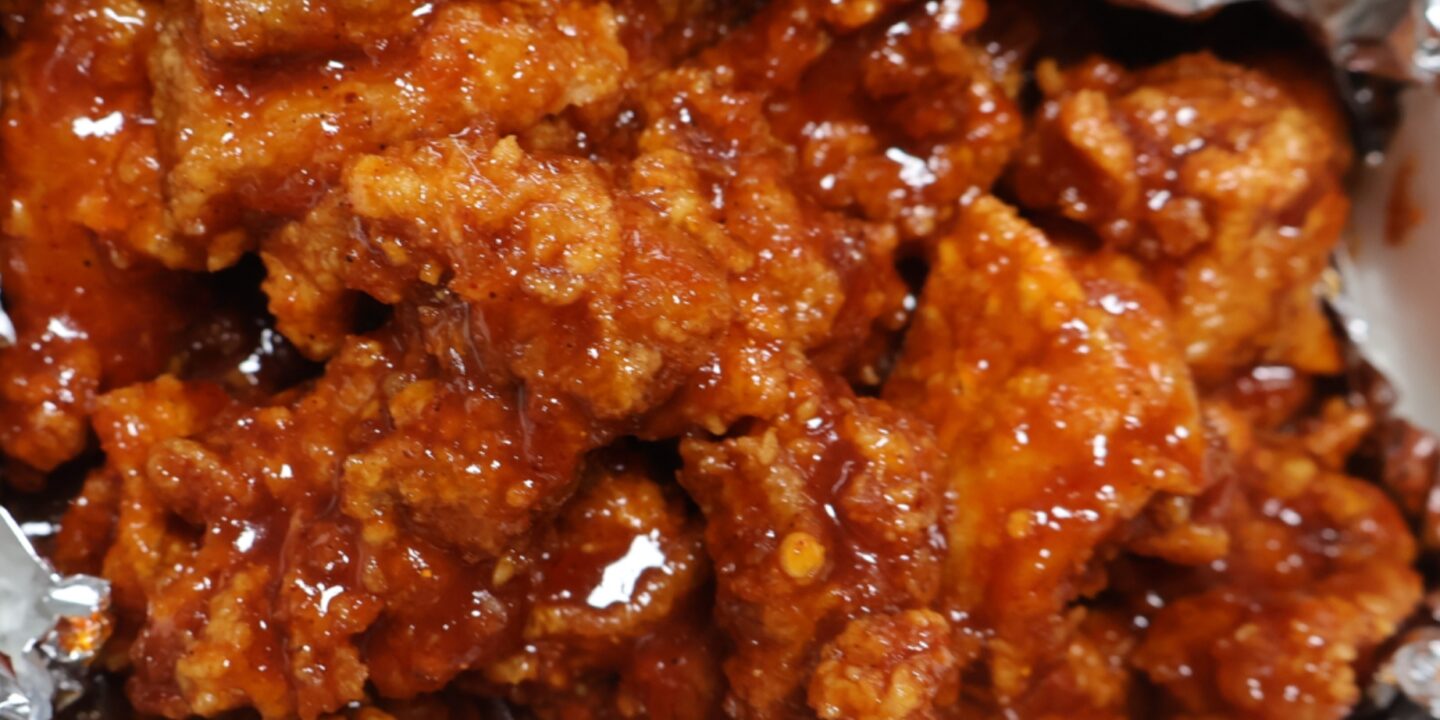
Gochujang, garlic, sugar, vinegar. Sweet first, then a slow heat that builds over the course of the box. This is the flavour that defines the category and the one most people mean when they say Korean fried chicken. Sticky, messy, requires the plastic gloves that come with it.
간장 (ganjang) — soy garlic
Soy sauce, garlic, a little sugar. Savoury rather than sweet, less aggressive than yangnyeom, and the most universally liked of the range. Kyochon built an empire on this. If you are ordering for a group with mixed tastes, this is the safe half.
Honey butter and honey garlic
Sweet, buttery, mild. Genuinely good in small quantities and cloying by the end of a whole bird. A good third of a shared order rather than a whole one.
뿌링클 (bburinkle) — the cheese powder one
BHC’s signature and one of the most successful product launches in modern Korean food: fried chicken dusted in a sweet-savoury cheese powder, served with a dipping sauce. It sounds like a novelty and is genuinely excellent. Order it once.
Snow cheese and variations
Nene’s version of the same idea, plus a range of shops doing powdered-cheese variants. Broadly similar; pick by whichever shop is nearest.
Half and half
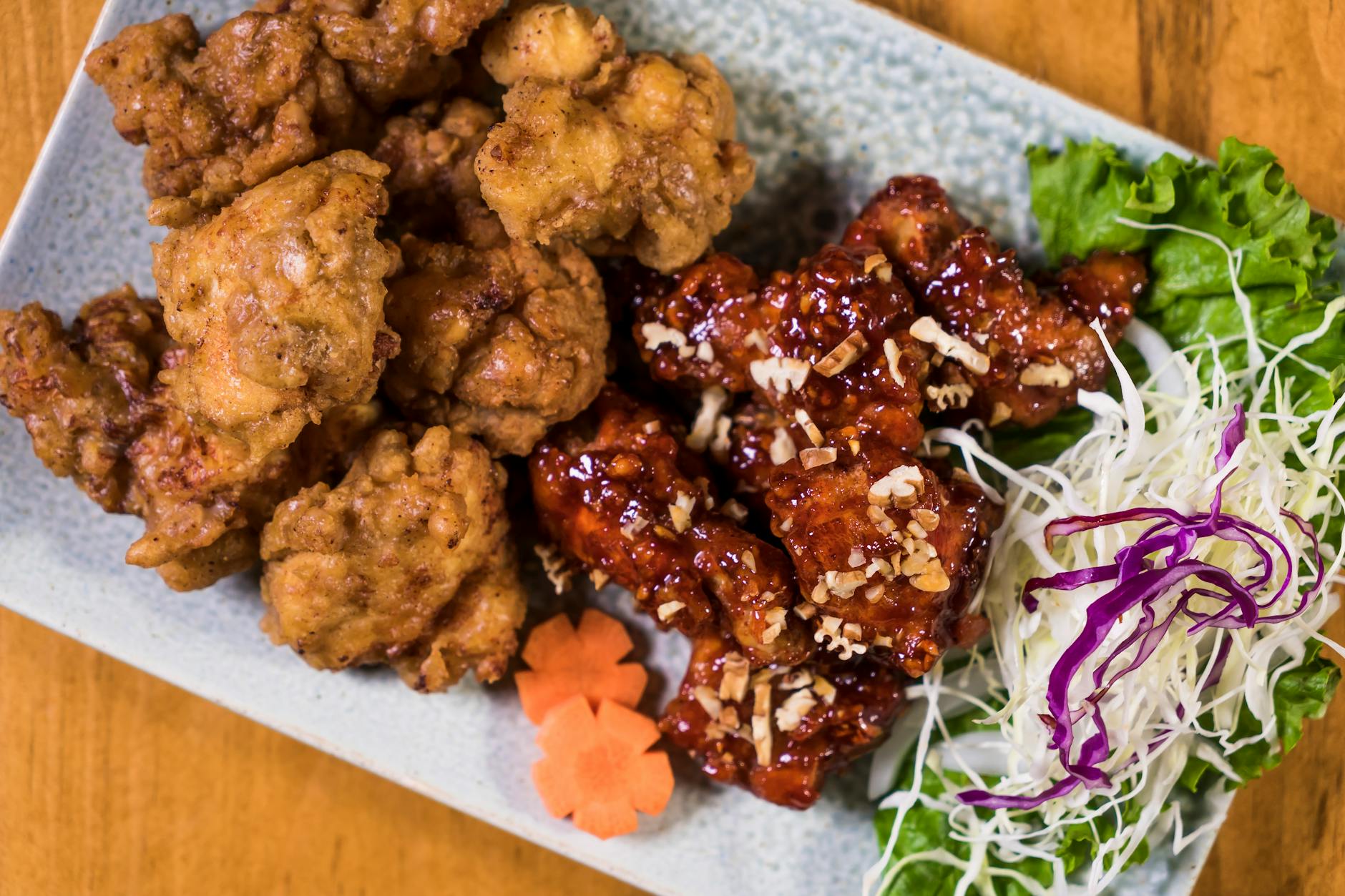
The single most useful thing to know: order ban-ban (반반) and you get half the bird in one flavour and half in another. Every shop does it. The standard combination is yangnyeom and ganjang, and it is the right order for two people.
The chains, compared honestly
Kyochon
The best of the big chains, and priced accordingly at the top of the ₩17,000–21,000 band. Kyochon’s soy garlic is the benchmark version of that flavour: thin-skinned, properly seasoned, brushed rather than drowned. The Red series is its spicy line and is genuinely hot. If you only eat chain chicken once, eat it here.
BBQ
The largest network and the one you will pass most often. BBQ’s Golden Olive is fried in olive oil, which produces a lighter, cleaner result, and its Secret Sauce line is consistently good. Slightly less refined than Kyochon, considerably easier to find.
BHC
Home of bburinkle, which is reason enough. The rest of the range is solid rather than remarkable, and the cheese powder is the thing to order.
Kkanbu
A newer chain with a strong following, generous portions and a good beer offer. Popular with students, which tells you what you need to know about price and volume.
Goobne
Oven-roasted rather than fried, which makes it the outlier. Lower in fat, less crisp, and better than that description suggests — a legitimate choice if the idea of a whole fried bird is too much. Not what you came for, but useful to know exists.
Nene, Pelicana, Mexicana, Puradak
All perfectly good, all broadly interchangeable, all everywhere. Puradak leans into elaborate flavours and premium pricing; the others are neighbourhood defaults.
The independents worth crossing the city for
The chains are good, which is unusual and slightly deflating — in most countries the chain version of a national dish is a compromise. In Korea it is not. But the independents are where the character is.
Hanchu, Sinsa-dong
Twenty years in one location near Sinsa Station in Gangnam, no franchise, and a genuinely distinctive product: double-fried chicken with green pepper worked into the batter, served alongside stuffed fried chilli peppers that are arguably the better half of the order. Small, busy, and worth the journey south of the river. Our Gangnam guide covers what else is nearby.
Gyeyeolsa, Buam-dong
A decades-old owner-run shop in Buam-dong, north of Gyeongbokgung, doing one thing extremely well: ultra-crisp fried chicken with potato wedges and cold golbaengi noodles. Buam-dong is a quiet hillside neighbourhood that most visitors never reach, which is part of the appeal — it makes a good end to an afternoon walking the Bugaksan area.
How to find the others
Beyond the famous names, the rule is geographic. Look in the back streets of Hongdae, the alleys around Konkuk University and Sinchon, and the older commercial blocks of Euljiro and Jongno. Signs of a good one: a small menu, a queue of Koreans rather than tourists, plastic tables, and a single fryer visible from the street. Order huraideu, and if it is good, go back and work through the rest.
The Han River move
This is the version of chimaek worth planning your evening around, and it is much easier than visitors assume.
How it works
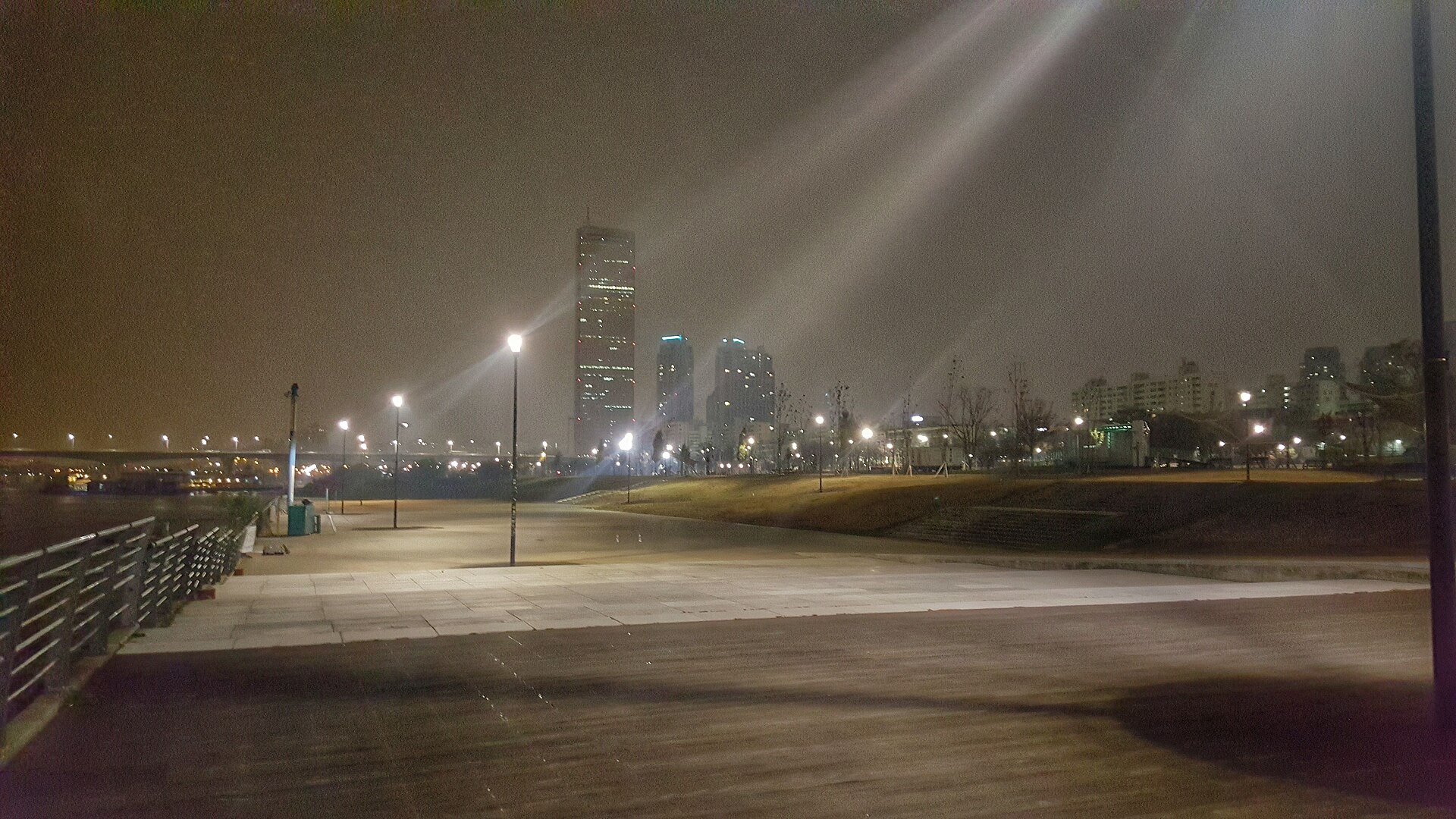
Korea’s delivery apps — Baemin (배달의민족) and Coupang Eats — deliver to designated points in the Han River parks. Yeouido Hangang Park is the classic location, with Banpo and Ttukseom as the other main options. You spread a mat on the grass, order on your phone, and a rider brings a box of chicken to a marked meeting point where you collect it.
Doing it as a foreigner
The apps have historically been difficult for visitors — Korean phone verification, Korean-only interfaces — and this is the one genuine obstacle. Three workarounds, in order of ease:
- Buy the chicken first. Order at a shop near the park, carry it in, and skip the app entirely. This is what I would do. There are chicken shops within a few minutes of every Han River park entrance.
- Ask a Korean friend or your accommodation to order for you. Guesthouse staff do this routinely and are usually happy to.
- Try the English options. Coupang Eats and Baemin have both improved their foreign-card and English support in recent years, but availability varies and verification can still fail. Worth ten minutes of trying; not worth an hour.
The rest of the picnic
Buy the beer at a convenience store on the way — cans at ₩2,000–3,000 rather than ₩5,000 in a restaurant, often on a 4-for-₩10,000 promotion. Add pickled radish if the chicken shop does not include it, and something to sit on: mats are rented at the parks for a small fee, or sold in any convenience store. Drinking outdoors in a park is entirely legal and completely normal.
Yeouido is at its best in late spring and early autumn. Summer works but the humidity is punishing; winter mostly does not. Our Han River activities guide covers what else the parks offer, and the convenience store guide tells you what else to buy on the way.
How to order in a chicken shop
- One whole chicken feeds two. Order more only if you are three or more, or if someone is very hungry. A whole bird is a lot of food.
- Say “ban-ban” (반반) for half and half. Nearly universal.
- Beer comes in bottles or draught — saeng-maekju is draught. A 500ml glass runs ₩4,000–6,000.
- Gloves and wet wipes arrive with the food. Use the gloves; the sauce does not come off easily.
- Pickled radish (chicken-mu) is free and refillable. Eat it between pieces rather than at the end.
- Most shops open around 16:00 and run past midnight. Chicken is an evening food; a chicken shop at eleven in the morning is unusual.
- Payment by card everywhere, including foreign cards.
If you would rather not drink, that is fine and unremarkable — soft drinks and Korean sikhye are on every menu. On what else is worth ordering alongside, see our Korean alcohol guide.

What to drink with it, and what else to order
The beer question
Korean lagers — Cass, Terra, Kloud, Hite — are light, cold and carbonated, which is exactly right against a heavy fried thing and exactly wrong if you were hoping for something with flavour. That is not a criticism: the beer’s job in chimaek is to reset your palate between pieces, and a hoppy craft IPA genuinely does the job worse. Order the draught, drink it very cold, and save the craft beer for another evening.
If you would rather not drink lager, somaek — soju cut into beer — is the standard alternative and is stronger than it tastes. Makgeolli works surprisingly well with plain fried chicken and badly with yangnyeom.
The rest of the menu
Most chicken shops have a short list of sides that are worth knowing about:
- Chicken-mu — the cubed pickled radish. Free, refillable, and structurally necessary. Eat it between pieces.
- Cheese balls and cheese sticks — deep-fried, molten, and a very effective way to make an already heavy meal heavier. Order them anyway.
- Tteokbokki — rice cakes in gochujang sauce, offered at a lot of shops as a side. Good, and it makes the meal work for a larger group.
- Golbaengi muchim — cold sea snails in spicy dressing with noodles, which some of the older independents serve alongside. Sharp and cold against the fried food; genuinely the best pairing on this list.
- Chips or wedges — usually included in the box at the independents, extra at the chains.
A note on portions and pace
Korean chicken shops are not fast-turnover restaurants. A table of four will sit for two or three hours over one or two birds and steady beer, and nobody will ask you to leave or bring the bill unprompted. This is a slow evening rather than a meal, which is worth knowing if you are planning to be somewhere afterwards — and worth embracing if you are not.
The honest verdicts
Do not order three flavours for two people. A whole chicken is around a kilogram of food. Half and half is the correct order and anything more is bravado that ends with a cold box.
Honey butter is a third, not a half. It is delicious for six pieces and exhausting for fifteen.
Skip the chicken at a tourist-district chain outlet on Myeongdong’s main street. Same brand, same price, but a rushed kitchen doing volume. Walk five minutes off the main drag and the same chain will cook it better.
The “Korean fried chicken experience tours” sold to visitors are a chicken shop with a guide attached, at two to three times the price. The dish requires no interpretation. Order it yourself.
Do not eat it on your first night if you have a short trip. This sounds odd, but chimaek is a late, heavy, alcohol-adjacent meal, and it works far better on night three when your body has adjusted than on the evening you land.
What it costs, and how that compares
A whole chicken at ₩17,000–21,000, two beers at ₩5,000 each in a restaurant, and you are at ₩30,000 or so for two people — a genuinely reasonable dinner in a city where a Korean barbecue meal for two will run closer to ₩60,000. Doing it at the river with convenience-store beer brings it under ₩25,000.
Prices have risen noticeably over the past few years and the ₩20,000 whole chicken has become a minor national grievance, discussed in newspapers with the seriousness other countries reserve for fuel duty. Expect the top of the range rather than the bottom at any chain in a central district. Our cheap eats guide has the options below this price point.
Where to eat it
- Hongdae — the highest density of chicken shops and the right atmosphere for a late one. See our Hongdae guide.
- Yeouido Hangang Park — the picnic version, and the one to prioritise if the weather is good.
- Jamsil — chicken carried into a baseball game is a completely normal thing to do, and the shops around the stadium are set up for it. See our KBO baseball guide.
- Sinsa-dong — for Hanchu specifically.
- Buam-dong — for Gyeyeolsa, and a quieter evening.
- Anywhere at all after midnight — chicken shops keep the longest hours of any restaurant category, which puts them at the centre of our late-night food guide.
Frequently Asked Questions
How much does Korean fried chicken cost in Seoul?
A whole chicken runs ₩17,000–21,000 at the major chains and a half ₩10,000–12,000. With two beers, dinner for two comes to roughly ₩30,000–40,000 in a restaurant, or under ₩25,000 with convenience-store beer at the river.
What does chimaek mean?
Chicken plus maekju, the Korean word for beer. The term became universal during the 2002 FIFA World Cup, when the country watched matches together over fried chicken, and the pairing has been a national institution since.
Which chain is best?
Kyochon, particularly its soy garlic, which is the benchmark version of that flavour. BBQ’s Golden Olive is the best of the widely available alternatives, and BHC’s bburinkle cheese-powder chicken is worth ordering once regardless of what else you get.
What is yangnyeom chicken?
Fried chicken tossed in a sweet, garlicky gochujang glaze — sweet first, with a heat that builds. It was invented in Korea in the 1980s and is the flavour most people mean by “Korean fried chicken”.
Can I order half and half?
Yes — ask for ban-ban (반반). Every shop does it, and yangnyeom plus soy garlic is the standard combination for two people.
Can I get chicken delivered to the Han River?
Yes. Baemin and Coupang Eats both deliver to designated meeting points in the Han River parks, Yeouido especially. The apps can be difficult with a foreign phone number, so the simplest approach is to buy from a shop near the park entrance and carry it in.
Is Korean fried chicken spicy?
Only some of it. Plain fried, soy garlic, honey butter and the cheese-powder styles are all mild. Yangnyeom has a moderate building heat, and the dedicated spicy lines — Kyochon Red, for instance — are genuinely hot.
Do I need to book?
Rarely. Independents like Hanchu can involve a wait at peak times, and there is no reservation system at most chicken shops — you queue or you come at a quieter hour.
Is it halal or vegetarian-friendly?
Not usually. The chains are not halal-certified, though Seoul does have certified Korean restaurants — see our halal food guide. There is no meaningful vegetarian version of this dish.
Final Thoughts
Korean fried chicken is the rare national dish where the mass-market version is genuinely excellent, which means the barrier to eating it well is close to zero. Walk into any chain, order half yangnyeom and half soy garlic, drink a cold beer with it, and you will have had a very good meal for the price of two coffees each.
The upgrade, when you have an evening and decent weather, is the river: buy the chicken near the park, buy the beer at the convenience store, find a patch of grass at Yeouido and eat it looking at the water. That is not a tourist activity — it is what Seoul does on a Friday, and it is one of the best things about the city.
For the rest of what to eat while you are here, start with our Seoul food guide and the dishes worth trying.
Photo Credits
Yangnyeom fried chicken: BBQ Yangnyeom chicken Korean fried chicken by Startandstar, CC0, via Wikimedia Commons.
Yeouido Han River Park at night: 63 Building and Yeouido Han River Park at Night by Patrick Park, CC BY 2.0, via Wikimedia Commons.