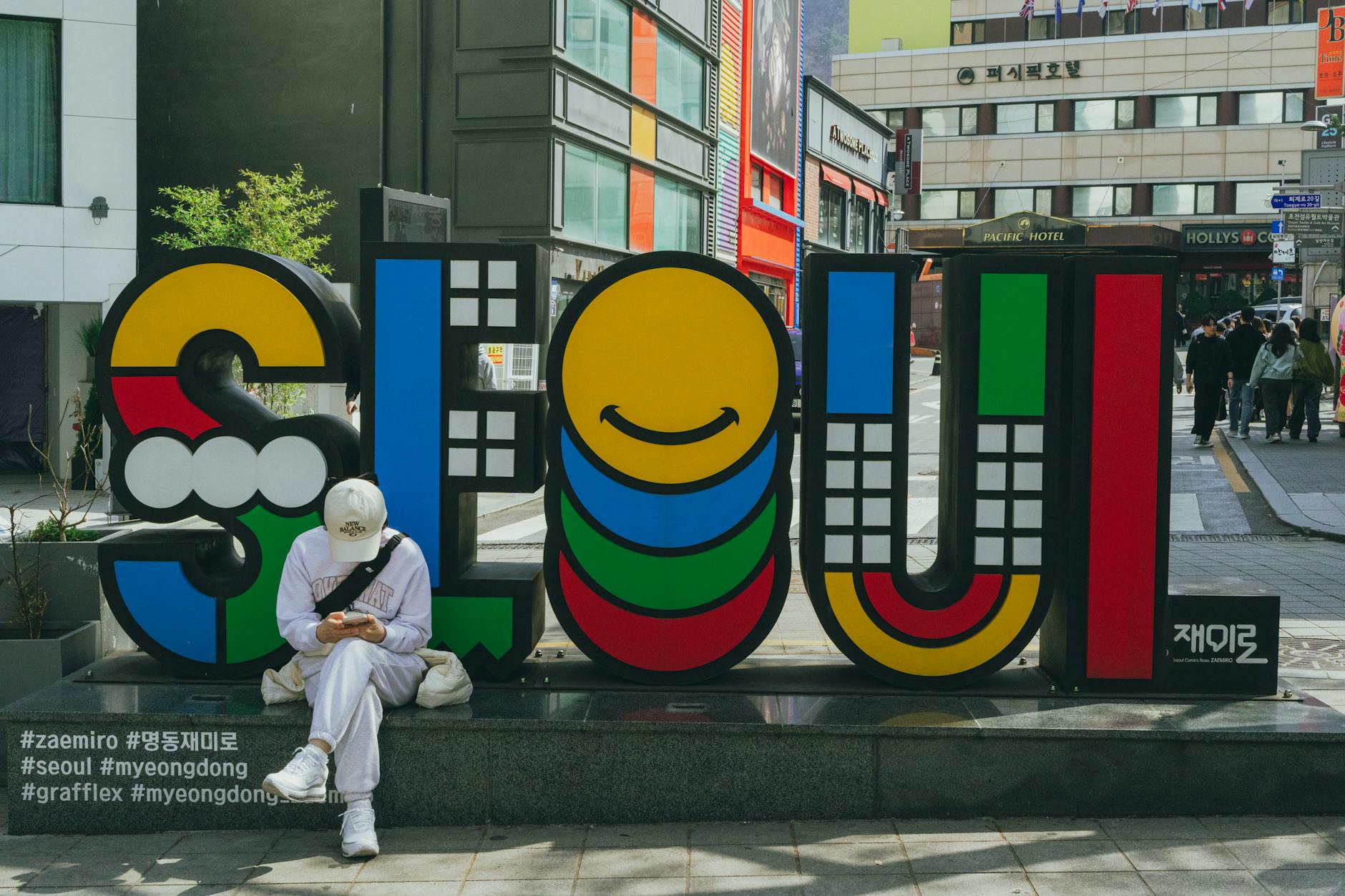
This page puts the three head to head to head on the things that actually change a trip: nightly price, how many subway transfers stand between you and the palaces, how loud it gets after midnight, what you can eat within five minutes of the lobby, and how painful the airport run is at either end. It then adds three runner-up bases — Jongno, Itaewon and Seongsu — that suit specific kinds of traveller better than any of the big three. Prices were checked in September 2026 and move with the season, so treat them as the right order of magnitude rather than a quote. For the full menu of districts, our where to stay in Seoul guide covers everything this comparison leaves out.
At a glance: cost, transfers and noise
The table below is the whole comparison compressed. “Transfers to Gyeongbokgung” counts subway changes from the district’s main station; “late-night noise” is what you hear from a mid-range room with the window shut.
| Myeongdong | Hongdae | Gangnam | |
|---|---|---|---|
| Main station / lines | Myeongdong (Line 4), Euljiro 1-ga (Line 2) five minutes away | Hongik Univ. (Line 2, AREX, Gyeongui–Jungang) | Gangnam (Line 2, Sinbundang) |
| Hostel dorm bed | ₩25,000–40,000 | ₩20,000–35,000 | ₩30,000–45,000 (few options) |
| Mid-range double | ₩90,000–150,000 | ₩70,000–120,000 | ₩110,000–180,000 |
| Four-star and up | ₩150,000–300,000+ | ₩140,000–200,000 | ₩220,000–450,000+ |
| Transfers to Gyeongbokgung | 1 (about 15 min) | 1 (about 30 min) | 1 (about 35–40 min) |
| Direct airport option | Limousine bus to hotel doors; AREX via Seoul Station | AREX all-stop stops here | Limousine bus; no direct AREX |
| Late-night noise | Low after 22:30 — the crowd goes home | High until 04:00, especially Fri–Sat | Moderate; traffic rather than people |
| Food within five minutes | Street stalls, chains, tourist-priced restaurants | Everything, cheap, open late | Good but expensive; office-lunch quality |
| Best for | First-timers, families, short trips | Solo travellers, under-30s, nightlife | Business, luxury, south-river itineraries |
If those numbers look higher than you expected, it is worth reading them next to a full trip budget rather than in isolation — our Seoul trip cost breakdown puts accommodation in context against food, transport and entry tickets.
Myeongdong: the frictionless option
Myeongdong is a shopping district that happens to have a lot of hotels in it. Nobody lives here in any real sense; the population at nine on a Sunday morning is hotel staff, delivery riders and a few confused tourists looking for coffee. That emptiness is the first thing people find odd, and the second thing they come to appreciate, because it means the neighbourhood belongs to you at both ends of the day.
Why it works for a first trip
Two things. First, position: Myeongdong sits just south of the old city, so Gyeongbokgung, Deoksugung, Insadong and Cheonggyecheon are all a short subway hop or a twenty-minute walk. You are inside the historic core without paying the premium for a room overlooking it. Second, redundancy: if Line 4 has a problem, Euljiro 1-ga on Line 2 is a five-minute walk. If the subway has shut for the night, taxis queue on the main road. If you land at Incheon with three suitcases, an airport limousine bus will drop you outside the hotel door rather than at the bottom of a station staircase.
The airport link matters more than people expect. From Incheon, the AREX express reaches Seoul Station in about 43 minutes, and Seoul Station is one Line 4 stop from Myeongdong. The limousine buses cost more and take longer in traffic but stop directly at a rotation of Myeongdong hotels, which is worth every won at the end of a fourteen-hour flight. Check the current stop list when you book, because the routes get reshuffled.
What is genuinely annoying about it
The restaurants are tourist restaurants. Not bad, but priced for people who will eat there exactly once, with picture menus and a queue outside that is mostly other visitors. The street-food stalls are fun the first night and expensive by the third — a paper cup of tteokbokki here costs what a full plate costs in a neighbourhood market. The cosmetics shops employ people whose job is to intercept you on the pavement. And the main drag is genuinely unpleasant between six and nine in the evening if you dislike crowds.
The fix is simple: sleep in Myeongdong, eat elsewhere. Namdaemun Market is a twelve-minute walk and serves the same food at local prices. Euljiro is two stops. Gwangjang Market is fifteen minutes by subway. Our Myeongdong guide maps the parts of the district worth your time, and the best hotels in Myeongdong covers the specific properties, including which ones face the noisy side.
Who should not stay here
Anyone on a second or third visit to Seoul. Once you know the city, Myeongdong’s convenience stops being worth its blandness, and you will get more out of Jongno, Euljiro or Seongsu. Also anyone whose trip is mostly nightlife — the last useful subway leaves around midnight and Myeongdong itself closes early.
Hongdae: cheaper, louder, better food
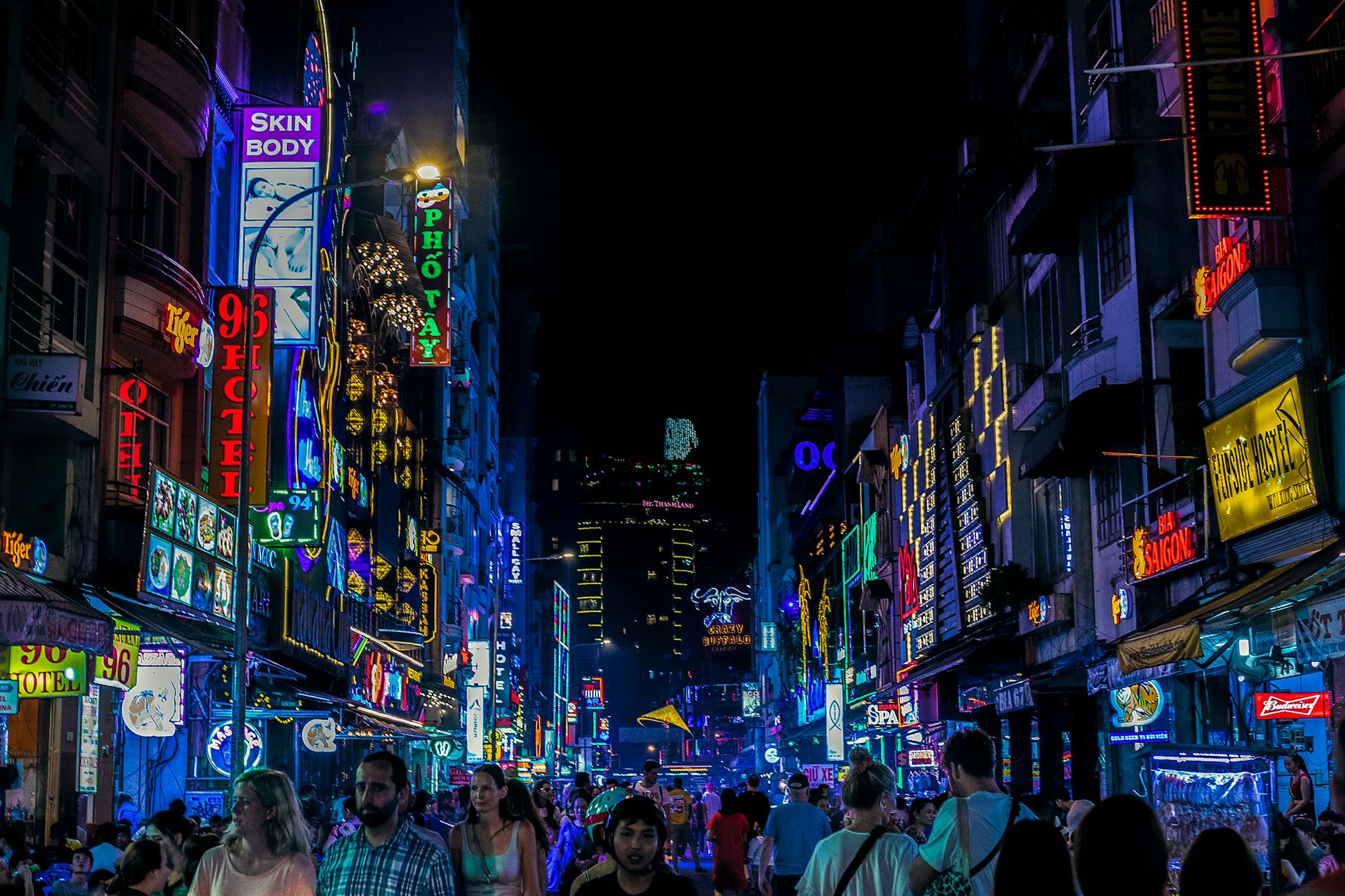
Hongdae is the area around Hongik University, which has one of Korea’s best art schools, and the neighbourhood has taken on the character of its students: creative, broke, awake late. It is the only one of the three districts where you could plausibly spend an entire evening without leaving, and the only one where you will regularly eat well for under ₩10,000.
The transport case
Hongik University Station is a genuine hub — Line 2, the AREX airport line, and the Gyeongui–Jungang line all stop there. The AREX point matters: the all-stop service from Incheon calls here, so you can go airport to hotel with no transfer at all, which neither of the other two districts can offer. Line 2 is the circle line, which means Gangnam, Jamsil, Sinchon and City Hall are all one-seat rides.
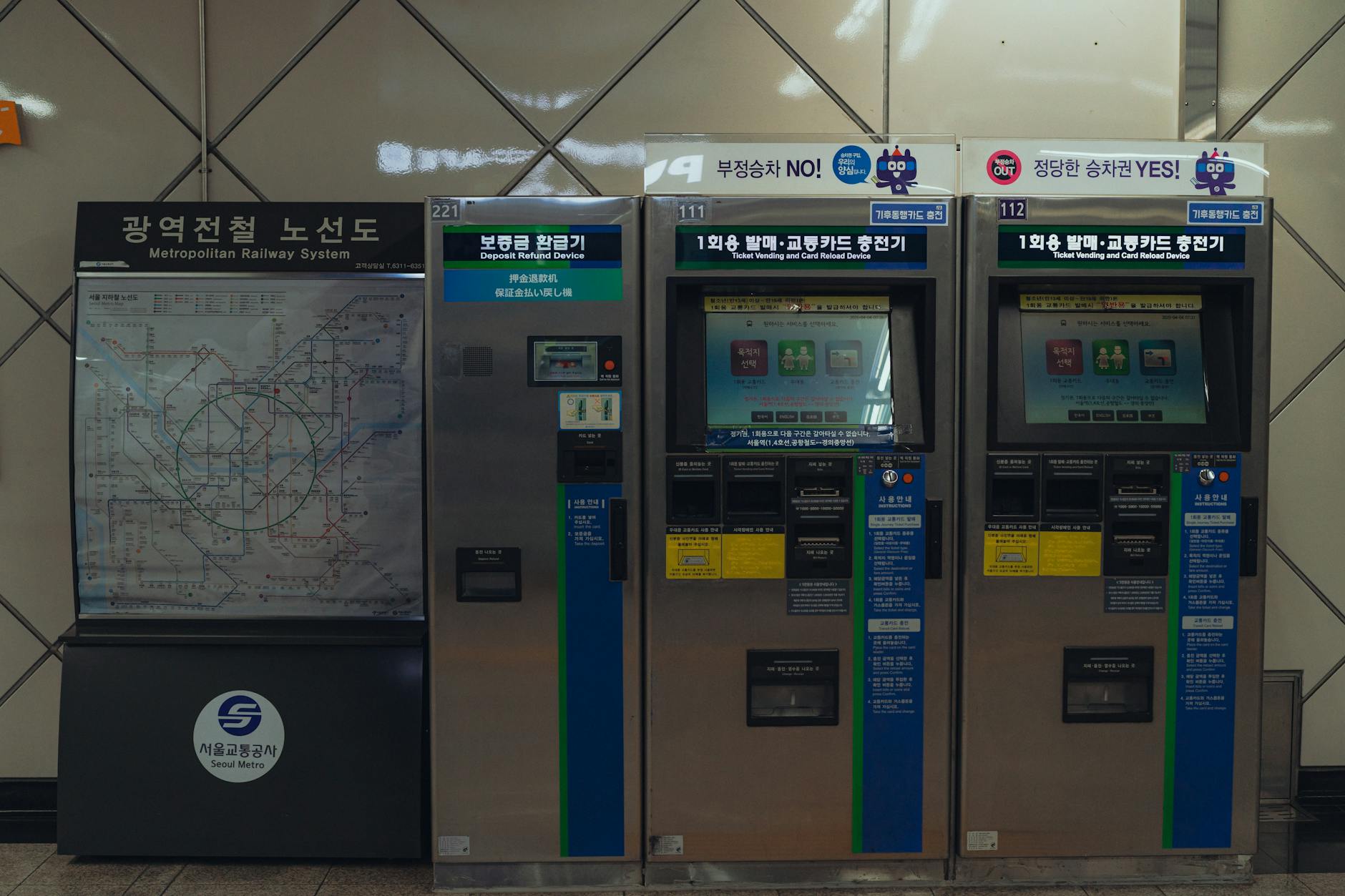
The catch is the north side. Gyeongbokgung, Bukchon and Changdeokgung all need a transfer at Euljiro 3-ga onto Line 3, which turns a fifteen-minute journey from Myeongdong into a thirty-minute one from here. Over a four-day trip with two palace mornings, that is a lost hour. Not fatal — but it is the trade you are making. If you are unsure how the lines connect, the Seoul subway guide explains the transfer logic and the ticketing.
The noise problem, honestly
Hongdae is loud. On a Friday it is loud until four in the morning, and the noise is not traffic — it is people, buskers, and bars with their doors open. A room facing the main streets between Exit 9 and the playground area will be affected. Rooms on the Yeonnam-dong side, west of the station, are noticeably quieter while still being a ten-minute walk from everything, and that is where I would look if you want the neighbourhood without the soundtrack.
Bring earplugs regardless. Ask for a high floor facing the courtyard. Most guesthouses will tell you honestly which rooms are quiet if you email and ask — they would rather do that than take the review.
Where the money goes further
This is the clearest financial win of the three. A private room in a decent Hongdae guesthouse runs ₩70,000–120,000, against ₩110,000–180,000 for the equivalent in Gangnam. Dinner and drinks for two comes to maybe ₩35,000 where Gangnam would take ₩70,000. Over five nights that gap pays for a KTX return to Busan. More on the properties in the best hotels in Hongdae, and on the neighbourhood itself in our Hongdae guide.
Gangnam: the one people over-book
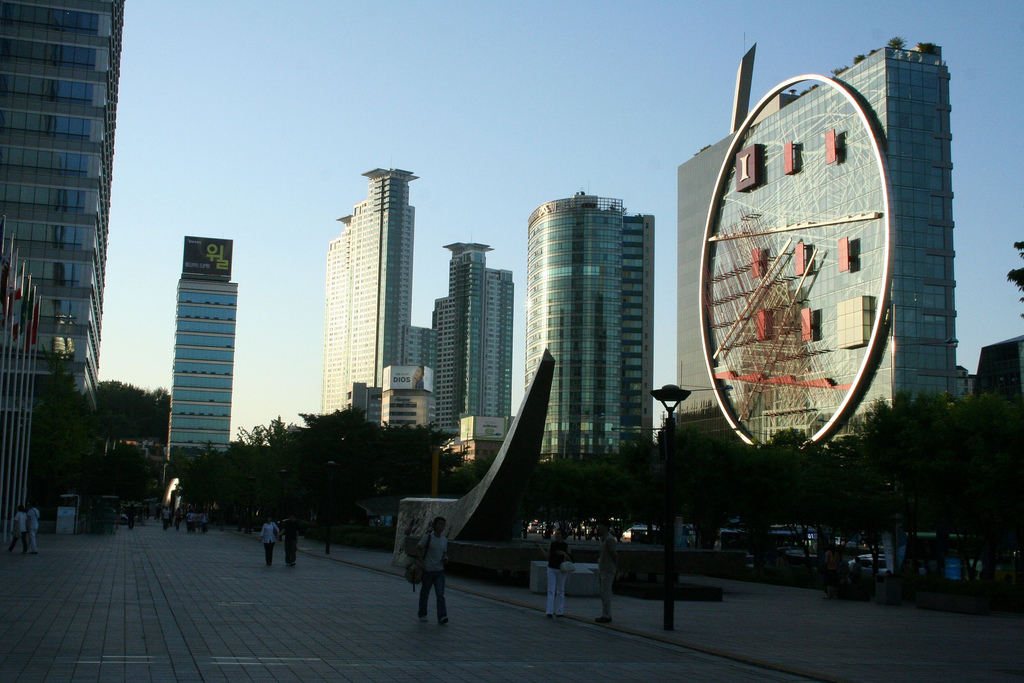
Gangnam is the district everyone has heard of, which is exactly why it gets booked by people it does not suit. It is a business district south of the Han River, built at motorway scale — eight-lane roads, long blocks, glass towers. It is clean, safe, well-served by taxis, and has the best top-end hotels in the city. It is also thirty-five to forty minutes from the palaces and has almost nothing in the way of street-level atmosphere.
When it is the right call
Gangnam earns its place on a specific set of trips. If you are here on business, your meetings are here. If you want a genuine five-star with a proper pool and a club lounge, the concentration is here and in neighbouring Samseong. If your plan is heavy on Lotte World, Seoul Sky, the COEX Aquarium and the Starfield library, you are already south of the river and the commute inverts. If you are chasing K-pop — agency buildings, the concert venues, the Apgujeong cafes — you are in the right place, and our K-pop and Korean culture guide covers what is actually visitable versus what is a locked office lobby.
Transport is also better than its reputation in one direction: the Sinbundang Line from Gangnam Station is fast, and Line 2 gets you to Hongdae in about twenty-five minutes without changing. Getting north to the palaces is the slow part, not getting around generally.
When it is the wrong call
On a first visit of three or four days built around palaces, markets and old Seoul, Gangnam costs you roughly forty minutes each way, every day, and charges you more for the privilege. The evening streets are dominated by chain restaurants and office crowds; the interesting food is tucked into basements you would need a local to find. And the walk between subway exit and hotel is genuinely long here in a way it is not in Myeongdong — those blocks are enormous.
If you have decided on Gangnam anyway, look at Sinnonhyeon or Sinsa rather than Gangnam Station itself; both are calmer and better for food. The best hotels in Gangnam goes property by property, and the Gangnam guide covers the district beyond the hotels.
How the three compare on the things people actually ask about
Getting to the palaces
Gyeongbokgung is the benchmark, since almost every first-time itinerary starts there. From Myeongdong you change once at Chungmuro and arrive in about fifteen minutes. From Hongdae you change once at Euljiro 3-ga and arrive in about thirty. From Gangnam you change once and arrive in thirty-five to forty. All three are one transfer — the difference is the sitting time, and it compounds across a trip.
Arriving from Incheon with luggage
Hongdae is the only one of the three with a genuine no-transfer train from the airport. Myeongdong compensates with door-to-door limousine buses and a one-stop hop from Seoul Station. Gangnam has limousine buses too but no AREX at all, and a taxi from Incheon will sit at the top of the ₩50,000–70,000 range because of the distance and the tolls. If you are landing late at night, the bus or a taxi is the answer everywhere.
Travelling with children
Myeongdong, comfortably. Short walks, lifts in most stations, convenience stores every fifty metres, and a lot of hotels with proper family rooms. Gangnam is a close second on room quality but the block lengths are punishing with a pushchair. Hongdae is the weakest — late-night noise plus crowded, uneven pavements.
Solo travellers
Hongdae, and it is not close. It has the hostel density, the social common rooms, the cheap food that does not feel strange to eat alone, and the highest concentration of people your own age doing the same thing. Myeongdong hostels exist but tend to be quiet and transactional.
Safety after dark
All three are safe by any international standard; Seoul’s late-night streets are among the calmest of any big city. The realistic risk in Hongdae is drunk crowds and the odd scooter on the pavement, not crime. Gangnam is the quietest at two in the morning simply because nobody is there.
Three runner-up bases worth considering
Jongno — for the second visit
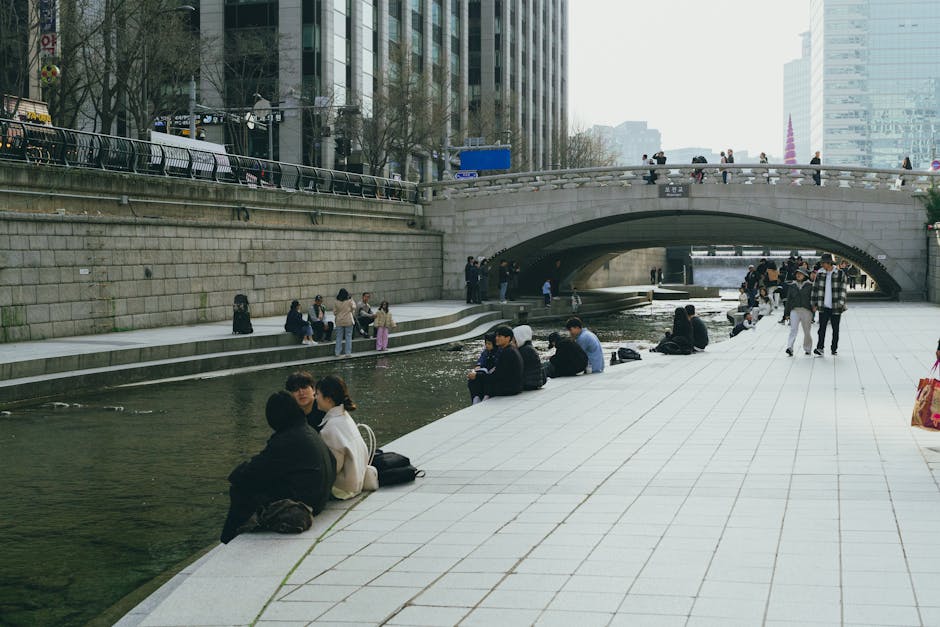
Jongno is the actual old city: Gyeongbokgung and Changdeokgung on the doorstep, Bukchon’s hanok lanes uphill, Insadong’s tea houses downhill, Gwangjang Market a short walk east, and Cheonggyecheon running through the middle. Rooms are typically cheaper than Myeongdong for the same standard, and the neighbourhood has genuine residents, which changes the texture of a morning enormously. The trade-off is fewer international-brand hotels and a slightly more limited late-night scene. It is my own first recommendation to anyone who has been to Seoul before — see the Jongno guide.
Itaewon — for food breadth and a later night
Itaewon is Seoul’s most international district, which in practice means the widest non-Korean food selection in the city, a serious bar scene, and the highest concentration of English spoken. Line 6 is the weak point — it does not connect neatly to the palaces and you will change more than once for a lot of journeys. Worth it if you want Turkish, Indian, Nigerian and halal options within a few streets, and it is the natural base for anyone who wants Seoul with a soft landing. The Itaewon guide has the detail.
Seongsu — for coffee, design and a local feel
Seongsu is a former shoe-factory district east of the centre that has turned into Seoul’s best cafe and concept-store neighbourhood without losing its warehouses. Staying here means excellent coffee, brand pop-ups, and a genuinely local weekday rhythm — but also fewer hotels, a longer run to the palaces, and less to do at midnight. It suits a returning visitor on a slow trip more than a first-timer on a tight one. Our Seongsu-dong guide explains what is worth queueing for.
A decision framework, if you are still stuck
- First trip, three to four days, palaces and markets: Myeongdong.
- First trip but you are 25 and want a night out: Hongdae, west side near Yeonnam-dong.
- Second trip, want to feel like you live there: Jongno.
- Travelling with young children: Myeongdong.
- Business, or you want a real five-star: Gangnam or Samseong.
- Trip built around Lotte World, COEX and Seoul Sky: Gangnam or Jamsil.
- Solo and want to meet people: Hongdae.
- Want the widest food choice and a bar at two in the morning: Itaewon.
- Slow trip, cafes and design: Seongsu.
- Landing at Incheon after midnight: anywhere with a limousine bus stop — Myeongdong or Gangnam.
One thing worth doing instead of choosing
If you have six nights or more, split them. Three nights in Myeongdong or Jongno for the historic core, then three in Hongdae or Seongsu for the modern city. Seoul’s luggage-storage lockers are everywhere, the subway makes the move trivial, and you will get two genuinely different versions of the city instead of one commute repeated six times. The only reason not to is if you have booked a rate that punishes a shorter stay — check before you assume.
Frequently Asked Questions
Is Myeongdong too touristy to stay in?
To eat in, yes. To sleep in, no. The district is quiet in the mornings and after about half past ten at night, and its position between the palaces and Seoul Station is genuinely hard to beat. Treat it as a base rather than a destination and it works very well.
Which is cheapest overall — Myeongdong, Hongdae or Gangnam?
Hongdae, on both rooms and food. Expect to pay roughly 20–30% less for a comparable private room than in Myeongdong, and considerably less than Gangnam. The saving on meals is bigger than the saving on the room.
Can I stay in Gangnam and still see the palaces easily?
You can, but budget thirty-five to forty minutes each way with one transfer. That is fine on a longer trip. On a three-day trip where two mornings are palace mornings, it is close to two hours of your holiday spent underground.
Is Hongdae too loud to sleep?
On the main streets on a Friday or Saturday, yes, for light sleepers. Book on the Yeonnam-dong side west of the station or ask for a courtyard-facing high floor, and bring earplugs. Midweek is much calmer.
Which area is best if I am arriving from Incheon late at night?
Myeongdong or Gangnam, because both have airport limousine buses that run later than the AREX and drop you near your hotel door. Hongdae is excellent for daytime arrivals thanks to the direct AREX stop, less so at one in the morning.
Where should I stay for a K-pop-focused trip?
Gangnam, Apgujeong or Seongsu. The agency buildings, flagship stores and most of the concert venues sit south and east, and staying north means a long commute in the wrong direction every evening.
Do I need to stay near a subway station at all?
Yes. Seoul is bigger than it looks and taxis in rush hour are slower than the train. A five-minute walk to a station is worth more than almost any other hotel feature, and a ten-minute walk with luggage in July heat will change your opinion of a bargain rate very quickly.
Final Thoughts
The three districts are not really competing for the same traveller. Myeongdong sells you time — every day starts faster and ends closer to bed. Hongdae sells you money and atmosphere, at the cost of sleep and half an hour of extra travel to the old city. Gangnam sells you comfort and polish, and charges you both cash and commuting for it. Work out which of those three currencies you are shortest of on this particular trip and the answer picks itself.
If you want to sanity-check the choice against the rest of your plan, start with the full Seoul travel guide, which sets out how many days each part of the city really needs.
Photo Credits
Myeongdong street scene: Myeong-dong, Jung-gu, Seoul, South Korea – panoramio by 张元柏, CC BY-SA 3.0, via Wikimedia Commons.
Gangnam plaza and towers: Korea-Seoul-Gangnam-01 by Pachinee Buathong, CC BY-SA 2.0, via Wikimedia Commons.