This guide goes month by month: average high and low, rainfall and humidity, what to wear, what is blooming or turning colour, how busy and expensive the city is, and the one thing most worth doing that month. Temperatures and rainfall are the Korea Meteorological Administration’s 1991–2020 averages; any given year can run a few degrees hotter or colder, and recent summers have tended to be hotter than the long-term average. Seasonal timings were checked in October 2026.
Seoul weather at a glance
| Month | High °C | Low °C | Rain (mm) | Humidity | In a word |
|---|---|---|---|---|---|
| January | 2 | −6 | 17 | 56% | Freezing |
| February | 5 | −3 | 28 | 55% | Cold |
| March | 11 | 2 | 37 | 55% | Chilly, dusty |
| April | 18 | 8 | 73 | 55% | Blossom |
| May | 24 | 14 | 104 | 60% | Ideal |
| June | 28 | 19 | 130 | 66% | Warming up |
| July | 29 | 22 | 414 | 76% | Monsoon |
| August | 30 | 23 | 348 | 74% | Hot and sticky |
| September | 26 | 18 | 142 | 66% | Clearing |
| October | 20 | 11 | 52 | 62% | Best of the year |
| November | 12 | 4 | 51 | 60% | Crisp |
| December | 4 | −3 | 23 | 58% | Cold, festive |
Nearly 1,420 mm of rain falls in an average year, and more than half of it arrives in July and August. The rest of the year is surprisingly dry, and winter in particular is often clear and sunny. For the bigger question of when to plan a trip, our best time to visit Seoul guide weighs weather against crowds, prices and events.
Understanding Seoul’s climate
Seoul has a humid continental climate with a strong monsoon influence. In practice that means four clearly defined seasons and three weather phenomena worth knowing by name before you travel.
- Jangma — the summer monsoon, usually from late June to late July. Not constant rain, but days of heavy downpours, high humidity and grey skies, sometimes with flash flooding in low-lying areas.
- Typhoons — most likely in August and September. Seoul is further from the typical typhoon tracks than Jeju or Busan and is often hit only by their outer rain bands, but a direct hit can disrupt flights and outdoor plans for a day or two.
- Fine dust and yellow dust — “misemeonji” (fine particulate pollution) and “hwangsa” (dust blown in from the deserts of northern China and Mongolia) are worst in late winter and spring. On bad days the sky turns hazy white and locals wear masks. Check an air-quality app such as AirVisual or the Korean app Misemise.
Month by month
January
- Temperature: average high 2°C, low −6°C. Cold snaps can push well below that, and the wind chill is brutal.
- Rain and snow: the driest month, around 17 mm. Snow falls a few times, usually lightly; a proper blanket is a treat rather than a certainty.
- Sky: often bright and clear, which makes it a surprisingly good month for photography.
- What to wear: a long padded coat, thermal base layers, a hat, gloves, a scarf, warm waterproof boots. Indoor heating is strong, so layer.
- Nature: bare trees, frozen streams, snow on Bukhansan’s peaks.
- Crowds and prices: among the quietest and cheapest months, except around the New Year and Seollal if it falls in late January.
- Do this: warm up in a jjimjilbang after a cold day of palaces, or take a day trip to a ski resort or the Hwacheon ice-fishing festival in Gangwon province.
February
- Temperature: average high 5°C, low −3°C. Still firmly winter, with the first mild days towards the end of the month.
- Rain: dry, around 28 mm.
- What to wear: the same as January. Do not be fooled by a sunny forecast.
- Nature: nothing much yet; plum blossom begins in the far south of Korea, not Seoul.
- Crowds and prices: low, apart from Seollal (Lunar New Year), which in 2027 runs from 6 to 9 February. During Seollal many small restaurants close and trains out of the city sell out, but the palaces often hold traditional events.
- Do this: experience Seollal in Seoul — folk games at the palaces and the National Folk Museum, and a bowl of tteokguk.
March
- Temperature: average high 11°C, low 2°C. Big swings: a warm 18°C afternoon can be followed by a frosty morning.
- Rain: around 37 mm.
- Air quality: one of the worst months for fine dust and yellow dust. Pack a KF94 mask, sold in every convenience store and pharmacy.
- What to wear: a warm jacket, layers you can shed, a scarf.
- Nature: yellow forsythia and pink azaleas appear on the hillsides in late March; cherry blossom sometimes starts in the final days of the month in warm years.
- Crowds and prices: moderate and rising.
- Do this: walk the Seoul City Wall trail on Naksan or Inwangsan as the forsythia comes out, before the April crowds.
April
- Temperature: average high 18°C, low 8°C. Mornings and evenings are still cool.
- Rain: around 73 mm, usually in short spells.
- What to wear: a light jacket or trench coat, a jumper for the evenings, comfortable walking shoes.
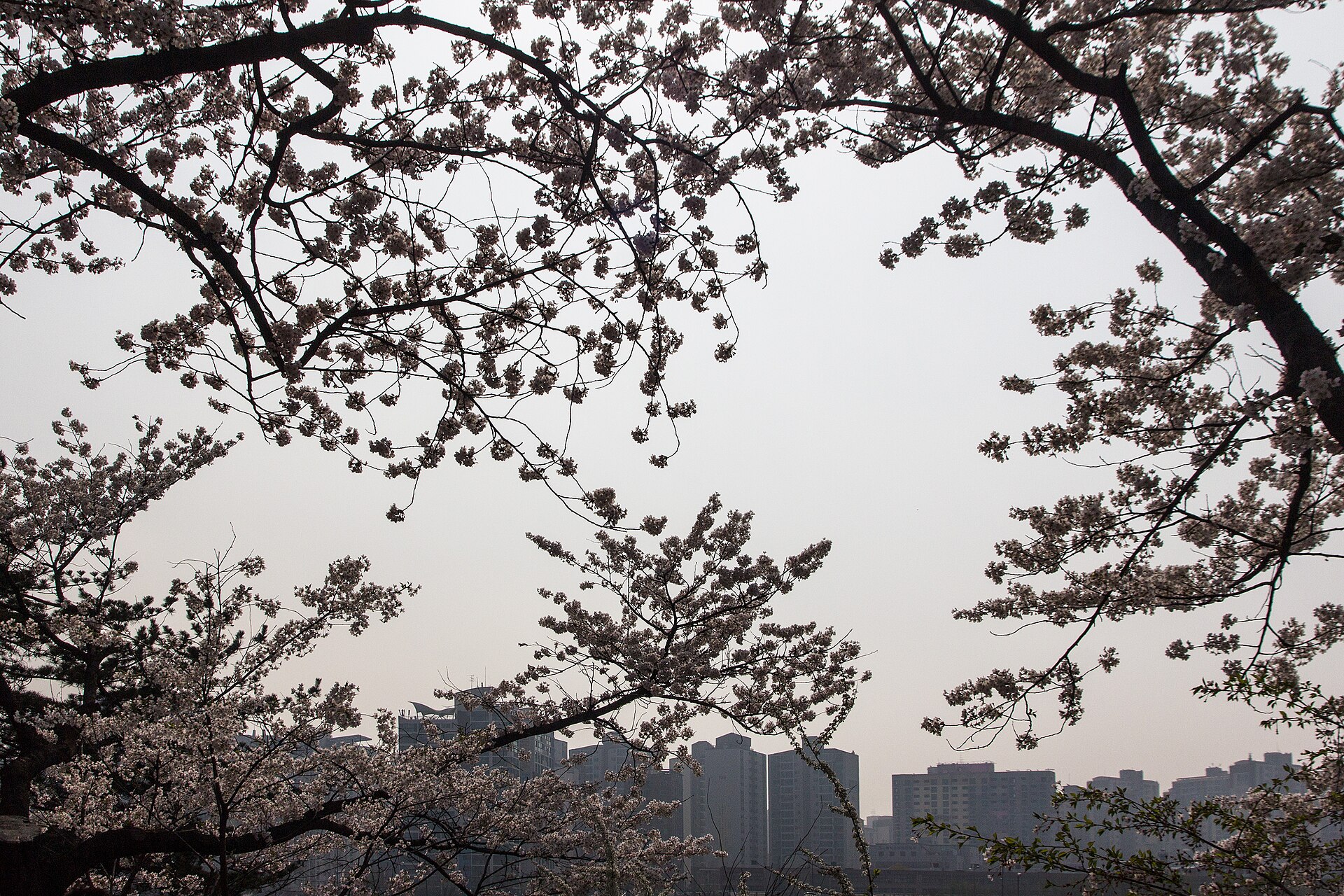
- Nature: cherry blossom, usually peaking in the first half of the month, followed by azaleas and fresh green leaves. Blossom forecasts are published from March and dates shift by a week or more from year to year.
- Crowds and prices: high. Hotel prices rise and the blossom spots — Yeouido, Seokchon Lake, the Han River parks — are packed at weekends.
- Do this: walk under the cherry trees at Seokchon Lake or along Yunjung-ro in Yeouido, ideally on a weekday morning. Our cherry blossom guide covers forecasts and the best spots.

May
- Temperature: average high 24°C, low 14°C. Warm, bright days and comfortable evenings.
- Rain: around 104 mm, but still plenty of dry, sunny days.
- What to wear: T-shirts and light trousers, a light layer for the evening, sunscreen and sunglasses.
- Nature: roses, peonies and lush green parks. The best month for hiking.
- Crowds and prices: high. Children’s Day (5 May) and Buddha’s Birthday bring holiday crowds, and school trips fill the palaces.
- Do this: see the Lotus Lantern Festival parade and the lantern-hung temples around Buddha’s Birthday, or hike Bukhansan while the weather is ideal. Our Bukhansan hiking guide has the routes.
June
- Temperature: average high 28°C, low 19°C. Increasingly hot and humid as the month goes on.
- Rain: around 130 mm, rising sharply in the last week as the monsoon arrives.
- What to wear: light, breathable clothes; a compact umbrella from mid-month. Buildings are strongly air-conditioned, so carry a thin layer.
- Nature: hydrangeas and deep green hills.
- Crowds and prices: moderate. A good-value month in the first half.
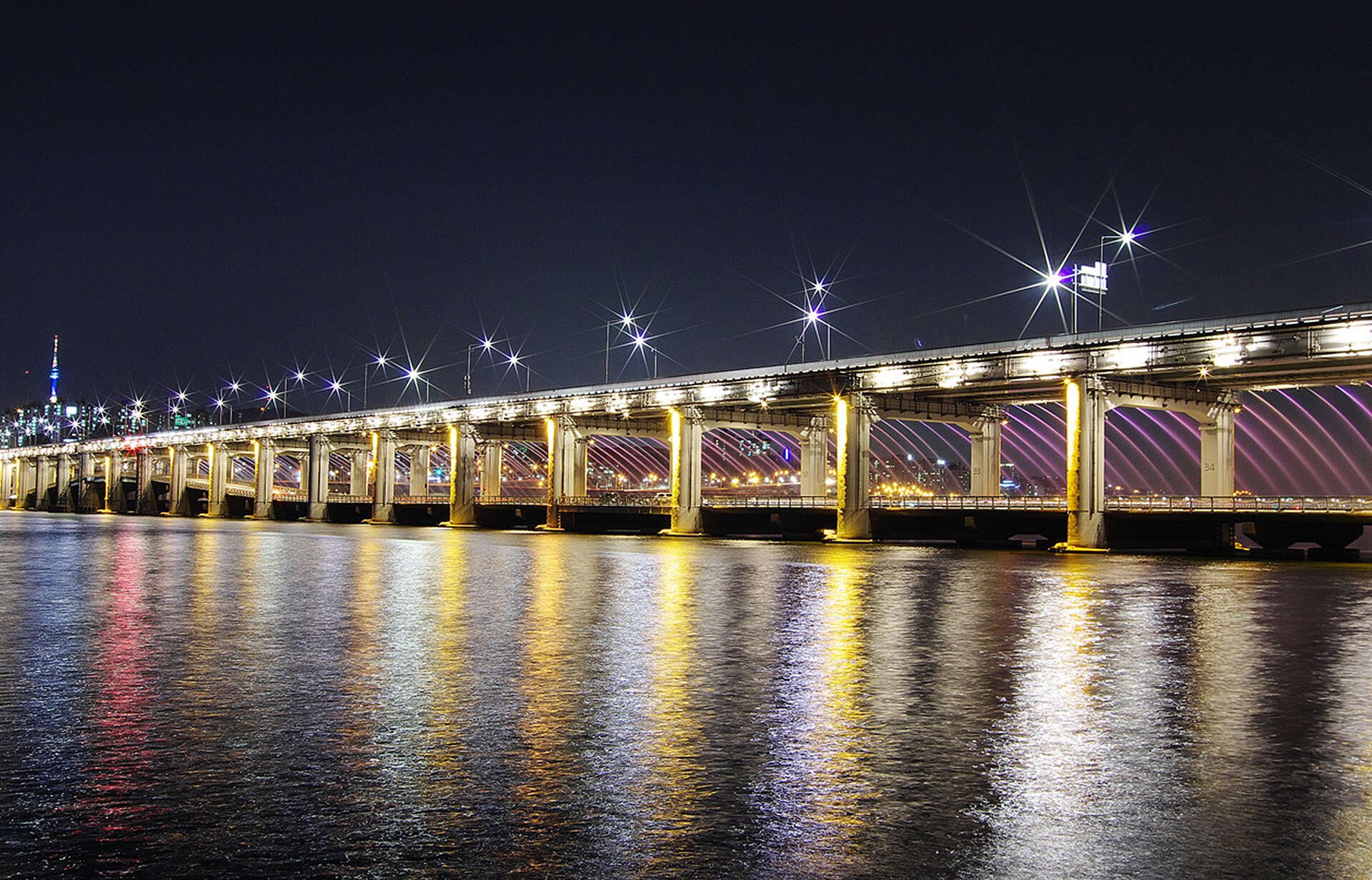
- Do this: spend the long evenings by the river — a picnic, the Banpo Bridge fountain or a bike ride. Our Han River guide has ideas.
July
- Temperature: average high 29°C, low 22°C. It feels much hotter because of the humidity, and heatwave days above 33°C can occur.
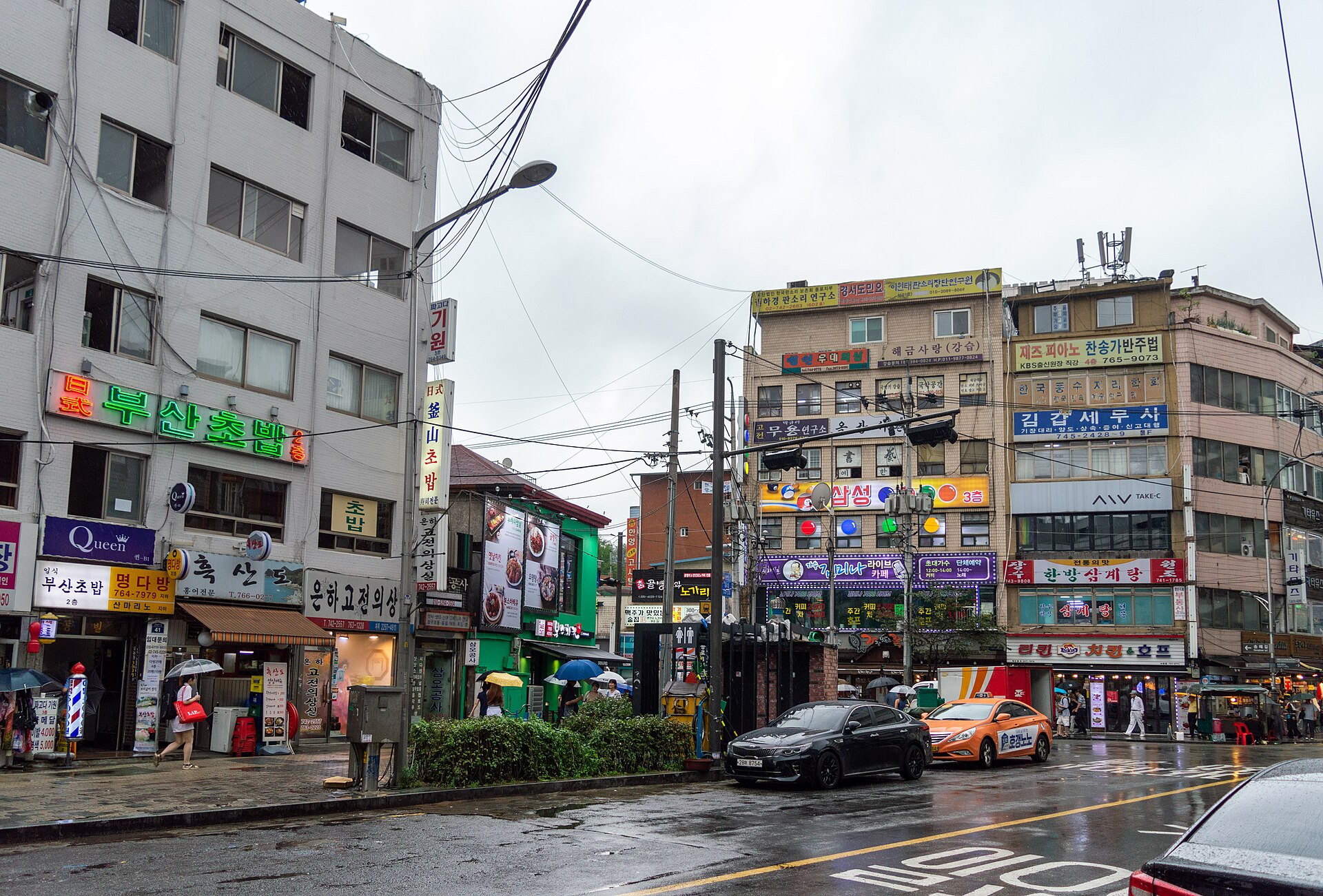
- Rain: the wettest month, around 414 mm, with about 13 days of 1 mm of rain or more. Downpours can be torrential; some days are dry but oppressively muggy.
- Humidity: around 76% on average, often higher.
- What to wear: quick-drying clothes, sandals or shoes you do not mind getting wet, a sturdy umbrella. Leave the suede at home.
- Nature: lotus flowers in palace ponds and at Jogyesa.
- Crowds and prices: moderate, rising late in the month as Korean school holidays begin.
- Do this: plan indoor afternoons — museums, the aquarium, a K-pop agency tour or a spa — and go out again in the evening. Our rainy day activities guide is made for July.
August
- Temperature: average high 30°C, low 23°C — the hottest month.
- Rain: around 348 mm. The monsoon usually ends in late July, but heavy thunderstorms and typhoon rain bands continue.
- What to wear: the lightest clothes you own, a hat, sunscreen, a small towel. Koreans use handheld fans and parasols.
- Nature: crape myrtle and cicadas, very loudly.
- Crowds and prices: busy with domestic holidaymakers and families; flights and resorts outside Seoul are expensive.
- Do this: embrace the summer: the outdoor pools in the Han River parks, cold naengmyeon noodles, patbingsu shaved ice and a night market. Our Seoul summer guide explains how to survive and enjoy it.
September
- Temperature: average high 26°C, low 18°C. Still summery at the start, noticeably fresher by the end.
- Rain: around 142 mm, most of it early in the month or from passing typhoons.
- What to wear: summer clothes for the first half, a light layer for evenings in the second.
- Nature: clear blue skies return; cosmos flowers bloom in the parks.
- Crowds and prices: moderate, spiking around Chuseok, the harvest festival, which falls in September or early October. Like Seollal, it empties the city of residents and fills the trains.
- Do this: late September is ideal for the palaces and the city wall walks, with the heat gone and the autumn crowds not yet arrived.
October
- Temperature: average high 20°C, low 11°C. Warm days, cool nights, low humidity — the best weather of the year.
- Rain: dry, around 52 mm, with long runs of clear skies.
- What to wear: layers: a T-shirt by day, a light jacket or jumper in the evening.
- Nature: autumn colour starts in the mountains early in the month and reaches the city late in October, with red maples and golden ginkgo trees.
- Crowds and prices: October is a popular month to visit, so book early.
- Do this: hike for the foliage, and catch the Seoul International Fireworks Festival over the Han River at Yeouido, usually held on an early October Saturday.
November
- Temperature: average high 12°C, low 4°C. Cooling fast; late November can feel like winter.
- Rain: around 51 mm.
- What to wear: a warm jacket, jumper and scarf, and gloves by the end of the month.
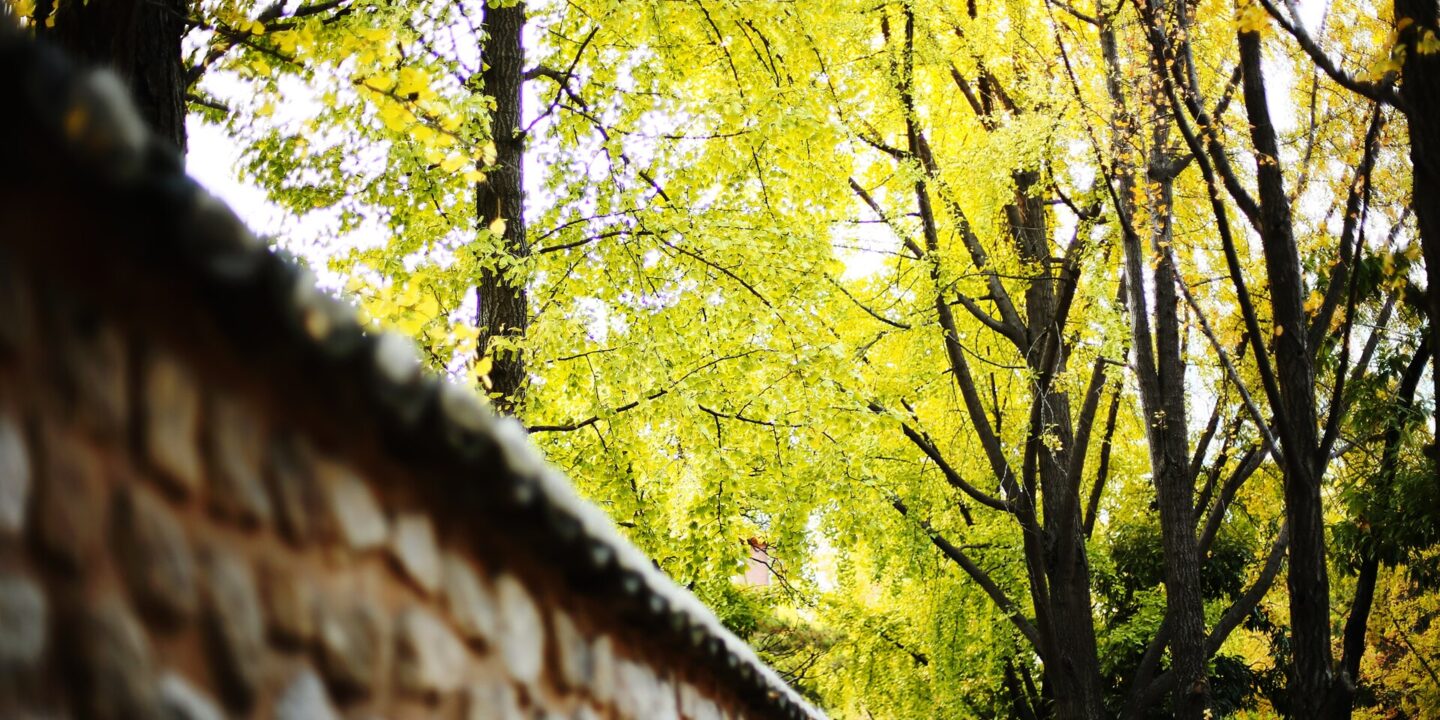
- Nature: the ginkgo avenues turn brilliant yellow in early to mid November, carpeting streets such as the stone-wall road beside Deoksugung. By the end of the month the trees are bare.
- Crowds and prices: moderate and falling; good value in the second half.
- Do this: walk the Deoksugung stone-wall road and the palace gardens under the ginkgo trees. Our autumn foliage guide maps the best spots.
December
- Temperature: average high 4°C, low −3°C, falling through the month.
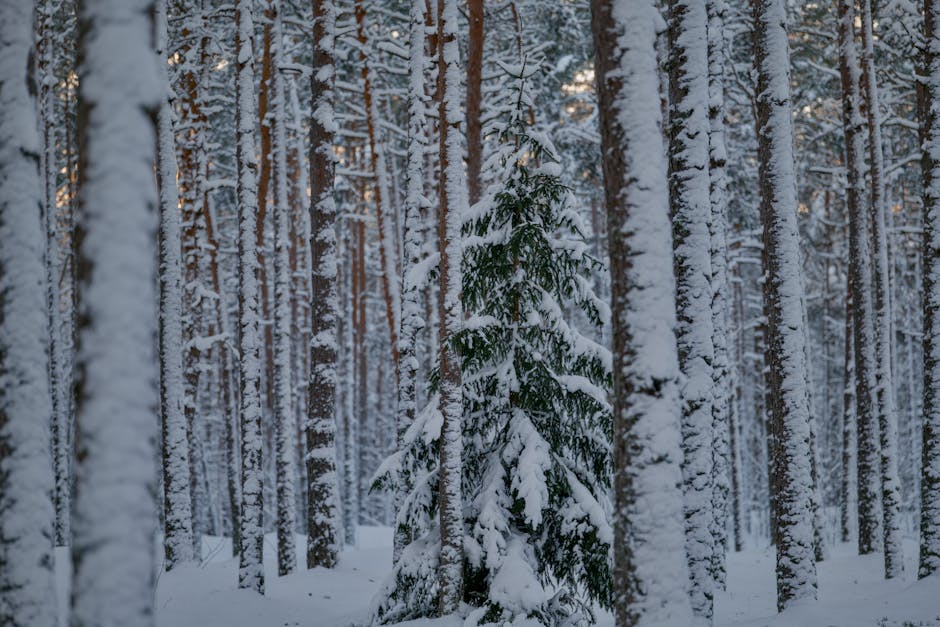
- Rain and snow: dry, around 23 mm including snow; Seoul’s average first snowfall comes around 20 November, though the date varies each year.
- What to wear: full winter gear — padded coat, hat, gloves, thermals.
- Nature: winter, softened by some of the best light displays of the year.
- Crowds and prices: low in early December, high around Christmas Eve and New Year’s Eve.
- Do this: see the Christmas lights and lanterns, and the Bosingak bell-ringing at midnight on 31 December. Our Christmas and New Year in Seoul guide has the details.
How the city copes with its weather
Seoul has spent decades adapting to its extremes, and a surprising amount of that infrastructure makes life easier for visitors, whatever the month.
In the heat
- Shade at crossings: many districts put up large parasols or fixed canopies at busy pedestrian crossings in summer, so you are not left standing in full sun waiting for the lights.
- Heat shelters: community centres, banks and some public buildings open as air-conditioned “cooling shelters” during heatwaves.
- Underground routes: long shopping arcades run beneath Myeongdong, City Hall, Euljiro, Jongno and Gangnam, letting you cover surprising distances without surfacing. Our underground shopping guide maps the main ones.
- Cold food: summer menus switch to naengmyeon (cold buckwheat noodles), kongguksu (chilled soybean noodle soup) and patbingsu. Samgyetang, a hot chicken and ginseng soup, is also eaten on the hottest days of the year in the belief that fighting heat with heat restores energy.
In the cold
- Heated bus-stop seats: many bus stops have heated benches, and some have enclosed wind shelters in winter.
- Ondol: traditional underfloor heating is standard in Korean homes, guesthouses and many restaurants with floor seating. Taking your shoes off and sitting on a warm floor after a freezing walk is one of the pleasures of a Seoul winter.
- Jjimjilbang: bathhouses with hot pools and heated rooms, open around the clock. Our jjimjilbang guide explains the etiquette.
- Street snacks: winter brings out bungeoppang (fish-shaped pastries filled with red bean), hotteok, roasted sweet potatoes and chestnuts, sold from carts for a couple of thousand won.
In the rain
- Umbrella covers: shops and offices provide plastic sleeves or drip stands at the door — use them.
- The subway: nearly everything worth seeing is close to a station, so heavy rain is an inconvenience rather than a cancellation.
- Flooding: in exceptionally heavy downpours, some low-lying roads, riverside paths and underpasses flood. The Han River parks close sections when water levels rise. Follow emergency alerts and do not walk through floodwater.
Mountains, the river and microclimates
Averages are measured in the city, and they do not tell the whole story.
- The mountains are colder and windier. The summits of Bukhansan and Dobongsan can be several degrees colder than downtown, with ice on the rock well into March. Hiking boots with good grip and crampons for winter are standard among Korean hikers.
- The river is windy. The bridges and riverside parks feel noticeably colder in winter and breezier in summer — welcome in August, punishing in January.
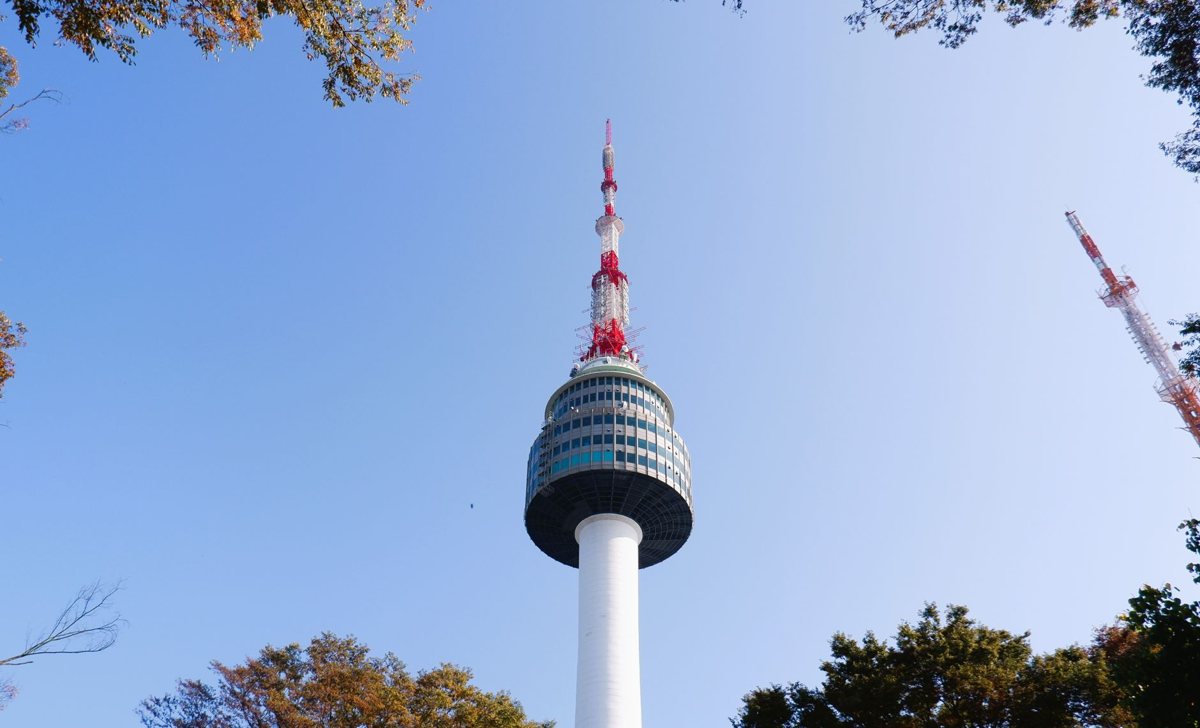
- Namsan is exposed. The observation plaza by N Seoul Tower catches the wind; take an extra layer even on a mild evening.
- Concrete holds heat. Dense districts such as Myeongdong and Gangnam stay warm late into summer nights, while the parks cool off faster.
If you plan to spend time outdoors, our Seoul outdoor and nature guide covers the best seasons for each hike, park and riverside route.
The best and worst months
| If you want… | Go in | Avoid |
|---|---|---|
| The best weather | Mid-April to May; late September to October | July, August, January |
| Cherry blossom | Early April | — |
| Autumn colour | Late October to mid-November | — |
| Low prices and fewer tourists | January, February (outside Seollal), early December, June | April, October |
| Hiking | May, October | July, August |
| Clean air | Late summer and autumn | March–April on dusty days |
| Festivals | May, October, December | — |
| A quiet city | Seollal and Chuseok (but expect closures) | — |
For a full calendar of what is on, see our Seoul festivals and events guide, and for public holidays that affect opening hours and transport, our Korean holidays guide.
Packing by season
| Season | Essentials |
|---|---|
| Spring (March–May) | Light jacket, layers, KF94 masks for dusty days, comfortable walking shoes, sunglasses |
| Summer (June–August) | Breathable clothes, sturdy umbrella, waterproof sandals, sunscreen, hat, a thin layer for air-conditioning, insect repellent |
| Autumn (September–November) | Layers, light jacket, jumper for evenings, walking or hiking shoes; warm coat by late November |
| Winter (December–February) | Long padded coat, thermals, hat, gloves, scarf, warm boots, lip balm and moisturiser for the dry air |
Anything you forget is easy to buy: convenience stores sell umbrellas, masks, hand warmers and cheap gloves, and Seoul’s shops are full of clothing. Our Seoul packing list has the full checklist.
Weather apps and warnings
- Korea Meteorological Administration (KMA) — the official forecaster, with an English website.
- Naver Weather — Naver’s weather service for Korea.
- Air-quality apps — AirVisual (IQAir) or Misemise for fine dust levels.
- Emergency alerts — Korean phones receive government alerts for heavy rain, heatwaves, typhoons and cold waves, in Korean with English versions increasingly common. The Safety Korea app provides alerts in English.
Our Seoul travel apps guide covers these and the other apps worth installing.
Frequently asked questions
What is the best month to visit Seoul for weather?
October, closely followed by May. Both have warm, dry days, cool evenings and low humidity. Late April and late September are also excellent.
What is the rainy season in Seoul?
The summer monsoon, jangma, usually runs from late June to late July, and July and August together receive more than half of Seoul’s annual rainfall. Typhoons can bring further heavy rain in August and September.
How cold does Seoul get in winter?
January averages a high of 2°C and a low of −6°C, and cold snaps can push well below that. The wind chill makes it feel colder, especially by the river and on Namsan.
When do the cherry blossoms bloom in Seoul?
Usually in the first half of April, occasionally starting in late March in warm years. Check the official blossom forecasts, published from March, before you book.
When is autumn foliage in Seoul?
Colour reaches the mountains around Seoul in mid to late October and the city itself from late October to mid November, with ginkgo trees turning yellow in early to mid November.
Is fine dust a problem in Seoul?
It can be, particularly in late winter and spring. Most days are fine, but on bad days the sky turns hazy and it is sensible to wear a KF94 mask outdoors and plan more indoor activities. Check an air-quality app each morning.
Final thoughts
There is no truly bad month to visit Seoul, only months that need different plans. Come in April or October for the weather everyone dreams of, and book early. Come in January for bright, freezing days, cheap hotels and hot bathhouses; come in July with an umbrella and a list of museums. Whichever month you choose, pack for the season rather than the calendar, check the air quality in spring, and let the weather decide which half of your itinerary happens indoors.
Photo Credits
Ginkgo trees turning yellow beside a traditional stone wall in autumn: Autumn (126656567) by Jaeseop An, CC BY 3.0, via Wikimedia Commons.
Cherry blossom under a hazy sky in Yeouido Park: Cherry Blossom in Yeouido Park – panoramio by Alexey Komarov, CC BY 3.0, via Wikimedia Commons.
Banpo Bridge fountain after dark: 2011년 11월 대한민국 서울특별시 명소 (Seoul best attractions) 1 by Kwangmo, Public domain, via Wikimedia Commons.
A rainy July street in Jongno: Intersection of Donhwamun-ro sipil-gil and Supyo-ro by Tristan Surtel, CC BY-SA 4.0, via Wikimedia Commons.