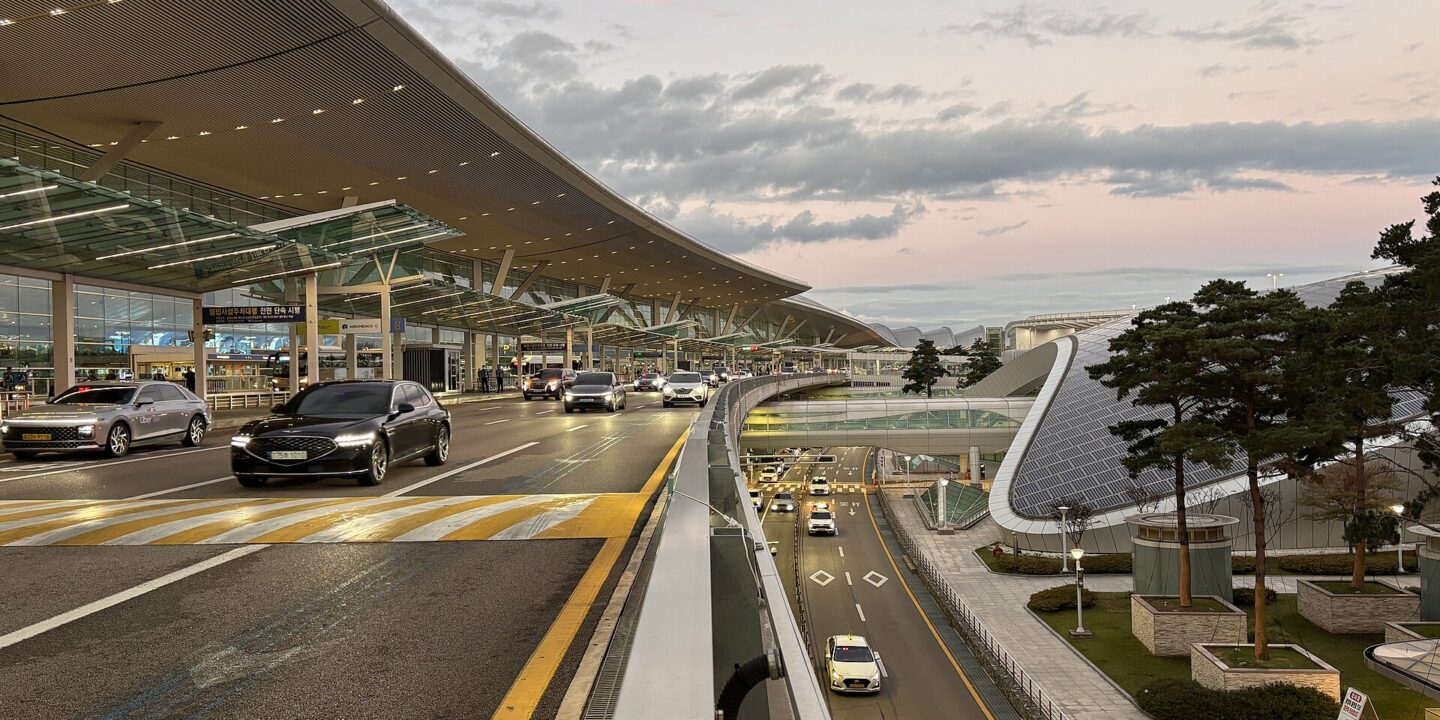
Terminal assignments, counter locations, opening hours and prices were checked in November 2026 against the airport’s own pages and the operators’ sites. Airlines do change terminals (Asiana has moved its whole operation to Terminal 2), so always confirm the terminal on your e-ticket or in the airline’s app before you set off.
Incheon at a glance
| What | The short version |
|---|---|
| Terminal 2 | Korean Air, Asiana, Jin Air, Air Seoul, Air Busan, Delta and other partner airlines |
| Terminal 1 | Jeju Air, Trinity Airways, Eastar Jet, Air Premia, Parata Air and most other foreign airlines |
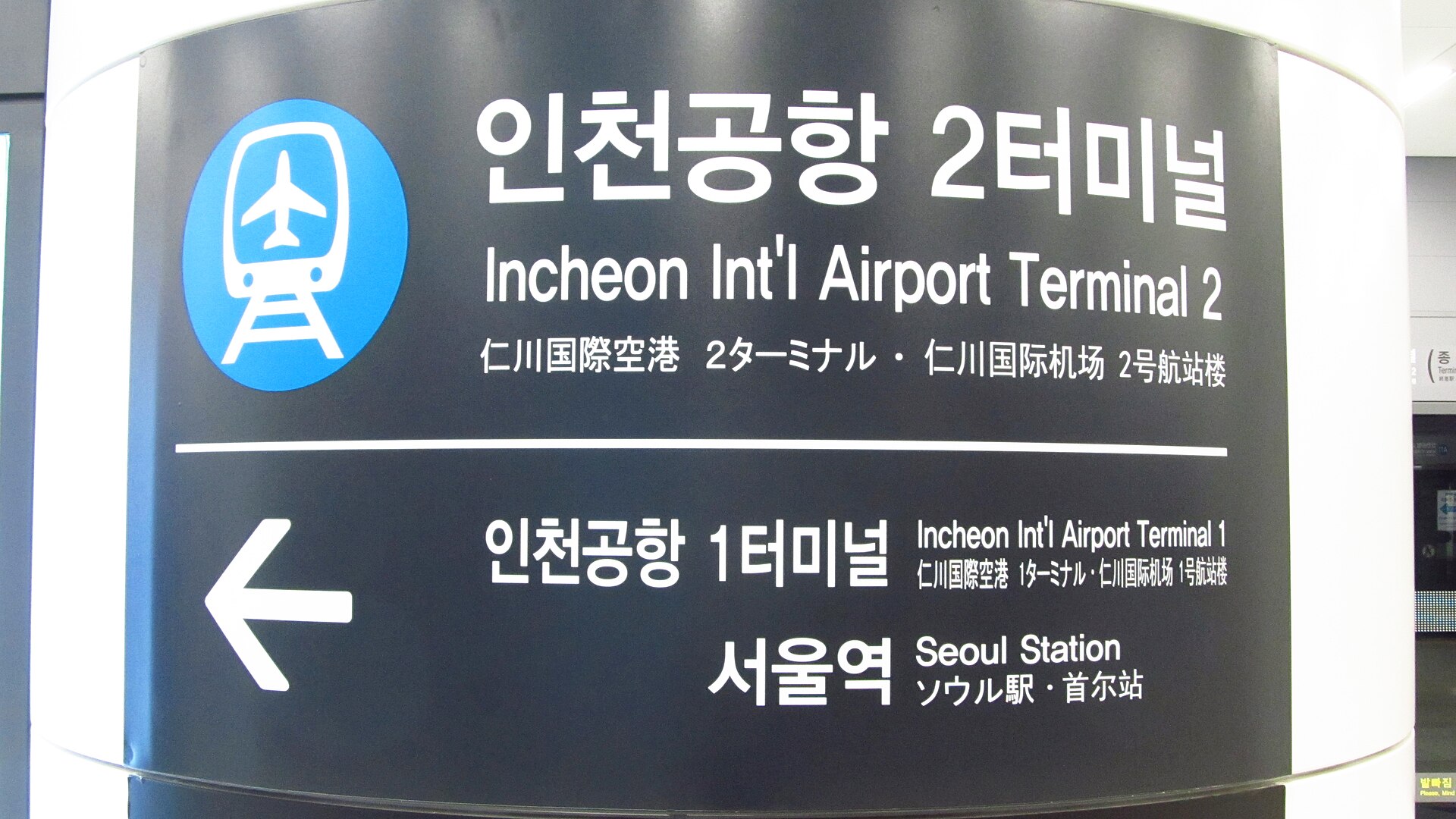
| Between terminals | AREX train, about 6 minutes, ₩1,050; or the free shuttle bus, every 7–20 minutes |
| SIM and roaming counters | KT, SK Telecom and LG U+ on the arrivals floor of both terminals, with 24-hour counters |
| Into Seoul | AREX Express to Seoul Station ₩13,000 (43 minutes from T1, 51 from T2); all-stop AREX, buses and taxis |
| Luggage | T-Luggage counters on the departures floor of both terminals for storage and same-day delivery |
| Capsule hotel | Darakhyu, landside in both terminals, open 24 hours; day use from ₩32,000 for 3 hours |
| Tax refunds | Kiosks by the check-in rows in both terminals, open 24 hours, plus airside desks |
| Long layover | The Transit Tour runs tours into Seoul and the surrounding area for layovers of up to 24 hours, several of them free |
Terminal 1 or Terminal 2?
This is the question to settle before anything else, and older guides may give you the wrong answer. Now that Asiana has moved across, Terminal 2 is the home of the Korean Air group and its partners, while Terminal 1 serves Korea’s independent low-cost and newer airlines and most foreign carriers.
The airport’s own list puts these airlines at Terminal 2: Korean Air, Asiana Airlines, Jin Air, Air Seoul, Air Busan and Delta, plus other partner airlines. The self check-in kiosks in Terminal 2 also serve Air France, KLM, China Airlines, Aeromexico and SAS, which tells you who else checks in there.
At Terminal 1 you will find Jeju Air, Trinity Airways, Eastar Jet, Air Premia and Parata Air, along with most other foreign airlines. Its kiosks serve Cathay Pacific, Turkish Airlines, United, Singapore Airlines, Vietnam Airlines, American Airlines and Air Canada, among others.
The trap is the codeshare. If you booked a flight sold by one airline and operated by another, the terminal is the operating airline’s, not the one on your booking. The airport itself warns that codeshare flights can use a different terminal, so check the operating carrier on your e-ticket, and if in doubt, look the flight up on the airport’s website.
The mistake that costs you an hour
The classic Incheon error goes like this: you take the AREX from Seoul, step off at the first airport station because everyone else does, and only realise at the check-in hall that your airline is in the other terminal. Heading out from Seoul, the train calls at Terminal 1 first and Terminal 2 second, so if you are flying from Terminal 2, stay on. By the time you have found the connecting train or bus, waited for it and walked back up to the departures floor, the detour has eaten a big slice of your margin.
Getting between the terminals
- By AREX train: the quickest way. It takes about 6 minutes and costs ₩1,050; the ride between terminals is not free. Ticket machines are at the Transportation Centre on the B1 level of each terminal, or tap a transport card.
- By free shuttle bus, Terminal 1 to Terminal 2: the AIRPORT 04 bus leaves from the 3rd floor of Terminal 1, in front of Gate 8, every 10–20 minutes from 04:30 to 23:20, and drops you on the 3rd floor of Terminal 2 near Gates 6 and 7.
- By free shuttle bus, Terminal 2 to Terminal 1: the AIRPORT 03 bus leaves from the 3rd floor of Terminal 2, in front of Gate 7, every 7–20 minutes from 04:30 to 23:35, stopping at Terminal 1’s 3rd floor at Gates 3 and 12.
The buses also call at car parks and other stops on their loops, so the train is the faster choice when you are in a hurry. Use the bus when you have time, or when you are already on the departures floor and do not want to go down to B1 with a trolley.
The arrival sequence, step by step
Whichever terminal you land in, the order of events is the same. Knowing it in advance takes most of the stress out of the first hour.
Before you land
- Arrival card: unless you hold a K-ETA, submit the free e-Arrival Card online within the three days before you land. K-ETA holders skip it.
- Q-CODE: the health declaration is only required of travellers arriving from areas Korea designates for quarantine inspection. Everyone else can ignore it.
- Customs: if you have something to declare, you can fill in the declaration on the “Traveler Customs Declaration” app or website during entry, which speeds up clearance.
Our Seoul visa guide covers the K-ETA and visa rules, and the Seoul travel essentials guide has the full pre-departure checklist.
Immigration
Follow the arrival signs to the immigration hall and join the lanes for foreign passports. Officers take fingerprints and a facial photo from every visitor aged 17 and over, and may ask how long you are staying and where, so have your accommodation address to hand. Citizens of 42 countries and regions can use the automated Smart Entry gates, but only once they have registered their fingerprints and photo on a previous arrival; on a first visit, foreign visitors queue in the foreign-nationals lines for an officer.
Baggage and customs
Collect your bags from the carousel shown on the screens, then go through customs. If you have nothing to declare, you do not need a form at all: walk through the green channel. The duty-free allowance is USD 800 of goods bought abroad, plus alcohol up to USD 400 in total, in no more than two bottles and two litres, 200 cigarettes and 100 ml of perfume (no alcohol or tobacco allowance for those aged 19 and under). Cash worth more than USD 10,000 must be declared.
Data, money and transport cards: in the right order
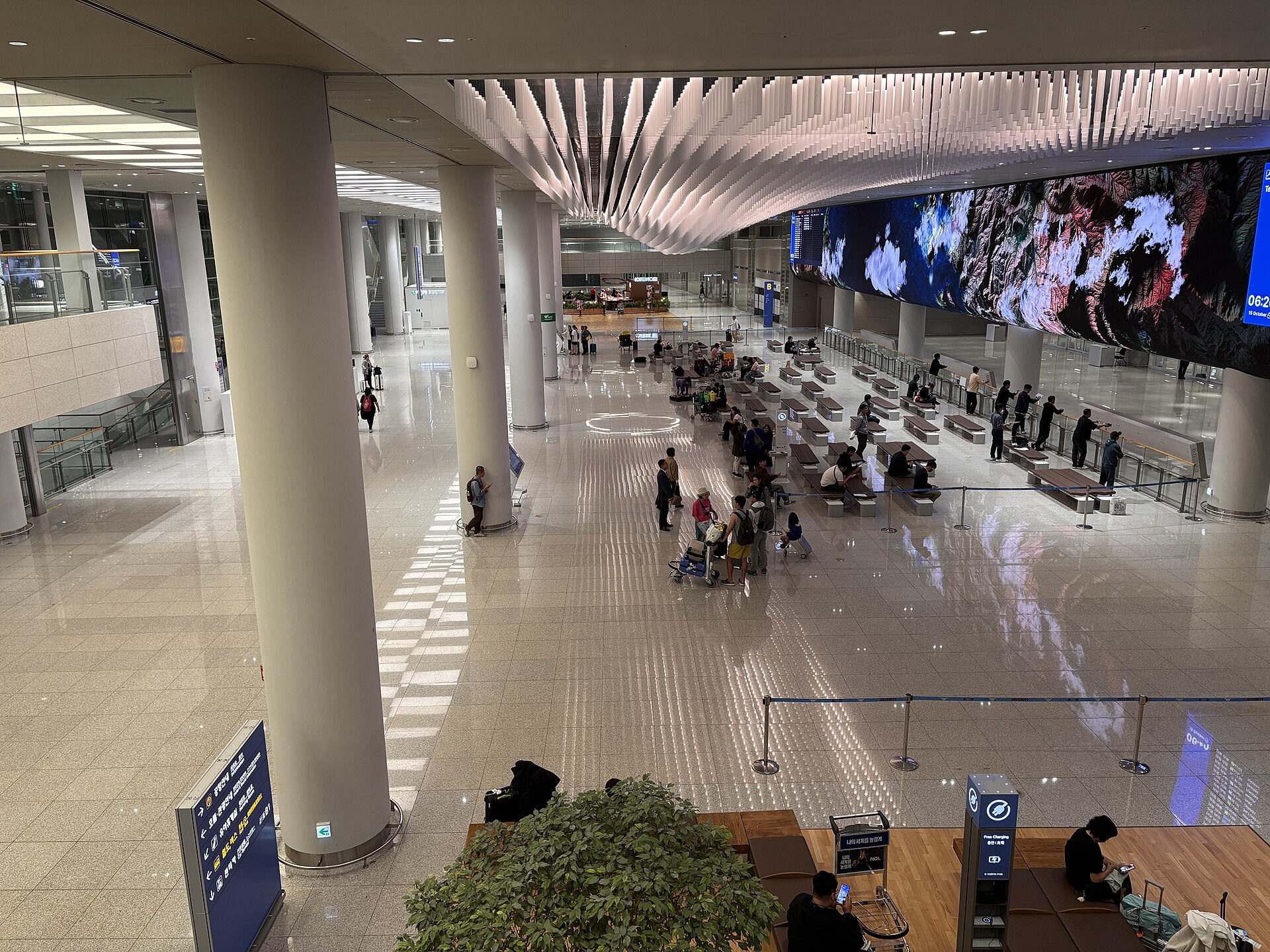
The arrivals hall is where you set yourself up for the whole trip, and the order matters. Get data first, because your maps, translation app and train tickets all depend on it. Then cash, then a transport card, then the train.
1. Data: the roaming counters
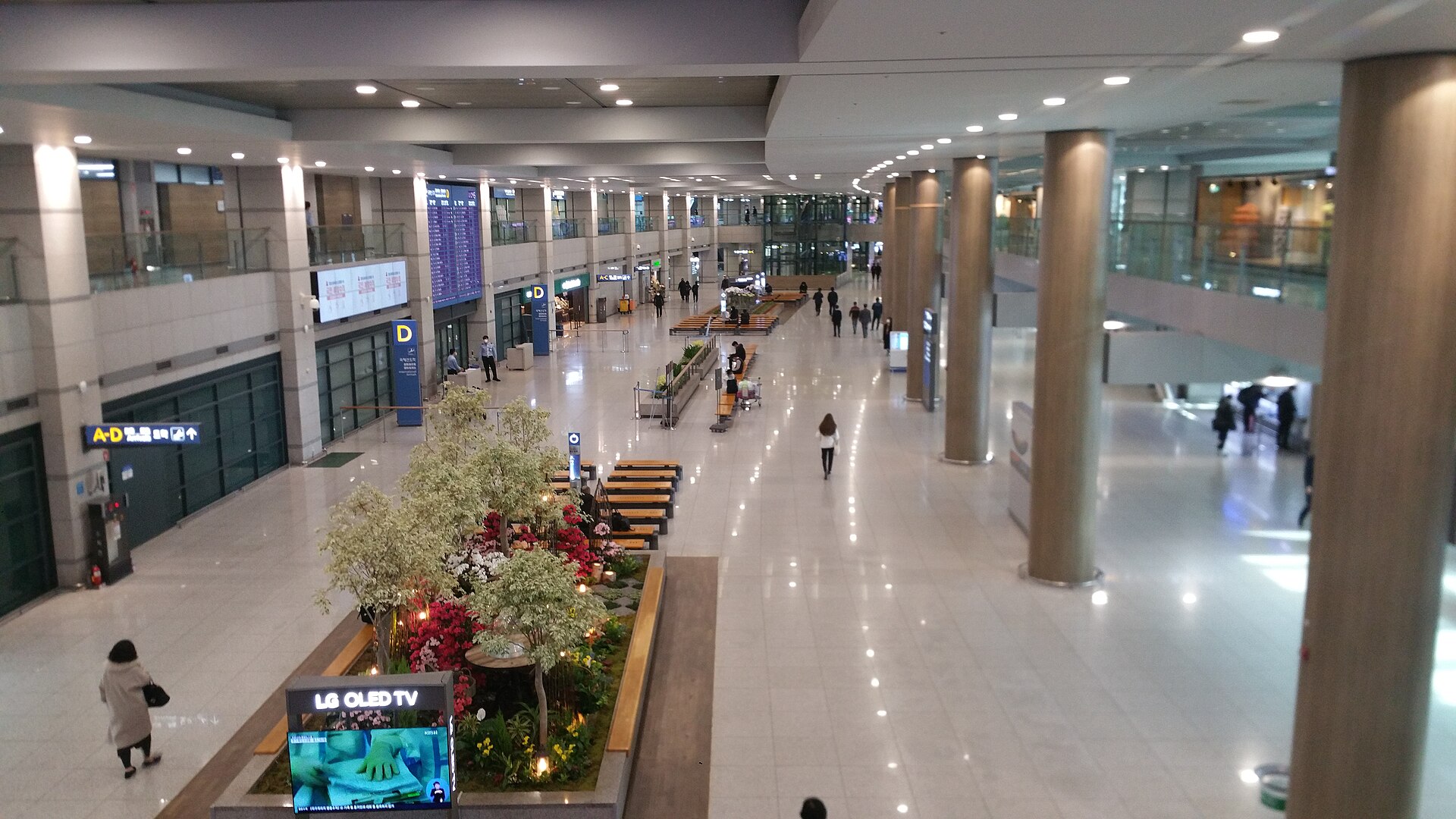
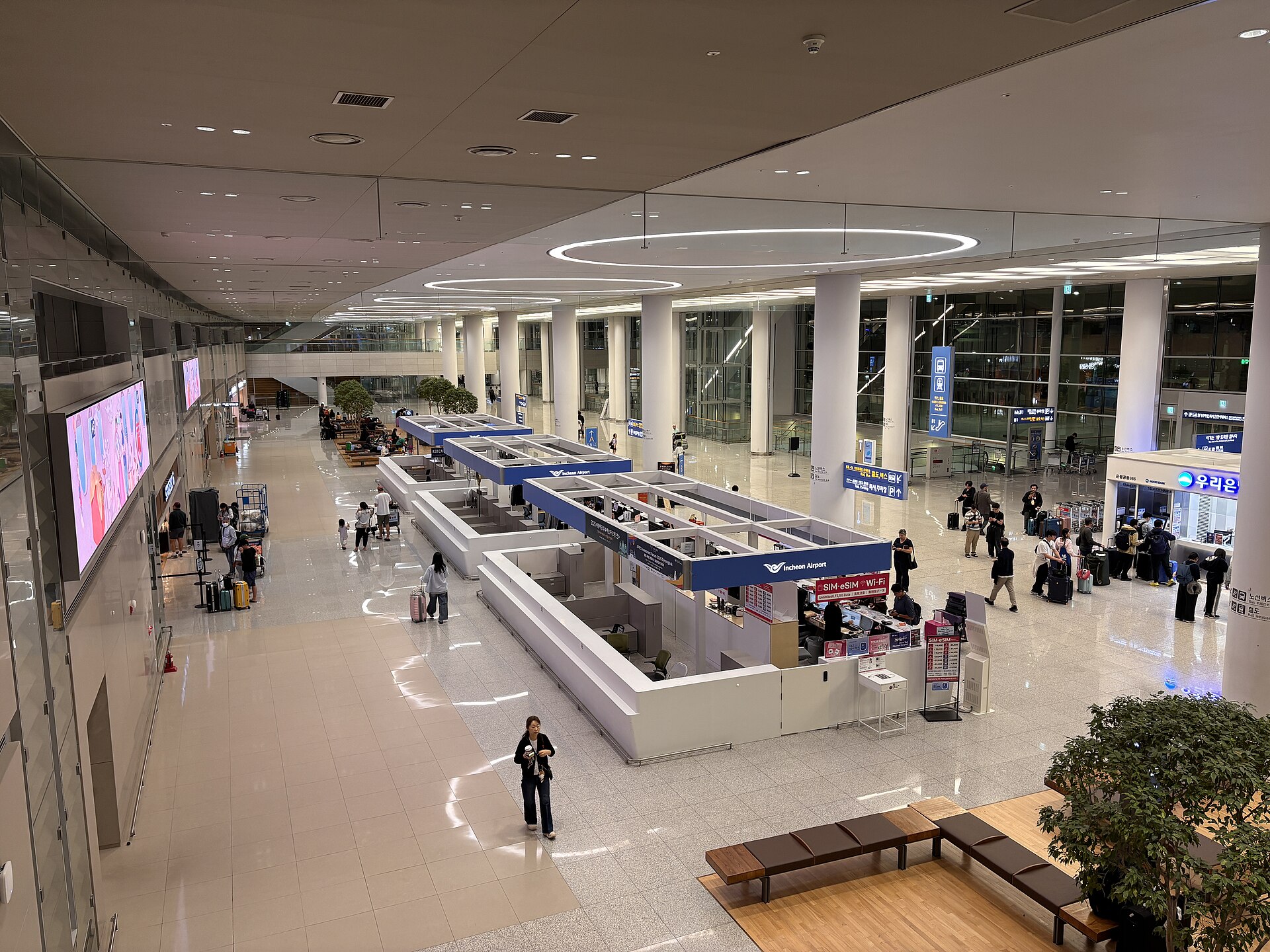
All three Korean carriers, KT, SK Telecom and LG U+, have roaming and SIM counters on the arrivals floor, and each terminal has 24-hour counters.
- Terminal 1: all three carriers run 24-hour counters at Arrival Hall F at the west end of the ground floor, and counters open 06:00–22:00 at Arrival Hall A at the east end.
- Terminal 2: KT and LG U+ run 24-hour counters near Exit 4, and SK Telecom a 24-hour counter near Exit 7; LG U+ has a second counter near Exit 7, open 06:00–22:00.
If you bought an eSIM before you flew, switch it on as soon as you land and skip this step.
2. Cash: banks and ATMs
Exchange counters and ATMs line the arrivals floor. In Terminal 1, KB Bank has a 24-hour branch near Arrival Hall B and Woori Bank 24-hour branches near Exits 6 and 11, with more counters open 06:00–22:00; there is also a 24-hour ATM on B1 near the all-stop train ticket machines. In Terminal 2, Woori Bank has a 24-hour counter near Exit 7, other banks open 06:00–22:00 near Exits 1–2, 4 and 10, and 24-hour ATMs stand near Exits 3 and 7. Airport exchange rates are rarely the best in town, so change only what you need for the first day or two, or simply use an ATM.
3. A transport card
T-money cards are sold and topped up in cash at convenience stores, so buy one at the first convenience store you pass. Our T-money guide covers the details. If you are planning to use a Climate Card, Seoul’s unlimited pass, remember that you cannot board at Incheon with one, so use T-money or an AREX ticket for the ride in. If you use WOWPASS, check its app for the current locations of its machines at the airport before you land.
4. Into Seoul
The AREX Express runs non-stop to Seoul Station for ₩13,000 with reserved seats, in 43 minutes from Terminal 1 and 51 from Terminal 2. The all-stop AREX is far cheaper (₩4,750 from Terminal 1 to Seoul Station by transport card) and stops at Gimpo Airport and Hongik University on the way. Express tickets are sold at counters in the B1 Transportation Centre. Airport limousine buses run to most hotel districts and load your bags underneath, and taxis queue outside the arrivals exits. Our Incheon Airport to Seoul guide compares every option, with fares and journey times.
Landing late at night
Plenty of flights from Europe, the Americas and Southeast Asia land late in the evening or in the small hours, and Incheon handles that well, as long as you know what keeps running.
- Still open: each terminal has 24-hour roaming counters, 24-hour bank counters and ATMs, the Darakhyu capsule hotel and, in Terminal 1, the SPA at Home facility on B1, so you can get data, cash and a bed at any hour.
- The last trains: AREX does not run through the night, and its timetables changed on 23 October 2026. Check the last Express and all-stop departures for your terminal on the AREX website before you fly, rather than relying on an older guide.
- Taxis: taxis wait outside the arrivals exits around the clock, which is the simplest option after the last train for two or more people with luggage. Have your hotel’s address in Korean ready.
- Staying put: if you land after the last train and have an early start anyway, a night at Darakhyu (from ₩69,000 for a single) can be cheaper and calmer than a long taxi ride into Seoul and back.
If you are arriving very late, it is also worth booking your first night somewhere easy to reach from the airport, such as near Seoul Station or Hongdae on the AREX line. Our where to stay in Seoul guide compares the neighbourhoods.
Left luggage and delivery to your hotel
Arriving hours before you can check in, or flying out in the evening after checking out? Incheon is set up for both.
The main service is T-Luggage, run by Hanjin Express, with counters on the departures floor of both terminals: in Terminal 1 opposite check-in row B on the 3rd floor, and in Terminal 2 opposite check-in row H. It stores bags and runs same-day delivery between the airport and its staffed storage points at Seoul Station, Hongik University, Myeongdong and Gimpo Airport subway stations, so you can drop a suitcase in Seoul in the morning and collect it at the airport that evening, or the other way round.
- Storage: a small bag costs ₩3,000 on weekdays and ₩4,000 at weekends for the first 4 hours, then ₩1,000 for each extra hour.
- Delivery: sending a small bag to Incheon Terminal 2 costs ₩20,000 on weekdays and ₩29,000 at weekends. Larger bags cost more.
Check the cut-off times on T-Luggage’s own site before you rely on same-day delivery, especially for an evening flight. Courier companies also have counters in the terminals, including ZIMCARRY in Terminal 1 (near check-in row B, 07:00–21:00, and near row N, 24 hours) and Hanjin Express in Terminal 2, if you want bags delivered to or from a hotel.
Sleeping, showers, lounges and rest areas
Incheon is a comfortable place to be stuck. You have options on both sides of security, from free nap zones to a proper hotel room.
Before security: the capsule hotel
Darakhyu, a capsule-style hotel, has a branch landside in each terminal, open 24 hours: in Terminal 1 at the Transportation Centre on B1, and in Terminal 2 near the bus ticket counter. It is ideal for a late arrival before an early train, or an early flight after a late one. Weekday rates (weekends and holidays can differ) are:
| Room | Day use (08:00–20:00, 3 hours minimum) | Overnight (20:00–08:00, 12 hours) |
|---|---|---|
| Single | ₩32,000 | ₩69,000 |
| Single with shower | ₩38,000 | ₩79,000 |
| Double | ₩41,000 | ₩85,000 |
| Double with shower | ₩48,000 | ₩94,000 |
Extra hours of day use cost ₩10,000 each. Book ahead if you know your timings, as each terminal’s branch has a limited number of rooms.
Landside showers
In Terminal 1, SPA at Home on B1 is the landside option for a shower and a rest if you are not staying at the capsule hotel. It is open around the clock apart from a short break from 23:30 to midnight.
After security: transit hotels, showers and nap zones
Once you are through security (or if you are transferring without entering Korea), there is more:
- Transit Hotel: airside hotels on the 4th floor, near Gate 11 in Terminal 1 and opposite Gate 252 in Terminal 2. In Terminal 1, a double or twin room costs ₩90,000 for 6 hours, ₩180,000 for 12 hours and ₩220,000 for 16 to 24 hours, with short stays from ₩15,000 an hour.
- Shower rooms: airside on the 4th floor, open 05:00–23:00: in Terminal 1 near Gate 25 (east) and Gate 29 (west), and in Terminal 2 near Gates 231 and 268.
- Free rest areas: nap and relaxation zones open 24 hours in Terminal 1’s 4th-floor transfer areas, and a nap zone and public lounge near Gates 231 and 268 in Terminal 2.
- Lounges: besides the airline lounges, both terminals have SKY HUB lounges, and Terminal 1 also has Matina lounges. Check the airport’s facility list for access, prices and current hours, which change for some lounges with the season.
Leaving Korea: timing, check-in and Smart Pass
Departure from Incheon is efficient, but queues at security and immigration build quickly at peak times. Follow your airline’s check-in deadline, and check the airport’s live congestion information on the day if you are flying at a busy time.
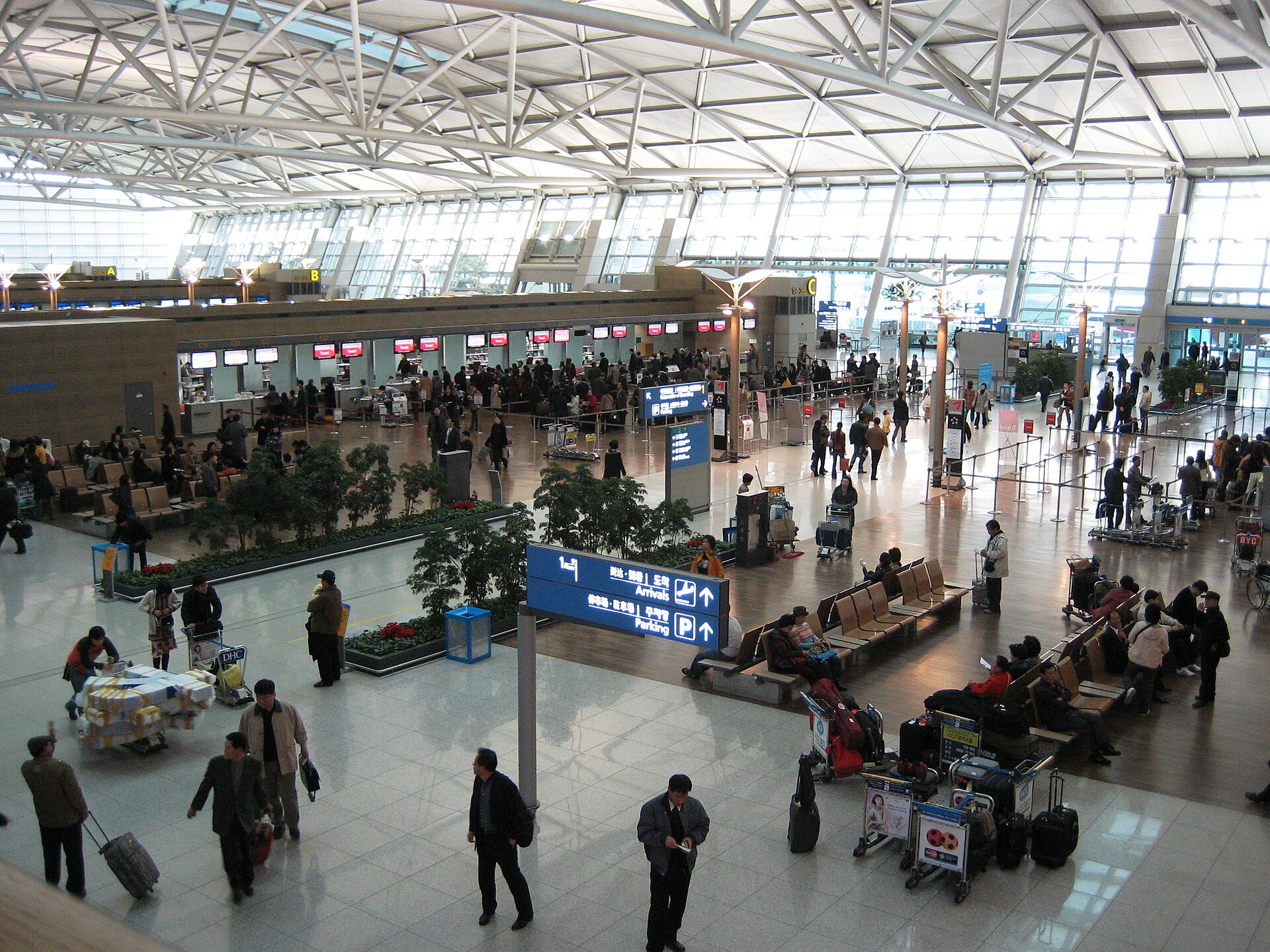
Check-in
- Counters: in Terminal 2, Korean Air’s counters open at 05:30 and Asiana’s (rows G to J) at 05:00. Foreign airlines generally open their counters 3 to 2 hours before departure.
- Self check-in kiosks: available 24 hours, up to an hour before departure. They are not for passengers who need a visa for their destination, some codeshare flights or passengers travelling with infants.
- Self bag drop: for bags under 90 cm, with some airlines only. Check with your airline.
- Check in at Seoul Station: if you are taking the AREX Express, the city airport terminal at Seoul Station handles check-in for participating airlines from 05:20 to 19:00, closing 3 hours before departure for Terminal 1 flights and 3 hours 20 minutes for Terminal 2. You then travel to the airport without your bags. It is for AREX Express passengers only.
Smart Pass
Smart Pass lets you pass through immigration checkpoints and some boarding gates using facial recognition after you pre-register your passport, face and boarding pass. You register your passport and face in advance through the SMARTPASS app, at a self check-in kiosk or through partner apps, and add your boarding pass for each trip; the face registration lasts five years. The airport says its Smart Pass lanes are open to any registered traveller, and for several Korean airlines, including Korean Air, Asiana, Jeju Air and Jin Air, the boarding pass is registered automatically when you check in.
Separately, the automated immigration gates for departure are open to short-term foreign visitors aged 17 and over without any pre-registration, which can save time in the immigration queue on the way out.
Before you fly: power banks and duty-free
Rules on carrying power banks change, and the airport posted a notice about them in 2026; check the current rules with your airline before you pack. If you bought duty-free goods in Seoul for collection at the airport, leave time to pick them up airside before boarding.
Tax refunds at the airport
If you shopped at tax-free stores and did not get an immediate refund in the shop, you claim it at the airport before you fly. The refund points are:
- Terminal 1: near check-in rows J and L, open 24 hours.
- Terminal 2: near check-in rows F and G, open 24 hours, plus airside points near Gates 249 and 270 (07:00–21:30).
- Concourse: in the centre of the 3rd floor, open 24 hours.
The process is simple if you follow the order. Keep eligible purchases (each over ₩15,000, with their receipts and refund documents) in your hand luggage, and use a refund kiosk in the departure hall before check-in. If the kiosk flags your goods for a customs inspection, take your passport, the goods (unopened and unused) and your proof of purchase to the customs desk. If the goods are packed in your checked bag, tell the airline staff at check-in, get a customs tag, and reclaim the bag for the inspection before you drop it. Our duty-free shopping guide explains how tax-free shopping works in town.
A long layover? The Transit Tour
If you are connecting through Incheon with a layover of up to 24 hours, the airport’s Transit Tour can take you out of the terminal for a few hours. You need your passport and both boarding passes, and you register at the transit tour desk on the arrivals floor at least 30 minutes before the tour leaves. The programme in November 2026 includes:
- Royal Heritage and Charm: 5 hours, USD 3, a palace visit in Seoul (Changdeokgung on Tuesdays, when Gyeongbokgung is closed).
- Hongdae: 4 hours, free.
- Odusan and Imjingak (towards the border): 5 hours, free.
- DMZ: 5 hours, USD 4.
- Sinpo Market in Incheon: 5 hours, free.
- Seoul Botanic Park: 3 hours, USD 4, offered as a bad-weather alternative.
Each tour runs only on set days (the DMZ tour on Thursdays, for example), so check the airport’s course page for what is on during your layover. The desks are on the 1st floor: in Terminal 1 near Gates 1 and 2 and across from Exit 4, and in Terminal 2 near Exits 5 and 6, open 07:00–18:00. Leaving the airport means passing through immigration, so you must meet Korea’s entry requirements for your nationality. For more on the places these tours visit, see our guides to Hongdae, Changdeokgung and the DMZ.
Before any of this, there is the paperwork. Our K-ETA and arrival guide explains who needs a K-ETA and who submits the e-Arrival Card instead, when to fill in Q-CODE and the customs app, and what to have ready on your phone before landing.
If you land without a data plan, the carriers’ counters in both arrivals halls will sell you one at any hour. Before you queue, our Korea SIM vs eSIM vs pocket Wi-Fi guide sets out what each counter sells, what it costs per day and per person, and why a group of three or more usually does best with a single router.
If your stop at Incheon is a layover rather than an arrival, our Seoul layover guide goes further: which layovers are long enough to leave the airport, the full list of Transit Tours and the days they run, the entry rules for transit passengers, and plans for an afternoon or an overnight in the city.
Frequently Asked Questions
Which terminal does my airline use at Incheon?
Korean Air, Asiana, Jin Air, Air Seoul, Air Busan, Delta and their partners use Terminal 2. Jeju Air, Trinity Airways, Eastar Jet, Air Premia, Parata Air and most other foreign airlines use Terminal 1. Codeshare flights use the operating airline’s terminal, so check your e-ticket.
How do I get between Terminal 1 and Terminal 2?
The AREX train takes about 6 minutes and costs ₩1,050. Free shuttle buses also run between the terminals’ 3rd floors every 7–20 minutes from early morning until late evening, but they take longer.
Where can I buy a SIM card at Incheon Airport?
KT, SK Telecom and LG U+ all have roaming and SIM counters on the arrivals floor of both terminals, with counters open 24 hours in each terminal.
Can I store luggage at Incheon Airport?
Yes. T-Luggage, run by Hanjin Express, has counters on the departures floor of both terminals. A small bag costs from ₩3,000 for the first 4 hours on a weekday, and the service can deliver bags between the airport and its storage points at Seoul Station, Hongik University, Myeongdong and Gimpo Airport stations.
Is there a hotel inside Incheon Airport?
Yes, two kinds. Darakhyu, a capsule hotel, is landside in both terminals and open 24 hours, with day use from ₩32,000 for 3 hours. The Transit Hotel is airside, for passengers who are already through security or in transit.
Can I take a shower at Incheon Airport?
Yes. Airside shower rooms on the 4th floor of both terminals open 05:00–23:00, and SPA at Home on B1 in Terminal 1 is open almost around the clock on the landside.
Where do I get my tax refund at Incheon?
At the refund kiosks near check-in rows J and L in Terminal 1, or rows F and G in Terminal 2, before you check in your bags. Keep the goods in your hand luggage in case customs asks to see them.
Can I leave the airport on a layover?
Yes, if you meet the entry requirements for your nationality. For layovers of up to 24 hours, the airport’s Transit Tour runs trips into Seoul and the surrounding area, several of them free. Register at the transit tour desk on the 1st floor at least 30 minutes before departure.
Final Thoughts
Incheon rewards a little homework. Know your terminal, stay on the train if you are flying from Terminal 2, and do your errands in the arrivals hall in the right order: data, cash, transport card, train. Do that and the airport stops being an obstacle and becomes what it is meant to be, a smooth start and end to the trip. For the journey into the city, our Incheon to Seoul guide picks up where this one leaves off.
Photo Credits
Terminal 2 at dusk (featured image): 2025-10-14 17.34.10 Incheon International Airport by Choikwangmo25, CC0, via Wikimedia Commons.
Service counters in Terminal 2’s arrivals hall: 2025-10-14 17.20.29 Incheon International Airport by Choikwangmo25, CC0, via Wikimedia Commons.
The AREX station at Terminal 2: AREX-A11-Incheon-international-airport-terminal-2-station-sign-20181120-175312 by LERK, CC BY-SA 4.0, via Wikimedia Commons.
The arrivals floor in Terminal 1: Few people in arrival hall at Incheon International Airport Terminal 1 during the coronavirus outbreak 20200306 114257 by Bonnielou2013, CC BY-SA 4.0, via Wikimedia Commons.
Terminal 2’s arrivals hall: 2025-10-14 17.20.47 Incheon International Airport by Choikwangmo25, CC0, via Wikimedia Commons.
Terminal 1’s departure hall: Korea-Incheon-International-Airport-Deperture-lobby-check-in-counter by Kanchi1979, CC BY 2.5, via Wikimedia Commons.