This guide covers the journey (the KTX, the 2026 changes to booking and fares, and the alternatives), an honest verdict on the day trip against staying two nights, a realistic one-day route through Jagalchi, Gamcheon and Haeundae, a two-night plan, getting around Busan once you arrive, and a short FAQ. Fares and opening hours were checked in October 2026; KTX fares move and attraction hours change with the season, so check the exact figures before you travel.
Seoul to Busan at a glance
| Question | Short answer |
|---|---|
| Fastest way | KTX from Seoul Station or Suseo: a little over two hours on the fastest trains, more on services with extra stops |
| Standard fare | about ₩54,000 each way since the September 2026 fare cut (press reports give ₩53,820 to ₩54,400) |
| Where to book | KORAIL’s English website or the KORAIL+ app; tickets on sale from 07:00 two months ahead |
| Day trip? | Doable but tight: about five hours on trains for about nine hours in the city |
| How long to stay | Two nights for a first visit; three if you want the beaches and a slower pace |
| Transport card | T-money works on Busan’s subway and buses |
| Korail Pass? | Not for a Seoul–Busan return: point tickets are cheaper |
The journey: KTX from Seoul to Busan
Which station?
Busan trains leave Seoul from two stations. Seoul Station, in the centre, is the natural choice if you are staying around Myeongdong, Jongno, Hongdae or anywhere on the airport rail line. Suseo, in southeast Seoul, suits travellers based in Gangnam or Jamsil. Until August 2026 the Suseo trains were run as SRT by a separate company; since KORAIL absorbed it on 1 September 2026, they are sold as KTX alongside everything else. The trains arrive at Busan Station, on subway Line 1.
Your ticket names the station, so read it before you set off. Seoul Station and Suseo are a long subway ride apart, and turning up at the wrong one is the classic way to miss a Busan train.
How long does it take?
The fastest KTX trains take a little over two hours between Seoul and Busan. Many services stop more often and take closer to two and a half or three hours, so check the arrival time of the specific train when you book, not just the departure. If you are planning a day trip, the difference between a fast train and a slow one in each direction can add up to an hour of sightseeing.
Trains run from early morning to late evening in both directions. Check the first train out and the last train back on the day you plan to travel in the KORAIL+ app or on KORAIL’s website, especially for a day trip, where the last train back sets the shape of your whole day.
What it costs
In September 2026 KORAIL cut KTX fares by about 10% on average. The standard Seoul–Busan fare fell from ₩59,800 to roughly ₩53,800–54,400 (press reports differ; confirm on KORAIL’s site), so a return now costs about ₩107,600 to ₩108,800. First class costs more; compare both in the app. Children aged 6 to 13 pay half fare.
The Korail Pass does not pay for a single Busan return: the cheapest two-day pass costs ₩131,000. Our Korail Pass break-even guide shows the arithmetic, and the one travel pattern where the pass does win.
Booking as a visitor
Tickets go on sale at 07:00 two months before the travel date. Book on KORAIL’s English website, which takes credit-card payment, or in the KORAIL+ app, which replaced Korail Talk in August 2026. Friday afternoons southbound, Sunday afternoons northbound and the weeks around Seollal and Chuseok are a different story. Our KTX guide walks through the booking step by step, plus seats, luggage and refunds.
Other ways to get there
- Fly from Gimpo to Gimhae. The flight itself is short, but once you add the trip to Gimpo, check-in, security and the ride from Gimhae into the city, it is rarely faster than the KTX door to door. It makes sense mainly if you find a cheap fare or are connecting to an international flight from Gimhae.
- Express bus. Buses from Seoul Express Bus Terminal are usually cheaper than the KTX but much slower, and they are at the mercy of expressway traffic. Check times and fares at the terminal or on the Korean express bus (Kobus) website. Worth it only if money matters more than time.
- Drive. Possible, but tolls, fuel and Busan’s traffic and parking make it a poor choice for most visitors.
Day trip or overnight? The honest verdict
A Busan day trip from Seoul is possible, and plenty of people do it. Here is what it really involves.
- Time on trains: about five hours in total on the fastest services, more on slower ones, plus the subway at both ends.
- Time in Busan: about nine hours if you leave Seoul around 07:00 and take an evening train back.
- Cost: about ₩107,600 to ₩108,800 in standard KTX fares, plus Busan transport and food.
- What you see: one side of the city properly. Busan is spread out along the coast, and the old port area around Jagalchi and the beach district at Haeundae are a long subway ride apart.
The verdict: doable but tight. A day trip shows you that Busan is worth coming back to rather than letting you enjoy it. It suits travellers with a fixed Seoul base, a rail pass they are trying to use up, or a real reason to see one thing (a match, a show, a single neighbourhood). Everyone else should stay at least one night, and preferably two.
How many days do you need in Busan?
- One night: the old port and Gamcheon on day one, Haeundae and the coast on day two, train back in the evening. Rushed, but far better than a day trip.
- Two nights: the sweet spot for a first visit. Time for the markets, Gamcheon, the beaches, the coastal walks and a night out at Gwangalli without watching the clock.
- Three nights or more: add Gyeongju, a short KTX ride away, as a day trip, or slow down and treat Busan as a beach break.
If you are still deciding where to base yourself, our Seoul vs Busan comparison sets the two cities side by side, and the 10-day Korea itinerary shows how Busan fits with Gyeongju on a longer trip.
A realistic Busan day trip from Seoul
This route stays on subway Line 1 for most of the day, which is what makes it work, then finishes at Haeundae on Line 2. Times are a guide; plug in the trains you actually book.
Morning: Busan Station to Jagalchi and Nampo
- 07:00 KTX from Seoul Station.
- Around 09:30 Arrive at Busan Station. If you have luggage, use the station’s lockers or storage rather than carrying it all day.
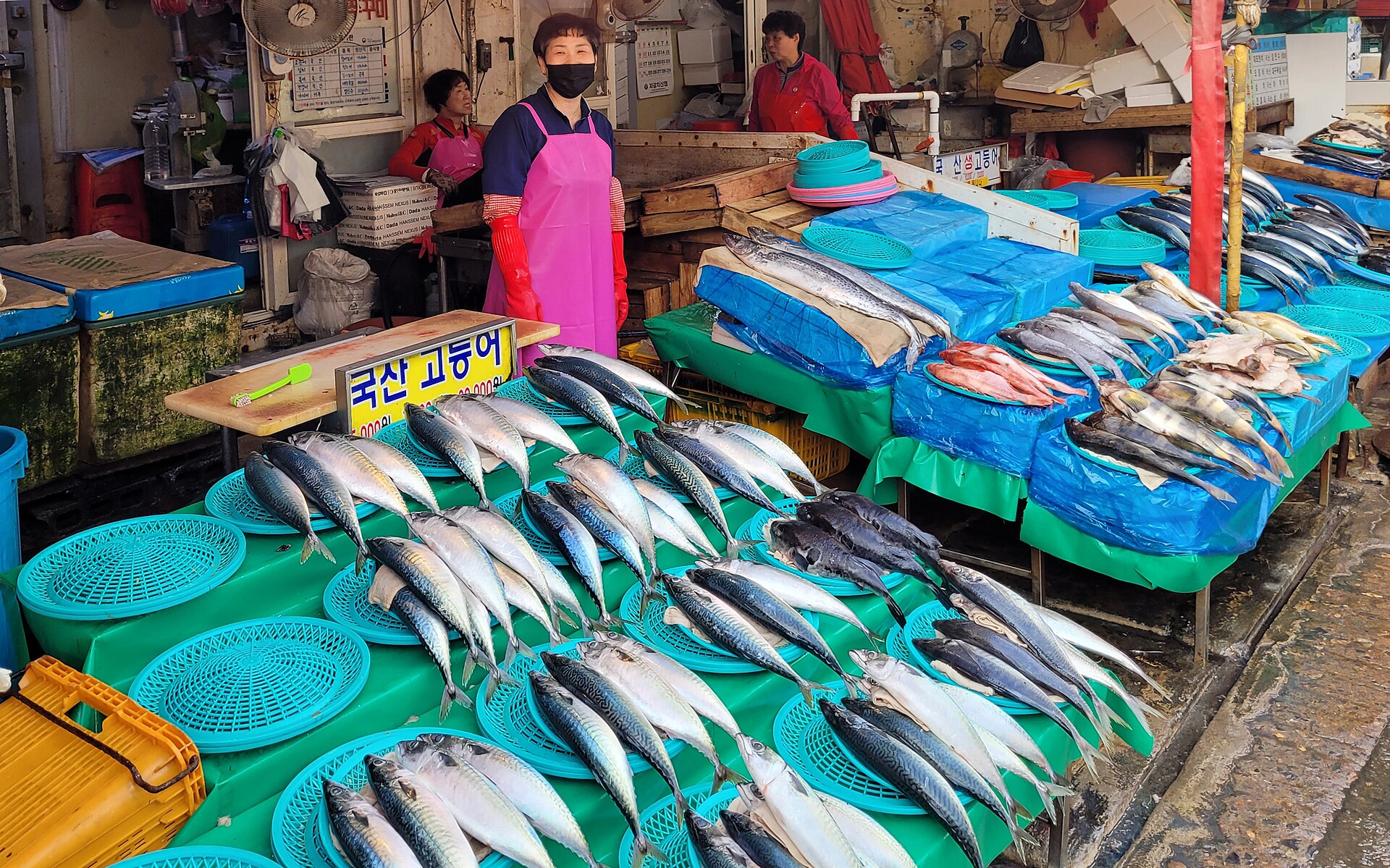
- 10:00 Subway Line 1 to Jagalchi, a few stops south. The fish market here is the city’s signature sight: tanks and trays of fish, octopus, shellfish and sea squirts along the harbourfront, and stallholders who have been doing this for decades. Hours vary between the main building and the outdoor stalls, and the market closes on some days each month, so check before you go.
- 11:00 Walk through Nampo-dong: BIFF Square for street snacks, and Gukje Market, a sprawling covered market of clothes, kitchenware, imported goods and food stalls.
- 12:00 Lunch. Jagalchi is the obvious choice for seafood, and the Nampo streets have plenty of cheaper options, including dwaeji gukbap, the pork and rice soup Busan is famous for.
Early afternoon: Busan Tower and Gamcheon
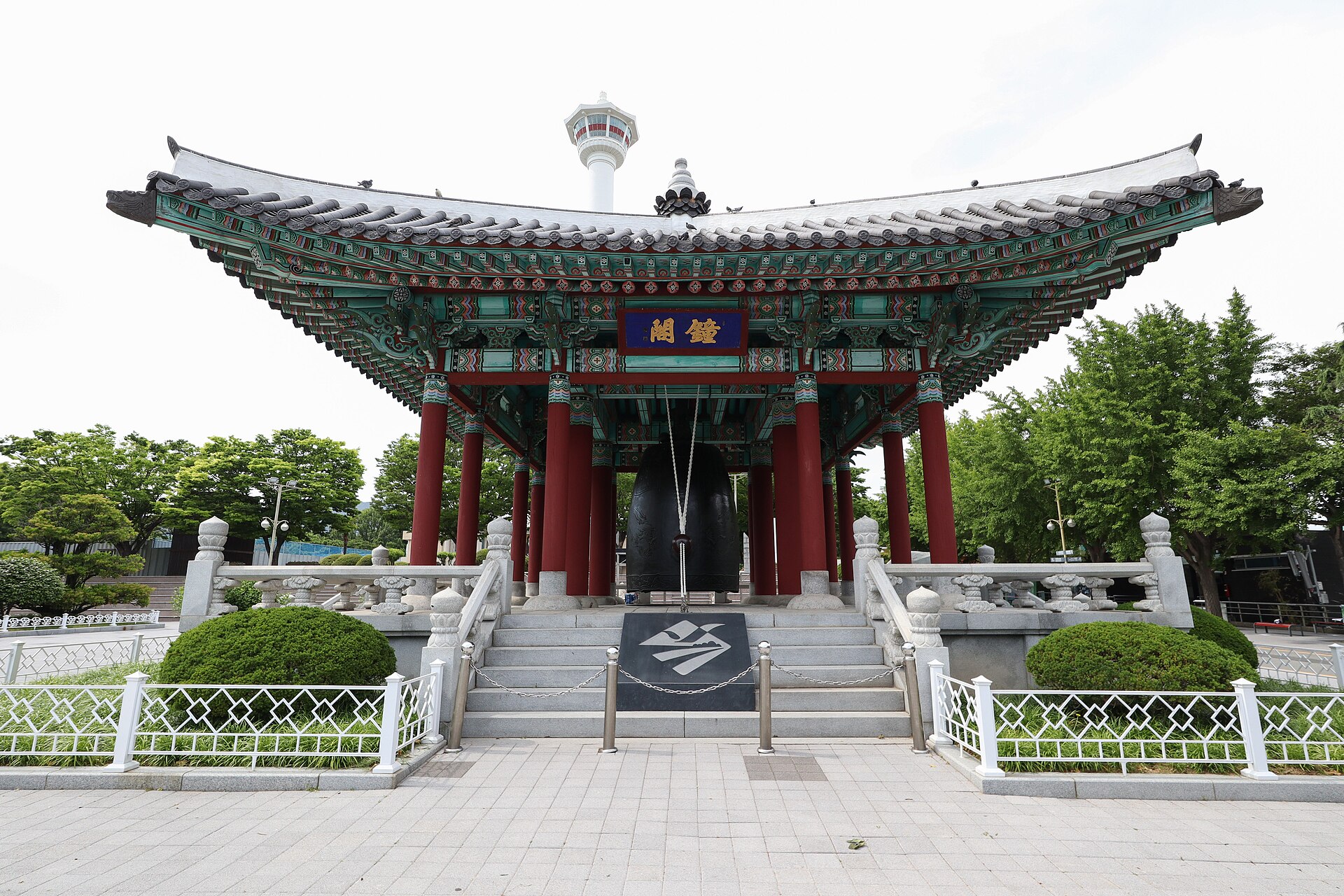
- 13:00 Walk up to Yongdusan Park and Busan Tower, a short walk from Nampo or about six minutes from Jungang Station on Line 1. The park is free; the tower is open from 10:00 to 22:00 daily, with last entry at 21:30. Check the admission price at the gate. On a clear day the view takes in the port, the bridges and the mountains behind the city.
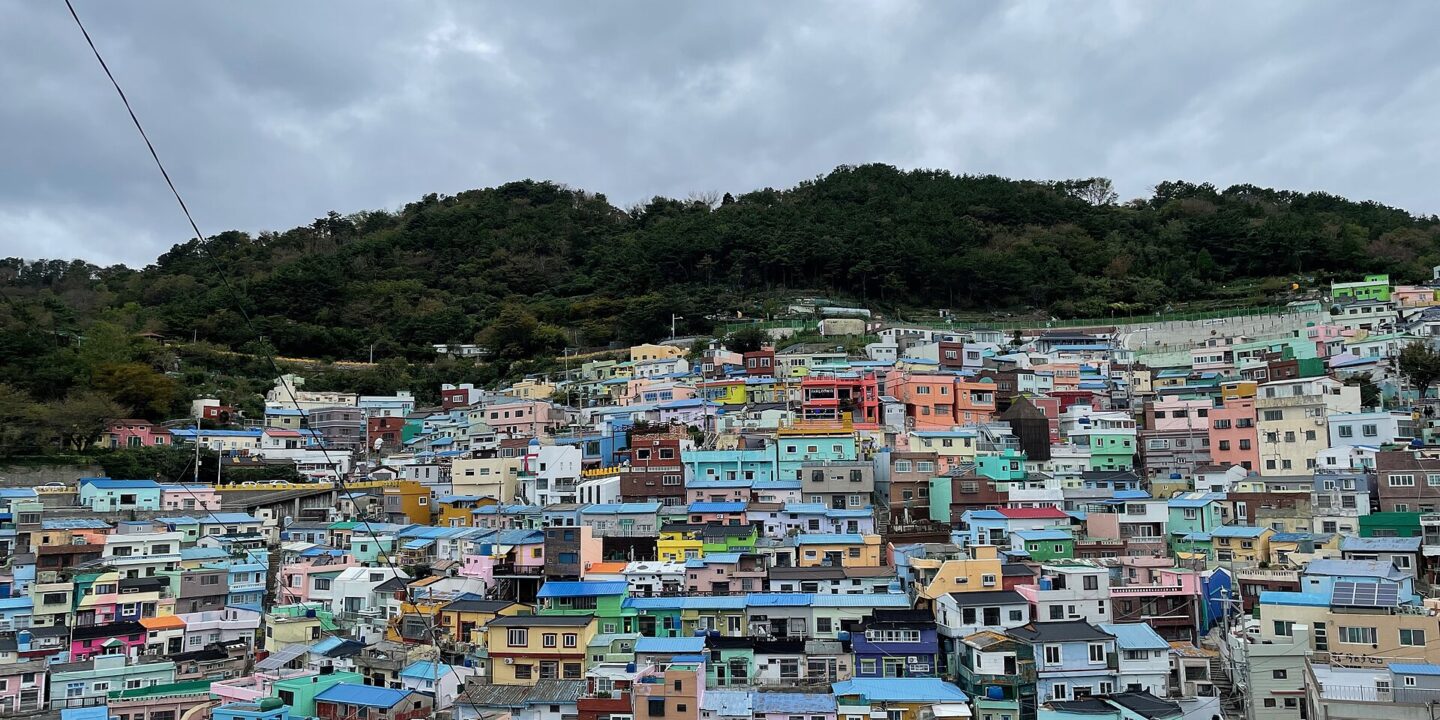
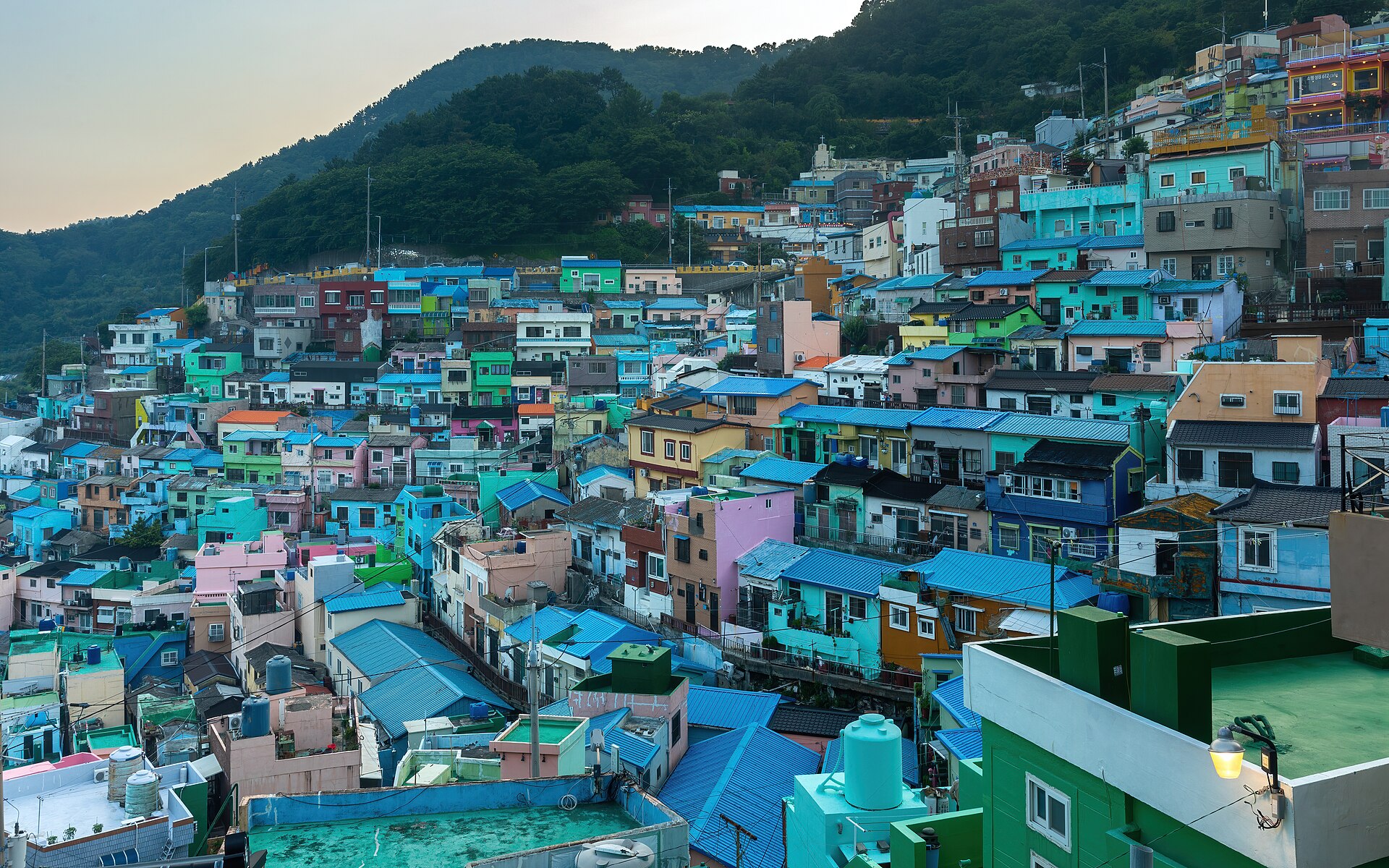
- 14:00 Subway Line 1 to Toseong Station, then from Exit 6 take village bus Saha 1-1 or Seo-gu 2 up the hill, and walk about five minutes from Gamjeong Elementary School into Gamcheon Culture Village. The village is open daily and free (you only pay for parking). From March to October its hours are 09:00 to 18:00, and from November to February 09:00 to 17:00. The stamp-trail map sold at the village information centre is a fun way to structure a wander through the alleys.
Gamcheon is a real neighbourhood where people live, built on a steep hillside by refugees during the Korean War and later painted and filled with art projects. Keep your voice down in the residential alleys, do not photograph into homes, and stick to the marked routes.
Late afternoon and evening: Haeundae
- 16:00 Subway across the city to Haeundae on Line 2. It is a long ride, so this is a good time to rest your legs.
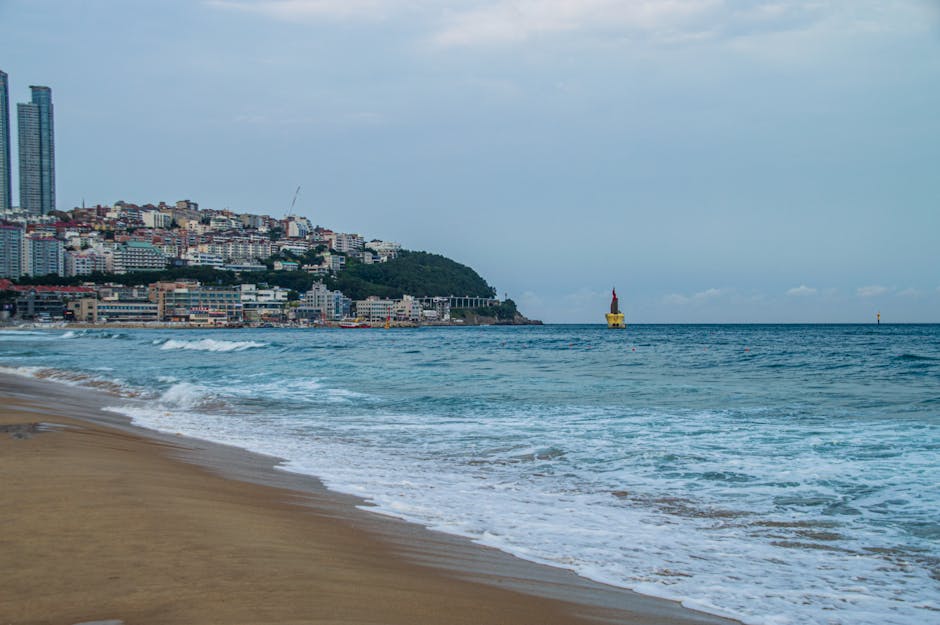
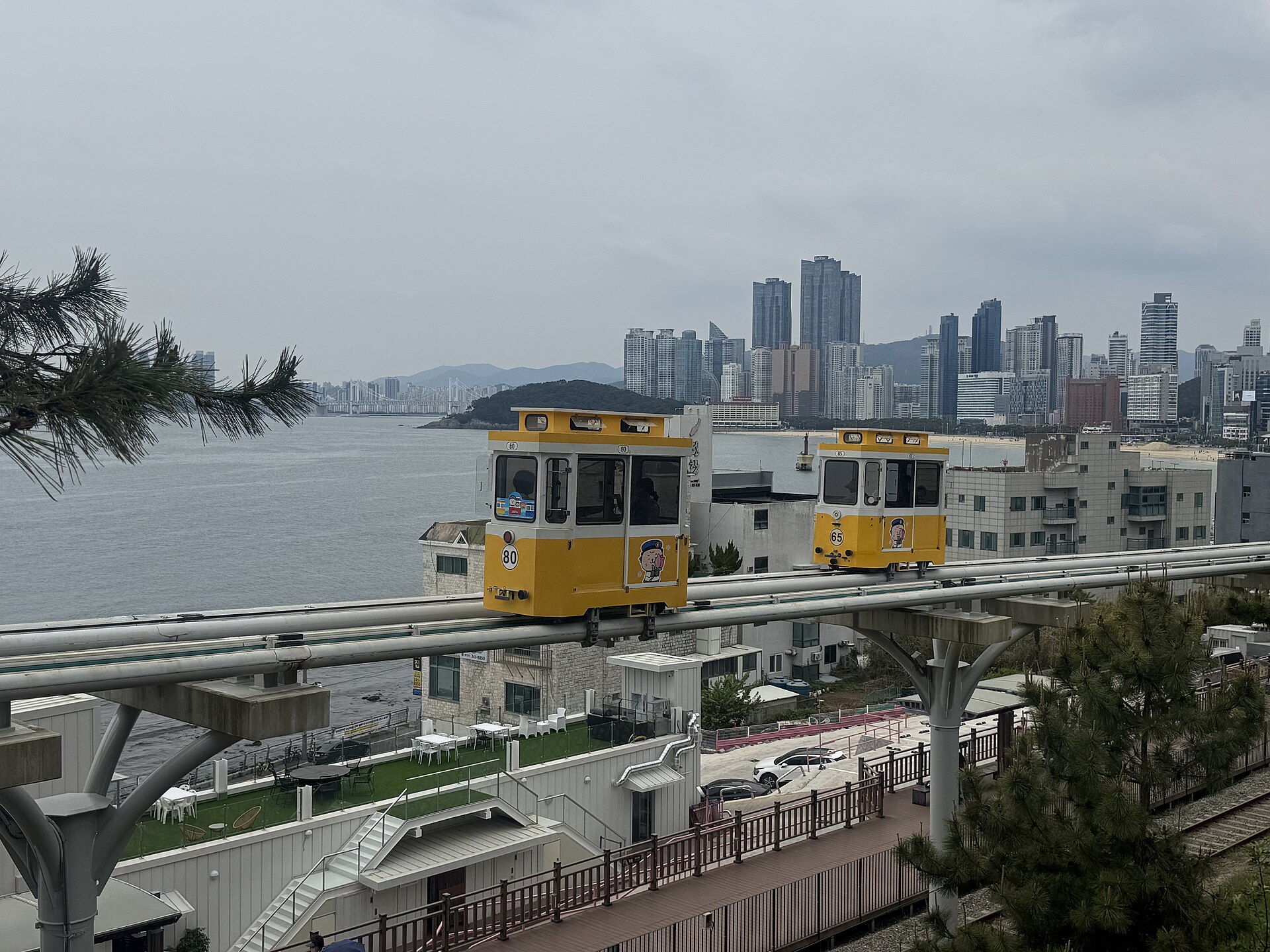
- 17:00 Walk the beach, and if you have time, ride the Haeundae Blueline Park Sky Capsule or Beach Train along the old coastal railway between Mipo, near the east end of the beach, and Songjeong. Details below.
- 18:30 Dinner in Haeundae: grilled clams, seafood or Korean barbecue.
- 20:00 Back to Busan Station by subway (allow plenty of time: Haeundae and Busan Station are at opposite ends of the city) for an evening KTX to Seoul.
If that last leg looks tight, it is. The alternative is to skip Haeundae and spend the afternoon at Gamcheon and the port, then catch the train with time to spare. Haeundae deserves a morning of its own on an overnight trip anyway.
Haeundae Blueline Park: worth it?
Blueline Park runs two rides along a disused coastal railway east of Haeundae Beach, with the sea on one side the whole way.
- Sky Capsule: small, brightly painted pods that run on an elevated track between Mipo and Cheongsapo. The fare is per capsule, one way: ₩50,000 for two people, ₩55,000 for three and ₩60,000 for four (prices from 1 May 2026). It runs from 08:30 to 18:30 in October, and 08:30 to 18:00 from November to February. Book ahead in busy periods.
- Beach Train: a larger tram-like train along the ground-level track between Mipo and Songjeong. One-way fares are ₩8,000 to ₩10,000 depending on where you board, a two-ride ticket is ₩14,000, and an all-stops day ticket is ₩16,000.
Is it worth it? The Sky Capsule is expensive for a short ride, but for a couple or a small group it is a memorable half hour with a sea view you cannot get any other way. The Beach Train is the better value, and the walking path alongside the track is free if you would rather go on foot. Check the operator’s site for current times and fares before you go.
Two nights in Busan: a better plan
With two nights you can split the city into its two halves and enjoy both.
Day 1: arrive and explore the old port
- Morning KTX from Seoul; drop your bags at your hotel.
- Jagalchi, Nampo-dong, BIFF Square and Gukje Market.
- Yongdusan Park and Busan Tower.
- Gamcheon Culture Village in the afternoon light.
- Dinner in Nampo or Seomyeon, Busan’s busy downtown hub where subway Lines 1 and 2 cross.
Day 2: beaches and the east coast
- Morning at Haeundae Beach and Dongbaekseom, the small wooded headland at its western end.
- Blueline Park: the Beach Train or Sky Capsule towards Songjeong.
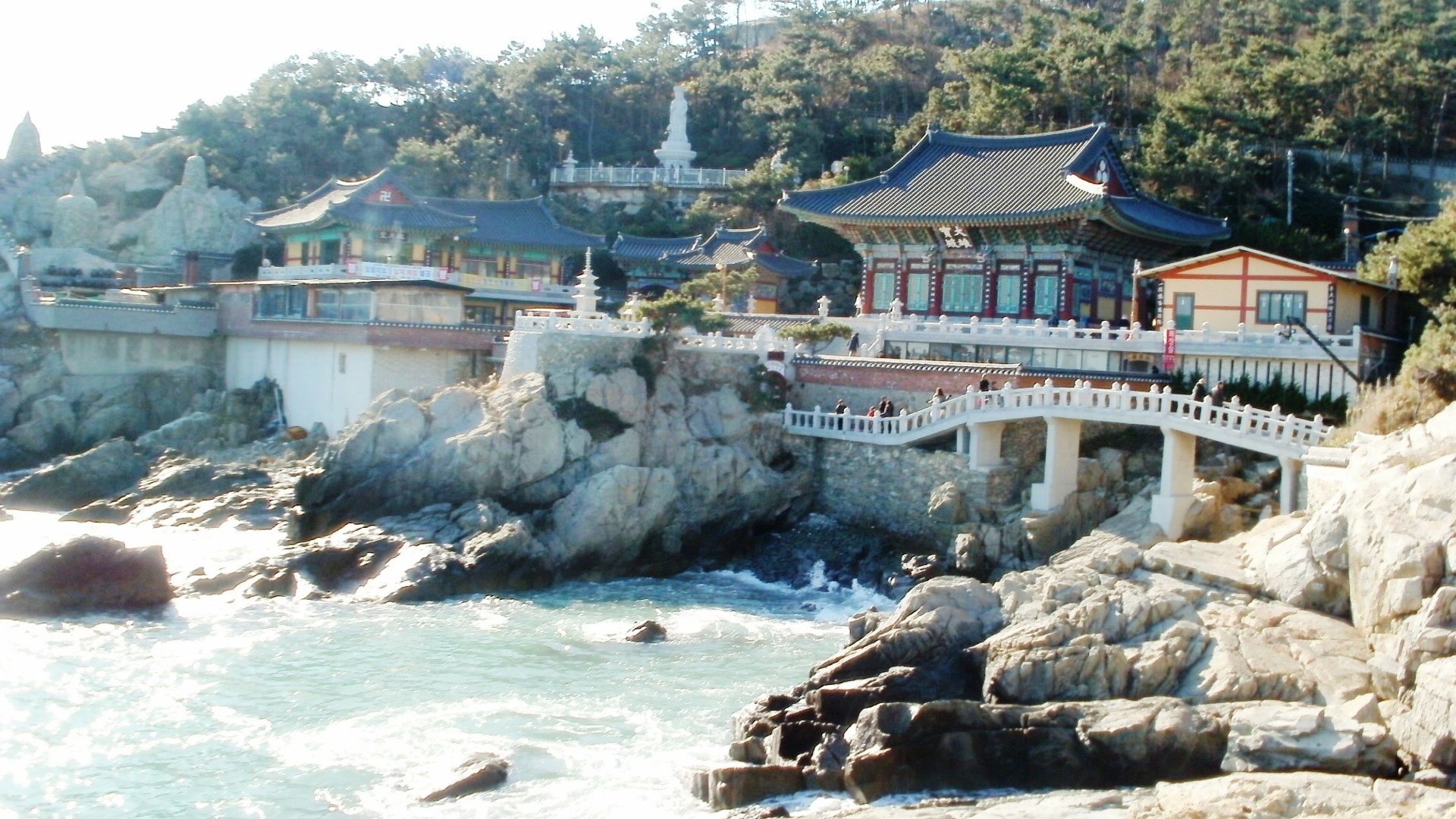
- Haedong Yonggungsa, the Buddhist temple built on the rocks above the sea northeast of Haeundae. Reach it by bus or taxi from Haeundae, and check the temple’s opening hours before you go.
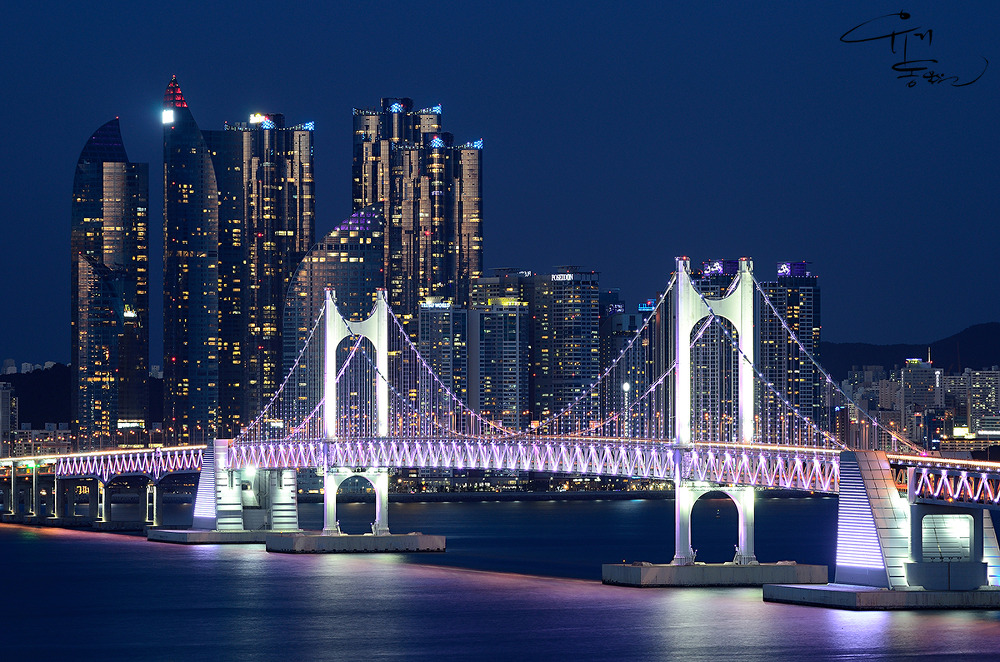
- Evening at Gwangalli Beach, where the Gwangan Bridge is lit up after dark and the beachfront is lined with bars and cafes.
Day 3: one last morning, then back to Seoul
- A slow breakfast, a final walk on the beach or a market visit.
- An afternoon KTX back to Seoul, or on to Gyeongju if you have more time.
Where to stay in Busan
Busan is long and thin, strung out along the coast, so where you sleep shapes your trip more than it does in Seoul. Pick the area that matches what you came for.
| Area | Best for | Trade-off |
|---|---|---|
| Haeundae | Beaches, sea views, the widest choice of hotels, Blueline Park on the doorstep | A long subway ride from the old port, Jagalchi and Gamcheon |
| Seomyeon | Nightlife, shopping and transport: Lines 1 and 2 meet here | No sea, and busy rather than scenic |
| Nampo and Jung-gu | Markets, Jagalchi, Busan Tower, the old port and Gamcheon nearby | Quieter at night, and far from the beaches |
| Around Busan Station | Short trips, early or late trains, minimal luggage hauling | Functional rather than charming |
| Gwangalli | The bridge view, beachfront bars and cafes | Fewer big hotels, and one stop off the main tourist circuit |
For a two-night first visit, Seomyeon is the practical compromise: it is on both of the lines visitors use most, so neither the port nor the beaches is far away. If the sea is the point of the trip, stay in Haeundae and accept a longer ride to the old town on the day you go there.
What to eat in Busan
Food is one of the best reasons to stay the night rather than rushing back to Seoul. Busan’s dishes are different enough from the capital’s to be worth seeking out.
- Seafood at Jagalchi. The classic routine is to choose your fish, shellfish or octopus downstairs and have it prepared at one of the restaurants above. Agree the price before anything is cut.
- Dwaeji gukbap. A milky pork-bone soup with slices of pork and rice, seasoned at the table with salted shrimp, chives and chilli. Cheap, filling and eaten at any hour.
- Milmyeon. Cold wheat noodles in a chilled, tangy broth, Busan’s own take on naengmyeon and the ideal lunch on a hot day.
- Eomuk. Fish cake, which Busan is famous for across Korea. You will find skewers simmering in broth at street stalls and whole shops devoted to fancier versions.
- Ssiat hotteok. A sweet fried pancake split open and stuffed with seeds and nuts, the street snack to try around BIFF Square in Nampo-dong.
- Grilled clams. A seaside evening tradition: shellfish cooked on a grill at the table, with soju, by the beach.
If you have been eating your way around Seoul, our guide to Korean dishes to try covers the national favourites; Busan’s specialities are the ones to add.
Adding Gyeongju to a Busan trip
Gyeongju, the capital of the ancient Silla kingdom, sits a short KTX ride north of Busan on the way back towards Seoul. Its royal tombs, Bulguksa temple and the old-town streets around Daereungwon make a very different day from Busan’s port and beaches. You can do it two ways:
- As a day trip from Busan, returning to the same hotel at night.
- As a stop on the way back to Seoul: Busan to Gyeongju, a night or two there, then the KTX from Gyeongju Station to Seoul.
The second is the better plan if you have the nights, because Gyeongju’s station sits outside the town and the sights are spread out; a night lets you see them without rushing. Our guide to where to go beyond Seoul covers Gyeongju alongside the other options.
Getting around Busan
Busan has its own subway, run by Busan Transportation Corporation (Humetro), with several lines. For visitors, two matter most:
- Line 1 runs north–south through the old city: Busan Station, Jungang, Nampo, Jagalchi and Toseong (for Gamcheon) are all on it.
- Line 2 runs east–west: Seomyeon, Gwangan (for Gwangalli Beach) and Haeundae.
Lines 1 and 2 cross at Seomyeon. The journey from the old port to Haeundae is long, so plan your days to cover one side of the city at a time rather than criss-crossing it.
Your T-money card works in Busan, on the subway and buses, so there is no need to buy a new card. Top it up at any station machine with cash. Busan’s fares are set by the city rather than Seoul, so check the current fare on Humetro’s site if you need it. Taxis are plentiful and reasonably priced, and Kakao T works here as it does in Seoul. Our T-money card guide covers topping up and refunds.
Practical tips for the trip
- Book the return when you book the outbound, especially for Sunday afternoons, when everyone heads back to Seoul.
- Use the lockers at Busan Station on a day trip, or stay near Busan Station or Seomyeon on an overnight trip to keep luggage moves short.
- Pick a base by the kind of trip you want: Haeundae for beaches and hotels, Seomyeon for nightlife and transport connections, Nampo for markets and the old port.
- Eat seafood at least once, and try dwaeji gukbap and milmyeon, Busan’s wheat-noodle answer to Seoul’s naengmyeon.
- Check festival dates. The Busan International Film Festival ran from 6 to 15 October in 2026; check the festival’s own site for future dates if you want to go, or avoid, during it.
Frequently Asked Questions
How long is the KTX from Seoul to Busan?
A little over two hours on the fastest trains, and closer to two and a half or three hours on services with more stops. Check the specific train’s arrival time when you book.
How much is the KTX from Seoul to Busan?
A standard seat costs roughly ₩53,800 to ₩54,400 each way since the September 2026 fare cut (press reports differ), so about ₩107,600 to ₩108,800 return. Check the exact fare in the KORAIL+ app.
Can you do a day trip from Seoul to Busan?
Yes, but it is tight: about five hours on trains for about nine hours in Busan. You will see one side of the city properly. Two nights is far better for a first visit.
How many days do you need in Busan?
Two nights is the sweet spot for a first visit: one day for the old port, Jagalchi and Gamcheon, one for Haeundae and the coast. Add a third night for a day trip to Gyeongju or a slower beach break.
Which Seoul station do Busan trains leave from?
Seoul Station or Suseo. The Suseo trains ran as SRT until KORAIL absorbed SR in September 2026 and are now sold as KTX. Check which station your ticket names.
Does T-money work in Busan?
Yes. Your Seoul T-money card works on Busan’s subway and buses.
Is Gamcheon Culture Village free?
Yes. The village is free to visit (you only pay for parking) and open daily, 09:00 to 18:00 from March to October and 09:00 to 17:00 from November to February.
Is the Korail Pass worth it for Seoul to Busan?
No. A return on point tickets costs about ₩107,600 to ₩108,800, while the cheapest two-day pass costs ₩131,000.
Final Thoughts
Seoul to Busan is an easy long journey: a couple of hours on a fast, comfortable train, booked in minutes on your phone. That ease is exactly what tempts people into the day trip, and the day trip is exactly what undersells the city. Give Busan two nights, split them between the old port and the beaches, eat at Jagalchi, walk Gamcheon in the afternoon light and finish at Gwangalli with the bridge lit up behind you. Then take the train back to Seoul and wonder why you ever considered doing it in a day.
Photo Credits
Gamcheon Culture Village hillside (featured image): Busan Gamcheon Village 2022-10-09 by RonanHoogmoed, CC BY-SA 4.0, via Wikimedia Commons.
Gamcheon Culture Village houses: Colorful houses in Gamcheon Culture Village at sunset in Busan South Korea by Basile Morin, CC BY-SA 4.0, via Wikimedia Commons.
Mackerel at Jagalchi Market: Jagalchi Market 02 by Bernard Gagnon, CC0, via Wikimedia Commons.
Yongdusan Park and Busan Tower: Busan Tower and Yongdusan Park 20200522 002 by Mobius6, CC BY-SA 4.0, via Wikimedia Commons.
Sky Capsules at Haeundae Blueline Park: Sky Capsule train at Haeundae Blueline Park, Busan by VN.NguyenDucDuy, CC BY-SA 4.0, via Wikimedia Commons.
Haedong Yonggungsa: Haedong Yonggungsa Temple, Busan, South Korea by Anna L Martin, CC BY 2.0, via Wikimedia Commons.
Gwangan Bridge at night: Busannopicture by Sonoda Umi, Public domain, via Wikimedia Commons.