It covers the big 2026 changes (the end of SRT as a separate brand, the new KORAIL+ app, cheaper fares and a longer booking window), how to book as a visitor and which channels accept foreign cards, which Seoul station you need for which city, the train types and seat classes, standing and unreserved tickets, luggage, food, refunds and the mistakes that cost people their train. Fares and rules were checked in October 2026; Korail adjusts both, so confirm the details in the app before you travel.
KTX at a glance
| Question | Short answer (October 2026) |
|---|---|
| Operator | KORAIL. The separate SRT operator was absorbed on 1 September 2026, and every high-speed train is now sold as KTX |
| Where to book | KORAIL’s English website, the KORAIL+ app, station counters and ticket machines, or a reseller such as Klook |
| Foreign cards | Yes, overseas credit cards work on the English website; check payment options at the counter and in the app |
| Booking window | From 07:00, two months before the travel date |
| Seoul to Busan | From a little over 2 hours on the fastest trains, longer with more stops; standard fare about ₩54,000 since the September 2026 fare cut |
| Seoul stations | Seoul Station for Busan and the southeast, Yongsan for the southwest, Cheongnyangni for Gangneung and Andong, Suseo for southern-Seoul departures |
| Children | Ages 6–13 pay half; under-6s get 75% off (up to two per guardian) |
| Riding without a ticket | Boarding without one can cost a penalty equal to the standard fare |
What changed in 2026
If you read a Korea rail guide written before September 2026, three things in it are probably wrong.
SRT is now part of KTX
For years Korea had two high-speed operators. KORAIL ran the KTX from Seoul Station and Yongsan; a separate company, SR, ran the SRT from Suseo in southern Seoul on its own booking site and app. Booking a “Seoul to Busan” ticket on the wrong one, or turning up at the wrong station, was the classic visitor mistake.
On 1 September 2026 KORAIL absorbed SR. The KTX brand was kept, all high-speed trains, including the former SRT services from Suseo, are now booked in one place, and the old SRT app and website stopped on 31 August. The former SRT trains are being repainted in KTX colours over the next several years, so you may still see the old livery on the platform. Suseo itself has not gone anywhere: it is still a separate station, so the trap has shrunk rather than vanished. Check the departure station on your ticket.
Korail Talk became KORAIL+
KORAIL’s booking app, long known as Korail Talk, was replaced by KORAIL+ in August 2026. If a guide tells you to download Korail Talk, it means KORAIL+.
Cheaper fares and a longer booking window
With the merger came an average fare cut of about 10%, bringing KTX prices into line with what SRT used to charge. The standard Seoul–Busan fare, long quoted as ₩59,800, dropped to about ₩54,000; Korean press reports give ₩54,400 and ₩53,820, so check the exact figure in the app. Then, from 1 October 2026, KORAIL doubled its booking window: tickets now go on sale at 07:00 two months before the travel date, rather than one month.
The capacity is growing too. KORAIL said seats on routes leaving Suseo would rise by about 30% after the merger, and Suseo trips now earn the same mileage as other KTX tickets.
How to book KTX tickets as a visitor
There are four ways to buy.
1. KORAIL’s English website
For most visitors this is the best place to start. KORAIL’s foreign-visitor site works in several languages and takes overseas credit cards. You do not need a Korean phone number or a membership: you book with your name and an email address, set a password, and use the two later to view your ticket.
Book the name exactly as it appears in your passport, and save or screenshot the ticket. You will show it on your phone if a conductor checks.
2. The KORAIL+ app
KORAIL+ is the app Korean passengers use, and it is the most convenient way to manage tickets once you have them: mobile tickets live in the app, and you can refund them there before departure. Whether it takes your particular foreign card is less predictable than the website, so if a payment fails in the app, switch to the English website rather than retrying.
3. Station counters and machines
Major KTX stations have staffed ticket counters and ticket vending machines. If you plan to pay with an overseas card, ask at the counter which cards it takes. Note that subway station machines do not sell rail tickets: you need the rail station itself.
Buying at the station on the day is perfectly fine for an off-peak weekday trip. It is a gamble on Friday evenings, weekend mornings and anywhere near a national holiday, when popular trains sell out days or weeks ahead.
4. Resellers
Klook sells KORAIL tickets, and Trip.com also sells Korean rail. Resellers are handy if you already use them and want everything in one place, but you are adding a middleman between you and a refund. Compare the price with KORAIL’s own site before you pay.
How far ahead should you book?
- Weekday, off-peak: a day or two ahead is usually fine, and same-day often works.
- Friday afternoon to Sunday: book as soon as your plans are fixed, ideally a week or more ahead for popular routes such as Seoul–Busan.
- Seollal, Chuseok and long weekends: book the moment the two-month window opens at 07:00. Korean families move across the country on these dates and trains fill fast.
- Autumn foliage weekends: trains to Gangneung and the east coast fill early, as do the buses.
A booking, step by step
Whichever channel you use, the booking follows the same pattern, and it takes about five minutes once you have done it once.
- Pick the stations, not the city. Search “Seoul” and you may get Seoul Station only; search “Busan” and you get Busan Station. If you want a southern-Seoul departure, choose Suseo by name.
- Set the date and the number of passengers, with children entered as children so the discount applies.
- Read the train list. Each line gives the train type, the departure and arrival times, and whether standard and premium seats are still available. A fast train and a slow one can leave ten minutes apart.
- Choose your seat on the seat map if you care about direction, a window, or being near the luggage rack at the end of the carriage.
- Enter your name as it is in your passport and pay.
- Save the ticket. Screenshot it as well as keeping the email or the app copy, in case you have no signal at the station.
For a return trip, book the two legs at the same time if you can. On busy weekends it is the return, not the outbound, that sells out first.
Which Seoul station? The map that matters
Seoul has several KTX stations, and the network is built around lines rather than destinations, so the station you need depends on where you are going. This is the table to screenshot.
| Station | Main destinations | Subway connection |
|---|---|---|
| Seoul Station | Busan, Daegu, Gyeongju, Ulsan, Pohang (Gyeongbu line) | Lines 1 and 4, Gyeongui-Jungang, AREX |
| Yongsan | Jeonju, Gwangju Songjeong, Mokpo, Yeosu-Expo (Honam and Jeolla lines) | Line 1, Gyeongui-Jungang |
| Cheongnyangni | Gangneung and the east coast, Andong (KTX-Eum) | Line 1, Suin-Bundang, Gyeongui-Jungang |
| Suseo | Busan and the southeast, Gwangju and the southwest (the former SRT services) | Line 3, Suin-Bundang, GTX-A |
| Gwangmyeong, Haengsin | Stops on many Gyeongbu and Honam services, at the southwest and northwest edges of Seoul | Gwangmyeong: Line 1 shuttle; Haengsin: Gyeongui-Jungang |
Two rules of thumb. If you are staying in Gangnam, Jamsil or anywhere in southeast Seoul, a Suseo departure can save you a good deal of subway travel. If you are in Myeongdong, Jongno, Hongdae or near the airport rail line, Seoul Station is the natural choice. Our getting around Seoul guide and subway guide cover the city end of the journey.
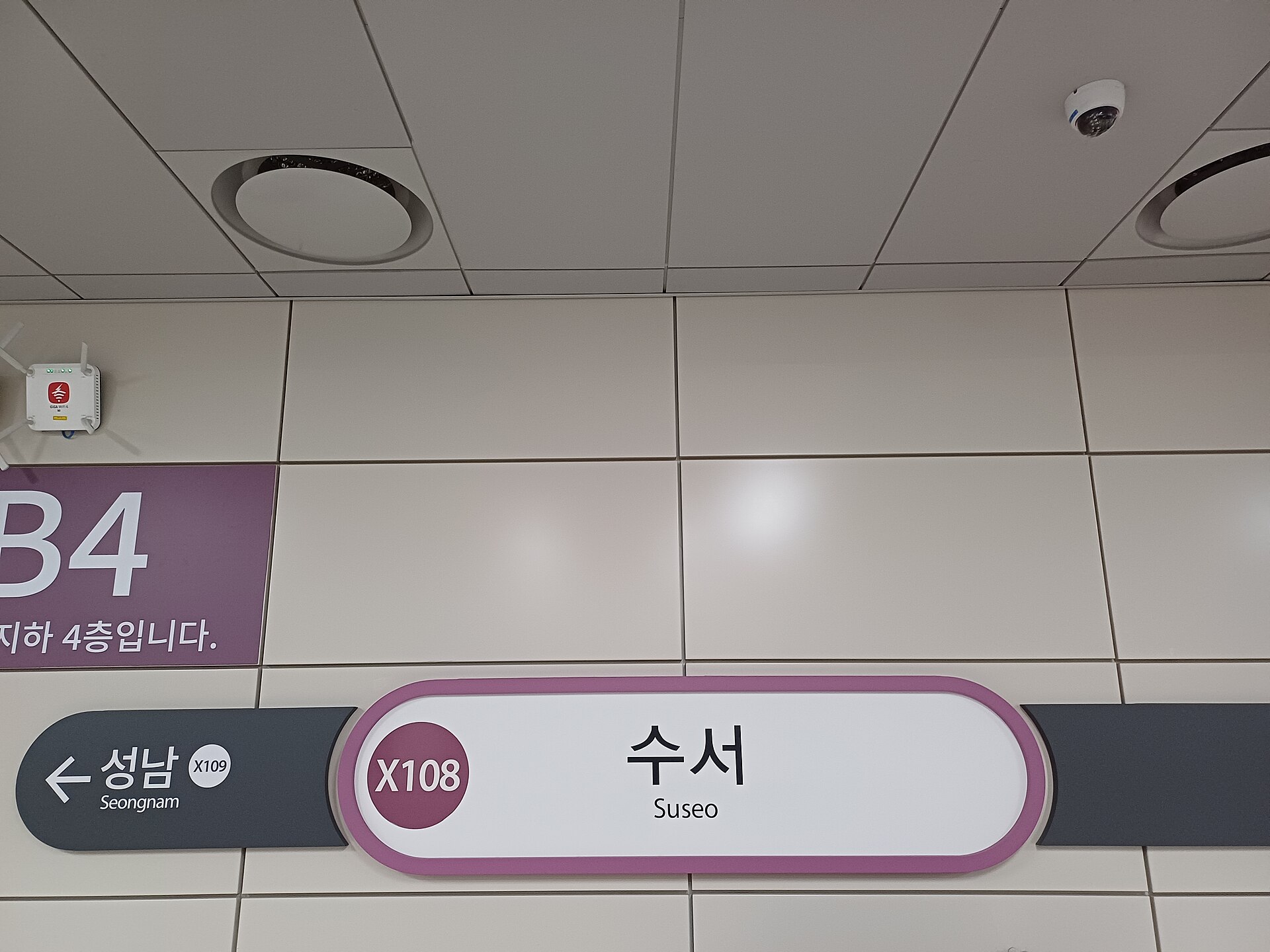
The ticket names the station. Read it twice. The most common way to miss a train is going to Seoul Station for a train that leaves from Yongsan or Suseo.
Train types: which KTX are you on?
“KTX” covers several generations of train, and your ticket will name the one you are booked on. You do not need to choose between them, but it helps to know what to expect.
- KTX (the original): the long, French-derived trains that opened the network in 2004, still running on the Busan and southwest routes. Seats are narrow in standard class, and many face backwards.
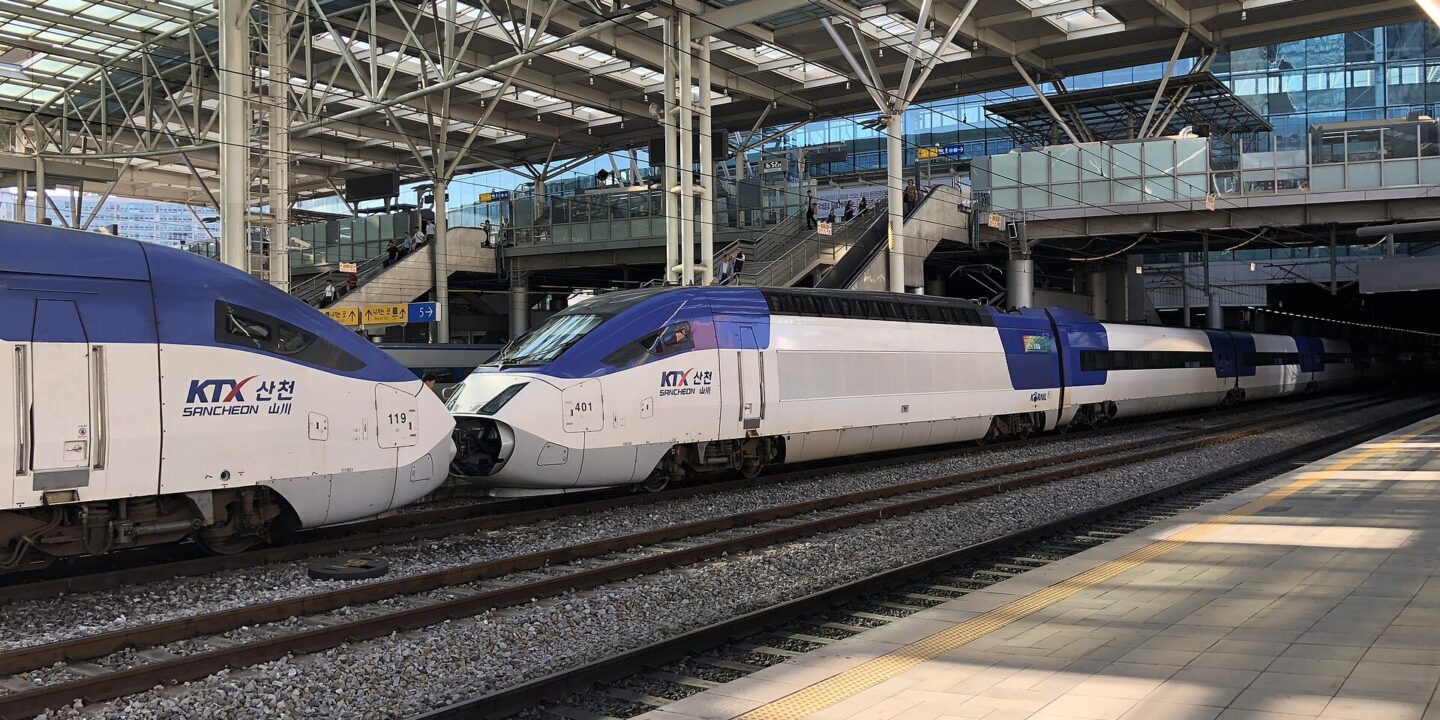
- KTX-Sancheon: the Korean-built successor, recognisable by its fish-shaped nose. Many services run as two coupled sets, which matters for finding your carriage (see below).
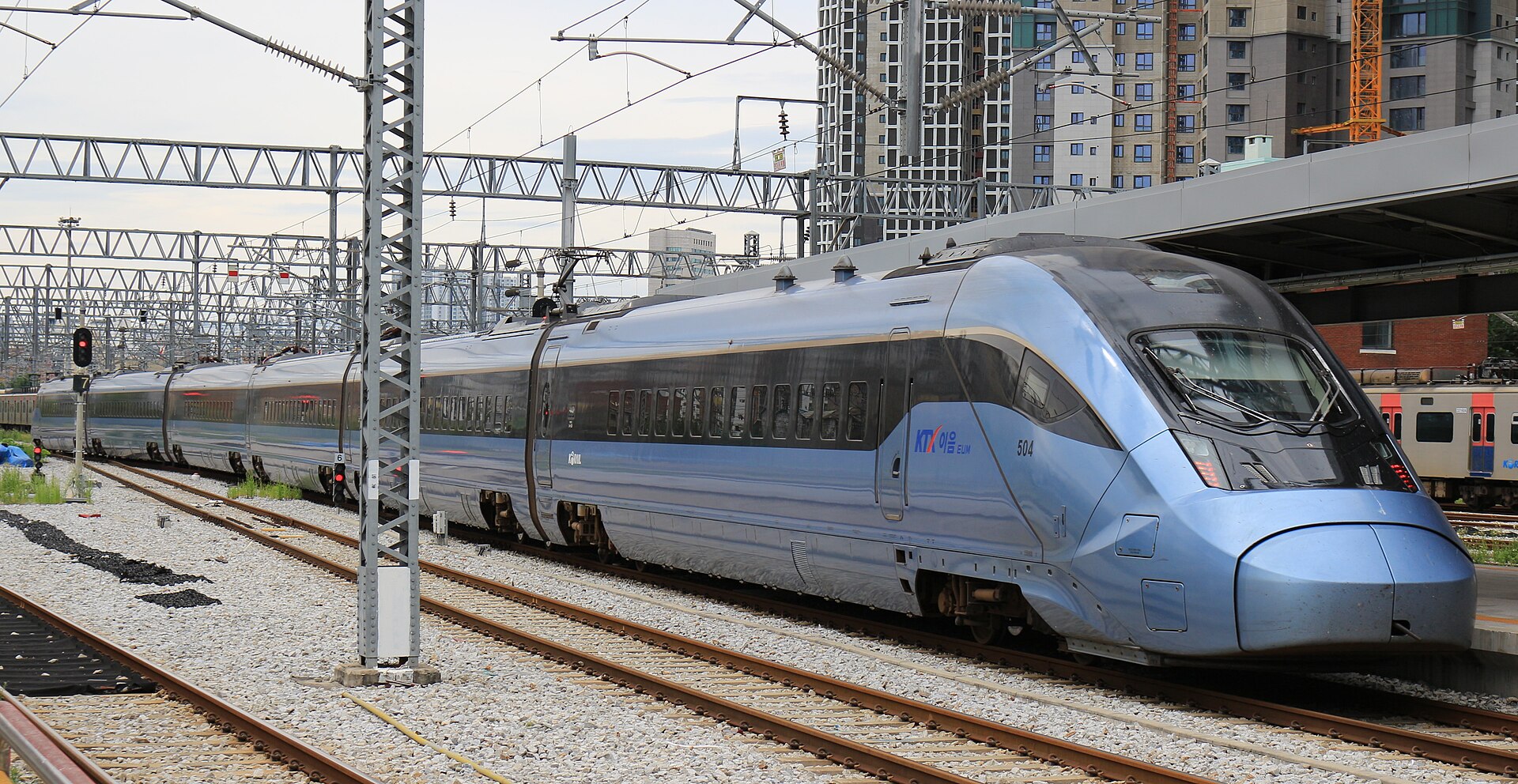
- KTX-Eum: the newer, pale-blue trains with motors spread along the train rather than in end power cars. They serve Gangneung, Andong and other newer lines, mostly from Cheongnyangni.
- KTX-Cheongryong: the newest, which entered service on 1 May 2024 on the Gyeongbu and Honam lines.
Alongside the KTX, KORAIL runs slower intercity trains (ITX-Saemaeul, ITX-Maum and Mugunghwa) on conventional lines. They are cheaper, slower and occasionally more scenic, and they go places the KTX does not.
Seat classes, seat direction and unreserved tickets
Standard or first?
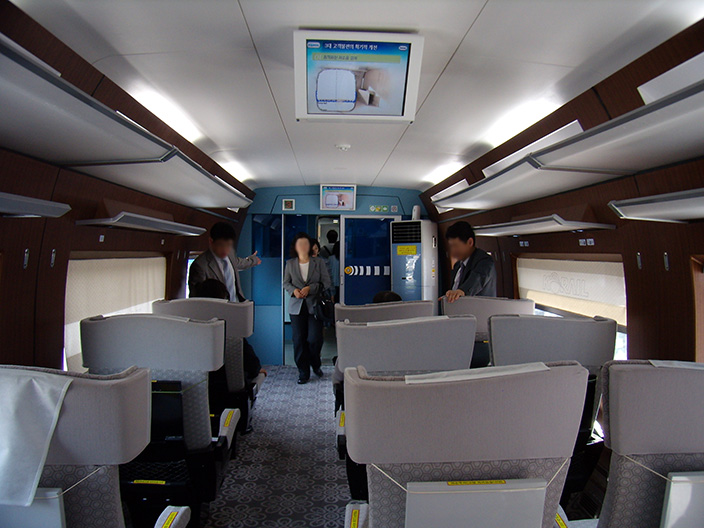
The original KTX and the KTX-Sancheon have standard and first class. The KTX-Eum and KTX-Cheongryong have standard and superior. The premium class gets wider seats and more legroom.
Is it worth it? On a two-hour run to Jeonju or Gangneung, rarely. On the full Seoul–Busan journey in a crowded holiday period, or if you are tall, it can be. The price gap varies by route and train, so compare both in the app.
Forward or backward facing
Many seats on the older KTX sets are fixed and face backwards, and some rows face each other across a table. Your ticket tells you which way your seat faces. If backward travel makes you queasy, check before you pay and pick a forward-facing seat on the seat map.

Standing and unreserved tickets
When reserved seats sell out, KORAIL often sells standing tickets (입석) and, on some services, places in unreserved cars (자유석) where you sit wherever is free. They are a useful fallback for short hops and a miserable one for the full run to Busan. Check what the app offers for your train.
Finding your carriage
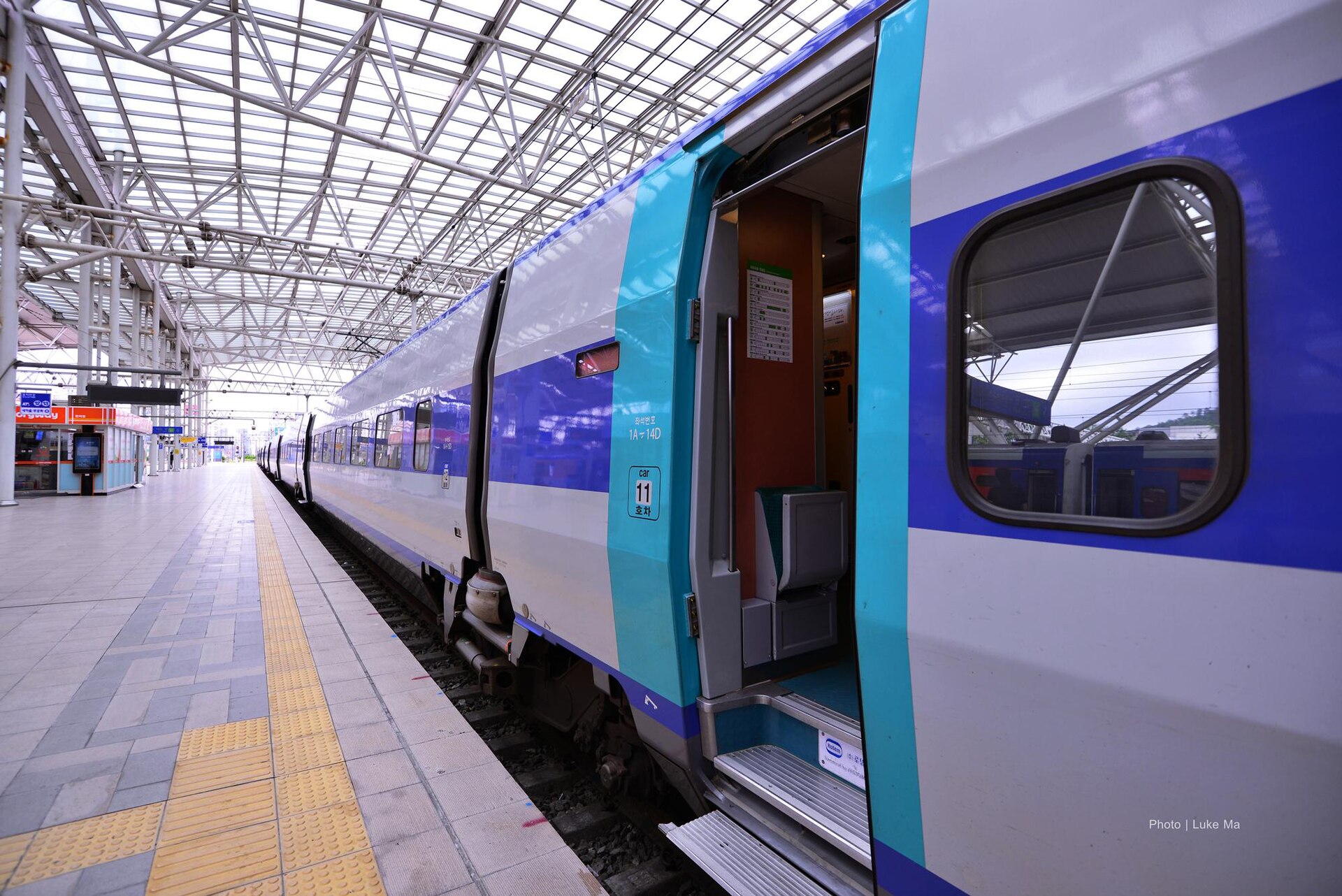
Your ticket gives a car number and a seat number. Platform floors and overhead signs show where each car stops. On coupled KTX-Sancheon services, the two halves of the train may be numbered as one sequence, and you cannot walk between them once you are moving, so get to the right half before you board. Doors close quickly, and the train will not wait.
On the day: from the subway to your seat
The KTX is easy once you are on it. The part that catches first-timers is the last half hour before departure, so here is how it goes.
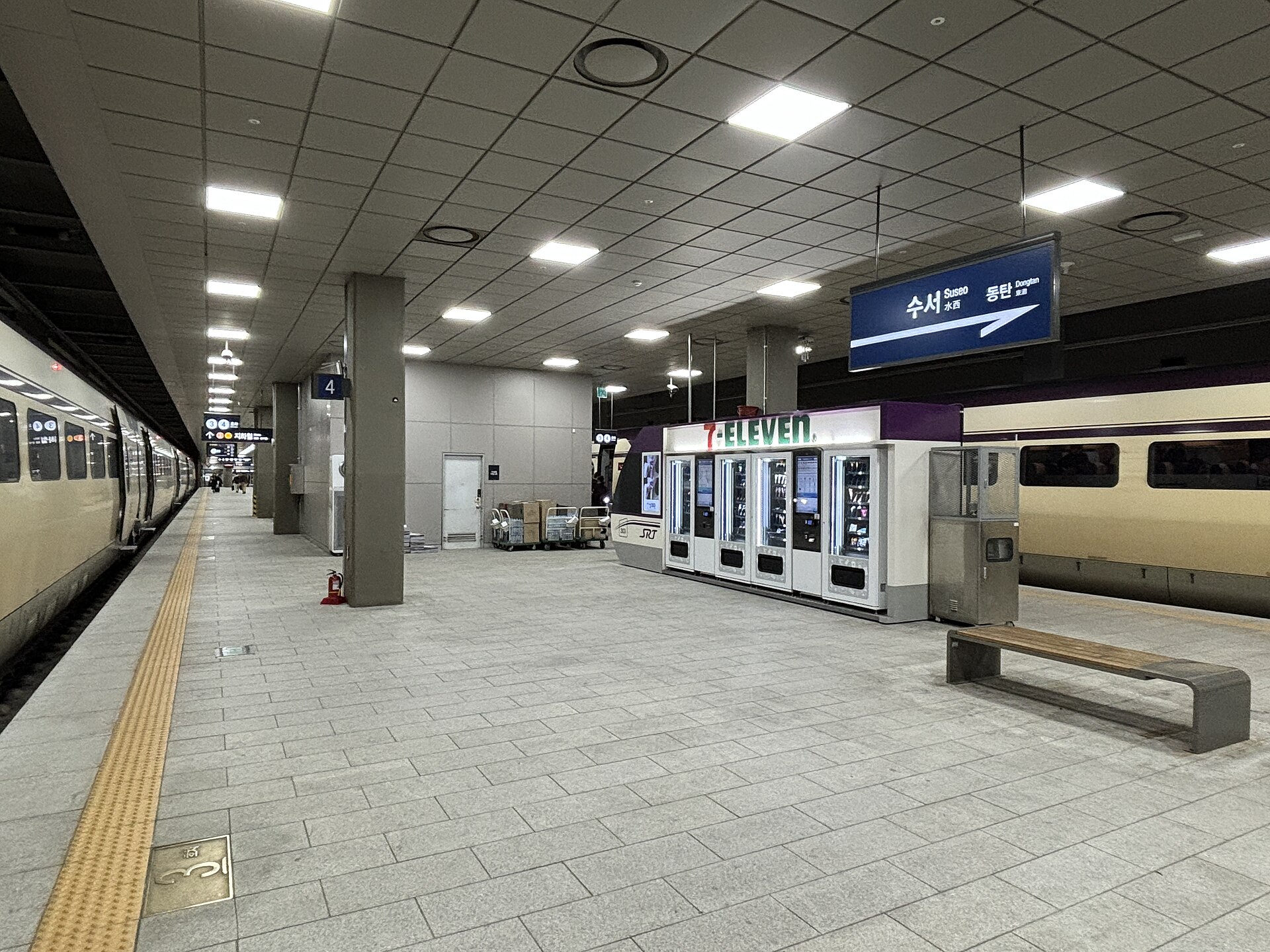
- Arrive with time to spare. The big stations are large, and the walk from the subway exit to the rail concourse can take longer than you expect, especially with a suitcase. Give yourself a buffer, more at Suseo, where the platforms are deep underground.
- Find your train on the departure boards by its number and departure time, not just the destination: several trains to Busan may be listed within the same hour. The boards show the platform.
- Go down to the platform when it is shown, not before you know which one it is. Escalators and lifts lead from the concourse to each platform.
- Walk to your car number. Markers on the platform floor and signs overhead show where each car will stop, so you can wait in the right place rather than walking the length of the train after it arrives.
- Board, stow your bag and sit. Large cases go in the racks at the end of the carriage. If a conductor checks tickets on board, the ticket on your phone is all you need to show.
- Watch the station names on the screens on the way. KTX trains stop only briefly at intermediate stations, so be at the door with your bags as your stop approaches.
KTX, bus or plane?
The KTX is not always the right answer, and part of booking well is knowing when to skip it.
- Busan, Daegu, Gyeongju, Jeonju, Gwangju: the train wins. It runs city centre to city centre, there is no security queue, and it is quicker than flying once you count the trips to and from the airports.
- Jeju: fly. Jeju is an island and there is no train; most flights from Seoul leave from Gimpo.
- Seoraksan and Sokcho: take the express bus. There is no KTX to Sokcho.
- Tight budget, flexible time: express buses are usually cheaper than the KTX on the same route and comfortable enough for a couple of hours, though they are slower and at the mercy of traffic.
- Short hops near Seoul: Suwon, Incheon and the nearer day trips are on the subway network, and the KTX saves little once you count the time to reach the station.
Luggage, food and life on board
Luggage
There is no check-in and no luggage van: you carry your own bags. Large suitcases go in the racks at the ends of each carriage, and smaller bags on the overhead shelves. On busy trains the end racks fill quickly, so board as soon as the doors open if you are travelling with a big case. If you are moving between cities with a lot of luggage, a hotel-to-hotel luggage delivery service can make the train far more pleasant.
Food and drink
KTX trains have no restaurant car or bar. Buy food before you board. Seoul Station, Yongsan and Suseo have shops and places to eat, and a dosirak (packed lunch box) from a station shop is a very Korean way to eat on a train. Eating at your seat is normal; just avoid anything strong-smelling, and take your rubbish with you.
Etiquette
- Keep phone calls short and take them in the vestibule.
- Keep the volume off on videos, or use headphones.
- Do not put bags on an empty seat on a busy train.
- Stand to the side of the door when the train arrives; passengers get off first.
Fares: what a KTX ticket costs
KTX fares depend on the route, the train, the class and the day. The September 2026 cut lowered fares by about 10% on average. Here is what press reports of the new fares show for two flagship routes; for everything else, the app shows the exact price before you pay.
| Route | Standard fare before 1 Sept 2026 | Standard fare after |
|---|---|---|
| Seoul–Busan | ₩59,800 | About ₩54,000 (reported as ₩54,400 or ₩53,820) |
| Yongsan–Gwangju Songjeong | ₩46,800 | About ₩42,000 (reported as ₩42,000 or ₩42,120) |
Children aged 6 to 13 pay half fare, and children under 6 get 75% off, for up to two children per guardian. Foreign visitors can also buy the KORAIL Pass, a multi-day rail pass sold on the English website with your passport details; whether it pays off depends entirely on how much you travel, and for a single Seoul–Busan return it usually does not.
Refunds and changes
KORAIL’s refund rules follow a simple principle: the closer to departure you cancel, the more you lose, and weekends and public holidays carry higher fees than weekdays.
- Before departure: refund web tickets on the website and mobile tickets in KORAIL+, yourself.
- After departure: only at a station ticket counter, and the deduction rises the longer you wait.
- After the train’s arrival time: no refund at all.
The exact percentages sit in KORAIL’s fee table on its English passenger guide. If you might change plans, buy a weekday ticket where you can, and cancel as early as you know.
Mistakes that cost people their train
- Going to the wrong station. Busan trains leave from Seoul Station and Suseo; Jeonju trains leave from Yongsan. Read the ticket.
- Using an old guide’s app. Korail Talk and the SRT app are gone; it is KORAIL+ now.
- Leaving holiday travel late. Chuseok and Seollal trains can sell out soon after the window opens.
- Cutting the connection fine. Seoul Station is big and Suseo is deep underground. Allow plenty of time to get from the subway to the platform.
- Boarding the wrong half of a coupled train. Check the car number before you step on.
- Riding without a valid ticket. A penalty equal to the standard fare is not worth it.
Where the KTX takes you from Seoul
Once the mechanics make sense, the whole country opens up. Busan, Gyeongju and Jeonju are all within about two to three hours, Gangneung’s beaches are about two hours away, and Andong’s Hahoe Village is a long but rewarding day. Our guide to where to go in Korea beyond Seoul rates each destination on travel time and the nights it deserves, the 10-day Korea itinerary strings them into a route, and Seoul vs Busan helps if you are deciding where to base yourself. One place the KTX cannot take you is Seoraksan: for that, our Seoraksan and Sokcho guide covers the express bus.
If you are weighing a rail pass against individual tickets, our Korail Pass break-even guide compares the pass’s cost per travel day with real post-cut KTX fares, and explains the two-reservations-a-day rule that limits it.
Frequently Asked Questions
Can foreigners book KTX tickets online?
Yes. KORAIL’s English website accepts overseas credit cards and needs no Korean phone number or membership: you book with your name, an email address and a password. Klook and other resellers also sell KTX tickets.
Is the SRT still separate from the KTX?
No. KORAIL absorbed SR on 1 September 2026 and all high-speed trains are now sold as KTX through KORAIL’s website and the KORAIL+ app. Suseo is still a separate departure station, so check which station your ticket names.
What happened to the Korail Talk app?
It was replaced by KORAIL+ in August 2026. Tickets, refunds and seat maps all work through the new app.
How far in advance can I book KTX tickets?
Since 1 October 2026, tickets go on sale at 07:00 two months before the travel date. For holiday periods, book as soon as the window opens.
How much is the KTX from Seoul to Busan?
After the September 2026 fare cut, a standard seat is about ₩54,000 (press reports give ₩54,400 and ₩53,820), down from ₩59,800. The exact fare depends on the train, so check it in the app.
How long does the KTX take from Seoul to Busan?
A little over two hours on the fastest services, longer on trains with more stops. Check the specific train’s times in the app.
Can I buy a KTX ticket at the station on the day?
Yes, at the station counters or machines. On weekday off-peak trains that usually works; on weekends and holidays, book ahead.
Is there food on the KTX?
There is no restaurant car, so buy food at the station before you board. Seoul Station, Yongsan and Suseo have shops and places to eat.
What if I miss my train?
Go straight to a ticket counter. After departure, refunds are only handled at a station counter, the deduction grows with time, and nothing is refunded once the train has reached its destination.
Final Thoughts
The KTX is one of the best things about travelling in Korea, and in 2026 it got simpler: one operator, one app, cheaper fares and a longer booking window. Book on KORAIL’s English website with your passport name, check the station twice, buy lunch before you board, and leave holiday travel to the people who booked two months ago at 7am. Get those right and the rest of the country is a couple of hours away.
Photo Credits
KTX-Sancheon trains side by side at a platform (featured image): KTX-산천 중련연결 by revi, CC BY 2.0 KR, via Wikimedia Commons.
KTX at Seoul Station: KTX-I with door opened in Seoul Station by Luke Ma, CC BY 2.0, via Wikimedia Commons.
Platform at Suseo Station: 202403 Nameboard and Platform 3,4 of SRT Suseo Station by MNXANL, CC BY-SA 4.0, via Wikimedia Commons.
Suseo GTX nameboard: 20240330 gtx 수서역 역명판 by Striker9498, CC0, via Wikimedia Commons.
KTX-Eum at Cheongnyangni: 20220911 Cheongnyangni Station KTX-Eum 504 by Rsa, CC BY-SA 3.0, via Wikimedia Commons.
KTX-Sancheon first class: KTX-2 1st by simta, CC BY-SA 3.0, via Wikimedia Commons.
KTX-Eum premium cabin: KTX-EUM First Class(2021.01.26) by 생각하는 나무, CC BY-SA 4.0, via Wikimedia Commons.