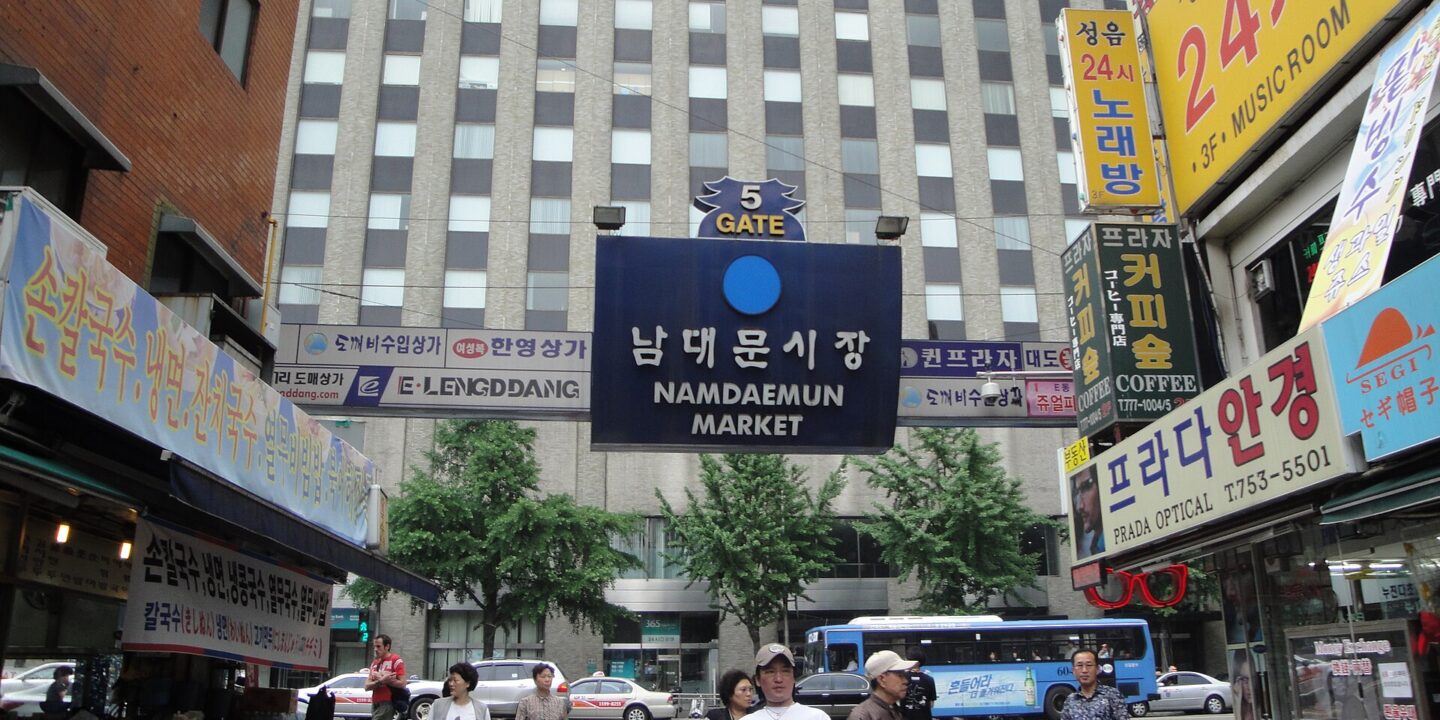
This guide covers how the market is laid out and what each part sells, what is genuinely worth buying, where to eat (including Kalguksu Alley and Galchi Jorim Alley), when to go and when not to, how haggling and tax refunds work, and how to walk it together with Myeongdong or Seoul Station. Hours and prices were checked in September 2026. Namdaemun is made up of thousands of independent businesses, so individual shop hours vary; treat prices as the right order of magnitude.
Namdaemun Market at a glance
| Detail | |
|---|---|
| What it is | Korea’s largest traditional market: more than 10,000 retailers, stalls and wholesalers |
| Where | Jung-gu, central Seoul, beside Sungnyemun Gate and between Seoul Station and Myeongdong |
| Subway | Hoehyeon Station, Line 4, Exit 5 opens straight into the market |
| Hours | Roughly 09:00–17:00 Monday to Saturday for most retail shops; many open earlier. Some wholesale areas trade overnight |
| Closed | Mostly closed on Sundays |
| Entry | Free |
| Time needed | 1–2 hours to browse and eat; half a day for serious shopping |
| Best buys | Kitchenware, children’s clothes, glasses, ginseng and dried goods, socks, hats, accessories, used cameras |
| A meal | Under ₩10,000 for a bowl of kalguksu; more for braised hairtail |
| Street snacks | Hotteok and other snacks from around ₩2,000 |
A market older than the country
People have been trading outside Seoul’s great south gate for more than six hundred years. The first government-licensed shops appeared here in the early Joseon period — records go back to 1414 — because the gate was where goods entering the capital from the south were brought in. The modern market, in its current form, dates from 1964, after decades of fires, war damage and rebuilding.
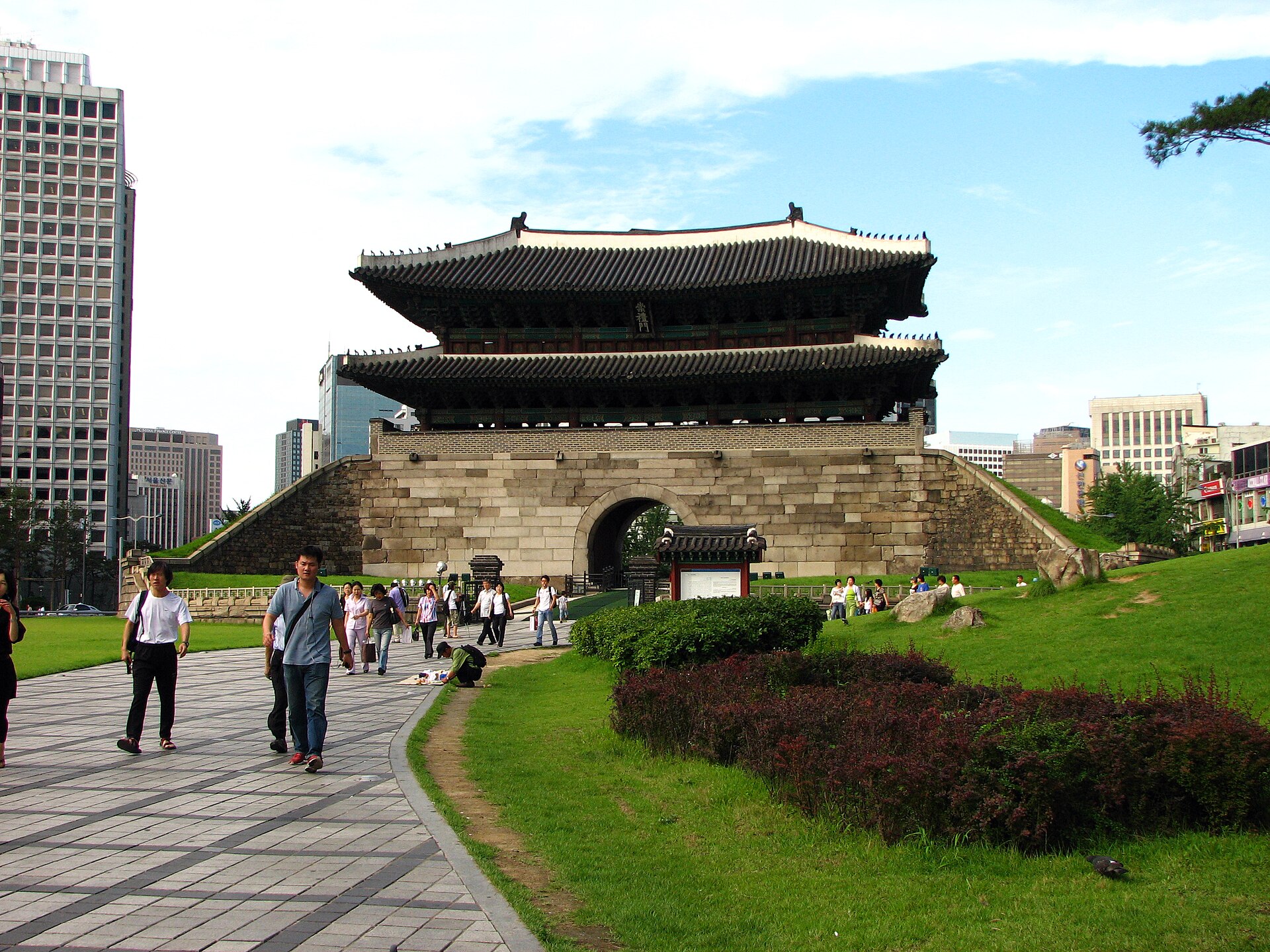
The market takes its name from the gate. Namdaemun means “great south gate”, and its formal name is Sungnyemun. Built in the late 14th century, it was one of the oldest wooden structures in Seoul until an arson attack in 2008 destroyed much of the upper pavilion. It was painstakingly restored using traditional methods and reopened in 2013, with sections of the old city wall rebuilt beside it. It stands on a traffic island at the edge of the market and is worth a five-minute detour.
Getting there
- Hoehyeon Station (Line 4), Exit 5: the easiest way in. You come up the stairs directly into the market.
- From Seoul Station: a 10–15 minute walk north-east past Sungnyemun, or one stop on Line 4.
- From Myeongdong: a 10–15 minute walk west past Shinsegae Department Store, or one stop on Line 4.
- From City Hall: about 10 minutes south on foot.
The market is spread over a large irregular block with numbered gates around the edge. Gate numbers are a useful way to arrange to meet someone and to find your way out, because the interior alleys are genuinely maze-like.
How the market is laid out
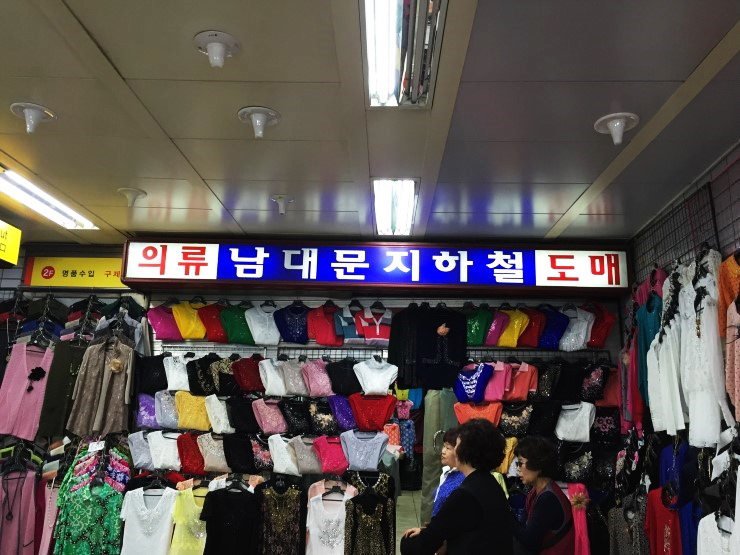
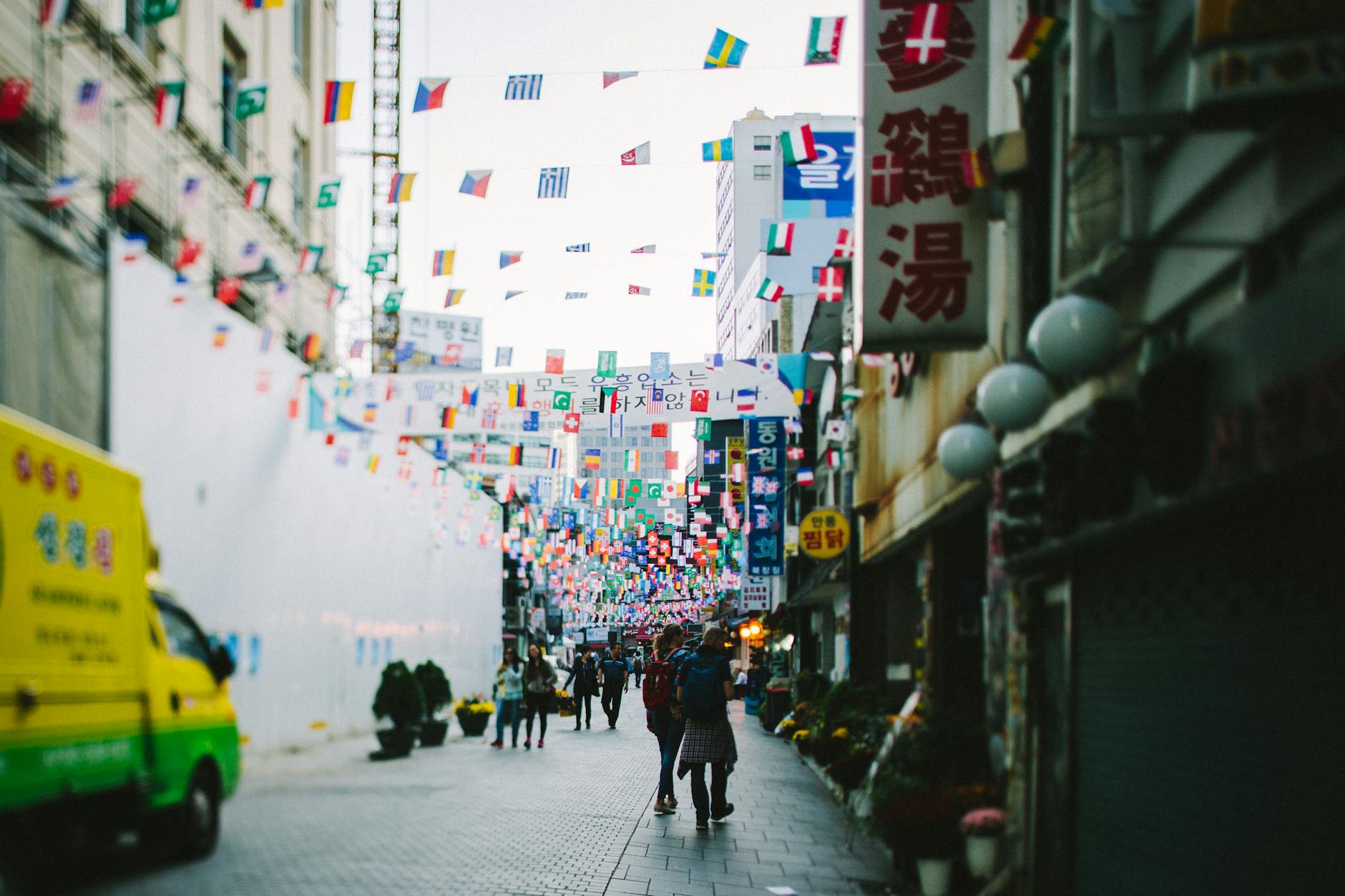
Namdaemun is less a single market than a dense district of alleys, street stalls, multi-storey arcade buildings and underground shopping floors, each with its own speciality. The first-time visitor’s mistake is to walk the main alley, see mostly socks and souvenirs, and leave. The better stuff is upstairs, downstairs and down side lanes.
The main sections
| Section | What you will find | Worth it for visitors? |
|---|---|---|
| Kitchenware | Stainless steel bowls and chopsticks, stone pots, grill pans, gimbap mats, lunchboxes, commercial restaurant equipment | Yes — the best souvenir shopping in the market |
| Children’s clothing | Multi-storey buildings of children’s wear, much of it sold wholesale to shops across Korea | Yes, if you have children to buy for |
| Glasses and optical | Opticians selling frames and lenses, often made up while you wait | Yes, with your prescription |
| Cameras | New and used cameras, lenses and accessories, clustered near Gate 1 | Yes for film-camera hunters; check equipment carefully |
| Ginseng and health foods | Red ginseng, dried mushrooms, herbal products, gift boxes | Yes, if you know what you are buying |
| Imported goods | The Namdo Import Market and the underground “Dokkaebi” market: imported food, alcohol, cosmetics, household goods, military-surplus oddities | For curiosity more than bargains |
| Accessories | Hair clips, jewellery, bags, hats and belts, much of it wholesale | Yes for cheap, fun items |
| Socks, underwear, pyjamas | Everywhere, often at bundle prices | Yes — Korean character socks are a classic cheap gift |
| Hiking and outdoor gear | Jackets, boots and poles at discount prices | Occasionally; check brands carefully |
| Souvenirs | Fridge magnets, keyrings, hanbok dolls, K-pop goods | Only if convenient; Insadong has better craft items |
What is actually worth buying
Kitchenware
This is the section that surprises people. Namdaemun supplies restaurant kitchens, and its kitchenware shops sell the real equipment Korean homes and restaurants use at prices far below department stores. Good buys include:
- Stainless steel chopsticks and spoons — the flat Korean kind, in gift sets.
- Stainless rice bowls with lids, exactly like the ones in every Korean restaurant.
- Dolsot — stone bowls for bibimbap. Heavy, so consider your luggage allowance.
- Gimbap bamboo mats and lunchboxes.
- Tabletop grill pans for Korean barbecue at home.
- Brass tableware (bangjja yugi) — beautiful and expensive; good shops will explain the difference between hand-forged and cast.
Children’s clothes
Namdaemun has long been the centre of Korea’s children’s clothing trade, and a huge share of the kids’ wear sold in shops around the country passes through its buildings. Retail visitors can buy here, but bear in mind that some shops are wholesale-first: early in the morning they are busy with trade buyers, and a few prefer to sell in multiples. Late morning and early afternoon are the easiest times to shop as an individual.
Glasses
Glasses in Korea are generally quicker and cheaper to buy than in many Western countries, and Namdaemun’s opticians are a popular place to get them. Many shops can make up a pair of frames and standard lenses within an hour or so. Bring your written prescription or your current glasses, ask for a clear total price including lenses before they start, and allow extra time for thinner or specialist lenses.
Ginseng and health foods
Korean red ginseng is a classic gift, and Namdaemun’s health-food shops sell it in every form: roots, extracts, sliced honeyed ginseng, tea and capsules. Seoul Sanghoe is one of the better-known shops. Quality and price vary enormously, so buy from a shop that will explain the grade and age of the root, and check your home country’s customs rules on bringing it back.
Where to eat
Namdaemun’s food is less of a tourist event than Gwangjang Market’s, which is exactly why it is good: these are places that feed market workers and shoppers, fast and cheap.
Kalguksu Alley
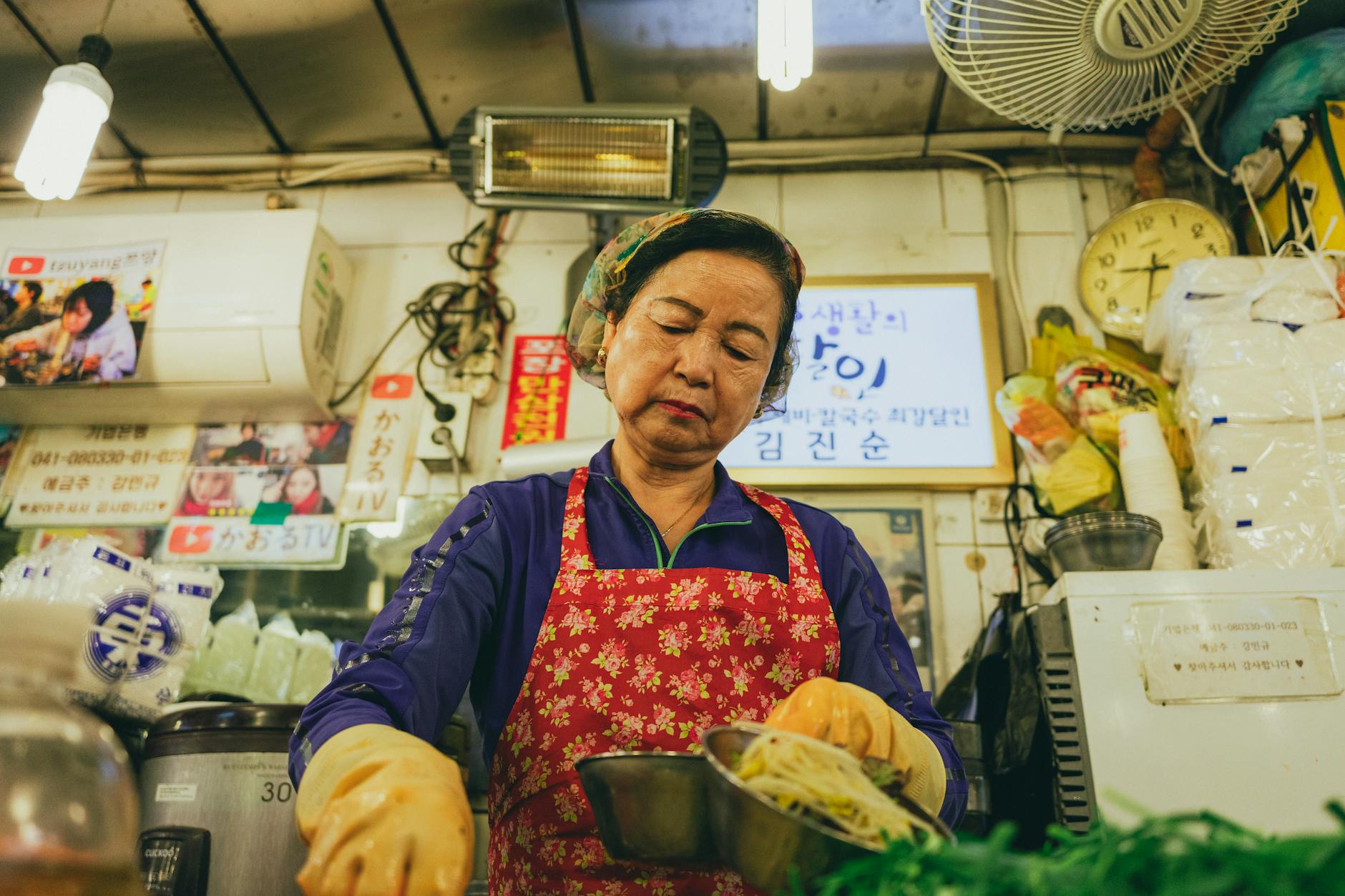
A narrow lane of tiny counters where women sit behind steaming pots and serve bowls of kalguksu — hand-cut wheat noodles in a mild broth — at shared benches. Order kalguksu and you will usually be given a small portion of boribap, barley rice with vegetables and gochujang to mix in, or cold noodles on the side. It is one of the best-value meals in central Seoul, typically under ₩10,000. The stall owners will shout to get your attention; pick one, sit down, and point.
Galchi Jorim Alley
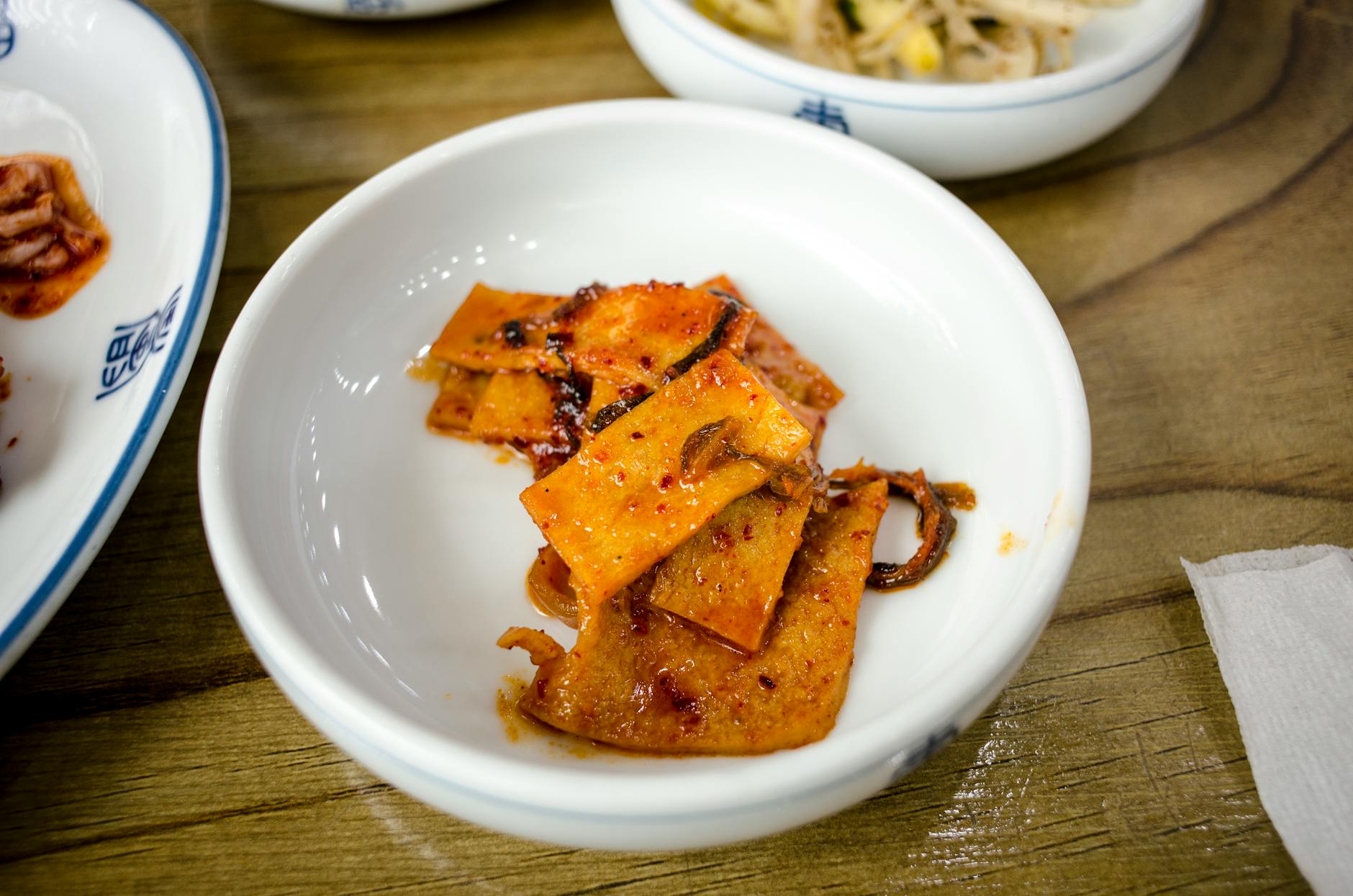
A lane of small restaurants specialising in galchi jorim: hairtail fish braised with radish in a spicy, garlicky red sauce, served bubbling in a pan with rice and side dishes. It is salty, spicy and very good with a bottle of soju. Most places serve it for a minimum of two people, at roughly ₩12,000–15,000 per person. Hairtail has fine bones, so eat carefully.
Hotteok
Namdaemun is famous for its yachae hotteok, a savoury version of Korea’s pan-fried stuffed pancake, filled with glass noodles and vegetables rather than the usual brown sugar. The best-known stall, near Gate 2, has a queue most afternoons. Expect to pay around ₩2,000 and to burn your mouth.
Other street food
- Mandu — steamed dumplings, sold in big bamboo steamers at several stalls.
- Tteokbokki and eomuk — spicy rice cakes and fish-cake skewers in broth.
- Hodu-gwaja — little walnut-shaped cakes filled with red bean.
- Fresh juice and sikhye — sweet rice drink, good on a hot day.
For a deeper look at Seoul’s street food, see our Seoul street food guide.
When to go
The daily rhythm
| Time | What is happening | For visitors |
|---|---|---|
| Late night to early morning | Wholesale trade in some buildings; shop owners from across Korea buying stock | Interesting but not really for retail shoppers |
| 07:00–09:00 | Shops opening, deliveries, breakfast at the food stalls | Atmospheric; many shops not yet ready |
| 10:00–15:00 | Full retail trading | The best time to visit |
| 15:00–17:00 | Winding down; some shops start closing | Fine, but go earlier for the full market |
| After 17:00 | Most retail shops closed | Not worth a special trip |
| Sunday | Most of the market closed | Avoid |
The honest verdict on timing
Go on a weekday or Saturday between 10:00 and 15:00. Do not plan Namdaemun for a Sunday or an evening; you will find shutters, and the neighbouring Myeongdong is the better choice for those times. If your visit falls on a Korean public holiday such as Chuseok or Seollal, expect much of the market to be closed.
Haggling, payment and tax refunds
Haggling
- Prices are often fixed in shops with price tags, especially in kitchenware and food.
- Gentle bargaining is normal at clothing, accessory and souvenir stalls, especially if you are buying several items. Asking for a small discount or a free extra item is the typical approach; aggressive haggling is not.
- Buying in bulk is where the real savings are. Many stalls have one price for one and a better price for three or ten.
- Be polite and smile. A friendly “kkakka juseyo?” (can you give me a discount?) goes a long way.
Payment
Most shops take cards, including foreign cards. Smaller stalls, food counters and wholesale traders often prefer cash, and some offer a small discount for it. There are ATMs around the edge of the market, including global ATMs in bank branches. A WOWPASS card works for payment at many shops and doubles as a T-money card.
Tax refunds
Some shops in Namdaemun, particularly larger retailers selling ginseng, cosmetics and kitchenware, participate in Korea’s tax refund scheme. Look for a “Tax Free” sign, ask before you pay, and have your passport with you. There is a minimum spend per shop, and small market stalls generally do not participate. Our duty-free and tax refund guide explains the process in full.
Walking Namdaemun into Myeongdong or Seoul Station
Namdaemun’s position makes it easy to fold into a day. Two routes that work well:
Route 1: Namdaemun to Myeongdong (half a day)
- 10:30 — Enter at Hoehyeon Station Exit 5. Browse kitchenware and accessories.
- 12:00 — Kalguksu or galchi jorim for lunch.
- 13:00 — Hotteok for dessert, then walk to Sungnyemun.
- 13:30 — Walk east past the Shinsegae flagship, whose older wing opened in 1930 as the Mitsukoshi department store, and the Bank of Korea Money Museum opposite.
- 14:00 — Myeongdong for skincare shopping; street food carts set up in the late afternoon. Our Myeongdong guide covers what is worth your time.
- 17:00 — Namsan cable car from Myeongdong for sunset.

Route 2: Seoul Station, Sungnyemun and the market (2–3 hours)
- Start at Seoul Station, and look at the old station building, now the Culture Station Seoul 284 arts space.
- Walk up Seoullo 7017, the elevated walkway built on a former highway overpass, towards the market.
- Stop at Sungnyemun.
- Enter the market, eat, shop and leave from Hoehyeon Station.
This route is handy on arrival or departure days if you are staying near Seoul Station and have a few hours to fill.
Namdaemun vs Gwangjang vs Dongdaemun
Seoul’s three big markets are often confused, and each suits a different visitor.
| Namdaemun | Gwangjang | Dongdaemun | |
|---|---|---|---|
| Best for | Kitchenware, children’s clothes, glasses, ginseng, wandering | Food | Fashion and fabrics, late-night shopping |
| Character | Sprawling traditional market, wholesale-driven | Covered market with a famous food hall | Malls and wholesale towers around the DDP |
| Food | Good, cheap, low-key | The main event | Mostly food courts and street stalls |
| Hours | Daytime; closed Sundays | Daytime and early evening | Retail malls until very late; wholesale overnight |
| Nearby | Myeongdong, Seoul Station | Jongno, Cheonggyecheon | DDP, Cheonggyecheon |
If you are primarily hungry, our Gwangjang Market food guide is the better starting point. For fashion and night shopping, see our Dongdaemun guide. And for Seoul’s many smaller markets, our guide to Seoul’s traditional markets has the full list.
Practical tips
- Wear comfortable shoes and carry a tote bag; plastic bags are not always free.
- Watch out for delivery trolleys and motorbikes in the narrow alleys. Step aside when you hear shouting.
- Keep valuables secure. Seoul is very safe, but any crowded market is a place to keep your phone and wallet in front of you.
- Toilets are in the arcade buildings and in the subway station.
- Use Naver Map or KakaoMap to find specific shops; the Korean names are more reliable than English ones.
- Strollers and wheelchairs are hard work in the inner alleys, but the main streets around the edge are manageable.
- Check customs rules before buying ginseng, food products or anything that looks like a branded item at a suspiciously low price.
- Carry some cash for food stalls and small purchases.
Frequently asked questions
What are Namdaemun Market’s opening hours?
Most retail shops open roughly 09:00–17:00 from Monday to Saturday, and many open earlier. Some wholesale areas trade overnight. Most of the market is closed on Sundays.
Is Namdaemun Market open on Sunday?
Mostly not. A few stalls and shops around the edge may open, but the majority of the market is closed. Visit on a weekday or Saturday instead.
What should I buy at Namdaemun Market?
Korean kitchenware (stainless steel chopsticks, rice bowls, stone pots), children’s clothing, glasses, ginseng and health foods, character socks, accessories and used cameras are the best buys.
What is the best food at Namdaemun Market?
A bowl of kalguksu in Kalguksu Alley, braised hairtail (galchi jorim) in Galchi Jorim Alley, and the vegetable-and-glass-noodle hotteok near Gate 2.
How do I get to Namdaemun Market?
Take Line 4 to Hoehyeon Station and use Exit 5, which opens into the market. It is also a 10–15 minute walk from both Seoul Station and Myeongdong.
Is Namdaemun or Dongdaemun better?
Namdaemun is better for traditional-market atmosphere, kitchenware, children’s clothes and cheap daytime food. Dongdaemun is better for fashion, fabrics and late-night shopping.
Final thoughts
Namdaemun is not the prettiest market in Seoul, nor the one with the best food, but it is the most honest: a working wholesale district that has been trading at the city’s south gate for six centuries and still does not really care whether tourists come or not. Go on a weekday morning, look beyond the main alley, buy a set of steel chopsticks and a hotteok, and walk on to Myeongdong. For more shopping ideas, our Seoul shopping guide covers everything from department stores to vintage.
Photo Credits
Gate 5 of Namdaemun Market: Namdaemun Market Gate 5 by User:CaliforniaAliBaba, CC BY-SA 3.0, via Wikimedia Commons.
Sungnyemun Gate before the 2008 fire: Korea-Seoul-Namdaemun-Sungnyemun-01 by by sean in japan, CC BY-SA 2.0, via Wikimedia Commons.
Underground wholesale clothing stall at Namdaemun: Namdaemun market(1) by Jocelyndurrey, CC BY-SA 4.0, via Wikimedia Commons.