It focuses on the paperwork for a short visit. For visa types, long stays and the full list of visa-free countries, see our Seoul visa requirements guide, and for everything else to sort before you fly, from mobile data to money, our Seoul travel essentials guide. Everything here was checked in November 2026 against the K-ETA portal, the e-Arrival Card site, the Korea Disease Control and Prevention Agency, the Korea Tourism Organization and Korean embassy notices. The big open question is the K-ETA exemption, which is set to end on 31 December 2026; the section on it below explains what to do about trips in 2027.
Arrival paperwork at a glance
| What | Who needs it | When | Cost |
|---|---|---|---|
| K-ETA | Most visa-free visitors, except the 22 exempt countries and regions (through 31 December 2026), under-18s and over-64s | Before you board; the advice is at least 72 hours ahead | ₩10,000, valid 3 years |
| e-Arrival Card | Visitors without a K-ETA | Within 3 days before arrival | Free |
| Q-CODE | Only travellers who stayed in or passed through a priority quarantine area | From 7 days before arrival | Free |
| Customs declaration | Only travellers with goods or cash to declare | Before landing (app) or at customs | Free (duty may apply) |
| Biometrics | Every foreign visitor aged 17 or over | At the immigration desk | – |
The short version: if you are a visa-free visitor, you will need either a K-ETA or an e-Arrival Card, not both. Everything else applies only in particular circumstances.
Do you need a K-ETA?
The K-ETA (Korea Electronic Travel Authorization) is an online pre-screening for travellers who can enter Korea without a visa. It is not a visa, and an approved K-ETA does not guarantee entry, because the immigration officer still makes the decision at the border. But without one, if you need one, you will not be allowed to board.
The visa-free starting point
Citizens of 112 countries and regions can visit Korea without a visa for tourism, family visits, events and business meetings: 67 under visa-waiver agreements and 45 under separate tourism and transit arrangements. How long you can stay depends on your passport. The K-ETA portal lists 90 days for visitors from the United States, the United Kingdom, Australia, Japan, Germany, France, Italy, Spain, Singapore, Taiwan, Hong Kong and Macau, three months for the Netherlands, Belgium, New Zealand, Malaysia, Mexico and Switzerland, six months for Canada, and 30 days for some other countries, including South Africa and Saudi Arabia. Check your own nationality on the portal before you plan a long trip.
If your country is not on the visa-free list, the K-ETA does not apply to you: you need a visa from a Korean embassy or consulate instead.
The 22 countries and regions exempt through 2026
Korea has temporarily exempted citizens of 22 countries and regions from the K-ETA. The exemption in force for 2026 runs from 1 January to 31 December 2026, and it covers:
- In the Americas: the United States (including Guam) and Canada
- In Asia and the Pacific: Australia, New Zealand, Japan, Singapore, Taiwan, Hong Kong and Macao
- In Europe: the United Kingdom, Austria, Belgium, Denmark, Finland, France, Germany, Italy, the Netherlands, Norway, Poland, Spain and Sweden
If you hold one of these passports and arrive by 31 December 2026, you do not need a K-ETA; you submit the free e-Arrival Card instead. You can still apply for a K-ETA if you would rather skip the arrival card (the portal shows a “K-ETA Exempt” message, and you pay the normal fee).
Travelling in 2027?
This is the part that catches people out. The exemption has a fixed end date, 31 December 2026, and as of mid-November 2026 the K-ETA portal had published no decision about 2027. It has been extended before, but you cannot count on it. If your trip starts on or after 1 January 2027 and you hold one of the 22 passports above:
- Check the notices on k-eta.go.kr before you book flights, and again a few weeks before you travel.
- If no extension has been confirmed, apply for a K-ETA. It costs ₩10,000 and is valid for three years, so even if the exemption is extended later, you have lost very little and saved yourself a nasty surprise at the check-in desk.
Who never needs one
Whatever their nationality, the K-ETA portal exempts travellers aged 17 or under or 65 or over on the date of entry, passengers transferring at a Korean airport without entering the country, holders of diplomatic, official or UN passports, APEC Business Travel Card holders, aircraft and ship crew, active-duty US military personnel covered by the Status of Forces Agreement, and foreigners who already hold a Korean visa or are registered residents.
How to apply for a K-ETA
The application takes a few minutes if you have everything to hand.
Where to apply
Only on the official website, k-eta.go.kr, or the official “K-ETA” mobile app. The portal itself warns about phishing and agency sites that charge far more than the official fee, and some of them look convincingly official. If a site asks for more than ₩10,000 plus a small card payment fee, close it. You can apply as a registered member or as a guest.
What you need
- A valid passport, which must be the one you will travel on
- A valid email address, where the result is sent
- A recent ID-style photo of your face
- A credit or debit card for the fee
- Your travel details: the purpose of your visit, your address in Korea (your first hotel will do), contact details, expected dates and anyone travelling with you
Fee, timing and validity
- Fee: ₩10,000 (roughly USD 7 to 8), plus a small online payment fee. It is not refunded if your application is refused.
- Timing: results usually come within 72 hours but can take longer, and there is no express service. You must have approval before you board; applying after boarding, or after arriving in Korea, can mean refusal or entry restrictions. The official advice is to apply at least 72 hours before departure. In practice, apply as soon as your trip is booked.
- Validity: three years, or until your passport expires if that comes first, for as many visits as you like within the visa-free rules.
Changes, new passports and refusals
If your travel details change (a different hotel or new dates), update them on the portal using the “Update Travel Information” option rather than applying again. If you get a new passport, though, your K-ETA does not transfer, and you need a fresh application. The same applies if your criminal record or infectious disease information changes. Giving false information can lead to refusal, cancellation and penalties. If you are refused, the portal’s FAQ explains your options; read it before reapplying.
The e-Arrival Card
If you do not have a K-ETA, you submit an arrival card online before you land, on the official e-Arrival Card site, e-arrivalcard.go.kr. It is free, and it was introduced in February 2025 to take over from the paper arrival card.
- Who needs it: visitors without a K-ETA. K-ETA holders, registered residents and some group visa holders do not.
- When: within the three days before your arrival in Korea. The window opens three days out, so set a reminder rather than doing it when you book.
- What it asks: after accepting the terms and confirming your email, you enter your passport details and your itinerary: arrival, departure and where you are staying. You then check and submit.
- Groups: one individual submission can cover 1 to 9 people, and the group option covers 2 to 1,000.
- Changes: you can check or edit a submission using its issue number or your email address.
Nothing needs printing; the information is linked to your passport. If you are not sure whether your submission went through, check it on the site before you leave for the airport rather than finding out at the immigration desk.
The Q-CODE health declaration
Q-CODE is the Korea Disease Control and Prevention Agency’s online health declaration, and most visitors never need it. It is mandatory for travellers who stayed in or passed through the agency’s priority quarantine areas, and anyone arriving from any designated quarantine area with symptoms such as fever or cough must report to the quarantine officer.
The list changes. The agency’s designation for the last quarter of 2026 named 32 countries as priority quarantine areas for diseases including plague, human avian influenza, MERS, Ebola and Nipah virus, with the United States and China designated by region. Bangladesh was also added to the wider quarantine-management list for measles. If you have been anywhere with a disease outbreak in the weeks before your trip, check the current list on the agency’s Q-CODE page.
If you do need it:
- You can fill it in from 7 days before arrival, and you need a new Q-CODE for each entry.
- You show the saved QR code at quarantine on arrival. If you did not complete it in advance, there are kiosks and tablets in the quarantine area.
- Failing to declare, or declaring falsely, can bring a fine of up to ₩10 million.
The customs declaration
Since May 2023, travellers with nothing to declare do not fill in a customs form at all; you simply walk through the green channel. You need a declaration only if you are bringing in more than the duty-free allowances or cash over the limit:
- Goods: up to USD 800 of goods bought abroad are duty-free.
- Alcohol: up to USD 400 in total, in no more than two bottles and two litres.
- Tobacco and perfume: 200 cigarettes and 100 ml of perfume.
- Age: travellers aged 19 and under get no alcohol or tobacco allowance.
- Cash: declare Korean or foreign currency worth more than USD 10,000.
If you do need to declare, the “Korea Customs Declaration for Travelers” app (on Android and iOS), or the mobile web form at m.customs.go.kr/tms, produces a QR code to show at customs, and one declaration covers a family.
At immigration: what actually happens
With the paperwork done, the immigration desk is quick. Join the lanes for foreign passports and hand over your passport. Then:
- Biometrics: every foreign visitor aged 17 or over has their fingerprints scanned and a facial photo taken. Follow the officer’s instructions on the screen in front of you.
- Questions: the officer may ask why you are visiting, how long you are staying and where. Answer simply, and have your accommodation address and return or onward ticket on your phone in case you are asked.
- Smart Entry: citizens of 42 countries and regions can use the automated Smart Entry gates on arrival, but only once they have registered their fingerprints and photo on a previous arrival. On a first visit, everyone goes to an officer. On the way out, short-term visitors aged 17 and over can use the automated departure gates without registering in advance.
What to have ready on your phone before landing
The fastest arrivals are the ones where everything is a tap away. Before you switch your phone to aeroplane mode:
- Your K-ETA approval email, or the confirmation of your e-Arrival Card submission.
- Your first night’s address in English and Korean, as text and as a screenshot. It goes on your arrival card, the officer may ask for it, and taxi drivers need the Korean version.
- Your return or onward ticket, in case the officer asks.
- Your Q-CODE QR, only if you need one.
- Your customs QR, only if you have something to declare.
- Offline copies of the above. Your data may not work until you have sorted a SIM or switched on an eSIM, and the airport Wi-Fi is not something to rely on in a queue.
- The apps you will need on day one, installed and logged in: a map app, a translation app and a taxi app. Our Seoul travel apps guide lists them.
Once you are through, our Incheon Airport guide covers the counters to visit in the arrivals hall, in the right order, and our Incheon to Seoul guide covers the train and bus into the city.
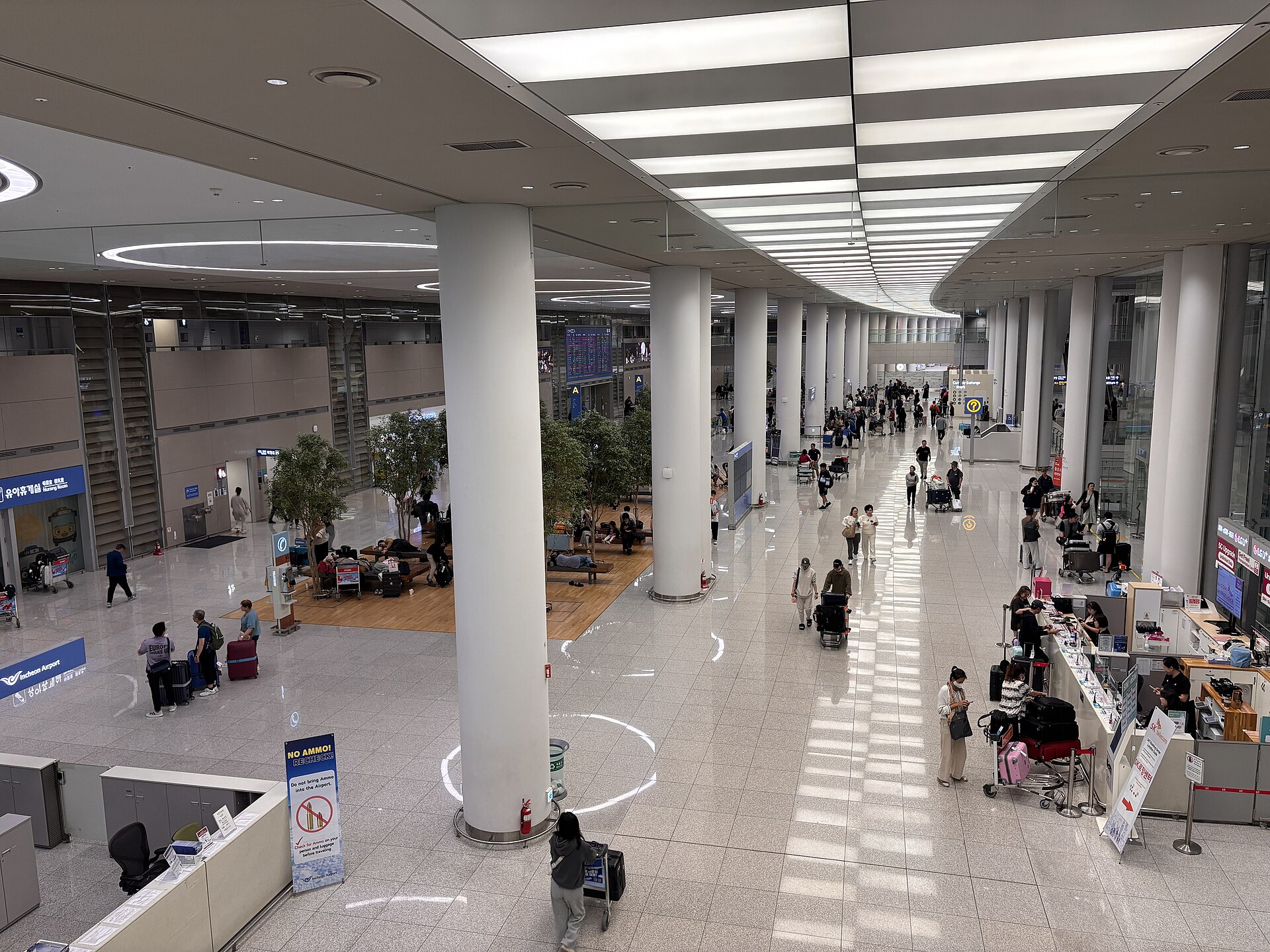
A simple timeline: what to do, and when
| When | What to do |
|---|---|
| As soon as your trip is booked | Apply for a K-ETA if you need one (it lasts three years, so there is no reason to wait) |
| Before booking a trip that starts in 2027 | If you hold one of the 22 exempt passports, check the K-ETA notices for news of an extension |
| 7 days before arrival | Fill in Q-CODE, but only if you have been in a priority quarantine area |
| 3 days before arrival | Submit the e-Arrival Card, if you do not have a K-ETA |
| Before landing | Fill in the customs declaration app, but only if you have something to declare |
| On arrival | Fingerprints and photo at immigration (ages 17 and over), baggage, then customs |
Travelling as a family
The rules work slightly differently for children and older relatives, and families often trip over the difference.
- K-ETA: travellers aged 17 or under, or 65 or over, on the date they enter Korea do not need one, even if their parents or travelling companions do.
- Arrival cards: anyone without a K-ETA, children included, needs the e-Arrival Card. One individual submission can cover up to nine people, so a parent can submit for the whole family in one go, within the three days before arrival.
- Biometrics: fingerprints and a photo are taken only from visitors aged 17 and over, so younger children simply stand with you at the desk.
- Customs: travellers aged 19 and under get no duty-free allowance for alcohol or tobacco, and one customs declaration covers a family if you need to make one.
For the rest of the trip with children, from strollers on the subway to the best rainy-day options, see our guide to Seoul with kids.
Common mistakes, and how to avoid them
- Applying on a lookalike site. Search results for “K-ETA” are full of agencies charging several times the official fee. Type k-eta.go.kr into your browser yourself, or use the official “K-ETA” app.
- A typo in your passport number. Your K-ETA or arrival card is matched to your passport electronically. Check every character before you submit, and if you renew your passport, apply for a new K-ETA.
- Leaving the K-ETA too late. Results usually take up to 72 hours and sometimes longer, with no way to speed them up. Apply when you book.
- Submitting the arrival card too early. The e-Arrival Card only accepts submissions in the three days before arrival.
- Assuming the 2026 exemption carries on. It ends on 31 December 2026 unless Korea extends it. Check before you fly in 2027.
- Doing both, or neither. You need a K-ETA or an e-Arrival Card, not both. If you have neither, sort one out before you leave home.
Which one applies to you? A quick guide
| You are… | You need |
|---|---|
| From one of the 22 exempt countries or regions, arriving by 31 December 2026 | The e-Arrival Card (or a K-ETA, if you prefer to skip the card) |
| From one of the 22, arriving on or after 1 January 2027 | Check k-eta.go.kr; apply for a K-ETA if no extension is confirmed |
| From another visa-free country, aged 18 to 64 | A K-ETA before you board |
| From a visa-free country, aged 17 or under or 65 or over | No K-ETA; submit the e-Arrival Card |
| Transferring at Incheon without leaving the airport | No K-ETA |
| From a country without visa-free entry | A visa from a Korean embassy or consulate |
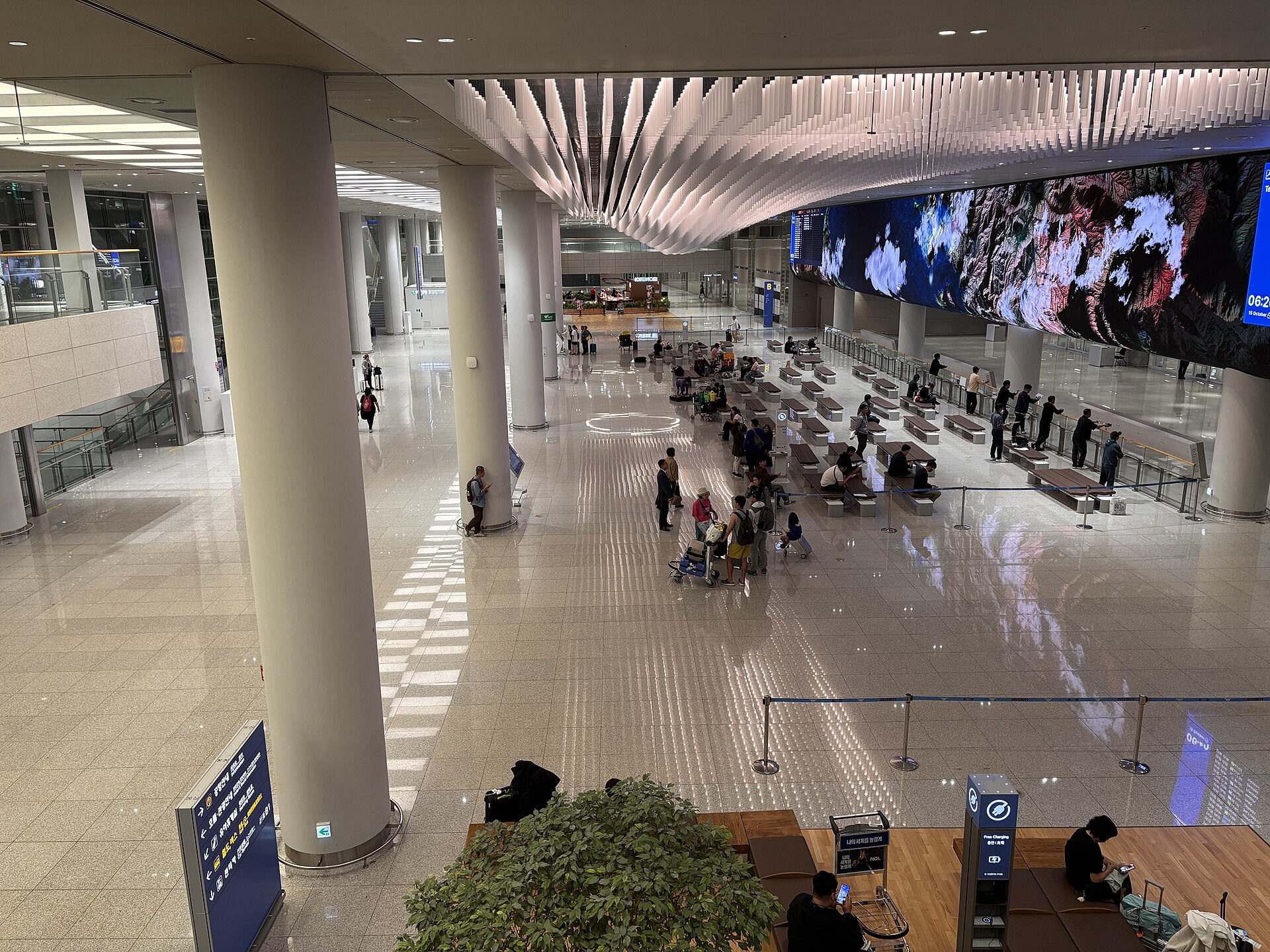
Once the paperwork is done, the next thing your phone needs is data. Our guide to choosing a Korea SIM card, eSIM or pocket Wi-Fi explains what to install before you fly and what to collect at the airport, and what a tourist number will and will not do when an app asks for a Korean phone number.
Frequently Asked Questions
How much does a K-ETA cost?
₩10,000 (roughly USD 7 to 8), plus a small online payment fee, on the official site or app. The fee is not refunded if your application is refused.
How long does a K-ETA take?
Usually 72 hours or less, but it can take longer and there is no express option. Apply at least 72 hours before departure, and ideally as soon as you book.
Is the K-ETA exemption extended into 2027?
The exemption for 22 countries and regions runs to 31 December 2026. As of mid-November 2026, the K-ETA portal had published no decision about 2027, so check its notices before you travel and apply for a K-ETA if no extension is confirmed.
Do US citizens need a K-ETA?
Not for arrivals by 31 December 2026, while the temporary exemption lasts; they submit the e-Arrival Card instead. For trips from 1 January 2027, check k-eta.go.kr.
Do I need both a K-ETA and an arrival card?
No. K-ETA holders do not need to submit an arrival card. If you do not have a K-ETA, submit the free e-Arrival Card within three days before you arrive.
Does everyone need a Q-CODE to enter Korea?
No. Q-CODE is mandatory only for travellers who stayed in or passed through priority quarantine areas; travellers from other designated areas report to quarantine only if they have symptoms. Check the current list on the Korea Disease Control and Prevention Agency’s Q-CODE page.
Do I need to fill in a customs form?
Only if you have something to declare, such as goods over USD 800 or cash worth more than USD 10,000. With nothing to declare, walk through the green channel with no form.
Is my K-ETA still valid if I renew my passport?
No. A K-ETA is tied to the passport you applied with, so a new passport needs a new application.
Final Thoughts
Korea’s arrival process is genuinely painless once you know which forms apply to you, and for most visitors that is just one: a K-ETA or an e-Arrival Card. Do it on the official site, do it in good time, and check the K-ETA notices if you are travelling from January 2027, when the current exemption is due to end. Then the hardest part of arriving at Incheon is choosing between the train and the bus.
Photo Credits
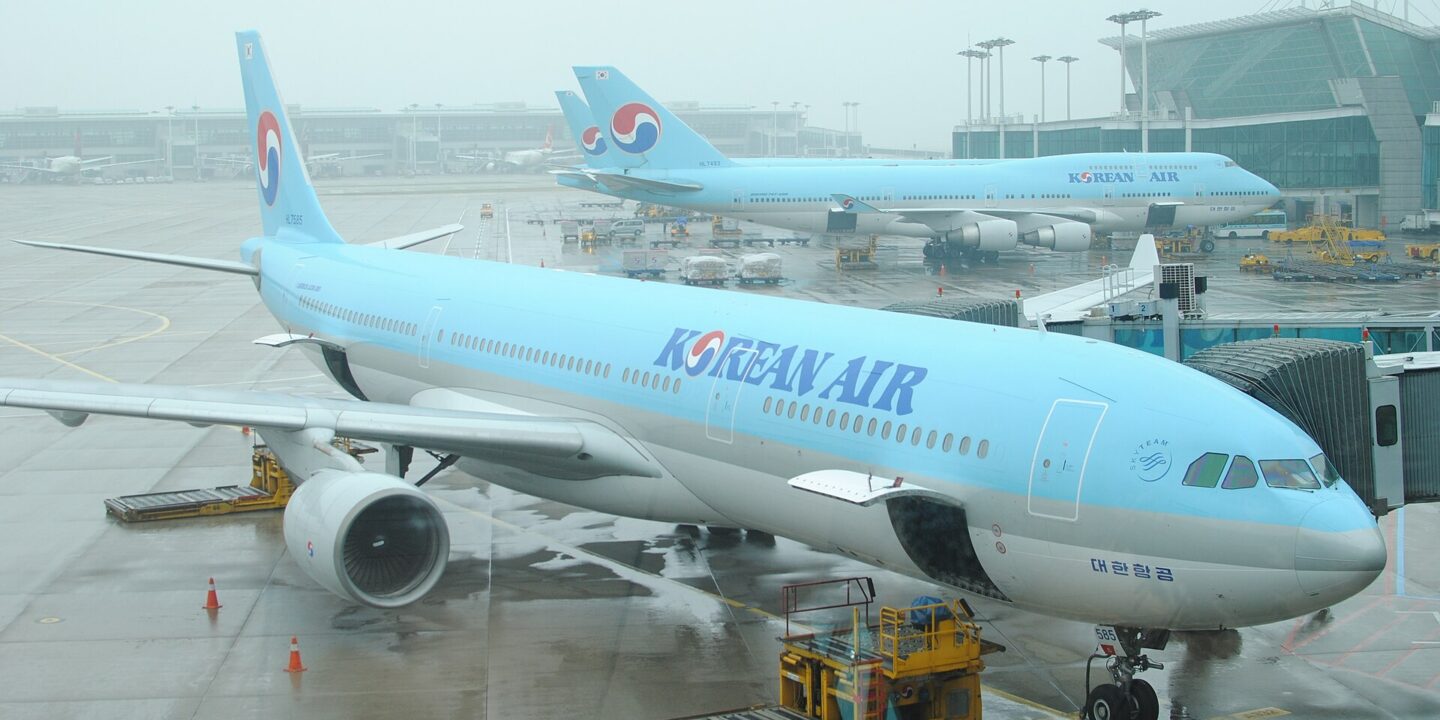
A Korean Air jet at an Incheon gate (featured image): Incheon-international-airport by ckgodman, CC0, via Wikimedia Commons.
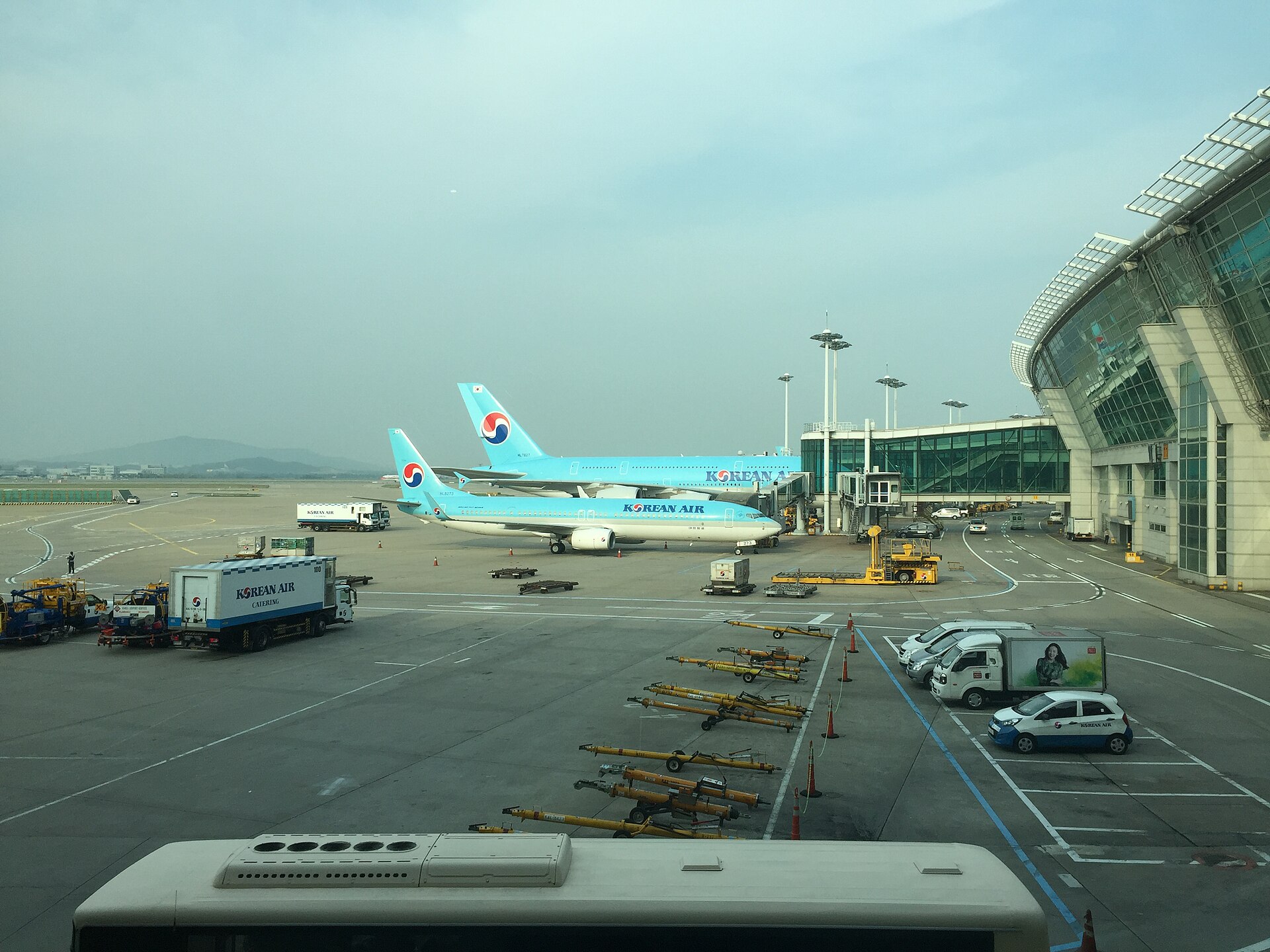
Korean Air jets at the gates at Incheon: Korean Air 737-900 HL8273 at ICN (28375353036) by G B_NZ, CC BY-SA 2.0, via Wikimedia Commons.
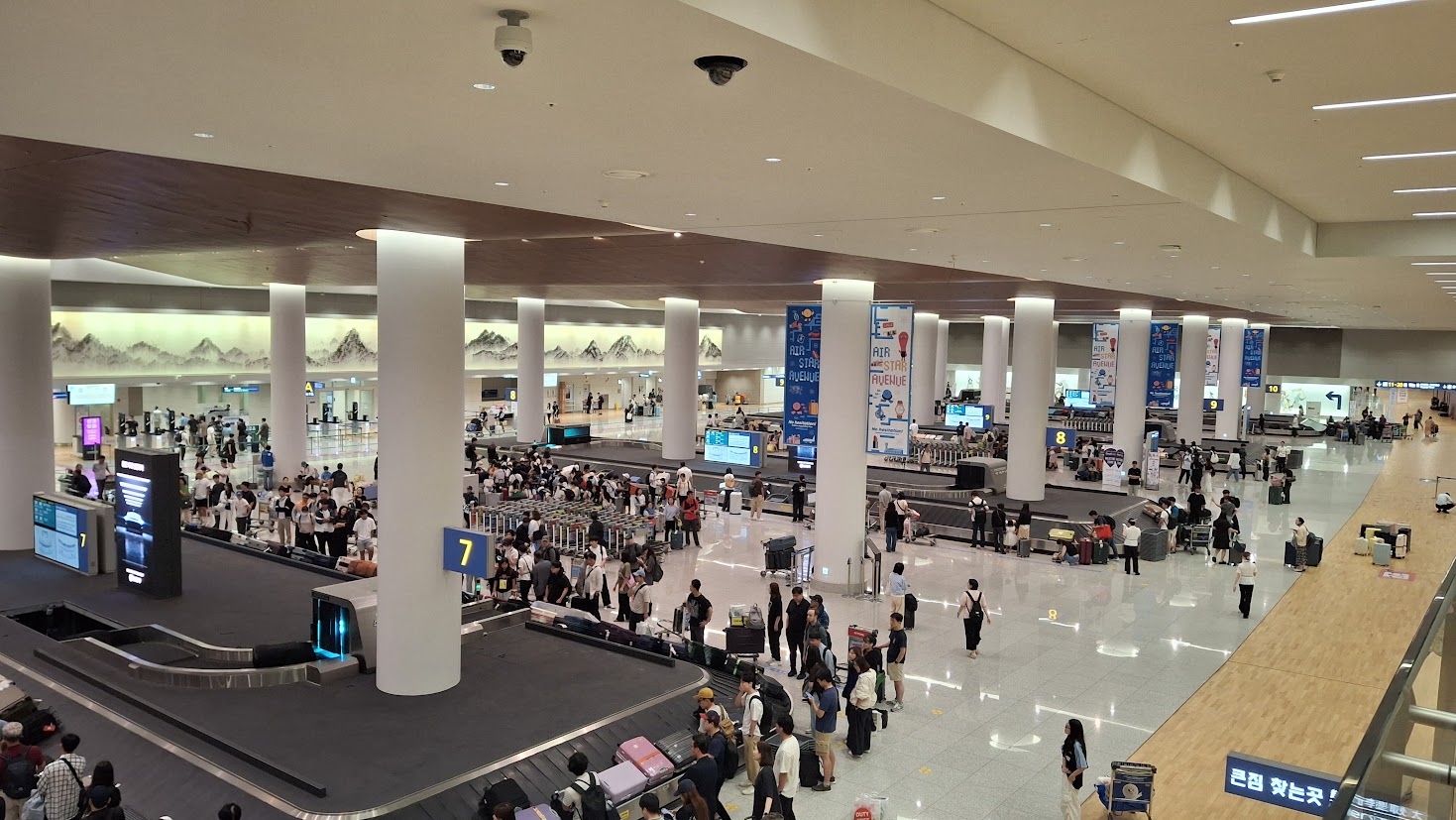
The baggage hall at Incheon Terminal 2: ICN T2 arrival by AirportTerminalGuy, CC BY 4.0, via Wikimedia Commons.
Terminal 2’s arrivals hall from above: 2025-10-14 17.17.48 Incheon International Airport by Choikwangmo25, CC0, via Wikimedia Commons.
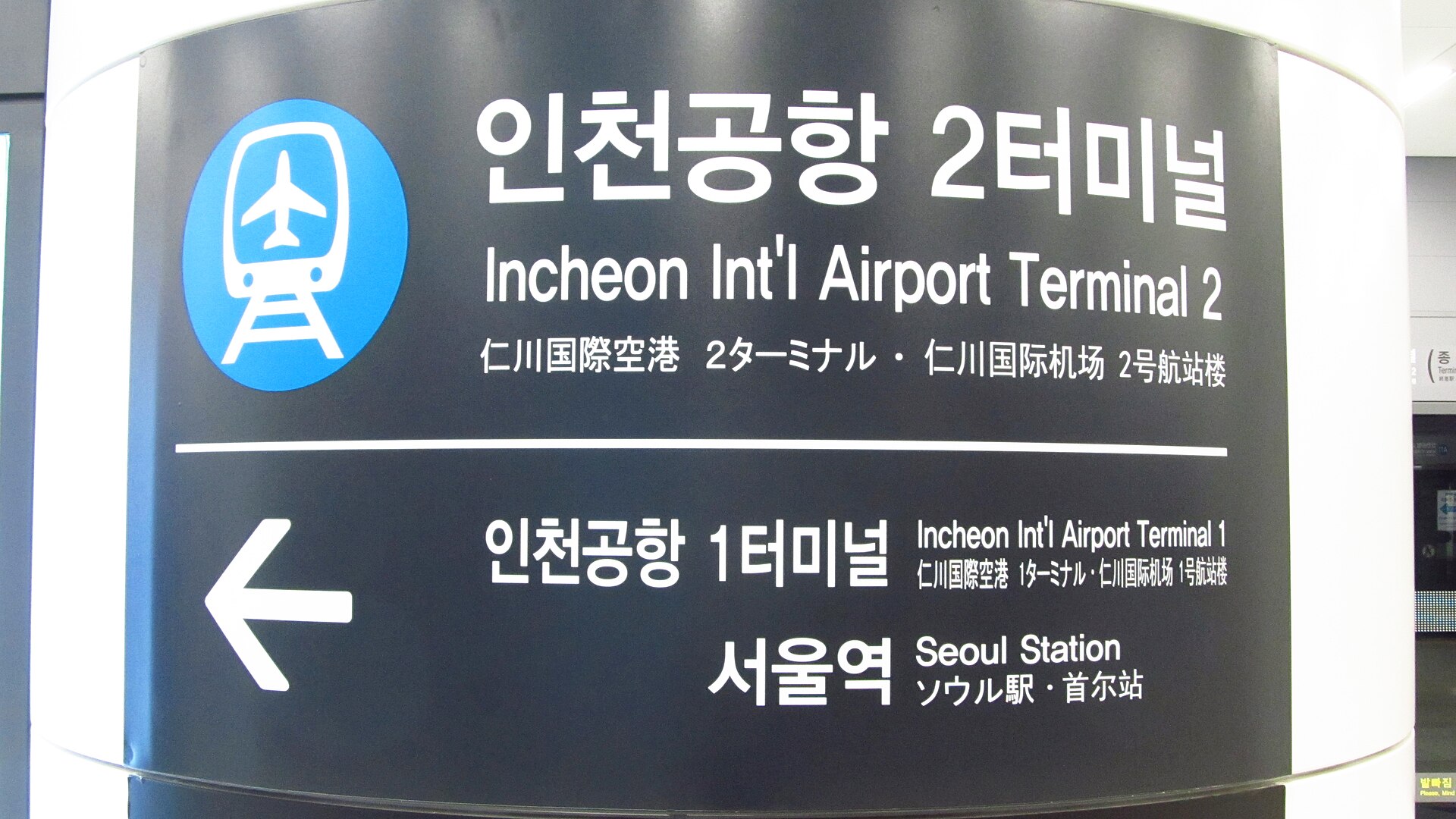
The AREX station at Terminal 2: AREX-A11-Incheon-international-airport-terminal-2-station-sign-20181120-175312 by LERK, CC BY-SA 4.0, via Wikimedia Commons.
The exit into Terminal 2’s arrivals hall: 2025-10-14 17.20.47 Incheon International Airport by Choikwangmo25, CC0, via Wikimedia Commons.