This is the complete late-night food Seoul guide for tourists in 2026: every category of post-midnight dining, the legendary spots that stay open until sunrise, the new Mapo-gu Pojangmacha Preservation Zones, what to order, and how Seoul’s late-night food scene became a cultural institution.
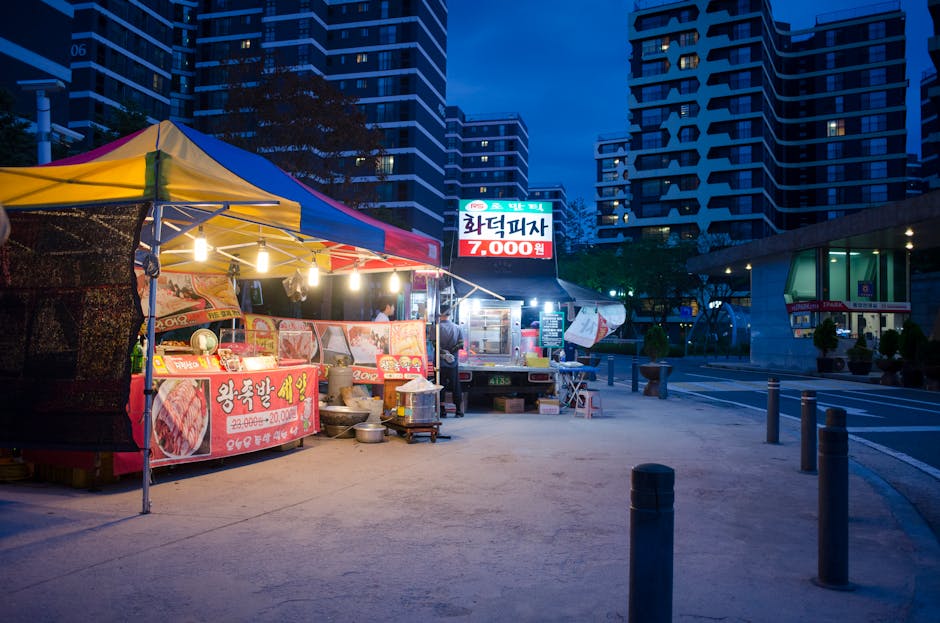
Late-night food? Seoul does it better than almost anywhere, and it isn’t an afterthought here — it’s a whole second dinner with its own name (yashik), its own dishes, and its own social rituals. The city rewards night owls: you can eat genuinely well at 2 AM, often better and more cheaply than at noon, surrounded by office workers, students, and taxi drivers doing exactly the same thing. This guide maps every category of after-dark eating, the spots that never close, and how to get home once the subway stops. Pair it with our Seoul nightlife guide and the Seoul food guide for the full picture.
Why Seoul is Made for Late-Night Eating
Three structural reasons:
- Hard-drinking culture means hangover-prevention soup spots stay open all night.
- 24-hour subway culture doesn’t quite exist (subway closes ~12:30 AM, restarts ~5:30 AM) — meaning many Seoulites kill the gap with food.
- Late dinner habits push primary meals to 8–9 PM and second meals (yashik) to 11 PM–2 AM.
The result is a deep ecosystem: pojangmacha (tent bars), haejangguk (hangover soup) joints, chimaek (chicken + beer) restaurants, 24-hour gomtang (oxtail soup) shops, late-night noodle counters, convenience stores, and entire markets that operate after midnight.
There’s a cultural logic underneath all this. Korean social life runs on hoesik — the long, multi-stage work or friend dinner that moves from a meat restaurant to a bar to a noraebang and, almost inevitably, to a late bowl of something restorative. Each “round” (cha) has its own venue, and the food keeps pace. Add a hard-drinking culture that prizes a proper hangover-prevention meal, a city that genuinely never feels unsafe after dark, and a delivery network that runs past 3 AM, and you get one of the most developed late-night food scenes on earth. Tourists who treat dinner as the end of the night are missing half of Seoul.
The 8 Best Late-Night Food Categories in Seoul
1. Pojangmacha (포장마차) — Street Tent Bars
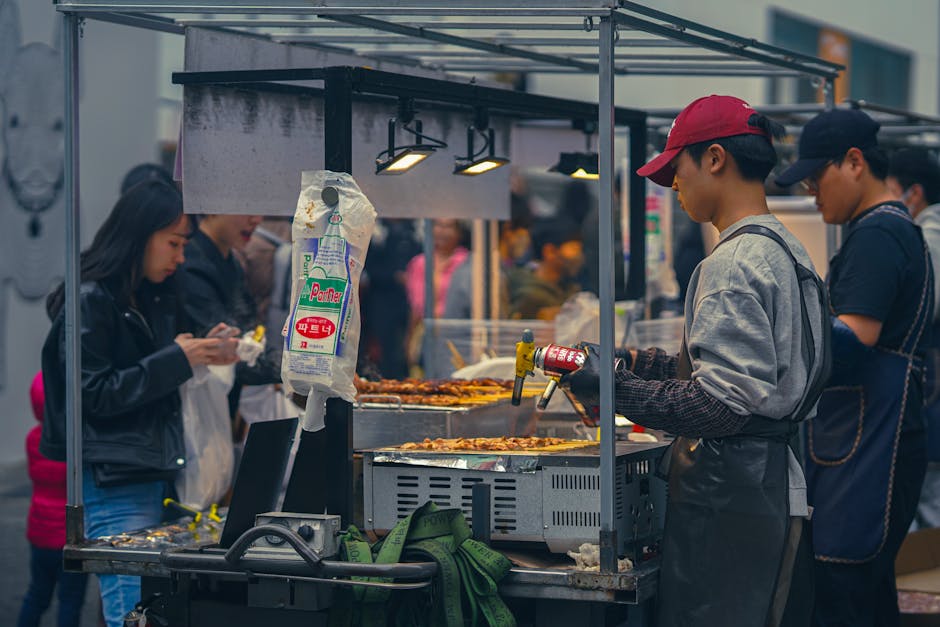
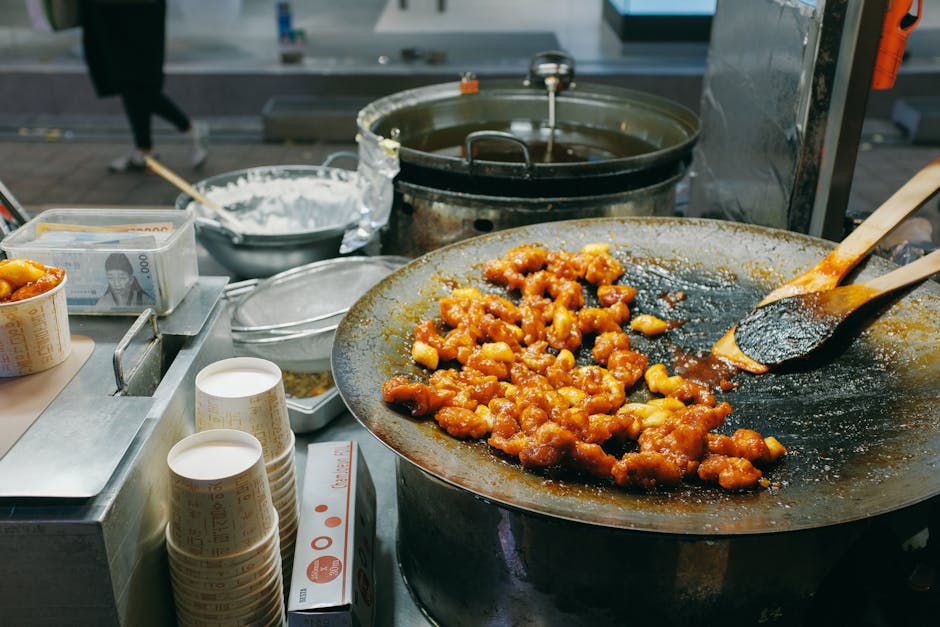
Pojangmacha are orange-tent street stalls that pop up after dusk and operate well past midnight. They serve hot snacks paired with soju and beer. In 2026, Mapo-gu officially designated Pojangmacha Preservation Zones to keep the city’s best tents legal and concentrated.
Top dishes to order:
- Eomuk (어묵): Fish-cake skewers in hot broth — ₩1,000–2,000 each
- Dak-kkochi (닭꼬치): Sweet-and-spicy chicken skewers — ₩3,000
- Tteokbokki (떡볶이): Spicy rice cakes — ₩4,000–7,000
- Sundae (순대): Korean sausage with offal — ₩5,000–7,000
- Gopchang-bokkeum (곱창볶음): Spicy stir-fried beef intestines — ₩12,000–18,000
- Soju + beer (somaek): ₩4,000–6,000
Best pojangmacha zones:
- Jongno 3-ga station alley — long-running tent strip
- Dongdaemun (around Gate 1) — busy until 4 AM, English signs
- Hapjeong / Mapo — preservation zone, atmosphere
- Sinchon — student crowd, cheaper
- Jongno’s Pimatgol alley — historical alley
What makes a pojangmacha special is the atmosphere as much as the food: you duck under an orange tarpaulin into a steamy, plastic-stooled world lit by a single bulb, the ajumma (auntie) running the place ladles fish-cake broth into a paper cup to warm your hands, and strangers at the next table strike up a somaek-fueled conversation. Order a few skewers, a portion of tteokbokki, and a green-bottle soju, and you’ve bought a couple of hours of pure Seoul. Cash is still king at the older tents, though more now take card. They’re at their best on a cold night — the contrast of warm broth and frigid air is the whole point — and they spill across Jongno, Dongdaemun, and the Mapo preservation zones. For the neighborhood context, our Seoul neighborhoods guide helps you pick a base.
2. Haejangguk (해장국) — Hangover Soup Specialists
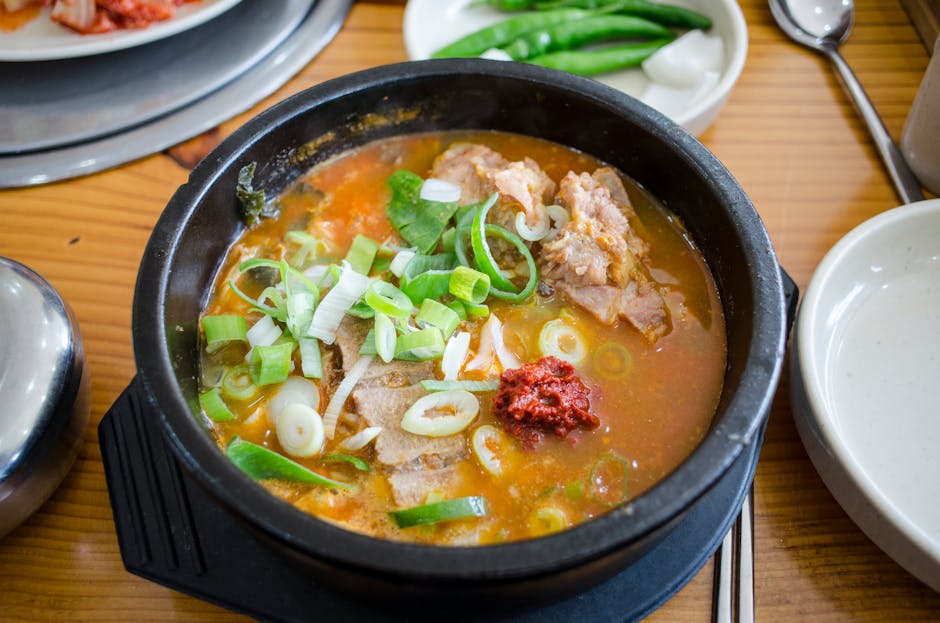
Haejangguk literally means “soup that wakes up from drinking.” It’s a peppery, beef-bone-broth-based soup loaded with pork backbone or beef, congealed blood, vegetables, and rice. Served with kimchi and a side of rice. It’s the spiritual cure for any 3 AM regret, and it’s why dozens of haejangguk shops in Seoul never close.
Legendary haejangguk spots:
- Cheongjinok (청진옥, Jongno): 1937-founded, considered the original. ₩12,000.
- Gomtangjip (Mapo): 24-hour beef-bone version.
- Cheongdanggol Haejangguk (Dongdaemun): Famous for spicy version.
- Hwangsangmu (Yeongdeungpo): Fish-broth haejangguk variant.
Even if you’re stone-cold sober, haejangguk is worth seeking out — it’s one of the most soulful cheap meals in Korea, and the 24-hour shops that serve it are wonderfully unpretentious, full of solo diners hunched over steaming bowls at 4 AM. The seonjihaejangguk version with congealed ox blood is the traditional purist’s choice (it tastes far milder than it sounds); the ppyeo-haejangguk with meaty pork spine is the crowd-pleaser. Cheongjinok in Jongno, dating to 1937, is the canonical spot. A bowl runs ₩10,000–13,000 with rice and kimchi, and you’ll leave restored. It’s the perfect bookend to a night out covered in our best bars in Seoul guide.
3. Chimaek (치맥) — Korean Fried Chicken + Beer
Chimaek = chi(cken) + mac(beer). The unofficial national late-night meal. Most Korean fried chicken chains stay open until 2–3 AM in nightlife districts, with delivery available until even later.
Best chimaek chains:
- Kyochon Chicken — sweet soy garlic, ₩22,000 whole bird
- BBQ Chicken — golden olive oil chicken, ₩21,000
- Goobne — premium sit-down chimaek, ₩25,000
- Pelicana — old-school neighborhood
- Kyedong (Hongdae) — cult-favorite garlic soy
Chimaek is less about any single chain and more about the ritual: a crispy fried bird, a frosty pitcher of lager, a sports match or a group of friends, and zero hurry. In nightlife districts the chains run until 2–3 AM, and delivery pushes even later. Get the half-and-half (yangnyeom-and-fried) so you don’t have to choose, and don’t skip the pickled radish cubes that cut the grease. For the sit-down version and the full chicken-and-beer culture, see our Korean alcohol guide; for where to drink around it, the best clubs and noraebang guides map the nearby nightlife.
4. 24-Hour Gomtang & Seolleongtang (Oxtail/Bone Soup)
Gomtang (rich oxtail soup) and seolleongtang (milky beef bone broth) are restorative, deeply flavored soups that 24-hour shops slow-cook for hours. ₩12,000–18,000. Best for quiet 3 AM solo dining.
Top picks:
- Imun Seolnongtang (Insadong) — opened 1904, oldest restaurant in Korea, 24/7
- Hadongkwan (Myeongdong) — beef gomtang since 1939
- Mannaru (Jongno) — 24/7 spicy gomtang
These milky bone broths are the quiet, grown-up end of late-night eating — no spice, no drama, just deeply restorative soup that’s been simmering for the better part of a day. Imun Seolnongtang near Insadong, trading since 1904 and often called the oldest restaurant in Korea, is the pilgrimage; you season your own bowl with salt, scallion, and a scoop of rice. It’s the ideal 3 AM meal when you want comfort rather than a party, and a genuine piece of living Seoul history. Our best Korean dishes to try guide explains the bone-soup family in detail.
5. Late-Night Korean BBQ
Most Korean BBQ restaurants in Hongdae, Itaewon, and Gangnam stay open until 2–3 AM. Search for “새벽 BBQ” (dawn BBQ) on Naver Maps. Samgyeopsal (pork belly) and galbi remain the staples.
Late-night Korean BBQ hits different — the grills fire up, the soju flows, and the meal stretches for hours. Search “24시 고기집” (24-hour meat house) on Naver Maps and you’ll find samgyeopsal joints in Hongdae, Mapo, and around Gangnam Station serving until or past dawn. It’s pricier than the soup options (₩25,000–45,000 a head with drinks) but it’s the most social way to spend the small hours. For technique and cuts, our Korean BBQ guide has you covered.
6. Tteokbokki Specialists
Sindang-dong’s Tteokbokki Town is so famous for the spicy rice-cake stew that the words have become synonymous. Many of its 50+ shops stay open 24 hours. Pair with cheese, ramen, dumplings.
7. Convenience Store 24/7 Eats
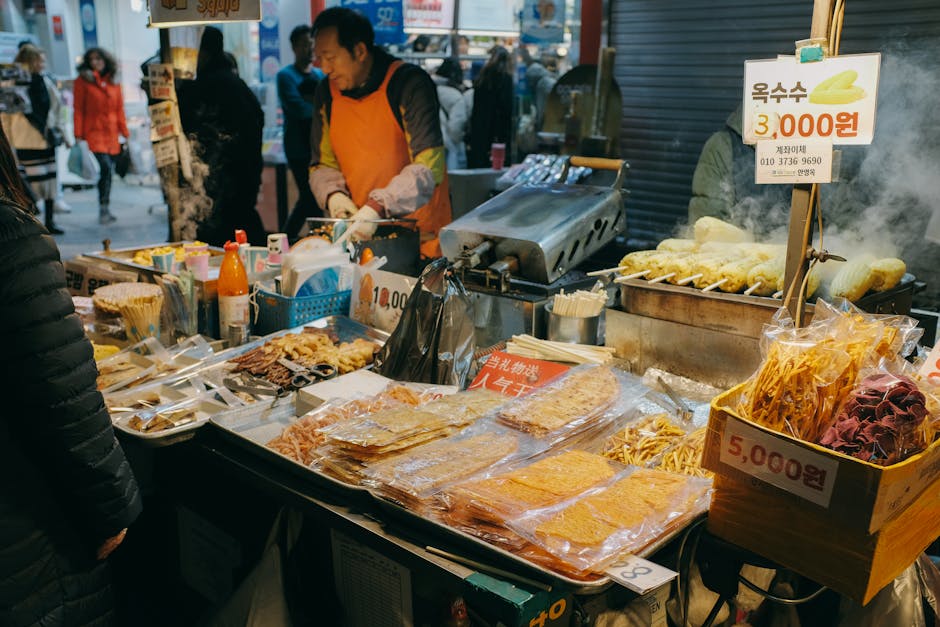
Every block has a CU, GS25, 7-Eleven, or Emart24 open 24/7. Hot ramen at the in-store boiling station (₩2,500), microwave dosirak (₩4,500–6,500), kimbap, banana milk, and triangle gimbap are all available. Naver Maps’ “편의점” filter shows the closest one.
8. Late-Night Noodle Houses
Many jjajangmyeon (black bean noodle) and jjamppong (spicy seafood noodle) spots stay open all night, especially in Yeongdeungpo, Mapo, and university districts. ₩7,000–10,000.
Yashik delivery: eating in after midnight
If you’re staying put — jet-lagged in your hotel, or simply done with the cold — Seoul’s delivery culture is the late-night secret weapon. The two big apps, Baemin (배달의민족) and Coupang Eats, deliver to most central addresses until 3–4 AM, and a surprising amount of the city’s best yashik is available: fried chicken, jjajangmyeon, tteokbokki, jokbal (braised pig’s trotters, a classic late-night order), and bossam. Baemin now has an English-friendly interface, though you’ll need a Korean phone number or a hotel address for delivery; many hotels and guesthouses will happily take a delivery to the front desk. Minimum orders run around ₩12,000–15,000 and a small delivery fee applies. Jokbal-and-beer delivered to your room at 1 AM is one of the most quietly satisfying things you can do in Seoul. For getting around when you’d rather go out, see our getting around Seoul guide.
The all-night noodle houses deserve a special mention for solo travelers: a steaming bowl of jjamppong or hand-cut kalguksu at 2 AM, eaten at a counter, is the introvert’s perfect late meal — quick, cheap, comforting, and no group required. They cluster in Yeongdeungpo, Mapo, and the university districts, and most do a brisk trade with night-shift workers, so you’re never the only one there.
Late-Night Food by Neighborhood
Hongdae
The most active. Pojangmacha alleys, 24-hour BBQ, convenience-store culture. Best after-club destination. See our Hongdae guide.
Jongno
Cheongjinok and historic Pimatgol pojangmacha alley. The classic hangover-soup district.
Itaewon
International late-night options — kebabs, Egyptian, Indian — many open till 4 AM. See our Yongsan guide.
Gangnam
Polished, late-night Korean BBQ, premium chimaek, business-after-hours steakhouses. See our Gangnam guide.
Dongdaemun
The 24-hour shopping market keeps late-night food running until dawn. Famous for pojangmacha at the gate.
Sindang-dong
Tteokbokki Town. Multiple 24/7 spots.
Mangwon and Hapjeong
Newer pojangmacha preservation zones. Local crowd. See our neighborhoods overview.
Euljiro and Jongno 3-ga
The “Hipjiro” district has become a late-night magnet — retro pojangmacha-style bars, noodle counters, and grill joints packed into old printing-district alleys, busy with a young crowd until the early hours. It connects on foot to Jongno 3-ga’s historic tent strip, making this the best walkable late-night zone in central Seoul.
Noryangjin
For something different, the 24-hour fish market lets you pick live seafood downstairs and have it prepared upstairs at any hour — a memorable, if pricier, late-night feast best shared by a group.
Sample Late-Night Eating Itinerary
A 3-stop progression for night owls:
- 11:00 PM — Korean BBQ in Mapo or Sindang-dong
- 1:00 AM — Pojangmacha for fried skewers + soju in Hongdae
- 3:00 AM — Haejangguk at Cheongjinok in Jongno
- 4:30 AM — Convenience-store coffee at first-train Jongno-3-ga
Late-night food etiquette, safety and getting home
A few things that make the small hours go smoothly. Seoul is famously safe to walk at 3 AM — solo travelers of all kinds report no issues — but the real logistical puzzle is transport: the subway stops around 00:30 and restarts about 05:30, so plan to either pull an all-nighter until the first train or take a taxi. Use the Kakao T app rather than hailing on the street; late-night taxis add a roughly 20% surcharge after midnight, which is normal and metered, not a scam. At pojangmacha and in residential alleys, keep your voice down after 1 AM — noise complaints are the main thing that gets tents shut down. Tipping isn’t a thing here, side dishes are free and refillable, and Korean “spicy” is no joke, so learn deol maewo (덜 매워) for “less spicy.” Pace the soju: somaek goes down easy and the night is long. Our Seoul subway guide and Seoul taxi guide cover the getting-home details.
The best late-night dishes, ranked by mood
Not sure what to order at 2 AM? Match the dish to the moment. If you’ve been drinking: haejangguk or a milky gomtang — the broth and rice settle everything. If you’re with a rowdy group: gopchang-bokkeum (spicy stir-fried intestines) or late-night BBQ, both built for sharing over soju. If you want comfort: tteokbokki with a sheet of cheese and a side of fried mandu. If it’s hot and humid: a bowl of icy naengmyeon (cold buckwheat noodles), a genuine Seoul summer-night ritual. If you’re broke or it’s 4 AM and everything’s shut: convenience-store ramyeon at the window counter, ₩2,500 and always open. If you want a only-in-Korea story: jokbal delivered to your room or live seafood at Noryangjin. Run through two or three of these across a night and you’ll understand why Seoulites guard their yashik traditions so fiercely. Our Seoul street food guide covers the daytime snack versions of many of these.
Late-Night Drinks Pairing Guide
- Pojangmacha → Soju + Cass beer (somaek), or makgeolli
- Haejangguk → Cold barley tea or makgeolli
- Chimaek → Cass, Hite, or Kloud lager
- Gomtang → Hot rice tea (sungnyung)
- BBQ → Soju + beer chasers
For more on Korean drinks see our Korean alcohol guide.
Practical Tips for Late-Night Eating
- Cards work everywhere — even at most pojangmacha tents.
- Naver Maps shows late-night hours reliably; filter for “24시간.”
- Subway closes ~12:30 AM; plan return by Kakao T or wait for 5:30 first train.
- Tipping not customary.
- Don’t be loud at pojangmacha after 1 AM in residential streets.
- Pojangmacha tents fill fast Friday/Saturday; arrive before 11 PM.
- Free side dishes (banchan) are unlimited at most haejangguk and gomtang spots.
- Spicy levels: Korean spicy is genuinely spicy; ask for “덜 매운 (deol mae-un)” = less spicy.
An easier late-night plan for first-timers
If a sunrise-chasing crawl sounds like too much, here’s a gentler version that still captures the magic. Start around 10 PM with Korean BBQ or chimaek in Hongdae or Euljiro. Around midnight, wander into a pojangmacha for a couple of skewers and a single bottle of soju — just enough for the atmosphere. Then, instead of pushing to dawn, cap the night with a restorative bowl of gomtang or haejangguk before catching a Kakao T taxi back by 1 AM. You’ll have tasted three pillars of Seoul’s late-night culture in a manageable three hours, no all-nighter required. It slots neatly onto the end of any evening in our Seoul nightlife guide or live music venues guide.
What Locals Order at 3 AM
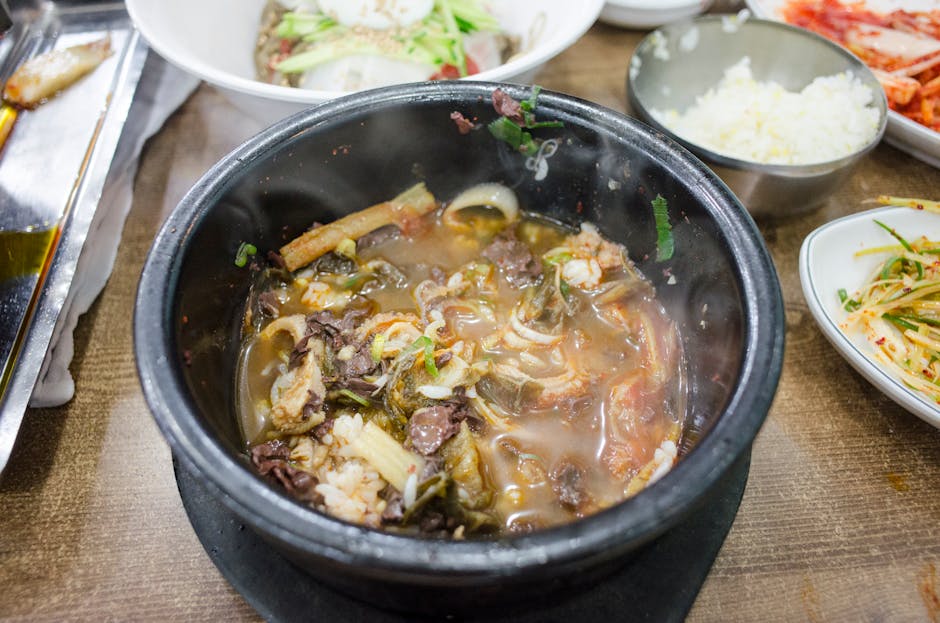
- Bones-and-bone-marrow gomtang when feeling sick or hungover
- Spicy gopchang stir-fry when meeting friends
- Tteokbokki + soju as a go-to comfort meal
- Naengmyeon (cold noodles) in summer 2 AM heat
- Kimchi jjigae and rice as an old-school choice
- Chimaek when watching late-night sports
One reassurance for solo and female travelers specifically: eating alone late at night is completely normal and comfortable in Seoul. Counter seating at gomtang, ramyeon, and noodle shops is designed for one, nobody will look twice, and the streets between venues stay busy and well-lit into the small hours. It’s one of the easiest cities in the world to be out alone after midnight — a freedom worth savoring.
Late Night Food Seoul: typical costs
| Category | Average Cost (per person) |
|---|---|
| Pojangmacha (skewers + drinks) | ₩15,000–25,000 |
| Haejangguk + rice + kimchi | ₩10,000–14,000 |
| Chimaek (½ chicken + beer) | ₩18,000–25,000 |
| Gomtang/Seolleongtang | ₩12,000–18,000 |
| Convenience store ramen + dosirak | ₩5,000–8,000 |
| Late-night BBQ | ₩25,000–45,000 |
A note on budgeting the night: the beauty of Seoul’s late-night scene is that the most authentic options are also the cheapest. You can have a complete, memorable 3 AM meal — a bowl of haejangguk, kimchi, rice, refillable banchan — for under ₩14,000, less than a cocktail in many cities. The pojangmacha experience, with skewers and a couple of bottles of soju shared between friends, lands around ₩15,000–25,000 a head and buys you the atmosphere too. Only late-night BBQ and Noryangjin seafood climb higher. Factor in a Kakao T ride home and a typical big night out still costs less than you’d expect — our Seoul trip cost guide puts it in context.
Frequently Asked Questions
What’s the best late-night food in Seoul?
Haejangguk (hangover soup) and pojangmacha tent bars are most iconic. Chimaek (fried chicken + beer) is most popular among young locals.
Where are the pojangmacha in Seoul?
Jongno 3-ga, Dongdaemun, Hongdae, Sindang-dong, and Mapo-gu’s official preservation zones.
Can I drink alcohol late at night in Seoul?
Yes — Korea has no last-call law. Bars and pojangmacha serve until they close, often 4–6 AM.
Are convenience stores really 24/7?
Yes — every CU, GS25, 7-Eleven, Emart24 in central Seoul is open 24/7.
What’s the cheapest late-night meal?
Convenience-store ramen (₩2,500) or coin noraebang snacks (₩4,500 dosirak).
Is street food safe in Seoul late at night?
Yes — Korean street food has high hygiene standards and the vendors typically pass food-safety inspections.
Are foreigners welcome at pojangmacha?
Yes — most vendors deal with international visitors and many have basic English menus.
What time does the subway close?
Last trains leave central stations between 23:30 and 00:30. First trains start ~5:30 AM. See our Seoul subway guide.
Can I get food delivered late at night?
Yes — Coupang Eats and Baemin deliver until 3–4 AM in central Seoul.
Is haejangguk good if I’m not hungover?
Absolutely — it’s hearty Korean comfort food popular at any time.
Can I get food delivered to my hotel late at night?
Yes — Baemin and Coupang Eats deliver to most central Seoul addresses until 3–4 AM. You’ll usually need a Korean phone number or a hotel front-desk address; many hotels accept deliveries on your behalf. Jokbal, fried chicken, and tteokbokki are popular late orders.
What’s the most local late-night dish to try?
Haejangguk (hangover soup) is the most quintessentially Seoul; jokbal (braised pig’s trotters) and gopchang (grilled intestines) are the classic drinking-night orders locals love.
How do I get home after the subway closes?
Take a Kakao T taxi (a ~20% late-night surcharge applies and is normal) or stay out until the subway restarts around 5:30 AM. See our Seoul taxi guide.
Is late-night food in Seoul expensive?
No — a bowl of haejangguk or gomtang is ₩10,000–18,000, convenience-store ramen is ₩2,500, and pojangmacha snacks are a few thousand won each. Only late-night BBQ and seafood push higher.
Final Thoughts
Seoul’s late-night food culture is one of the city’s most distinctive features. After a Hongdae bar crawl, a Gangnam dinner, or simply a long arrival flight, you’ll find pojangmacha steam rising under neon, haejangguk shops at 4 AM, and convenience stores standing by 24/7. Eating late in Seoul is an essential part of the experience — and arguably the city at its most authentic. Pair this with our Seoul food guide, cheap eats Seoul, Seoul nightlife guide, and the master Seoul travel guide.