This is the complete cheap eats Seoul guide for tourists: every category of budget-friendly meal, the legendary spots that locals actually use, what to order, what to expect, and how to navigate menus and ordering when you don’t read Korean.
The best part about cheap eats in Seoul is that “cheap” almost never means “bad.” Korea’s food culture is built on hearty, fast, inexpensive everyday meals, so a ₩6,000 bowl of stew at a corner diner can be as satisfying as anything you’d pay triple for elsewhere. This guide is organized by category first — so you can recognize the dish in front of you — then by neighborhood, with a tested ₩20,000 day of eating at the end. Pair it with our Seoul on a budget guide and the broader Seoul food guide for the full picture.
Why Seoul is a Cheap-Eats Paradise
Three structural reasons make Seoul affordable for daily eating:
- Subsidized rice culture: Korean meals built around rice, soup, and side dishes are inherently low-cost.
- Bunsik tradition: “Snack restaurants” specialize in cheap, fast meals — kimbap, ramen, tteokbokki, mandu — all under ₩7,000.
- Convenience-store culture: 24/7 stores sell hot dosirak (lunchboxes) and Korean staples at low markup.
Your goal as a budget traveler is simple: avoid tourist-zone restaurants and instead eat where Korean office workers, students, and elderly residents eat. That’s where ₩6,000 buys a full meal.
It’s worth understanding why this works, because it tells you where to look. Korean restaurants tend to specialize — one shop does kalguksu, the next does only pork cutlets — and that focus keeps quality high and prices low. Rents fall sharply just one block off a main commercial street, so the cheapest, most authentic spots are almost always the ones you have to turn a corner to find. And the culture of free, refillable banchan means a single cheap dish quietly becomes a full meal. Keep those three facts in mind and Seoul’s budget food scene opens right up.
The 12 Best Cheap Eats Categories in Seoul
1. Kimbap (₩2,000–6,000)
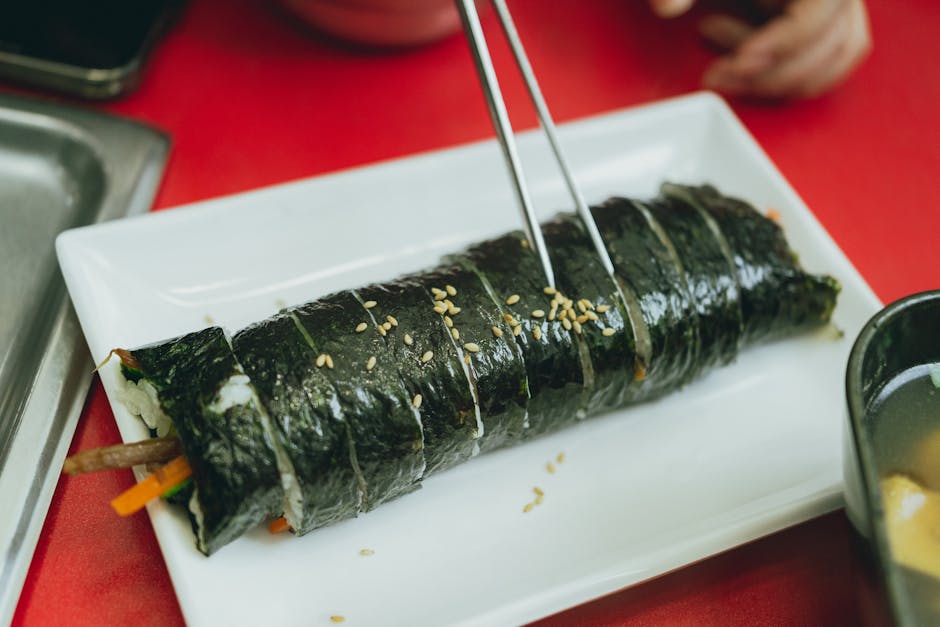
Kimbap (or gimbap) is rice rolled in seaweed with vegetables, eggs, ham, or tuna inside. The basic vegetable version costs ₩2,500–4,000 and is a perfect on-the-go meal. Variations include:
- Chamchi (tuna) kimbap: ₩3,500
- Cheese kimbap: ₩3,500
- Mayak (“addiction”) kimbap: mini rolls with a soy-mustard dip, ₩4,000
- Bulgogi kimbap: ₩4,500
Best places: Kimbap Cheonguk (chain), Robot Kimbap (chain), or any traditional market.
A pro tip on kimbap: the freshest rolls come from dedicated counters where someone is rolling them in front of you, not from the refrigerated case. Watch for the word 김밥 on the sign. The “mayak” (마약, literally “narcotic”) gimbap from Gwangjang Market earns its nickname — tiny rolls you dunk in a mustard-soy sauce that are genuinely hard to stop eating, and a bargain at around ₩4,000 for a plate. Kimbap also travels well, making it the perfect ₩3,000 breakfast to grab before a day of sightseeing or a hike up Bukhansan.
2. Tteokbokki (₩3,000–8,000)
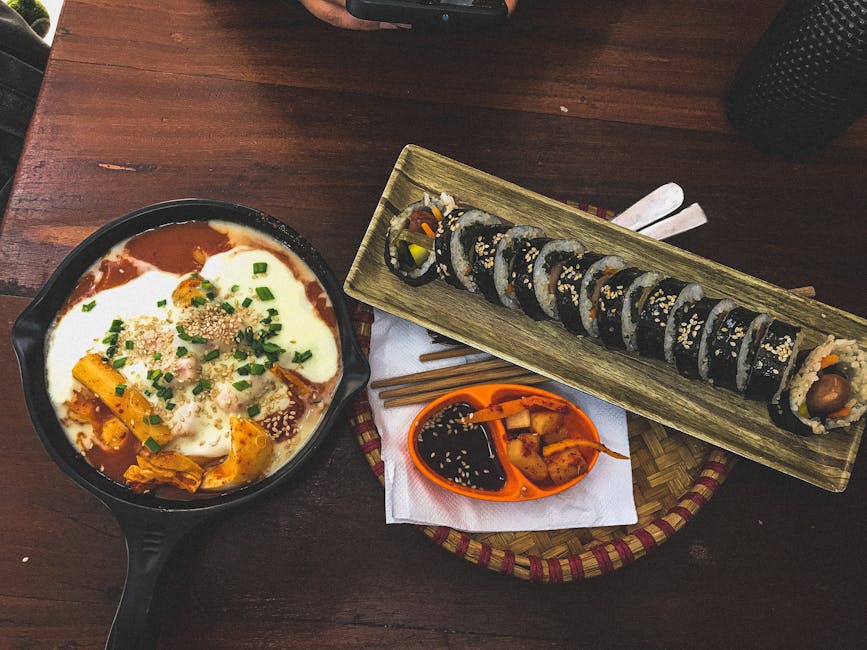
Tteokbokki — chewy rice cakes simmered in spicy red gochujang sauce — is the king of Korean street food. Available everywhere from corner stalls (₩3,000 a portion) to specialty shops with 12 toppings (₩8,000). Try Sindang-dong’s Tteokbokki Town for the legendary version, or Mukshidonna chain for affordable variety.
Order tteokbokki “rosé” if the gochujang heat worries you — the creamy, milder version has taken over Seoul in the last couple of years and most shops now offer it. At specialty spots like the legendary Sindang-dong stalls you cook it at the table in a wide pan, adding ramen noodles, fish cakes, boiled eggs, and a sheet of cheese; two people eat richly for under ₩15,000. It’s messy, communal, and deeply Korean. Wash it down with the slushy corn-syrup-sweet slush punch many tteokbokki shops keep on tap for free.
3. Ramyeon (Korean Ramen) (₩2,500–7,000)
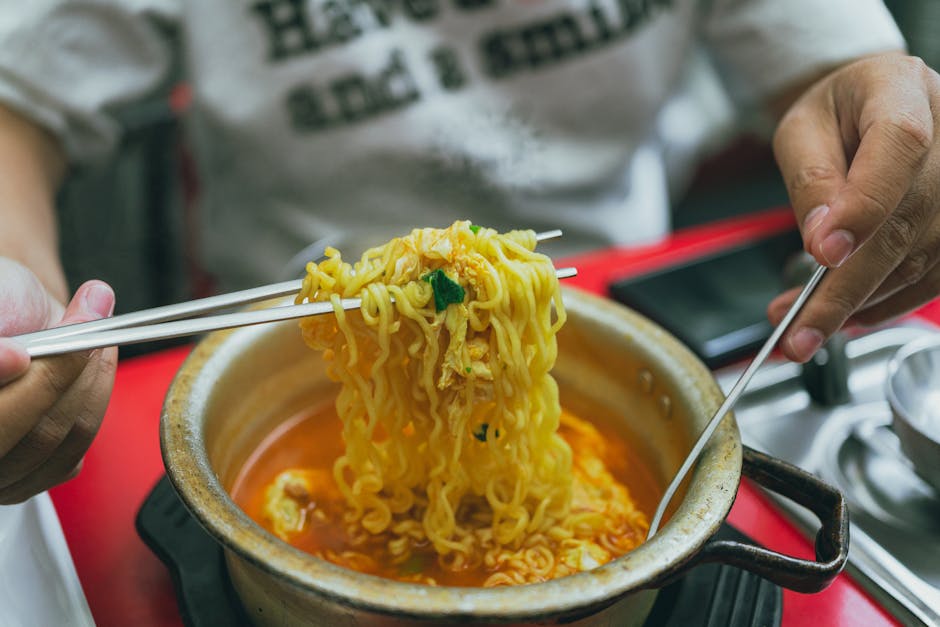
Korean instant ramen has been elevated to an art form. Convenience-store ramen (₩2,500 + ₩500 for the cooker) is fine; bunsik ramen (₩4,500–6,000) adds an egg, kimchi, and sometimes cheese; specialty bowls like at Hworyongjeon or Yibap-Yibap offer hand-made noodles for ₩7,000–9,000.
4. Bibimbap (₩7,000–10,000)
Bibimbap — rice with mixed vegetables, beef, and egg topped with gochujang — is a complete one-bowl meal. Standard rice version ₩7,000–9,000; dolsot (stone bowl) bibimbap with crispy rice ₩9,000–12,000. Try Gogung or any market food court.
If you order one cheap sit-down meal a day, make it a stone-bowl (dolsot) bibimbap: the rice crisps against the hot stone into a layer called nurungji that’s worth the extra ₩2,000 alone. It arrives with free banchan and is one of the easiest meals for vegetarians to adapt — just ask them to hold the beef and the egg. Temple-food restaurants and market food courts do excellent versions. For more on eating meat-free cheaply, see our vegetarian and vegan Seoul guide.
5. Hansot Dosirak — Lunchbox Specialists (₩4,500–7,500)
Hansot Dosirak is Korea’s answer to Subway — a fast-casual chain serving 50+ lunchboxes (rice + meat/fish + sides). Average ₩5,500–7,500 for a satisfying complete meal. Locations near every major subway station. Pomato is a similar chain open 24/7 with self-serve banchan.
6. Cochon Tonkatsu — Korea’s Most Famous Cheap Eat
Cochon Tonkatsu serves a 3,000-won pork cutlet that includes rice, miso soup, salad, and pickles. Yes, ₩3,000. The quality is surprisingly good — Korean pork, homemade batter, properly fried. Multiple locations across Seoul; expect short queues at lunch.
The ₩3,000 cutlet sounds too good to be true, and to be fair the portion is student-sized — but add a ₩2,000 side and you’ve eaten a full lunch for the price of a fancy coffee. This kind of value is the whole thesis of cheap eating in Seoul: small, no-frills shops that have done one dish for decades and price it for office workers, not tourists. Seek them out a block or two off the main tourist drags, where rents are lower and the queues are Korean.
7. Jjigae and Jjajangmyeon (₩6,000–9,000)
A bowl of kimchi jjigae, doenjang jjigae, or sundubu jjigae (soft tofu stew) at any neighborhood diner runs ₩6,000–9,000 and includes rice and 4–6 side dishes free. Jjajangmyeon (black bean noodles) is the classic Korean Chinese order at ₩6,000–8,000.
8. Gimbap Chain Sets (₩5,500–8,500)
Chain shops like Kimbap Cheonguk and Bukchang-dong Soondubu offer combo sets (kimbap + ramen, or tteokbokki + dumplings) for ₩5,500–8,500. Open early to late, English menus available.
9. Korean Fried Chicken Singles (₩7,000–9,000)
While whole chicken costs ₩18,000–25,000, single-piece chicken or “snack-size” half portions at chains like Goobne, BHC, Kyochon, BBQ Chicken run ₩7,000–9,000.
Korean fried chicken is rarely a true “cheap eat” at full-bird prices, but the single-piece and snack-box options at the big chains close the gap, and a half-and-half (yangnyeom sweet-spicy plus soy-garlic) shared between two is one of the great Seoul pleasures. For solo budget travelers, look for the cup-chicken and skewer stalls in Myeongdong and university areas — fried chicken by the handful for ₩4,000–6,000. The full chimaek (chicken-and-beer) ritual is covered in our Korean BBQ guide and the best Korean dishes to try.
10. Convenience Store Dosirak (₩3,500–6,500)
Every CU, GS25, 7-Eleven, and Emart24 sells hot lunchboxes 24/7. Quality varies — celebrity-chef-branded ones (Baek Jong-won, Kim Hye-ja) are better. Microwave free at the store. Pair with a banana milk and you’ve got a full meal for ₩6,000.
The convenience-store meal deserves its own fan club. Beyond the hot dosirak, the move is a “bibim” cup ramyeon plus a triangle gimbap, microwaved together for under ₩5,000, eaten at the window counter that every CU and GS25 keeps stocked with hot water, chopsticks, and a microwave. The chains rotate limited-edition collaborations constantly — celebrity-chef lunchboxes, viral spicy noodles — so it’s worth a browse even if you’re not hungry. It’s the ultimate ₩5,000 fallback when everything else is closed or you’re too tired to sit down.
11. Traditional Market Stalls (₩3,000–8,000)
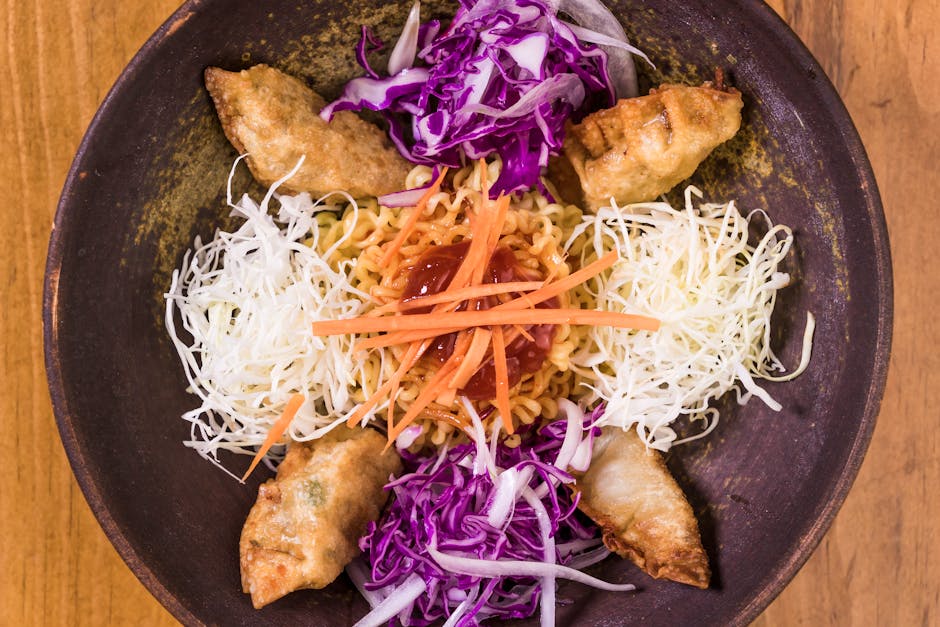
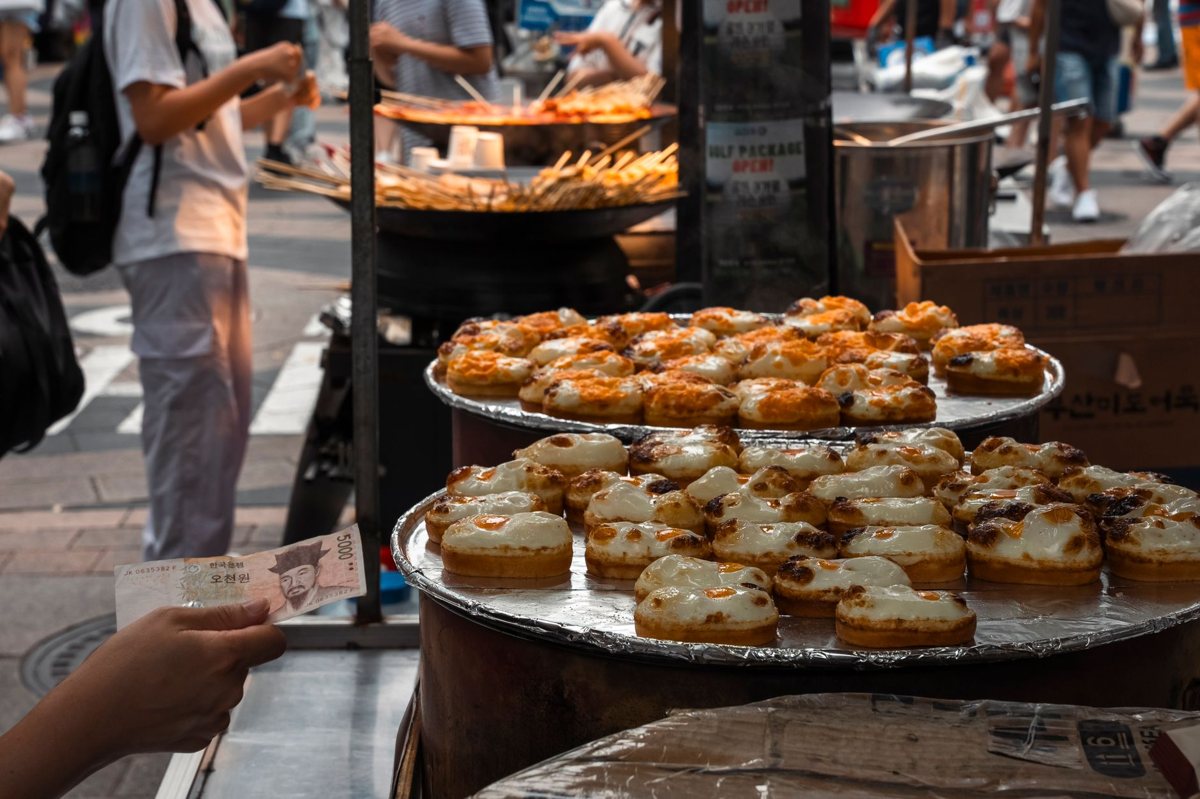
Markets are budget eating goldmines. Gwangjang Market serves bindaetteok (mung bean pancake) for ₩6,000, Tongin Market uses brass coins to buy banchan for a custom lunchbox, Mangwon Market has cheap fried chicken, and Namdaemun Market serves ₩4,500 noodle bowls under the canvas tents.
Beyond Gwangjang, don’t sleep on the smaller neighborhood markets where prices haven’t been tourist-inflated. Mangwon Market is a local favorite for cheap fried chicken, croquettes, and tteok; Tongin Market’s brass-coin “dosirak café” lets you assemble a custom tray of banchan for about ₩5,000; and the alley tents at Namdaemun ladle out kalguksu (knife-cut noodle soup) for a few thousand won. Markets are also where you’ll eat shoulder-to-shoulder with locals — the best sign you’ve found the real thing. Our Gwangjang Market food guide and Seoul street food guide go deeper on what to order.
12. Airport Lounge–Style Food Courts (₩6,000–10,000)
Most underground subway food courts (Express Bus Terminal, Yeongdeungpo, Myeongdong) host 8–15 stalls offering complete Korean meals for ₩6,000–9,000. Quick service, English signs, big variety.
More cheap-eats wins: bakeries, lunch sets and student combos
Three more categories worth knowing. First, bakery chains: Paris Baguette and Tous Les Jours are on practically every corner, and while they’re not gourmet, a ₩2,500 soboro-ppang (streusel bun) or a ₩3,500 sandwich plus their bottomless self-serve drip coffee is a cheap, reliable breakfast — and a clean restroom. Independent neighborhood bakeries often beat them on quality for the same money.
Second, the lunch special (점심특선). This is the single biggest hack in Seoul eating: restaurants that charge ₩20,000+ at dinner routinely serve the same or similar dishes at lunch for ₩8,000–12,000, often as a set with soup and banchan. Even some upscale and Michelin-adjacent spots do it. If you want to eat above your budget, eat your big meal at noon. Our Seoul Michelin restaurants guide flags which fine-dining kitchens offer affordable lunch sets.
Third, university-district combos. Around Hongik, Korea University (Anam), Konkuk, and Sinchon, entire blocks are built to feed broke students: ₩6,000 dakgalbi-and-rice sets, jumbo dumpling counters, and “1+1” snack deals. These are some of the cheapest sit-down meals in the city, and the energy is fun. The Hongdae guide maps the best of the Hongik student alleys.
Where Locals Actually Eat Cheap
- Office worker zones at lunch (Jongno, Gangnam, Yeouido) — Restaurants compete on lunch sets ₩6,000–9,000.
- University districts (Hongdae, Sinchon, Anam, Konkuk, Daehakno) — Cheap student-aimed bunsik shops.
- Traditional markets — Best banchan and home-style cooking.
- Underground subway food courts — Affordable variety.
- Old-school neighborhoods (Mangwon, Anam, Susaek) — Pre-gentrification prices.
What your won actually buys: cheap-eats price tiers
It helps to calibrate expectations around a few price points. For ₩3,000–4,000, you’re in snack-and-grab territory: a kimbap roll, a convenience-store triangle gimbap plus banana milk, a cup of tteokbokki, or that legendary student tonkatsu. For ₩5,000–7,000, you reach a proper sit-down single dish — a bowl of ramyeon loaded with egg and kimchi, a market bindaetteok, a bunsik combo, or a bakery sandwich-and-coffee. For ₩7,000–10,000, you unlock a full home-style meal with rice, soup, and free refillable banchan: bibimbap, a jjigae set, jjajangmyeon, or a lunchbox special. And just above the cheap-eats ceiling, ₩10,000–13,000 gets you the famous bowls worth queueing for — Imun Seolnongtang’s century-old ox-bone soup, a heaping plate of dakgalbi. Knowing these tiers means you’ll instantly recognize when a “tourist menu” is overcharging. For the wider money picture, our Seoul trip cost and Seoul on a budget guides break it all down.
How to Order at Cheap Eats Without Korean

- Look for picture menus at the entrance.
- Use Naver Translate’s image function for hand-written menus.
- Point — universally accepted.
- “Igeo juseyo” = “This one, please.”
- “Maewo?” with raised eyebrows = “Spicy?”
- Pay at the register, not the table. Most cheap eats use a counter pay system.
- Side dishes are free and refillable — never feel embarrassed to ask for more.
Eating cheap with dietary needs
Budget eating in Seoul gets trickier — but not impossible — if you’re vegetarian, vegan, halal, or avoiding spice. Kimbap can be ordered vegetable-only (yachae gimbap), bibimbap minus meat and egg is naturally close to vegan, and temple-cuisine restaurants do entirely plant-based meals, though those skew mid-range. Sundubu (soft-tofu stew) and doenjang jjigae are cheap and usually vegetable-forward, but confirm there’s no anchovy or beef stock if you’re strict. For halal options, Itaewon’s “Halal Street” near the central mosque has affordable kebab and curry. And remember the universal phrase for “less spicy,” deol maewo (덜 매워). Our vegetarian and vegan Seoul guide lists specific budget-friendly addresses.
A few more ordering realities that smooth things along: many cheap spots have a ticket machine at the entrance (especially ramyeon and udon counters) — choose your dish, pay the machine, hand the printed ticket to the cook. Water and side dishes are self-serve at a station along the wall in a lot of diners; don’t wait to be served. And tables turn fast at lunch, so it’s normal to be seated efficiently and left alone — that brisk service isn’t rudeness, it’s the cheap-eats rhythm.
Cheap Eats in Seoul by Neighborhood
Hongdae
Best for student-budget bunsik. Try Yongkang Lemon Tteokbokki (₩6,000), Tongbu Dakgalbi (₩9,000), and the entire alley behind Hongik University Station Exit 9.
Myeongdong
The street food capital. ₩3,000 dumplings, ₩4,000 hotteok, ₩5,000 fish-cake skewers. See our Seoul street food guide.
Insadong
Slightly more expensive but worth one cheap meal at Imun Seolnongtang (₩12,000 for the legendary ox-bone soup).
Gwangjang Market
Bindaetteok ₩6,000, mayak gimbap ₩4,000, sundae ₩5,000. See the Gwangjang Market food guide.
Anam (Korea University area)
One of Seoul’s best-kept budget secrets. Pork-cutlet diners, kimbap counters, and student bars at college-town prices.
Yeongdeungpo Underground Market
The food court alone has 25+ stalls under ₩8,000.
Gangnam (cheap eats do exist)
Yes, even pricey Gangnam has bargains — you just have to go underground. The food courts beneath Gangnam Station and inside COEX serve full Korean meals for ₩8,000–12,000, and the office-worker lunch sets around Teheran-ro are some of the best value in the district at midday. See our Gangnam guide.
Dongdaemun
The 24-hour shopping district means 24-hour cheap food: kalguksu alley, ₩5,000 noodle tents, and late-night market stalls that run until dawn. Perfect for shoppers and night owls — our late-night food in Seoul guide covers the after-midnight scene.
Sample Day of ₩20,000 Eating
Here’s how to eat satisfyingly in Seoul on a tight budget:
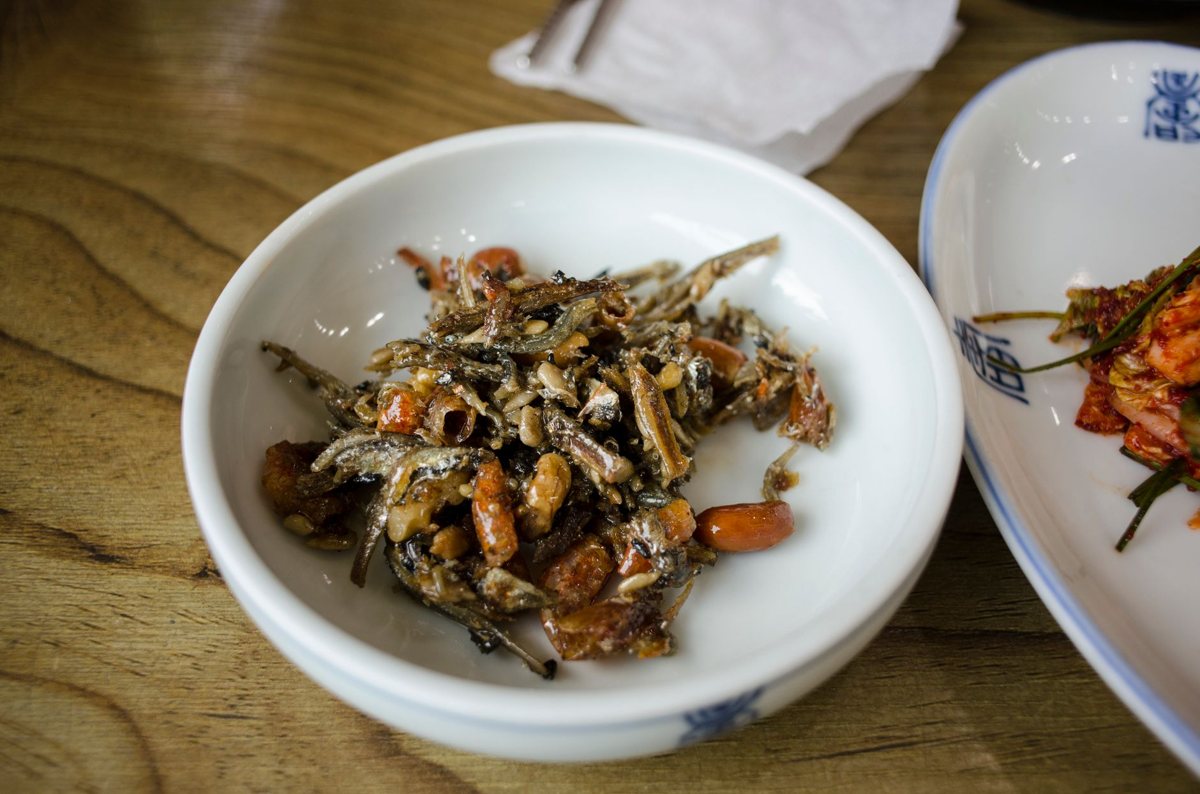
- Breakfast: Convenience-store dosirak + banana milk — ₩5,500
- Lunch: Kimbap + tteokbokki at a bunsik counter — ₩7,000
- Snack: Dragon’s beard candy in Insadong — ₩3,000
- Dinner: Sundubu jjigae at a neighborhood diner — ₩7,500
Total: ₩23,000 — a comfortable full day of eating.
A second sample day: ₩15,000 ultra-budget
Want to go even leaner? Here’s a comfortable day on ₩15,000. Breakfast: bakery bun plus bottomless drip coffee — ₩3,500. Lunch: the ₩3,000 student tonkatsu, plus a ₩2,000 side of rice and soup — ₩5,000. Afternoon snack: a market mayak gimbap plate — ₩4,000. Dinner: convenience-store dosirak with a cup ramyeon — ₩5,000 (you’ll be a touch over, but full). It’s repetitive if you do it every day, but it proves how far ₩15,000 stretches when you lean on bakeries, markets, and convenience stores. Most travelers land somewhere between this and the ₩23,000 day above.
Cheap Eats Tips for Tourists
- Avoid Myeongdong restaurant streets at peak time — pricier than the side alleys.
- Look for the lunch special menu (점심 특선) — most restaurants offer 30% off at lunch.
- Free refills: Side dishes, water, sometimes rice.
- No tipping: Korea has no tipping culture — keep your cash.
- Cards accepted everywhere: Even ₩2,000 kimbap purchases can go on Visa.
- Tax included: Menu prices are final.
- Order water: Free everywhere; tap water is safe.
For a broader budget plan, see our Seoul on a budget guide and how much does a Seoul trip cost.
How to keep a day of eating under ₩25,000
The math is simple once you internalize a few rules. Eat your largest meal at lunch to catch the discounts. Treat convenience stores and bakeries as your breakfast default. Drink the free water and barley tea instead of buying drinks. Hit one traditional market a day for a cheap, memorable meal. And never feel shy about asking for more banchan — refills are free and expected, and a single ₩7,000 stew with unlimited side dishes can genuinely fill you up. Do that and you’ll spend less on food in Seoul than almost any major city while eating better than you’d expect. For the full budget framework — accommodation, transport, sights — see our how much does a Seoul trip cost guide.
Cheap snacks, drinks and dessert
Budget eating isn’t only meals. Seoul’s between-meal snacks are a category unto themselves and almost all cost under ₩4,000: hotteok (syrup-filled griddle cakes) in winter, bungeoppang (fish-shaped red-bean pastries) from street carts, a paper cone of tornado potato, gyeran-ppang (egg bread), or a ₩1,500 soft-serve from the convenience store. For drinks, skip the ₩6,000 café latte when you’re economizing — Korean convenience stores sell decent canned and bottled coffee for ₩1,500, and tap water and barley tea are free at every restaurant. Dessert on a budget means a shared bingsu (shaved-ice mountain) in summer or a ₩3,000 bag of Korean rice cakes. None of it will dent ₩10,000. For sit-down café culture when you do want to splurge on ambience, see our Seoul café guide.
Cheap Eats vs. Mid-Range vs. Splurge
| Tier | Per Meal | What You Get |
|---|---|---|
| Cheap eats | ₩4,000–10,000 | Bunsik, kimbap, market food, jjigae |
| Mid-range | ₩12,000–25,000 | Casual restaurants, bibimbap, BBQ |
| Special meal | ₩40,000+ | Royal cuisine, premium BBQ, fine dining |
Mix categories — a cheap-eats lunch lets you splurge on a special dinner.
Cheap-eats mistakes and tourist traps to avoid
A short list of ways travelers overspend without realizing it. Avoid the restaurants with photo menus and touts on the main Myeongdong and Insadong drags — duck one street back for the same food at local prices. Be wary of “set menus for tourists” that bundle dishes you didn’t want. Don’t buy bottled water or drinks with meals (they’re free). Skip the airport and major-station sit-down chains when a food court is two minutes away. And resist the urge to tip — there’s no tipping culture in Korea, and leaving cash can cause confusion. Eat where the queue is Korean, follow the office workers at noon, and you’ll almost never go wrong. For broader first-trip guidance, our first-time Seoul travel tips and Korean dining etiquette guides are worth a read.
A quick cheap-eats menu glossary
Recognizing a handful of Korean words turns any hole-in-the-wall into an open book. 분식 (bunsik) — cheap snack-food diner. 김밥 (gimbap) — seaweed rice rolls. 떡볶이 (tteokbokki) — spicy rice cakes. 라면 (ramyeon) — Korean ramen. 비빔밥 (bibimbap) — mixed rice bowl. 찌개 (jjigae) — stew. 국밥 (gukbap) — soup with rice, the ultimate cheap one-bowl meal. 백반 (baekban) — a home-style set of rice, soup, and many banchan, usually ₩7,000–9,000 and the best-value sit-down lunch in Korea. 점심특선 — lunch special. 덜 매워 (deol maewo) — “less spicy.” Spot 백반 or 국밥 on a sign and you’ve found a cheap, filling, deeply Korean meal. Our Seoul food guide explains each dish in more depth.
Frequently Asked Questions
What is the cheapest meal in Seoul?
The 3,000-won tonkatsu at Cochon Tonkatsu, or convenience store dosirak at ₩3,500–4,500.
Where do locals eat cheap in Seoul?
University districts, traditional markets, underground subway food courts, and neighborhood bunsik shops.
Can I eat well in Seoul on a tight budget?
Yes — ₩15,000–25,000 per day buys three honest meals.
What’s bunsik?
Korean snack-food cafés serving kimbap, tteokbokki, ramen, and dumplings — all under ₩8,000.
Are convenience-store meals safe?
Yes. Korean convenience stores have very high food safety standards.
Should I tip at cheap eats restaurants?
No — Korea has no tipping culture.
Are credit cards accepted at cheap restaurants?
Yes — even tiny shops typically take Visa/Mastercard.
What’s the best traditional market for cheap eats?
Gwangjang Market for variety; Tongin Market for the brass-coin lunch tray.
How do I find cheap eats nearby?
Use Naver Maps’ “맛집” (mat-jip / good food) filter or search “분식” (bunsik) near your location.
Is street food cheaper than restaurants in Seoul?
Usually similar — both run ₩3,000–8,000 per item. Street food and market stalls win on atmosphere and snacking; sit-down bunsik diners win when you want free banchan and a place to rest. See our Seoul street food guide.
How do I get the cheap lunch specials?
Look for 점심특선 (lunch special) signs, usually served roughly 11:30 AM–2 PM. Many restaurants cut prices 20–40% versus dinner for the same dishes.
Can vegetarians eat cheaply in Seoul?
Yes, with care — vegetable kimbap, meat-free bibimbap, and tofu stews are cheap and common. Our vegetarian and vegan guide has specific spots.
What’s the best cheap breakfast in Seoul?
A bakery-chain bun with bottomless coffee, a convenience-store dosirak, or a ₩3,000 kimbap roll grabbed on the way out. Most Korean diners don’t do a separate breakfast menu, so these chains fill the gap.
Final Thoughts
Seoul is one of the world’s most rewarding cities to eat well on a budget. Mix kimbap stops, market lunches, jjigae diners, and the occasional convenience-store dosirak, and you’ll experience the full breadth of Korean home-style cooking for less than the price of a single fast-casual meal back home. For the wider food picture, see our Seoul food guide, the best Korean dishes to try, and our complete Seoul travel guide.